


⚡ Azores at a Glance
🌏 Overview
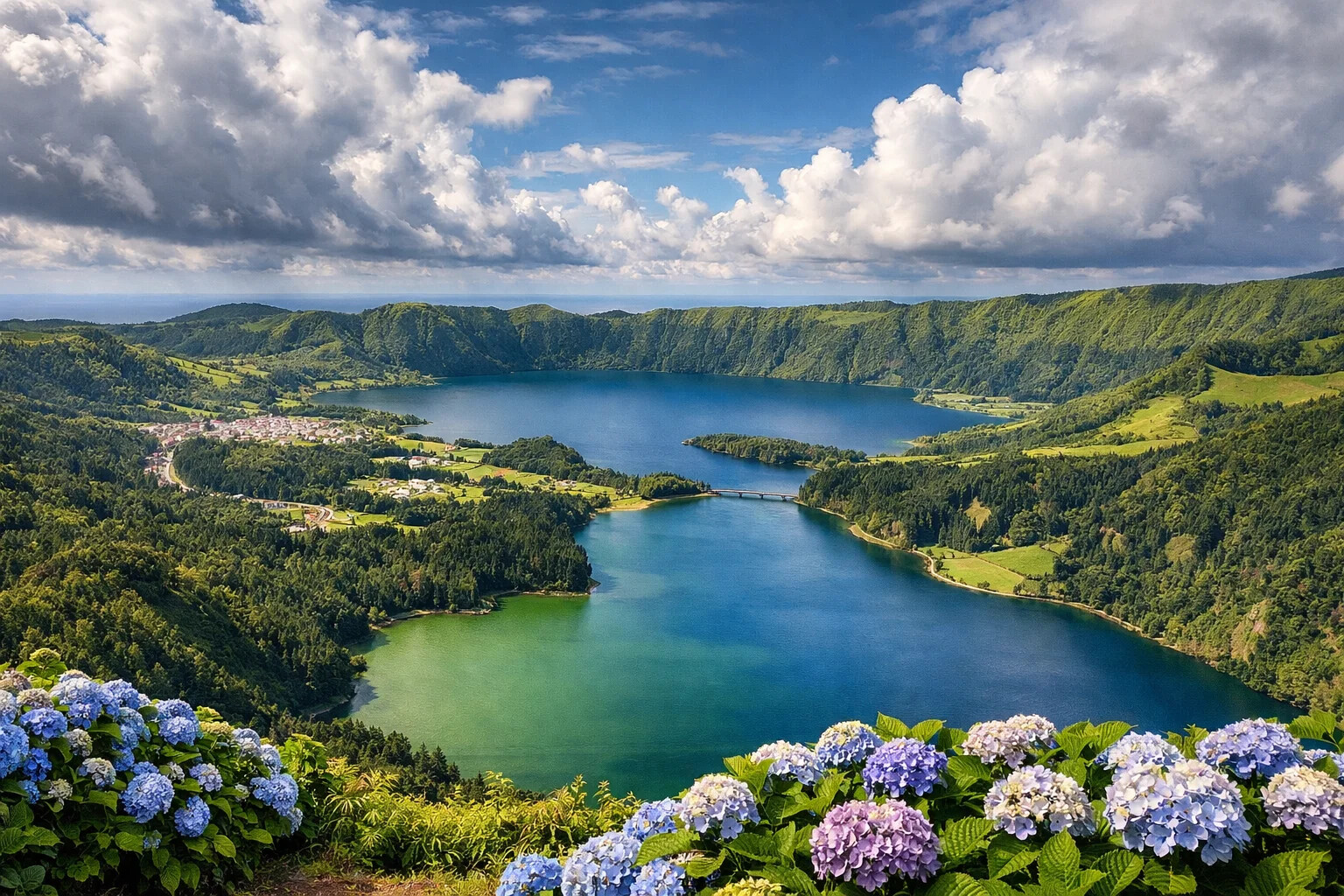
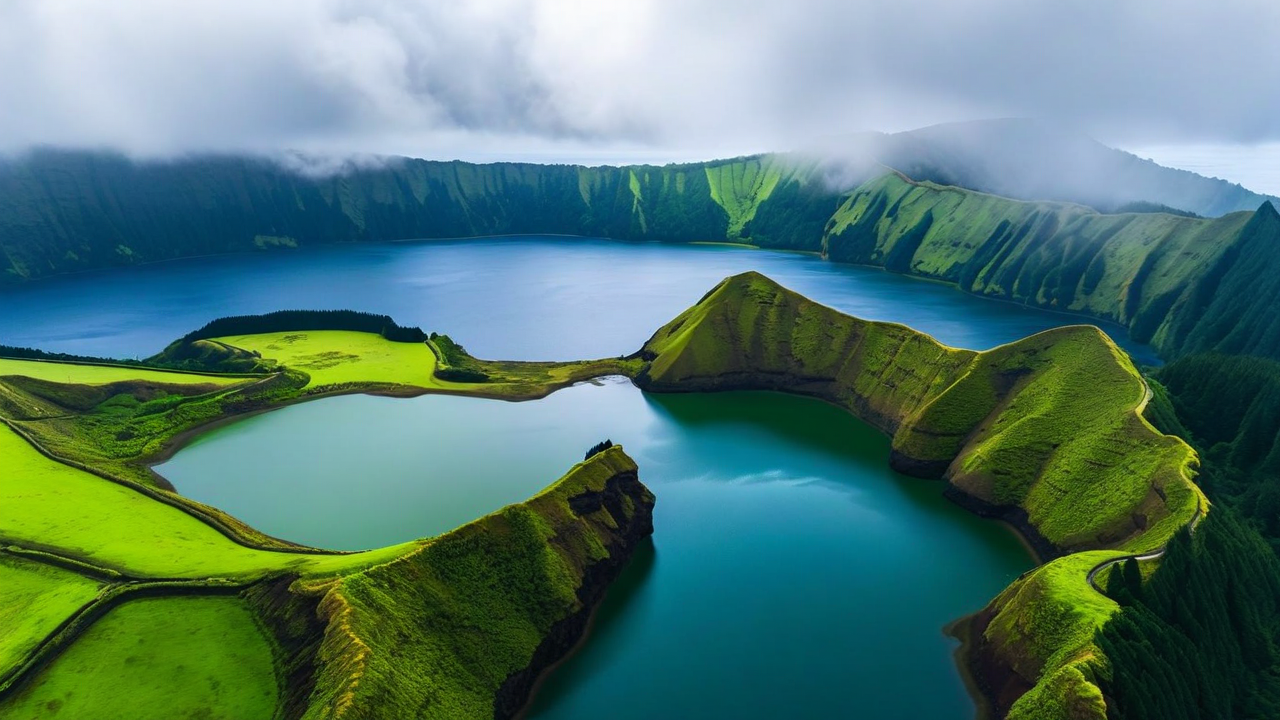
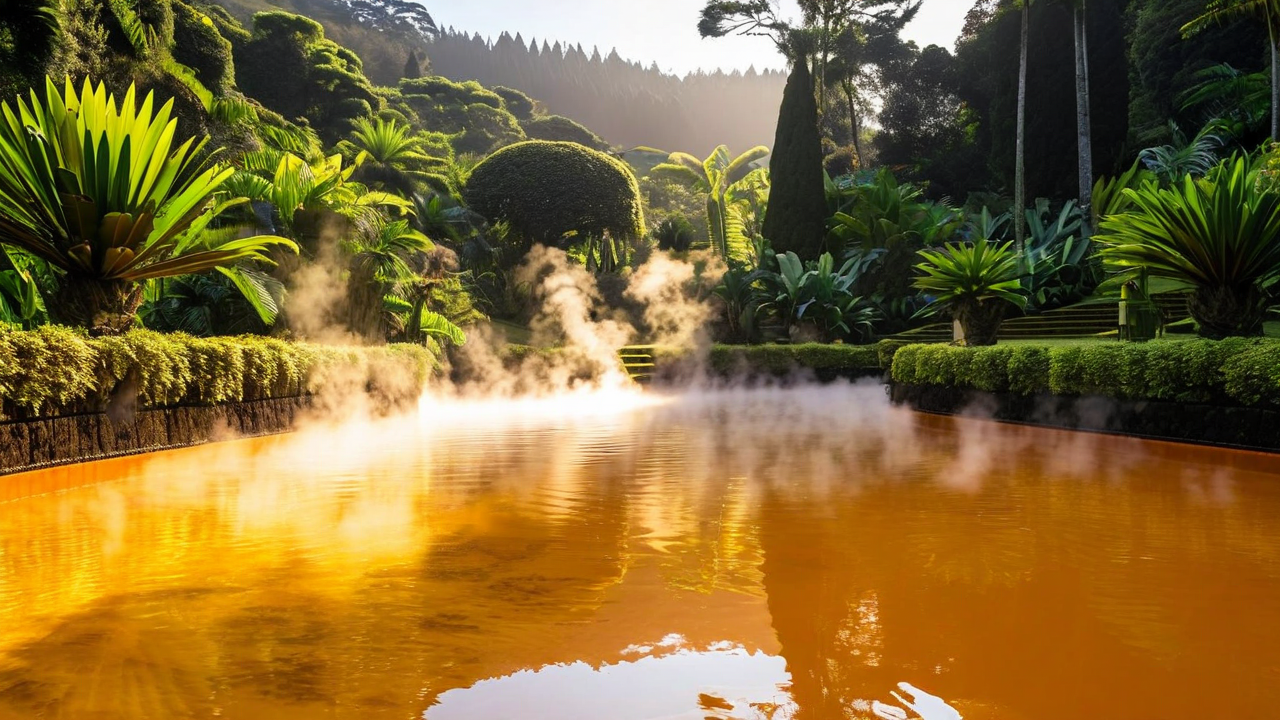
The Azores are nine volcanic islands scattered across the mid-Atlantic Ocean, roughly 1,500 kilometers west of mainland Portugal. This autonomous region of Portugal offers an extraordinary landscape of emerald crater lakes, steaming hot springs, towering hydrangea-lined roads, and dramatic coastal cliffs that plunge into deep blue waters. São Miguel, the largest island, draws most visitors with the twin crater lakes at Sete Cidades — one green, one blue — and the fumaroles of Furnas, where locals still cook traditional cozido stew underground using volcanic heat.
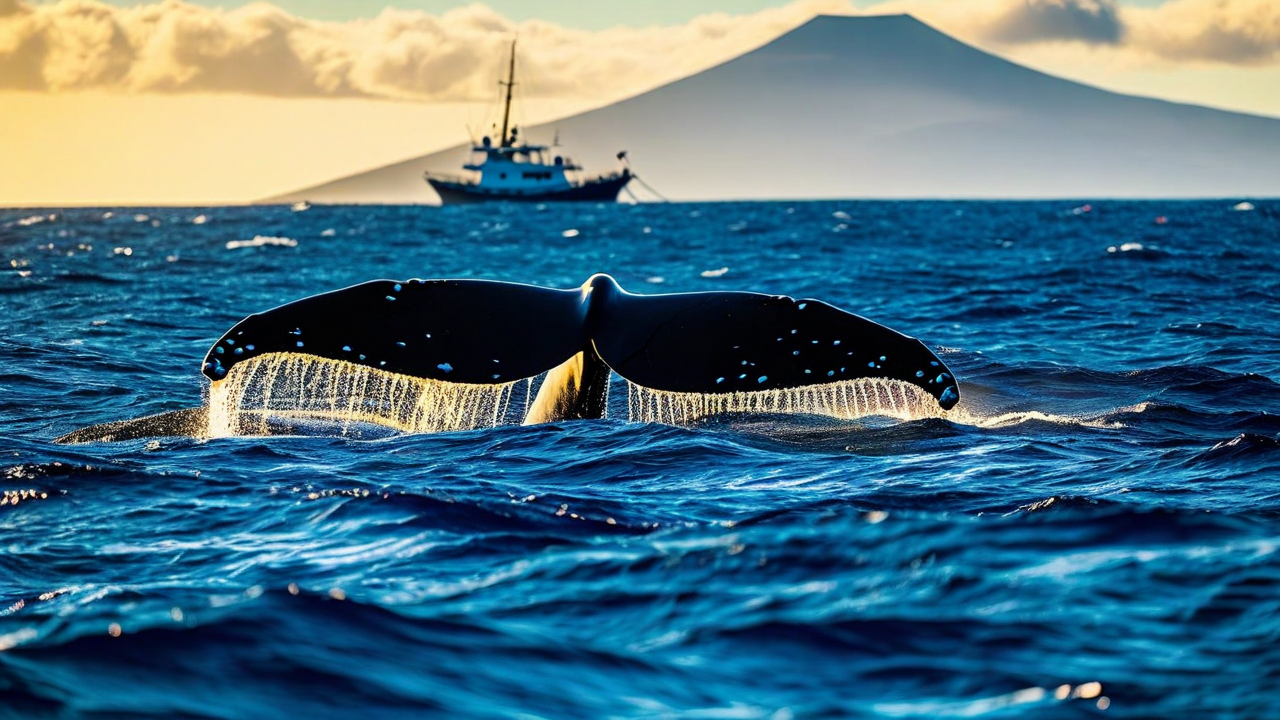
Over the past decade, the Azores have emerged as one of Europe's premier ecotourism destinations while remaining refreshingly uncrowded. More than 20 whale and dolphin species pass through these nutrient-rich waters, making the archipelago one of the world's finest cetacean-watching locations. Hiking trails cross volcanic calderas draped in Japanese cedar and moss, diving reveals underwater caves and seamounts teeming with marine life, and the unhurried pace of island living feels like a secret that Europe has kept from the world.
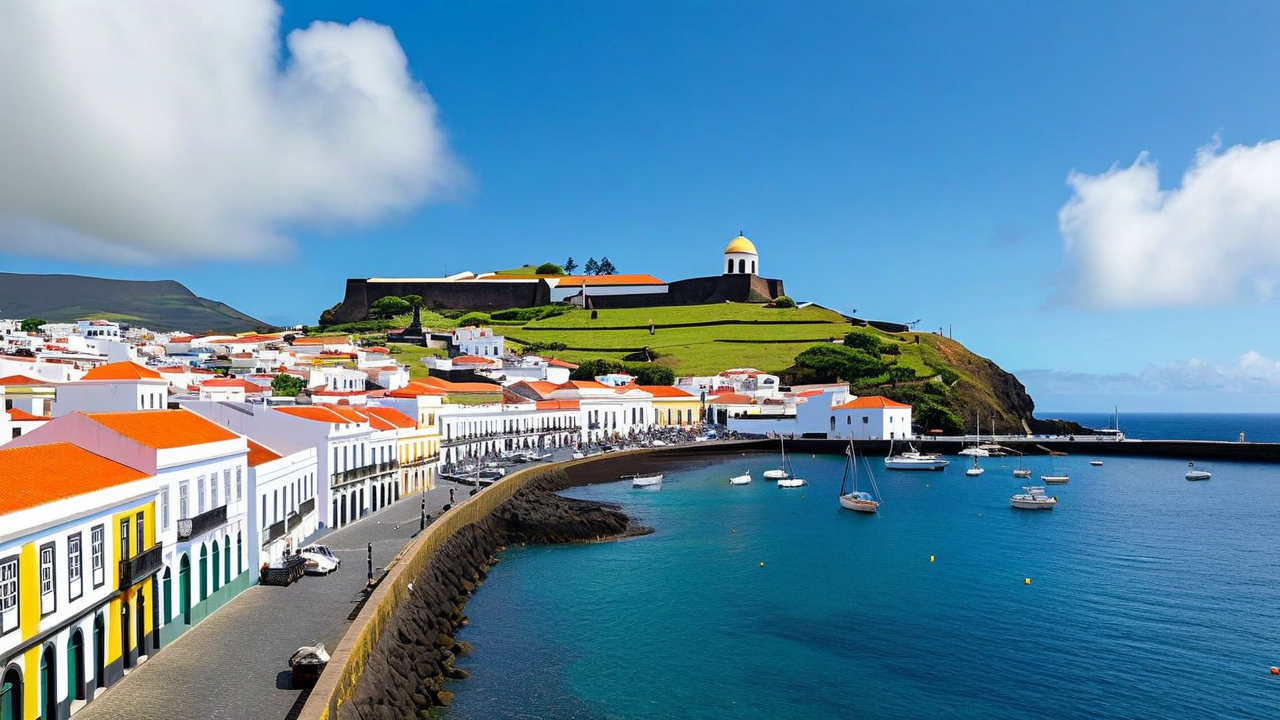
Each island possesses its own distinct character. Faial is the sailors' island, its Horta marina a legendary mid-Atlantic waypoint. Pico boasts Portugal's highest peak (2,351m) and UNESCO-listed vineyards where grapevines grow in lava-rock enclosures called currais. Flores and Corvo, the westernmost points of Europe, feel like the edge of the known world. Terceira's Angra do Heroísmo holds UNESCO World Heritage status for its Renaissance city center. Together, these nine islands offer a microcosm of natural wonders within a compact, accessible archipelago.
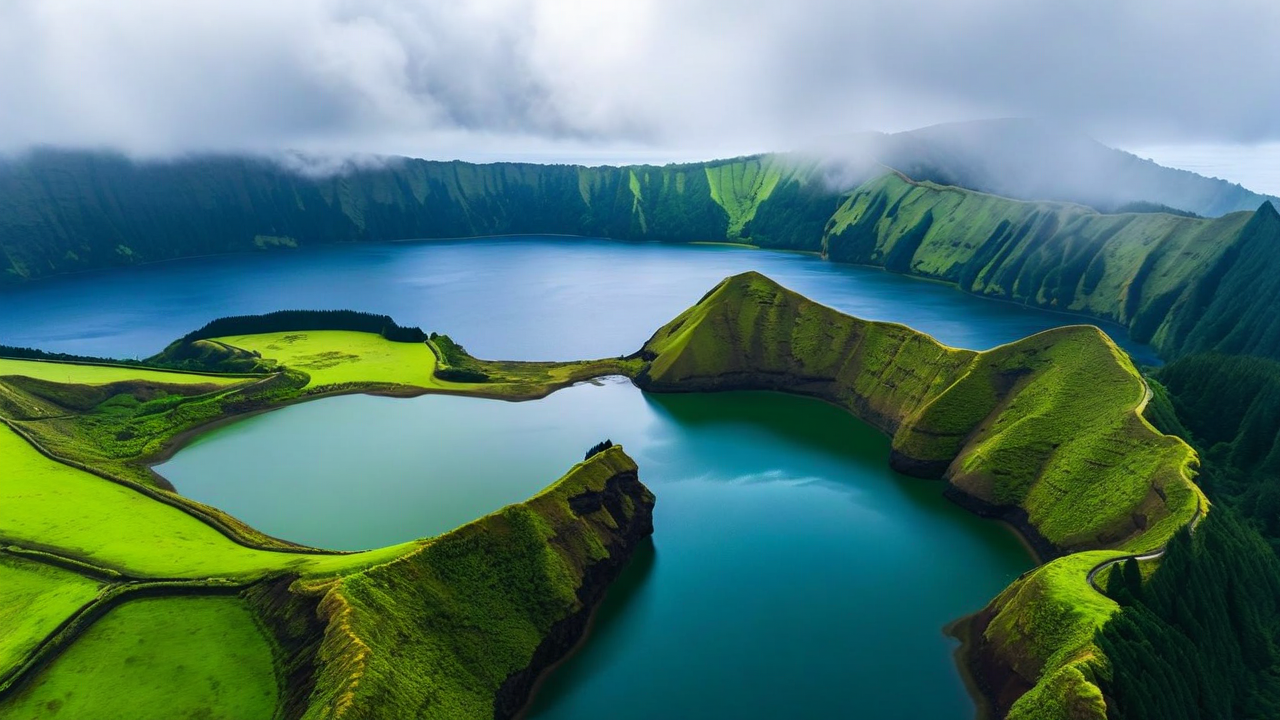
Sete Cidades
The iconic twin crater lakes — one green, one blue — seen from the Vista do Rei viewpoint on São Miguel
🏷️ Name & Identity
The name "Azores" derives from the Portuguese word "açores" (goshawks), though early explorers likely misidentified the common buzzards they spotted upon arrival. The Portuguese discovered the uninhabited islands around 1427, and settlement began in 1439 under Prince Henry the Navigator's colonization program. The islands became vital waypoints for trans-Atlantic navigation, whaling operations, and undersea telegraph cables.
Today, the Azores function as an Autonomous Region of Portugal with their own government, parliament and courts — uniquely split across three "capitals": the Presidency of the Regional Government sits in Ponta Delgada (São Miguel), the Legislative Assembly in Horta (Faial), and the region's highest court in Angra do Heroísmo (Terceira). While proudly Portuguese, Azoreans maintain a distinct identity shaped by isolation, volcanic landscapes, and deep Atlantic traditions. A significant Azorean diaspora — particularly in Massachusetts, Rhode Island, and California — maintains strong cultural ties, and reverse migration has brought American influences back to the islands. The population has been gently declining for decades as younger Azoreans move to the mainland or abroad for work and study, a demographic challenge the regional government actively wrestles with even as tourism brings new energy to the islands.
🗺️ Geography & Islands
The nine islands are divided into three groups across roughly 600 kilometers of ocean. The Eastern Group comprises São Miguel (the largest at 747 km²) and Santa Maria. The Central Group includes Terceira, Graciosa, São Jorge, Pico, and Faial. The Western Group holds Flores and tiny Corvo, the westernmost points of Europe.
The archipelago sits atop the Mid-Atlantic Ridge where the Eurasian, North American, and African tectonic plates meet — a geological triple junction that explains the intense volcanic and seismic activity. Mount Pico on Pico Island rises 2,351 meters above sea level (and over 8,000 meters from the ocean floor), making it Portugal's highest peak. Hot springs, fumaroles, calderas, and lava tubes are found across the islands, with the last major eruption occurring on Capelinhos, Faial, in 1957–58.
The marine environment is equally dramatic. Deep ocean trenches surround the islands, creating upwellings that support extraordinary biodiversity. The Formigas Bank and Dollabarat reef system hosts pelagic species from manta rays to blue sharks, while hydrothermal vents on the seafloor support unique chemosynthetic ecosystems found nowhere else.
🗺️ Map
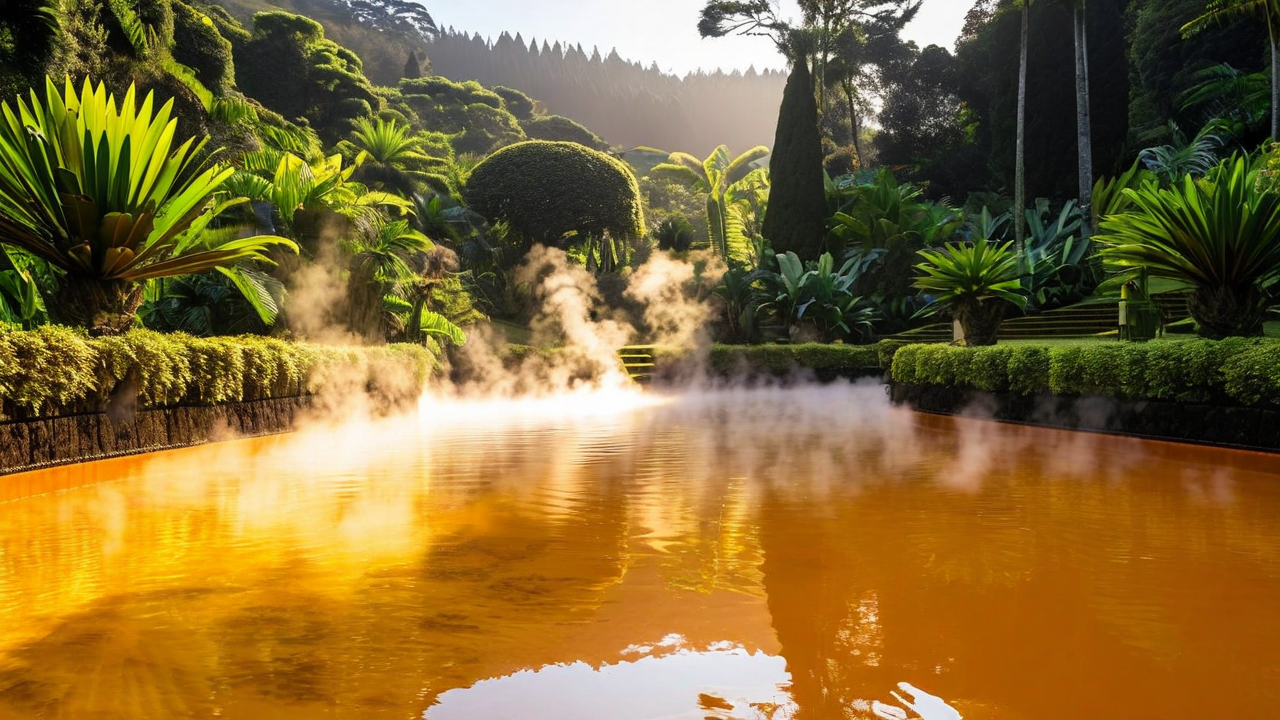
Furnas Valley
Steaming fumaroles power hot springs and cook the famous cozido stew underground
📜 History
The Azores were uninhabited when Portuguese navigators first sighted them around 1427. Settlement began in 1439 on Santa Maria, with colonists from mainland Portugal, Flanders, and other regions gradually populating all nine islands. The islands quickly became critical waypoints for Portuguese exploration, with ships returning from Africa, India, and Brazil stopping to resupply.
Whaling shaped Azorean culture for centuries, particularly on Pico and Faial, where shore-based whaling stations operated until 1987. Herman Melville's Moby-Dick features Azorean whalers, and the whaling heritage remains central to island identity — though today the industry has been entirely replaced by whale-watching tourism. During both World Wars, the Azores served as strategic military bases, and the American Lajes Air Base on Terceira operated as a crucial NATO facility throughout the Cold War.
The 1974 Carnation Revolution in Portugal brought democracy and eventually autonomy to the islands. Since 1976, the Azores have governed themselves as an autonomous region with significant control over taxation, education, and economic policy.
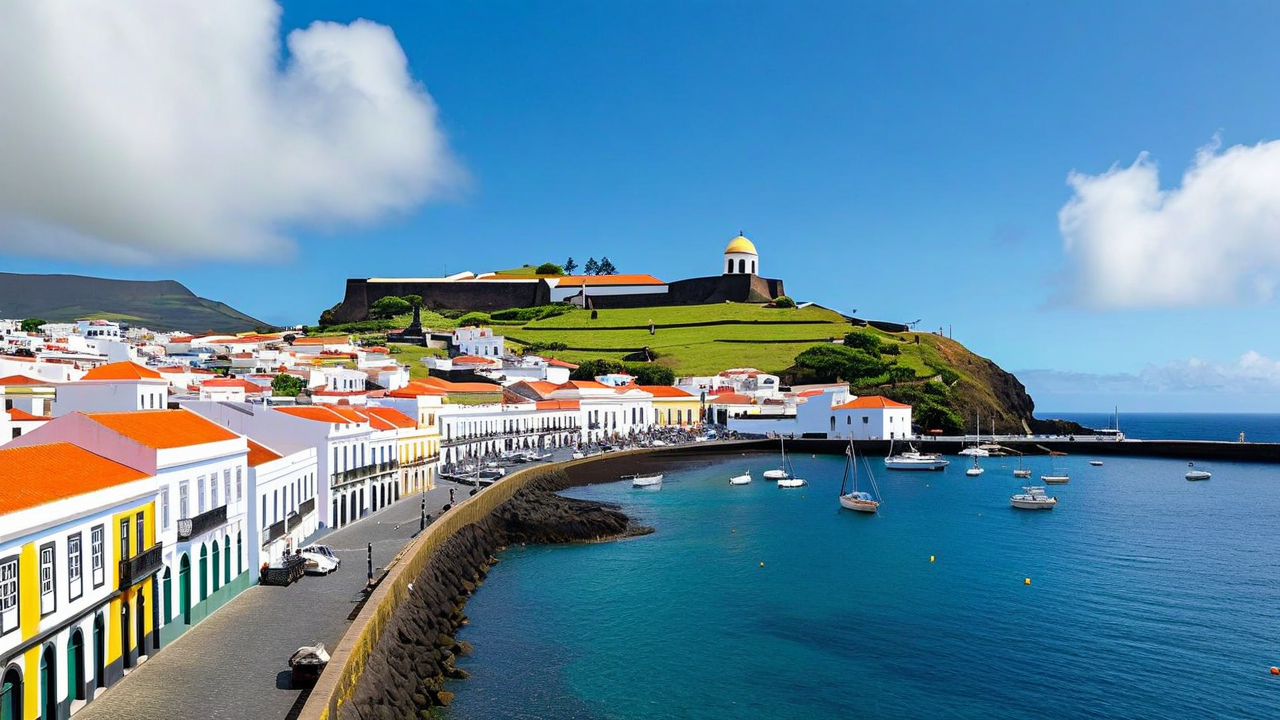
Angra do Heroísmo
A UNESCO World Heritage city on Terceira with colorful Renaissance architecture
👥 People & Culture
Approximately 241,000 people inhabit the Azores, with just over half living on São Miguel. The population is ethnically Portuguese with traces of Flemish, Moorish, and Jewish heritage. Azorean Portuguese has its own distinctive accent and vocabulary that mainlanders sometimes struggle to understand. Roman Catholicism is deeply embedded in daily life, with elaborate festivals honouring the Holy Spirit (Festas do Espírito Santo) representing the islands' most important cultural tradition.
The Festas do Espírito Santo, held from May through September, involve the entire community in a cycle of processions, feasts, and charitable giving that dates back to medieval Portugal. Each parish holds its own festival, with an elected "emperor" hosting communal meals of alcatra (beef stew) and massa sovada (sweet bread). Bullfighting à corda — where bulls run through streets on a long rope while daring men dodge and tease them — is another unique Azorean tradition, particularly popular on Terceira.
Music and craftsmanship thrive across the islands. Traditional viola da terra (12-string guitar) accompanies folk songs, and scrimshaw — the art of carving whale teeth and bone — reflects the whaling heritage. Embroidery, pottery, and wickerwork each have distinct island traditions.
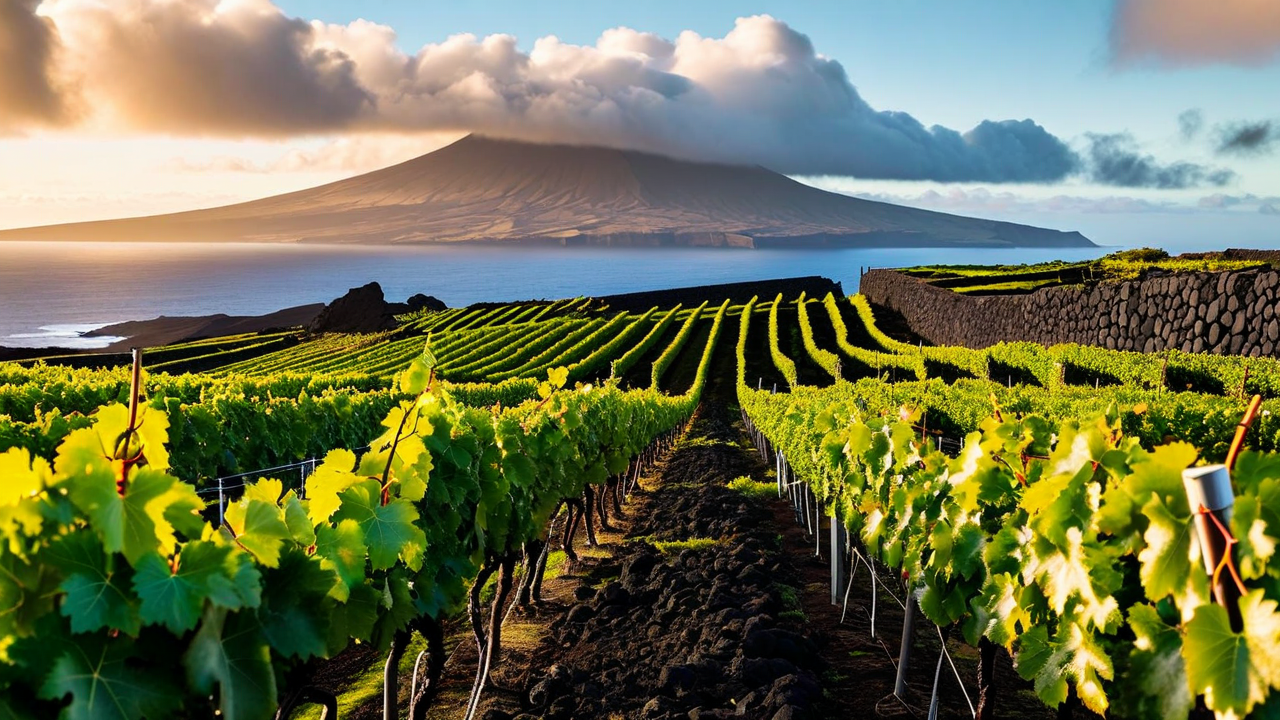
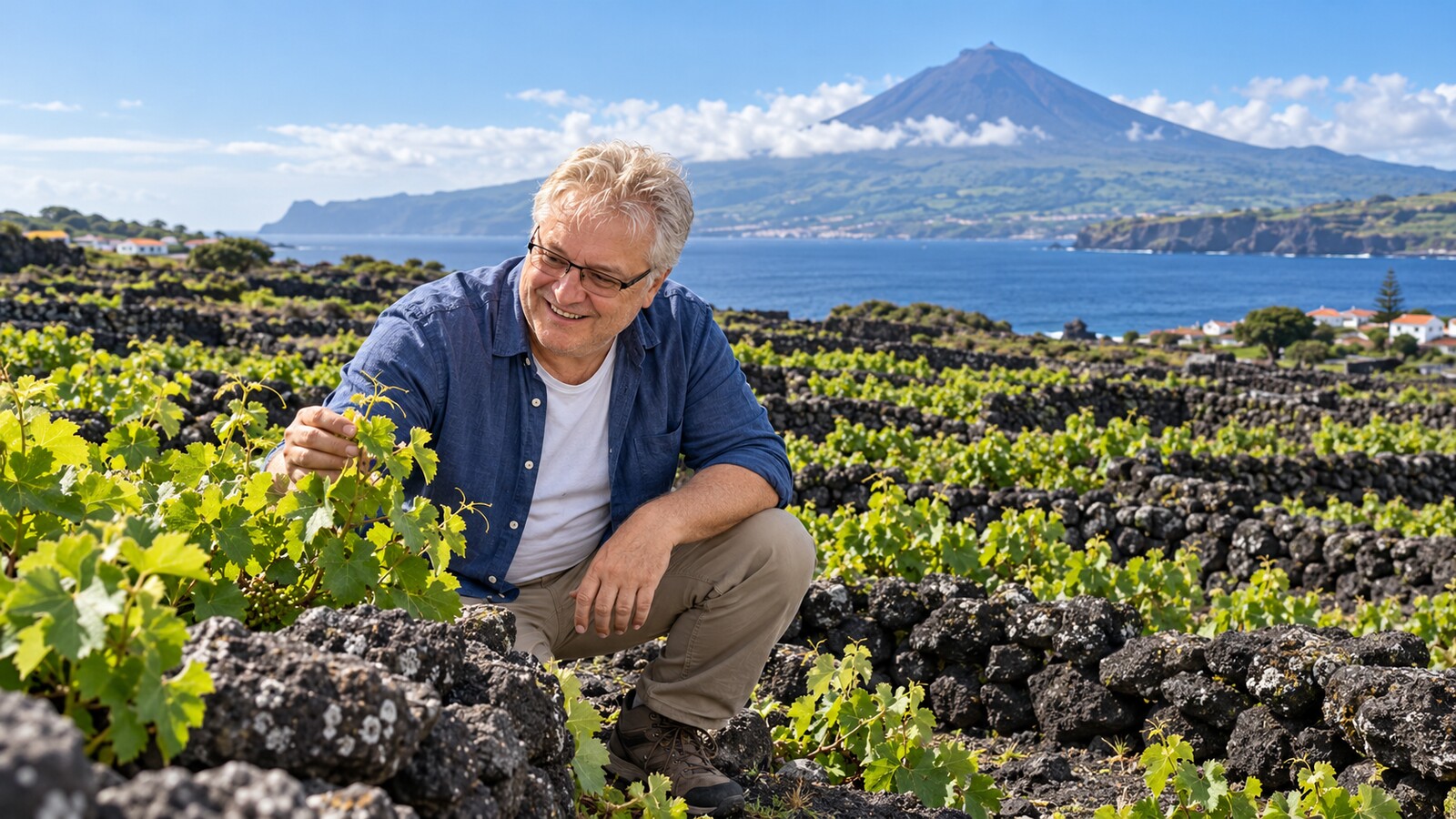
Pico Island Vineyards
UNESCO-listed vineyards sheltered in basalt-walled currais, with Mount Pico towering behind
🏛️ Government & Politics
The Azores are an Autonomous Region of Portugal (Região Autónoma dos Açores), a status enshrined in the 1976 Portuguese Constitution after the political turbulence that followed the Carnation Revolution. The region has its own Political-Administrative Statute, legislates in areas from fisheries and agriculture to tourism and education, and applies reduced rates of VAT and income tax compared with the mainland. It is also one of the EU’s nine Outermost Regions, which unlocks dedicated structural funding and derogations from certain single-market rules.
Power is deliberately dispersed across three islands. The Presidency of the Regional Government sits in Ponta Delgada on São Miguel; the Legislative Assembly — 57 deputies elected by proportional representation across the nine island constituencies plus a compensation circle — has met in Horta on Faial since 1976; and the region’s highest court sits in Angra do Heroísmo on Terceira. Lisbon is represented by a Republic Representative, a largely ceremonial office.
José Manuel Bolieiro (Social Democratic Party, PSD) has served as President of the Regional Government since 24 November 2020 and leads the XIV Regional Government, formed after the February 2024 snap election as a PSD-led coalition with CDS-PP and PPM. His arrival ended four decades of continuous Socialist rule in the archipelago. Azoreans also elect deputies to Portugal’s national Assembly of the Republic and vote in European Parliament elections within the national constituency.
Defence and foreign affairs remain with Lisbon, but the Azores carry outsized strategic weight: Lajes Field on Terceira has hosted a US military presence since 1943 under a bilateral agreement, and its future — repeatedly downsized since 2012 — remains a recurring theme in regional politics and in Azorean–American relations.
🏝️ São Miguel — The Green Island
São Miguel is the Azores' largest and most visited island, home to the capital Ponta Delgada and nicknamed "The Green Island" for its intensely verdant landscape. The twin crater lakes of Sete Cidades — one appearing green, the other blue — are the archipelago's most iconic sight, best viewed from the Vista do Rei viewpoint. The Furnas Valley steams with volcanic activity: hot springs, fumaroles, and thermal pools where visitors can bathe in naturally heated mineral water.
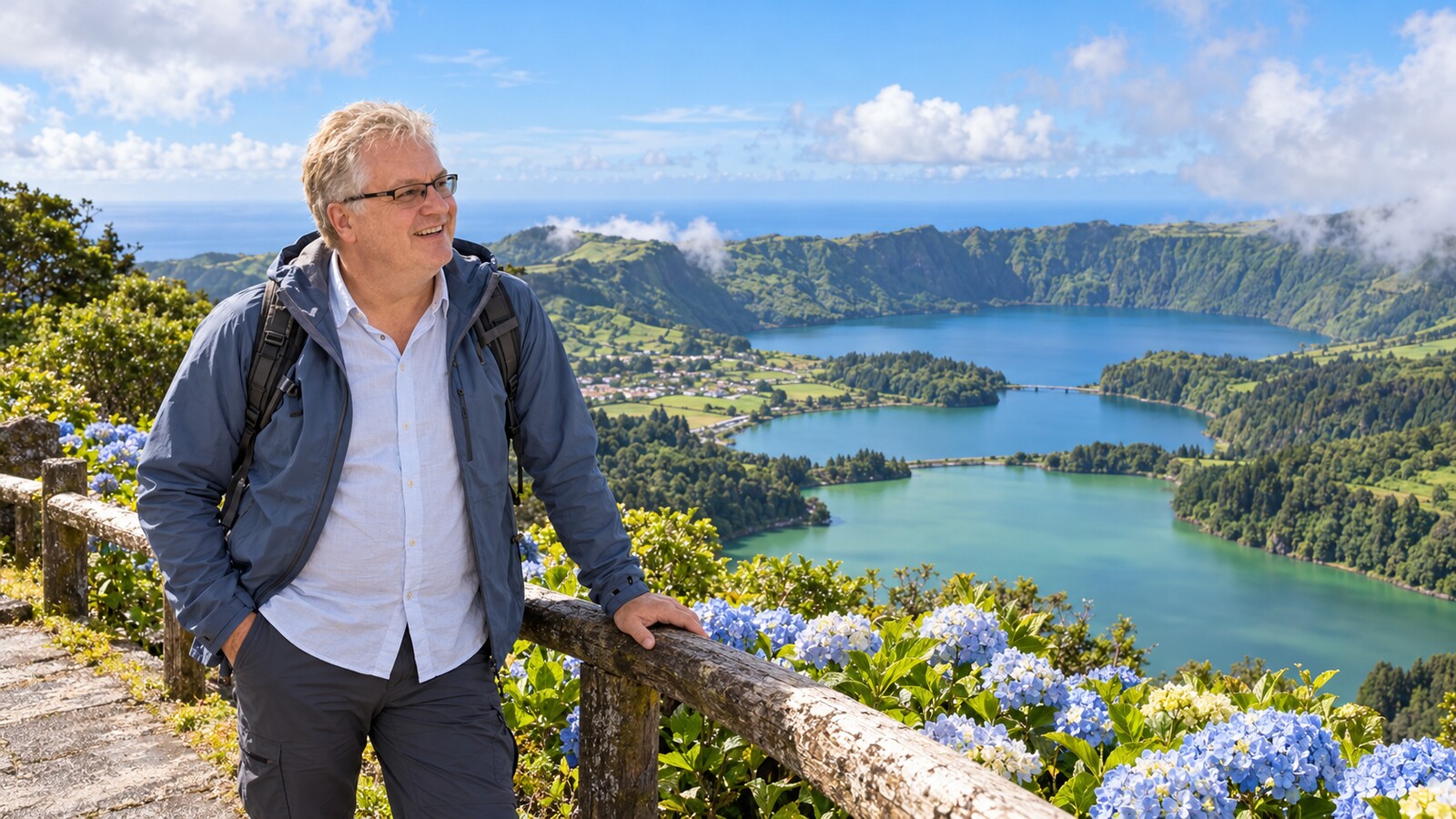
Beyond the famous sights, São Miguel offers tea plantations (Europe's only), pineapple greenhouses producing intensely sweet fruit, the primeval laurel forests of Sete Cidades, and the dramatic coastal cliffs around Nordeste. Ponta Delgada combines historic churches and mansions with a lively marina, excellent restaurants, and easy access to whale-watching excursions just minutes offshore.
⚓ Terceira & Faial — Renaissance Streets, Painted Harbours
Terceira's capital Angra do Heroísmo earned UNESCO World Heritage status for its remarkably preserved Renaissance city center, painstakingly rebuilt after a devastating 1980 earthquake. The Algar do Carvão lava tube descends into a spectacular underground cavern with a crystal-clear lake and towering stalactites, and the island's Festas Sanjoaninas in June bring bullfighting à corda and folk music to packed streets.
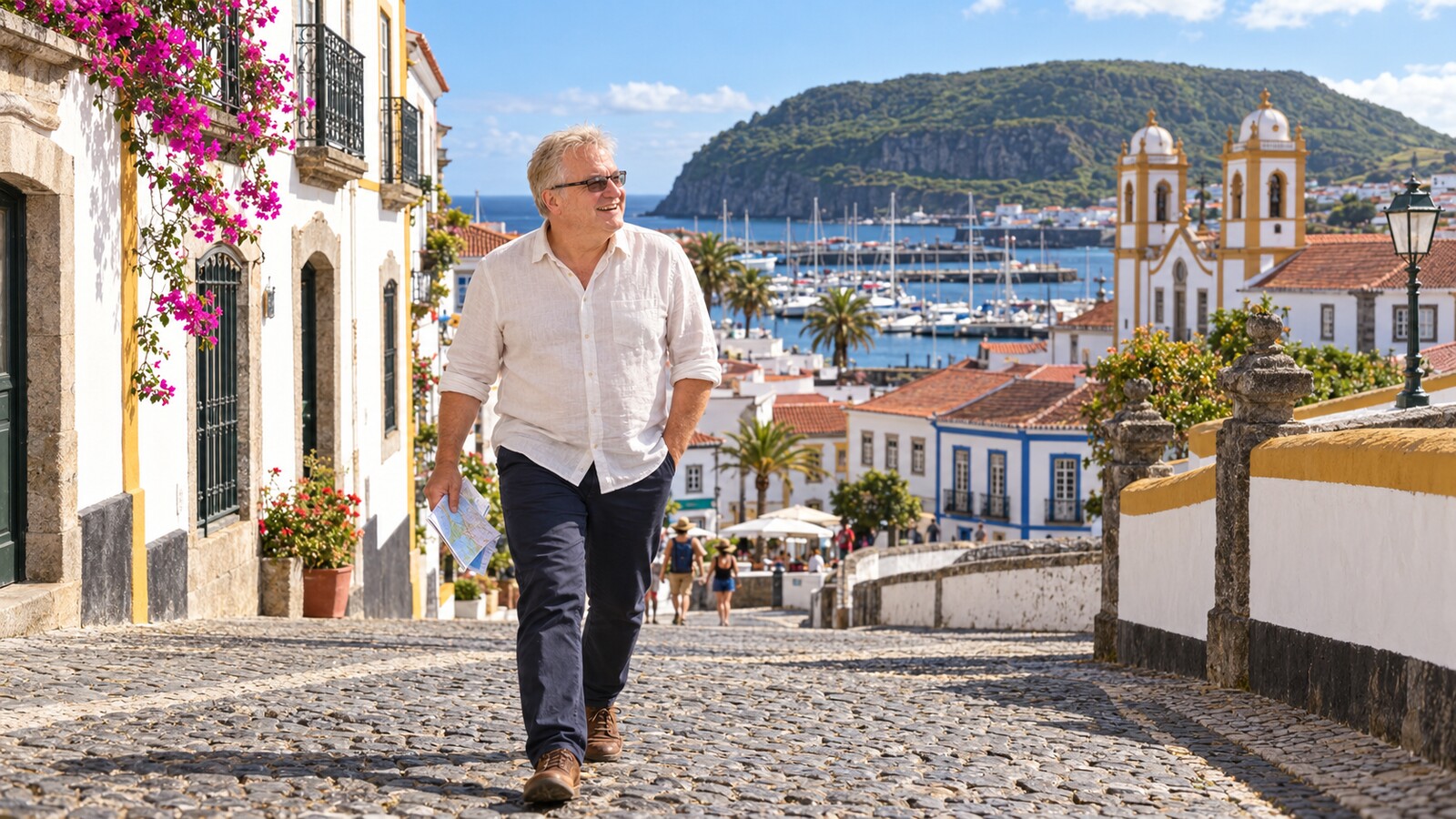
Faial, nicknamed the "Blue Island" for the hydrangea hedges that line every road each summer, centers on Horta — a legendary stop for trans-Atlantic sailors since the age of sail. Horta's marina walls are covered in thousands of painted murals left by passing crews over decades; tradition holds that failing to leave one before departing brings bad luck at sea, and sailors take the superstition seriously enough that fresh paint appears constantly. The Capelinhos volcano at the island's western tip, which erupted in 1957–58 and added new land to Faial, is now a haunting visitor center built half-underground in ash.
🍇 Pico & the Western Islands
Pico Island is dominated by its volcanic cone — Portugal's highest point at 2,351m — and by its UNESCO-listed wine landscape, discussed further below, where centuries of Azorean winemakers built black basalt walls to shelter vines from relentless Atlantic wind. Climbing Mount Pico itself is a serious full-day undertaking, but the view from the summit crater on a clear day reaches across half the archipelago.
São Jorge, a narrow, cliff-edged island between Pico and Graciosa, produces its famous DOP cheese — firm, peppery, aged in volcanic caves — from cattle grazed on the island's fajãs, the flat coastal shelves formed by old lava flows and landslides that give São Jorge some of the most dramatic farmland in Europe. Graciosa, the "White Island," centers on a still-active volcanic cave, the Furna do Enxofre, reachable by a long spiral staircase into a sulfur-scented underground lake.
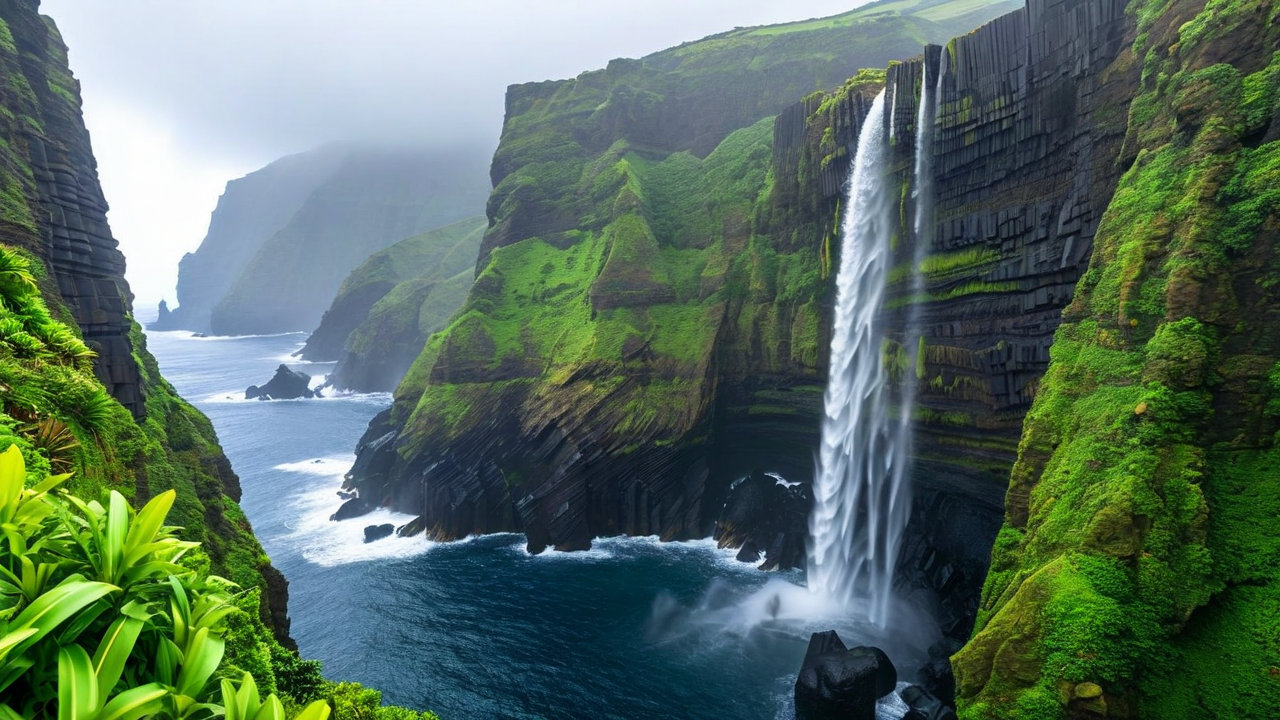
Flores ("Island of Flowers") and tiny Corvo — population under 500 — represent Europe's westernmost points, sitting on the North American tectonic plate rather than the Eurasian one. Flores is laced with waterfalls tumbling directly into the ocean and crater lakes rivaling Sete Cidades in beauty with a fraction of the visitors; Corvo, reachable mostly by small boat or plane, consists of essentially one village and one volcanic caldera, and remains about as far from anywhere as inhabited Europe gets.
🍽️ Cuisine
Azorean cuisine celebrates the ocean and volcanic terroir. Cozido das Furnas — a stew of meats, vegetables, and sausages slow-cooked underground in volcanic steam for 5–6 hours — is the most famous dish, a must-try experience unique to São Miguel. Fresh seafood dominates menus: grilled limpets (lapas) with garlic butter, tuna steaks, octopus stew, and the rich fish soup caldeirada.
Alcatra, a Terceira specialty, slow-cooks beef with wine and spices in a clay pot. São Jorge cheese — a firm, peppery DOP cheese aged in volcanic caves — is exported worldwide. Sweet treats include massa sovada (sweet bread), queijadas (cheese tarts), and the Azorean take on arroz doce (rice pudding). Local wines from Pico and Graciosa are increasingly respected, and the Azores produce excellent craft beers and passion fruit liqueur (maracujá).
Cozido das Furnas
Cooked by the Volcano Itself
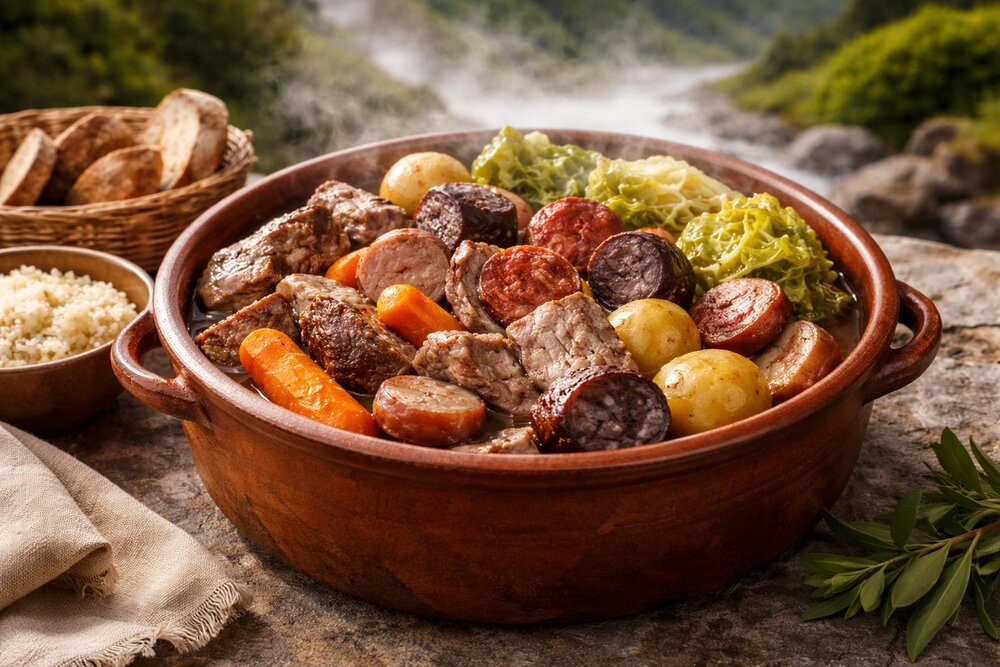
A hearty stew of beef, pork, chicken, blood sausage, cabbage, carrots, and potatoes, traditionally lowered into a volcanic fumarole in Furnas and left to steam for five to six hours in the earth's own heat.
Ingredients: beef shank · pork belly · chicken thighs · morcela (blood sausage) · chouriço · cabbage wedges · carrots · potatoes · sweet potato · salt
Preparation (home oven version): layer the meats and vegetables in a heavy covered pot or Dutch oven in the order they take to cook — toughest cuts on the bottom. Add a splash of water, cover tightly, and cook low and slow at 150°C (300°F) for about 5 hours, resisting the urge to open the lid. The result should be deeply savoury, falling-apart tender, and faintly smoky.
💡 In Furnas itself, restaurants still lower pots directly into roped-off steam vents each morning and haul them out at lunchtime — ask any local restaurant about a "cozido tour" to watch the process.
Lapas Grelhadas
Grilled Limpets with Garlic Butter
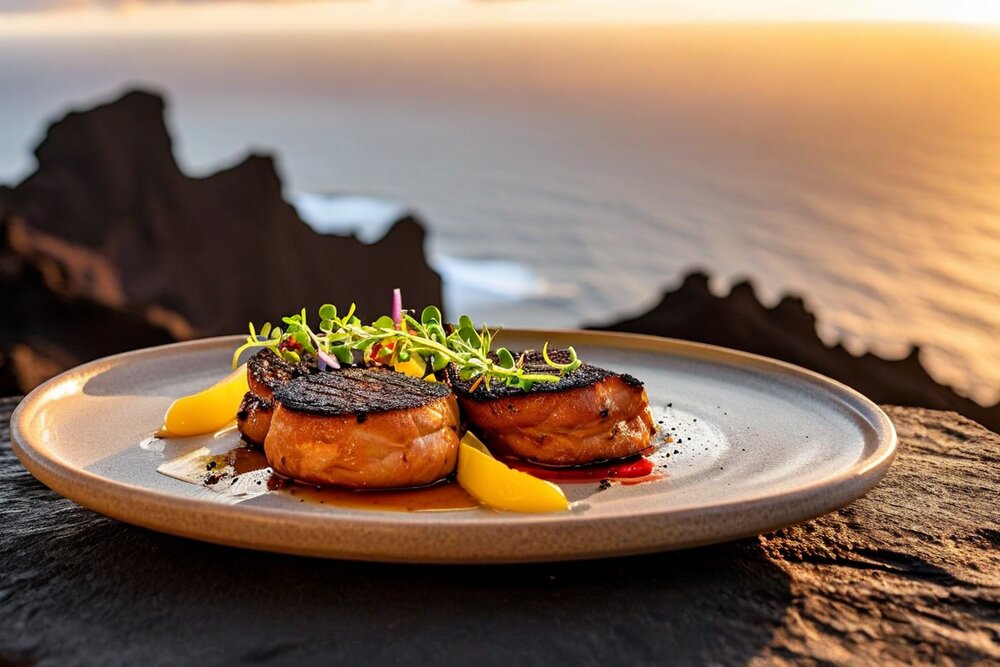
Limpets plucked straight off volcanic coastal rocks, grilled in their shells with garlic, butter, and lemon — a simple dish that tastes entirely of the Atlantic.
Ingredients: fresh limpets in the shell · 80g butter, softened · 3 garlic cloves, minced · lemon juice · fresh parsley, chopped · chili flakes (optional)
Preparation: mix the softened butter with garlic, a squeeze of lemon, parsley, and a pinch of chili if using. Arrange the limpets shell-down on a hot grill or under a very hot broiler, top each with a small spoonful of the garlic butter, and cook for 3–4 minutes until the butter bubbles and the limpets turn opaque and firm. Serve immediately with crusty bread to mop up the juices.
💡 Do not overcook — limpets turn rubbery within a minute of being ready, so pull them the moment the butter starts to brown at the edges.
Queijadas da Vila
Small Cheese-and-Cinnamon Tarts
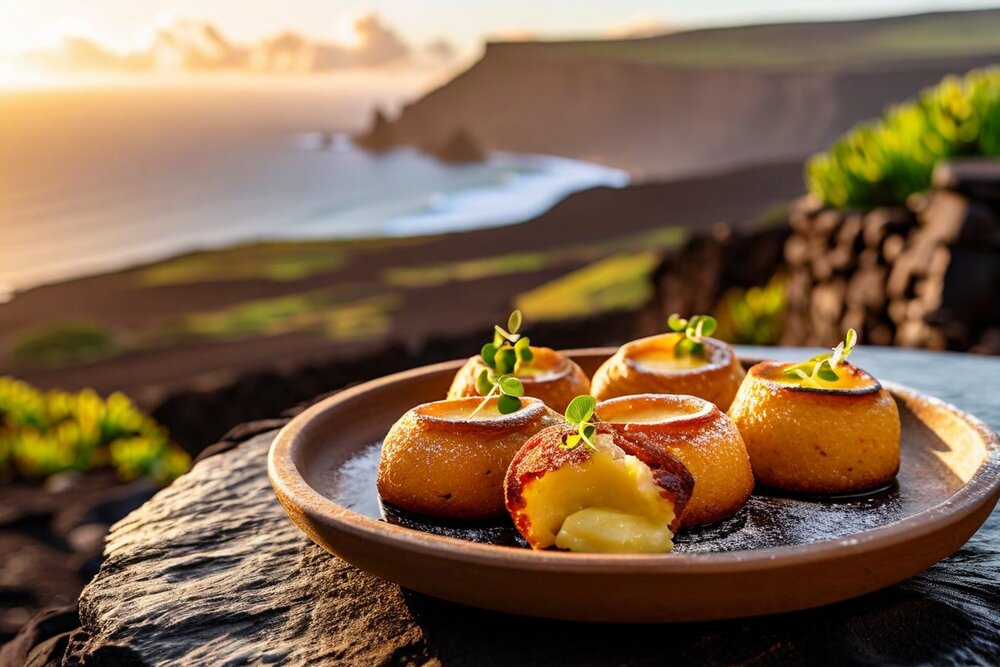
Small, dense custard tarts made with fresh cheese and cinnamon, associated especially with Vila Franca do Campo on São Miguel — a bakery-counter staple across the islands.
Ingredients: 250g fresh mild cheese (queijo fresco or ricotta) · 200g sugar · 3 eggs · 30g butter, melted · 30g flour · 1 tsp cinnamon · pinch of salt
Preparation: beat the cheese until smooth, then whisk in the sugar, eggs, melted butter, flour, cinnamon, and salt until fully combined. Pour into small buttered tart tins or a muffin tray and bake at 200°C (390°F) for 20–25 minutes, until the tops are golden-brown and slightly domed. Cool before removing from the tins — they sink and firm up as they cool.
💡 The characteristic dark, slightly caramelized top comes from a high oven temperature — resist the urge to turn the heat down even if they brown quickly.
🍸 Cocktails & Mixed Drinks
Azorean drinking culture runs on passion fruit, volcanic-soil wine, and the sugarcane spirit distilled on nearly every island since colonial times — simple, punchy drinks built for long, unhurried evenings.
Maracujá Sour
Passion Fruit, Island-Style
Azorean passion fruit liqueur, shaken into a sour — bright, tart, and the unofficial house drink of São Miguel's marina bars.
🥃 Coupe glass · 🔨 Shake & strain
Ingredients: 50ml licor de maracujá · 25ml white rum · 20ml lime juice · 10ml sugar syrup · fresh passion fruit pulp
Preparation: shake all ingredients hard with ice and double strain into a chilled coupe. Top with a spoonful of fresh passion fruit pulp.
💡 Passion fruit grows easily in the Azores' mild, humid climate — nearly every household garden seems to have a vine.
Pico Spritz
Volcanic White Wine, Chilled
A simple, low-alcohol spritz built on Pico's mineral-driven Verdelho or Arinto dos Açores — a bright, saline aperitif that tastes faintly of the lava it grew on.
🥃 Wine glass · 🔨 Build
Ingredients: 90ml Pico white wine, chilled · 60ml sparkling water · lemon twist
Preparation: fill a wine glass with ice, pour in the chilled wine, top with sparkling water, and stir gently. Garnish with a twist of lemon.
💡 Pico's vines grow inside black basalt-walled currais, individually planted and shielded from Atlantic wind — the wine carries a faint salinity from the sea spray that reaches over the walls.
Aguardente com Mel
Sugarcane Spirit & Honey
A warming, old-fashioned digestif of aguardente (a clear sugarcane spirit distilled locally since colonial times) sweetened with honey — the Azorean answer to grappa.
🥃 Small tumbler · 🔨 Stir
Ingredients: 50ml aguardente · 1 tsp local honey · lemon peel
Preparation: warm the aguardente gently (do not boil), stir in the honey until dissolved, and serve in a small tumbler with a twist of lemon peel expressed over the top.
💡 Traditionally poured after a big meal, particularly a cozido — locals swear it "settles the stomach," though the science is mostly just enthusiasm.
Kaufmann Drinks Score (KDS)
| Drink | Style | KDS |
|---|---|---|
| Maracujá Sour | Passion Fruit, Island-Style | 85 |
| Pico Spritz | Volcanic White Wine, Chilled | 82 |
| Aguardente com Mel | Sugarcane Spirit & Honey | 78 |
🍷 Wine, Spirits & Drinking Culture
The Azores have a genuine and historically important wine tradition. The volcanic archipelago's Pico Island vineyards — protected by UNESCO World Heritage-listed currais (black basalt stone walls that shield vines from Atlantic winds) — have produced wine since the 15th century. Verdelho do Pico was once one of the world's most prized wines, exported to the Russian tsars and described by Portuguese poets. Today, the Azores Wine Company and Cooperativa Vitivinícola da Ilha do Pico produce Verdelho, Arinto dos Açores, and Terrantez from vines grown in the extraordinary volcanic landscape — black lava rock, blue Atlantic, green vines. Licor de Maracujá (passion fruit liqueur) and aguardente de Pico are local specialties.
🏆 Kaufmann Wine Score — Azores
Rated on four criteria: Aroma (/25), Taste (/30), Finish (/20), Value (/25) — Total /100
| Wine | 🔴 Aroma | 🟡 Taste | 🟢 Finish | 🔵 Value | Total |
|---|---|---|---|---|---|
| Azores Wine Company Arinto dos Açores | 22 | 26 | 17 | 22 | 87 |
| Czar Pico Licoroso (fortified Verdelho) | 24 | 28 | 19 | 20 | 91 |
| Curral Atlantis Verdelho | 21 | 25 | 17 | 22 | 85 |
| Insula Terrantez do Pico | 23 | 27 | 18 | 19 | 87 |
| Frei Gigante Branco | 20 | 24 | 16 | 23 | 83 |
95–100 Legendary · 90–94 Outstanding · 85–89 Very Good · 80–84 Good · 75–79 Average · <75 Below Average
🌡️ Climate
The Azores have a maritime temperate climate with mild temperatures year-round: 14–17°C in winter and 22–25°C in summer. Rain falls frequently but briefly — the local saying is "wait five minutes and the weather will change." Humidity is high, and the western islands receive more rain than the eastern group. The best weather runs from June through September, though the islands are beautiful year-round. Whale watching peaks from April to June when migratory species pass through.
✈️ Getting There
João Paulo II Airport (PDL) on São Miguel and Lajes Airport (TER) on Terceira are the main gateways. SATA Azores Airlines and Ryanair operate flights from Lisbon (2.5 hours), Porto, and several European cities. Direct flights from Boston and Toronto serve the large Azorean diaspora. Inter-island flights (30–60 minutes) and summer ferries connect the islands. Car rental is essential on each island — public transport is limited.
📋 Practical Info
Visa: EU/Schengen rules apply — the Azores are part of Portugal and the EU. US, Canadian, UK, Australian and other visa-exempt nationals can stay up to 90 days in any 180. The EU Entry/Exit System (EES) has been fully operational at Schengen external borders since April 2026, so non-EU arrivals at Ponta Delgada, Lajes and Horta are biometrically registered (fingerprints and facial image) rather than passport-stamped. ETIAS is not yet in force — as of August 2026 the launch has slipped beyond 2026, with 2027 the likely date, so no travel authorisation is required or can be applied for. Currency: Euro (€). Cards are widely accepted in towns; carry cash for rural areas. Language: Portuguese. English is spoken in tourist areas, less so in rural villages.
Budget: more affordable than mainland Portugal. Budget travelers can manage on €50–70/day, mid-range €100–150, luxury €200+. Accommodation ranges from €30 hostels to €200+ boutique hotels in restored manor houses (solares). Safety: extremely safe. Respect volcanic hazards — stay on marked trails near fumaroles and follow local guidance during any seismic activity.
⚠️ Travel Advisory
🟢 Level 1 — Exercise Normal Precautions
Assessment current as of August 2026. The US Department of State rates Portugal Level 1, its lowest tier, and the UK FCDO issues no warning against travel — its advice explicitly covers the Azores, Madeira and Porto Santo. The archipelago is among the safest destinations in Europe; violent crime is rare and petty theft uncommon even by Portuguese standards.
The real risks here are geological and meteorological, not criminal:
- Seismic and volcanic activity. All nine islands sit on the Azores Triple Junction. Tremors are routine; São Jorge went through a seismic crisis of thousands of quakes in 2022 and its alert level was raised. Follow Proteção Civil dos Açores guidance and register with your embassy for long stays.
- Fumarole fields. At Furnas, Ribeira Grande and the Caldeiras da Lagoa das Furnas the ground crust is thin and steam vents reach boiling point. Stay strictly on marked paths — burns are the most common visitor injury in the region.
- Atlantic weather. Fog and crosswinds routinely delay, divert or cancel inter-island flights, with Horta, Pico and Flores worst affected. Build a 24-hour buffer before any onward international connection.
- Coastal hazards. Strong currents, sudden swells and unmarked natural pools cause drownings every year. Swim at supervised beaches and heed red flags.
- Hiking. Trails on Pico and Flores turn treacherous in cloud. The Mount Pico ascent requires registration at the Casa da Montanha and a GPS tracker; a guide is strongly recommended.
Emergency number: 112. EU/UK visitors should carry an EHIC/GHIC; healthcare is good on São Miguel and Terceira, but serious cases are air-evacuated to Lisbon.
🏛️ UNESCO World Heritage
Central Zone of Angra do Heroísmo (1983) — the Renaissance city center of Terceira's capital, a masterpiece of urban planning and Atlantic colonial architecture that served as an obligatory port of call for fleets from Africa, India, and the Americas.
Landscape of the Pico Island Vineyard Culture (2004) — an extraordinary pattern of long linear walls running inland from the coast, protecting vineyards planted in lava-rock enclosures (currais), creating a stunning cultural landscape that reflects centuries of winemaking adaptation to harsh volcanic terrain.
🤯 Fascinating Facts
- 🐋 Over 20 whale species visit Azorean waters — one of the highest concentrations of cetaceans on Earth
- 🌋 The last volcanic eruption was in 1957–58 at Capelinhos, Faial, which added new land to the island
- 🍵 São Miguel is home to Europe's only tea plantations, producing tea since 1883
- ⛰️ Mount Pico stands 2,351 m above sea level but roughly 8,450 m from the Atlantic seabed — its ~6,100 m underwater face is recognised by Guinness World Records as the highest on Earth
- 🍍 Azorean pineapples grow in greenhouses using a 19th-century technique involving smoke from burning leaves
- 🗺️ Flores and Corvo are the only European territories sitting on the North American tectonic plate
- 🎨 Horta Marina holds thousands of murals painted by sailors from around the world — leaving without painting one is said to bring bad luck
📸 Gallery
Share your Azores photos! Send to photos@kaufmann.wtf to be featured.
⚽ Sports & Activities
The Azores are an adventure playground. Whale watching is the headline activity, with operators running ethical tours from nearly every island. Hiking ranges from gentle crater rim walks to the challenging ascent of Mount Pico (6–8 hours round trip). Diving and snorkelling reveal volcanic landscapes, caves, and encounters with manta rays, blue sharks, and mobula rays at sites like Princess Alice Bank.
Surfing conditions are excellent, particularly on São Miguel's north coast and Santa Maria. Canyoning, kayaking, and stand-up paddleboarding are popular on crater lakes. Mountain biking trails cross volcanic terrain, and paragliding from Sete Cidades offers aerial views of the twin lakes. The Azores Trail Run attracts ultramarathoners to some of Europe's most spectacular course routes.
✍️ Author's Note
"The Azores caught me completely off guard. I expected pleasant Portuguese islands with nice views and good seafood. What I found was something wilder and more profound — a volcanic archipelago where the earth steams and shifts beneath your feet, where whales breach within sight of shore, and where a glass of Pico wine tastes of basalt and Atlantic salt."
"Standing at the rim of Sete Cidades as clouds parted to reveal those impossible twin lakes — one emerald, one sapphire — I understood why the Azoreans call their home 'o paraíso no meio do Atlântico.' Paradise in the middle of the Atlantic. They're not exaggerating."
— Radim Kaufmann, 2026
📚 Resources
🌐 Official
📖 Reading
🔗 Quick Links
Support This Project 🌍
This World Travel Factbook is a labor of love – free to use for all travelers. If you find it helpful, consider supporting its continued development.
