Contents
01
🛢️ Still an Oil Economy, Slowly Diversifying
🛢️ Still an Oil Economy, Slowly Diversifying
01Chapter
AngolaCountry
2026Reviewed
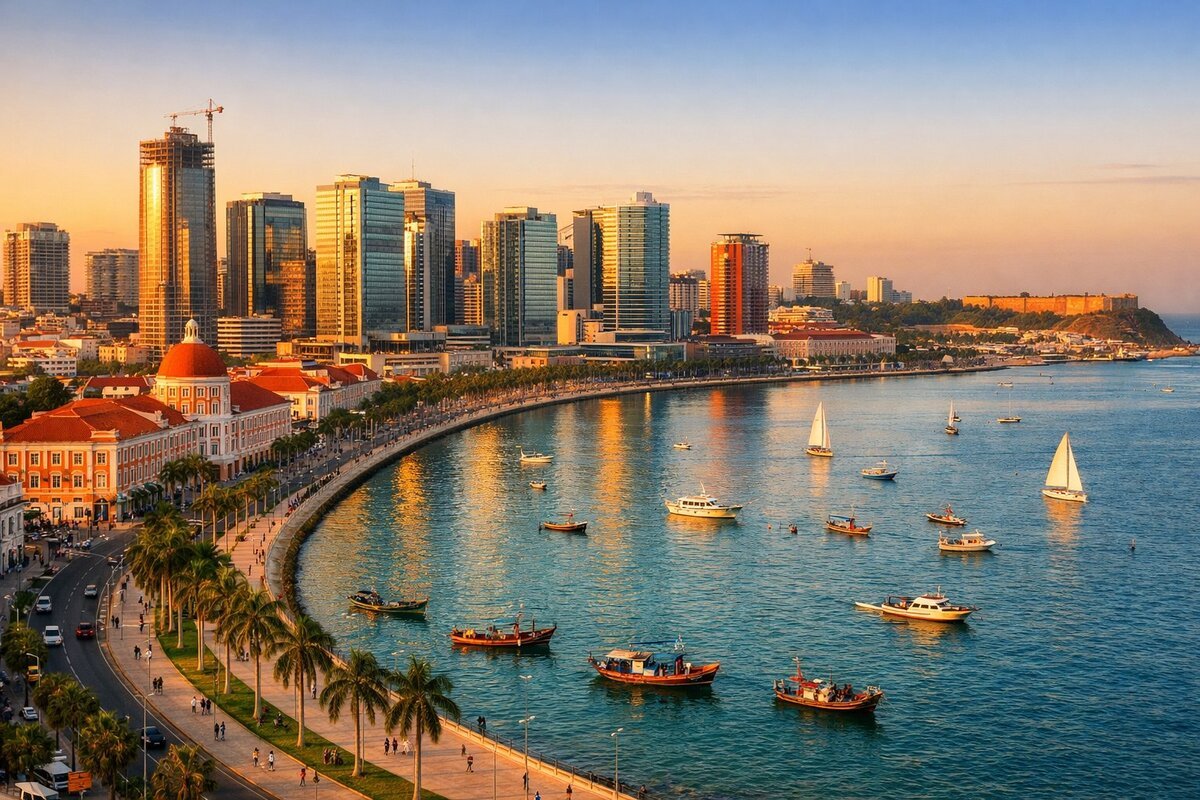
Angola's economy is still, unmistakably, an oil economy — the country is Africa's second-largest crude producer, and hydrocarbons have funded the bulk of state revenue since independence in 1975. That's been changing, gradually and deliberately, under President João Lourenço's privatization program (PROPRIV), launched after he took office in 2017 promising to unwind decades of state domination and endemic corruption in the economy his predecessor's family had come to symbolize.
For a foreign entrepreneur, Angola remains a genuinely difficult place to start a small business from scratch — bureaucracy, opaque procurement, and a banking system still rebuilding credibility make it a poor fit for casual investment. Where Angola gets interesting is at the other end of the scale: large-cap privatization, energy-sector partnerships, and infrastructure concessions, where the government is actively courting foreign capital on much more transparent terms than a decade ago.
02
📈 BODIVA & the Sonangol IPO
📈 BODIVA & the Sonangol IPO
02Chapter
AngolaCountry
2026Reviewed
Angola's stock exchange, BODIVA (Bolsa de Dívida e Valores de Angola), only began trading actual equities in 2022 — for its first eight years after founding in 2014, it handled government debt only. It's still tiny: roughly a dozen listed companies as of 2026, trading in kwanzas, with an equity segment that remains a rounding error next to its bond market. But the pipeline is genuinely significant: state telecom giant Unitel, banking groups BFA and BAI, and — the marquee event everyone in Luanda's finance sector is watching — a planned 30% IPO of Sonangol itself, the state oil company, timed loosely around its 2026 50th anniversary.
Sonangol remains the company that actually defines the Angolan economy: founded in 1976, it holds exclusive rights over oil and gas exploration, generates roughly $10-11 billion in annual revenue, and functions as much as a arm of state finance as a conventional oil major. Endiama, the state diamond company, plays a similar, smaller role in Angola's other major export.
03
🌾 Diversification Beyond Oil
🌾 Diversification Beyond Oil
03Chapter
AngolaCountry
2026Reviewed
Agriculture, fisheries, mining, logistics, manufacturing and digital services are the central diversification themes. The challenge is converting investment into formal jobs and opportunity beyond Luanda.
04
🚆 Lobito Corridor
🚆 Lobito Corridor
04Chapter
AngolaCountry
2026Reviewed
The Lobito rail-and-port corridor links the Atlantic with the Angolan interior and onward toward the DRC and Zambia. It can reduce freight time while supporting secondary cities and agricultural value chains.
05
🏦 Banking & Payments
🏦 Banking & Payments
05Chapter
AngolaCountry
2026Reviewed
Formal finance remains concentrated in cities. Mobile payments and digital banking are expanding, but cash and the Multicaixa network still matter. Businesses should plan for currency volatility and compliance requirements.
06
🤝 Practical Business Culture
🤝 Practical Business Culture
06Chapter
AngolaCountry
2026Reviewed
Relationships, introductions and clear authority matter. Meetings may move slowly before decisions accelerate. Use qualified local legal and tax advice, document commitments and leave time for administrative procedures.
Keep exploring
Read another chapter, send a correction or get the monthly English newsletter.
Share Your Photo
Been to Angola? Email your own photograph with the location and your preferred credit. Attach the photo in your email app.
Email your photoBack to top ↑