Wine, Spirits & Drinking Culture
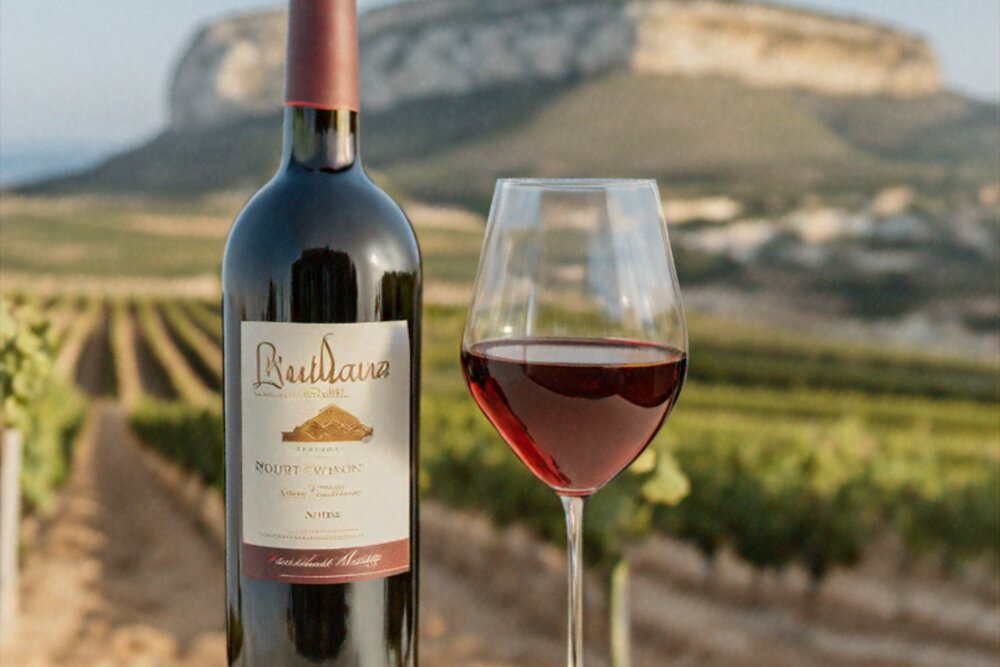
Algeria's wine story is one of the most dramatic rise-and-fall narratives in the history of viticulture. In the 1930s, this North African nation was the world's largest wine exporter — producing over 18 million hectolitres annually, more than the entire output of modern-day Australia. French colonial plantations carpeted the coastal hills from Oran to Constantine, and Algerian wine secretly constituted up to two-thirds of what was sold in France as "French wine," adding body and colour to the thin vintages of the Midi. At independence in 1962, Algeria possessed 400,000 hectares of vineyards — an area larger than all of Burgundy, Bordeaux, and Champagne combined.
Then came the great unravelling. The departure of French colons removed both expertise and export markets overnight. Boumediene's socialist nationalisation (1971) replaced skilled vignerons with state bureaucrats. Islamisation campaigns in the 1980s stigmatised alcohol production. The devastating civil war of the 1990s (la décennie noire) destroyed infrastructure and terrified remaining winemakers. By 2000, Algeria's vineyard area had collapsed to under 60,000 hectares — an 85% decline in four decades.
Yet the vine endures. Algeria still produces approximately 500,000 hectolitres annually, making it the largest wine producer in North Africa and the Arab world. The terroir remains extraordinary: limestone soils at 600–1,200 metres altitude in the Atlas Tell, Mediterranean climate tempered by Atlas winds, and vines averaging 40–60 years old — ancient by any standard. A quiet renaissance is underway, driven by a handful of determined producers who recognise that Algeria's wine heritage is too valuable to abandon.
🍇 Colonial Empire & Decline
The French planted Algeria's first commercial vineyards in the 1830s, but expansion accelerated dramatically after phylloxera devastated French vineyards in the 1870s. Desperate for wine, France turned to its colony across the Mediterranean. By 1930, Algeria had become a viticultural superpower — its wines shipped in bulk to Marseille, Sète, and Bordeaux, where they were blended anonymously into French labels. The seven VDQS appellations established in 1957 (Médéa, Mascara, Coteaux de Tlemcen, Dahra, Coteaux du Zaccar, Ain Bessem-Bouira, and Haut-Dahra) represented France's belated acknowledgment of Algerian wine quality.
Post-independence, the Soviet Union briefly became Algeria's largest wine customer — a surreal arrangement in which Marxist Algeria shipped Mediterranean wine to Communist Russia. When that trade collapsed in the late 1980s, Algeria's wine industry entered what many considered terminal decline.
🏷️ Key Wine Regions & Wines
🍷 Coteaux de Médéa
Red blend · Cinsault, Carignan, Alicante Bouschet · 800–1,200m altitude · KWS 84
The crown jewel of Algerian wine. Médéa's high-altitude vineyards (the highest in North Africa) produce wines of surprising elegance — cooler nights preserve acidity while intense Mediterranean sun builds concentration. The ONCV (national wine office) Médéa bottlings show dark berry fruit, garrigue herbs, and a mineral backbone that betrays the limestone terroir. These wines regularly outperform their modest price in international competitions.
🍷 Mascara
Full-bodied red · Carignan dominant · Oran province · KWS 82
The historic powerhouse of Algerian wine — Mascara reds were the backbone of blended "French" wine for a century. Carignan vines here average 50+ years old, producing wines of remarkable depth and warmth. Tannic, robust, sun-baked — think of it as North Africa's answer to Châteauneuf-du-Pape, though the comparison flatters the marketing more than the precision. At its best, genuinely impressive.
🥂 Coteaux de Tlemcen
Red & rosé · Cinsault, Grenache, Mourvèdre · Western Algeria · KWS 81
Tlemcen, the "Pearl of the Maghreb," produces both powerful reds and surprisingly delicate rosés. The Moroccan influence is palpable — both in the Andalusian architecture and in the generous, fruity wine style. Cinsault-based rosé from Tlemcen may be the most charming wine Algeria produces, all Mediterranean sunlight and dried rose petals.
🍷 Dahra & Haut-Dahra
Coastal red · Alicante Bouschet, Carignan · Chlef province · KWS 78
The coastal Dahra hills produce deeply coloured, full-throttle reds dominated by Alicante Bouschet — the teinturier grape prized for the intensity of its colour. These were the blending workhorses of colonial-era wine, and they retain a rustic, uncompromising character. Not subtle, but honest.
🍷 Ain Bessem-Bouira
Red blend · Cabernet Sauvignon, Pinot Noir · Kabylie foothills · KWS 80
The most "French" of Algeria's wine regions — Ain Bessem in the Kabylie foothills was planted with noble varieties rather than colonial workhorses. Cabernet and Pinot Noir at altitude produce structured, age-worthy reds with genuine complexity. The region's Berber culture adds a layer of terroir identity that sets it apart.
🥃 Boukha, Mahia & Spirits
Boukha is North Africa's most famous spirit — a fig eau-de-vie with roots in the Tunisian and Algerian Jewish communities, crystal clear with an intense, sweet fig aroma. Though production has largely moved to Tunisia and France following the Jewish exodus, it remains culturally significant. Mahia, distilled from dates or figs, serves a similar role. Both are traditionally served ice-cold as digestifs.
Locally produced beer — Tango and Heineken Algeria — dominates the (discreet) alcohol market. Algeria's relationship with alcohol is pragmatic rather than prohibitionist: production and sale are legal but socially restricted. Bars exist but are rarely visible from the street. Most drinking happens at home or in licensed restaurants.
🍵 Mint Tea — The Real National Drink
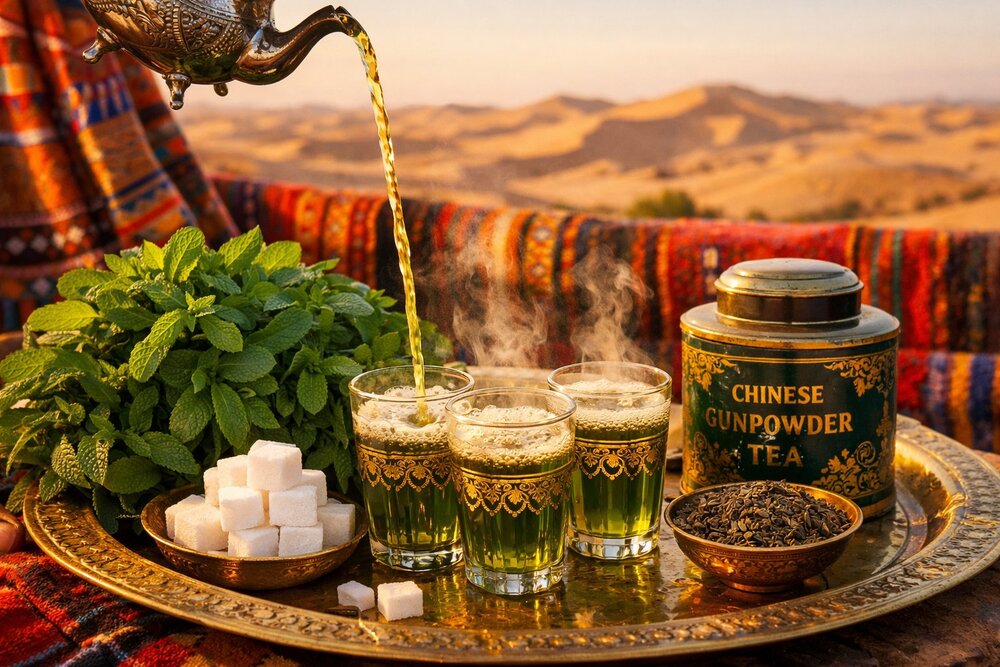
Atay (mint tea) is Algeria's true social lubricant — far more than wine or spirits ever were. Chinese gunpowder green tea brewed with enormous bunches of fresh spearmint and shocking quantities of sugar, served in small ornate glasses from a height that creates a satisfying froth. In the Saharan south, tea ceremony follows Tuareg tradition: a sequence of three glasses in some traditions — the first "bitter as life," the second "sweet as love," the third "gentle as death."
Qahwa (coffee) follows Turkish preparation in most of Algeria, though the Kabyle region has its own style with orange blossom water. Fresh fruit juices — particularly orange, pomegranate, and citron — are ubiquitous, and lben (buttermilk) remains the traditional accompaniment to couscous in rural areas.
🏆 Kaufmann Wine Score — Algeria
Rated on four criteria: Aroma (/25), Taste (/30), Finish (/20), Value (/25) = Total /100
| Wine | 🔴 Aroma | 🟡 Taste | 🟢 Finish | 🔵 Value | Total |
|---|---|---|---|---|---|
| 🍷 Coteaux de Médéa | 21 | 25 | 15 | 23 | 84 |
| 🍷 Mascara | 20 | 24 | 14 | 24 | 82 |
| 🥂 Coteaux de Tlemcen | 20 | 23 | 14 | 24 | 81 |
| 🍷 Ain Bessem-Bouira | 20 | 22 | 14 | 24 | 80 |
| 🍷 Dahra | 18 | 22 | 13 | 25 | 78 |