01
Algeria’s Seven World Heritage Sites
Algeria possesses seven UNESCO World Heritage Sites—an extraordinary collection representing 12,000 years of human history from prehistoric cave art to Ottoman urbanism.
North Africa · Sahara & Mediterranean
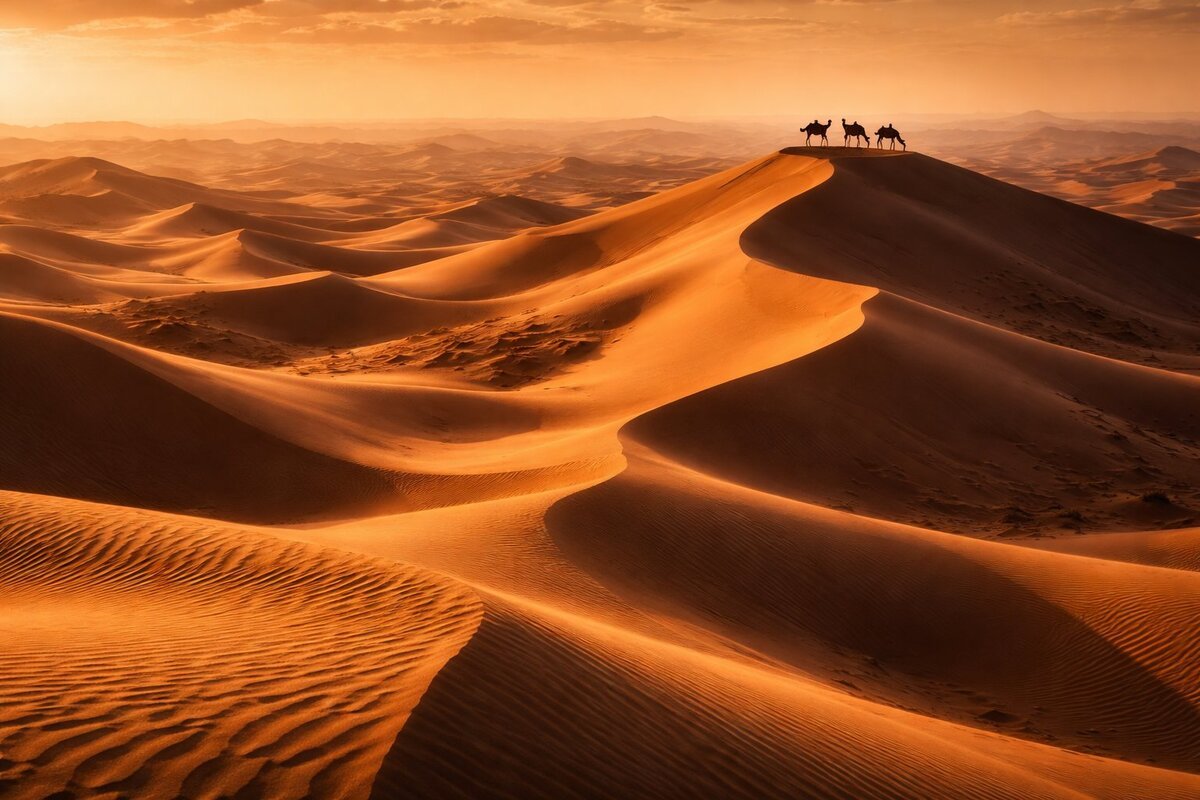
Algeria possesses seven UNESCO World Heritage Sites—an extraordinary collection representing 12,000 years of human history from prehistoric cave art to Ottoman urbanism.
Founded by Emperor Trajan around 100 CE as a colony for retired soldiers, Timgad is often called "the Pompeii of Africa." Unlike the Italian original, however, Timgad was never buried—its perfect grid plan and remarkable monuments have stood exposed to the Aurès Mountain air for nearly 2,000 years.
Why It Matters: Timgad offers perhaps the clearest example of Roman colonial town planning in existence. The original city was laid out in a perfect square, with streets crossing at right angles, colonnaded thoroughfares, and a forum at the center.
The Story: Timgad's 12,000 inhabitants enjoyed theaters, libraries (the large library ruins remain), public baths, and sophisticated water systems. An inscription on the forum reads "VENARI LAVARI LUDERE RIDERE HOC EST VIVERE"—"To hunt, to bathe, to play, to laugh, that is to live." The Arch of Trajan still stands at the city's entrance. Each July, the Timgad International Music Festival transforms these ancient stones into a spectacular concert venue.
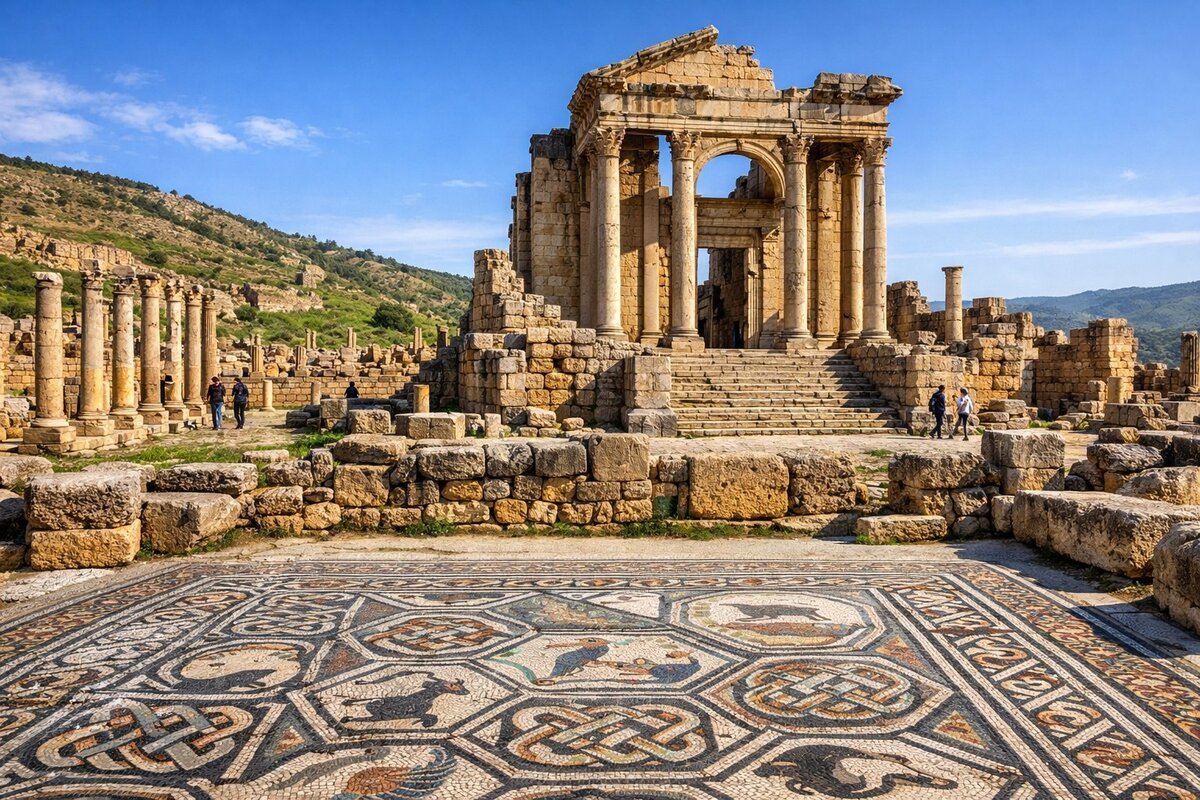
Roman mosaics still in situ, undisturbed for centuries.
If Timgad shows Roman planning at its most rigid, Djemila ("Beautiful" in Arabic) demonstrates how Romans adapted to challenging terrain. Perched at 900 meters in the mountains near Sétif, this city cascades down a ridge between two wadis.
Why It Matters: Djemila's architects brilliantly adapted the standard Roman urban formula to mountain topography, creating a city that flows with its landscape rather than fighting it. The museum contains one of the world's finest collections of Roman mosaics from a single site.
The Story: Originally called Cuicul, the city flourished from the 1st to 6th centuries CE. Two forums, a theater seating 3,000, elaborate baths, and houses with stunning mosaic floors testify to prosperity.
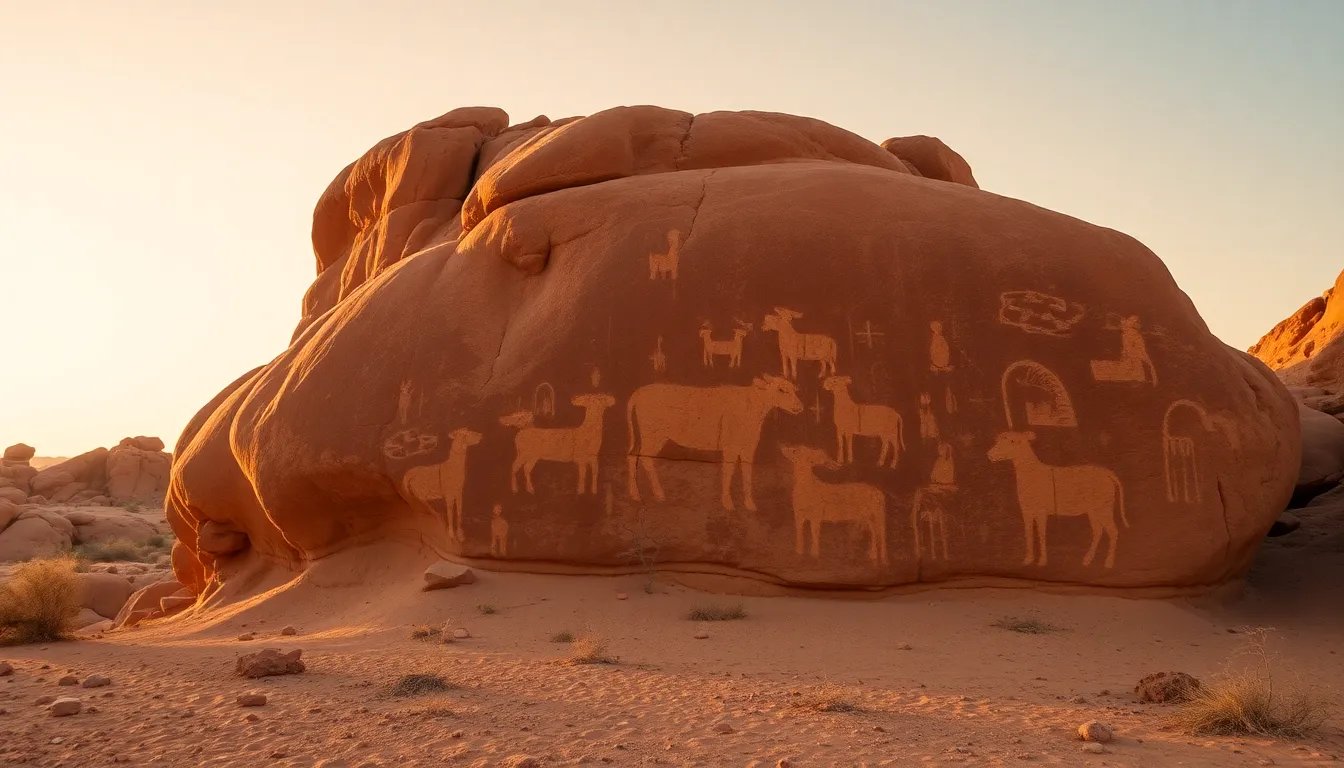
Prehistoric engravings dating back over 6,000 years.
In the remote southeast, where Algeria meets Libya and Niger, a sandstone plateau rises from the Sahara like a massive fortress. Eroded into bizarre towers, arches, and "forests of rock," Tassili n'Ajjer contains one of the world's most important collections of prehistoric rock art.
Why It Matters: Over 15,000 drawings and engravings document life in the "Green Sahara," when this now-barren landscape supported lakes, rivers, and abundant wildlife. The images span approximately 10,000 years, recording the gradual transformation from savanna to desert.
The Story: Early images show elephants, hippos, and crocodiles—animals requiring water now absent for millennia. Interpretations of individual images are often debated; guides’ symbolic explanations should be distinguished from archaeological evidence. Access requires multi-day expeditions from Djanet.
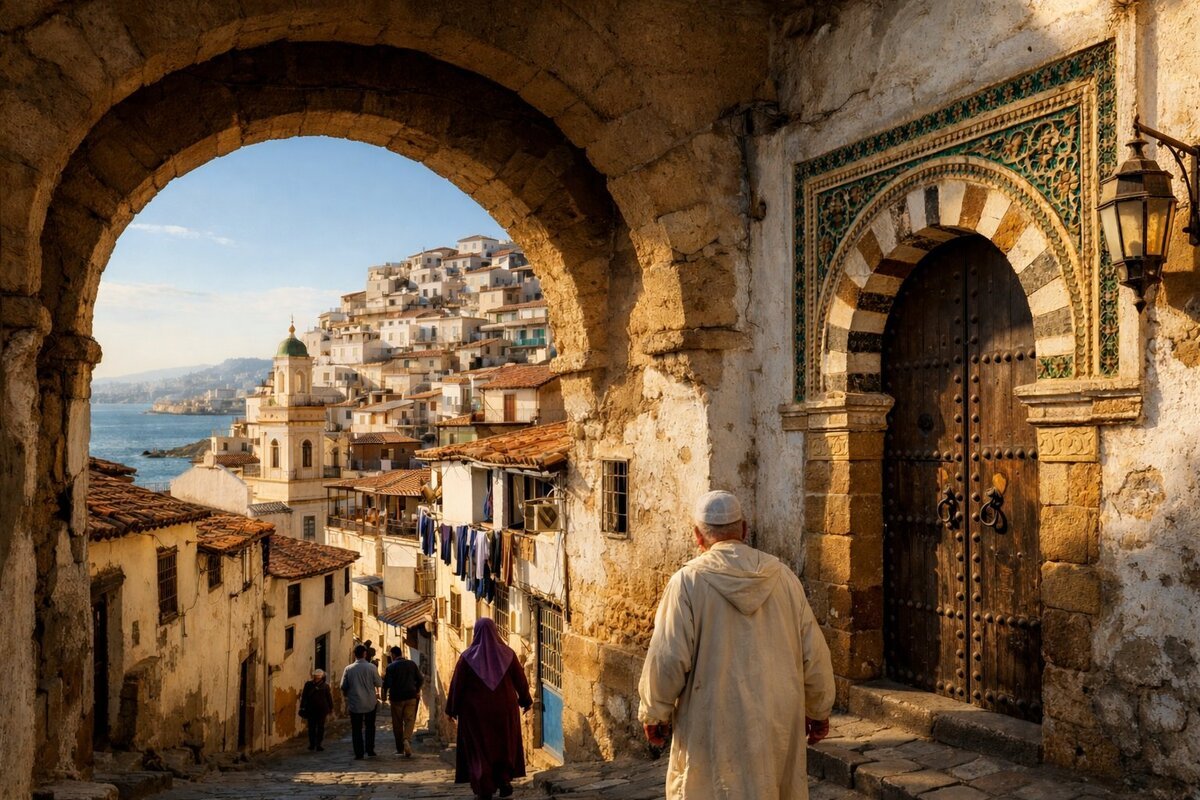
Ottoman-era alleys tumbling down to the Mediterranean.
The historic heart of Algiers, the Kasbah rises steeply from the harbor, its whitewashed buildings crowding labyrinthine alleys too narrow for cars, sometimes too narrow for two people to pass.
Why It Matters: The Kasbah represents a unique type of Mediterranean Islamic city—a medina adapted to extreme topography, creating an urban fabric of extraordinary density and complexity.
The Story: Ottoman palaces, hammams, mosques, and fountains hide within the maze of ordinary houses. Le Corbusier called it "a masterpiece of architecture and town planning."
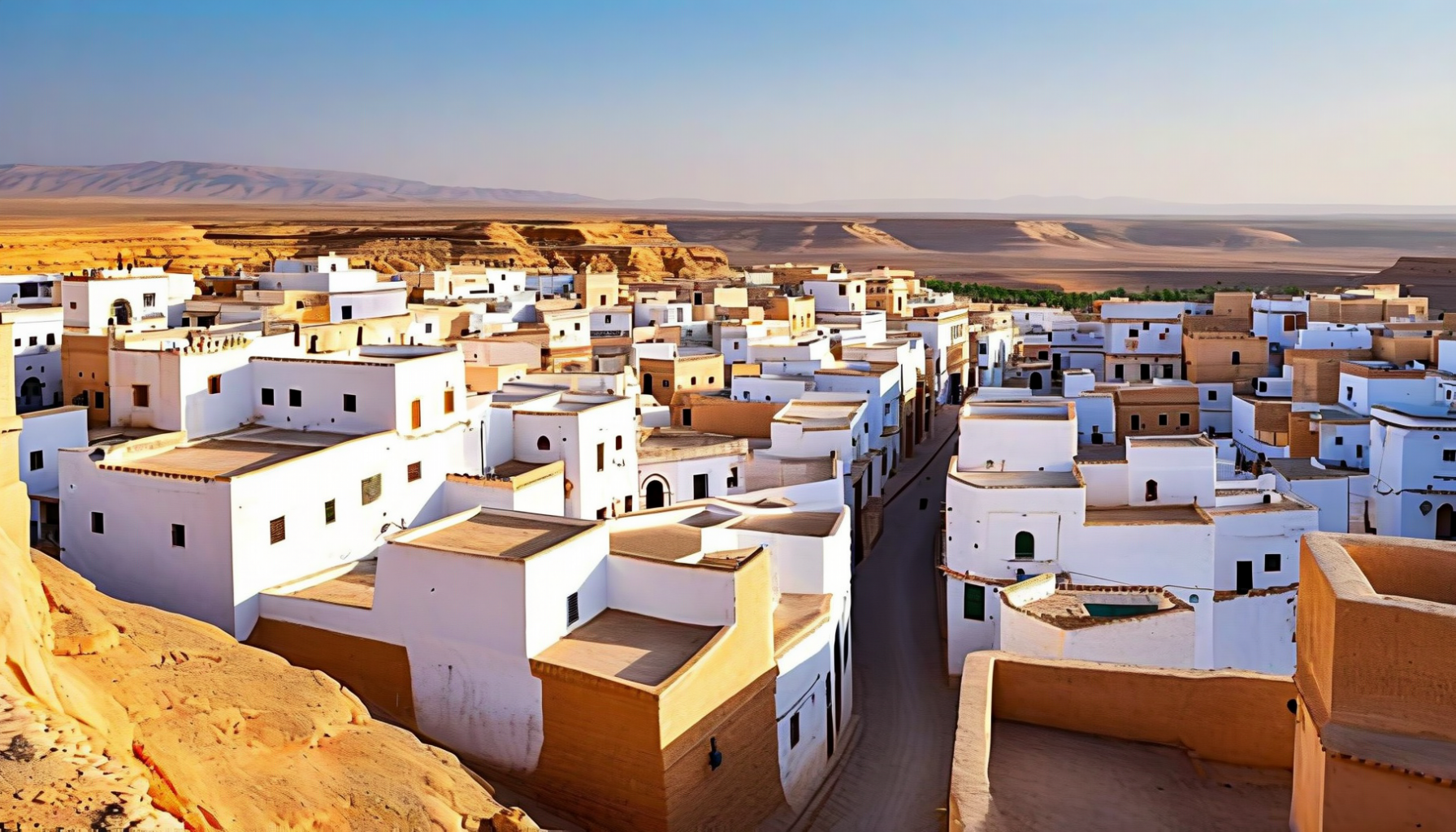
Fortified Mozabite architecture, still inhabited today.
Five historic Ibadite towns, developed from the 11th century, cluster in the M'Zab Valley—Ghardaïa, Melika, Beni Isguen, El Atteuf, and Bounoura—functioning as living museums of desert urbanism. Their architecture inspired Le Corbusier and remains virtually unchanged for a millennium.
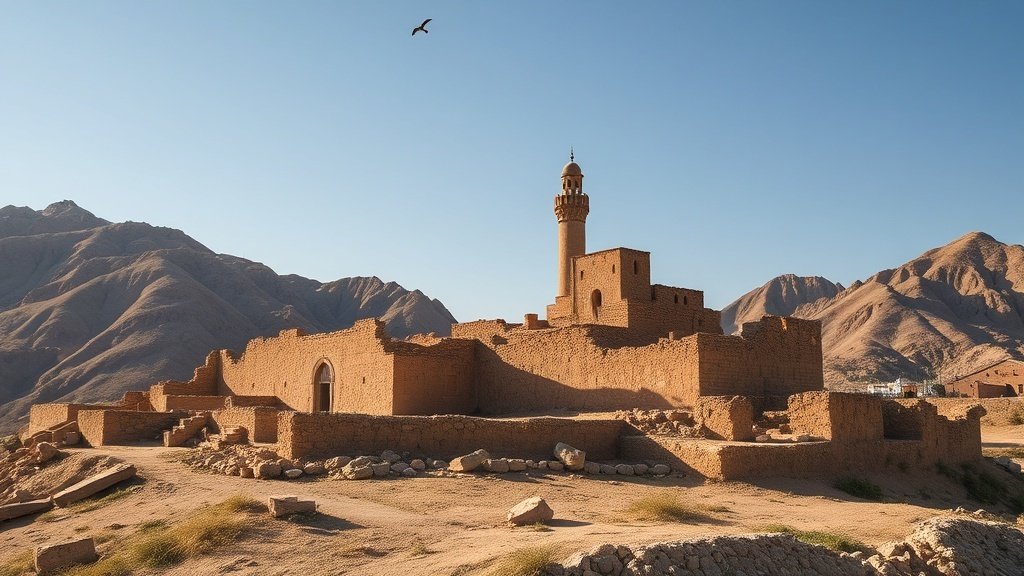
The ruined 11th-century capital of the Hammadid dynasty.
Ruins of the first Hammadid capital (1007-1152), perched at 1,000 meters in the Hodna Mountains. The minaret of the great mosque influenced North African architecture for centuries.
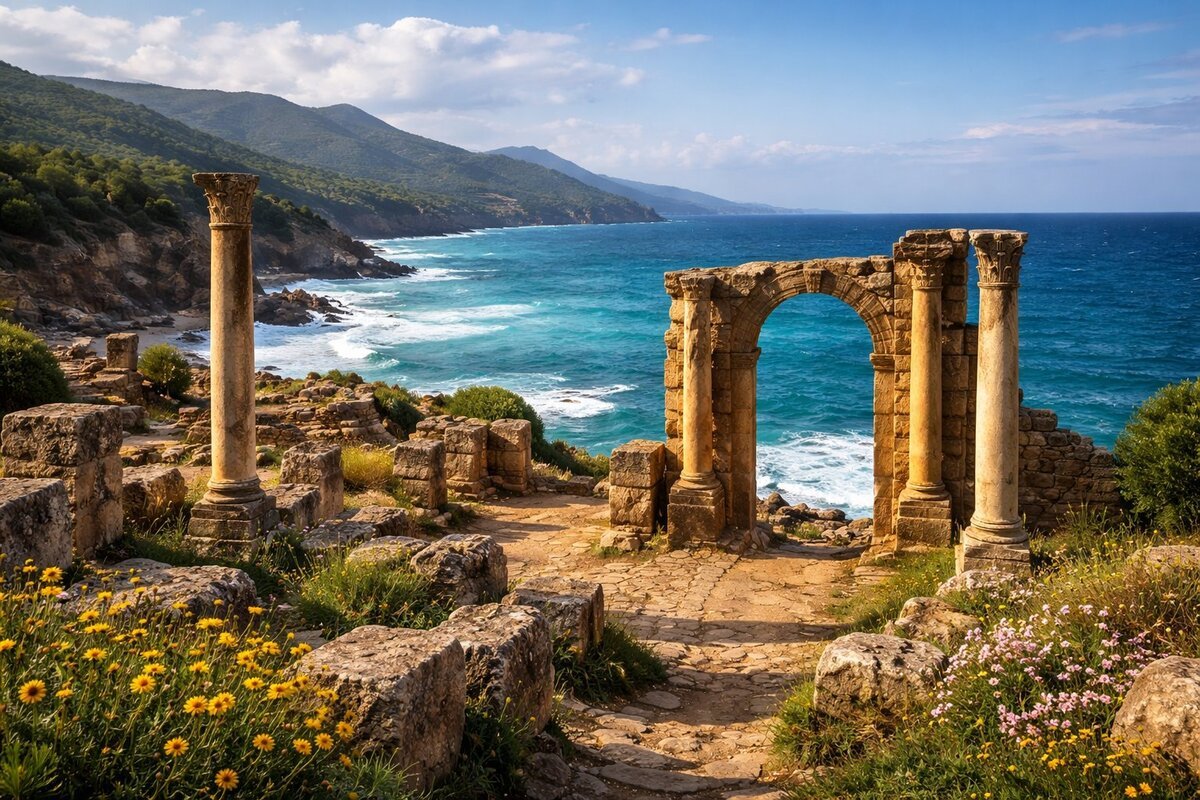
Roman and Punic ruins on the Mediterranean coastline.
Phoenician, Roman, and early Christian port city on the Mediterranean coast that inspired Albert Camus's essay "Nuptials at Tipasa." Roman ruins overlook the azure sea—one of Algeria's most romantic settings.
Algeria's seven sites split naturally into three geographic clusters, and trying to link them into one trip is the single biggest planning mistake first-time visitors make — the distances are Saharan-scale, not European.
The North Coast circuit (easiest, 3–4 days): Algiers' Kasbah, Tipasa (1 hour west of Algiers by car), and Djemila plus Timgad (both accessible from Constantine, a 1-hour flight or 6-hour drive from Algiers). This is the only cluster that works as a single, comfortable road trip.
The M'Zab Valley (moderate, 2–3 days from Algiers): Ghardaïa has direct flights from Algiers (roughly 1.5 hours) and can be combined with Al Qal'a of Beni Hammad only with real effort — the ruins near M’Sila require a separate long overland journey from Ghardaïa, and most visitors see Beni Hammad as a separate side trip from Algiers/Sétif instead.
Tassili n'Ajjer (its own expedition, 5+ days): reached only via flight to Djanet, then mandatory 4x4 travel with a licensed guide into the plateau — this cannot be bolted onto the other two clusters and should be budgeted as a standalone Saharan trip, ideally combined with the Hoggar region further southwest.
Realistic advice: pick one cluster per visit. Trying to complete all seven sites on a single two-week trip means several exhausting internal flights and very little time actually at each site.
Read another country, send a correction or support the project.