🌍 Kaufmann World Travel Factbook
SOUTHEAST ASIA · SOCIALIST REPUBLIC

Vietnam — Food & Drink

Vietnamese regional dishes, coffee, tea and beer: a guide to food, dining, ingredients and allergy-aware travel.

AI illustration of limestone islands and boats inspired by Hạ Long Bay
AI-generated project illustration
01

A regional kitchen, not one fixed menu

Vietnamese cooking often brings contrast to the table: warm broth and fresh herbs, grilled meat and pickled vegetables, a crisp wrapper and a soft filling. Fish sauce, rice, noodles and herbs recur, but the country's food cannot be summarized by a single balance of flavors. Region, household, season and cook all matter.

Phở is closely associated with the north and appears in many forms elsewhere. Beef and chicken versions are distinct choices; accompaniments vary between establishments and regions. Bún chả brings grilled pork, rice vermicelli, herbs and dipping sauce together in a familiar Hanoi meal. Bún bò Huế is associated with lemongrass and a different broth and noodle tradition.

Hội An's cao lầu uses rice-based noodles, not the wheat noodles stated in the old article. Stories about water, ash and local production are part of its identity, but a visitor should not turn one origin story into an absolute claim about every bowl. Mì Quảng offers another central Vietnamese combination of noodles, toppings, herbs and a relatively small amount of broth.

In the south, cơm tấm pairs broken rice with a range of accompaniments, often grilled pork. Hủ tiếu can be served as soup or with the liquid separately. Bánh xèo is a sizzling rice-flour pancake whose size and filling vary; pieces can be wrapped with greens and dipped. Bánh mì adapts the baguette into many Vietnamese sandwiches. Do not assume the bread is made with rice flour or is gluten-free.

Sources: Vietnam Tourism · Recipes. Checked: 2026-09-26.
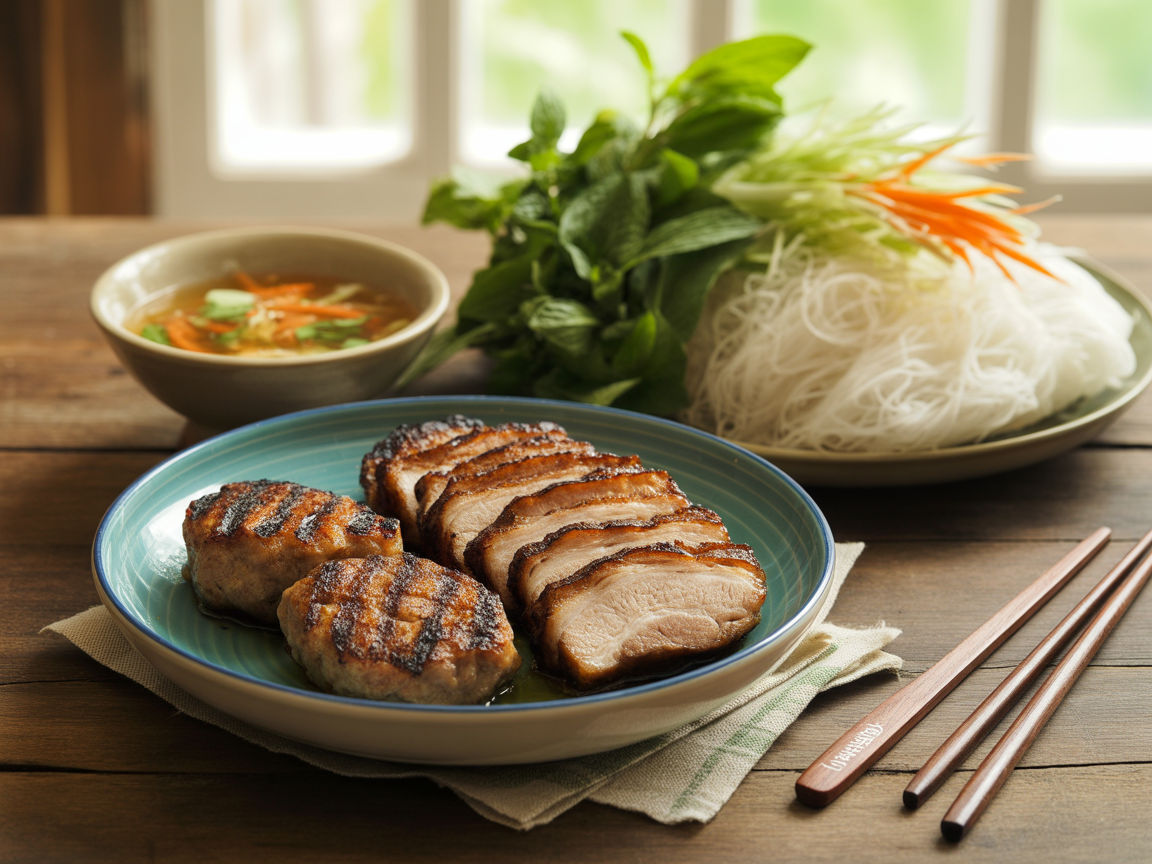
AI illustration of grilled pork, noodles and herbs for bún chả
AI illustration of grilled pork, noodles and herbs for bún chả. Project illustration, not a documentary photograph.
02

Dishes to recognize at the table

Phở bò: rice noodles and beef in broth, with preparation and garnish depending on the shop. If you need thoroughly cooked meat, ask specifically rather than assuming thin slices are fully cooked by hot broth alone. Phở gà uses chicken and has its own character.

Bánh mì: a bread roll with fillings that may include pâté, pork, egg, vegetables, herbs and sauces. It is a family of sandwiches, not a single recipe. Bún chả combines grilled pork with vermicelli, herbs and sauce; bánh cuốn consists of delicate steamed rice sheets, often with pork and wood-ear mushroom filling.

Gỏi cuốn are fresh rice-paper rolls, commonly containing herbs, vermicelli, pork or shrimp. The dipping sauce may contain peanuts, soy or fish ingredients. Cơm tấm, bánh xèo and bánh cuốn also vary in their accompaniments. A familiar dish name does not guarantee the absence of an allergen.

Meals are often assembled partly by the diner, using herbs, lime, chili or dipping sauce. Taste first and ask how the components are intended to be combined. Sharing dishes can be a sociable part of the meal; use the serving utensil when one is provided and follow your hosts' lead.

03

Coffee, tea, beer and the café stop

Coffee is a substantial part of Vietnam's agricultural and urban culture. Cà phê sữa đá combines coffee, condensed milk and ice; cà phê đen is black coffee, with sweetness worth clarifying when ordering. A phin filter introduces a slower rhythm than ordering a takeaway espresso. Contemporary cafés also work with different beans, roast styles and brewing methods.

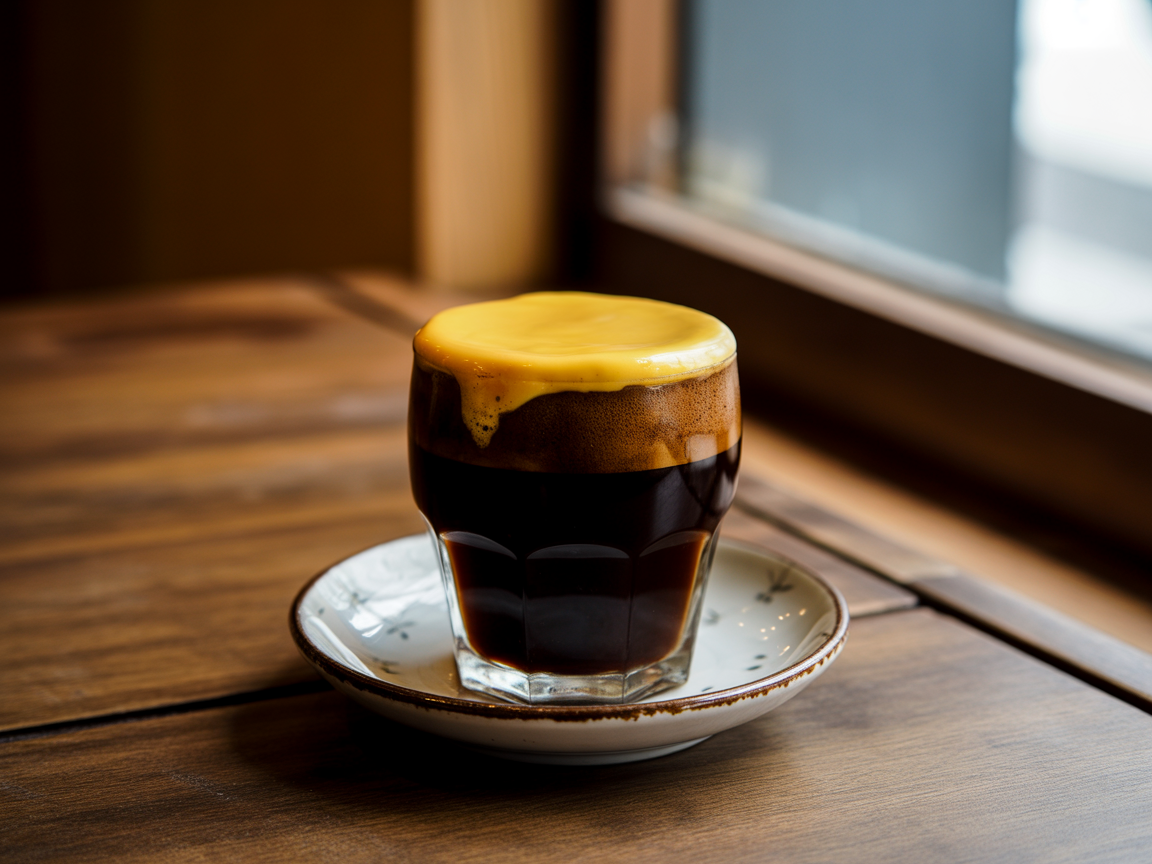
Hanoi's cà phê trứng adds a rich egg-based topping. It is a café specialty rather than an everyday substitute for every coffee drink, and its ingredients matter for egg or dairy allergies. Coconut-coffee drinks and salt-coffee styles offer other variations. Ask about the recipe instead of assuming a name guarantees a dairy-free or uncooked-egg-free drink.

Tea, fresh fruit drinks and sugarcane juice provide alternatives. Ice, water and equipment hygiene still matter even when a drink looks freshly made. Bia hơi is associated with casual draft-beer venues; bottled beer and craft brewing introduce other choices. Compare the serving size and stated price.

AI illustration of a glass of egg coffee
AI illustration of a glass of egg coffee. Project illustration, not a documentary photograph.
04

Eating out, allergies and practical care

A busy stall can be interesting, but a queue does not prove that food is safe. Look at preparation, storage, water and whether hot food is cooked and served hot. Use reliably treated or sealed drinking water, and take care with raw ingredients, unpasteurized products and food that has stood in heat.

Fish sauce, shrimp paste, peanuts, egg, dairy, wheat and soy may appear in sauces or fillings that are not obvious from a dish's name. Carry a clear Vietnamese allergy explanation, ask about shared equipment and do not accept uncertainty as reassurance when a reaction could be serious. Vegetarian-looking dishes may contain fish sauce or meat stock.

Agree a price before ordering dishes sold by weight, and confirm what a menu price covers. Wash or clean hands before eating. Seek medical help when symptoms warrant it; a travel article is not a prescription for antibiotics or a guarantee that a particular stall is safe.

Sources: FCDO · Health. Checked: 2026-09-26.