Tuvalu · Tuvalu mo te AtuaPolynesia · Central Pacific
FunafutiCapital atoll
10,643Total population · 2022–23 census
AUD · A$Currency · local coins also circulate
Tuvaluan · EnglishLanguages
01
Cuisine
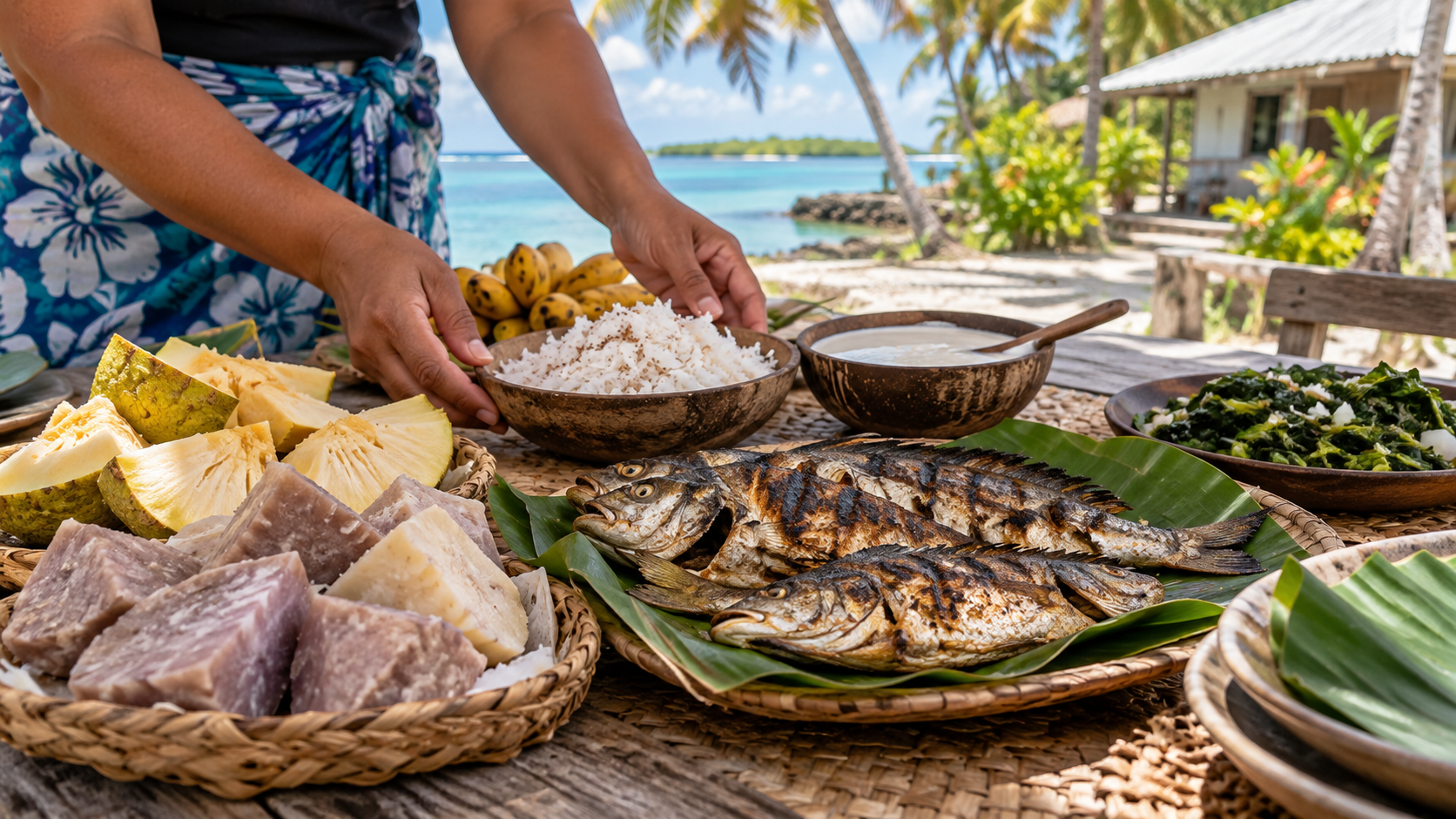
Tuvaluan food is simple and ocean-dependent. Fresh fish (tuna, skipjack, reef fish) is the primary protein, prepared grilled, in coconut cream, or eaten raw. Pulaka (giant swamp taro) is the traditional staple crop, grown in cultivated pits that reach the water table — its cultivation is increasingly threatened by saltwater intrusion. Coconut features in virtually everything: cream, oil, toddy (sweet or fermented palm sap), and copra. Breadfruit, bananas, and pandanus supplement the limited produce. Imported rice and canned goods have become dietary staples due to limited arable land.
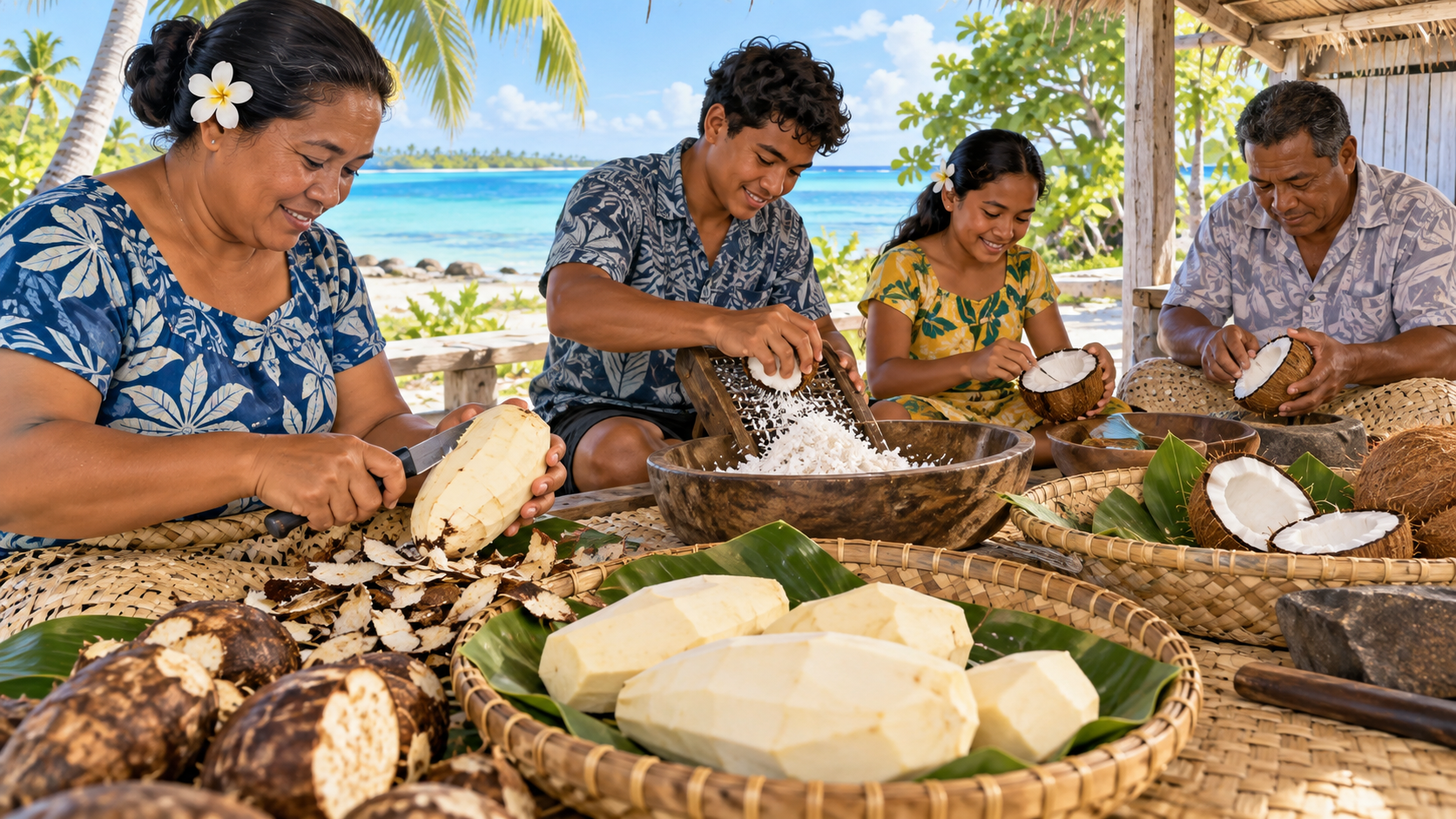
Pulaka, or giant swamp taro, connects Tuvaluan food with a carefully maintained agricultural landscape. Its pits are cultivated and enriched over generations. UNESCO’s description of the cultural landscape emphasizes this inherited knowledge, including the relationship between cultivation, water and island settlement. Saltwater intrusion and freshwater management are therefore questions of food security as well as physical geography.
Fekei is associated with the preparation of starchy staples and coconut, with recipes and names varying among islands and households. A cook’s account of ingredients and preparation offers a valuable introduction to these traditions. Ask hosts how a dish is prepared and what ingredients are used; the answer can reveal family practice and local variation more clearly than a generic recipe copied across travel websites.
For a home adaptation, use an established cooking method for the ingredient available to you and cook taro thoroughly. Avoid treating unfamiliar raw roots or fermented palm sap as an experiment. The richness of island cooking lies in the knowledge carried through households and communities. Supporting a local cook and listening to their account of a dish is often the best way to learn.
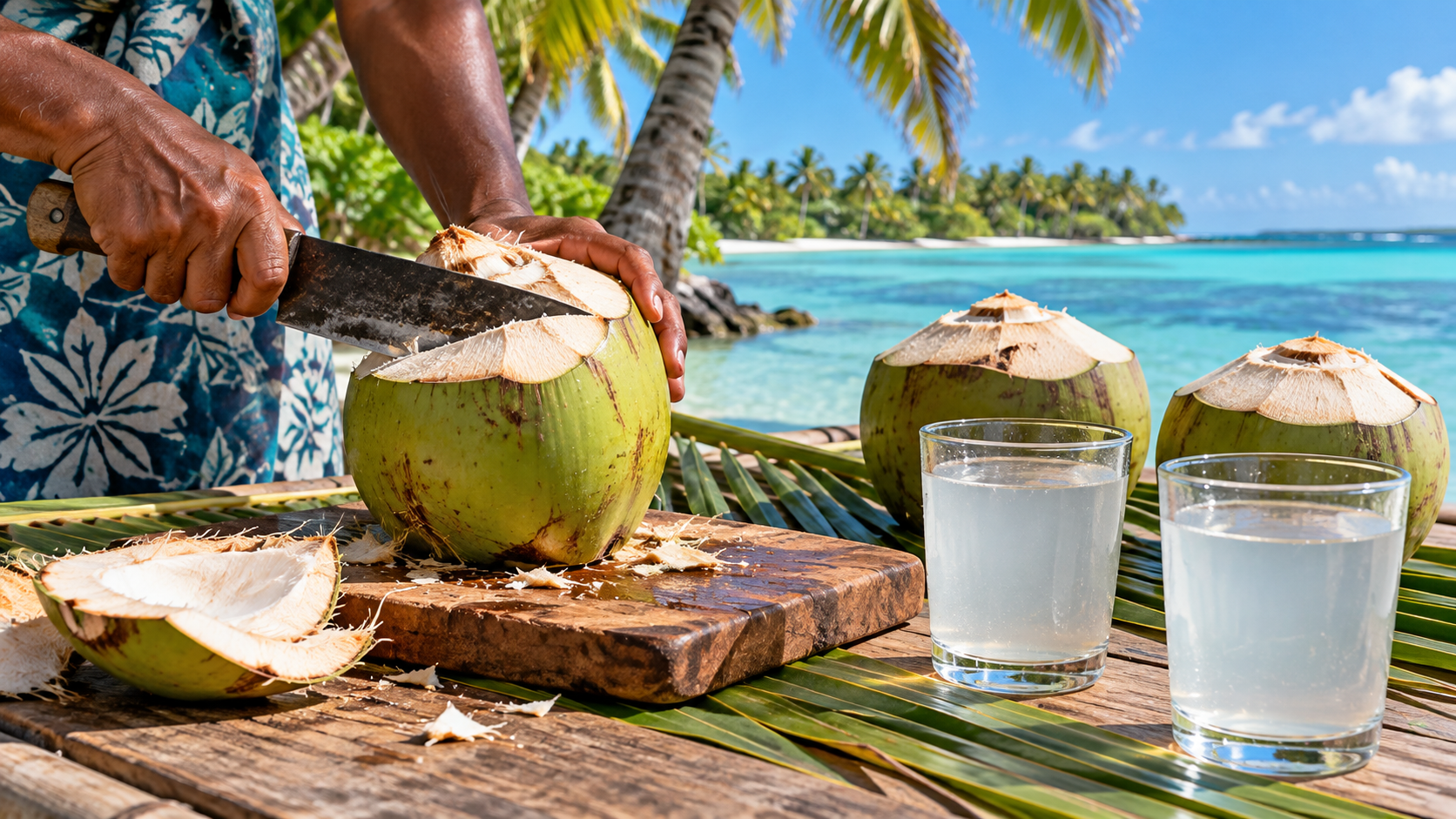
Young coconut water and coconut-based preparations belong to island food culture, while the sap collected from coconut flower stems can be consumed fresh or fermented. Fresh sap and fermented toddy are different products: flavor, alcohol content and storage conditions vary. Ask the person preparing the drink about its ingredients and condition before consuming it.
Imported soft drinks, beer, wine and spirits reflect Tuvalu’s connections with regional supply chains. Availability changes with shipments, so an imported beverage selection is best confirmed locally. Ask an accommodation provider what is available and whether a drink is locally prepared or imported.
For daily hydration, follow reliable advice about drinking water, use a refillable bottle where safe and distinguish sealed commercial drinks from water of uncertain quality. Alcohol is optional, and respectful participation in a gathering does not require drinking it. Sunday customs, household preferences and church-related events deserve consideration when choosing where and when to consume alcohol.
Tuvalu has a hot, humid tropical maritime climate with temperatures averaging 28-30°C year-round. The wet season (November-April) brings heavy rainfall and occasional cyclones. Rising sea levels, extreme tides and storms put pressure on low-lying settlements, freshwater supplies and coasts; their effects vary among islands and should not be reduced to one universal annual rate. Tuvalu has been among the most vocal nations in international climate negotiations, arguing that its very survival depends on global emissions reductions.
For a practical itinerary, treat marine weather and transport advice as local decisions. A calmer season is not a promise that every boat departure will operate, and a rainfall average does not describe an individual week. Plan protection from heat and strong sun, leave time for delays and respect any instructions issued by the operator or community.
Seasonal planning: wetter November–April, warm conditions year-round, and marine weather that can change transport. · Kaufmann.WTF editorial graphic
05
Resources
The following primary sources support the dated corrections and provide places to check current arrangements. Travel advice is nationality-specific; consult the appropriate authority for your own passport.