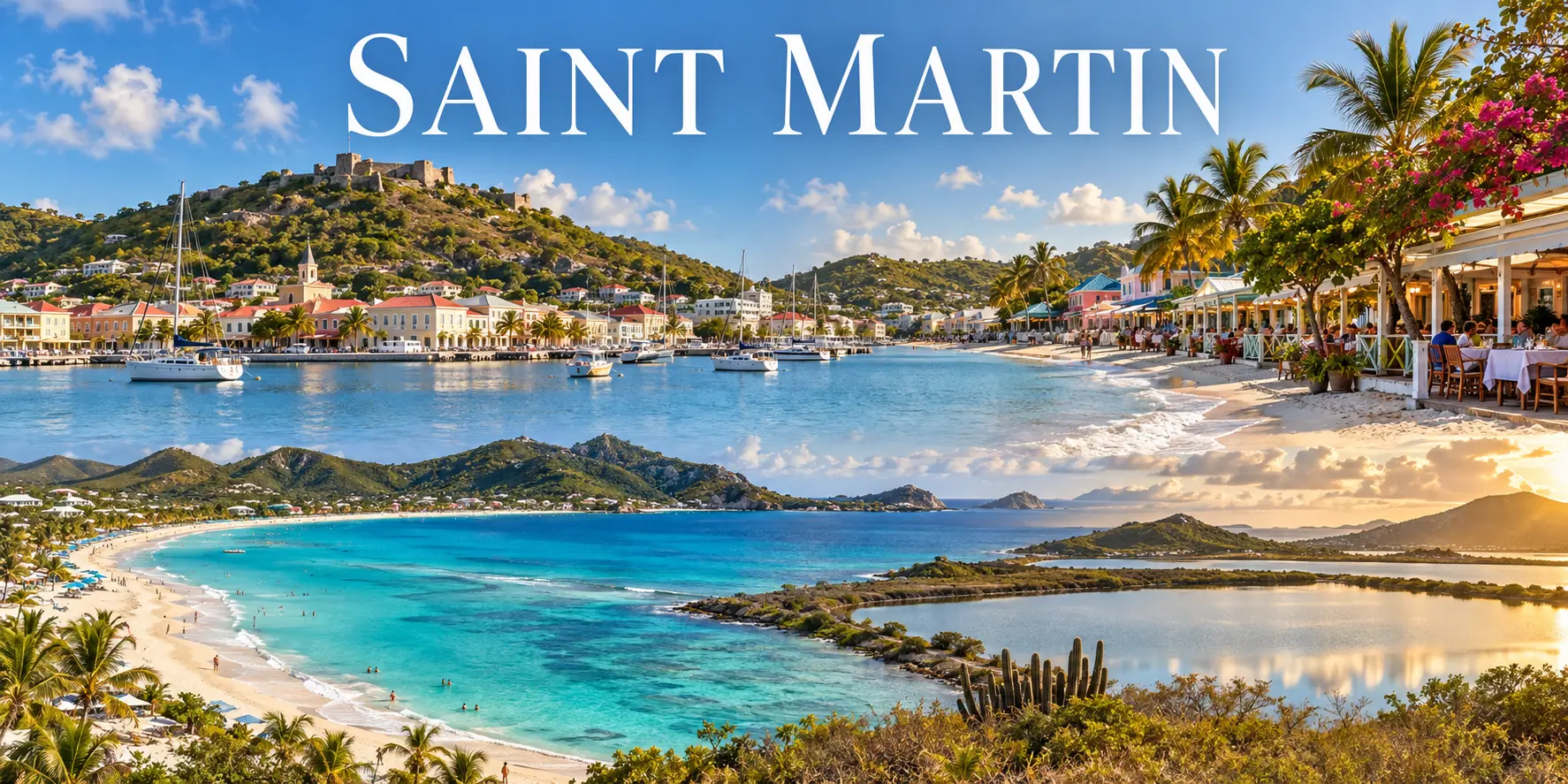
Saint-Martin is the northern, French part of one Caribbean island shared with Sint Maarten in the south. It is a French overseas collectivity, an outermost region of the European Union, and a place where French administration, English-speaking island life and wider Caribbean culture meet. Marigot is the capital; Grand Case, Orient Bay, Cul-de-Sac and Quartier-d’Orléans give the small territory several distinct centres rather than one resort strip.
🏷️ Name & identity
Use the spelling carefully: Saint-Martin usually means the French collectivity, while Sint Maarten is the autonomous country within the Kingdom of the Netherlands on the southern side. The island’s open internal boundary is socially ordinary but legally important. Entry, insurance, mobile roaming and rental-car conditions can change when a journey crosses that line.
🗺️ Geography & landscape
The French territory covers roughly 53 square kilometres of volcanic hills, shallow bays, salt ponds, dry forest and low coastal wetlands. Pic Paradis is the island’s high point. The Atlantic-facing east is breezier and rougher; the Caribbean-facing west is often calmer. Limited land and steep relief concentrate housing and traffic along a narrow road network.
📜 History
Indigenous Caribbean communities lived on the island long before European rule. France and the Dutch Republic formalised a division in 1648 through the Treaty of Concordia, though control and boundaries shifted repeatedly. Slavery was abolished on the French side in 1848. Saint-Martin separated administratively from Guadeloupe in 2007 and became a French overseas collectivity under Article 74 of the Constitution.
👥 People, languages & culture
French is the official language, yet English is widely used in daily life, tourism and commerce; Creole varieties, Spanish and Haitian Creole are also heard. This multilingual reality is not a decorative detail but part of how families, schools, workplaces and the two sides of the island connect. Courtesy matters: greet before making a request, dress beyond swimwear away from beaches and ask before photographing people.
🏘️ Marigot & Fort Louis
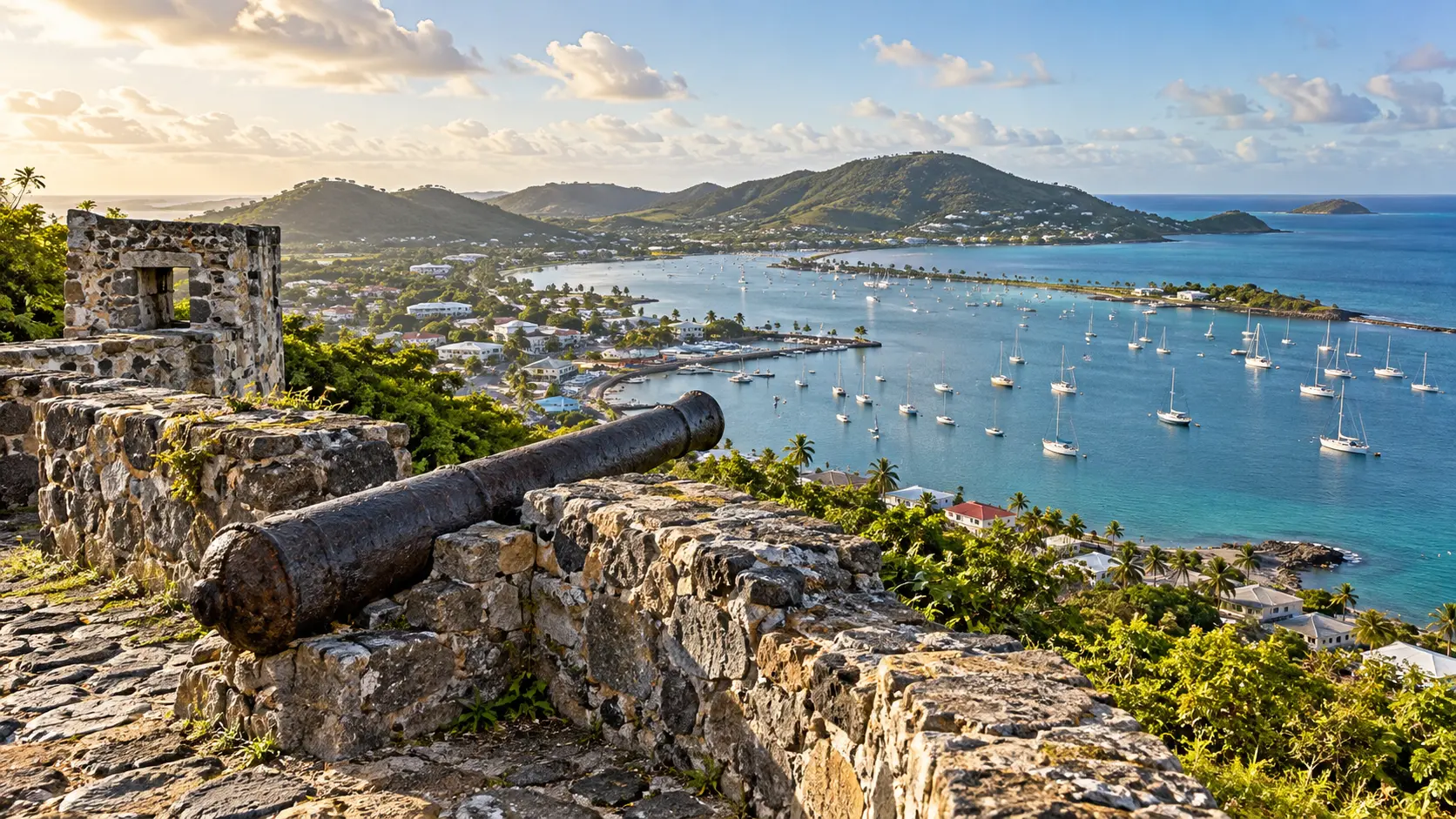
Marigot combines the market, ferry terminal, administrative buildings and a waterfront facing Anguilla. The climb to Fort Louis gives the clearest reading of the bay and its defensive geography. The fort is a historic ruin rather than a staged attraction: take water, use secure footwear and avoid exposed paths during heavy rain or strong heat.
🍽️ Grand Case & the table
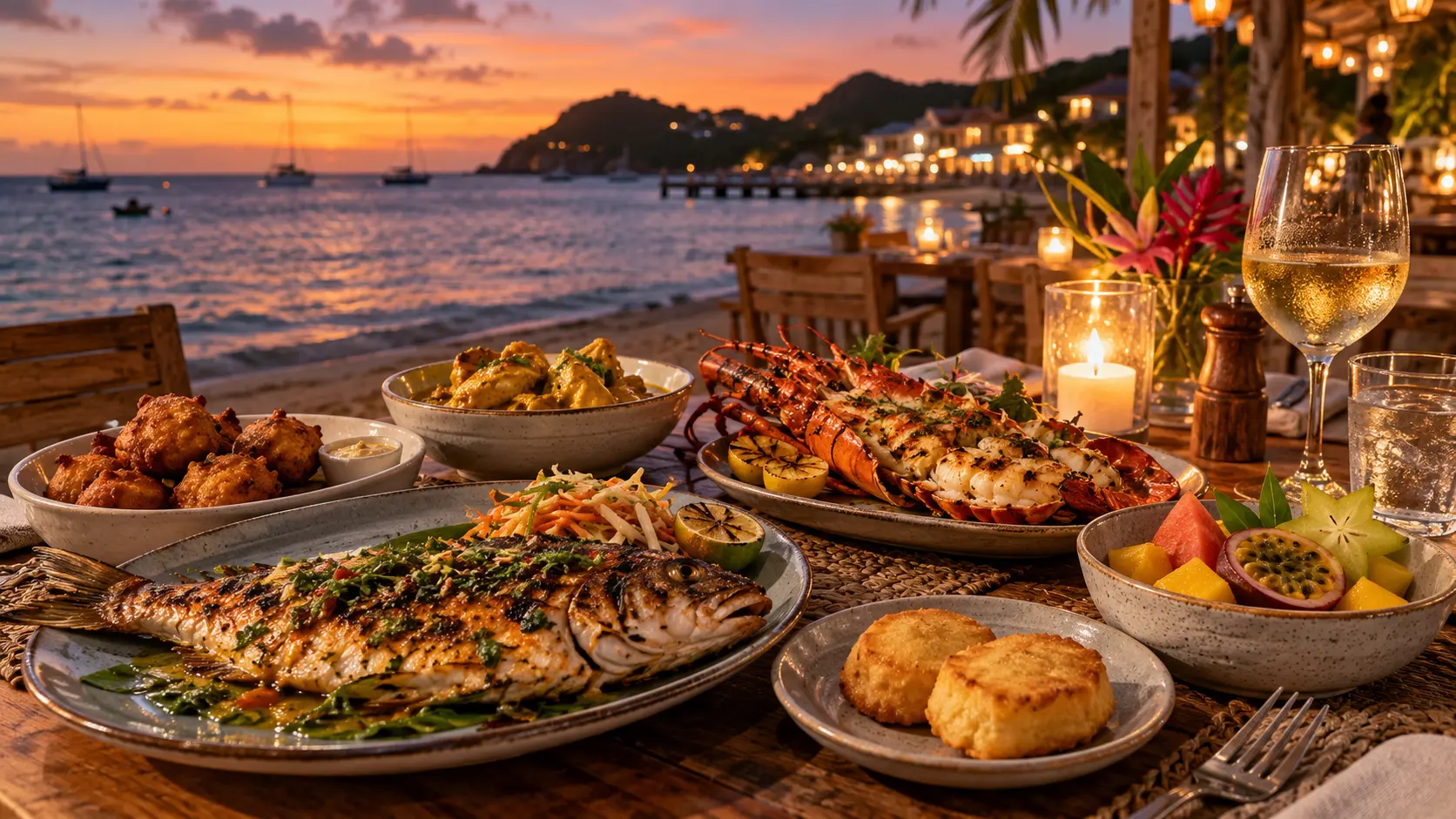
Grand Case is the island’s strongest culinary address, ranging from beachside lolos to French-Caribbean restaurants. Expect grilled fish, lobster in season, accras, colombo, Johnny cakes, local sauces and metropolitan French technique. Ask prices before ordering seafood by weight, confirm whether service is included and reserve ahead in the busiest winter weeks.
🏖️ Beaches & coastal etiquette
Orient Bay is broad and active; Friar’s Bay is more sheltered; Happy Bay requires a short walk; Grand Case links swimming with restaurants; Anse Marcel feels enclosed by hills. Conditions can change quickly. Respect red flags, currents, protected areas and private access rules, never leave valuables visible in a parked car, and keep distance from nesting birds and turtles.
🌿 Nature reserve, ponds & reefs
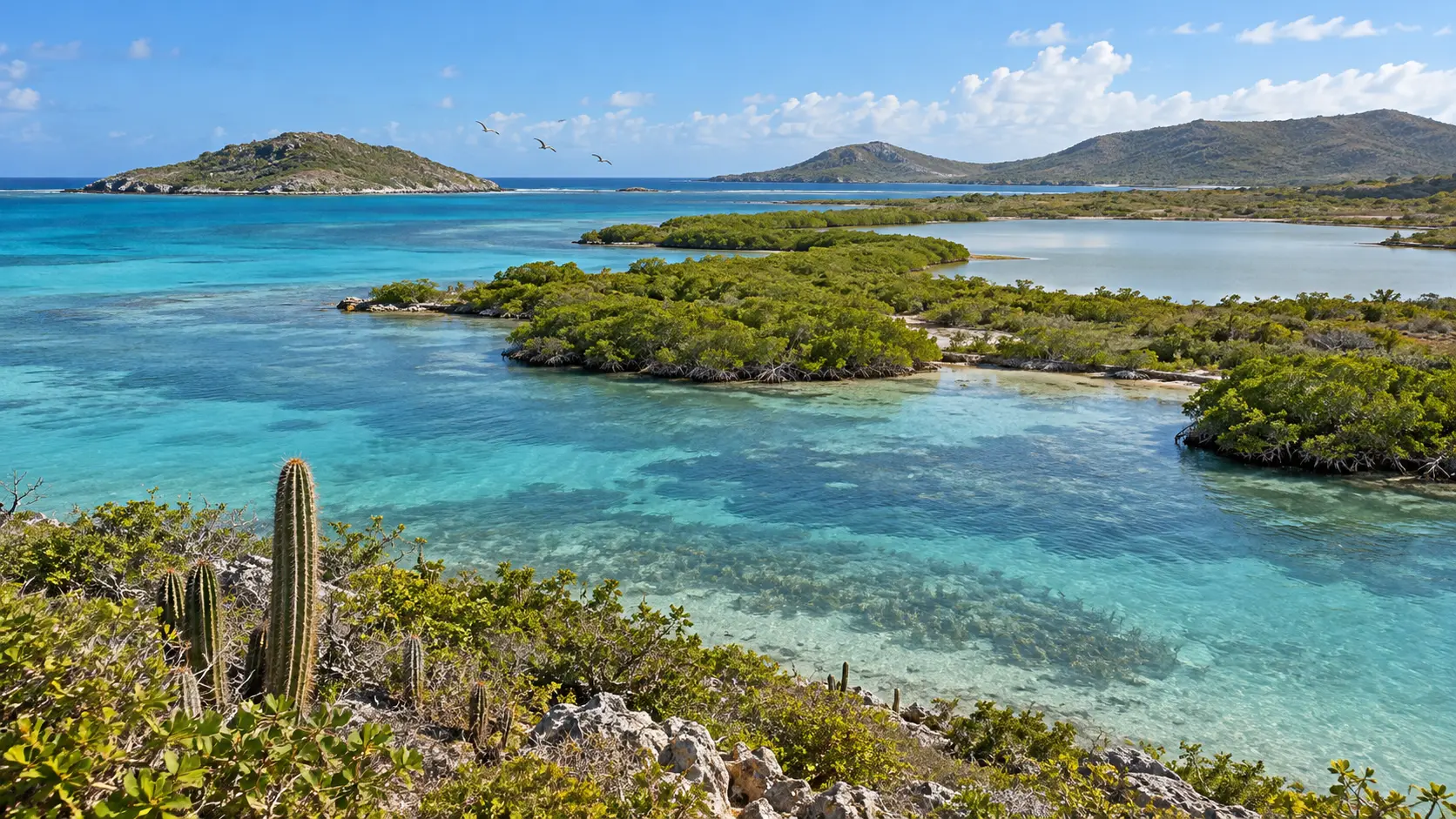
The Réserve Naturelle protects marine and coastal habitats around the north-east, including islets, mangroves, seagrass and dry coastal vegetation. Choose operators that use moorings rather than anchors, never stand on coral and do not feed wildlife. Salt ponds are working ecological infrastructure: they buffer floods, shelter birds and hold memory of the island’s former salt economy.
🌦️ Climate & hurricane season
The dry, breezier season from December to April is popular; May and June are warmer transition months; late summer and autumn bring higher humidity and storm risk. The official Atlantic hurricane season runs from 1 June to 30 November. Seasonal forecasts cannot predict an island impact: monitor the Collectivité and Préfecture, understand shelter instructions and keep flexible bookings.
✈️ Arrival & getting around
Grand Case–Espérance airport handles regional links on the French side. Most long-haul visitors arrive at Princess Juliana International Airport on Dutch Sint Maarten, which means crossing a different jurisdiction before reaching Saint-Martin. Carry a passport for that route, verify entry rules for every side visited and allow extra time for traffic. Driving is on the right; buses are informal and taxis can be expensive.
📋 Practical information
The euro is the official currency on the French side; US dollars and cards are widely accepted but conversion rates vary. Electricity is generally 220 V with French Type E sockets. Emergency numbers are 112 (European emergency), 15 (medical), 17 (police) and 18 (fire). The legal population in force on 1 January 2026 is 31,160, based on INSEE’s 2023 reference population.
Status
French overseas collectivity; EU outermost region
Capital
Marigot
Area
about 53 km²
Population
31,160 · legal population effective 1 Jan 2026
Official language
French; English widely spoken
Currency
Euro (EUR)
Driving
Right
Power
220 V · Type E
Hurricane season
1 June–30 November
Emergency
112 · medical 15 · police 17 · fire 18
🏛️ Heritage without a UNESCO label
As of 8 October 2026, Saint-Martin has no property inscribed on the UNESCO World Heritage List. That absence does not make its heritage empty: Fort Louis, archaeological layers, salt ponds, traditional neighbourhoods and the living food culture require care. Do not describe a place as UNESCO-listed unless UNESCO’s own register confirms it.
♻️ Responsible travel
Fresh water, waste capacity, reefs and roads are finite on a small island. Refill where accommodation confirms safe water, refuse single-use plastics, choose reef-safe practices, follow waste instructions and favour locally owned guides and kitchens. After major storms, check what is genuinely open rather than treating damaged neighbourhoods as spectacle.
📸 Visual notebook
The three scenes below are commissioned editorial illustrations. They evoke Fort Louis, Grand Case dining and the protected north-east coast; they are not evidence of current conditions at a precise address.
Saint-Martin is most honest when seen as more than half an island. Its boundary is open enough to disappear during an afternoon drive, yet real enough to shape law, language and opportunity. The reward comes from slowing down: reading the ponds as history, the market as a meeting place and the table as a conversation between France and the Caribbean. — Radim Kaufmann, 2026