🍷 Wine & Mint Tea Culture
Morocco has produced wine since Roman and Phoenician times, and — as a majority-Muslim country with a legal, longstanding wine industry — occupies an unusual middle ground in the region: alcohol is available and consumed, mostly by locals discreetly and by tourists openly, but Morocco is not a "drinking culture" in the way Spain or France just across the water are. The country's best-known modern producer, Les Celliers de Meknès, farms vineyards around Meknes and the Zerhoune region under labels including Château Roslane; other estates like Domaine de la Zouina, near the Roman ruins of Volubilis, and Thalvin (Ksar Bahia) round out a genuinely respectable, French-consulted modern wine scene most visitors never expect to find.
Far more central to daily Moroccan life is atay — gunpowder green tea steeped with fresh mint and a generous amount of sugar, poured from height into small glasses to build a foamy head, offered as a matter of course in homes, shops, and carpet negotiations alike. Declining it outright can read as brusque; even a small, symbolic sip is the polite move.
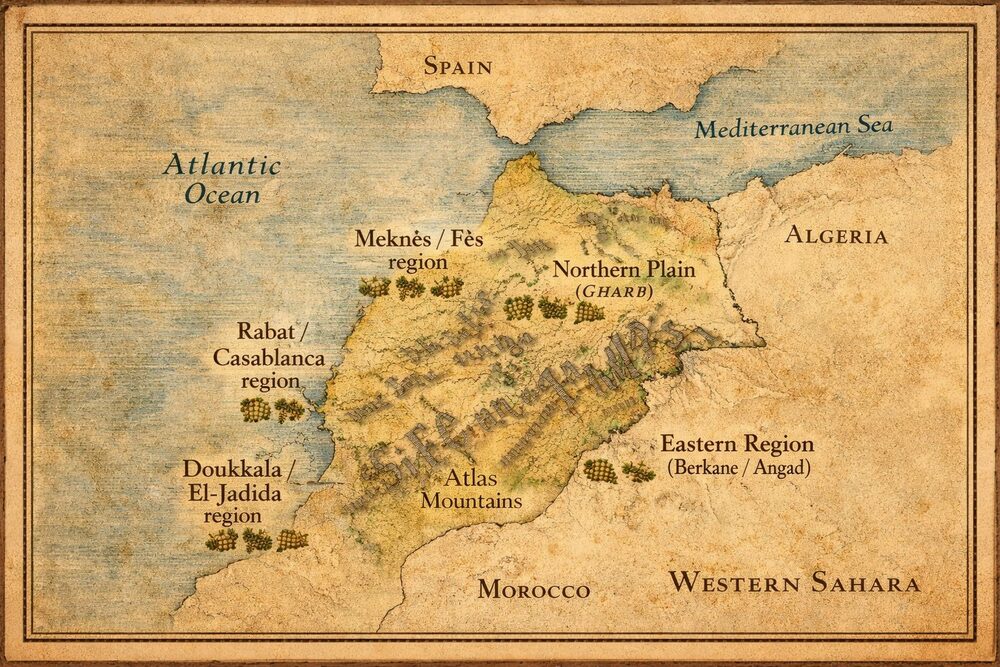
Morocco's Quiet Wine Country
Vineyards around Meknes and the Zerhoune hills, a legacy of Roman-era winemaking still quietly continued today
