🍽️ Cuisine
Moroccan cuisine ranks among the most refined and internationally celebrated in Africa, built on slow-cooked spice work rather than raw heat. The tagine — both the conical clay cooking vessel and the stew cooked inside it — is the everyday centerpiece: meat or vegetables, preserved lemon, olives, and a spice blend that might include cumin, ginger, saffron, and cinnamon, simmered until the sauce reduces to a thick, fragrant gravy. Couscous, traditionally served on Fridays, is steamed rather than boiled, a labor-intensive technique that separates a good version from a great one.
Pastilla (b'stilla) — a sweet-savory pigeon or chicken pie wrapped in warqa pastry and dusted with cinnamon and sugar — exemplifies the Andalusian influence on Fassi (Fes-style) cooking, historically the country's most refined culinary tradition. Street food runs from Marrakech's evening food stalls (snail soup, grilled kefta, harira soup to break the day's fast during Ramadan) to msemen (flaky square flatbread) and endless variations on olives, preserved lemons, and argan oil, a Moroccan specialty pressed from the nut of a tree that grows almost nowhere else on Earth.
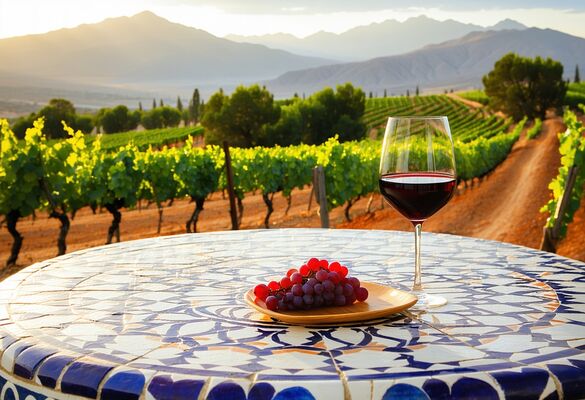
A Moroccan Table
Tagine, mint tea poured from a height, and the unhurried rhythm of a Moroccan meal
