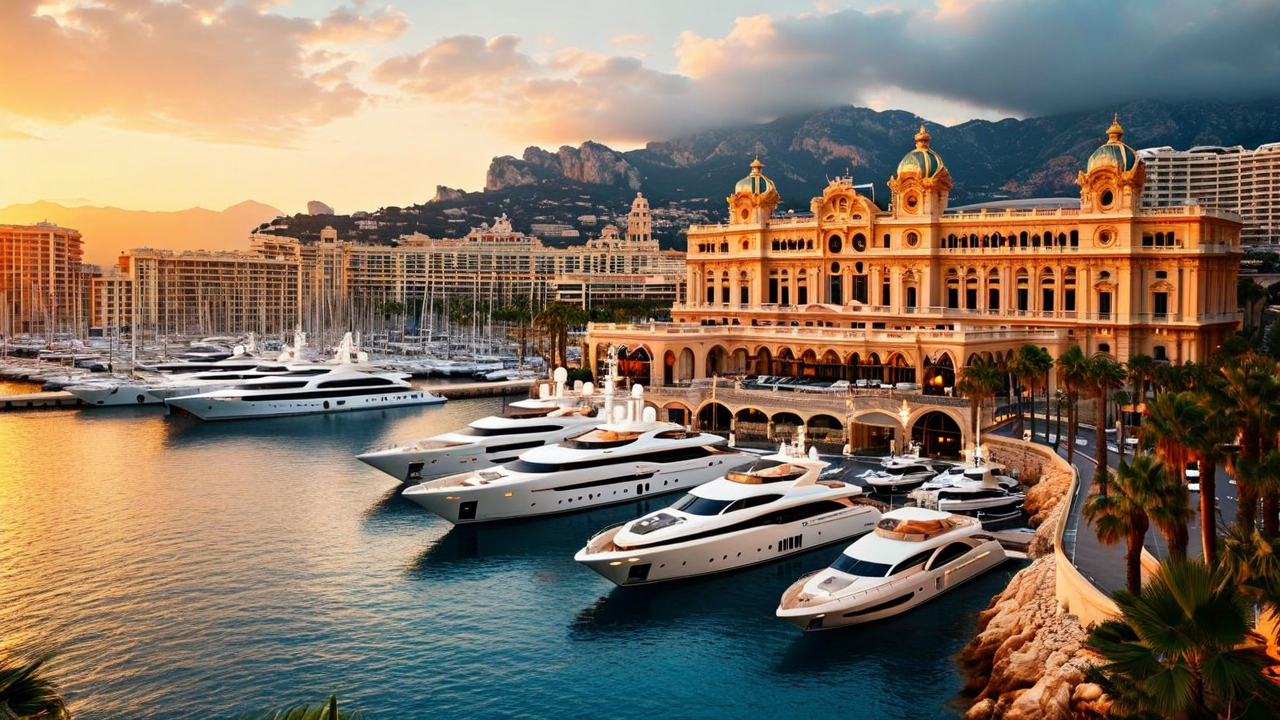


🇲🇨 Monaco at a Glance
🌍 Overview — The Country You Can Walk Across
Monaco is 2.084 km². That is smaller than the historic centre of Prague, smaller than most airports, and roughly the size of New York's Central Park. It is the second-smallest sovereign state on earth after the Vatican, the most densely populated, and the only country where you can stand at one border and see the other.
The 2025 census counted 38,857 residents from 144 nationalities. Of those, 9,333 are Monegasque citizens — 24% of the people living in their own country. That single number explains more about Monaco than the casino does.
Where it is
On the French Riviera, wedged between the Mediterranean and the Maritime Alps, surrounded on all three land sides by the French department of Alpes-Maritimes — the communes of Cap-d'Ail, Beausoleil, La Turbie and Roquebrune-Cap-Martin. The Italian border is about 15 km east; Nice is 20 km west.
How big, really
2.084 km², about 3.83 km of coastline, and a maximum width of roughly 1.7 km. The highest point is the Chemin des Révoires at 164.4 m, on the slope of Mont Agel — a pavement, not a summit. You can walk the length of the country in under an hour, but you will climb a great deal doing it.
Who lives there
38,857 at the 2025 census. Monegasques (9,333) are the largest single group at 24%, followed by the French (8,270) and Italians (7,559). Nobody has a majority. The working population is far larger than the resident one — around 55,000 people commute in from France and Italy every morning.
How it is governed
A constitutional monarchy under the 1962 constitution. Prince Albert II has reigned since 2005. Day-to-day government is run by a Minister of State — Christophe Mirmand since July 2025 — with a 24-seat elected National Council. Catholicism is the state religion; freedom of worship is constitutionally guaranteed.
The money
Monaco uses the euro by agreement with the EU and mints its own coins, but it is not an EU member. GDP per head is around $315,000 — the highest of any state — though that figure is distorted by the enormous commuter workforce counted in output but not in population.
2026 in one line
Monaco chairs the Committee of Ministers of the Council of Europe from 15 May to 10 November 2026, the first time since it joined in 2004; it is still on the FATF grey list but has completed its action plan; the Mareterra district opened in December 2024; and Kimi Antonelli won the Grand Prix on 7 June.
🏷️ The Name, the Language and the Word "Monegasque"
Where the name comes from
From the Greek Monoikos — "single house" or "lone dwelling" — the epithet of a temple to Herakles Monoikos that stood on the rock in antiquity. The Romans called the harbour Portus Herculis Monoeci, which is why the main harbour is still Port Hercule today. The name is older than the Grimaldis by well over a thousand years.
Monaco or Monte-Carlo?
They are not the same thing and confusing them is the standard tourist error. Monaco is the country. Monte-Carlo is one ward inside it — the casino district, named in 1866 after Prince Charles III (Monte Carlo = "Charles's mount" in Italian). Postmarks say Monaco; hotel brochures say Monte-Carlo.
The official language
French, and it is genuinely the working language of the country — administration, schools, shops, courts. Italian and English are everywhere in practice; a great many residents speak neither French nor English as a first language.
Monégasque
Munegascu is a Ligurian dialect, closer to Genoese than to French, and it very nearly died. It was made a compulsory school subject in 1976, and it survives now as a taught heritage language: street signs in the old town are bilingual French/Monégasque, and there is a national language competition. Fluent everyday speakers number in the low thousands at most.
What "Monegasque" means legally
It is not a synonym for "resident". Monegasque citizenship is difficult to obtain — normally by descent, by the Prince's discretionary grant, or after a decade of marriage — and it brings real privileges: subsidised housing in the state sector, priority in employment, and exemption from most French taxation. A resident millionaire is not a citizen and generally never will be.
What Monegasques call the place
A Roca — the Rock — for the old town, and Múnegu for the country. The national anthem, the Hymne Monégasque, has words in Monégasque; almost nobody can sing them from memory, which is roughly the situation of the language as a whole.
🗺️ A Country Built on a Slope
Monaco's geography is one sentence long: a limestone massif drops almost straight into the Mediterranean, and there is a shelf of flat ground at the bottom about four hundred metres wide. Everything the country has ever done — the terraces, the tunnels, the tower blocks, the land reclamation — follows from that.
The Rock
Le Rocher is a limestone promontory jutting about 800 m into the sea, rising 60 m sheer out of the water. It is the reason Monaco exists: a defensible headland with a harbour on each side. The old town, the palace, the cathedral and the Oceanographic Museum all sit on top of it.
The wall behind
Immediately inland the ground rises to the Tête de Chien (550 m) and Mont Agel (1,148 m), both in France. Monaco's own territory stops at 164 m. The massif shelters the coast — Monaco's winters are noticeably milder than places a few kilometres inland — and it makes the country an amphitheatre facing south.
The vertical solution
With no land to spread onto, Monaco went up and down. There are around 80 public lifts, escalators and travelators stitching the levels together, free to use and running most of the day. A great deal of the country — car parks, the railway station, roads, even a sports hall — is inside the rock.
Land from the sea
Roughly a fifth of Monaco's present territory did not exist in 1900. Fontvieille, 22 hectares, was reclaimed in the 1960s and 70s. Larvotto's beach is artificial. Mareterra, six hectares off the Anse du Portier, was handed over in December 2024. The country has grown by about 3% in the last decade alone.
Climate
Mediterranean and unusually kind: winter days around 13 °C, summer around 27 °C, roughly 300 days of sunshine and about 800 mm of rain, most of it in short autumn downpours. Sea temperature reaches 25 °C in August and rarely falls below 13 °C. Snow at sea level is a once-in-a-decade event.
The sea itself
Monaco's territorial waters run out 12 nautical miles and include part of the Pelagos Sanctuary, an international marine protected area for cetaceans agreed by Monaco, France and Italy in 1999. Fin whales and striped dolphins are genuinely present offshore in summer. The principality is a serious funder of Mediterranean marine science, which is not a public-relations line — see the Oceanographic Institute.
🏙️ The Wards — What Is Actually Where
Monaco is administratively a single commune divided into wards (quartiers). Visitors need about five of them, and knowing which is which saves an enormous amount of walking uphill by mistake.
Monaco-Ville
The old town on the Rock. The Prince's Palace, Saint Nicholas Cathedral, the Oceanographic Museum, the Palatine Chapel and a grid of narrow medieval-scale streets. It is also the one part of Monaco that feels like a small Mediterranean town rather than a financial district, and it empties out beautifully after six in the evening.
Monte-Carlo
The casino district on the terrace north-east of the port: Place du Casino, the Hôtel de Paris, the Café de Paris, the Opéra, the luxury retail. Also — less advertised — the Jardins du Casino, which are free, and some of the best sea views in the country from the terraces below the casino.
La Condamine
The working harbour district around Port Hercule, and the closest thing Monaco has to ordinary life. The Marché de la Condamine on Place d'Armes is a real market with a covered food hall where locals actually eat; rue Grimaldi is a normal shopping street. If you want lunch that costs €15 rather than €80, this is where you go.
Fontvieille
Reclaimed in the 1960s–70s and now the industrial and family quarter: the second harbour, the Stade Louis II, the heliport, light industry, the Princess Grace Rose Garden and the Parc Paysager. Quiet, green, and almost entirely free of tourists. The Jardin Exotique, often wrongly placed here, is actually in the ward that bears its name, up the hill.
Larvotto and Le Portier
The beach district in the east: Monaco's public beach, reopened after a full reconstruction, the Grimaldi Forum conference centre, and now Mareterra on the reclaimed Anse du Portier. Larvotto beach is free and genuinely used by residents — one of the few places where Monaco looks like a normal seaside town.
Up the hill
Jardin Exotique, Les Moneghetti and La Rousse climb the slope behind. They hold the exotic garden and its prehistoric cave, most of the schools and clinics, and a great deal of ordinary Monegasque housing. Almost no visitors go there, and the views back down over the country are the best available for free.
📜 From a Genoese Fortress to a Tax Haven and Out Again
Before the Grimaldis
The Rock was a Ligurian, then Greek, then Roman site — Portus Herculis Monoeci is mentioned by Pliny and by Virgil. It was fortified by the Republic of Genoa in 1215, and the modern state dates its existence from that fortress rather than from anything earlier.
1297 and the friar
On 8 January 1297 François Grimaldi, exiled from Genoa with the Guelph faction, took the fortress by disguising himself and his men as Franciscan monks and asking for shelter. Monaco has been Grimaldi ever since — over seven centuries, one of the longest continuous dynasties in Europe — and the coat of arms still shows two sword-wielding monks.
The long poor centuries
For most of its history Monaco was a small, hard-up seigneury living off olives, lemons and harbour dues, protected in turn by Genoa, Spain (1524) and France (1641). It was annexed by revolutionary France in 1793, restored in 1814, and then lost Menton and Roquebrune — 95% of its territory and most of its income — when they seceded and were sold to France in 1861. That catastrophe is what produced modern Monaco.
The casino gamble
Broke and stripped of its lemon groves, the principality bet on gambling, which was then illegal in France and Italy. The Société des Bains de Mer was chartered in 1863 and François Blanc made the enterprise work; Charles Garnier, architect of the Paris Opera, designed the casino's expansion. The railway arrived in 1868. Within twenty years Monaco had abolished direct taxation and never reinstated it.
The twentieth century
The 1911 constitution ended absolute rule. Monaco was occupied by Italy in 1942 and Germany in 1943–44; the German occupation deported around 90 Jewish residents and refugees, an episode Prince Rainier's grandson formally apologised for in 2015. Rainier III (1949–2005) rebuilt the economy away from gambling, married Grace Kelly in 1956, reclaimed Fontvieille and gave the country the 1962 constitution.
Joining the world
Monaco was a diplomatic curiosity until surprisingly recently: it joined the United Nations only in 1993 and the Council of Europe in 2004. Albert II succeeded in 2005 and has pushed hard on two fronts — ocean conservation and financial transparency — the second of which turned out to be the harder of the two.
👑 The Grimaldis — Who They Are and What They Actually Do
Monaco is not a ceremonial monarchy. The Prince appoints the government, signs the laws, represents the state abroad and can dissolve the National Council. It is a real, if constitutionally bounded, executive monarchy — one of the last in Europe.
Albert II
Born 1958, sovereign since April 2005. A five-time Olympic bobsleigh competitor and an International Olympic Committee member, he has made ocean and climate work his defining project through the Fondation Prince Albert II, founded 2006. He has also presided over the most uncomfortable decade in the principality's modern financial history, and has publicly staked his reputation on Monaco coming out of it clean.
Rainier III and Grace
Rainier III reigned 56 years and turned a gambling town into a diversified economy — banking, services, light industry, real estate. His 1956 marriage to the Oscar-winning actress Grace Kelly gave Monaco a global image it has traded on ever since. Princess Grace died in a car crash on the corniche above Monaco in September 1982; the Princess Grace Hospital and the rose garden carry her name.
The succession
The heir apparent is Prince Jacques, born 10 December 2014, ahead of his twin sister Gabriella, who was born two minutes earlier — Monaco's 2002 succession law is male-preference. Jacques and Gabriella carry out limited public duties, mostly at National Day.
Princess Charlène
The former South African Olympic swimmer Charlene Wittstock married Albert in 2011. Her long absence from Monaco in 2021–22 for treatment of a severe sinus infection produced years of tabloid speculation; she has since resumed a full public role, focused on water safety and drowning prevention through her own foundation.
The 2002 treaty
France and Monaco signed a treaty in 2002 replacing the 1918 arrangement. The old rule — that Monaco would revert to France if the throne fell vacant — was dropped in favour of a broader definition of the dynasty. In exchange Monaco accepts that its foreign policy will not diverge from France's on fundamental interests. It is the single most important document in Monegasque statehood.
What being a subject means
Monegasque citizens do not pay income tax, get priority for the substantial stock of state-subsidised housing, receive preference in hiring and cannot be expelled. They also may not gamble in the Casino de Monte-Carlo — a rule dating from the casino's founding, when the point was to take money from foreigners rather than from the population.
🏛️ How Monaco Is Actually Run
Monaco has a written constitution, an elected parliament, an independent judiciary and a free press — and a hereditary prince with more real power than any other monarch in Europe. Both halves of that sentence are true at once, and the tension between them is the substance of Monegasque politics.
The Prince
Executive authority is vested in the sovereign. Albert II appoints the Minister of State and the government, promulgates laws, signs treaties, grants citizenship and may dissolve parliament. The 1962 constitution — which he cannot unilaterally suspend, unlike his predecessors before 1962 — sets the limits.
The government
A Minister of State chairs a Council of Government of five or six ministers. The post was traditionally filled by a senior French civil servant proposed by Paris, and still usually is: Christophe Mirmand, a former French prefect, took office on 21 July 2025. He replaced Didier Guillaume, who died in office in January 2025 — the foreign minister Isabelle Berro-Amadeï served as interim.
The National Council
24 members, elected for five years by Monegasque citizens only — an electorate of about 7,500 people. It votes the budget and must approve legislation, but it cannot initiate laws on its own; that right belongs to the Prince. In the February 2023 election the Monegasque National Union took 89.6% of the vote and all 24 seats on a 57% turnout. The next election is due in 2028.
Who presides
Thomas Brezzo has been President of the National Council since April 2024 and was re-elected on 2 April 2026 with 20 votes and four blank ballots — the blanks being, in a 24-seat chamber elected on a single list, roughly what passes for an opposition.
The Mairie
Confusingly, the country also has a town council and a mayor, elected separately, dealing with the things municipalities deal with: markets, sports facilities, weddings, community services. Georges Marsan has been mayor since 2003.
What is genuinely contested
Not left versus right — Monegasque politics is largely consensual — but housing, above all: how much of the domaine communal is built, how it is allocated, and whether citizens are being priced out of their own country. After that: how far to go on financial transparency, how much more sea to reclaim, and how to handle 55,000 daily commuters on a road network the size of a village's.
💼 The Economy Behind the Postcard
The casino is no longer the point. Gambling contributes a modest share of both GDP and state revenue; the money now comes from professional services, finance, construction and property. In 2025 Monaco's GDP passed €10 billion for the first time — €10.28 billion, up 8.8% in real terms.
What the economy is made of
The largest contributors to GDP in the latest official figures are scientific and technical activities (23.5%), financial and insurance services (17.6%) and construction (9.6%), which overtook wholesale trade for the first time since 2020. Construction being a top-three sector in a 2 km² country tells you how much of Monaco is permanently a building site.
The commuter economy
Monaco recorded roughly 78,000 jobs in 2025 — more than twice its resident population. About 55,000 people cross the border to work every day, mostly from Nice, Menton and the Italian border towns. This is why GDP per capita is a nearly meaningless statistic here: the output is produced by a workforce that mostly sleeps in France.
Where the state gets its money
Overwhelmingly from VAT, levied at French rates under a customs and fiscal union with France dating to 1963. VAT alone brought in about €1.24 billion in 2025. The rest comes from corporate profits tax, registration and stamp duties, state property and, still, the gaming concession.
The Société des Bains de Mer
The SBM — majority-owned by the state — runs the Casino de Monte-Carlo, the Hôtel de Paris, the Hermitage, the Monte-Carlo Bay, the Thermes Marins spa and a good deal of the restaurant scene. Gaming revenue is around €215 million a year, and hotels now earn the group more than the tables do.
Property
The most expensive residential real estate on earth, routinely above €50,000 per m² and well over €100,000 in the newest towers. Alongside the open market sits a large stock of state-built housing reserved for Monegasque citizens at controlled rents — a quiet socialist backbone inside the world's most conspicuous capitalist showcase.
What it is not
It is not an offshore financial centre in the Cayman sense. Monaco has no significant fund industry, no shell-company economy and full automatic exchange of tax information with the EU and OECD since 2018. Its banks are mostly wealth managers for people who actually live there. Its problems, as the FATF found, were about supervision and enforcement, not about secrecy laws.
💰 The Tax Question, Answered Honestly
Almost everything written about Monaco and tax is either wrong or a decade out of date. Here is what is actually true in 2026.
No personal income tax — with one exception
Monaco abolished direct taxation on individuals in 1869 and has never brought it back. The exception is French nationals: under the 1963 Franco-Monegasque convention, French citizens who moved to Monaco after 1957 remain liable to French income tax as if they still lived in France. This is not a loophole anyone has found a way around.
No wealth or property tax
There is no wealth tax, no annual property tax and no local residence tax. Property transactions attract registration duties of roughly 4.5% (or 7.5% through certain structures), and rentals carry a 1% stamp duty. Estate duty is 0% in the direct line but rises to 16% for unrelated beneficiaries.
Companies do pay tax
Businesses earning more than 25% of turnover outside Monaco pay corporate profits tax (impôt sur les bénéfices) at 25% — the rate having been stepped down from 33.33%. A purely domestic shop or restaurant pays none. So the caricature of a country where nobody pays anything is simply false.
VAT at full French rates
The standard rate is 20%, identical to France, and it is the state's main source of income. Nothing bought in Monaco is duty-free; the shopping is expensive because the shops are expensive, not because the tax is low.
Residency is not automatic
To obtain a carte de séjour you must show accommodation in Monaco (bought or rented, and there is very little of it), proof of sufficient means — in practice a bank attestation, commonly on a deposit of €500,000 or more — a clean criminal record, and then genuinely live there. The first card runs a year; renewals require real presence.
The FATF grey list
In June 2024 the Financial Action Task Force placed Monaco under increased monitoring — the "grey list" — after a critical Moneyval evaluation in 2023 found the country strong on paper and weak on enforcement. At its June 2026 plenary the FATF found Monaco had substantially completed its action plan, clearing the way for an on-site assessment. As of September 2026 Monaco is still on the list: removal requires demonstrated results over time, not just new statutes.
🇪🇺 Monaco and the European Union
Monaco is not in the EU, not in the EEA, and not formally in Schengen — and yet in daily life you would never know it. The arrangement is a patchwork of bilateral treaties with France, most of them older than the EU itself.
The customs union
Monaco has been in customs and fiscal union with France since 1963, which means it is inside the EU customs territory and the EU VAT area. Goods move freely; French customs officers act on Monaco's behalf. There is no duty-free anything.
The euro
Monaco uses the euro under a monetary agreement with the EU and mints its own euro coins bearing the Prince's portrait — issued in small quantities and hunted by collectors. It has no seat on the ECB and no say in monetary policy.
Borders
There are no controls on the French land border — you cross it without noticing, and the only marker is a change in the road markings and police uniforms. Monaco is not a Schengen signatory, but by treaty its ports and heliport are treated as a Schengen external frontier administered by France. A Schengen visa is valid for Monaco; a Monegasque visa is issued by France.
The association agreement
Since 2015 the EU has negotiated an association agreement with Monaco, Andorra and San Marino to bring them into the single market. In September 2023 Monaco and the Commission agreed to suspend the negotiations: the Commission's mandate could not be reconciled with Monaco's red lines on housing, employment priority for citizens and residence conditions. Andorra and San Marino carried on without it. The talks remain paused.
Tax cooperation
Monaco has exchanged financial account information automatically with the EU since 2018, and on 13 October 2025 signed a protocol updating that agreement to cover crypto-assets and other new categories. It has also transposed the EU's sixth anti-money-laundering directive into domestic law.
The Council of Europe presidency
Monaco chairs the Committee of Ministers of the Council of Europe from 15 May to 10 November 2026 — the first time since it joined in 2004, and a deliberate piece of reputational repair. The foreign minister Isabelle Berro-Amadeï, a former judge of the European Court of Human Rights, presides.
🏰 Le Rocher — The Old Town on the Rock
If you have one morning in Monaco, spend it here. The Rock is the oldest part of the country, the only part with narrow streets and no traffic, and — because almost every visitor arrives on a coach at eleven for the guard change and leaves by one — the only part that becomes genuinely quiet in the afternoon.
The Prince's Palace
Built on the Genoese fortress of 1215 and rebuilt many times since. The State Apartments are open to visitors most of the year, and the tour includes the Hercules Gallery, whose sixteenth-century frescoes were rediscovered under later plaster during restoration work completed in the 2010s — a genuinely remarkable find that most guidebooks still ignore.
Changing of the guard
The Carabiniers du Prince perform the ceremony in the Palace square at 11:55 every day, weather permitting. It lasts about ten minutes, it is free, and it is the single most crowded ten minutes in the country. Arrive by 11:30 for a view, or skip it entirely and have the Rock to yourself at 15:00.
Saint Nicholas Cathedral
Consecrated in 1875 on the site of a thirteenth-century church, in a pale Romanesque-Byzantine style from La Turbie stone. The Grimaldi princes are buried in the ambulatory; the two graves people come for are Rainier III and Princess Grace, side by side. It is a working cathedral — the Sunday choral mass at 10:00 is open to anyone.
The streets
A dense grid of lanes — rue Basse, rue Comte Félix Gastaldi, place de la Mairie — with bilingual French/Monégasque street signs, small squares, and the Chapelle de la Miséricorde, which most visitors walk past. The Rock is a real neighbourhood of about a thousand residents, not a museum.
The views
From the Jardins Saint-Martin along the southern cliff you look straight down 60 m to the sea; from the ramparts on the north side you see the whole of Port Hercule and Monte-Carlo rising behind it. Both are free, both are open all day, and the light is best in the late afternoon.
Getting up there
Walk the Rampe Major from Place d'Armes — a cobbled ramp through three gates, about ten minutes and a serious climb — or take bus 1 or 2, or ride the public lift from the Fontvieille car park. The tourist "train" from the Oceanographic Museum is the lazy option and there is no shame in it in July.
🎰 Monte-Carlo — The Casino and What Surrounds It
The Casino de Monte-Carlo is not a casino in the Las Vegas sense. It is a Belle Époque theatre complex that happens to contain gaming rooms, and its architectural importance considerably outweighs its gambling importance — the Salle Garnier opera house inside it is the real treasure.
What Garnier built
Charles Garnier, fresh from the Paris Opera, designed the casino's great expansion and the Salle Garnier, inaugurated in 1879 with Sarah Bernhardt reciting on stage. The auditorium is red and gold, seats about 520, and has premiered works by Massenet, Fauré and Ravel — L'Enfant et les sortilèges had its first performance here in 1925.
Visiting the gaming rooms
Morning visits (roughly 10:00–13:00) let you walk the historic Salons Européens as a tourist for around €19, before play begins. From the afternoon it is a working casino: 18+, photo ID compulsory, no shorts or sportswear, jacket expected in the private rooms. Monegasque citizens are still barred by law.
The Place du Casino
One of the most photographed squares in Europe, flanked by the Hôtel de Paris (1864), the Café de Paris and the Hôtel Hermitage, with the Jardins du Casino terracing down towards the sea. Rubbing the knee of the bronze horse in the Hôtel de Paris lobby is the local luck ritual; the knee is polished bare.
What it costs to just look
Nothing. The square, the gardens, the terraces below the casino and the view over the sea are all free and open at any hour. The Jardins du Casino and the terraces below them are among the pleasantest places in Monaco and cost precisely zero euros to sit in.
The other Monte-Carlo
Beyond the square: the Opéra de Monte-Carlo season, the Monte-Carlo Philharmonic, the Ballets de Monte-Carlo — heir to Diaghilev's company, which was based here from 1911 — and the Nouveau Musée National in two villas. Monaco's cultural budget per resident is, unsurprisingly, extraordinary.
The retail
The Carré d'Or around avenue des Beaux-Arts and the One Monte-Carlo development are where the luxury houses cluster. It is worth walking through once for the spectacle. If you actually want to buy food, socks or a phone charger, go to La Condamine instead.
🐋 The Oceanographic Museum — Monaco's Best Thing
This is the institution that justifies the country. Founded by Prince Albert I — an oceanographer who mounted 28 scientific campaigns and is taken seriously by historians of science — the museum opened in 1910 in a monumental building set into the cliff face of the Rock, 85 m above the sea.
The building
Eleven years to build, using 100,000 tonnes of stone from La Turbie, its whole seaward façade rising sheer out of the cliff. The Honour Hall, the whale skeletons and the original wooden laboratory fittings are almost unchanged. Whatever else Monaco spends money on, this was a serious act of patronage.
Albert I
The "Prince of the Seas" pioneered oceanographic method, mapped currents, invented equipment still in use in modified form, and gave his name to a deep-sea trench. He also founded the Institut Océanographique in Paris and did significant work in palaeontology and meteorology. He is the reason Monaco's environmental diplomacy has a real historical foundation rather than a green veneer.
Cousteau
Jacques-Yves Cousteau directed the museum for 31 years, from 1957 to 1988. The connection is not incidental branding: much of what the general public knows about the sea passed through this building.
The aquarium
About 90 tanks in the basement level, with a strong Mediterranean section — the fish you will actually see if you snorkel here — and a large tropical lagoon with sharks. The turtle rehabilitation centre on the roof treats animals recovered from the Mediterranean and releases them.
The roof terrace
One of the finest views in the principality, over the sea towards Cap Martin and Italy, with a café. It is included in the ticket, it is almost never crowded, and a surprising number of visitors leave without going up.
Practicalities
Open daily, roughly 10:00–18:00 with longer summer hours; adult tickets are in the €19–21 range with family and combined options. Allow two hours minimum. It is at the far end of the Rock — combine it with the old town and the Jardins Saint-Martin rather than making a separate trip.
🏗️ Mareterra — Six Hectares That Did Not Exist
On 4 December 2024 Monaco formally inaugurated a new district built on ground reclaimed from the Mediterranean at the Anse du Portier. It is the largest thing the country has done since Fontvieille, it enlarged the national territory by about 3%, and it is the clearest possible statement of how Monaco intends to solve the problem of having no land.
The numbers
Six hectares of new land, roughly €2 billion of private investment, ten years from decision to handover. Reclamation was finished in 2020 and the buildings in 2024; the last residential phase, Les Jardins d'Eau, was delivered in 2025.
How it was built
18 caissons, each about 26 m high and weighing some 10,000 tonnes, were cast in Marseille, floated round and sunk in a ring to form the perimeter, then filled with dredged sand. The seabed inside was excavated and the whole structure keyed into the rock. It is a piece of civil engineering of a scale entirely out of proportion to the country.
Who designed it
Renzo Piano led the masterplan, with landscape by Michel Desvigne. The result is deliberately low-rise by Monegasque standards — villas, townhouses and the Le Renzo apartment building — around a marina, with about a hectare of public park, a coastal walk and a pine grove on the roof of the car park.
What is public
More than you would expect. The seafront promenade, the park, the pine wood and the small marina quay are open to everyone, connected to the Larvotto beach path. You cannot go into the buildings, but you can walk the whole waterfront, and it is one of the more pleasant free things to do in Monaco.
The environmental case
The project moved 384 Pinna nobilis fan mussels and transplanted seagrass beds before work began, used specially formulated low-carbon concrete, and the buildings run on seawater heat pumps and solar. Independent marine scientists remain divided on whether the mitigation offsets the loss of the seabed; Monaco argues the alternative was building higher on the existing coast.
What comes next
Monaco has floated further offshore extension and there is continual pressure to build. Against it stand the cost, the environmental objections, the treaty limits of its territorial waters and the plain fact that the seabed drops away very steeply beyond the existing works. Expect argument rather than a decision for some years.
🏁 The Grand Prix — And What Changed in 2026
The Circuit de Monaco is 3.337 km of ordinary public road — longer than the country is wide — run since 1929 and part of the Formula 1 world championship since its first season in 1950. It is the slowest, narrowest and most prestigious race on the calendar, and it is very nearly impossible to overtake on.
The lap
Sainte-Dévote, the climb to Massenet, Casino Square, down through Mirabeau to the Fairmont hairpin — the slowest corner in Formula 1, taken at about 45 km/h — then Portier, the tunnel, the harbour chicane, Tabac, the Swimming Pool complex, Rascasse and Anthony Noghès. Barriers within centimetres of the cars the whole way round.
2026: new cars, new rules
The 2026 regulations brought smaller, lighter cars with active aerodynamics — and Monaco became the first circuit to get its own bespoke rulebook. There is no "straight mode" here: with no straight long enough to be safe, both wings stay closed all lap. A new "Rev1" mode caps MGU-K deployment, and cars within a second at the detection point get an extra 0.5 MJ of energy to attack with.
2026: the two-stop rule dropped
The mandatory two-stop strategy imposed in 2025 to manufacture overtaking was abandoned for 2026. Whether the new energy rules do the job better is the argument that will run until someone finally passes for the lead on track.
The 2026 race
Held on 7 June 2026 over 78 laps. Kimi Antonelli (Mercedes) took pole, fastest lap and the win — a Grand Slam, and he became the youngest winner in the history of the race. Lewis Hamilton (Ferrari) was second. Third place went to Isack Hadjar after a long dispute over pit-lane speeding penalties that was only settled on appeal in September 2026.
Going to the race
Grandstand seats run from roughly €500 to well over €1,500 for the weekend; the cheapest legitimate option is the general-admission Rocher terraces on the Rock, which sell out months ahead. Hotels across the whole Riviera triple their prices and impose minimum stays. Book a year out or do not attempt it.
Walking it for free
For the other fifty weeks of the year the circuit is simply the town's road network, and you can walk every metre of it in about forty minutes. Start at the harbour, do the tunnel on the pavement, climb to Casino Square. It costs nothing and it explains the track better than any television camera does.
👥 Living There — Housing, Safety and 144 Nationalities
The housing divide
There are effectively two property markets. The open market is the most expensive on earth. Beside it the state runs a large stock of domaine communal flats built for and let only to Monegasque citizens at controlled rents, with a further protected sector for long-term resident workers. Without it there would be almost no Monegasques left in Monaco, and everyone in local politics knows it.
Safety
Monaco has one of the highest ratios of police to population anywhere — on the order of one officer per hundred residents — plus dense CCTV coverage and a small, well-resourced criminal justice system. Violent crime is close to nonexistent and the streets are safe at any hour. Pickpocketing at the obvious tourist pinch-points is the realistic risk.
Health and welfare
Care is delivered through the French-linked social insurance system and the Princess Grace Hospital, currently being rebuilt into the rock in a project running for over a decade. Standards are high; the state also funds pensions, family benefits and disability provision generously. This is not a country that skimps on its citizens.
Schools
State schools follow the French national curriculum with additional Monegasque language and history, and are free. There is also the International School of Monaco and the private Lycée Albert I. Monaco has one university, the small private International University of Monaco; most students go to France, Italy or Britain.
144 nationalities on 2 km²
The 2025 census counted 144 nationalities, with no group holding a majority and Monegasques at 24%. Practically, that means the ambient language on the street shifts every fifty metres, that religious provision runs well beyond the Catholic state church — Anglican, Orthodox, Reformed, Jewish and Muslim communities all have places of worship — and that Monaco is far more cosmopolitan than it is cosmopolitan-looking.
What residents complain about
Traffic and construction noise, in that order. A country the size of a park with 55,000 daily commuters, permanent building works and a road network that was laid out for donkeys has exactly the problems you would predict. The lifts and the buses work well; the cars do not.
🎭 Culture and the Calendar
For a country of 39,000 people Monaco runs a cultural programme that would flatter a mid-sized European capital, and an events calendar so dense that choosing when to come is mostly a question of which crowd you want to be in.
Sainte Dévote — 26/27 January
The national patron saint and by far the most genuinely Monegasque thing in the calendar. Legend has the martyr's body carried from Corsica by a boat guided by a dove; a thief who tried to steal the relics had his boat burned. On the evening of 26 January a boat is ceremonially burned in front of the little church in the Sainte-Dévote ravine, followed by fireworks, with the procession and mass on the 27th.
National Day — 19 November
The Fête du Prince: Te Deum in the cathedral, the Prince and family on the palace balcony, a military parade by the Carabiniers and the Compagnie des Sapeurs-Pompiers, decorations, a gala at the opera and free public events. It is the one day the Grimaldis and the population are visibly the same country.
The Circus Festival — January
The Festival International du Cirque de Monte-Carlo, founded by Rainier III in 1974, is the most prestigious circus competition in the world, and its Golden Clown is the profession's highest honour. It runs in a big top in Fontvieille and is genuinely worth attending — the standard is extraordinary and tickets are far cheaper than anything to do with motor racing.
Performing arts
The Opéra de Monte-Carlo in Garnier's hall, the Orchestre Philharmonique de Monte-Carlo (founded 1856), and Les Ballets de Monte-Carlo, direct heir to the tradition of Diaghilev's Ballets Russes, who wintered here from 1911. The Printemps des Arts festival runs March–April; the Fort Antoine open-air theatre plays in summer.
Sport beyond Formula 1
The Monte-Carlo Rally in January, the oldest event of its kind (1911). The Herculis athletics meeting at the Stade Louis II in July, a Diamond League fixture where world records are broken with some regularity. The Monaco E-Prix, which uses the full Grand Prix circuit. And AS Monaco, which plays in the French Ligue 1 and has won it eight times.
A detail worth knowing
The Monte-Carlo Masters tennis tournament, played every April and named after the principality, is not actually in Monaco: the Monte-Carlo Country Club sits just over the border in Roquebrune-Cap-Martin, France. The Monaco brand has always travelled a few hundred metres further than the frontier.
🍽️ What Monegasques Actually Eat
Monegasque cooking is Ligurian food that ended up in France. It shares nearly everything with Nice and the Italian Riviera — chickpea flour, chard, olive oil, anchovies, salt cod, basil, pine nuts — and almost nothing with the Michelin restaurants that the country is famous for. The two cuisines coexist about four hundred metres apart.
Barbagiuan
The national dish, and the one thing you should eat here. Small pastries stuffed with Swiss chard, ricotta, rice, parmesan, onion and leek, then deep-fried. The name means "Uncle John" in Monégasque. They appear at every national celebration, at the market, and in every traditional restaurant. Recipe below.
Stocafi
Stockfish à la monégasque: air-dried cod, soaked for days, then stewed slowly in tomato, garlic, black olives, herbs and a splash of brandy, usually with potatoes. Deeply unfashionable, deeply traditional, and the dish that most divides visitors. It is dark red and savoury, not pale.
Socca and pissaladière
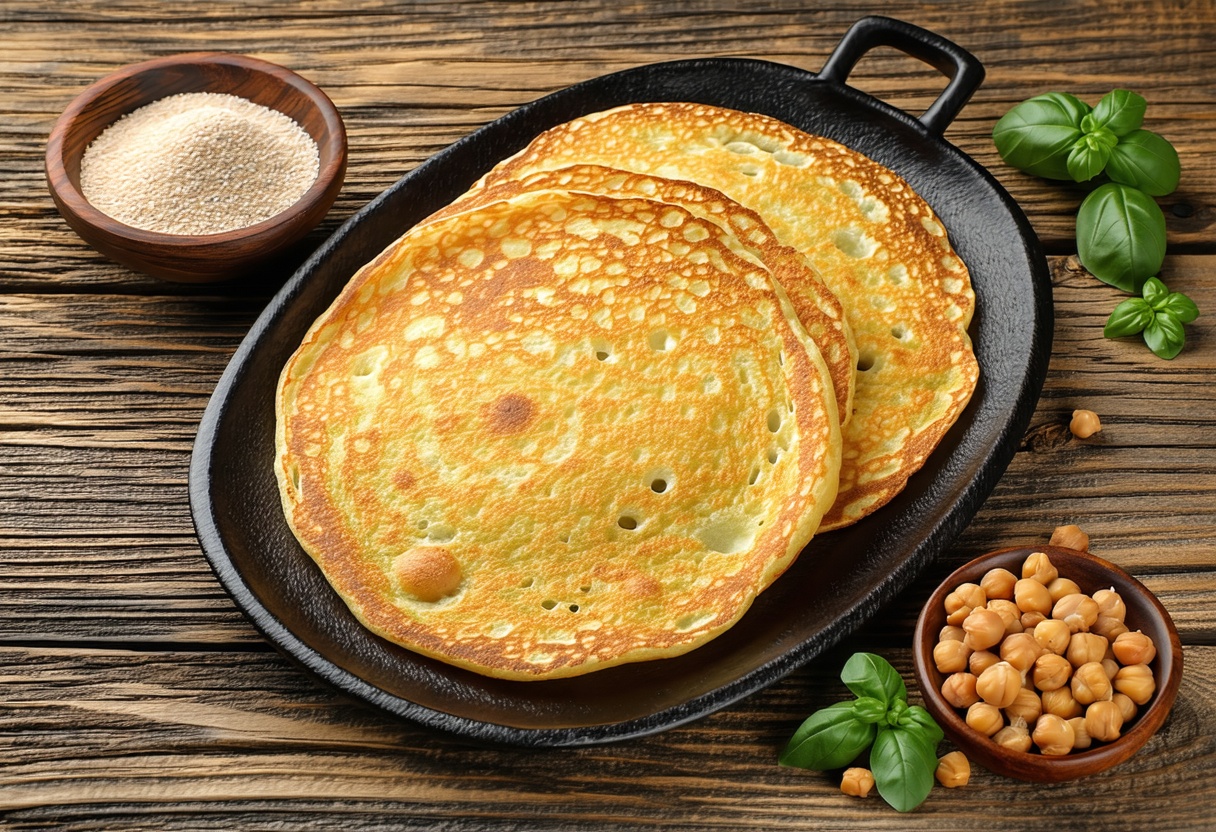
Socca — the chickpea pancake above — and pissaladière, a slow-cooked onion tart with anchovies and black olives. Both are street food, both are shared with Nice, and both are eaten with your fingers. The best versions in Monaco are at the Marché de la Condamine.
Fougasse monégasque
Not the savoury French fougasse. The Monegasque version is a sweet flat bread flavoured with orange-flower water and anise, studded with nuts and scattered with red and white sugared aniseeds. It is the ceremonial cake of Sainte Dévote and National Day, and it is sold in the old town bakeries all year.
The Michelin layer
The 2026 Michelin guide gives Monaco 14 stars across nine restaurants in an area of two square kilometres — the densest concentration on earth. Le Louis XV – Alain Ducasse at the Hôtel de Paris holds three stars and has since 1990, when it became the first hotel restaurant ever to get them. Les Ambassadeurs, Le Blue Bay and L'Abysse Monte-Carlo hold two each.
Eating for a normal price
Entirely possible, and almost nobody does it. The covered hall at the Marché de la Condamine serves barbagiuan, socca, pasta and pan bagnat at counters for €8–18. The bakeries on the Rock do pissaladière by the slice. The bars behind rue Grimaldi serve a plat du jour at lunch. You are eating what the 55,000 commuters eat, which is the point.
👨🍳 Two Monegasque Recipes

Barbagiuan — Monaco's National Pastry
Makes about 30 · 45 min plus resting · Fried
Ingredients: Pastry: 300 g plain flour, 3 tbsp olive oil, 1 egg, about 120 ml warm water, a good pinch of salt. Filling: 600 g Swiss chard leaves (blettes) — spinach at a pinch, 250 g ricotta, 80 g grated parmesan, 1 onion, 1 leek, 60 g cooked rice, 1 egg, nutmeg, salt, pepper. To fry: a litre of neutral oil.
Method: Make the pastry first: mix flour and salt, work in the oil, egg and enough warm water to give a smooth firm dough, and rest it covered for at least an hour. Meanwhile blanch the chard leaves for two minutes, drain, squeeze very dry and chop finely. Soften the finely chopped onion and leek in olive oil without colouring, then combine with the chard, ricotta, parmesan, rice and egg, and season hard with salt, pepper and nutmeg — the filling should taste slightly too strong on its own. Roll the dough as thin as you can, cut 8 cm discs, put a heaped teaspoon of filling on each, moisten the edge, fold over and crimp firmly with a fork. Fry at 170 °C in batches for 3–4 minutes until deep gold, and drain on paper.
💡 The two things that go wrong are wet chard and too-thick pastry. Squeeze the chard until you think you have damaged it, and roll the dough until you can almost read through it. Serve hot, with a cold dry white — a Bellet from the hills above Nice is the local answer.
Stocafi — Monegasque Stockfish in Tomato
Serves 4 · 3 days soaking, then 2 hours · Slow stew
Ingredients: 600 g dried stockfish or good salt cod, 1 kg ripe tomatoes (or 800 g tinned peeled), 2 onions, 4 cloves garlic, 150 g black olives (Niçoise if you can get them), 500 g waxy potatoes, 1 glass dry white wine, a small glass of brandy, olive oil, bay, thyme, parsley, pepper.
Method: Soak the dried fish in cold water in the fridge for two to three days, changing the water twice a day — this is not optional and cannot be hurried. Drain, remove skin and bones, and cut into large pieces. Soften the sliced onions and garlic in plenty of olive oil, add the fish and let it take a little colour, then flame or simply reduce the brandy. Add the wine, then the chopped tomatoes, bay, thyme and pepper — no salt yet. Simmer very gently, covered, for about an hour. Add the peeled potatoes cut in thick pieces and the olives and cook another 30–40 minutes until the potatoes are done and the sauce is thick and dark red. Taste, and only now add salt if it needs it. Finish with chopped parsley.
💡 Stockfish is the air-dried, unsalted kind and takes the longer soak; salt cod is quicker but saltier. Either way the finished dish should be dark red and glossy — if it is pale, the tomato has not reduced enough. It is better the next day.
🍷 Drinking in a Country with No Vineyards
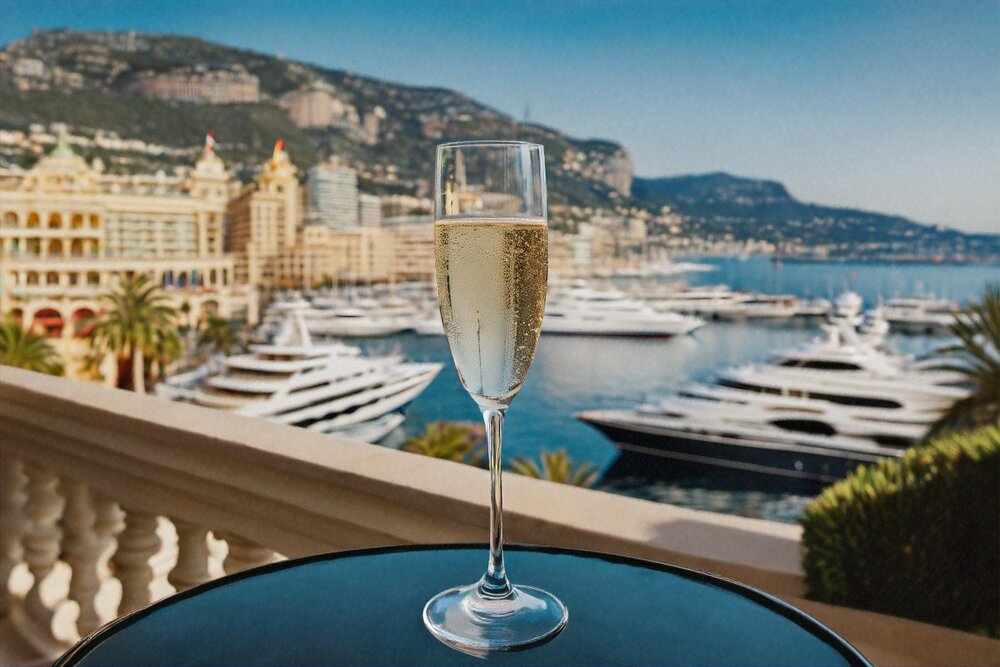
There is no Monegasque wine
With 2 km² and no agricultural land, Monaco grows nothing commercially. What it has instead is proximity: Bellet, one of France's smallest appellations, is on the hills inside the city of Nice, twenty minutes away, and its Braquet and Folle Noire reds are the closest thing to a local bottle. Provence rosé and Ligurian whites — Vermentino, Pigato — do the rest of the work.
The cellar under the Hôtel de Paris
Dug into the rock in 1874 and now holding on the order of 350,000 bottles across 1,500 m² — one of the largest hotel wine cellars in the world, and a listed part of Monaco's heritage. Guided visits are occasionally possible and are worth chasing. Part of it was famously bricked up and hidden from the German occupiers during the war.
Brasserie de Monaco
Monaco does make its own beer. The Brasserie de Monaco on the port has brewed unfiltered, unpasteurised lager, amber and white beers since 2008, in the country's only brewery. It is also one of the more reliably normal places to have a drink by the water.
The drink called "Monaco"
Order a Monaco anywhere in France and you get lager, lemonade and a dash of grenadine — pink, sweet and about 2% alcohol. It is named after the principality but was not invented there, and asking for one in Monaco itself will get you a slightly weary smile from the bartender.
Pastis and the aperitif hour
The Riviera aperitif runs from about six: pastis with cold water, a glass of chilled rosé, or a vermouth. The custom is genuinely observed — even in the most expensive bars in the world, the six o'clock crowd is drinking the same anise-flavoured spirit as everyone else on the coast.
What a drink costs
This is where Monaco's reputation is deserved. A coffee is €4–8. A beer in a normal bar is €8–12; on the Place du Casino terraces, considerably more. A cocktail at the Hôtel de Paris or the Buddha-Bar starts around €25. The Brasserie de Monaco and the bars behind the market are the honest options.
🏛️ Heritage — Including What Monaco Does Not Have
No World Heritage sites
Monaco is one of a small handful of European states with no UNESCO World Heritage site at all. It ratified the convention in 1978 and has never had an inscription. This is worth stating plainly, because a great deal of travel writing implies otherwise. The Rock's old town, the casino and the Oceanographic Museum are protected under Monegasque law, not international listing.
The Belle Époque legacy
What Monaco does have is one of the most coherent surviving Belle Époque ensembles anywhere: Garnier's casino and opera, the Hôtel de Paris, the Hermitage with its Eiffel-attributed glass dome over the winter garden, the Villa Sauber and Villa Paloma, and the cathedral. Much of it was built in a single thirty-year burst after 1863.
The Grimaldi archives
The Palace Archives hold documents running back to the thirteenth century, and the palace itself has undergone a long restoration campaign that uncovered the sixteenth-century frescoes of the Hercules Gallery under later plaster — one of the significant European art-historical rediscoveries of recent decades, and now visible on the state apartments tour.
The prehistoric layer
The Grotte de l'Observatoire, beneath the Exotic Garden, is the highest-altitude prehistoric cave in Europe with evidence of human occupation, going back some 250,000 years, and it holds stalactites, columns and rare "spaghetti" formations. It reopened to visitors on 30 March 2026 together with the garden above it.
The Exotic Garden's return
The Jardin Exotique closed in 2020 for what was meant to be a short rock-stabilisation job and stayed shut for nearly six years and more than €18 million of work. It reopened on 30 March 2026 with its collection of thousands of succulents on the cliff face, the cave beneath, and the best free-standing view in the country. If you last visited Monaco before 2026, this is the thing that has changed.
The Monegasque language as heritage
Monégasque has been a compulsory school subject since 1976, has an official orthography, a dictionary and a national competition, and appears on the old town's street signs. It is a rare example of a micro-state successfully institutionalising a dialect that had nearly gone. Whether that amounts to saving it is a fair question — the number of people who use it at home is very small.
🌊 The Sea, the Reserves and the Green Bit
It is easy to write Monaco off as concrete. In fact the principality protects a larger share of its territory and territorial waters than most countries manage, and its marine conservation record is the part of its international reputation that stands up best to scrutiny.
The Larvotto marine reserve
A protected underwater area off the Larvotto shore, established in 1976, where fishing and anchoring are banned and posidonia seagrass meadows have recovered substantially. You can snorkel over it straight from the public beach — mask and snorkel are all you need, and the fish life is startling for a city shoreline.
The Spélugues coral reserve
A second, smaller reserve off the Spélugues, protecting a rare shallow-water coral formation of Cladocora caespitosa — a stony coral that builds reefs in the Mediterranean and is under serious pressure from warming. Access is restricted; the point is the protection, not the visit.
The Pelagos Sanctuary
Monaco's waters form part of a 87,500 km² international sanctuary for marine mammals agreed with France and Italy in 1999 — the first of its kind in the world. Fin whales, sperm whales, striped and bottlenose dolphins and Cuvier's beaked whales all use it. Whale-watching trips run from Nice and Cannes in summer with a genuine chance of sightings.
The Prince Albert II Foundation
Founded in 2006, it has funded several hundred projects on ocean acidification, marine protected areas, biodiversity and climate, and Monaco has been a persistent and quite effective advocate at IMO, CITES and UN ocean negotiations — the diplomatic weight of a very small state applied narrowly and consistently to one subject.
Green space
About 20% of the territory is public green space, which for the most crowded country on earth is a real achievement: the Jardins Saint-Martin on the Rock, the Jardins du Casino, the Princess Grace Rose Garden and the Parc Paysager in Fontvieille, the Japanese Garden by the Grimaldi Forum, and the newly reopened Jardin Exotique. All free except the last.
The beaches
Larvotto is the public beach — free, sandy (imported sand over a reconstructed foreshore), with showers and lifeguards in season. Beyond it are private beach clubs at private-beach-club prices. If you want somewhere prettier, take the train two stops to Cap d'Ail and walk down to Plage Mala, a cove under the cliffs that is one of the best swimming spots on the whole Riviera.
📅 When to Go
Monaco is a year-round destination with a Mediterranean climate and very little bad weather — but the calendar of events matters more here than the calendar of seasons, because two or three weekends a year the entire country becomes something else.
May–June: avoid or commit
The Grand Prix (late May or early June) takes over the whole principality for a week either side — grandstands, closed roads, tripled prices, minimum-stay rules across the Riviera. If you are going for the race, book a year ahead. If you are not, do not come in this window at all.
April and October: the sweet spot
Warm enough to sit outside, too early or too late for the crowds, and hotel prices at their most reasonable. April brings the Printemps des Arts and the tennis; October is quiet, clear and still around 21 °C. These are the two months to choose if the choice is yours.
July–August: hot and full
Around 27–30 °C, sea at 25 °C, Larvotto busy, the whole coast at capacity, and the highest prices of the year outside race week. It is perfectly pleasant if you want to swim. The Herculis athletics meeting is in July and the fireworks festival runs across both months.
September: yachts
Fine weather and warm sea — and the Monaco Yacht Show in late September, which fills Port Hercule with several hundred million euros of hardware and every hotel room for fifty kilometres. Spectacular to look at from the quay; a bad week to need a bed.
November–March: the real Monaco
Mild (around 13 °C by day), sunny, cheap by local standards and almost empty of tourists. This is when the country is most itself. National Day on 19 November, the Circus Festival and the Monte-Carlo Rally in January, and Sainte Dévote on 26–27 January are all worth planning around.
A day trip is legitimate
Monaco is 25 minutes by train from Nice. A very large share of visitors come for one day, walk the Rock, the port and Monte-Carlo, and leave — and that is a perfectly sensible way to see it. Two nights is enough for everything in this guide; a week is for people who are here for a reason.
✈️ Getting There
Monaco has no airport and no international flights of its own. Everything arrives through Nice Côte d'Azur (NCE), about 30 km west, or by rail along the coast.
From Nice airport by bus
The Airport Express — line 80, renumbered from the long-familiar 110 — runs from both terminals to Place d'Armes, the Casino and Monte-Carlo Bay in about 45 minutes for roughly €22 one way, with return and group fares. It is the simplest option with luggage.
From Nice by train
The cheapest and often the fastest way. TER trains run along the coast from Nice-Ville to Monaco-Monte-Carlo in about 25 minutes for around €5, several times an hour. To reach the station from the airport, take tram line 2 to Nice-Ville or Nice-Riquier first. The line continues to Menton and on into Italy.
By helicopter
Monacair flies Nice airport to the Fontvieille heliport in 7 minutes, from about €195 per person on the scheduled shuttle, including ground transfer at both ends. It is the classic Monaco arrival and, for a group in a hurry, not as absurd as it sounds — a private charter for six runs around €700.
By car
Possible and usually a mistake. The A8 motorway runs above the principality with three exits; from there it is a steep descent into a road network with almost no street parking. Use one of the public underground car parks (first hour often free, then roughly €2–3 an hour) and leave the car there for the duration.
The station
Monaco-Monte-Carlo station is entirely inside the rock — a 1999 replacement for the old surface line, with several hundred metres of platform and three separate exits at different levels: La Condamine and the port, Fontvieille, and Sainte-Dévote. Pick the right exit, because coming out at the wrong one costs you a long climb.
Border formalities
There are none on the land border with France, and it is not a Schengen frontier in practice. Arrivals by sea or by helicopter go through checks run by French officers on Monaco's behalf. A Schengen visa is valid; Czech and other EU citizens need only an identity card, though a passport is more useful.
🚌 Getting Around
Walk — but know the levels
The country is 1.7 km wide at its broadest, so everything is walkable in theory. The catch is vertical: Monaco is stacked in terraces, and the direct route between two points is frequently 60 m of stairs. Look at a contour map before planning a walking day.
The public lifts
Monaco's best-kept practical secret. Around 80 public lifts, escalators and travelators connect the levels, they are free, and they are marked on the official map. The lift from the Fontvieille car park to the Rock, and the chain of escalators from the port up to Monte-Carlo, save an enormous amount of effort. Most run roughly 06:00–24:00.
Buses
Six routes cover the whole country. A single ticket is about €2 on board or less from a machine, and a day pass around €5.50 pays for itself immediately. Routes 1 and 2 link the Rock, the port and Monte-Carlo and are the two you will use.
The Bateau Bus
A small solar-electric ferry crosses Port Hercule between Quai des États-Unis and the Rock side, on a normal bus ticket. It takes three minutes, it runs all day, and it is the cheapest boat trip in the principality by several orders of magnitude.
Bikes and scooters
MonaBike is the shared electric-bike scheme, integrated with Nice's system, with docking stations across the country. Given the gradients, electric assistance is not a luxury here. Private e-scooters are regulated and helmets are compulsory for under-18s.
Taxis
Expensive, and you generally cannot hail one — use the ranks at the station, the casino and Place d'Armes, or book. A short hop within the principality will still be around €15–20. Given the buses, the lifts and the size of the place, most visitors never need one.
📋 Practical Information
Money
The euro. Cards are accepted everywhere, contactless is universal, and cash is barely necessary. ATMs are plentiful. Monaco mints its own euro coins — if one turns up in your change, keep it; they are scarce and collectors pay well above face value.
Phones and internet
Monaco is not in the EU, so EU "roam like at home" does not apply and Czech operators may charge non-EU rates. Check before you arrive; some operators include Monaco in their EU zone voluntarily and some emphatically do not. Free public wifi is widespread, and the whole country has excellent 5G.
Health
Standards are French, and high. The Princess Grace Hospital handles emergencies. The European Health Insurance Card does not cover Monaco — it is outside the EU — so commercial travel insurance is essential, and it should explicitly name Monaco rather than just "France".
Emergency numbers
112 works. Locally: 17 police, 18 fire and ambulance, 112 from mobiles. Response times in a country this size and this heavily policed are measured in a couple of minutes.
Rules people break by accident
Walking around bare-chested or in swimwear away from the beach is an offence and is actually enforced. So is lying on the grass in some public gardens. Photography inside the casino gaming rooms is forbidden. Drones require authorisation. None of this is aggressive policing — but the rules exist and are applied evenly.
Dress
There is no dress code on the street beyond the above, but there is one in the casino's private rooms and in the grander restaurants and the opera: jacket for men, no sportswear, no shorts, no beach shoes. Smart-casual covers essentially everything else, including the Salons Européens in daytime.
💶 What It Actually Costs
Monaco's reputation for expense is half-deserved. Accommodation and cocktails really are among the priciest on earth; public transport, museums, beaches, gardens and market food are ordinary Riviera prices or better. Approximate koruna figures below use a rate of about 24,5 Kč to the euro — check the current rate before you travel.
Sleeping
This is the problem. A four-star in Monaco runs €250–450 (6,000–11,000 Kč) a night in season, and the Belle Époque palaces start well north of €600 (15,000 Kč). The standard workaround is to sleep in Beausoleil — which is literally the next street up, in France — or in Cap-d'Ail, Menton or Nice, at a third to a half the price, and commute in by train in minutes.
Eating
Market hall counters at the Condamine: €8–18 (200–450 Kč). A plat du jour in a normal bar: €18–25. A decent sit-down dinner: €40–70 a head. A starred restaurant: €150–400, and Le Louis XV considerably more. The gap between the cheapest and dearest meal in Monaco is a factor of forty.
Getting about
Bus single ~€2, day pass ~€5.50, all the lifts and escalators free, the Bateau Bus on a bus ticket. Train from Nice ~€5 each way. Transport is genuinely cheap here and there is no reason to take a taxi.
Seeing things
Oceanographic Museum ~€19–21, Prince's Palace state apartments ~€10, casino daytime visit ~€19, Jardin Exotique with the cave around €12. Combined tickets exist and are worth it if you are doing two or more. The Rock, the gardens, the port, Larvotto beach, the F1 circuit and the whole of Mareterra's waterfront are free.
A realistic day
A day trip from Nice, doing the Rock and the Oceanographic Museum, eating at the market and drinking a beer by the port: €45–60 (1,100–1,500 Kč) including the train. The same day with a casino visit and a proper lunch: €110–140. Sleeping in Monaco rather than France roughly doubles any budget.
A week from Prague
Flying Prague–Nice in season, sleeping in Cap-d'Ail or Menton, and treating Monaco as one of several destinations on the coast: figure 28,000–40,000 Kč per person for a week including flights, which is a normal Riviera holiday. Doing the same week from a Monaco hotel: 70,000 Kč and upwards.
🇨🇿 Notes for Czech Visitors
Getting there from Prague
There are direct seasonal flights Prague–Nice, roughly May to October, with Smartwings and easyJet, about 1 hour 45 minutes, and returns commonly from 2,000–4,500 Kč booked early. Out of season, connect through Paris, Vienna or Munich. From Nice airport it is 45 minutes by the Airport Express bus or about an hour via Nice-Ville by train.
Documents
Czech citizens need only an identity card, and there are no checks on the land border. A passport is more practical if you arrive by sea or air. Monaco is not in the EU and not in Schengen, but a Schengen visa covers it and in practice you will not notice a frontier.
Two things that catch Czechs out
First, the EHIC does not work here — Monaco is outside the EU, so buy commercial travel insurance and check that the policy names Monaco specifically. Second, EU roaming rules do not apply: some Czech operators include Monaco in their EU zone and some charge world rates. Check both before you leave.
MZV ČR and DROZD
The Czech Republic has no embassy in Monaco; consular and diplomatic responsibility lies with the Czech Embassy in Paris, which covers France and the Principality. There is currently no travel warning for Monaco. Registration in DROZD is quick and sensible even for a safe destination — it is how the ministry reaches you if something happens on the coast.
Language
French is the working language and it genuinely helps. English is widely understood in hotels, museums and the tourist trade, less so in the market and on the buses. Italian works well. Czech will not get you anywhere, but nobody will be rude about it — Monaco is used to people who speak something else.
Why it is worth the trip from Prague
Because it is genuinely unlike anywhere else, because it costs very little if you sleep in France, and because it fits inside a Riviera week rather than needing one of its own. Fly to Nice, base yourself in Menton or Cap-d'Ail, and give Monaco a full day — the Rock in the morning, the museum at midday, the port and Monte-Carlo in the afternoon. That is the whole country done properly for under 1,500 Kč.
🎲 Curiosities, Including Some That Are Not True
The band-versus-army claim
You will read everywhere that Monaco's orchestra is bigger than its army. It is roughly true but not quite: the Compagnie des Carabiniers du Prince numbers about 120, and the Monte-Carlo Philharmonic about 100. Add the fire-and-rescue corps, which is also a military unit, and the armed forces come out comfortably ahead. Monaco's actual defence is guaranteed by France under treaty.
No Olympic medal — ever
Monaco has competed at the Olympic Games since 1920 and has never won a medal, which makes it one of the longest-participating nations still on nought. Prince Albert II competed in five Winter Games in the bobsleigh and carried the flag. He also sits on the International Olympic Committee.
The flag problem
Monaco's red-over-white bicolour is essentially identical to Indonesia's, differing only in proportion — Indonesia raised the issue when it adopted its flag in 1945, and Monaco pointed out that it had been using its own since 1881. Poland's flag is the same two colours the other way up. Monaco's design derives from the Grimaldi arms.
It cannot feed or water itself
Monaco produces essentially no food, and its drinking water and most of its electricity come from France. Its rubbish is incinerated in a plant that also supplies district heating. For all its wealth, the country's physical survival is contracted out to its neighbour — which is exactly what the 2002 treaty is about.
The life-expectancy statistic
You will see Monaco listed with the highest life expectancy in the world, sometimes at 89 years. The healthcare is genuinely excellent, but the figure is heavily distorted by the population itself: a small, wealthy, disproportionately elderly resident body with the best medicine money can buy, and hardly any of the young poor who pull national averages down elsewhere.
Odds and ends
Monaco's dialling code is +377 and its domain is .mc. It issues its own postage stamps, which are a serious philatelic niche. It has one of the world's highest densities of CCTV cameras. The Grimaldis have ruled longer than any other reigning European house except, arguably, the Danish crown. And the entire country would fit inside the runway complex of most major airports.
🔮 What Happens Next
Getting off the grey list
The single most important item on Monaco's agenda. The FATF found in June 2026 that the action plan was substantially complete; what remains is an on-site assessment and, harder, sustained evidence that the new rules are being enforced — prosecutions, sanctions, seizures, reliable statistics. Nobody in the government is promising a date, which is itself the honest answer.
More land, or not
The Mareterra model — private capital, offshore caissons, a slice of public park — worked, and there is constant pressure to repeat it. Against that stand cost, the steeply shelving seabed, the limits of Monaco's territorial waters and an environmental case that is no longer easy to dismiss. Expect studies and arguments rather than a decision this decade.
The housing squeeze
Monegasques are 24% of their own country and the open market is beyond almost all of them. The state builds and allocates housing to keep citizens in Monaco, and every National Council debate comes back to it. If that policy ever fails, the principality becomes a place with Monegasque institutions and no Monegasques — which is the one existential risk the country genuinely has.
Europe
The association agreement is paused, not dead, and the underlying question has not gone away: how a country whose entire social contract rests on priority for its citizens in housing and work can join a single market built on the opposite principle. Andorra and San Marino found answers. Monaco has not, and may simply keep its bilateral patchwork indefinitely.
Climate and the sea
A country whose land is partly artificial and whose whole economy sits on 3.8 km of coast has an obvious exposure to sea-level rise and to Mediterranean storms, which are getting more violent. The new works are engineered for it; the older seafront is not. Monaco's marine science gives it an unusually clear-eyed view of what is coming.
The succession
Prince Jacques turns 12 in December 2026. Barring accident, Monaco has a settled succession for the first half of the century — which, given that the 2002 treaty exists precisely because the dynasty once had none, counts as a stable position.
🧳 Tourism by the Numbers — and How to Not Be a Statistic
Monaco's own 2025 tourism survey counted 6.7 million visits and about €1.4 billion of direct visitor spending. The striking figure is the split: 92.5% of visits were same-day, and yet the 7.5% who stayed overnight generated 61.4% of the sector's value.
The day-tripper country
Six million people a year come for a few hours, walk the same 1,200 metres between the palace and the casino, buy a coffee and leave. Overnight visitors averaged 3.8 days and produced over 1.4 million overnight stays, of which about 908,000 were in hotels. Monaco has around a dozen hotels, which is why the numbers are what they are.
Cruise ships
Growing fast: 99 calls between July and September 2025 against 84 in the same months of 2024, and passenger numbers up 29% to just over 70,000. They anchor off and tender in, and they arrive in the morning, which is precisely when the Rock is worst.
How to miss the crowd
Do the Rock at 08:30 or after 15:00 and skip the 11:55 guard change. Do the Oceanographic Museum at opening or in the last two hours. Do Monte-Carlo in the evening, when the square is lit and the coaches have gone. The crowd in Monaco is a wave with a very predictable timetable, and stepping out of it takes almost no effort.
What most visitors miss
The Marché de la Condamine food hall. The Jardins Saint-Martin along the cliff. The free public lifts. The Mareterra waterfront, which almost nobody realises is open. The Bateau Bus across the harbour on a bus ticket. The terraces below the casino. All free, all empty, all better than the queue at the palace.
What is genuinely worth paying for
The Oceanographic Museum, without hesitation — it is the best thing in the country and would be a serious institution in a state a thousand times the size. After that the state apartments for the rediscovered frescoes, and the Jardin Exotique with its cave, newly reopened after six years.
Be a decent visitor
Cover up away from the beach — it is a rule, not a suggestion. Don't photograph inside the casino gaming rooms. Don't block the Rock's narrow lanes for photographs; a thousand people live there. And remember that most of the people serving you crossed a border at six this morning and will cross it back at eight tonight.
📸 Gallery — Five Files, Honestly Described
The AWS connection was unavailable again when this page was built, so the image inventory was assembled by HTTPS probing of more than 1,200 candidate filenames across both /images/monaco/ and /countries/images/monaco/, including the Abkhazian naming scheme found in Lithuania, Luxembourg and Micronesia. Five files exist. Every one of them was downloaded and looked at before being used or rejected.
Correction: this inventory was built blind
The AWS listing came back after this page was written, and it showed that the HTTPS probing used to build the inventory had missed files in every country in this batch — it can only find names somebody thinks to guess. The real listing for Monaco holds 7 files, not the 5 this page found — the two extras are champagne-monte-carlo.jpg, now used in the drinks section, and monaco-drink.jpg, a near-duplicate of it at dusk. The manifest and the images above have been corrected from the authoritative listing, and the probing method is recorded here as unreliable so that no later page relies on it while the AWS connection is available.
The genuine photograph
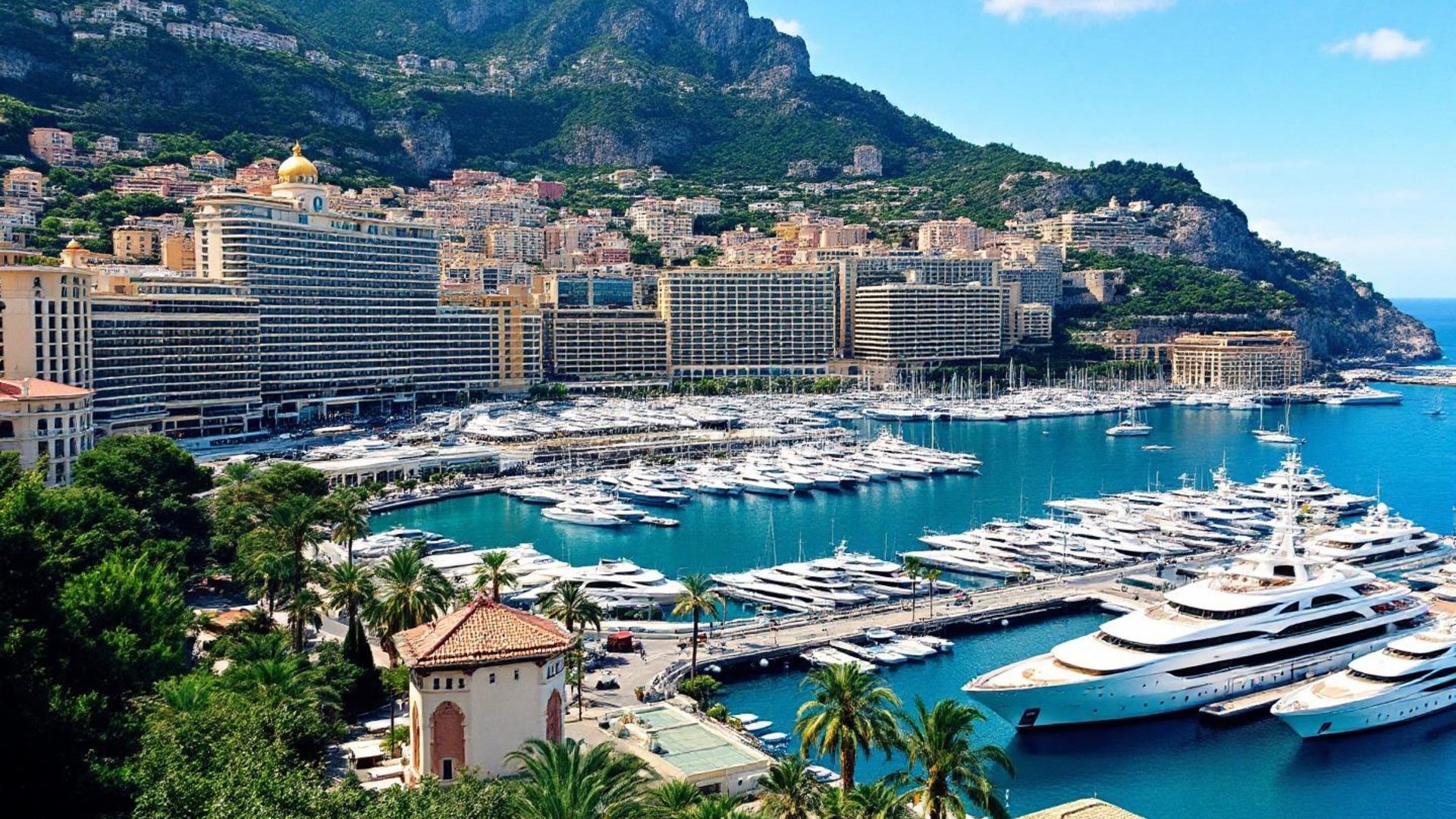
countries/images/monaco/hero.jpg, used at the top of the overview, is a real photograph and the best image available for this country — 1920×1080, correctly exposed, unmistakably Monaco: the packed marina, the wall of terraced apartment blocks, the massif behind. One honest limitation: it is not possible to establish with certainty from the frame alone whether this is Port Hercule or Port de Fontvieille, so the caption describes what is visible rather than naming the harbour. It sits outside /images/monaco/, so the build script cannot use it as the hero; it is placed inline instead.
Barbagiuan — accurate
recipes/monaco-barbajuan.jpg is the best of the food images and is used beside the recipe. Right shape, right crimped edge, right chard-and-ricotta filling shown in cross-section, right accompaniment. One small deviation: Monegasque barbagiuan are usually made noticeably smaller than these — about the size of a large raviolo — and eaten with the fingers rather than with a fork.
Socca — right idea, wrong execution
recipes/monaco-socca.jpg shows two thick, pale, soft pancakes with bowls of chickpea flour and chickpeas. The ingredients are exactly right; the dish is not. Real socca is baked in a wood-fired oven on a metre-wide copper pan and comes out thin, blistered and charred at the edges, then is scraped up and torn into ragged pieces. It is used, with the correction stated in the caption, because the alternative was leaving the cuisine section with no image at all.
Stocafi — rejected
recipes/monaco-stocafi.jpg shows poached white fish in a pale yellow broth with diced carrot and potato. Monegasque stocafi is stockfish stewed in tomato, garlic and black olives and is dark red. This is not that dish — it is a generic fish soup — and putting it beside the stocafi recipe would actively mislead readers about what they are cooking towards. It is therefore not used anywhere on this page, and it is listed here so the decision is on the record rather than silent. Like the hero, it is a PNG carrying a .jpg extension.
A dead reference on the old page
The page this one replaces linked recipes/monaco-le-louis-xv.jpg. That file returns HTTP 404 and has been broken for as long as the page has been live — the same defect found on the Micronesia page, where three recipe images were referenced and none existed. Meanwhile monaco-stocafi.jpg sat in the bucket unreferenced. The image pipeline is writing filenames into pages without checking that the files were ever uploaded.
What is not here
There is no photograph of the Prince's Palace, the cathedral, the Oceanographic Museum, the Rock, the Grand Prix circuit, Mareterra or the Jardin Exotique anywhere in the bucket for this country. Five files, of which one is a real photograph, is the entire visual inventory for the second-smallest state on earth. The sections above are therefore written to work without pictures, and nothing has been illustrated with an image of somewhere else.
Support This Project 🌍
This World Travel Factbook is a labor of love – free to use for all travelers. If you find it helpful, consider supporting its continued development.