

🇱🇸 Lesotho at a Glance
🌍 Overview
Lesotho is 30,355 km² — about the size of Belgium, or two Moravias — with roughly 2.3 million people, and it holds two records that between them explain almost everything about it. It is the only country in the world entirely above 1,400 metres, and it is one of only three countries completely surrounded by a single other state.
That second fact is the harder one. Lesotho is an enclave inside South Africa, and every road, every export, every hospital referral and a large share of every family's income runs through its neighbour. It is nonetheless a sovereign kingdom that has never been conquered, has its own language and monarchy, and takes both very seriously.
The state
A parliamentary constitutional monarchy. King Letsie III has reigned since 1996 and is a ceremonial head of state with no executive power — the constitution says explicitly that he is a "living symbol of national unity". Sam Matekane, a diamond and construction businessman who founded his party six months before the election, has been prime minister since October 2022, heading a coalition that has been rebuilt more than once. The next election is due in 2027.
The people
Unusually homogeneous by African standards: the overwhelming majority are Basotho, speaking Sesotho, with small Zulu, Xhosa and other minorities. That homogeneity is a direct product of how the nation was assembled — by Moshoeshoe I in the 1820s, out of refugees from the wars on the plains below, gathered onto a defensible mountain. Something like a fifth of the workforce has historically worked in South Africa.
The economy
Three legs, all of them held by someone else. Textiles sewn for the American market — jeans for Levi’s, Walmart and Calvin Klein — which employed around 30,000 people and were hit in April 2025 by a 50% US tariff, the highest imposed on any country. Water sold to South Africa under the Highlands Water Project. And SACU customs revenue plus remittances from miners. Unemployment is around 30% and youth unemployment far higher.
What visiting is like
Extraordinary and almost unvisited. Lesotho gets a tiny fraction of the visitors its landscape deserves — most people who come are South Africans doing the Sani Pass in a 4x4 for the day. What is here: the highest mountains in southern Africa, pony trekking that is a genuine local institution rather than a tourist product, San rock art, and a welcome that has not yet been worn down by tourism.
🏷️ The Sesotho Country
Lesotho means, roughly, "the land of the people who speak Sesotho" — the name of the country, the people (Basotho, singular Mosotho) and the language (Sesotho) are three forms of the same root, which is a Bantu-language pattern and a neat statement of what the country is. It is pronounced closer to le-SOO-too than to the English spelling suggests.
The flag
Adopted on the fortieth anniversary of independence in 2006, replacing a military-era design: horizontal blue, white and green for rain, peace and prosperity, with a black mokorotlo — the conical Basotho hat — in the centre. It is one of very few national flags whose central emblem is a hat, and the hat’s shape is said to be modelled on Mount Qiloane near Thaba Bosiu.
Moshoeshoe I
The founder, and the reason there is a country here at all. In the 1820s, as the Difaqane wars scattered the peoples of the highveld, a minor chief named Moshoeshoe gathered refugees onto the flat-topped mountain of Thaba Bosiu and built a nation out of them by a combination of hospitality, diplomacy and an unusual reluctance to fight when he could talk. He is on the money, in the anthem and in almost every conversation about national character.
"The Kingdom in the Sky"
The tourist-board phrase, and for once an accurate one. The lowest point in Lesotho is 1,400 m, which is the highest low point of any country on earth; about 80% of the country lies above 1,800 m; and Thabana Ntlenyana at 3,482 m is the highest peak in Africa south of Kilimanjaro. It snows here, which surprises people who have not looked at a map.
Never conquered
Lesotho takes real pride in the fact that it was never militarily subdued. It fought the Boers of the Orange Free State to a standstill in the wars of the 1850s and 60s, lost the fertile lowlands west of the Caledon in the process, and then asked Britain for protection in 1868 — a deliberate choice that preserved the nation and cost it the farmland. When South Africa became a union in 1910, Basutoland stayed out. That decision is why Lesotho exists and South Africa’s Free State does not contain it.
🗺️ Straight Up
Lesotho is a tilted block. The western strip along the South African border is the lowlands — still at 1,400 to 1,800 m — where the towns, the farms and roughly three quarters of the people are. Everything east of that rises into the Maloti highlands, which merge with the Drakensberg and hold the country's water, its wool and almost nobody.
The mountains
The Maloti and the Drakensberg escarpment, a plateau of basalt lava flows cut by deep valleys, with flat-topped summits rather than peaks — the landscape looks like a series of tables rather than a range of pyramids. Thabana Ntlenyana (3,482 m) is the highest point in southern Africa and is a walk rather than a climb. Snow falls between May and September and the passes close.
The rivers
This is the water tower of southern Africa. The Orange — called the Senqu here — rises in the Lesotho highlands and runs 2,200 km to the Atlantic, watering half of South Africa on the way; the Tugela and the Caledon also rise on or near the escarpment. Rainfall in the highlands is high by regional standards and it falls in summer, in violent thunderstorms.
Erosion
The country’s deepest environmental problem. Overgrazing by sheep, goats and cattle on steep slopes, combined with intense summer rain, has produced dongas — gullies that eat entire fields — across the lowlands and the foothills. Lesotho loses a great deal of topsoil every year, arable land is under 10% of the country and shrinking, and the problem is genuinely hard because the livestock are the rural economy.
Climate
Temperate and continental despite the latitude, because of the altitude. Summers (November to March) are warm, wet and stormy, around 20–30 °C in the lowlands; winters are dry, brilliantly clear and cold, with lowland days around 15 °C and nights well below freezing, and highland temperatures that have gone below −20 °C. The light in winter is the best thing about the country and nobody mentions it.
Wildlife
Modest by African standards and unusual for it. There are no lions, elephants or rhinoceros — the big game was shot out in the nineteenth century. What there is: eland and rhebok, black-backed jackal, the rare bearded vulture (lammergeier) which breeds on the escarpment, the bald ibis, and the Maloti minnow, a fish found nowhere else and one of the reasons Sehlabathebe is protected.
Where the dinosaurs walked
Lesotho’s sandstone holds some of the best-preserved dinosaur footprints in the world, at Moyeni (Quthing), Morija, Leribe and half a dozen other sites, walked into what was a lake shore around 200 million years ago. Lesothosaurus is named after the country. Most of the sites are unfenced and you find them by asking someone to show you.
🛡️ Moshoeshoe and the Making of a Nation
Before
The area was inhabited for tens of thousands of years by San hunter-gatherers, whose rock paintings survive in shelters all over the country, and from around the sixteenth century by Sotho-Tswana farming communities moving south. The San were displaced, absorbed and finally hunted; a few Sesotho words and a great many paintings are what is left of them, and Lesotho is now more honest about that history than it once was.
The Difaqane
In the 1820s the wars radiating out of the Zulu kingdom — the Mfecane or Difaqane, the scattering — tore apart the societies of the highveld and sent tens of thousands of people fleeing. Famine and cannibalism are part of the oral record of those years. It is out of this catastrophe, not out of an ancient kingdom, that Lesotho was assembled.
Thaba Bosiu, 1824
Moshoeshoe moved his people to a flat-topped sandstone mountain with sheer sides and permanent water on top, and made it the capital. The name means "mountain at night"; the story goes that it was said to grow to an unassailable size after dark, which the attackers who failed to take it may have believed. It was besieged repeatedly — by Ndebele, by Boers, by the British — and never fell.
Diplomacy as a weapon
Moshoeshoe’s method was to absorb rather than destroy: defeated enemies were given cattle and land, the starving were fed, and refugees became Basotho. He famously sent cattle to a defeated Ndebele force with a message that they must be hungry. He also invited French Protestant missionaries in 1833, using them as advisers, scribes and diplomatic channels — a shrewd move that also brought literacy, the Sesotho orthography and the printing press at Morija.
The wars with the Boers
From the 1840s the expanding Orange Free State pressed on the fertile land west of the Caledon. Three wars followed. Lesotho was not defeated in the field but was steadily squeezed, and the 1868 request for British protection — Moshoeshoe asking to be "a flea in the Queen’s blanket" — ended the fighting at the cost of the conquered territory, which is still called the Lost Lands and is now the South African Free State.
What it means now
Moshoeshoe died in 1870 and the nation he assembled has outlasted the Orange Free State, the Union of South Africa and apartheid. Moshoeshoe’s Day on 11 March is the main national holiday, his grave is on top of Thaba Bosiu, and the phrase khotso, pula, nala — peace, rain, prosperity — on the coat of arms is still what politicians promise.
📜 Basutoland to Independence
British rule, twice
Annexed to the Cape Colony in 1871, which went badly — the Gun War of 1880–81, fought over an order to disarm the Basotho, was a Basotho victory and a Cape humiliation. Britain took the territory back as a directly administered protectorate in 1884 and mostly left it alone, governing through chiefs and investing almost nothing. That neglect preserved the nation and produced a country with no infrastructure at independence.
Staying out of South Africa
The South Africa Act of 1909 provided for the eventual transfer of the three High Commission Territories — Basutoland, Bechuanaland and Swaziland — to the new Union. Basotho chiefs and, later, the British government resisted; the rise of apartheid after 1948 made transfer politically impossible. It is the single most consequential thing that did not happen in Lesotho’s history.
The labour reserve
What Basutoland became instead was a supplier of men to the South African gold mines. At the peak, well over a hundred thousand Basotho men were on the mines at any time and remittances were the largest single source of national income. It shaped the society profoundly: villages run by women, generations of absent fathers, and later one of the highest HIV rates in the world along the migration routes.
Independence, 1966
Basutoland became the Kingdom of Lesotho on 4 October 1966, with Moshoeshoe II as king and Leabua Jonathan of the Basotho National Party as prime minister. When Jonathan lost the election of 1970, he annulled it, suspended the constitution, sent the king briefly into exile and ruled for fifteen years. Lesotho’s democracy was thus interrupted four years after it began.
Under apartheid’s thumb
Jonathan’s later turn against Pretoria — recognising the Soviet bloc, sheltering ANC members — brought South African raids, including the Maseru raid of December 1982 in which South African commandos killed 42 people. In 1986 a South African border blockade helped precipitate the military coup that removed him. Military rule lasted until 1993.
The 1990s
Elections returned in 1993. Then: an army mutiny, the deposition and restoration of Moshoeshoe II, his death in a car crash in the mountains in 1996 and the accession of his son Letsie III; and in 1998 disputed elections, an army revolt and a South African and Botswanan intervention under SADC in which people were killed and much of central Maseru was looted and burned. The proportional element added to the electoral system afterwards is why Lesotho has had coalition governments ever since.
⚖️ Coups, Coalitions and the Road to 2022
The mixed system
After 1998 Lesotho adopted a mixed member proportional parliament — 80 constituency seats plus 40 allocated to make the whole chamber proportional. It ended the winner-takes-all violence and produced permanent coalition politics, with governments that rarely last a full term and prime ministers who change by parliamentary arithmetic rather than by election.
2014
An attempted coup, or something close to it: prime minister Tom Thabane fled to South Africa after the army surrounded police headquarters, and SADC mediation brought early elections. The rivalry between the army and the police, and between Thabane and Pakalitha Mosisili, dominated the following years.
The killings
In 2015 the former army commander Maaparankoe Mahao was shot dead by soldiers; a SADC commission recommended prosecutions. In 2017 Thabane’s estranged wife Lipolelo Thabane was murdered two days before his inauguration; in 2020 Thabane himself and his new wife were charged in connection with it, and he was forced from office. The case is still working its way through the courts and is a permanent shadow over Lesotho’s politics.
2022 and the outsider
Sam Matekane, one of the richest men in the country — diamonds, construction, aviation — founded the Revolution for Prosperity in March 2022 and won the October election with it six months later, taking 56 of 120 seats. It was an explicit vote against the established parties. He has governed in coalition with a rotating cast of smaller partners ever since.
What has actually changed
Less than the 2022 result promised. Reforms to the constitution, the security services and the electoral system — the long-delayed national reforms pushed by SADC since 2018 — have advanced partially. Corruption prosecutions have been announced repeatedly. The government’s energy since 2025 has gone almost entirely on the tariff emergency, which is not what it was elected to do but is not its fault either.
The army question
Lesotho’s army is small, has intervened in politics repeatedly since 1986 and has been at the centre of the worst episodes of the last decade. Security-sector reform is the piece of the SADC reform agenda that matters most and has moved least. Nobody in Maseru assumes it is settled.
🏛️ Politics Now — 6 September 2026
📅 Checked 6 September 2026. Lesotho spent the last eighteen months in an economic emergency created by a decision taken in Washington. That is the story of this year and it runs through everything below.
Who is in charge
King Letsie III, on the throne since 1996, purely ceremonial and genuinely respected — he has served as an African Union and UN goodwill ambassador on nutrition and is not a political actor. Sam Matekane has been prime minister since October 2022, leading a coalition of his Revolution for Prosperity with a shifting set of smaller parties. Parliament runs to 2027, when the next general election is due.
The tariff shock
On 2 April 2025 the United States imposed a 50% tariff on Lesotho — the highest rate applied to any country in the world — calculated from a trade-deficit formula that penalised Lesotho precisely because it is poor: it sells America jeans and buys almost nothing back. Orders stopped, factories went dark, and this in a sector employing around 30,000 people, mostly women, in a country of 2.3 million.
The state of disaster
In July 2025 the government declared a two-year national state of disaster over youth unemployment and job losses, with overall unemployment reported around 30%. The African Development Bank projected growth falling to a five-year low. Factories closed, including Tzicc with 1,300 workers; the ripple went through transport, food, rents and school fees in Maseru and Maputsoe.
And then it was lifted
The tariffs expired on 29 July 2026 following a US Supreme Court ruling on the reciprocal-duty regime, restoring Lesotho’s duty-free access. That is a genuine reprieve, and it does not undo eighteen months of closures, lost orders and buyers who moved their contracts elsewhere. Manufacturers describe it, accurately, as a wake-up call about depending on one market.
AGOA, in December
The larger cliff is still ahead. The African Growth and Opportunity Act, the US law under which Lesotho’s garment exports have entered duty-free since 2000 and around which the entire industry was built, is due to expire on 31 December 2026. Whether it is renewed, and on what terms, matters more to Lesotho than anything its own parliament will decide this year.
Being noticed for the wrong reason
In March 2025 the US president told Congress that aid had gone to "Lesotho, which nobody has ever heard of". The remark was widely reported and widely resented; Lesotho’s foreign minister replied that the country has diplomatic relations with the United States going back to independence. Between that, the tariff and the closure of USAID programmes — many of them HIV-related — 2025 was a year in which a very small country discovered how exposed it is to another country’s domestic politics.
💰 The Economy
The shape of it
GDP of roughly USD 2 billion, one of the smallest economies in Africa, and one of the most externally determined. The loti (LSL) is pegged one-to-one to the South African rand, which circulates freely alongside it, so Lesotho imports South African monetary policy wholesale and has no exchange-rate tool of its own.
Textiles
The largest formal private employer and the reason the tariff mattered so much. Lesotho became sub-Saharan Africa’s biggest garment exporter to the United States under AGOA — denim above all, for Levi’s, Wrangler, Walmart and Calvin Klein — with mostly Taiwanese-owned factories in Maseru, Maputsoe and Thetsane employing around 30,000 people, the great majority women. About three quarters of output went to the US market.
Water
The most reliable income the country has. Under the Lesotho Highlands Water Project, Lesotho sells water to South Africa’s industrial heartland and receives royalties worth a significant share of government revenue, plus the electricity from Muela that covers much of domestic demand. It is the one asset South Africa cannot obtain elsewhere.
SACU and remittances
Lesotho’s share of the Southern African Customs Union revenue pool is historically the single largest line in the budget — a transfer that is volatile, negotiated, and entirely outside Lesotho’s control. Remittances from Basotho working in South Africa, especially miners, have fallen from their twentieth-century peak as the gold industry contracted but remain substantial.
Diamonds and wool
The Letšeng mine at 3,100 m produces the highest average dollar-per-carat diamonds in the world and has yielded several stones over 500 carats, including the 910-carat Lesotho Legend. It is a large export earner and a small employer. Mohair and wool from highland sheep and Angora goats are the classic rural cash crop; a 2019 attempt to route all wool sales through a single Chinese-owned broker was a policy disaster that cost farmers a season’s income and was reversed.
The bind
Lesotho has almost no domestic market, no port, one trading partner surrounding it and a workforce whose jobs are decided in Washington and Pretoria. Diversification is the answer everyone gives and it is genuinely hard: horticulture, cannabis licensing — Lesotho was the first African country to license medical cannabis, in 2017 — and tourism are the candidates, and none is at the scale of what the garment sector employs.
💧 Selling Water Downhill
The Lesotho Highlands Water Project is the largest thing in the country by every measure — engineering, money, environmental effect and political weight. It exists because Lesotho has water and altitude and South Africa's economic heartland, three hundred kilometres away and lower down, has neither.
How it works
Dams in the Lesotho highlands impound the headwaters of the Senqu (Orange), and tunnels move that water north and downhill by gravity into South Africa’s Vaal system, which supplies Johannesburg, Pretoria and the industrial Gauteng province. On the way it drops through the ’Muela hydro station, which generates most of Lesotho’s electricity. South Africa pays for the water; Lesotho keeps the power.
Phase I
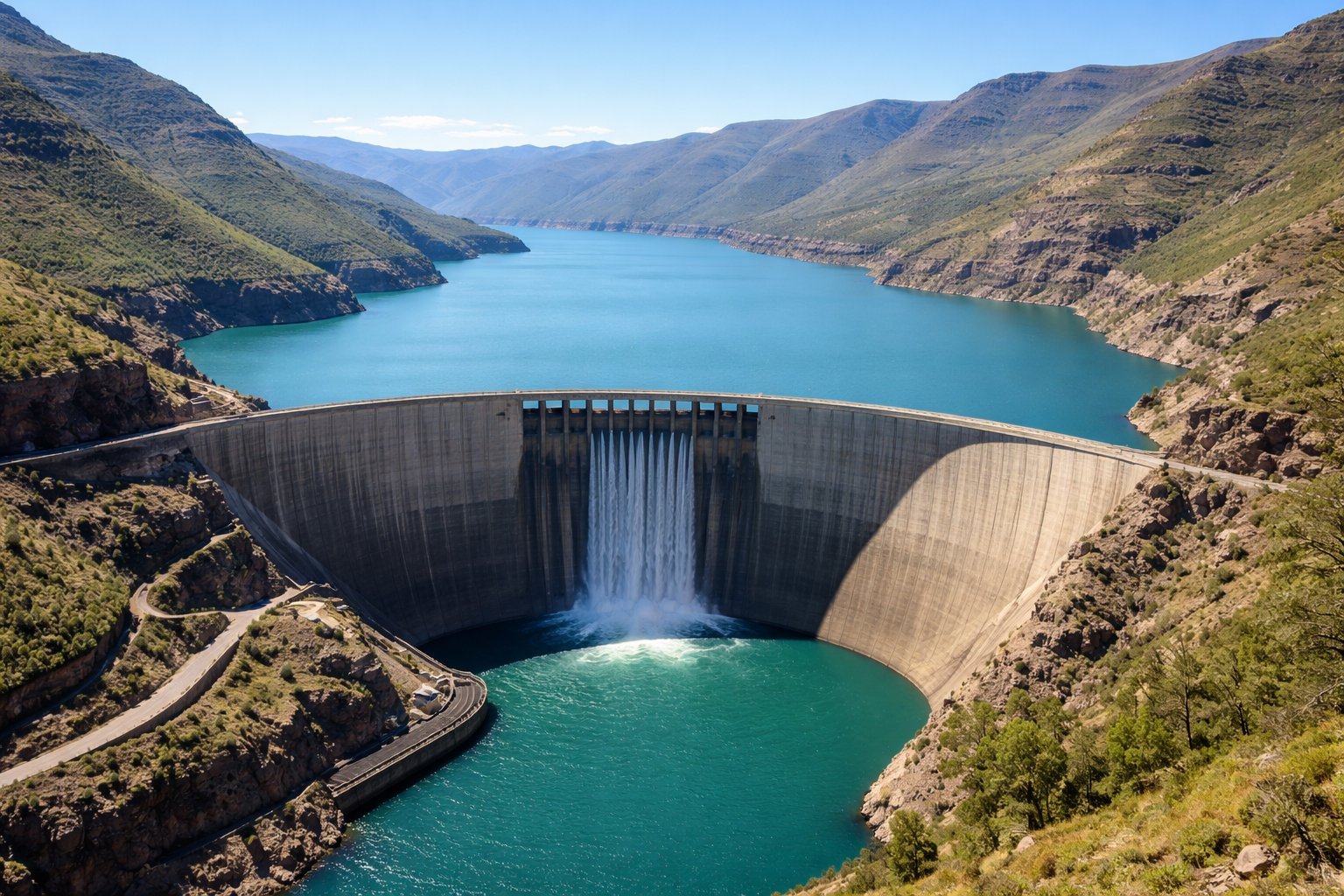
The Katse Dam, completed in 1997 — a 185 m double-curvature concrete arch dam, the second tallest in Africa — plus the Mohale dam, the Matsoku weir and 82 km of transfer tunnels. Katse is the country’s best-known man-made sight, has a visitor centre, and is genuinely worth the drive for the road alone.
Phase II and Polihali
Under construction now. The Polihali Dam on the Senqu, a 165 m concrete-faced rockfill dam, plus a 38 km transfer tunnel to Katse. As of mid-2026 the dam is around 50% complete, with impoundment targeted for the 2027/28 rainy season; two tunnel boring machines are working from the Katse and Polihali ends. It will raise deliveries to South Africa from about 780 to 1,270 million cubic metres a year.
What it costs Lesotho
Villages and grazing land have been flooded and communities resettled, with a long and contested record on compensation; Phase I resettlement is still cited in the literature as a case study in how not to do it, and Phase II has been watched more closely as a result. Fishing, grazing and burial sites have been lost. The roads built for the dams, on the other hand, opened the highlands to the rest of the country for the first time.
The corruption case
Phase I produced one of the most significant international bribery prosecutions of its era: the project’s chief executive Masupha Sole was convicted in Lesotho in 2002 of taking bribes, and several major European and North American engineering firms were convicted or debarred for paying them. Lesotho prosecuting multinationals successfully is a rare thing and Basotho lawyers mention it with justified pride.
The leverage
Water is the one card Lesotho holds against a neighbour that surrounds it entirely, and both governments know exactly how much it is worth. It is also why South Africa has an interest in Lesotho’s political stability that goes well beyond good neighbourliness — and why SADC has intervened here twice.
🌏 Living Inside Someone Else
The border
Around 909 km of it, all with South Africa, with Maseru Bridge the main crossing into Free State province. Fourteen crossings in all, several of them small, seasonal and in the mountains. The border is busy, ordinary and heavily used by Basotho who work, shop, study and get medical treatment on the other side; Maseru and Ladybrand function almost as one town.
Migrant labour
The defining relationship of the twentieth century. Basotho men went to the South African gold mines in enormous numbers for a hundred years; the industry’s contraction since the 1990s has cut those jobs by most of their peak. Basotho women went, and go, into domestic work and into the garment factories at home. Silicosis and tuberculosis compensation claims from ex-miners are a continuing legal issue.
SADC and intervention
South Africa and Botswana intervened militarily in 1998 under a SADC mandate after a disputed election and army revolt; the operation was contested, people were killed and central Maseru was extensively burned and looted. SADC mediated again in 2014–15 and has driven the national reform process since 2018. Lesotho’s sovereignty is real and its room for manoeuvre is not large.
The Lost Lands
The fertile territory west of the Caledon, taken by the Orange Free State in the wars of the 1860s and now part of South Africa’s Free State, is still referred to in Lesotho as the conquered or lost territories. There is no realistic claim and there is a persistent sense of grievance, occasionally voiced by politicians and never pursued.
Beyond the neighbour
Lesotho is a member of the UN, the AU, SADC, SACU and the Commonwealth and punches above its weight diplomatically for a country of 2.3 million. Relations with the United States have been dominated by AGOA and, in 2025, by the tariff; with China by construction contracts, retail traders and the wool episode; and with Taiwan historically by the garment factory owners, most of whom are Taiwanese.
What it is not
Lesotho is not a South African province, a homeland or a bantustan, and the comparison irritates Basotho considerably. It stayed out of the Union in 1910 and out of apartheid’s homeland system entirely, and it sheltered ANC and PAC members while South African commandos raided Maseru to kill them. That distinction was paid for.
🏔️ The Maloti
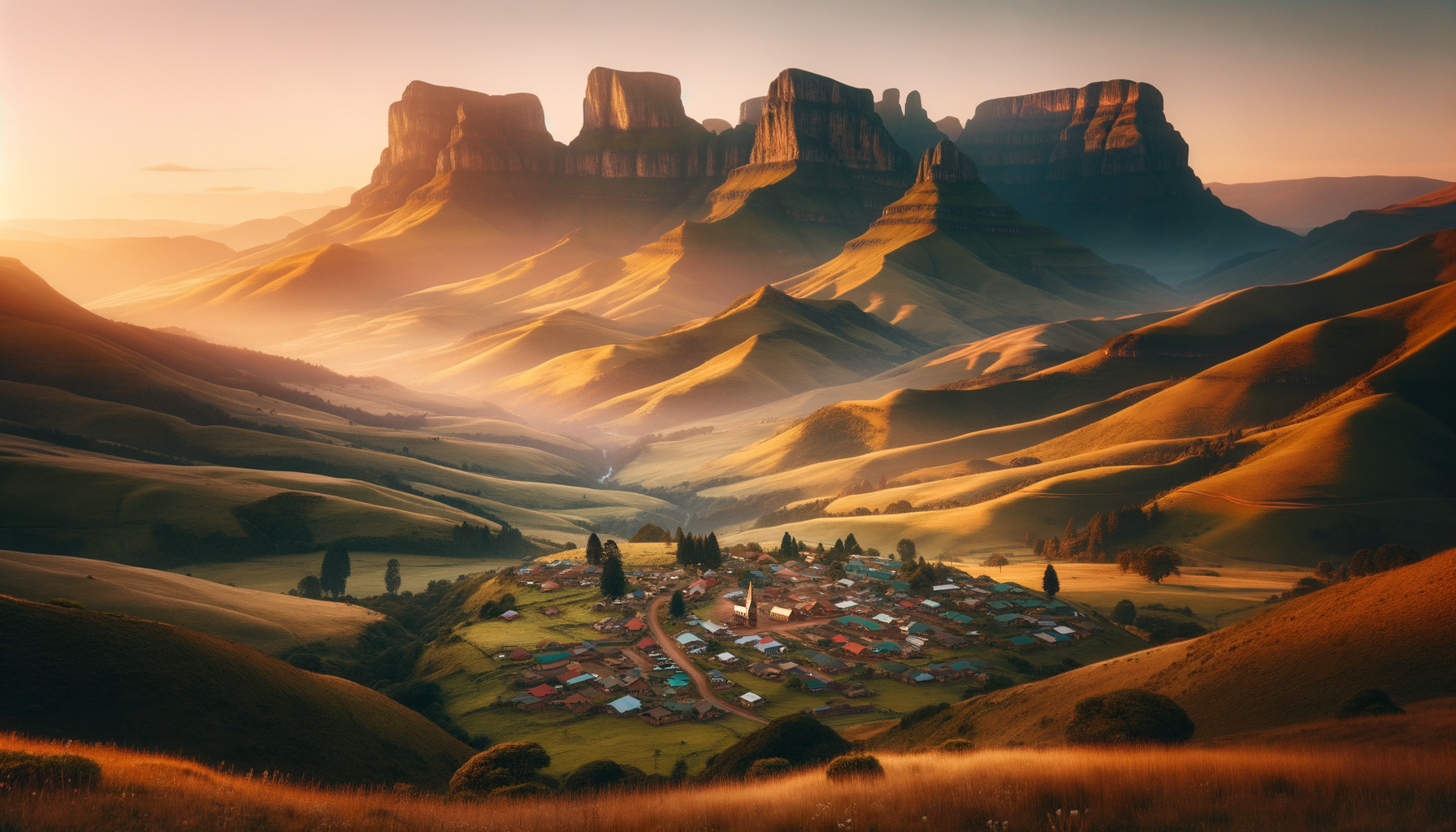
The highlands are the reason to come and they are unlike anywhere else in Africa. This is not savanna and it is not jungle: it is high, treeless, cold grassland cut by black basalt cliffs, with herd boys in blankets on the ridgelines and villages of stone rondavels at the head of valleys that take a day to walk out of.
Thabana Ntlenyana
At 3,482 m the highest mountain in Africa south of Kilimanjaro, and — disappointingly or wonderfully, depending on your temperament — a long walk up a grassy dome rather than a climb. It is usually approached from Sani Top, takes a full day, and rewards you with a view over the whole Drakensberg escarpment falling away into KwaZulu-Natal.
Sehlabathebe
Lesotho’s oldest national park, in the far south-east on the escarpment, and part of the transboundary Maloti-Drakensberg Park that is a UNESCO World Heritage site jointly with South Africa. Weathered sandstone arches and mushroom rocks, high tarns, the endemic Maloti minnow, spiral aloes, San rock art and essentially no people. It is remote, it needs a 4x4 or a horse, and it is the best wilderness in the country.
Ts'ehlanyane
In the Maloti in the north, protecting one of the few patches of indigenous che-che woodland left in Lesotho — the country is otherwise almost treeless, and the difference a valley of old trees makes is startling. Good marked walking, accessible by ordinary car from Butha-Buthe, and the easiest highland park to reach.
Bokong and the passes
Bokong Nature Reserve at 3,090 m has a visitor centre on the edge of a gorge with the Lepaqoa waterfall, which freezes solid in winter. The road to it, over the Mafika Lisiu pass at 3,090 m, is one of the great drives of southern Africa, and the Moteng and Tlaeeng passes in the north are higher still — Tlaeeng at 3,275 m is often called the highest tarred road pass in Africa.
The spiral aloe
Aloe polyphylla, the national plant, grows wild only in the Lesotho highlands, arranges its leaves in a perfect five-row spiral and is extremely difficult to cultivate, which has made it a target for poaching. Seeing one on a mountainside is a small event; buying one is illegal.
Snow
It really does snow here, mostly between May and September, and the country has a small ski resort, Afriski, at 3,050 m near the Mahlasela pass with a single main run. It is more of a curiosity than a skiing destination and it draws South Africans in numbers. Snow closes the high passes without warning and traps vehicles; in winter, ask locally before driving them.
💦 Maletsunyane and Semonkong
The falls
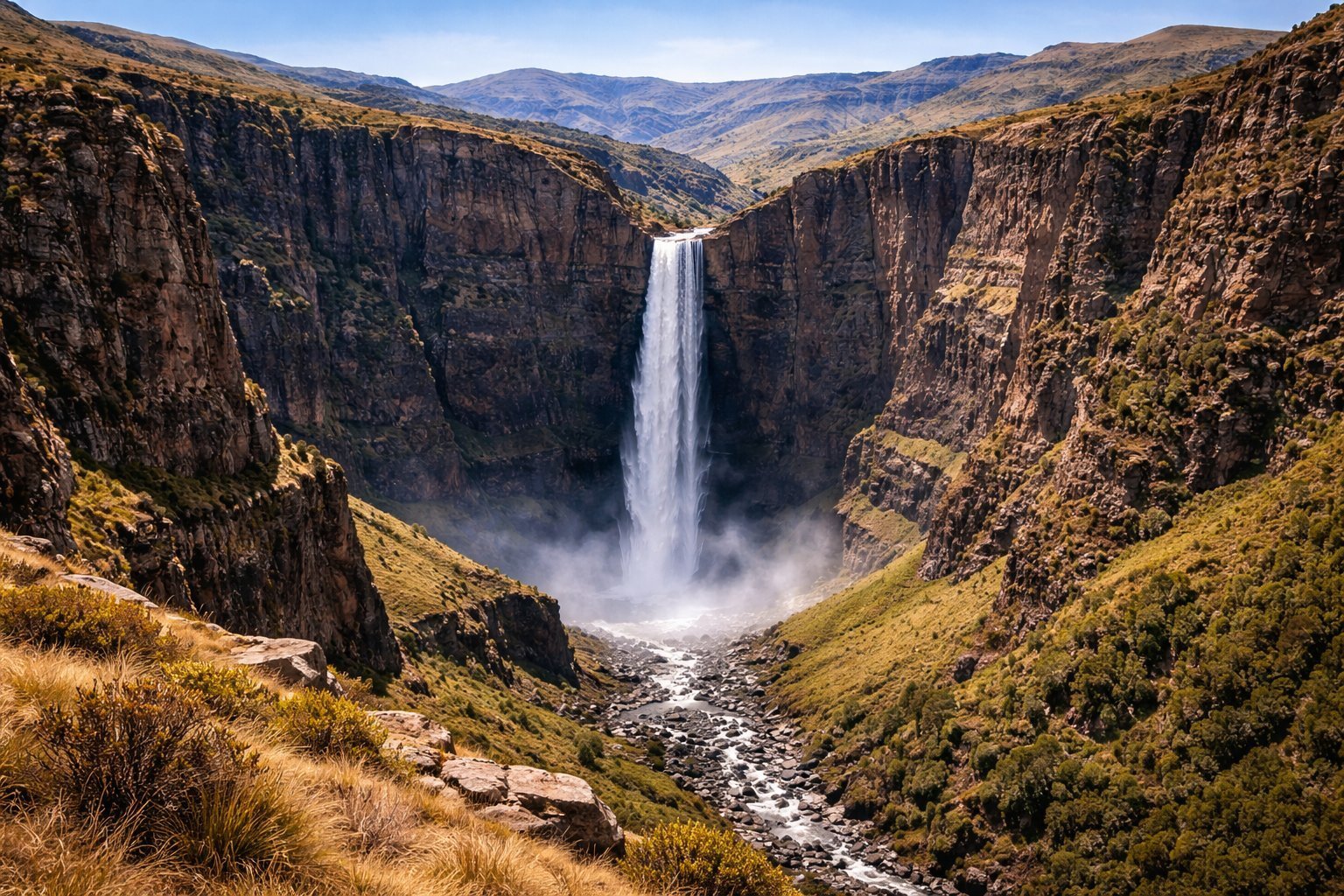
The Maletsunyane falls drop 192 m in a single unbroken plunge into a basalt gorge — one of the highest single-drop waterfalls in Africa. In summer the spray is visible from far off and the noise fills the gorge; in winter the flow drops and the spray freezes on the rocks. The Sesotho name for the settlement above it, Semonkong, means "place of smoke", for the same reason as Mosi-oa-Tunya.
Getting there
Semonkong is about 110 km from Maseru on a road that is now tarred most of the way and takes three hours. The village itself is a highland trading post that fills with horses on market day — more horses than cars, which is not a tourist-board line but simply what the main street looks like.
The abseil
The commercial single-drop abseil beside the falls, run from the Semonkong Lodge, has held a Guinness record as the longest commercially operated single-drop abseil in the world at around 204 m. It takes most of a morning, requires no experience and terrifies people appropriately.
Riding to it
The better way to see the falls is on a Basotho pony from the lodge, which takes a couple of hours each way through grassland and past herd posts and gets you to the viewpoints that the road does not reach. There is also a walk down into the gorge to the plunge pool, which is steep, hot and worth it.
Ketane
Two days further into the mountains, the Ketane falls drop about 122 m and are reached only on horseback or on foot from Semonkong — a classic two- or three-day pony trek with village overnight stops. This is the trip that people who have been to Lesotho talk about afterwards.
A practical note
Winter mornings at Semonkong sit around or below freezing and the lodge fires matter. Summer afternoons bring violent electrical storms onto exposed ground, which is a genuine hazard on a horse on a ridge; local guides watch the sky and you should do what they do.
🛡️ Thaba Bosiu
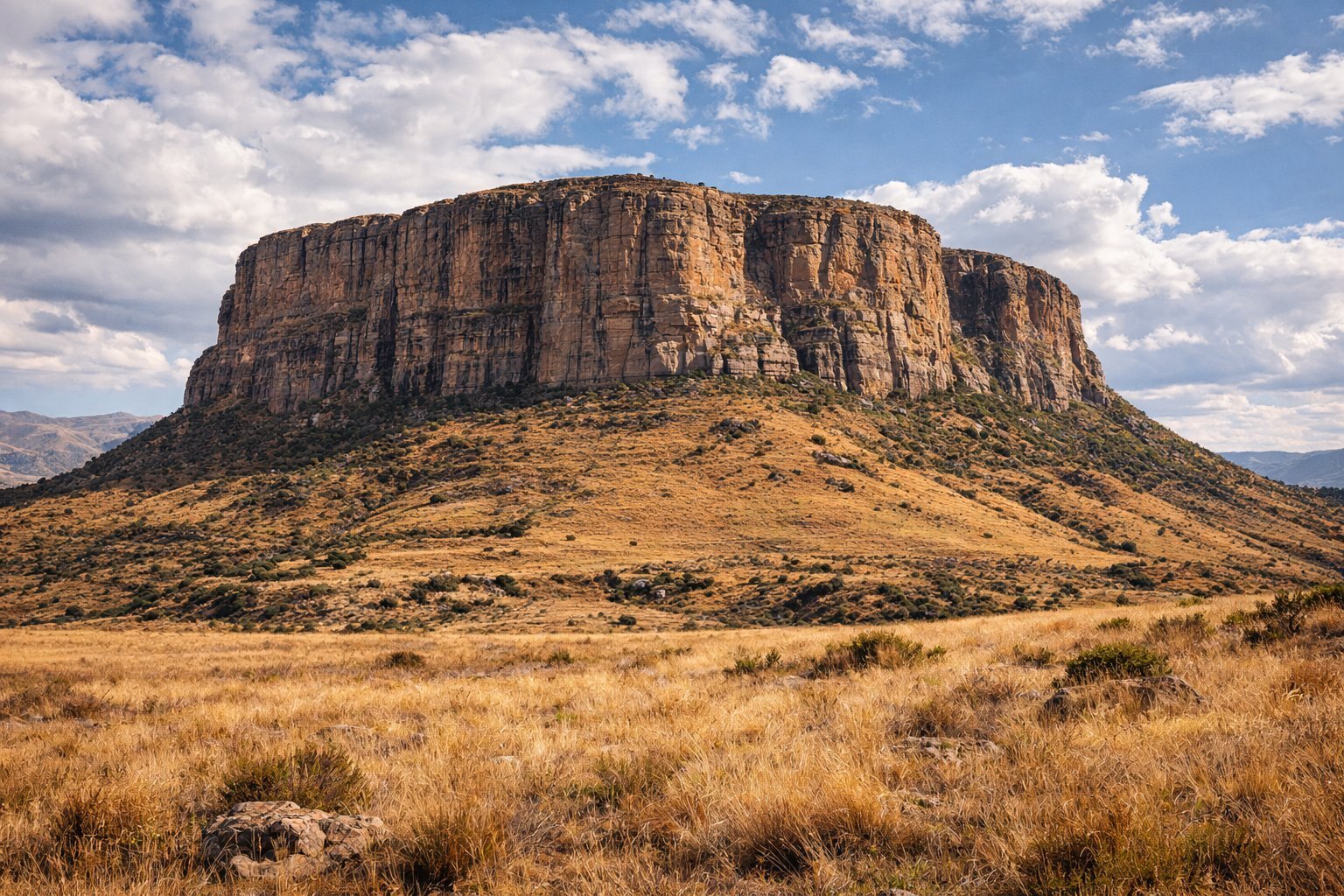
Twenty-four kilometres east of Maseru, a flat-topped sandstone mountain rises about 120 m out of the plain with sheer cliffs on every side and a few narrow passes to the top. This is where Lesotho was made, and it is the most important place in the country.
Why it held
Moshoeshoe I moved his people here in 1824. The plateau on top is about two square kilometres, has permanent springs and grazing, and can be reached only by a handful of steep passes that a small number of defenders can hold. Attackers arriving at the base found themselves under boulders rolled from above. It was besieged by Ndebele, by the Orange Free State and by a British force under Sir George Cathcart in 1852 — and it was never taken.
What is on top
The ruins of Moshoeshoe’s village and court, the foundations of the missionaries’ houses, the remains of the defensive passes and the royal burial ground, where Moshoeshoe I and later kings including Moshoeshoe II are buried. It is a working national shrine as much as an archaeological site, and visitors are expected to behave accordingly.
Mount Qiloane
Visible from the top: a conical hill with a distinctive tapering point, said to be the model for the mokorotlo, the Basotho hat on the national flag. Whether the hat copies the hill or the story came later, the association is fixed in national symbolism and every Mosotho will point it out to you.
The visit
There is a visitor centre and a cultural village at the base, and access to the summit is with a guide — this is not optional and it is the right arrangement, because the interest is entirely in what the guide tells you. The walk up takes about half an hour. Allow two hours in total and go in the morning before the heat.
Moshoeshoe’s Day
11 March, the anniversary of his death, is the main national holiday and the day the site matters most. Expect ceremonies, blankets, horses and speeches. If you can time a visit to Lesotho around one date, this is a strong candidate.
The other royal sites
Matsieng, the traditional royal village south of Maseru, remains the seat of the paramount chieftaincy. The Morija mission a little further on holds the museum and archives that are the best single collection on Basotho history anywhere — small, serious and worth an afternoon.
🏘️ Maseru, Morija, Malealea
Maseru
A low-rise capital of around 350,000 on the Caledon river, right against the South African border, and nobody’s idea of a beautiful city — much of the centre was burned and looted in 1998 and rebuilt as shopping centres. What it has: the Basotho Hat craft shop in a building shaped like a mokorotlo, the Maseru Mall, a decent restaurant scene by regional standards, and the practical business of a country. Most visitors use it as a first and last night.
Morija
Forty kilometres south, the site of the first mission station of 1833 and the intellectual capital of the country. The Morija Museum and Archives holds the best collection on Basotho history, culture and palaeontology in existence, including dinosaur footprints in the hills above. The Morija Arts and Cultural Festival, when it runs, is the country’s main cultural event.
Malealea
A lodge in the western foothills that has become, over decades, the standard base for pony trekking and village walks in Lesotho, with a long-running relationship with the surrounding villages and a development trust attached. Sunset from the Gates of Paradise pass above it is the postcard everyone brings home. If you have three days in Lesotho and no vehicle, this is where to spend them.
Roma
The university town, twenty-five miles from Maseru in a bowl of sandstone cliffs, home to the National University of Lesotho and to a Catholic mission that has been there since 1862. It is green, quiet and has some of the best short walks near the capital.
Teyateyaneng and the crafts
TY, an hour north of Maseru, is the tapestry and weaving centre of the country, with several workshops making mohair rugs and wall hangings that are genuinely good and cost a fraction of what they fetch abroad. Along with Thaba-Tseka pottery and the blanket shops in Maseru, it is where to buy things that were made here.
The dinosaur towns
Quthing (Moyeni) in the far south has a well-known trackway of footprints right beside the road under a shelter, and Leribe in the north has another. Both are casually protected, both are real, and in both cases somebody local will appear and show you around for a small fee, which is the correct arrangement.
🚙 Passes, Ponies and the Sani
The Sani Pass
The famous one, and the way most South Africans enter Lesotho: a rough 4x4 track climbing about 1,300 m in eight kilometres of hairpins from KwaZulu-Natal to the border post at 2,876 m, with the Sani Mountain Lodge at the top advertising itself as the highest pub in Africa. It has been progressively surfaced on the South African side, which has taken some of the edge off; the views have not changed.
The mountain road
The tarred A1 and A3 through the highlands — Butha-Buthe over Moteng and Mahlasela to Oxbow and Mokhotlong, or Maseru to Thaba-Tseka via Katse — are among the great drives in Africa: sustained altitude, no traffic, and passes above 3,000 m. Fuel stops are far apart and you should fill up whenever you can.
Ponies
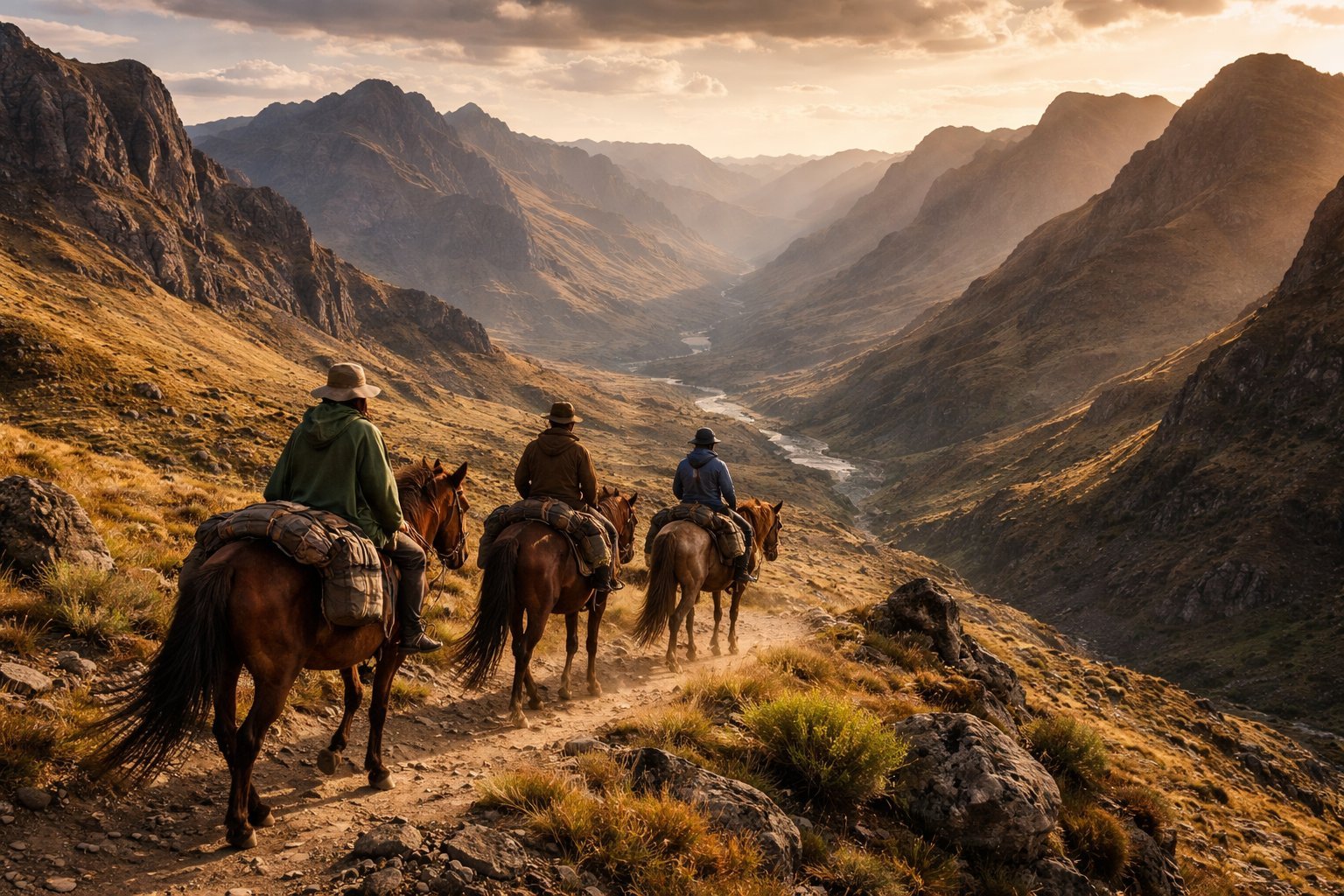
The Basotho pony, bred from Javanese and Arab horses brought to the Cape and hardened for two centuries on this terrain, is small, extraordinarily sure-footed and still genuine transport in the highlands, not a tourist novelty. Trekking is arranged through lodges at Malealea, Semonkong, Ramabanta and Roma, usually with a local guide and village overnight stops, and it is the best way to see the country there is.
The state of the roads
Main routes are tarred and reasonable; everything else is gravel, rutted and, after summer storms, sometimes gone. River crossings without bridges are normal in the highlands. A 4x4 with clearance is required for anything off the main roads, and driving after dark anywhere is a bad idea because of livestock, pedestrians and unlit vehicles.
Public transport
Minibus taxis and shared sedans run between towns from ranks in Maseru, cheaply and without timetables; they leave when full and go where the passengers are going. It works, it is slow, and it does not reach most of the places worth going. There are no trains and one very small airport with limited scheduled service.
Walking
Lesotho is a walking country — there is a footpath between every pair of villages and people use them daily. There is no formal long-distance trail network, but guided multi-day walks from the lodges are excellent and cheap. Altitude, sun and afternoon storms are the three things to plan around.
🎨 The San and Their Paintings
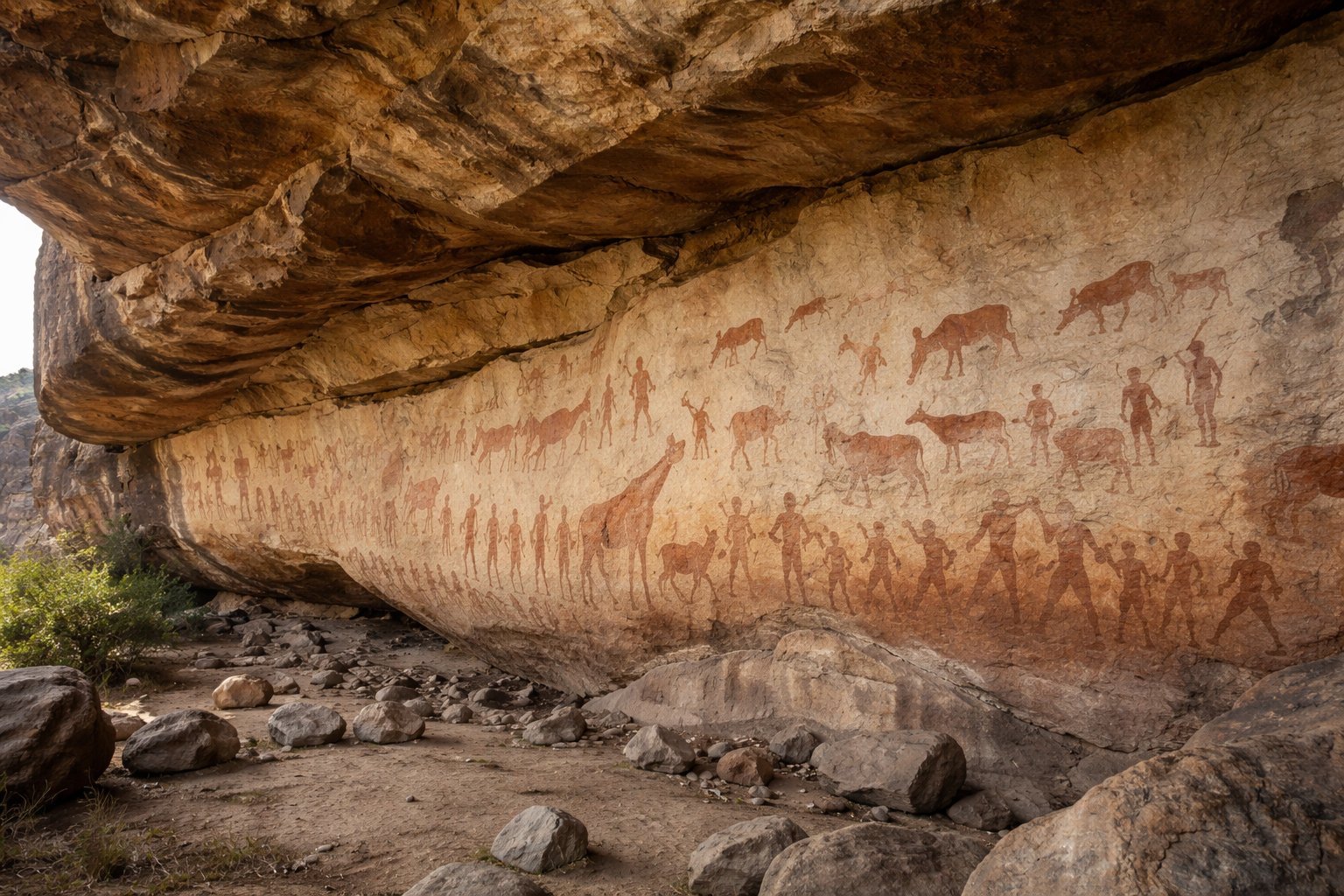
Before the Basotho there were the San, hunter-gatherers who lived in this landscape for tens of thousands of years and left several thousand painted shelters across Lesotho and the Drakensberg. It is one of the richest concentrations of rock art anywhere in the world, and it is almost entirely unvisited.
What is painted
Eland above all — the animal at the centre of San spiritual life — along with rhebok, cattle, human figures, hunts, dances and the therianthropes, part-human part-animal, that are read as depictions of the trance experience of shamans. The pigments are ochre, haematite and white clay bound with blood and fat, applied under sandstone overhangs where the overhang protected them.
Where to see it
Ha Baroana, an hour east of Maseru, is the most accessible site and has suffered from vandalism and from people wetting the paintings to photograph them, which destroys them. Sehlabathebe has sites in the park; Liphofung in the north is a cave with paintings and a small interpretation centre and is the easiest introduction; and the transboundary Maloti-Drakensberg Park is inscribed by UNESCO partly for the art on the South African side.
How to visit it responsibly
Do not touch the paintings, do not wet them, do not use flash, and go with a guide from the community that looks after the site — the fee is small and it is the mechanism by which these places get protected at all. Several sites have been badly damaged by visitors doing the opposite.
What happened to the San
They were displaced by farming societies moving in, then hunted systematically by Boer commandos and colonial forces in the nineteenth century, with the last recorded organised hunts in the Drakensberg in the 1870s. There is no San community left in Lesotho. Some Sesotho vocabulary, some of the click sounds in southern Sotho languages, and a great deal of paint are what remain.
The dinosaurs, too
The same sandstone that holds the paintings holds the footprints. Lesotho’s Elliot and Clarens formations are internationally important for Early Jurassic vertebrates: Lesothosaurus was described from here, and trackways at Moyeni, Morija, Leribe and Subeng are accessible and unfenced.
An honest caveat
Lesotho’s heritage sites are under-resourced. Signage is minimal, protection is often a padlock and a local caretaker, and several important sites have degraded within living memory. That is not a reason to skip them — visiting with a local guide is the main thing that generates any funding at all — but do not expect a museum.
🧣 The Blanket, the Hat and the Horse
Three objects carry Basotho identity, and all three are in daily use rather than in a museum: a wool blanket worn as a garment, a conical straw hat that is on the flag, and a small tough horse.
The Basotho blanket
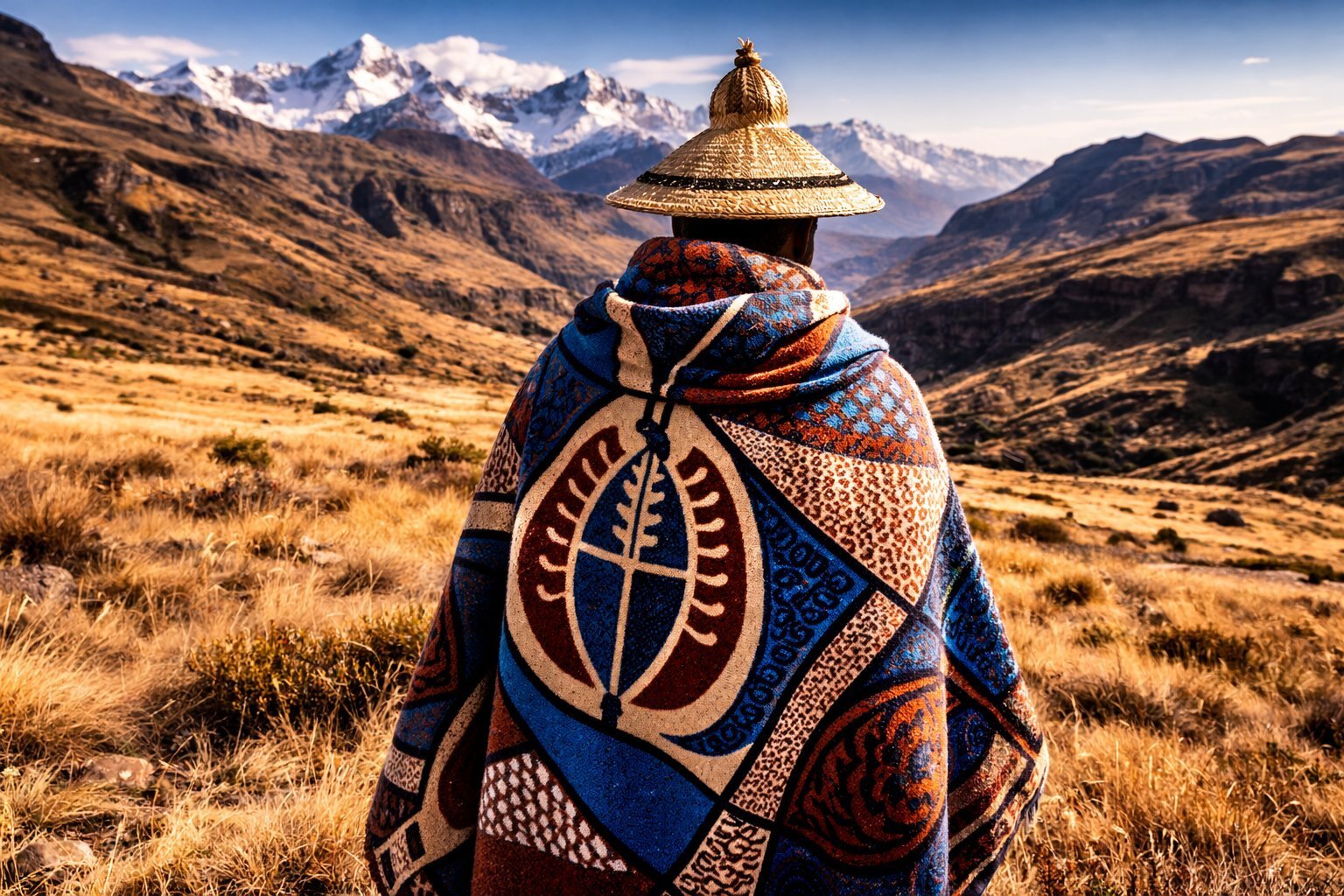
Worn pinned at the shoulder, in the cold, by men and women, every day, all over the country. The tradition is usually traced to the 1860s, when Moshoeshoe was given a blanket and adopted it, and the blankets themselves have been manufactured in England ever since — the Aranda and Victoria England brands, made in Yorkshire, with names like Seanamarena and Sefate and motifs of maize cobs, shields and crowns. A pinstripe runs vertically through the design and is traditionally worn upright, for good crops.
What a blanket says
A great deal. Specific designs mark initiation, marriage, chieftaincy and mourning; a new bride receives a particular blanket; a chief wears another. Buying one is easy and cheap in Maseru; wearing one appropriately is a question worth asking a Mosotho about rather than guessing at.
The mokorotlo
The conical straw hat with a distinctive knotted topknot, woven from local grass, worn mostly by men and reproduced on the flag, the number plates and the currency. Its shape is associated with Mount Qiloane. A real woven one is a craft object; the printed souvenir versions are not the same thing.
The pony
Introduced in the nineteenth century and bred into something specific to this terrain: small, calm, immensely sure-footed and able to work all day at altitude. Horses remain genuine transport in the highlands — you will see men riding to a shop, to a funeral, to a clinic — and horse racing at village level is a serious business with serious betting.
Music and dance
Famo is the national popular music: accordion, drum, deep sung Sesotho poetry, originating in the mining hostels and shebeens of the twentieth century. It is genuinely loved and it has a serious problem — rival famo fan groups have been linked to organised violence and gang killings on both sides of the border, and several famo groups were banned in Lesotho in 2024. Mokhibo (a kneeling women’s dance) and mohobelo (a men’s striding dance) are the traditional forms.
Manners
Greet before anything else — lumela and an enquiry after health precede any transaction, and skipping it reads as rude. Handshakes are soft and often two-handed. Chiefs and elders are addressed first. Ask before photographing people, always, and especially at initiation sites, which you should not approach at all. Modesty in dress is expected in villages.
🍲 The Food
Lesotho's cooking is plain, filling and built on maize, sorghum, beans, wild greens and, on occasions that matter, meat. It is closely related to South African Sotho and Zulu cooking and it is not a cuisine that travels or that restaurants sell — the good version is in a home.
Papa
The centre of every meal: stiff maize-meal porridge, cooked white and firm enough to be broken off with the fingers and used to scoop the rest. It is called papa here and pap across the border. Softer versions are eaten for breakfast. If you eat one Lesotho dish, it is this, and it comes with everything.
Moroho
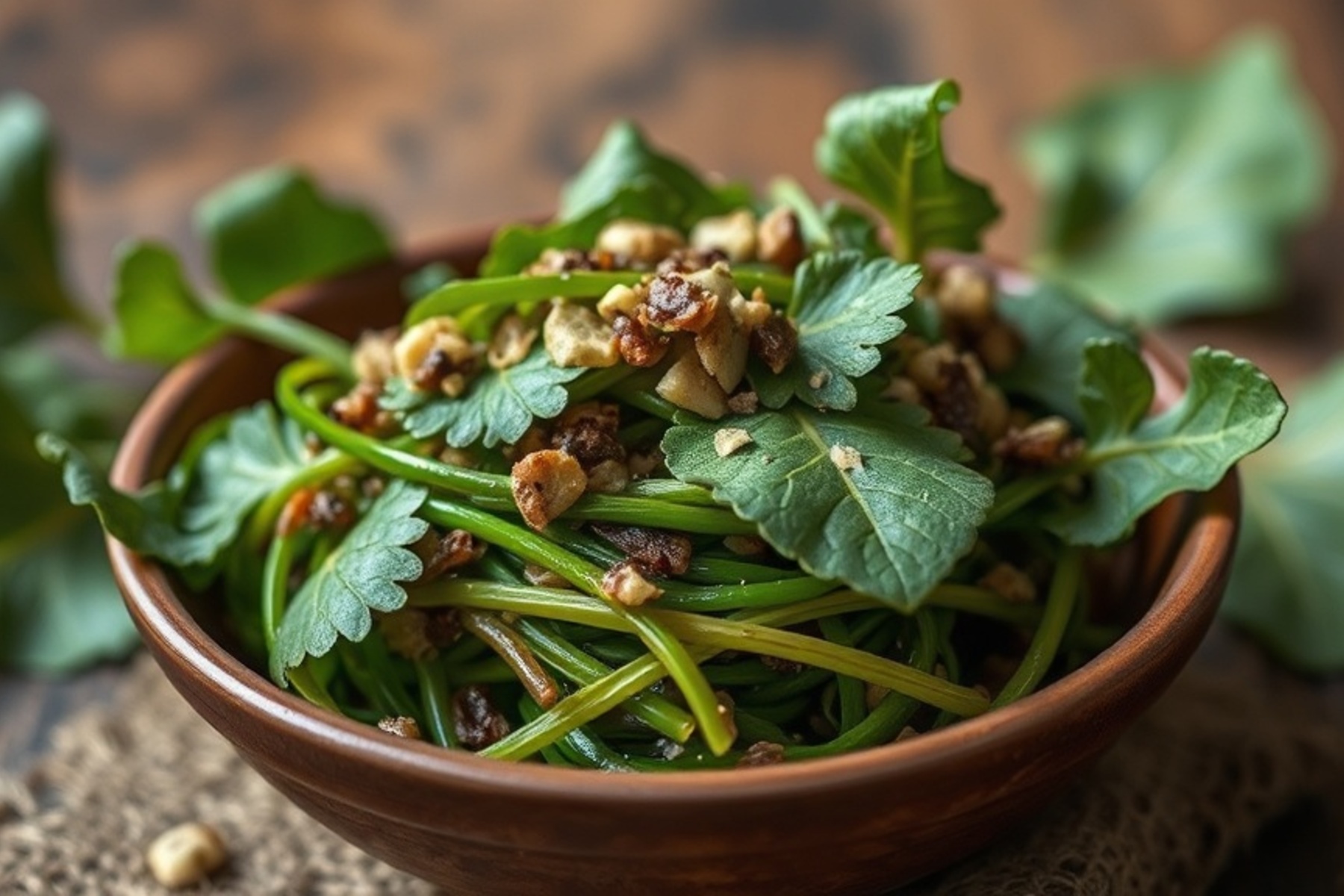
Cooked leafy greens — wild spinach, pumpkin leaves, rape, wild mustard, whatever the season gives — stewed soft with onion and often a little tomato. Nutritionally it is what keeps rural diets standing up and culturally it is the standard partner to papa. Every household has an opinion about which greens are best.
Meat
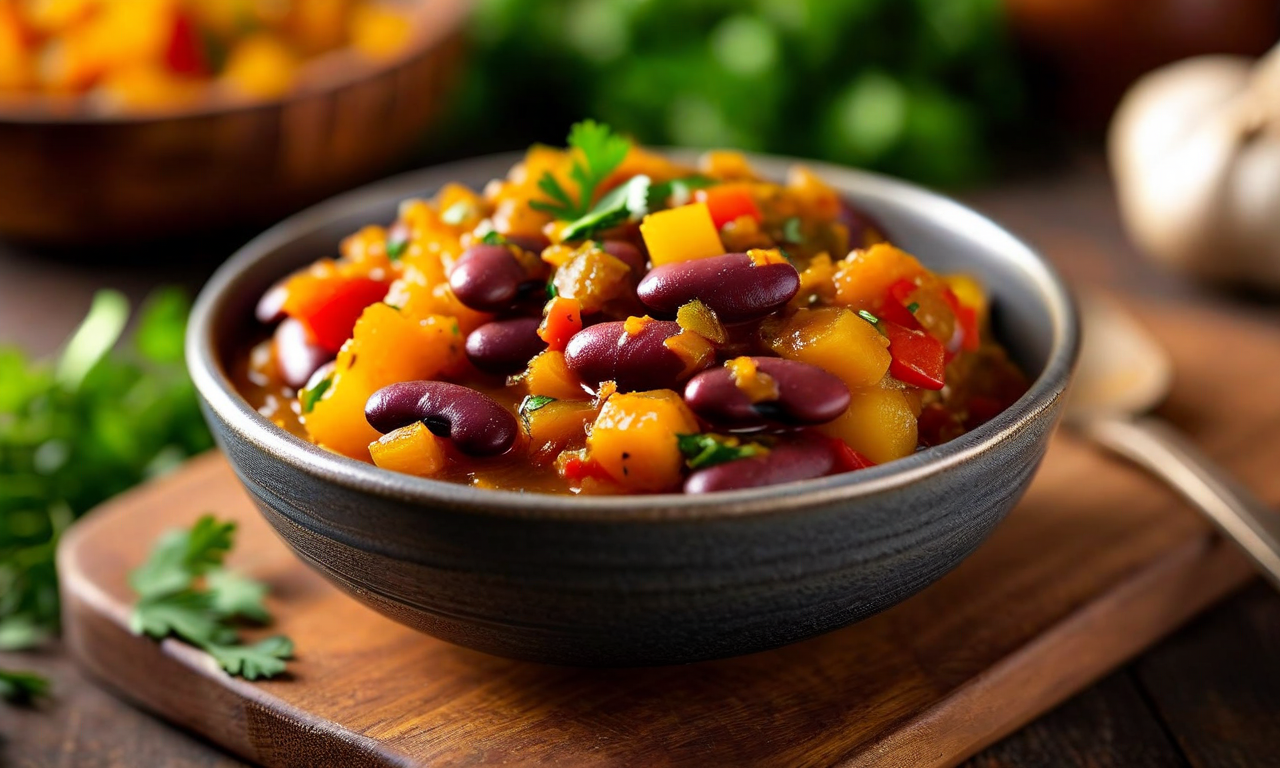
Mutton and beef, usually stewed long (nama), and mutton is the celebration food; a slaughtered sheep is what marks a wedding, a funeral or an important guest. Chakalaka, a spicy relish of beans, peppers, onion and curry spice, comes from South Africa and is universal here. Grilled meat — braai — is a shared regional institution.
Sorghum
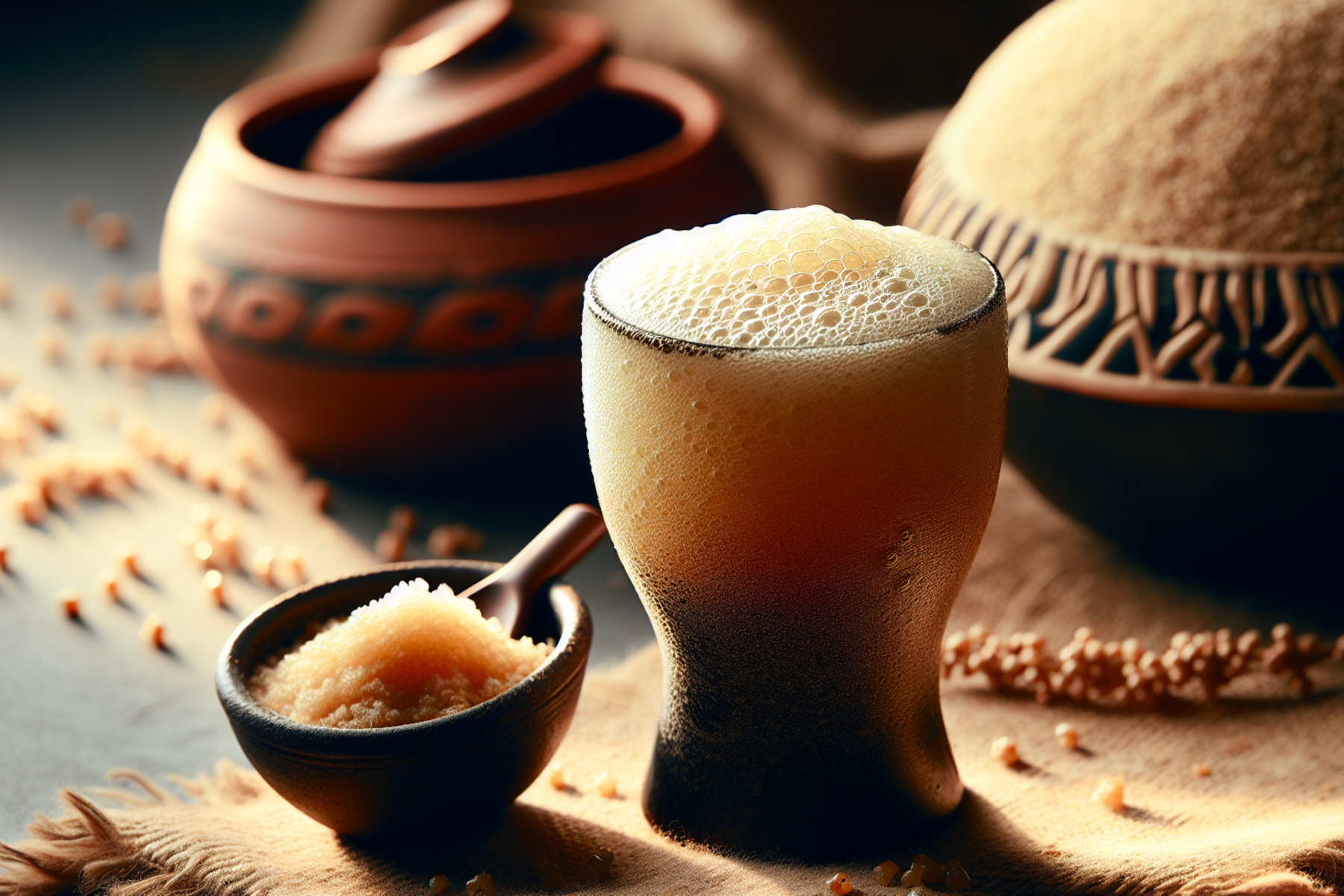
Older than maize in this country and still important. Motoho is fermented sorghum porridge, sour, thin enough to drink from a cup and eaten at breakfast; the same fermentation, taken further, gives the traditional beer. Sorghum grows where maize struggles, which in a warming climate is becoming an argument for it again.
The rest
Likhobe, a slow-cooked mix of samp, beans and maize; sesotho bread baked in a pot; roasted maize on the cob from roadside braziers; and marotho and other wild plants that people gather. Fruit is seasonal and limited: peaches around houses, and cactus pears in the lowlands.
Eating out
Maseru has South African chains, some good Chinese and Indian restaurants and a handful of genuinely good places; outside the capital the choice narrows to lodge kitchens and small cafés. The lodges at Malealea, Semonkong and Roma do the traditional dishes properly and are the realistic way for a visitor to eat Basotho food.
👨🍳 Two Recipes
The everyday plate, and the sour breakfast that goes with it.
Papa le Moroho
Serves 4 · 45 minutes
Ingredients: For the papa: 500 g white maize meal (fine or medium; South African or Zimbabwean brands are ideal), 1.2 litres water, 1 tsp salt. For the moroho: 500 g leafy greens (traditionally wild spinach, pumpkin or rape leaves; kale, chard or spring greens work), 1 onion sliced, 1 tomato chopped, 2 tbsp oil, salt and pepper, optional 1 chopped green chilli.
Method: Bring a litre of salted water to the boil in a heavy pot. Mix the remaining 200 ml cold water into about a quarter of the maize meal to a smooth slurry and stir it into the boiling water; let it cook for five minutes. Now sprinkle in the rest of the meal without stirring, cover, and leave over a low heat for ten minutes. Then take a wooden spoon and work it hard, pressing and turning, until it is smooth and very stiff, adding a little hot water only if it will not come together; cover again and steam on the lowest heat for 20 minutes. Meanwhile wash the greens, strip out any thick stems and shred them. Soften the onion in the oil, add the tomato and the chilli and cook to a pulp, then add the greens with a splash of water, cover and cook 10 to 15 minutes until completely tender — they should be soft and dark, never crisp. Season. Serve the papa turned out as a firm mound with the moroho beside it.
💡 Papa should be stiff enough to break off a piece with your fingers and dent with your thumb. If it pours, it is porridge and not papa.
Motoho
Serves 4 · 20 minutes plus 2–3 days fermenting
Ingredients: 200 g sorghum meal (or fine mabele meal; millet meal works), 1.5 litres water, a pinch of salt, sugar to taste at the table.
Method: Mix the sorghum meal with 500 ml of lukewarm water in a bowl or jug to a smooth thin batter, cover with a cloth and leave in a warm place for two to three days, stirring once a day, until it smells distinctly sour and has begun to bubble — that souring is the whole point of the dish. Bring the remaining litre of water to the boil with the salt. Stir the fermented batter well, then pour it slowly into the boiling water, whisking, and simmer gently for about 15 minutes, stirring often, until it thickens to the consistency of thin cream. Serve hot in cups or bowls, with sugar available for those who want it.
💡 The consistency should be drinkable but not watery. Keep a cup of the fermented batter back as a starter and the next batch will be ready in a day.
🍺 Beer, Joala and What Is in the Cup
Joala
Traditional sorghum beer, brewed at home, thick, sour, low in alcohol and drunk communally from a shared container. A white flag flying on a pole outside a house means there is fresh joala for sale inside, and that convention still works in villages across the country. It is a social institution attached to funerals, feasts and work parties as much as to drinking.
The flag code
Not only white. A flag outside a rural house advertises what is for sale: white for joala, yellow or green for other home brews, red for meat, and so on. It is one of the most charming practical customs in southern Africa and it is entirely functional.
Commercial beer
Maluti lager, brewed in Maseru, is the national beer and is decent and cold; South African brands are everywhere. Lesotho’s brewery also produces the ubiquitous sorghum beer in cartons under South African brand names, which is what most people actually drink.
Spirits and wine
Imported South African spirits and wine are widely available in Maseru and in lodges. Lesotho itself has no meaningful wine industry — the altitude and the frost see to that — and any claim to the contrary should be treated with suspicion; see the note about images at the foot of this page.
Tea and the everyday
Strong tea with a great deal of milk and sugar; instant coffee; and mageu, a thick non-alcoholic fermented maize drink sold in cartons, which is closely related to motoho and is drunk cold as a meal in itself by workers all over southern Africa.
Practicalities
Alcohol is legal and unremarkable, sold in bottle stores and bars, and drink-driving is both illegal and common, which is one more reason not to drive at night. Rural drinking is communal and hospitable; if you are handed a container of joala the polite thing is to take some and pass it on.
🗣️ Sesotho and English
Lesotho is one of the most linguistically uniform countries in Africa. Sesotho and English are both official; almost everyone speaks Sesotho as a first language, and English is the language of government, secondary education and business, widely spoken in towns and much less so in the mountains.
Sesotho
A Bantu language of the Sotho-Tswana group, mutually intelligible with the Setswana of Botswana and the Sepedi of South Africa at a stretch. It has a noun-class system, high and low tone, and a few click consonants borrowed from the San languages. Lesotho and South Africa use different orthographies for the same language, which is a small permanent irritation — Lesotho writes Lesotho and khotso where South Africa writes Lesuthu-style forms.
A survival list
Lumela (pronounced doo-MEH-la) — hello, to one person; lumelang to several. U phela joang? — how are you? Ke phela hantle — I am well. Kea leboha — thank you. Ee / che — yes / no. Ke bokae? — how much? Sala hantle — goodbye (to the one staying). Greeting properly before you ask anything is not optional politeness here; it is the structure of the conversation.
Khotso, pula, nala
Peace, rain, prosperity — the national motto, on the coat of arms, and a genuinely used greeting and toast. That rain sits between peace and prosperity in a country’s motto tells you what farming at this altitude is like.
The missionaries and the press
Sesotho was first written down by the French Protestant missionaries who arrived in 1833, and the press they set up at Morija in 1861 is one of the oldest in Africa. It printed the Bible, the first Sesotho newspaper Leselinyana la Lesotho (1863), and the novels of Thomas Mofolo — whose Chaka, written here in 1909, is one of the foundational works of modern African literature.
English in practice
Fine in Maseru, in lodges, with anyone who has been to secondary school and with most people under forty in the lowlands. Thinner in the highlands and among older people. Guides and lodge staff speak it well. A few words of Sesotho will change how you are treated more than in almost any country covered in this factbook.
Names
Sesotho place names are descriptive and worth decoding: Thaba is mountain, Ha means "at the place of" and prefixes a chief’s name, Maletsunyane and Semonkong describe water and smoke. Knowing that Ha Baroana means roughly "place of the little Bushmen" tells you what is painted there.
⛪ Churches, Ancestors and Initiation
Overwhelmingly Christian
Around 90% of Basotho identify as Christian, the legacy of the French Protestant mission of 1833 and the Catholic mission that followed in 1862. Roman Catholics are the largest single group, with the Lesotho Evangelical Church and the Anglicans substantial and a large and growing number of Pentecostal and African Independent churches. Sunday is genuinely observed.
The missions built the country
In a territory Britain barely administered, missions built the schools, the hospitals, the printing press and the literacy on which everything else rests — Lesotho’s adult literacy has long been among the highest in Africa and this is why. Morija, Roma and Mazenod are mission towns first and everything else second.
The older layer
Belief in balimo, the ancestors, coexists with Christianity rather than competing with it for many Basotho: ancestors are consulted, appeased and thanked, and a family ritual before an important undertaking is normal for people who also go to church. Traditional healers (lingaka) practise alongside clinics and are consulted first by many people.
Initiation
Lebollo, the initiation schools for boys (and, separately, for girls), remains widely practised, taking place in bush camps away from villages, usually in winter. It is closed to outsiders absolutely: do not approach a camp, do not photograph initiates, and do not ask detailed questions. There is also a live public argument in Lesotho about deaths and injuries at initiation schools and about their interaction with formal schooling.
Church and politics
The Christian Council of Lesotho and the Catholic bishops have repeatedly acted as mediators in the country’s political crises, including after 1998 and during the SADC-led reform process. In a small country with contested institutions, the churches are one of the few bodies most people accept as broadly neutral.
For visitors
A Sunday service is one of the easiest and warmest ways into Lesotho for a visitor and you will be welcomed conspicuously; dress properly and expect to be introduced to the congregation. Photograph the building, not the worshippers, unless invited.
👥 The People and What They Are Carrying
HIV
Lesotho has one of the highest HIV prevalence rates in the world — historically around a fifth of adults. The cause is not mysterious: a century of circular migrant labour to the South African mines, families separated for most of the year, and the epidemic arriving along those routes. The response since 2016 has been genuinely impressive, with near-universal treatment access, mother-to-child transmission largely interrupted and prevalence falling among the young. It was built substantially on PEPFAR and USAID money, and the closure of most USAID programming in 2025 removed a large part of the scaffolding.
Life expectancy
Around the mid-fifties — among the lowest in the world, and a direct consequence of HIV and tuberculosis, the latter with one of the world’s highest incidence rates, much of it in ex-miners with silicosis. The demographic hole this leaves is visible in villages: grandparents raising grandchildren is the standard family shape in much of rural Lesotho.
Young and out of work
The median age is around 24, unemployment is roughly 30% overall and much worse among the young, and the state of disaster declared in 2025 was explicitly about youth unemployment. The routes out have historically been the mines, the factories and South Africa; the mines have shrunk, the factories were hit by the tariff, and South Africa has tightened.
Herd boys
Boys taken out of school to look after cattle and sheep at remote highland posts, sometimes for years, is a real and persistent phenomenon and one reason male literacy in Lesotho is lower than female literacy — an unusual inversion. There are night schools and NGO programmes aimed at it. If you trek in the highlands, the young men you meet at cattle posts are often living there for the season.
Women
Lesotho has high female literacy, strong female participation in education and the workforce, and the garment industry — whose workforce is overwhelmingly women — put cash income into women’s hands on a scale nothing else has. Against that: gender-based violence rates are high, customary law and civil law still pull against each other on inheritance and marriage, and the 2025 job losses fell hardest on women.
Emigration and the diaspora
Movement to South Africa for work is so normal that it barely counts as emigration; the harder question is the loss of nurses, teachers and doctors to South Africa, Britain and the Gulf. A country of 2.3 million that trains health workers for export has a structural problem it cannot fix with salaries alone.
📅 When to Go
March to May: the best
The end of the summer rains. Green mountains, clear air, warm days, cold nights, rivers still running for the waterfalls, and the roads dry. Autumn light in the Maloti is exceptional. If you can choose, choose April.
September to November
The other good window. Spring, warming, the aloes and wildflowers out, before the heavy rain starts in December. Late November begins the thunderstorm season, which is dramatic and inconvenient in equal measure.
December to February: summer
Warm to hot in the lowlands, spectacular in the mountains and wet — this is when most of the year’s rain falls, in violent afternoon thunderstorms. The waterfalls are at their best and the dirt roads are at their worst; river crossings can become impassable within an hour. It is also the South African school holiday, so lodges fill.
June to August: winter
Cold, dry and brilliantly clear, with lowland days around 15 °C, hard frost at night and highland temperatures well below freezing. Snow closes the high passes without warning. What you get for it: the clearest air of the year, empty roads, Afriski, and the sight of the country in blankets, which is when Lesotho looks most like itself.
Dates worth planning around
Moshoeshoe’s Day, 11 March, the main national holiday, best observed at Thaba Bosiu. Independence Day, 4 October. The Morija Arts and Cultural Festival, when it runs, usually around the end of September. And horse races, which happen at village level throughout the year and are not advertised anywhere you can read.
Altitude
Everything in Lesotho is at least 1,400 m and the highlands are above 3,000 m. That means strong sun, cold nights in every season, and enough thinness of air that unfit visitors notice it on the first day. Two or three days at Maseru altitude before going high is sensible and rarely done.
🚗 Getting There and Around
Flying
Moshoeshoe I International (MSU) outside Maseru has very limited service — in practice a short hop to and from Johannesburg (OR Tambo) with the national carrier. Almost every visitor arrives via Johannesburg, either on that flight or, more commonly, by road. Do not build a tight itinerary around the Maseru flight schedule.
By road from South Africa
The realistic way in. Johannesburg to Maseru Bridge is about 430 km and four and a half to five hours on good roads; Durban to the Sani Pass is a similar distance and a very different drive. Hire cars in South Africa usually need written permission from the rental company to cross into Lesotho, plus a cross-border fee — arrange this at booking, not at the border.
Borders
Fourteen crossings. Maseru Bridge is open 24 hours and busy; Ficksburg, Caledonspoort and Qacha’s Nek are the other main ones; Sani Pass is 4x4-only and closes at 16:00, which strands people every year. Small mountain posts keep short hours and can close in snow. Formalities are quick and low-key: passport, a small vehicle charge, a stamp.
Driving
Left-hand side, as in South Africa. Main roads are tarred and fine; everything else needs a 4x4 with clearance. The real hazards are animals on the road, pedestrians in dark clothing, unlit vehicles and the mountain passes. Do not drive at night outside town. Fuel is available in towns and scarce in the highlands, so fill up on sight.
Public transport
Minibus taxis and shared sedans from ranks in Maseru serve every town, cheaply, leaving when full. They are how the country moves and they are not designed for luggage or for reaching viewpoints. There are no trains for passengers.
Lodges and 4x4s
The practical answer for most visitors is to base yourself at one or two lodges — Malealea, Semonkong, Roma, Ts’ehlanyane — and let them arrange horses, guides and transfers. It costs little, it puts money into the villages, and it removes the two hardest problems, which are the roads and knowing where anything is.
📋 Practical Information
Visas
Straightforward. Citizens of the EU including Czechia, the UK, the US, Canada, Australia and most Commonwealth countries enter visa-free for stays of up to 90 days; others can apply through the eVisa system at evisa.gov.ls. A passport valid six months and, in principle, proof of onward travel. Note that entering Lesotho means leaving South Africa, so if you are on a single-entry South African visa you will need a multiple-entry one to get back.
Money
The loti (plural maloti, LSL) is pegged 1:1 to the South African rand, and rand is accepted everywhere in Lesotho — but maloti are not accepted in South Africa, so spend or change them before you leave. ATMs work in Maseru and the larger towns and are absent in the highlands. Cards are fine in Maseru supermarkets, hotels and lodges and useless elsewhere. Carry cash for the mountains.
Health
No yellow fever requirement unless you are arriving from an endemic country. Lesotho is malaria-free because of the altitude, which is one of its underrated advantages. Medical facilities are limited: Maseru has hospitals, the highlands have clinics, and anything serious means evacuation to Bloemfontein or Johannesburg. Insurance with medical evacuation cover is essential. Tap water is not reliably safe; drink bottled or treated.
Safety
Lesotho is generally safe for visitors and rural areas are notably so. The realistic risks are road accidents by a wide margin, crime in central Maseru after dark, and occasional armed livestock theft in remote border areas. Political demonstrations and the periodic army-police tensions are worth avoiding rather than fearing. Do not walk in Maseru at night; do not leave anything visible in a car.
Altitude, sun and cold
Sunburn at 3,000 m is fast and severe. Nights are cold in every month and lodges in the highlands are heated by fire or not at all — bring warm clothing even in January. Afternoon lightning on exposed ridges in summer is a genuine danger and kills people in this region every year; if a storm builds, get off the ridge.
Connectivity and practicalities
Vodacom and Econet sell cheap prepaid SIMs with reasonable coverage in the lowlands and patchy coverage in the mountains. Electricity is 220V with South African-style three-round-pin plugs — bring an adapter, because European plugs do not fit. Tipping around 10% is normal in restaurants; guides and pony handlers should be tipped.
💵 What It Costs
Lesotho is inexpensive and its costs are essentially South African, because its currency is pegged to the rand and most goods come across the border. The one thing that is not cheap is getting there.
A bed
Backpacker dorm or rondavel LSL/ZAR 200–350 (about USD 11–19); a lodge double at Malealea, Semonkong or Roma 700–1,400 (USD 38–76), often including dinner; a good Maseru hotel 1,200–2,000. Village homestays arranged through the lodges are cheaper again and are the better experience.
Food and drink
A meal in a local café 50–90; a lodge dinner 150–250; a Maseru restaurant main 120–200. A beer 25–40. Self-catering from Shoprite or Pick n Pay in Maseru is cheap and is what most people driving through do.
Ponies and guides
A half-day pony trek with a guide runs about 300–500; a full day 500–800; a multi-day trek with a guide, pony and village accommodation lands around 800–1,200 a day all in. A village walk with a local guide is 100–200. This is exceptional value by any international standard and it goes almost entirely to the community.
Getting around
Minibus taxi between towns 30–100 depending on distance; a 4x4 hire from South Africa USD 60–110 a day; fuel is priced close to South African levels. Entrance to Thaba Bosiu, Katse, the parks and rock art sites is typically 30–100 with a guide included or extra.
A daily budget
Backpacking with taxis and dorms: USD 35–50 a day. Lodge-based travel with pony trekking and a share of a vehicle: USD 90–140. A fully organised small-group tour with a 4x4 and driver: USD 200 upward. Lesotho is one of the cheapest genuinely remarkable countries left.
What actually costs money
The flights to Johannesburg and the vehicle. Everything on the ground is inexpensive, and the gap between what a visitor spends in a day and what a rural household lives on in a month is very wide. Tip properly, buy crafts from the people who made them, and use community lodges.
🇨🇿 For Czech Travellers
Getting there from Prague
There is no route that does not go through Johannesburg. Prague to Johannesburg with one stop — Istanbul, Doha, Dubai, Addis Ababa or Frankfurt — takes 14 to 18 hours and costs typically 22 000–35 000 Kč return. From Johannesburg either take the short flight to Maseru or, far more usefully, hire a car and drive the 430 km, which takes about five hours and gives you the vehicle you will need anyway.
Visas
Czech citizens enter Lesotho visa-free for up to 90 days. The catch is South Africa: you will transit or drive through it, and if you are issued a single-entry South African visa or permit, crossing into Lesotho uses it up. Czech passport holders currently enter South Africa visa-free for short stays — verify the current rule on mzv.cz before booking, because it has been under review.
MZV ČR and DROZD
There is no Czech embassy in Lesotho. Consular coverage runs through the Czech Embassy in Pretoria, South Africa — check the current arrangement and emergency number on mzv.cz. Register the trip in DROZD (drozd.mzv.cz); for a country with thin medical infrastructure, no Czech representation and mountain roads, this is worth the five minutes.
Insurance
The European Health Insurance Card does not apply. Buy commercial cover and check three things specifically: that it covers medical evacuation (in practice to Bloemfontein or Johannesburg, which is what would actually happen), that it covers horse riding, which many Czech policies exclude and which is the main activity here, and that it covers driving a hired 4x4 on unpaved roads.
Prices in Czech terms
A lodge double with dinner runs about 900–1 800 Kč, a local meal 60–110 Kč, a full day of pony trekking with a guide 600–1 000 Kč, a hired 4x4 1 400–2 500 Kč a day. Two weeks on the ground for two people, excluding flights, comes to roughly 35 000–55 000 Kč including the vehicle. The flight is much the largest item.
Czech connections and a useful comparison
Czechoslovakia recognised Lesotho after independence and there is a small history of Czech development and mission work in southern Africa, but the direct links are thin — you will not find a Czech community in Maseru. The comparison worth carrying is a different one: a small mountain nation with its own language, wedged against a much larger neighbour it cannot ignore, which kept its identity precisely by being awkward to swallow. Czech visitors tend to recognise something in that.
🗺️ Routes Through the Country
Three days from Johannesburg
Drive to Maseru, on to Malealea for two nights of pony trekking and village walks, back via Morija for the museum and the dinosaur footprints. It is the minimum that shows you something real and it fits into a long weekend from Gauteng.
One week, the classic loop
Maseru → Thaba Bosiu → Semonkong for the Maletsunyane falls and a night or two → over the mountains to Katse and the dam → north through Thaba-Tseka to Ts’ehlanyane → out at Butha-Buthe or Caledonspoort. This is the drive that shows you the highlands and it needs a 4x4 for parts of it.
Ten days, the full circuit
Add the south-east: Qacha’s Nek and Sehlabathebe for the wilderness, then north along the escarpment to Sani Top and Mokhotlong before turning west. It is remote, slow and the most rewarding driving in southern Africa, and you should not attempt it in one vehicle in the wet season.
On horseback
Base at Malealea, Semonkong or Ramabanta and take a three- to five-day pony trek with village overnights. This is the thing Lesotho does better than anywhere: you are travelling the way the country travels, staying with families rather than in lodges, and the money goes where it should.
The day trip that is not enough
Most visitors to Lesotho drive up the Sani Pass from KwaZulu-Natal, have a drink at the pub at the top, buy a hat and drive back down. It is a spectacular road and it shows you nothing about the country. If you have come this far, go over the pass and keep going.
Combining it
Lesotho pairs naturally with the Drakensberg on the South African side, with the Free State and Golden Gate, and with a Johannesburg or Durban arrival. A fortnight covering Lesotho plus the Drakensberg is one of the best trips in southern Africa and almost nobody does it.
💡 Things Worth Knowing
The highest low point on earth
Lesotho’s lowest point, where the Senqu and Makhaleng rivers meet, is 1,400 m above sea level — higher than the lowest point of any other country in the world. There is nowhere in Lesotho you can stand below that. It is the single statistic that best explains the place.
One of three
Lesotho is one of only three countries completely surrounded by a single other state. The others are San Marino and Vatican City, both inside Italy, both tiny. Lesotho is the only one that is a full-sized country with a national language, an army and a monarchy.
Made in Yorkshire
The Basotho blanket, the most visible marker of national identity in the country, has been manufactured in England since the nineteenth century — the classic brands are woven in Yorkshire and shipped to Lesotho. Basotho are entirely aware of this and it does not trouble anybody; the blanket became Basotho by being used, not by being made here.
Diamonds the size of a fist
The Letšeng mine at 3,100 m yields the highest average value per carat of any diamond mine in the world, and has produced a series of enormous stones including the 603-carat Lesotho Promise and the 910-carat Lesotho Legend, one of the largest gem-quality diamonds ever found.
First in Africa for cannabis
In 2017 Lesotho became the first African country to license the cultivation of cannabis for medical use, drawing Canadian and South African investment into greenhouses in the highlands. The industry has grown more slowly than the announcements suggested, and cannabis has in any case been grown informally in these mountains for generations.
A ski resort in Africa
Afriski, at 3,050 m in the northern Maloti, is one of only two ski resorts in southern Africa and operates on a mixture of natural and machine-made snow from about June to August. It is small, it is a long way from anywhere, and it is completely real.
🧳 Tourism, Honestly
What is genuinely excellent
The mountains, at a scale and emptiness that surprises everyone. Pony trekking, which is the real thing rather than a staged one. The community lodges, several of which have been working with their villages for thirty years and do it properly. And the reception: Lesotho gets so few foreign visitors that being one is still an event, and it is met with curiosity rather than a sales pitch.
What is oversold
Very little, because almost nobody is selling it. The one exception is the Sani Pass day trip, which is marketed hard from Underberg as "visiting Lesotho" and amounts to a border stamp and a pub. Also treat "cultural village" experiences with the usual caution — the genuine version is a village you were taken to by someone who lives there.
Standards
Lodges range from very good to basic; village homestays are a rondavel, a mattress and a bucket. Electricity is unreliable outside towns and absent in many villages. Roads will damage a normal car. Food outside lodges is limited and repetitive. None of that is a complaint if you know it beforehand and all of it surprises people who do not.
Photography and dignity
Lesotho is extremely photogenic and its people are poor, which is a combination that produces bad behaviour from visitors. Ask before photographing anybody, do not photograph children without a parent’s consent, do not photograph initiation sites or initiates at all, and consider that a herd boy in a blanket on a ridge is a person at work rather than a composition.
Where the money goes
Choose community-linked lodges and local guides, buy blankets, hats and mohair from the workshops in Teyateyaneng and Maseru rather than at the airport, tip pony handlers, and pay the small site fees at rock art and dinosaur sites even when nobody makes you — that fee is the entire conservation budget in many cases.
Going in with the right expectation
This is a poor, mountainous, cold, welcoming country with a serious health burden, an economy hostage to decisions made abroad, and landscape that would be a national park anywhere else. It is not a safari destination and it is not a hardship posting. Both misreadings are common.
🔭 What Comes Next
December 2026
AGOA expires on 31 December 2026 unless the United States renews it. Lesotho’s entire garment sector was built on it and, having just survived an eighteen-month 50% tariff, faces the possibility of losing duty-free access permanently. Nothing else on the horizon matters as much to as many households.
Polihali
Impoundment of the Polihali reservoir is targeted for the 2027/28 rainy season, with the transfer tunnel to follow. When it runs, Lesotho’s water royalties rise substantially and the country’s one dependable income stream gets larger. It is the clearest good news in the medium term and it is a decade of construction from a decade of negotiation.
The 2027 election
Due next year, under a system that has produced coalition governments and mid-term prime ministerial changes for two decades. Sam Matekane was elected in 2022 as the outsider who would fix things; he has spent the second half of his term on an emergency created abroad. Whether the anti-establishment vote returns to him or moves on is the open question.
The reforms
The SADC-driven package on the constitution, the security services and the electoral system has moved partially and slowly since 2018. Until the army’s role in politics is settled, every Lesotho government carries a risk that nothing in its economic programme can price.
Health after PEPFAR
Lesotho built a near-universal HIV treatment programme substantially on American money, and much of that architecture was dismantled in 2025. Whether treatment coverage holds, and what happens to the gains of the last decade if it does not, is a question with a direct body count attached and no obvious domestic answer.
What does not change
Ninety per cent mountain, one language, one neighbour, a nation assembled on a flat-topped hill two hundred years ago by a man who preferred talking, and rain that runs downhill into somebody else’s country and comes back as money. Lesotho has been written off as unviable since 1868. It is still here.
📸 About the Pictures on This Page
Lesotho's image folder is the second we have found this week that is half full of another country. Here is exactly what was in it, what we used and what we would not touch.
Thirteen files that are not Lesotho
Storage holds 32 images under Lesotho, and thirteen of them belong to Abkhazia — Sukhumi’s promenade, Lake Ritsa, the Gagra colonnade, New Athos monastery inside and out, Stalin’s dacha, Voronya Cave, Lykhny village, a Caucasian feast table and four more in a "gallery" series. Their own filenames say so. The same set of strays turned up under Lebanon and under Latvia, so this is a systematic filing error rather than one mistake, and it has been logged for the site owner.
What we used
Seven images: the hero landscape, Thaba Bosiu, the Maletsunyane falls, the Basotho blanket and hat, a pony trek, Katse dam and a San rock art panel — each with a caption that says what is right about it and what is not. Three recipe photographs are used the same way. Every one of those captions is worth reading before you trust the picture.
The one clear rejection: papa
lesotho-papa.jpg shows a soft yellow porridge topped with tinned sweetcorn kernels. Papa is white and stiff — firm enough to break off with your fingers — and never has sweetcorn on it. The irony is that there is a bowl of correct-looking white stiff porridge out of focus in the background of the same photograph. We left it out and described the dish in the recipe instead.
Rejected: the Lesotho vineyard
A file named for "Lesotho wines" shows rows of vines at golden hour. Lesotho has no meaningful wine industry — the altitude and the frost rule it out — and publishing a vineyard under this country’s name would invent an entire agricultural sector. A second file, wine-culture.jpg, is the same idea and is also unused.
Not used, not vetted
Roughly ten further files with plausible Lesotho names — a second hero, a mountain village, an alpine landscape, snow mountains, a crafts market, a waterfall gorge, a traditional meal, a pony portrait and a Sani Pass shot — were downloaded but not examined closely, because seven checked images were enough for the page. We are saying so rather than implying we vetted the whole folder.
The rule
An image that is merely imperfect gets a caption that says so. An image that would teach the reader something false gets dropped. For Lesotho that meant using ten of thirty-six files, correcting most of them in their captions, refusing two outright, and reporting thirteen misfiled Abkhazian photographs.
Support This Project 🌍
This World Travel Factbook is a labor of love – free to use for all travelers. If you find it helpful, consider supporting its continued development.