🍹 Cocktails & Mixed Drinks
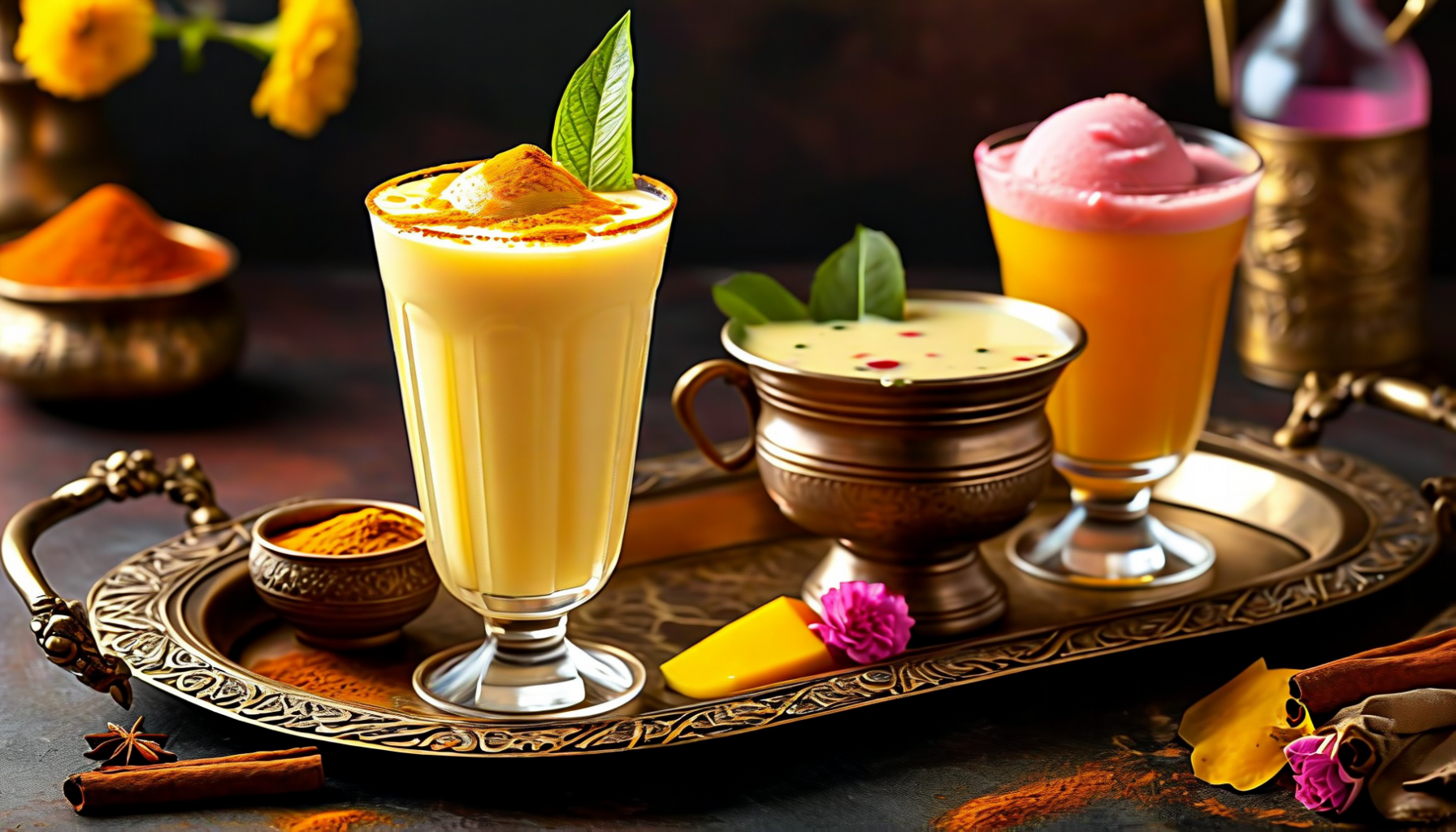
India's cocktail culture blends ancient traditions with modern bartending innovation. While imported spirits dominate urban bars, the most distinctly Indian drinking experiences come from traditional preparations evolved over millennia — mango lassi, spiced chai drinks, and Goa's unique Feni spirit.
Mango Lassi
Origin: Punjab & nationwide | Type: Traditional yogurt drink (optionally spiked)
Ingredients: 200ml thick yogurt, 1 ripe mango (peeled, cubed), 100ml cold milk, 2 tbsp honey, pinch cardamom, pinch saffron, ice. Optional: 30ml white rum.
Method: Blend yogurt, mango, milk and honey until smooth. Add cardamom and saffron bloomed in 1 tsp warm milk. Blend again, pour over ice. Garnish with cardamom powder and mango slice.
Masala Chai Martini
Origin: Modern Indian bartending | Type: Cocktail
Ingredients: 60ml vodka or spiced rum, 60ml masala chai concentrate (ginger, cardamom, cinnamon, cloves, black pepper), 15ml honey syrup, 15ml fresh lemon juice, ice.
Method: Brew chai double-strength and chill. Combine all ingredients in a shaker with ice. Shake 15 seconds. Double-strain into chilled martini glass. Garnish with cinnamon stick and star anise.
Goa Feni Colada
Origin: Goa | Type: Tropical cocktail with indigenous Feni spirit
Ingredients: 45ml cashew Feni, 90ml coconut cream, 60ml pineapple juice, 15ml lime juice, 1 tsp sugar, crushed ice.
Method: Blend all ingredients with crushed ice until smooth. Pour into a hurricane glass or hollowed pineapple. Top with toasted coconut flakes. Feni's earthy character plays beautifully against the sweet tropical base.
🍷 Wine, Spirits & Drinking Culture
India is Asia's most dynamic emerging wine producer, with a modern industry that has grown from virtually nothing in the 1990s to approximately 2,500 hectares under vine and over 100 wineries. While India has an ancient connection to grape cultivation — Sanskrit texts reference drakshasava (grape wine) dating back thousands of years, and Mughal miniatures depict wine-drinking scenes — the modern Indian wine industry is a 21st-century phenomenon, driven by economic liberalization, a growing middle class, and a handful of visionary entrepreneurs who recognized that India's tropical-latitude highlands could support quality viticulture.
🍇 Nashik — India's Wine Capital
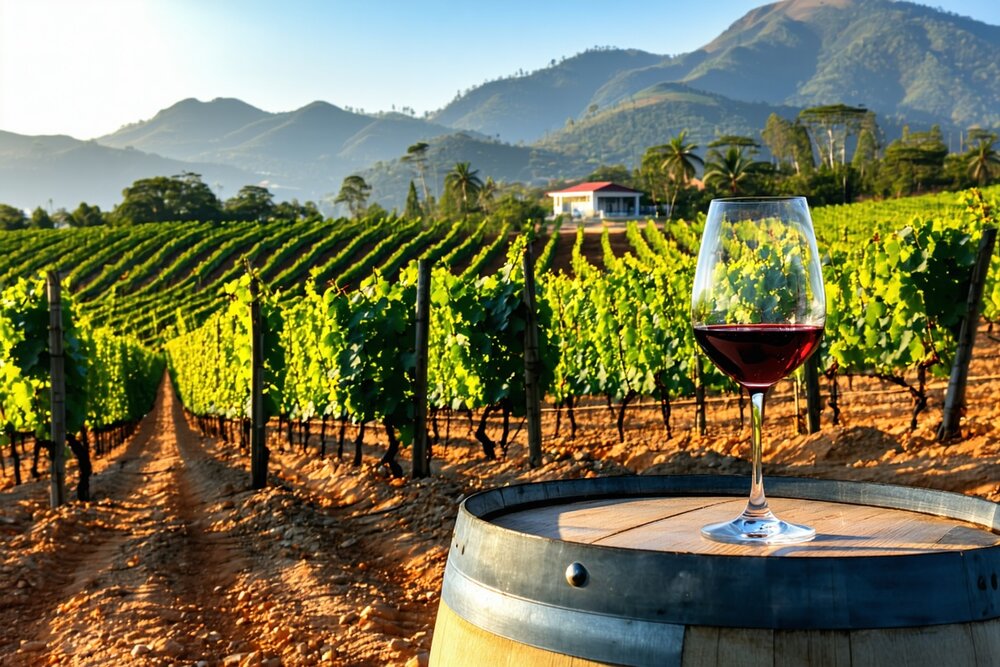
Nashik, in the Western Ghats of Maharashtra at 500–700 meters elevation, is the undisputed heart of Indian wine, accounting for a substantial majority of the country's production. The key to Nashik's viticultural success is altitude: at this elevation, the tropical latitude (20°N) is moderated by cooler nights, allowing grapes to retain acidity while achieving full ripeness. India's peculiar viticultural calendar — vines are pruned back after the monsoon (September–October) to trigger a fresh dry-season growing cycle, with harvest concentrated in February–March before the pre-monsoon heat — is an unusual tropical viticultural cycle rarely seen outside a handful of other tropical-latitude wine regions worldwide. Sula Vineyards, founded by Stanford-educated Rajeev Samant in 1999, pioneered the modern Indian wine industry and remains its most visible brand, with a portfolio spanning Sauvignon Blanc, Chenin Blanc, Shiraz, and Cabernet Sauvignon. Grover Zampa (with consultant Michel Rolland), Fratelli (an Italian-Indian joint venture), York Winery, and Charosa have raised quality standards significantly.
🗺️ Beyond Nashik
Karnataka (particularly the Nandi Hills near Bangalore at 900 meters) is India's second wine region, home to Grover Zampa's original estate and producing some of India's most refined reds. The cooler climate and red laterite soils of the Deccan Plateau provide excellent conditions for Cabernet Sauvignon and Shiraz. Emerging regions include parts of Himachal Pradesh in the Himalayan foothills (experimental Sauvignon Blanc and Pinot Noir at high altitude) and Dindori, a sub-district of Nashik itself where several newer vineyard projects, including Sula's, are concentrated. India's total wine production remains modest by global standards — approximately 20 million liters annually — but growth is rapid, driven by the domestic market's expanding appetite for wine, particularly among younger, urban, cosmopolitan consumers in Mumbai, Delhi, and Bangalore.
🏆 Kaufmann Wine Score — India
Rated on four criteria: Aroma (/25), Taste (/30), Finish (/20), Value (/25) — Total /100
| Wine | 🔴 Aroma | 🟡 Taste | 🟢 Finish | 🔵 Value | Total |
|---|---|---|---|---|---|
| Grover Zampa La Réserve (Cabernet-Shiraz) | 19 | 23 | 14 | 22 | 78 |
| Fratelli SETTE (Sangiovese blend) | 18 | 22 | 14 | 22 | 76 |
| Sula Dindori Reserve Shiraz | 18 | 22 | 13 | 22 | 75 |
| York Winery Sparkling Brut | 16 | 20 | 12 | 22 | 70 |
| Sula Chenin Blanc Reserve | 18 | 22 | 14 | 23 | 77 |
95–100 Legendary · 90–94 Outstanding · 85–89 Very Good · 80–84 Good · 75–79 Average · <75 Below Average
Visiting Sula Vineyards in Nashik — terraced rows of Chenin Blanc and Shiraz against a backdrop of the Western Ghats, with Hindu temples visible in the valley below — is one of the most surreal juxtapositions in world wine. The wines are good and improving rapidly; the Grover Zampa La Réserve, blended by Michel Rolland, would hold its own in a blind tasting against mid-range Languedoc reds. India's wine story is just beginning, and the 1.4 billion-person domestic market gives it a built-in audience that most wine countries can only dream of. Watch this space. — R.K.
