🕉️ Mankameshwar Mandir, Agra
Everyone photographs the Taj Mahal from across the Yamuna. Almost nobody walks the other direction, into the tangled lanes of the old city near Agra Fort, to find Shri Mankameshwar Mandir — a temple locals will tell you predates the Mughal empire that eventually rose up around it.
The legend explains the name. When Krishna was born in nearby Mathura, Shiva is said to have descended from Mount Kailash for a glimpse of the infant god, resting for the night on the banks of the Yamuna at this exact spot. Before heading home, he installed a shivling here and declared that whoever came with a heartfelt wish (manokamna) would have it granted — hence Mankameshwar, roughly "lord of the heart's desires." The silver-plated linga in the sanctum is still worshipped on that promise; devotees queue for hours during Maha Shivratri and throughout the holy month of Shravan (July–August), when the temple stays open until 11pm on Mondays alone.
There's no entry fee and no dress code beyond basic modesty, though shoes come off at the door. Small shrines to Ganesha, Hanuman, Saraswati, and Parvati ring the main sanctum, and the paan sellers outside fold their betel-leaf parcels into silver-dusted pyramids — a local specialty that's as much a part of the visit as the temple itself.
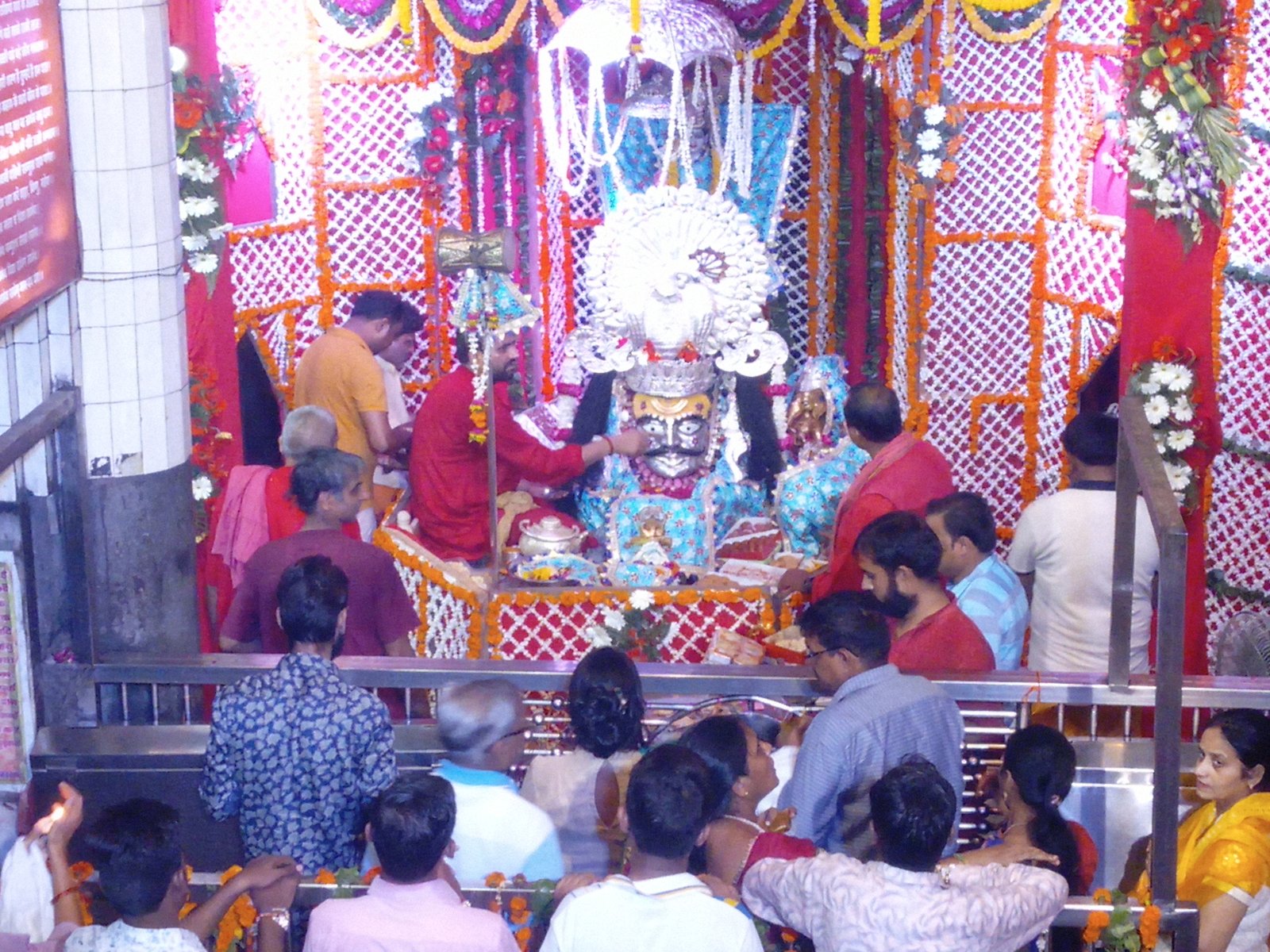
Mankameshwar Mandir
The silver-covered shivling, decorated for a festival day — a five-minute detour from Agra Fort that most Taj Mahal itineraries skip entirely.
🙏 The Golden Temple, Amritsar
Sikhism's holiest site isn't a Hindu temple at all, but nothing on this list draws a bigger daily crowd or makes a stronger first impression: a gold-plated shrine floating in the middle of a square pool, reached by a narrow marble causeway that every visitor — regardless of faith — walks in bare feet with their head covered.
Guru Ram Das founded the city of Amritsar around this pool; Guru Arjan Dev completed the temple in the 1580s and installed the Guru Granth Sahib, Sikhism's holy scripture, inside. The gold plating that gives the temple its English name came later, commissioned in the early 19th century by the Sikh emperor Maharaja Ranjit Singh.
The detail that stops most first-time visitors cold is the langar: a free communal kitchen, staffed almost entirely by volunteers, that serves a simple vegetarian meal to everyone who sits down — over 100,000 people on an ordinary day, several times that during festivals — no questions asked about religion, caste, or ability to pay. It has run continuously since the temple's founding, built on Guru Nanak's insistence that everyone eat together on the same floor; even the Mughal emperor Akbar reportedly had to sit and eat with the crowd before an audience with the Guru. Visitors are welcome to eat, and welcome to help peel, stir, or wash up.
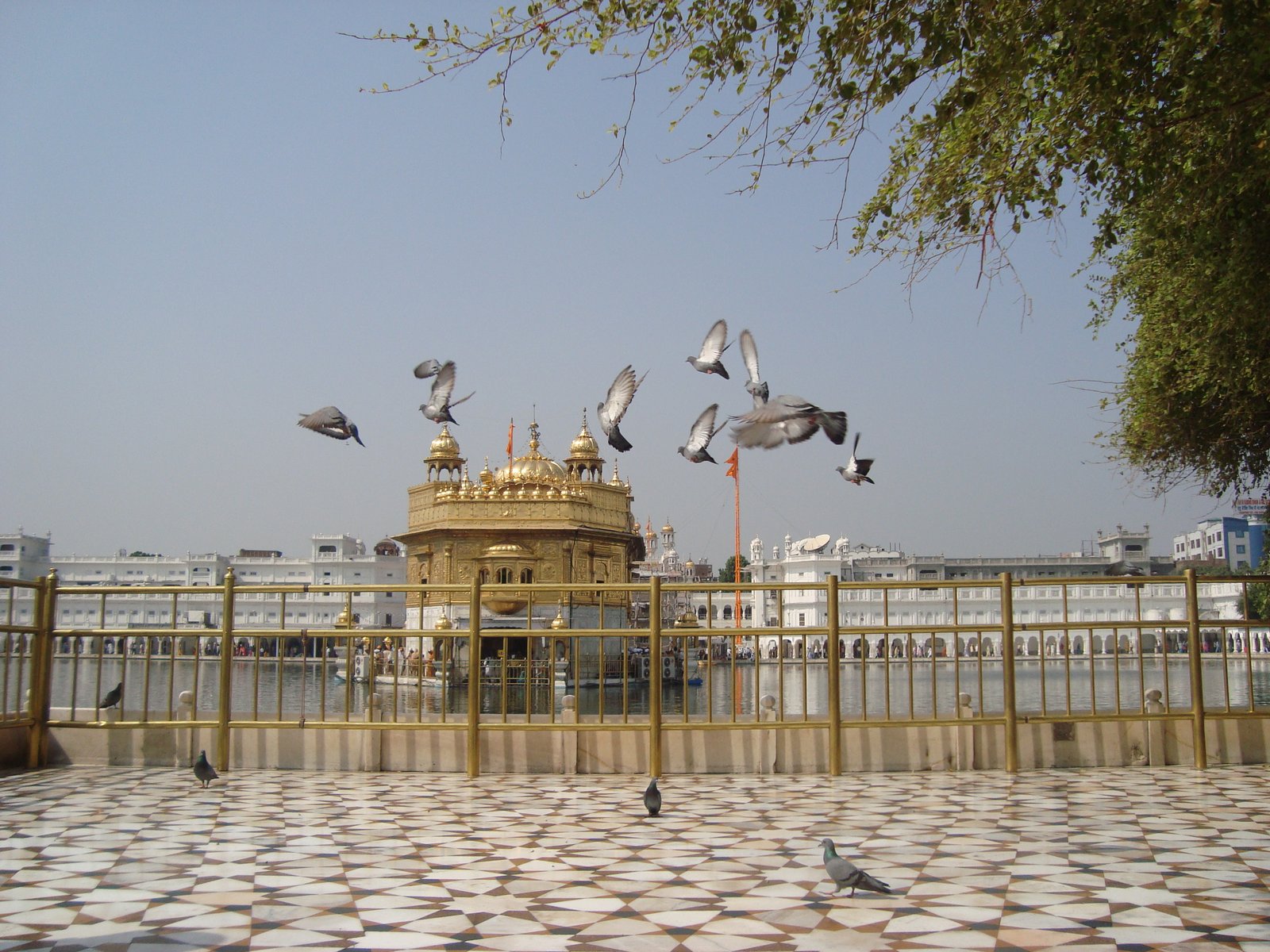
Harmandir Sahib
The causeway to the sanctum crosses the Amrit Sarovar — the "pool of nectar" that gives Amritsar its name.
🎨 Meenakshi Amman Temple, Madurai
If Agra and Amritsar are exercises in restraint, Madurai is the opposite argument entirely. The Meenakshi Amman Temple's fourteen gopurams — gateway towers, the tallest rising 170 feet — are stacked floor to ceiling with painted stucco figures: gods, demons, dancers, animals, an estimated 33,000 sculptures across the complex, repainted roughly every twelve years in a ritual restoration so the colors never quite fade to history.
The temple tells one story throughout: the divine marriage of the goddess Meenakshi (a form of Parvati, named for eyes "shaped like a fish") to Sundareswarar, a form of Shiva. Their wedding is re-enacted every spring during the ten-day Meenakshi Tirukalyanam festival, when more than a million pilgrims pass through a complex that, on an ordinary day, already sees fifteen to twenty-five thousand visitors. Inside, the Ayirakkal Mandapam — the "hall of a thousand pillars," in fact a still-impressive 985 — is carved column by column with mythical yali creatures, no two quite alike.
Photography is generally restricted inside the inner shrines, and non-Hindus are asked not to enter the innermost sanctum — but the outer halls, tanks, and towers are open to everyone and are, on their own, worth the trip to Tamil Nadu.
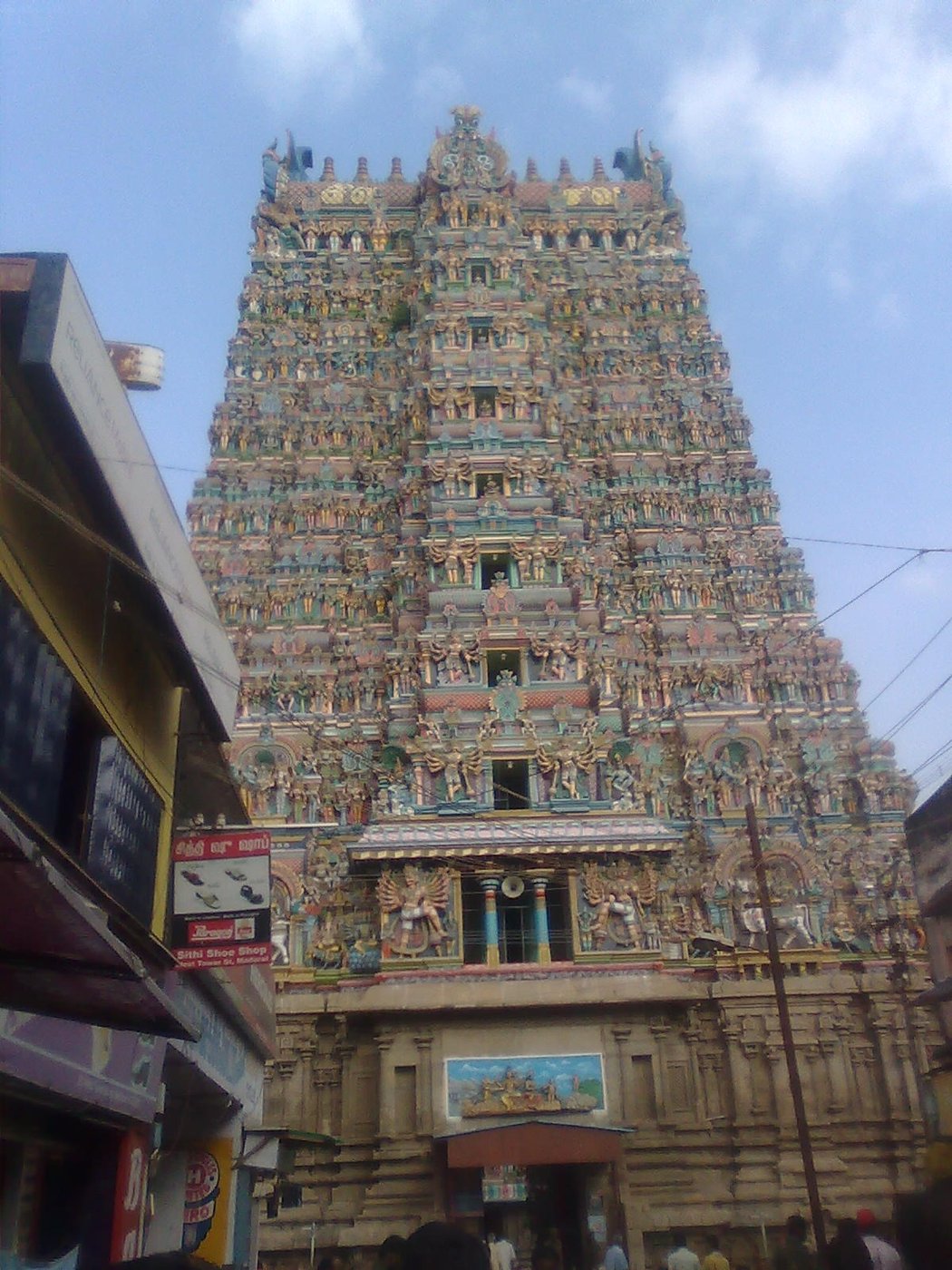
Meenakshi Amman Temple
One of fourteen gopurams, every tier packed with painted deities, demons, and mythical creatures.
🛞 Jagannath Temple, Puri
On the Bay of Bengal in Odisha, Jagannath Temple is one of India's Char Dham — the four pilgrimage sites a devout Hindu is meant to visit in a lifetime — and the one most people abroad have glimpsed without realizing it. Its annual Rath Yatra, in which three deities are pulled through the streets of Puri on wooden chariots the size of small buildings, is where the English word "juggernaut" comes from.
The chariots are rebuilt from scratch every single year out of freshly felled wood, then dismantled again afterward — nothing is reused. Inside the temple compound, the Ananda Bazaar kitchen is one of the largest in the world, cooking for tens of thousands of pilgrims a day in clay pots stacked seven high over an open flame; by local account the top pot finishes cooking first, a quirk of the method nobody has fully explained.
Non-Hindus are not permitted inside the temple itself — a rule enforced seriously here — but the rooftop of the Raghunandan Library across the street offers a legitimate view over the walls, and it's where most foreign visitors end up.
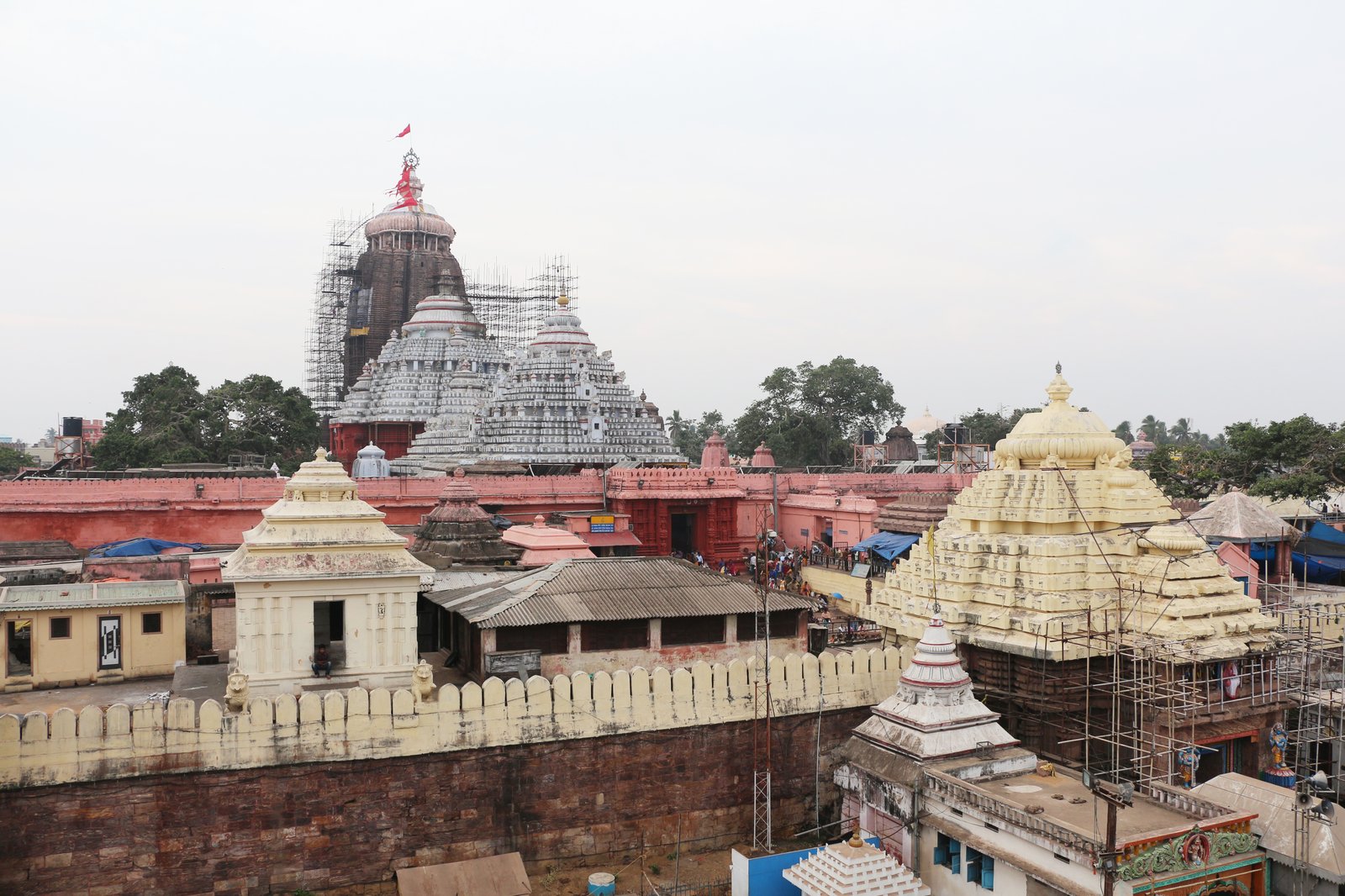
Jagannath Temple
The main shikhara and surrounding shrines, seen from within the temple compound walls.
📿 Visiting India's Temples: What to Know
A few rules travel well across almost all of them. Shoulders and knees stay covered; shoes come off before any threshold, and socks are worth wearing since marble floors get scorching by midday. Leather items — belts, wallets, sometimes even leather watch straps — are barred at the most traditional shrines. Photography rules vary widely and are rarely posted in English, so it's safest to watch what other visitors are doing or simply ask; the inner sanctum (garbhagriha) is off-limits to cameras almost everywhere.
Several major temples, including Jagannath in Puri and a number of South Indian shrines, restrict entry to Hindus only. This isn't negotiable and isn't personal, so it's worth checking ahead rather than finding out at the gate. At Sikh Gurdwaras like the Golden Temple, a head covering is required for everyone; scarves are provided free at the entrance for anyone without one.
Early morning is the best time to visit almost any of these — cooler, quieter, and often timed to the first aarti (ritual offering) of the day, when a building that photographs as pure architecture reveals itself as something still very much alive.
