

🇭🇺 Hungary at a Glance
🌍 Overview
Hungary is 93,030 km² — about a fifth larger than Czechia — with roughly 9.5 million people, no coastline, and borders with seven countries: Austria, Slovakia, Ukraine, Romania, Serbia, Croatia and Slovenia. It sits in the middle of the Carpathian Basin, which is a genuine geographical bowl, and about 84% of it lies below 200 m. It is the flattest country in Europe after the Netherlands, and it does not feel like it should be surrounded by mountains, but it is.
Three things make it unlike its neighbours. The first is the language: Hungarian is Uralic, not Indo-European, a relative of Finnish and Estonian and a much closer relative of two small Siberian languages, and it is surrounded on all sides by Slavic and Germanic speech it has nothing in common with. The second is the water: Hungary sits on a thinned section of the Earth's crust and has over 1,300 thermal springs, of which more than a hundred are inside Budapest. The third is Budapest itself, which is a nineteenth-century imperial capital built for a country twice the size of the one it now governs.
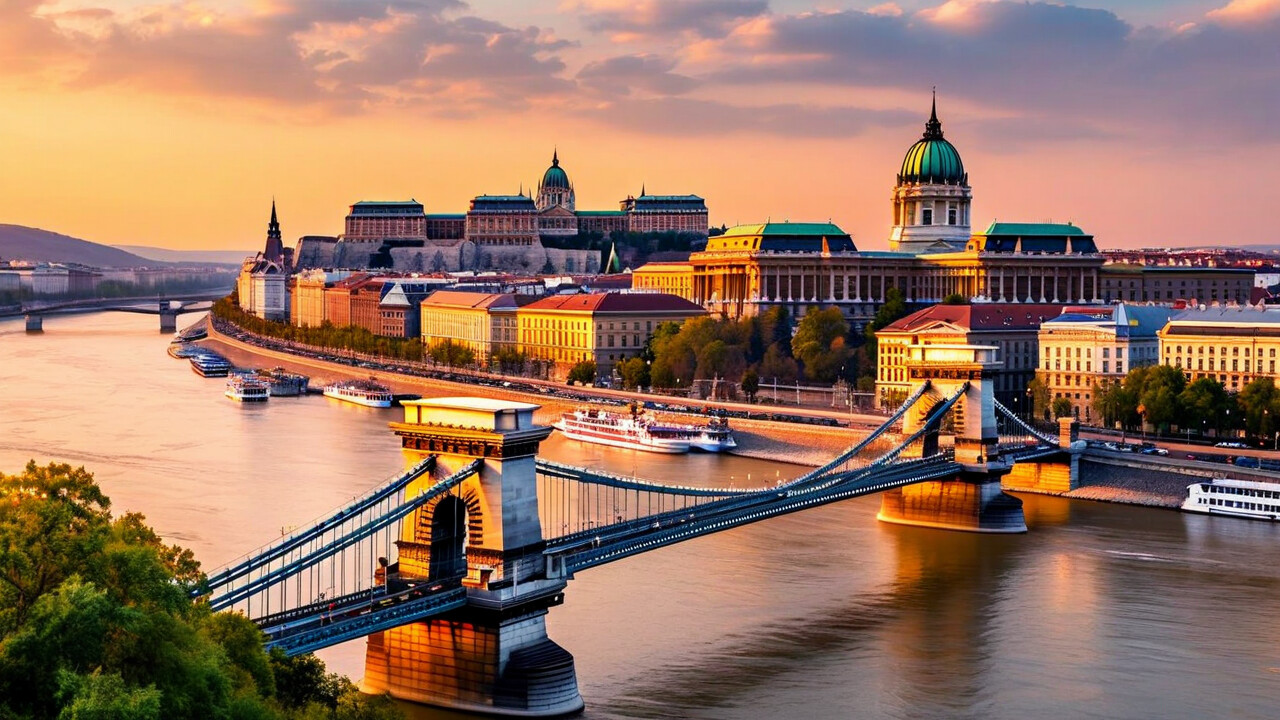
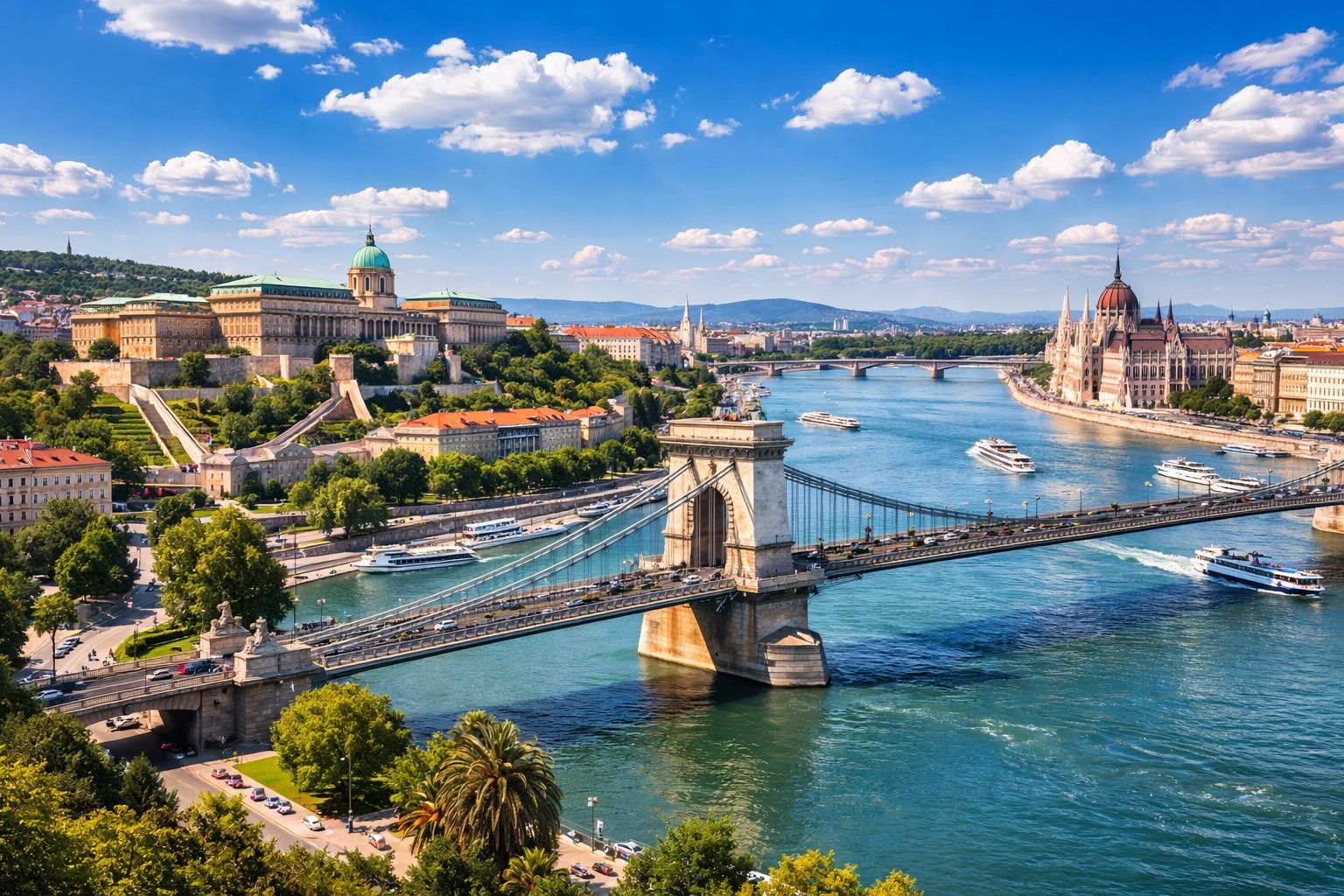
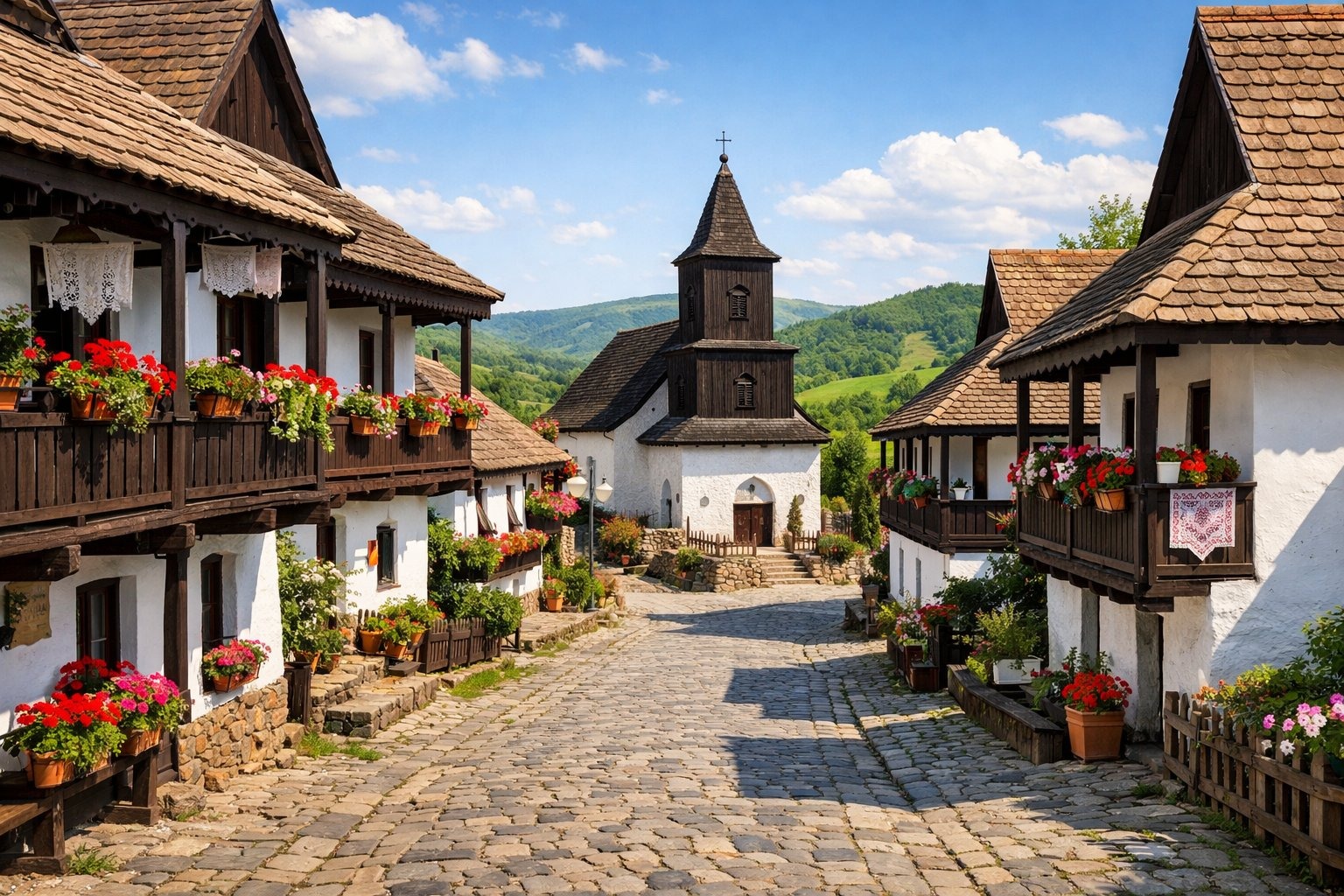
Hungary has eight UNESCO World Heritage sites for a country of nine million: the Danube banks and castle quarter of Budapest with Andrássy Avenue, the village of Hollókő, the Pannonhalma archabbey, the Hortobágy puszta, the early Christian necropolis at Pécs, the Tokaj wine region, and two shared with neighbours — the Fertő lake landscape with Austria and the Aggtelek caves with Slovakia.
And it has a national memory built around defeats rather than victories. The two dates every Hungarian knows are 1526, when the kingdom was destroyed at Mohács, and 1920, when the Treaty of Trianon took away two thirds of the country's territory. Neither is a distant curiosity: both are live in the culture, in the politics and in the map on the wall of a surprising number of restaurants.
🏷️ Magyar: A Language With No Neighbours
Hungarians call themselves magyar and their country Magyarország. "Hungary" comes to the rest of Europe by a different route — probably from the Turkic onogur, "ten arrows" or "ten tribes", by way of Slavic and medieval Latin — and the resemblance to "Hun" is a coincidence that has caused fifteen hundred years of confusion. The Magyars are not descended from Attila's Huns, whatever the medieval chroniclers preferred to claim.
What it is related to
Hungarian is Uralic, in the Ugric branch. Its nearest living relatives are Khanty and Mansi, spoken by a few thousand people either side of the Ob river in western Siberia; Finnish and Estonian are much more distant cousins. The split from its nearest relatives is roughly three thousand years old, so the relationship to Finnish is real but of no practical use — the two are not remotely mutually intelligible.
Why it is hard
It is agglutinative: grammatical information is stacked onto the end of the word in a long chain of suffixes, so a single word can carry what English needs a whole clause for. It has 14 vowels, distinguishes long and short in both vowels and consonants, and has vowel harmony, meaning the suffix you choose depends on the vowels already in the word. There is no grammatical gender at all, and no verb "to have".
What is easy
The spelling is completely regular — one sound, one letter, always, once you have learned the digraphs (sz = s, s = sh, cs = ch, gy = a soft d). Stress is always on the first syllable. And Czech speakers have a head start on ő and ű that English speakers do not.
A few words
Jó napot (good day), szia (hi/bye, informal), köszönöm (thank you), kérem (please), igen / nem (yes / no), egészségedre (cheers — and yes, it is that long), bocsánat (sorry), hol van a…? (where is the…?). Hungarians know their language is difficult and are disproportionately pleased when a foreigner tries.
Two everyday quirks worth knowing. Hungarians write their surname first, as East Asians do — the composer is Bartók Béla at home and Béla Bartók abroad. And dates go year, month, day. Both are Uralic-family habits that survived the millennium in Europe intact.
🗺️ Geography: A Bowl With Two Rivers
The Carpathian Basin is a genuine geological depression ringed by the Alps, the Carpathians and the Dinarides, and Hungary occupies the flattest part of the floor. That geography explains almost everything about the country: it has been the natural invasion route into central Europe for two thousand years, it has no defensible frontier anywhere, and it grows a very great deal of food.
The Great Plain
The Alföld, east and south-east of the Danube, is half the country: flat, treeless, hot in summer and the source of both the wheat and the myth. The Hortobágy at its centre is Europe's largest continuous natural grassland and a UNESCO site — and it is a cultural landscape, not a wilderness, shaped by two thousand years of grazing.
Transdanubia
Everything west of the Danube (Dunántúl): rolling, greener, with the Bakony and Mecsek hills, the wine country of Villány and Somló, Lake Balaton in the middle and a good deal of the Roman province of Pannonia underneath it.
The northern hills
A chain of low volcanic and limestone ranges along the Slovak border — the Mátra, with Kékes at 1,014 m as the country's high point, the Bükk, the Zemplén above Tokaj, and the Aggtelek karst with its 25 km cave system shared with Slovakia. This is where the wine and most of the forest is.
The rivers
The Danube enters from Slovakia, turns sharply south at the Danube Bend, and cuts the country in half on its way to Serbia — 417 km of it. The Tisza drains the eastern half and is Hungary's own river in a way the Danube is not; it is also the site of the Tisza mayfly bloom in June, when millions of insects emerge, mate and die in a few hours, in one of Europe's strangest natural spectacles.
♨️ The Water Underneath
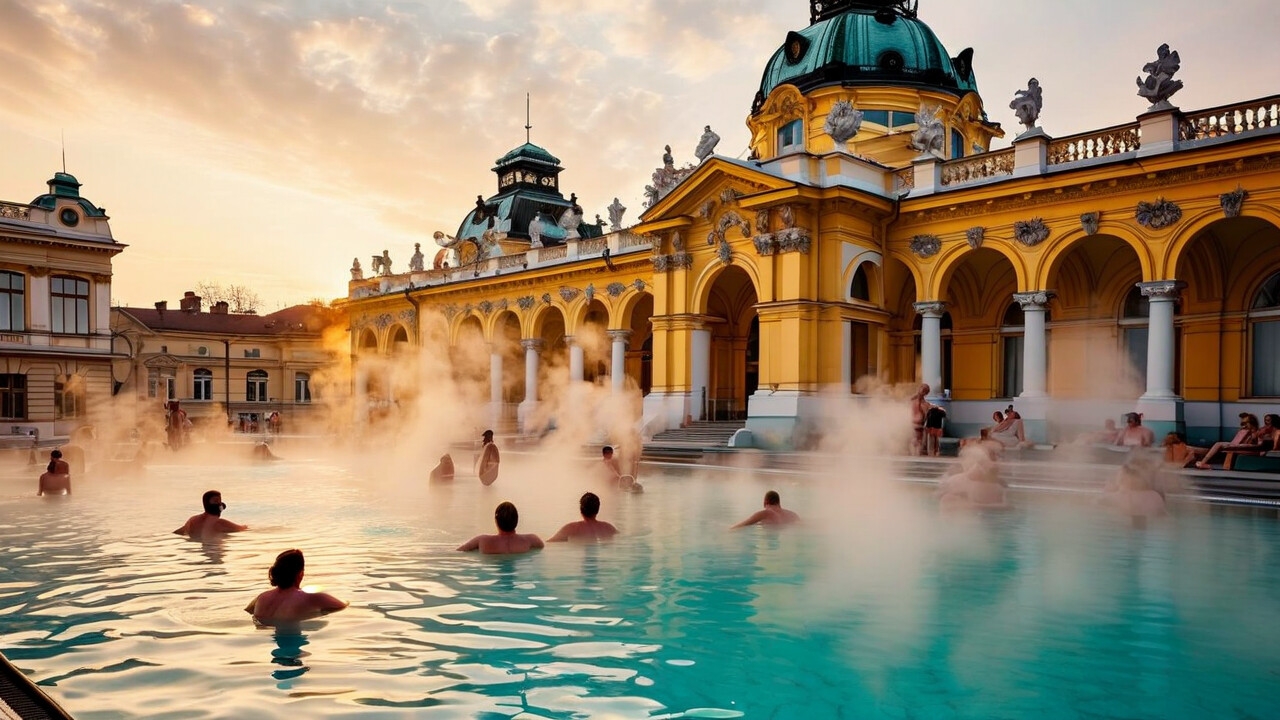
Hungary's crust is unusually thin — a consequence of the basin's formation — so geothermal heat is close to the surface almost everywhere. The result is more than 1,300 thermal springs, around 120 of them in Budapest, and a bathing culture that runs continuously from the Romans through the Ottomans to the present day. Budapest is the only capital city in the world with a working thermal spa industry on this scale.
The Ottoman baths
The genuinely old ones. Rudas (1550s) and Király (1560s) are working Turkish baths from the occupation, with octagonal domed chambers, coloured glass in the roof and hot pools under them. Rudas's rooftop hot tub with a view over the Danube is a much later addition and is worth the ticket on its own. Both have single-sex days; check before you go.
The grand ones
Gellért (1918) is the art nouveau showpiece — mosaics, stained glass, a colonnaded indoor pool — attached to a hotel and priced accordingly. Széchenyi is the big neo-baroque one in the park and the one most visitors go to. Lukács is where Budapest locals go and costs a fraction.
Hévíz
Near the western end of Balaton, the largest thermal lake in the world that you can swim in: 4.4 hectares of water at 24–38 °C depending on the season, its whole volume replaced every 72 hours by a spring 38 m below, covered in Indian water lilies, and used medicinally for two centuries. Floating in it in falling snow is one of the more memorable things available in central Europe.
How to behave
Bring or hire a towel and flip-flops. A swimming cap is required in the lane pools and nowhere else. Do not treat a medicinal thermal pool as a swimming pool — you sit in it, quietly, and 20 minutes at a time is the medical advice. Lockers and cabins are separate prices; cabins are worth it. And do not drink beforehand.
🌡️ Climate
Continental, with genuine four seasons and a wider range than Czechia's: colder winters relative to latitude, and summers that are reliably hotter. The basin traps air, so both extremes are amplified — and Budapest in July can be genuinely uncomfortable in a way Prague usually is not.
Spring (April–June)
The best half of the year. April is unreliable, May and June are excellent — 20–26 °C, everything in leaf, the terraces open and the crowds not yet at peak. Late May and June are also when the countryside is at its greenest, which does not last.
Summer (July–August)
Hot: 28–33 °C routinely, with heatwaves past 38 °C now regular. Budapest empties of Hungarians and fills with visitors; Balaton is the opposite. Thunderstorms break the heat every week or so. It is the season for the lake, for outdoor baths and for the Sziget festival, and a poor season for walking around a city.
Autumn (September–October)
Arguably the best time of all. Warm days into early October, cool nights, the grape harvest across Tokaj, Eger and Villány with cellar festivals in every wine town, and the Danube Bend and northern hills turning colour. Lower prices than summer and better weather than spring.
Winter (November–March)
Grey, damp and often foggy in the basin, with temperatures around 0 to 5 °C and occasional hard cold snaps to −10 °C or below. Snow is unreliable. This is bath season, which is the compensation, plus Christmas markets, thermal Hévíz and an empty Budapest at half the summer price.
🗺️ Map
Hungary sits between roughly 45°45′ and 48°35′ north — the same band as Croatia and southern France. Budapest is in the north-centre on the Danube; Balaton is 100 km south-west; Debrecen is 220 km east; the Austrian border is two hours from the capital and the Romanian border three.
From Prague
530 km by road via Brno and Bratislava, about five and a half hours. By rail, six and three quarter hours direct. Vienna is 240 km from Budapest and Bratislava only 200 — the three capitals are close enough that a Danube-cities trip taking in all of them is entirely reasonable.
Internal distances
Budapest to Balaton (Siófok): 100 km, 90 minutes. To Eger: 130 km, under two hours. To Pécs: 200 km, two and a half. To Debrecen: 220 km, two and a half by motorway or under three by train. Nothing in Hungary is more than four hours from Budapest, which is a consequence of the road and rail network all radiating from it.
The radial problem
That radial network is a real inconvenience: getting from Pécs to Debrecen, or Győr to Szeged, often means going in via Budapest. If you are touring the country by public transport, plan around the capital rather than against it.
Seven neighbours
Austria, Slovakia, Ukraine, Romania, Serbia, Croatia, Slovenia. Four are in Schengen with Hungary, so those crossings are invisible; Serbia and Ukraine have full border controls, and the Romanian and Croatian land crossings became internal in 2025 when both joined Schengen fully.
🏹 895 and 1000: The Conquest and the Crown
The Magyars arrived in the Carpathian Basin around 895 — the honfoglalás, the "land-taking" — a confederation of seven tribes under Árpád, coming from the steppe north of the Black Sea, mounted, and very good at what mounted steppe peoples were good at. For sixty years they raided westward as far as Spain and southern Italy, until a comprehensive defeat at the Lechfeld near Augsburg in 955 ended that as a business model.
What followed is the decision that made Hungary a European country rather than a footnote. Árpád's great-great-grandson Vajk was baptised as István — Stephen — and on Christmas Day 1000 or 1 January 1001 was crowned with a crown sent by Pope Sylvester II. He founded bishoprics, imposed Latin Christianity, organised the country into counties that in many cases still exist, and had his pagan relatives comprehensively suppressed. He was canonised in 1083 and 20 August, his feast, is the national day.
The Holy Crown
Not a symbol but, in Hungarian constitutional doctrine, a legal person: for centuries sovereignty was held to reside in the Crown itself rather than in the king wearing it. It has a famously bent cross on top, is a composite of two different pieces of goldwork, and spent the Cold War in the vault at Fort Knox before the United States returned it in 1978. It is now in the Parliament building under guard.
The Árpád dynasty
Ruled until 1301 and produced an unusual number of saints — Stephen, his son Imre, Ladislaus, Elizabeth of Hungary, Margaret. It also produced the Golden Bull of 1222, a charter of noble rights issued seven years after Magna Carta and containing a formal right of resistance against a king who breached it.
The Mongols, 1241
The catastrophe nobody outside Hungary remembers. A Mongol army destroyed the Hungarian host at Muhi in April 1241 and then spent a year in the country. Estimates of the death toll run from a fifth to half of the population. Béla IV rebuilt afterwards with stone castles instead of earthworks, which is why Hungary has the castles it has.
Matthias Corvinus
Mátyás (r. 1458–90), the Renaissance king: a standing professional army — the Black Army — that made Hungary the strongest power in the region, a library, the Bibliotheca Corviniana, that was second in Europe only to the Vatican's, Italian humanists at court, and a reputation in folklore as the just king who wandered his kingdom in disguise. Meghalt Mátyás, oda az igazság — Matthias died, and justice with him.
🗡️ Mohács and 150 Ottoman Years
On 29 August 1526, at Mohács in the south, a Hungarian army of perhaps 25,000 met an Ottoman army two or three times its size under Suleiman the Magnificent. The battle lasted about two hours. The king, Louis II, aged 20, drowned in a stream while fleeing. Most of the nobility and much of the senior clergy died with him. Mohács in Hungarian is not a place name so much as a word meaning national catastrophe, and it is used that way in ordinary speech to this day.
The kingdom split three ways: the Ottomans took the centre, the Habsburgs took a northern and western strip called Royal Hungary, and Transylvania became a semi-independent principality paying tribute to the Sultan — which is how it ended up as the refuge of Hungarian Protestantism and of Hungarian culture generally. Buda fell in 1541 and was held for 145 years.
What the Ottomans left
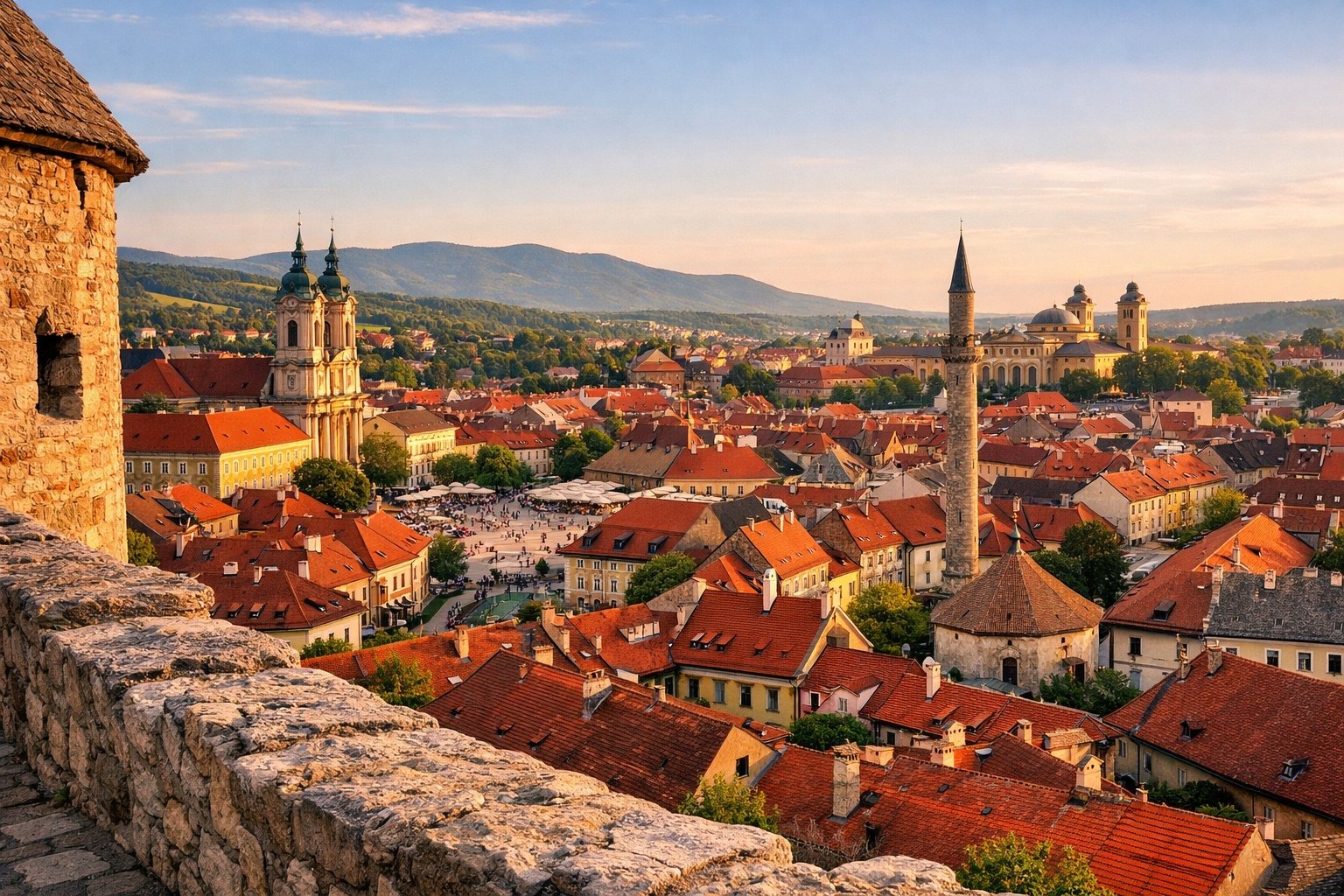
The baths, which are the best of it — Rudas and Király in Budapest are working Ottoman buildings. The Eger and Pécs monuments. And, indirectly, paprika: the American plant reached Hungary through the Balkans under Ottoman rule, though it stayed a curiosity for two centuries before becoming the national spice around 1800.
What it cost
Enormous depopulation across the central plain, the collapse of the medieval town network, and a permanent demographic shift — the resettlement of the emptied lands after 1686 with Germans, Serbs, Slovaks and Romanians is the origin of the multi-ethnic kingdom that Trianon later took apart.
The reconquest
Buda was retaken in 1686 by a Holy League army after a two-month siege, and the Ottomans were pushed out of the country by 1699. The city was almost entirely destroyed in the process, which is why Budapest has essentially no medieval fabric outside the Castle District.
Bull's Blood
The wine of Eger, Egri Bikavér, carries a legend that the defenders of 1552 drank red wine during the siege, the Turks saw it running into their beards and believed they were drinking bull's blood. The story dates from the nineteenth century rather than the sixteenth. The wine is real, is a blend, and is much better than its reputation from the 1970s suggests.
⚔️ The Habsburgs and 1848
Freed from the Ottomans, Hungary found itself thoroughly inside the Habsburg monarchy, and spent the eighteenth century in a relationship it never accepted. Rákóczi's War of Independence (1703–11) was the first serious attempt to leave and produced most of the country's melancholy folk music. The second attempt was 1848, and it is the one that matters.
On 15 March 1848, in the middle of the European revolutionary year, a group of writers and students in Pest — including the 25-year-old poet Sándor Petőfi — occupied a printing press, published the Twelve Points and Petőfi's Nemzeti dal (National Song) without censorship, and started a revolution. Within a month Hungary had a responsible government, the abolition of serfdom, freedom of the press and its own laws. Within a year it was at war with Vienna, and by April 1849 it had declared full independence.
How it ended
Austria could not win alone and asked for help. Tsar Nicholas I sent 200,000 Russian troops, and the Hungarian army surrendered at Világos in August 1849. Petőfi had already disappeared, aged 26, at the battle of Segesvár; his body was never found. Lajos Kossuth, the revolution's leader, went into exile and became an international celebrity, touring America to enormous crowds.
6 October
The thirteen generals of Arad were executed on 6 October 1849, and the prime minister Lajos Batthyány was shot in Pest the same day. It remains a day of national mourning. Whole districts of the retribution that followed are still taught in detail.
Why Hungarians don't clink beer glasses
The story is that the Austrian officers celebrated the executions by clinking beer mugs, and Hungarians swore not to do so for 150 years. The 150 years expired in 1999. A great many Hungarians still don't, and the taboo is real even though historians consider the origin story unproven. Clink wine and pálinka freely; with beer, follow your host.
15 March
A national holiday, marked by wearing a cockade in the national red-white-green. Along with 20 August (Saint Stephen) and 23 October (1956), it is one of the three great civic days, and all three are politically contested in a way that says a good deal about modern Hungary.
👑 1867–1914: The Golden Age
Eighteen years after crushing the revolution, Vienna made a deal with the people it had crushed. The Compromise of 1867 (Kiegyezés) created Austria-Hungary: one monarch, one army and one foreign policy, but two parliaments, two governments and two halves of an empire whose Hungarian half ran its own internal affairs entirely. Franz Joseph was crowned King of Hungary and stayed one for fifty years.
What followed was the most prosperous half-century in Hungarian history. Budapest — three separate towns until Buda, Óbuda and Pest were merged in 1873 — grew faster than almost any city in Europe, from about 300,000 to nearly a million by 1914. Almost everything a visitor now photographs was built in those forty years.
What got built
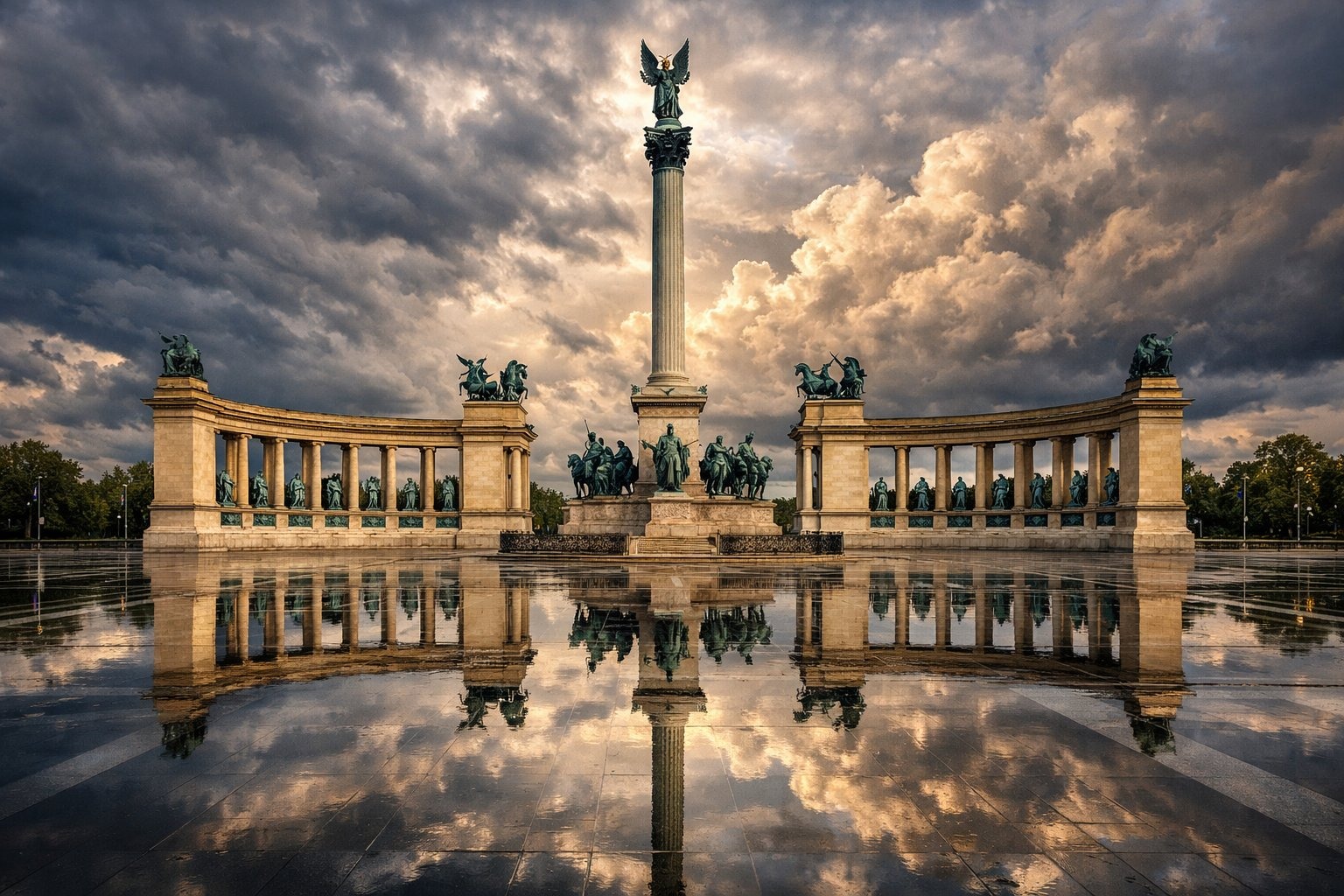
The Parliament (1885–1902), 268 m long and at the time the largest such building in the world, now third; the Opera House (1884); the Chain Bridge (1849), the first permanent bridge over the Danube in Hungary; Andrássy Avenue and the boulevards; the Great Market Hall; the Fisherman's Bastion; and the enormous Great Synagogue on Dohány Street (1859), still the largest in Europe.
The other side of it
The Hungarian half of the monarchy was less than half Hungarian by mother tongue, and its governments pursued vigorous Magyarisation of schools and administration among Slovaks, Romanians, Serbs, Croats and Germans. That policy is a large part of why, when the empire collapsed, those populations were so willing to leave — and it is not a part of the story that Hungarian public memory dwells on.
The Jewish community
Budapest's Jewish population reached around 23% of the city by 1910, integrated, largely Hungarian-speaking and central to the professions, banking, the press and the arts. The city was sometimes called "Judapest" by its detractors. The community produced a very large share of the scientific and cultural names in the sections below.
Café culture
By 1900 Budapest had somewhere around 500 coffee houses, several of which functioned as the actual editorial offices of literary magazines — writers had their own tables and their post delivered there. The New York Café survives, restored to a level of gilt that has to be seen, and the writers who founded the magazine Nyugat famously threw its key into the Danube so it could never close.
📜 Trianon, 4 June 1920
This is the single most important date in modern Hungarian consciousness and the one foreigners understand least, so it is worth being precise. After the collapse of Austria-Hungary, a short-lived democratic republic and an even shorter Soviet republic under Béla Kun, the peace treaty signed at the Grand Trianon palace at Versailles on 4 June 1920 reduced the Kingdom of Hungary from 325,000 km² to 93,000 km².
In plain numbers: Hungary lost two thirds of its territory and about 60% of its population. Transylvania went to Romania — an area larger than what remained of Hungary. Upper Hungary became Slovakia. Croatia and the Vojvodina went to the new Yugoslavia; Burgenland to Austria; Ruthenia to Czechoslovakia. Around 3.3 million ethnic Hungarians, roughly a third of the total, found themselves living in other countries without having moved.
Why it was so severe
The peace conference applied national self-determination to the empire's minorities, who were the majority of the kingdom's population, and then drew borders that also served strategic and railway logic and rewarded the winning side. Substantial compact Hungarian populations were left outside the line — the Székely of eastern Transylvania, southern Slovakia, the Vojvodina — which is what makes the treaty a live grievance rather than a historical one.
The legacy today
Around two million ethnic Hungarians still live in neighbouring states: roughly a million in Romania, 450,000 in Slovakia, 180,000 in Serbia, 130,000 in Ukraine. Hungary has offered them citizenship since 2011 and they vote in Hungarian elections. The maps of Greater Hungary you will see on car stickers and restaurant walls are about this, and are not usually a call to redraw borders so much as a statement of grief.
Where it led
Interwar Hungary under Regent Miklós Horthy made treaty revision the whole of its foreign policy, which is why it ended up allied to Germany — Hitler returned parts of Slovakia and Transylvania in the Vienna Awards of 1938 and 1940, and Hungary paid for those temporary gains at a price described in the next section.
How to talk about it
Carefully, and with the arithmetic straight. It is entirely possible to acknowledge that Trianon was a genuine national trauma, that the pre-1918 kingdom had treated its own minorities badly, and that the borders are settled and not going to change. Most Hungarians hold at least two of those three at once. A visitor who assumes it is ancient history will misread a great deal of the country.
🕯️ 1944–45
Hungary entered the Second World War alongside Germany in 1941 and lost most of its Second Army at the Don bend in January 1943 — around 100,000 men killed, wounded or captured in a few weeks. By 1944 Horthy was trying to leave the war, and on 19 March 1944 Germany occupied the country to stop him.
What followed was the fastest deportation of the Holocaust. Between 15 May and 9 July 1944, in under eight weeks, roughly 437,000 Hungarian Jews were deported, overwhelmingly to Auschwitz-Birkenau, where most were murdered on arrival. It was organised by Eichmann with a small German staff and carried out by the Hungarian gendarmerie and administration — a fact that Hungarian public memory has repeatedly tried to place elsewhere, and which the historical record does not permit.
Budapest
The capital's roughly 200,000 Jews were not deported in that wave, largely because Horthy stopped the trains in July under international pressure. After the German-backed Arrow Cross coup in October 1944, thousands were shot into the Danube by militia, and the rest were confined to a ghetto until the Soviet arrival. Something over half survived — the largest surviving Jewish community in central Europe, and the reason Budapest still has one.
The rescuers
Raoul Wallenberg, the Swedish diplomat, issued thousands of protective passes and set up safe houses; he was arrested by the Soviets in January 1945 and died in their custody. The Swiss vice-consul Carl Lutz saved a larger number still. Both are commemorated in the city, and both stories are usually told without the surrounding fact that the deportations were domestically administered.
The Shoes on the Danube
Sixty pairs of iron shoes on the embankment below the Parliament, installed in 2005, marking where people were made to take off their footwear before being shot into the river. It is the most affecting memorial in Budapest and takes about a minute to find and considerably longer to walk away from.
The siege
Soviet forces encircled Budapest in December 1944; the fighting lasted fifty days until 13 February 1945. Around 38,000 civilians died. Every bridge over the Danube was blown by the retreating Germans, the Castle was reduced to rubble, and a quarter of the city's buildings were destroyed. Hungary's war dead came to somewhere around 900,000 people, a tenth of the population.
🔥 1956
On 23 October 1956 a student march in Budapest, in solidarity with reform in Poland, turned into a national uprising within hours. The crowd pulled down the enormous Stalin statue in the City Park, leaving only the boots on the plinth; the secret police fired on demonstrators at the radio building; and within days the government had collapsed. Imre Nagy, a reform communist, became prime minister, announced a multi-party system, and on 1 November declared Hungary neutral and out of the Warsaw Pact.
The Soviet Union appeared to withdraw and then came back. On 4 November, several thousand tanks re-entered Budapest. Organised resistance held out for about a week, and strikes continued into January. Around 2,500 Hungarians and 700 Soviet soldiers were killed; roughly 200,000 people — two per cent of the population — fled west in the following weeks, mostly through Austria. It is the reason there is a Hungarian diaspora in Canada, Australia and the United States.
Imre Nagy
Taken from the Yugoslav embassy under a written safe conduct that was not honoured, tried in secret, and executed on 16 June 1958, then buried face down in an unmarked plot with his hands tied. He was reburied with full honours on 16 June 1989 in front of a crowd of 200,000, in the ceremony that is generally taken as the moment the Hungarian regime lost its authority.
Blood in the Water
At the Melbourne Olympics six weeks after the crushing, the Hungarian and Soviet water polo teams met in the semi-final. It became so violent that the match was stopped early with Hungary leading 4–0 and a Hungarian player, Ervin Zádor, bleeding from the eye — the photograph went around the world. Hungary won the gold. Half the team defected rather than go home.
The flag with the hole
Insurgents cut the communist coat of arms out of the centre of the national flag, leaving a hole. The flag with the hole is the visual symbol of 1956 and is still flown on 23 October, which has been a national holiday since 1989 and is also the anniversary of the declaration of the Republic in that year.
What the West did
Nothing. Radio Free Europe broadcasts had encouraged the impression that help would come; none was ever planned, and the Suez crisis was occupying Britain and France in exactly the same fortnight. The abandonment is remembered, and it is worth knowing when discussing Hungarian scepticism about Western guarantees.
🥘 Goulash Communism and 1989
János Kádár, installed by the Soviets in 1956, ran Hungary for thirty-two years. After executing several hundred people in the retribution that followed the uprising, he spent the rest of his rule buying social peace — and made Hungary, by a distance, the most liveable country in the eastern bloc.
The formula was the New Economic Mechanism of 1968: limited market pricing, semi-private small business, and a general policy of leaving people alone provided they left politics alone. Kádár's own phrase for it was "he who is not against us is with us" — a deliberate inversion of Rákosi's Stalinism. Outsiders called it goulash communism, and it produced full shops, private plots, a second economy, and permission to travel west every few years.
What it cost
The comfort was bought with foreign debt, and by the mid-1980s Hungary had the highest per-capita hard-currency debt in the bloc. It also involved a durable political silence about 1956 — the uprising was officially a "counter-revolution" until 1989 — and the suicide rate through the Kádár years was among the highest in the world.
The Pan-European Picnic
On 19 August 1989, at a peace demonstration at Sopronpuszta on the Austrian border, a gate was opened for a symbolic few minutes and around 600 to 700 East Germans ran through it into Austria. The border guards did not shoot. It was the largest single escape from the bloc since the Wall went up, and it is reasonably regarded as one of the direct triggers of what followed.
11 September 1989
Three weeks later Hungary opened its western border completely to East German citizens, in breach of its treaty with East Germany. Tens of thousands left within days. The Berlin Wall fell on 9 November. The sequence is not a coincidence, and Hungarians are — reasonably — annoyed that the world remembers the Wall and not the field near Sopron.
The transition
Negotiated, peaceful and quick: round-table talks through 1989, the Republic declared on 23 October 1989, free elections in March 1990, the last Soviet soldier out in June 1991. Hungary joined NATO in 1999 and the EU in 2004, and did not join the euro.
🏛️ Hungary Since 2010
Viktor Orbán was prime minister from 1998 to 2002 and has been prime minister continuously since 2010, winning four consecutive elections with parliamentary supermajorities. That makes him the longest-serving elected head of government in the European Union, and Hungarian politics is not comprehensible without him.
What has actually changed is a matter of record rather than opinion. A new constitution — the Fundamental Law — was written and passed in 2011 by the governing party alone and has been amended repeatedly since. The Constitutional Court's jurisdiction over budgetary matters was curtailed and its bench enlarged and reappointed. The electoral system was redrawn in 2011 in a way that converts a plurality of votes into a two-thirds majority of seats. Most of the regional press and a large share of national media were consolidated into a foundation aligned with the government. The Central European University was legislated out of Budapest and moved its US-accredited programmes to Vienna in 2019.
The EU dispute
The European Parliament triggered Article 7 proceedings against Hungary in 2018 over rule-of-law concerns, and in 2022 the Commission suspended access to billions of euros of cohesion and recovery funds under the conditionality mechanism, citing judicial independence, public procurement and corruption. Parts have since been unblocked against agreed reforms and parts remain frozen. This is the central fact of Hungary's relationship with Brussels.
"Illiberal democracy"
Orbán's own term, used in a 2014 speech that named Singapore, Russia, Turkey and China as models of successful states not organised on liberal principles. His government describes what it has built as a Christian-democratic alternative; its critics use terms from "hybrid regime" to "competitive authoritarianism". Elections continue to be held, are genuinely contested, and are assessed by OSCE observers as free but not entirely fair, largely on media access and campaign finance.
Foreign policy
Distinctive within the EU and NATO: the closest relationship with Moscow and Beijing of any member state, repeated delays to sanctions packages and to Sweden's NATO accession, and continued Russian gas via TurkStream. Hungary also runs the bloc's most restrictive asylum policy, for which it has lost repeatedly at the Court of Justice.
What this means for a visitor
Essentially nothing. Hungary is a safe, functioning EU member with excellent infrastructure, and none of the above affects a traveller. It does affect the mood: Hungarian politics is unusually polarised, dividing families and friendships, and it is worth having a sense of the terrain before raising the subject over dinner — though many Hungarians will raise it themselves within about ten minutes.
👥 The People
Around 9.5 million people, and falling — Hungary's population peaked at 10.7 million in 1980 and has declined every year since, through low birth rates and, more recently, emigration within the EU. Something like half a million Hungarians live and work in Austria, Germany and the UK. Successive governments have spent very large sums on natalist policy — income tax exemption for mothers of four or more, subsidised loans forgiven on childbirth — with modest effect.
Minorities
Officially thirteen recognised nationalities, of which by far the largest is the Roma: the census records around 3%, but realistic estimates run to 7–10% of the population, concentrated in the poorest north-eastern and southern regions. Roma unemployment, school segregation and life expectancy are the country's sharpest social problem and the one least discussed by outsiders writing about Hungary.
The Hungarians outside
Roughly two million in the neighbouring states — the Székely of eastern Transylvania, the towns of southern Slovakia, the Vojvodina, and Transcarpathian Ukraine. Since 2011 they can hold Hungarian citizenship and vote, which is a live issue in relations with Slovakia, Romania and Ukraine and a reliable feature of Hungarian election campaigns.
Religion
Historically Catholic in the west and Calvinist in the east — Debrecen is still called the Calvinist Rome, and the Reformation took deeper root in Hungary than anywhere else in the region except Bohemia. Practice is now low: censuses find a large and growing share declining to answer or declaring no religion. Around 100,000 Jews, almost all in Budapest, form central Europe's largest Jewish community.
Character
Hungarians will tell you themselves that they are pessimistic, and the phrase sírva vigad a magyar — the Hungarian makes merry while weeping — is used as self-description rather than as an insult. In practice: formal on first meeting, extremely hospitable once past it, blunt, funny, and much more Central European than the wilder end of the travel writing suggests.
🔬 The Martians
For a country of nine million, Hungary's output of scientists is difficult to explain and has been the subject of a good deal of speculation. The standing joke among American physicists in the 1940s was that the brilliant Hungarians at Los Alamos were actually Martians who had chosen Hungary as their cover story, on the grounds that their accents and abilities were otherwise inexplicable.
The Martians themselves
John von Neumann (Neumann János) — game theory, the stored-program computer architecture that almost every computer still uses, and a contributor to the Manhattan Project. Leó Szilárd, who conceived the nuclear chain reaction while crossing a London street in 1933 and drafted the letter Einstein signed. Edward Teller and Eugene Wigner. All four were Budapest Jews from the same handful of schools, and all four left in the 1920s and 30s.
The Nobel list
Around a dozen laureates with Hungarian origins, including Albert Szent-Györgyi (1937, for isolating vitamin C — from Szeged paprika, which is why paprika appears in the story), Dennis Gabor (holography), George Olah, John Harsanyi, Imre Kertész (Literature 2002, for Fatelessness), and — in the same week of October 2023 — Katalin Karikó for the mRNA work behind the COVID vaccines and Ferenc Krausz for attosecond physics.
The inventions
The ballpoint pen, patented by László Bíró in 1938, which is why it is a "biro" in English. The Rubik's Cube, made by the architecture lecturer Ernő Rubik in 1974 as a teaching aid for spatial reasoning and now the best-selling toy in history. The safety match, the electric transformer's practical form, the carburettor, the krypton lamp, and the first working electric train motor by Ányos Jedlik, decades early.
Why
The usual explanation is the Budapest secondary schools of the belle époque — the Fasori Lutheran gymnasium and the Minta among them — combined with an assimilated, ambitious and very well-educated Jewish middle class, and then the catastrophe of the 1920s and 30s that sent all of them abroad. It is a story about a golden age and about what destroyed it, and both halves belong in it.
🎻 Music, Folk and Film
Liszt and Erkel
Ferenc Liszt (1811–86), the most famous pianist who has ever lived and the inventor of the solo recital, whose Hungarian Rhapsodies did more than anything to fix the world's idea of Hungarian music — though what he was actually transcribing was urban Romani café music, not village folk song. Ferenc Erkel wrote the national anthem and the operas Bánk bán and Hunyadi László.
Bartók and Kodály
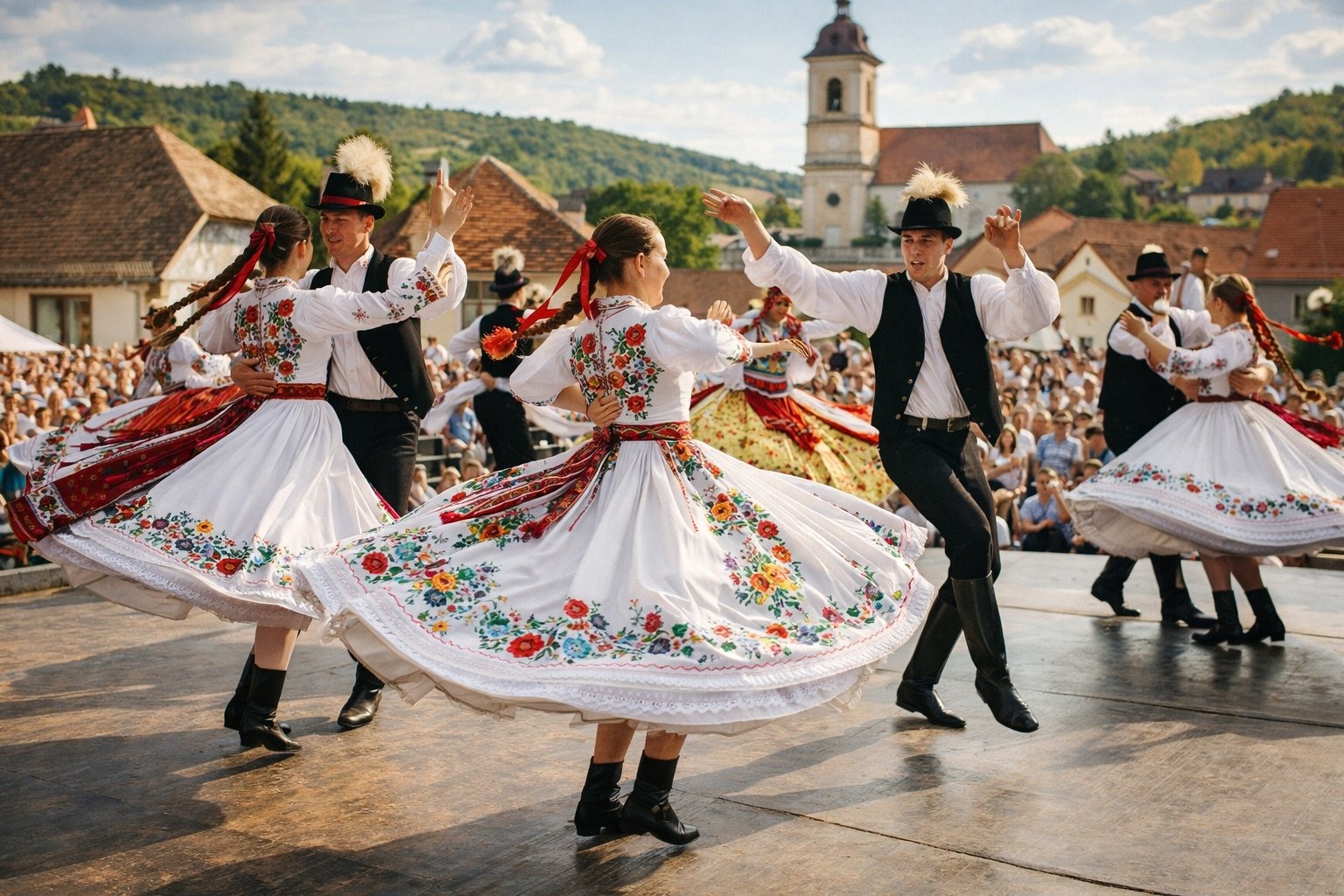
The correction to Liszt. From 1905 Béla Bartók and Zoltán Kodály went into the villages with a phonograph and recorded thousands of genuine peasant songs across Hungary, Slovakia, Romania and further, founding modern ethnomusicology in the process. Bartók built one of the twentieth century's major compositional bodies out of it; Kodály built the Kodály method of music education, which is used in schools around the world.
Literature
Sándor Petőfi and Attila József are the poets every Hungarian can quote. Sándor Márai's Embers found a huge international readership fifty years after it was written. Imre Kertész won the Nobel for Fatelessness, drawn from his own deportation at fourteen. László Krasznahorkai won the International Booker in 2015 for sentences that can run for pages.
Film
Béla Tarr, whose Sátántangó runs seven hours in long takes and is a genuine landmark rather than a joke; Miklós Jancsó's choreographed historical films; and László Nemes's Son of Saul, which won the 2016 Oscar for a film shot almost entirely in shallow focus over one man's shoulder inside Auschwitz. Hungary also has enormous studio capacity and doubles for half of Europe in international productions.
🥘 Food, and the Great Goulash Misunderstanding
Hungarian cooking is built on three things: paprika, lard and sour cream, with onions doing most of the structural work. It is not a subtle cuisine and it does not pretend to be. It is also considerably more varied than its reputation — there are freshwater fish soups, stuffed vegetables, a whole civilisation of pancakes and one of the better pastry traditions in Europe.
The paprika family, sorted
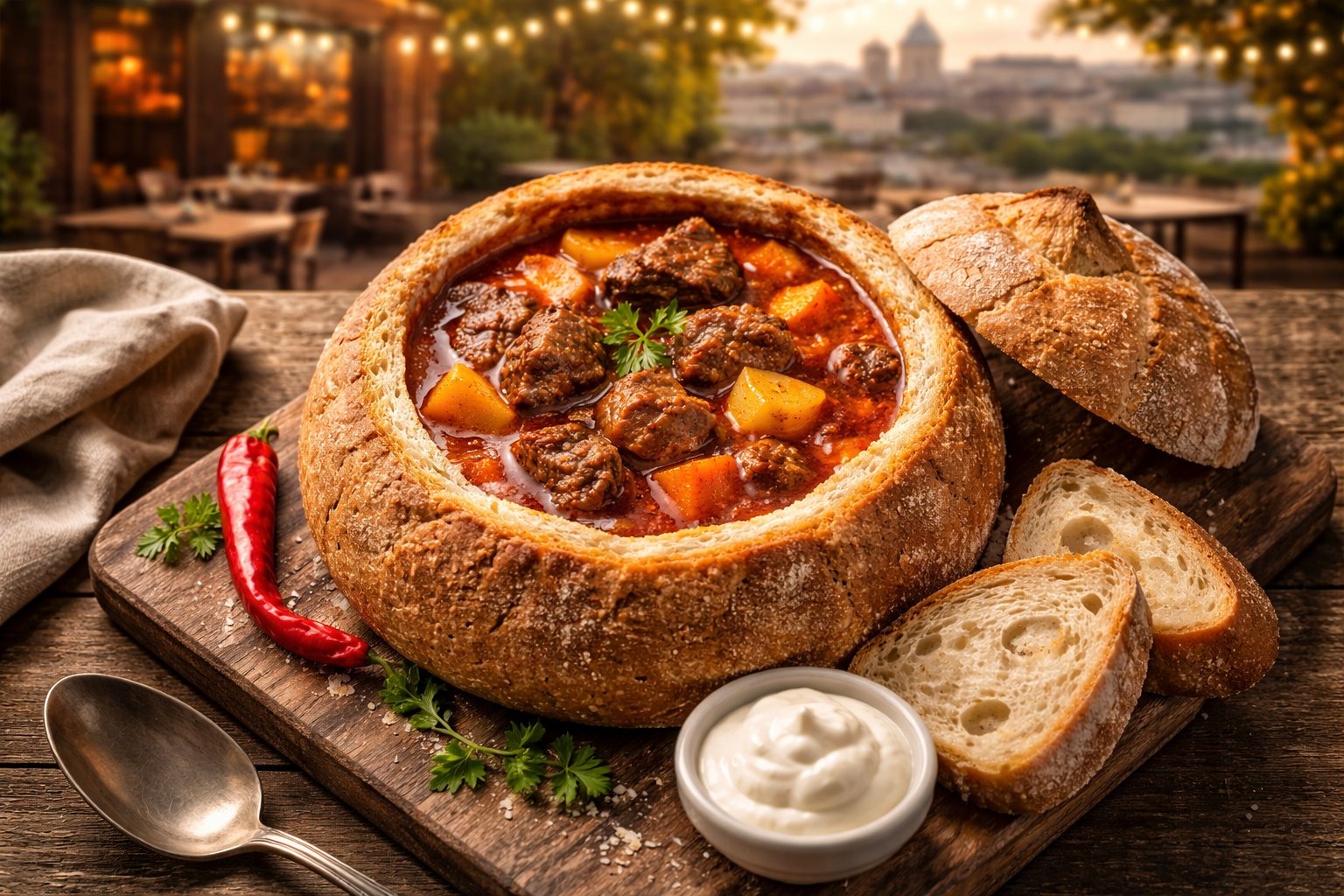
Gulyás — a soup of beef, onion, paprika, potato and carrot, with tiny pinched csipetke noodles. Pörkölt — meat and onion braised down to a thick paprika sauce, no cream, served with nokedli. Paprikás — the same but finished with sour cream, almost always chicken or veal. Tokány — meat in strips, less paprika, often with mushrooms and cream. Learning these four words unlocks most Hungarian menus.
The paprika itself
Grown around Szeged and Kalocsa, and graded on a scale that runs from különleges (special, mildest, brightest) through édesnemes (sweet noble, the everyday one) to erős (hot). It is added off the heat — paprika burns at frying temperature and turns bitter within seconds, which is the single most common mistake foreigners make with it.
Beyond the stews
Halászlé, the fisherman's soup of the Danube and Tisza — carp, a great deal of paprika, and a fierce regional argument about whether it should be strained. Lecsó, peppers and tomato stewed with onion, with sausage or egg. Töltött káposzta, stuffed cabbage. Hortobágyi palacsinta, savoury pancakes rolled around meat under a paprika-cream sauce. And libamáj — Hungary is one of the world's two big producers of foie gras.
Street food and sweets
Lángos: deep-fried flat dough with sour cream and grated cheese, and the correct order is with garlic rubbed on first. Kürtőskalács, the chimney cake, actually a Transylvanian Székely pastry. Dobos torta, six layers with chocolate buttercream under a sheet of caramel, invented in 1885. Somlói galuska, a trifle of sponge, walnut, chocolate and rum. And Túró Rudi, a curd-cheese bar in red-spotted wrapping from any corner shop, which no Hungarian abroad stops missing.
🍲 Recipe: Gulyásleves
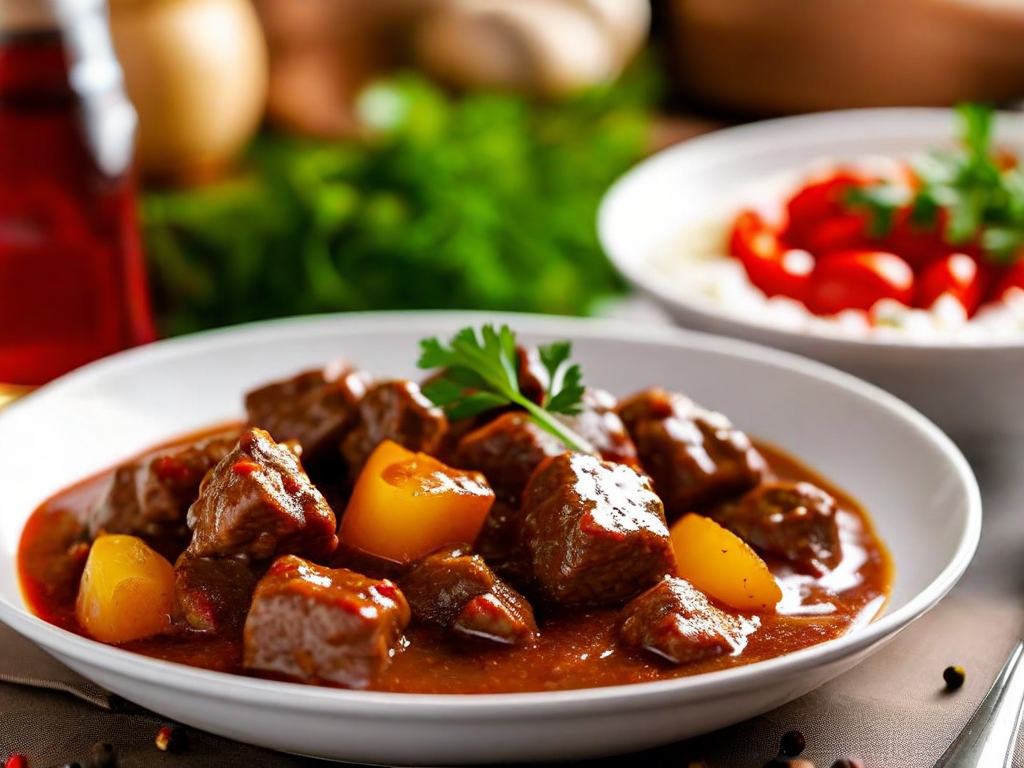
Gulyásleves
Hungarian goulash soup · serves 6 · 30 min prep + 2 h
Ingredients: 700 g beef shin or chuck, in 2 cm cubes; 3 large onions, finely chopped; 3 tbsp lard (or oil); 2 heaped tbsp sweet Hungarian paprika (édesnemes); 1 tsp caraway seed, crushed; 3 garlic cloves; 2 carrots and 1 parsley root, in rounds; 3 potatoes, in 2 cm cubes; 2 green peppers and 1 tomato, chopped; 2 litres water or light stock; salt; a hot cherry pepper if you like it. For the csipetke: 100 g flour, 1 egg, a pinch of salt.
Method: Cook the onions slowly in the lard until deep golden — 15 minutes at least, and this is where the soup is made or lost. Add the caraway and garlic for a minute. Now take the pot off the heat, stir in the paprika, and count to ten; if paprika touches a hot pan it turns bitter irreversibly. Add the beef, a splash of water, return to a low heat and let it stew in its own juices for 20 minutes. Add the carrots and parsley root, then the water, bring to a bare simmer and cook 90 minutes until the beef is tender. Add potatoes, peppers and tomato and cook 20 minutes more. For the csipetke, work the flour, egg and salt into a stiff dough, pinch off fingernail-sized pieces and drop them in for the last 8 minutes. Season and serve with bread and a hot pepper on the side.
💡 It must be a soup. If yours is thick enough to eat with a fork, add water — and if you deliberately want the thick version, leave out the potatoes, the extra liquid and the csipetke, and you have made pörkölt.
🍗 Recipe: Paprikás Csirke
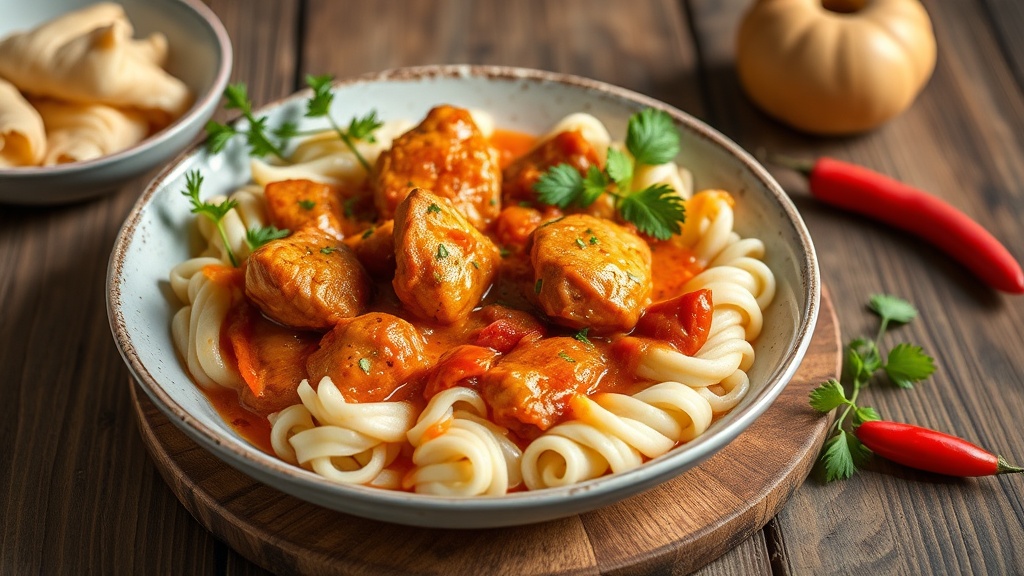
Paprikás Csirke
Chicken paprikash with nokedli · serves 4 · 1 h
Ingredients: 1 chicken, jointed, or 8 thighs and drumsticks, skin on; 2 large onions, finely chopped; 3 tbsp lard; 2 heaped tbsp sweet Hungarian paprika; 1 green pepper, sliced; 1 tomato, chopped (optional and small); 300 ml chicken stock or water; 200 ml full-fat sour cream; 1 tbsp flour; salt. For the nokedli: 300 g flour, 2 eggs, about 150 ml water, salt.
Method: Brown the chicken in lard and set aside. In the same fat cook the onions slowly to deep gold, 15 minutes. Off the heat, stir in the paprika. Return the chicken, add the pepper and tomato and the stock — just enough to come halfway up the meat, not to cover it — and simmer covered for 40 minutes until tender. Lift the chicken out. Whisk the flour into the sour cream until completely smooth, then temper it: stir several spoonfuls of the hot sauce into the cream before adding the cream to the pan, or it will split. Bring back to the barest simmer, never a boil, return the chicken and warm through. Meanwhile beat the nokedli ingredients into a thick sticky batter, rest 10 minutes, and push it in small pieces off a wet board into boiling salted water — they are done about a minute after they float.
💡 Full-fat sour cream only. Anything under about 15% fat will curdle in the pan and no amount of flour will save it.
🥬 Recipe: Töltött Káposzta
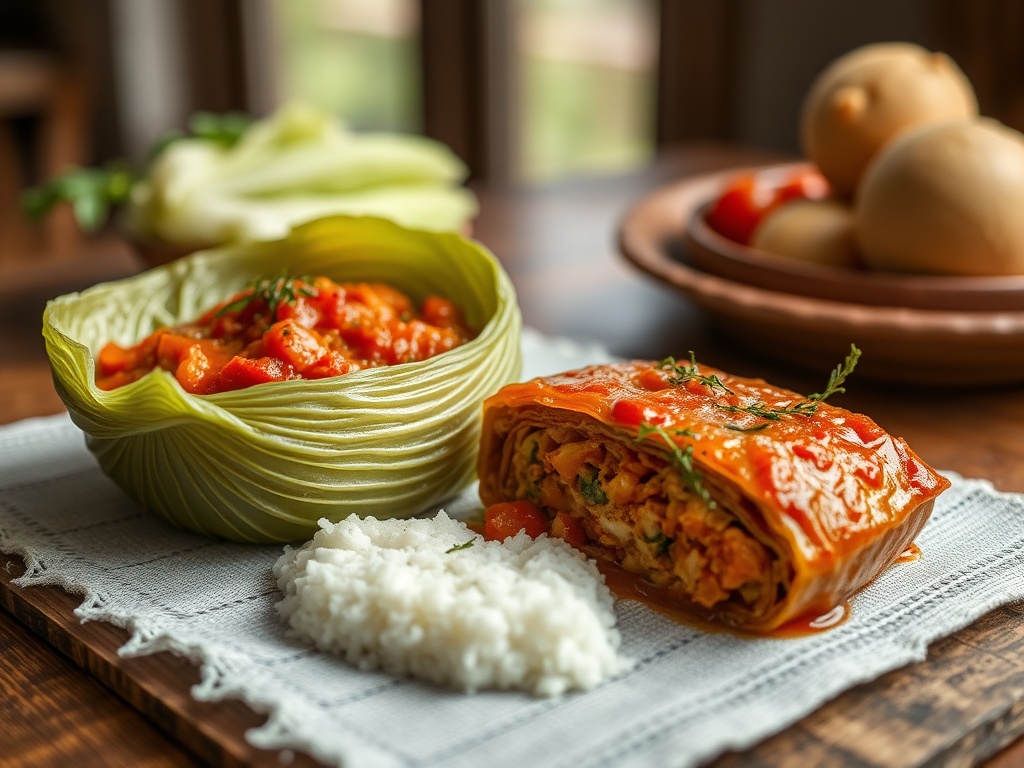
Töltött Káposzta
Hungarian stuffed cabbage · serves 6 · 40 min prep + 2 h
Ingredients: 1 large head of soured (pickled) whole cabbage, or 1 white cabbage plus 500 ml sauerkraut brine; 800 g sauerkraut, drained; 500 g minced pork (not lean — 20% fat); 100 g rice, uncooked; 1 onion, finely chopped; 2 garlic cloves; 1 egg; 1 tbsp sweet paprika; 1 tsp caraway; salt, pepper; 200 g smoked pork ribs or smoked sausage; 2 tbsp lard; 1 tbsp flour; 200 ml sour cream.
Method: Separate the cabbage leaves and trim the thick ribs flat. Fry the onion in a little lard until soft, cool, and mix with the pork, uncooked rice, garlic, egg, paprika, caraway, salt and pepper. Put a heaped tablespoon on each leaf, fold the sides in and roll tightly. Spread half the sauerkraut in a wide heavy pot, lay the rolls on it in a single layer with the smoked meat tucked between them, cover with the rest of the sauerkraut, add water to just cover and simmer very gently, covered, for 2 hours — it must never boil hard or the rolls burst. Near the end, make a light roux with the lard and flour, loosen it with a ladle of the cooking liquid and stir it back in to thicken. Serve with sour cream on top.
💡 Better on the second day, and better still on the third — this is Christmas and wedding food in Hungary, made in enormous quantities and reheated. It also freezes well.
🍷 Wine, Pálinka and Fröccs
Hungary has 22 wine regions and a viticultural history running to the Romans, and it spent the twentieth century wrecking its own reputation — first with phylloxera, then with collectivised bulk production for the Soviet market. The recovery since 1990 has been dramatic and is still not widely known outside the region, which makes Hungarian wine one of the better-value things in Europe.
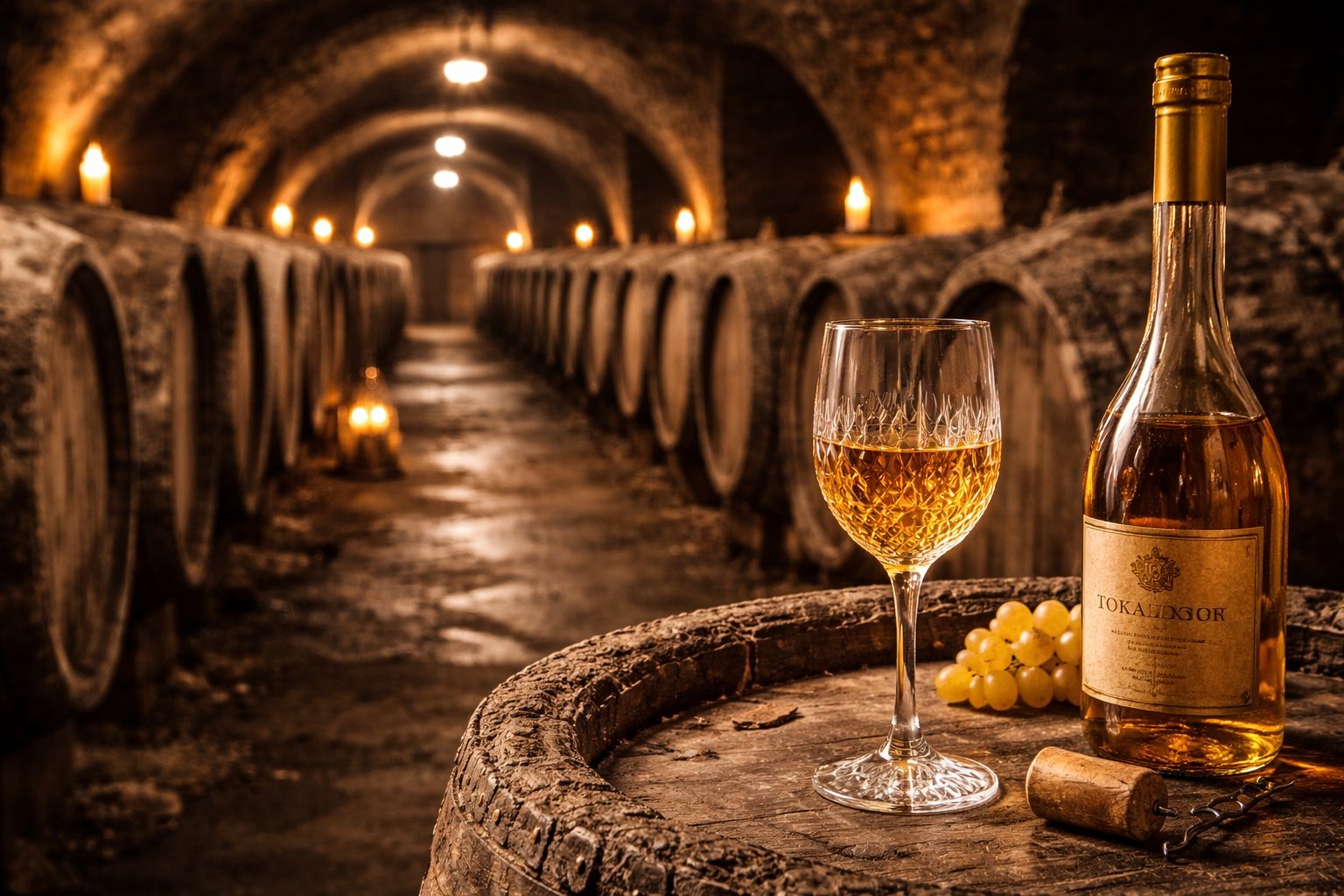
Tokaji aszú
The great one. Grapes affected by noble rot are picked berry by berry, made into a paste and steeped in base wine; the sweetness is measured in puttonyos, from 3 to 6, historically the number of hods of aszú berries per barrel. Louis XIV called it vinum regum, rex vinorum — the wine of kings and the king of wines — and it is in the national anthem. It is also, crucially, high in acid, so it is not cloying. Above the aszú sits Eszencia, so concentrated it barely ferments and can take years to reach 3% alcohol.
The reds
Villány in the far south for full-bodied Cabernet Franc — genuinely world class, and the grape Hungary does better than almost anyone. Szekszárd for Kadarka and Bikavér. Eger for its own Egri Bikavér, a blend that must contain Kékfrankos; the modern producers have hauled it a very long way from the sweetened bulk wine sold under the name in the 1980s.
The whites
Furmint made dry is the rising star — mineral, high-acid, ageworthy, and now Hungary's most exported serious wine. Hárslevelű, Juhfark from the volcanic cone of Somló (a tiny region making some of the country's most distinctive whites), Olaszrizling around Balaton, and Irsai Olivér and Cserszegi Fűszeres for cheap aromatic summer drinking.
Pálinka, Unicum, fröccs
Pálinka is a protected EU designation: only fruit spirit distilled in Hungary (plus four Austrian provinces for apricot) may use the name, it must be made from fruit with no added sugar or flavouring, and the classics are apricot from Kecskemét, plum, and quince. Unicum is a bitter herbal liqueur made by the Zwack family since 1790, in a round bottle, tasting like a medicine you would not take voluntarily until suddenly you would. And fröccs — wine and soda water — has a full nomenclature by ratio, from the kisfröccs (1 wine : 1 soda) through hosszúlépés (1:2) to the házmester (3:2) and about a dozen more.
🏰 Budapest: The Buda Side
Budapest was three towns until 1873: hilly, quiet, aristocratic Buda and Roman Óbuda on the west bank, and flat, commercial, growing Pest on the east. They still feel like different cities and the division is the most useful thing a visitor can hold on to. Buda is where you look at things; Pest is where you do things.
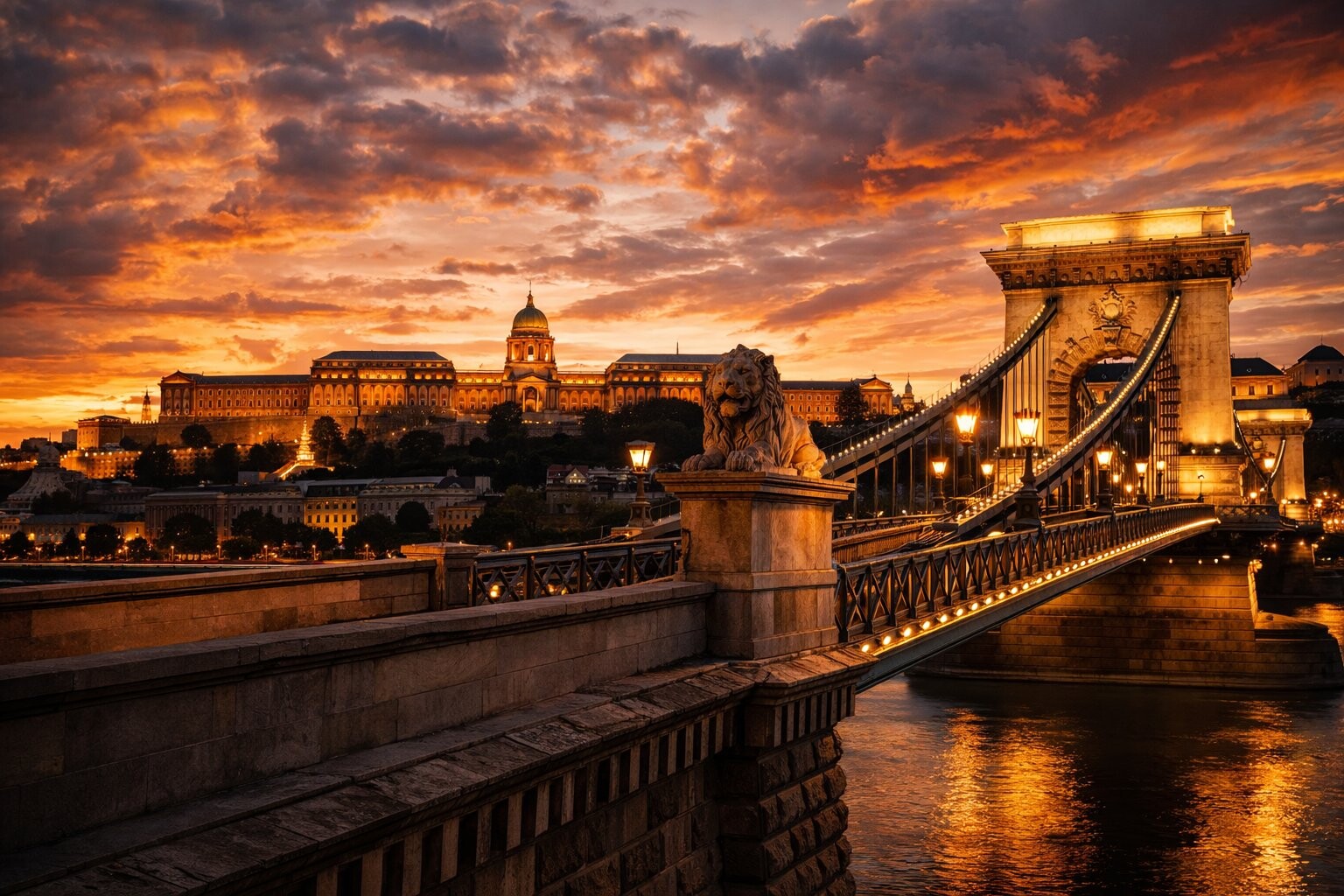
The Castle District
A single long ridge holding Buda Castle (now the National Gallery and the Széchényi Library), the Matthias Church with its Zsolnay tile roof, and the Fisherman's Bastion — a neo-Romanesque viewing terrace built in 1902 purely to look good, which it does. Go early or late; the middle of the day is very crowded. The funicular from the Chain Bridge is charming and there is a free bus that does the same job.
Gellért Hill
The 235 m crag over the river, topped by the Citadella and the Liberty Statue — a woman holding a palm frond, erected in 1947 to commemorate the Soviet liberation and quietly rededicated after 1989 with the Soviet inscriptions removed. The walk up takes 25 minutes and the view over the whole bend of the river is the best in the city.
Under the hill
Buda is riddled with caves in its thermal limestone. The Castle Hill labyrinth runs under the district; the Pálvölgyi and Szemlőhegyi caves in the northern suburbs are proper show caves inside the city limits; and the Hospital in the Rock, a wartime emergency hospital and later nuclear bunker under the Castle, is one of the best museums in Budapest.
Óbuda and Aquincum
The northern third, and the oldest: Aquincum was the capital of Roman Pannonia Inferior, with a preserved civilian town, an amphitheatre and a museum holding a working reconstruction of a Roman water organ. Óbuda's Fő tér is a small baroque square that most visitors never reach, with the excellent Vasarely and Kassák museums on it.
🏙️ Budapest: The Pest Side
Pest is the flat side, and it is where nine tenths of the city actually lives, eats and works. It is laid out on two ring roads and a set of radial avenues cut through in the 1870s on the Paris model, and it is one of the most architecturally coherent nineteenth-century cities left in Europe — partly because it was built in forty years, and partly because it was too poor between 1945 and 1990 to knock any of it down.
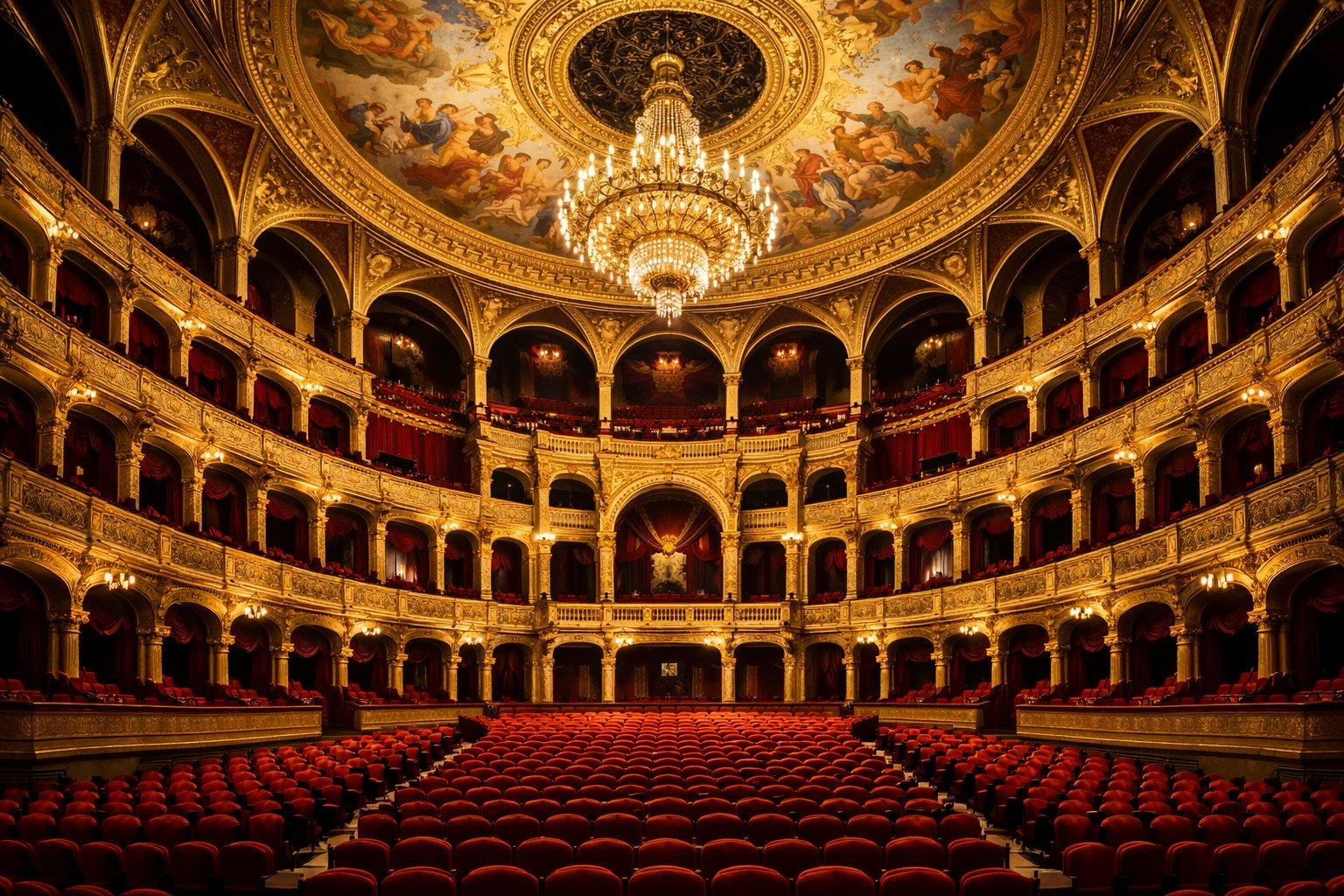
The Parliament
268 m long, 691 rooms, finished in 1902 and modelled loosely on Westminster. It holds the Holy Crown under guard and can only be seen on a timed guided tour, which sells out — book online, days ahead. The exterior from the Buda side at night is free and is arguably the better experience.
Andrássy and the City Park
The great avenue, a UNESCO site, running 2.5 km from the centre to Heroes' Square, with the Opera and the House of Terror museum on it — the latter in the building used as headquarters by both the Arrow Cross and the communist secret police, and worth going to while knowing it is a museum with a strong political argument. Beyond the square, the City Park holds Vajdahunyad Castle, the Széchenyi baths, the zoo and the new House of Music.
District VII
The old Jewish quarter, the wartime ghetto, and now the nightlife district. The Dohány Street Synagogue is the largest in Europe and the second largest in the world, with a memorial garden and a weeping-willow sculpture whose leaves carry victims' names. The same few streets contain the ruin bars, which is a juxtaposition worth being conscious of.
The market and the river
The Great Market Hall (1897) at the end of Váci utca — go for the ground floor (paprika, salami, produce) rather than the tourist embroidery upstairs. The Shoes on the Danube memorial on the embankment. And the tram 2 along the Pest riverfront, which National Geographic once named one of the world's great tram rides and which costs the price of a normal ticket.
🍺 Baths by Day, Ruin Bars by Night
The two things Budapest is now best known for internationally are a Roman-Ottoman inheritance and a twenty-year-old accident, and they pair unreasonably well: a morning in hot mineral water and an evening in a courtyard full of salvaged furniture is a genuinely good day.
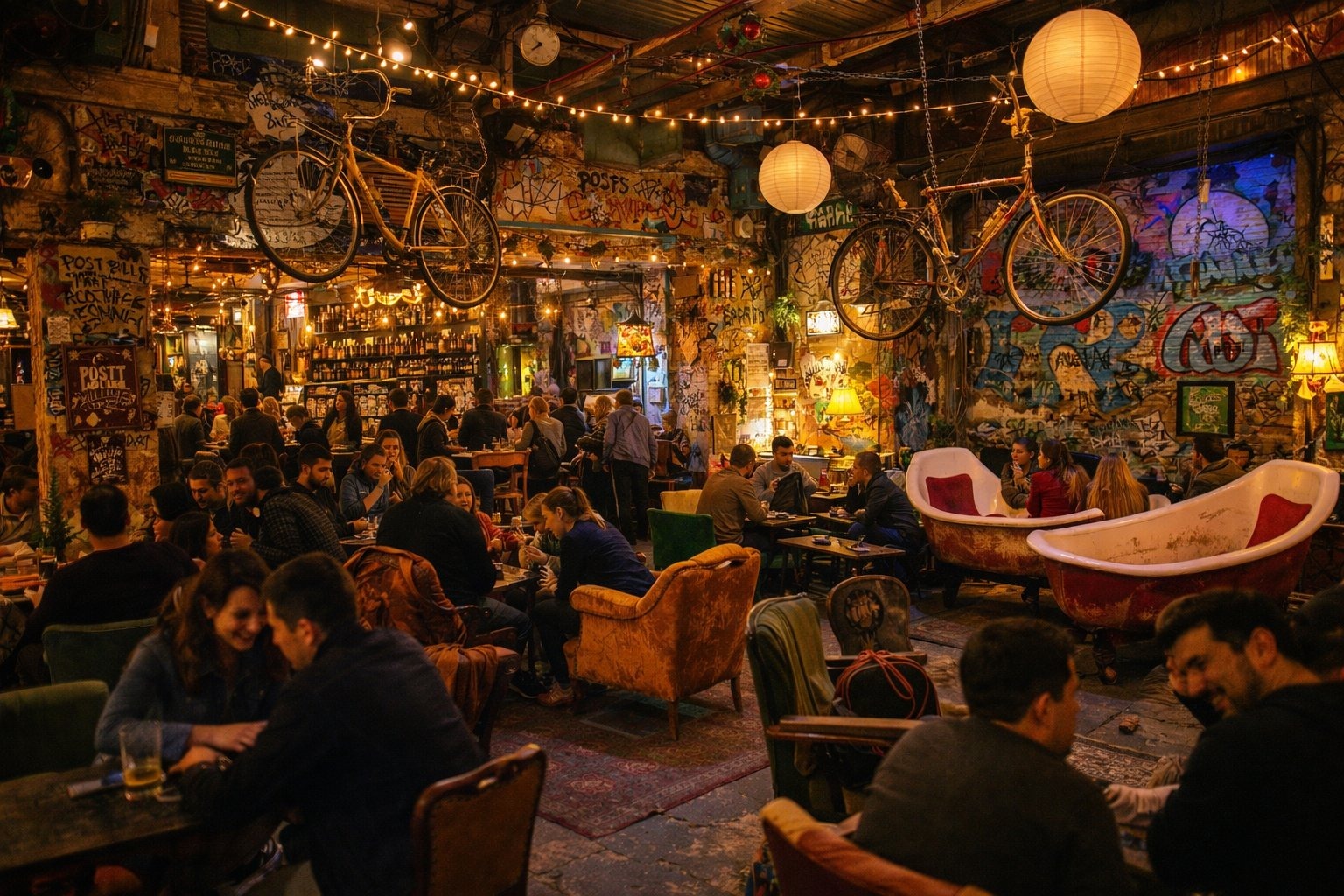
Szimpla and the rest
Szimpla Kert is still there, is now firmly on every itinerary, and runs a genuinely good farmers' market on Sunday mornings in the same courtyard. For something less crowded try Instant-Fogas, Csendes, Kőleves Kert, or the summer-only outdoor bars on Hajógyári Island. Prices in District VII have risen a great deal; a block or two out they have not.
Which bath, when
Széchenyi for the outdoor pools in winter steam — go at 7 a.m. or after 7 p.m. to avoid the worst crowds. Gellért for the architecture. Rudas for the Ottoman dome and the rooftop tub at sunset, booked in advance. Lukács for the local experience at local prices. And Palatinus on Margaret Island in summer, which is an outdoor lido rather than a spa.
Margaret Island
The 2.5 km island in the middle of the river, entirely a park, with a 5.3 km rubberised running track around it, medieval convent ruins, a Japanese garden, a musical fountain and no through traffic. It is where Budapest goes to run, and it is a five-minute tram ride from either bank.
Sziget
One of Europe's largest music festivals, held every August on Hajógyári Island — around half a million attendances over a week, with a very international crowd. If you are not going to it, be aware that Budapest accommodation prices in that week roughly double.
🚢 The Danube Bend
North of Budapest the Danube runs west to east, hits the Visegrád hills and turns sharply south. The Dunakanyar — the Danube Bend — is the prettiest short stretch of country in Hungary and is a straightforward day trip: an hour by train, by bus, or by boat from the city.
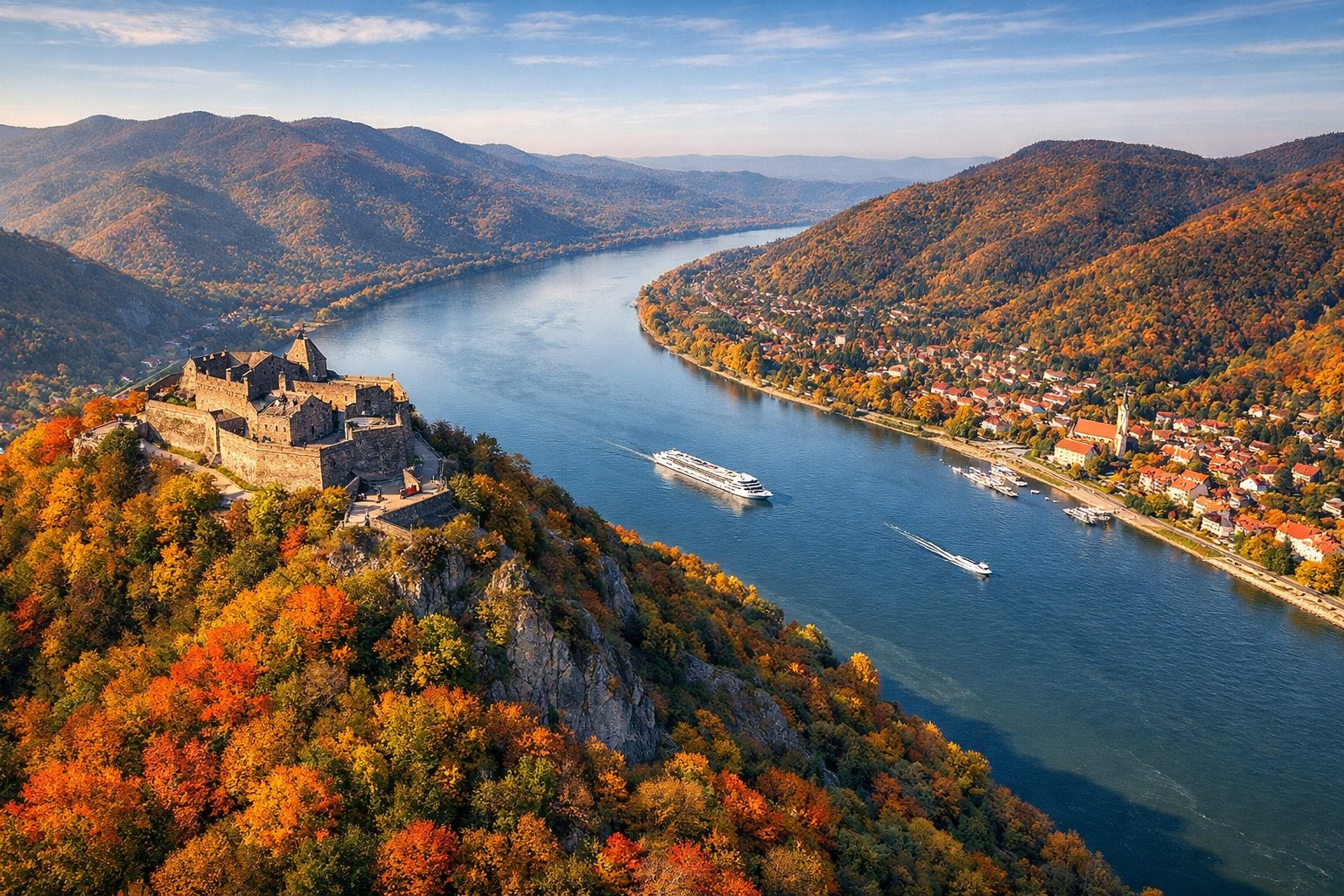
Szentendre
Twenty minutes on the HÉV suburban railway from Budapest: a small baroque town founded by Serbian refugees fleeing the Ottomans in the 1690s, with seven Orthodox churches, cobbled lanes in ochre and terracotta, and a long history as an artists' colony. It is very touristy in the middle of the day and lovely early or late. The Margit Kovács ceramics museum is the one to see.
Visegrád
The castle, the palace ruins, and a bobsled run on the hillside that is more fun than it has any right to be. The name is Slavic — vyšehrad, high castle — and it gave its name to the Visegrád Group because the kings of Hungary, Bohemia and Poland met here in 1335, and their successors chose the same spot in 1991.
Esztergom
The first capital of Hungary, where Saint Stephen was born and crowned, and the seat of the Catholic primate. The basilica is the largest church in Hungary and one of the largest in Europe, with a dome you can climb for a view straight into Slovakia — Štúrovo is on the far bank, joined by the Mária Valéria bridge, blown up in 1944 and only rebuilt in 2001.
How to do it
The boat from Budapest is slow and lovely in summer; the train to Szentendre and Esztergom is fast and cheap; Visegrád is easiest by bus or by the Nagymaros train plus the ferry across. A satisfying day is Szentendre in the morning, Visegrád in the afternoon, boat or bus back. Autumn colour makes it substantially better.
🏖️ Lake Balaton
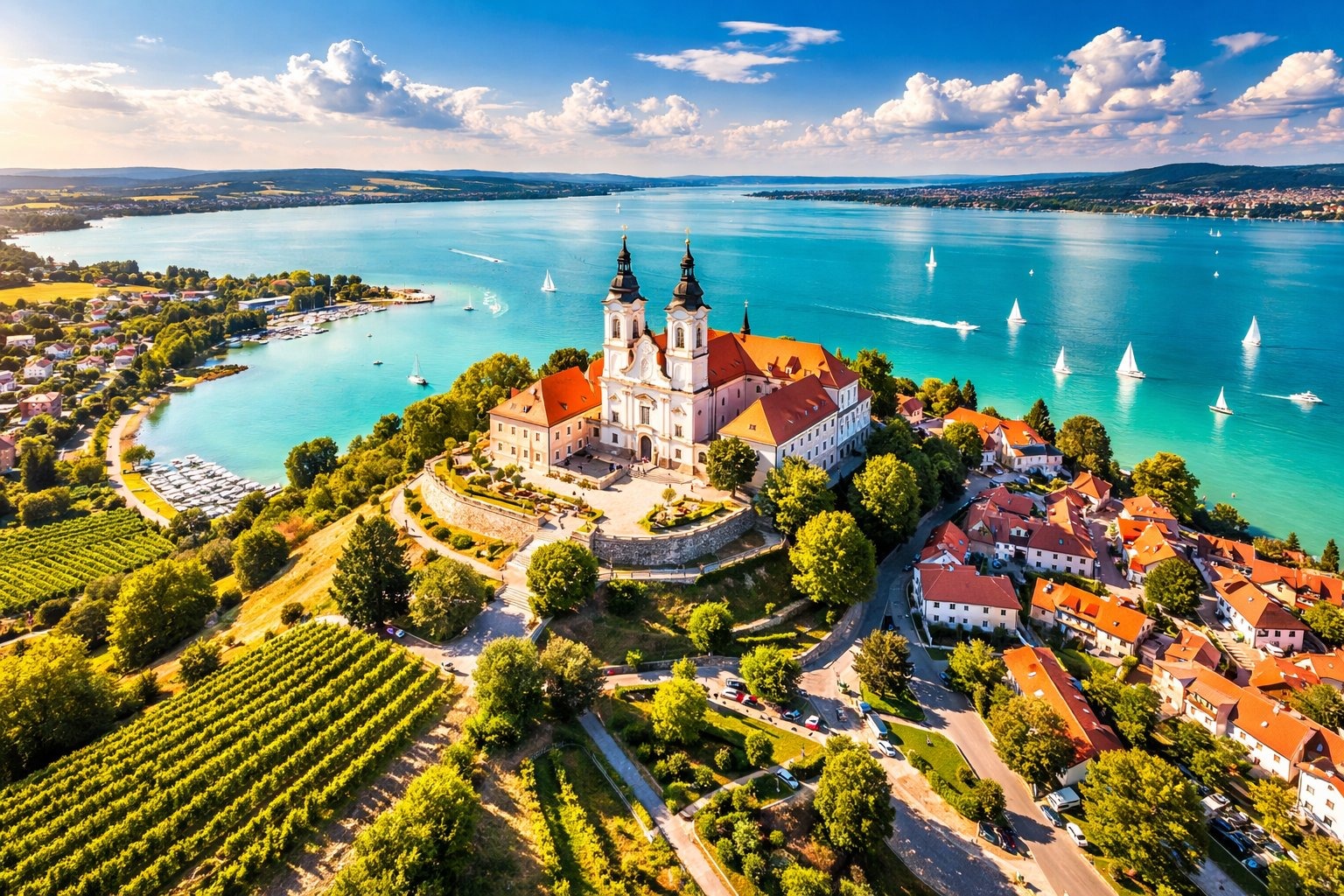
Balaton is 592 km², the largest lake in central Europe, and the sea of a country that has no sea. It is also almost absurdly shallow — an average depth of 3.3 metres, with a maximum of 12 in a single spot by the Tihany peninsula. That shallowness is the whole character of the place: the water warms to 25–27 °C in summer, you can wade a long way out on the southern shore, and it is the reason the lake is a family institution rather than a sailing one.
North shore vs south shore
The north is hilly, volcanic, quieter and where the wine is — Badacsony, Szigliget, Balatonfüred, the basalt cones of the Tapolca basin. The south is flat, shallow, sandy and where the crowds and the nightlife are, with Siófok as its noisy capital. Choose accordingly; a lot of disappointed visitors chose wrong.
Balatonfüred and Tihany
The elegant end. Balatonfüred is a nineteenth-century spa town with a lakeside promenade, a heart hospital fed by mineral springs and the country's oldest sailing club. Tihany has the abbey, lavender fields that flower in June and July, an inner lake on the peninsula, and a well-known echo off the abbey wall.
Around it
Cycle the 200 km circuit of the lake, which is entirely signposted and mostly flat. Visit Hévíz and its thermal lake, 8 km inland. Climb Badacsony or Szent György-hegy for basalt organ pipes and vineyard views. And go to Keszthely for the Festetics Palace, the largest country house in Hungary and one of the few not destroyed after 1945.
When
July and August are hot, warm-watered and very full — this is where the whole country goes. June and September are the sweet spot: the water is still swimmable in September, the wine towns are in harvest, and the prices drop noticeably. In winter almost everything closes, but in a hard year the lake freezes and people skate on it.
🌾 The Countryside
Most visitors see Budapest and go home, which is a mistake of the same order as seeing Prague and skipping Bohemia. The Hungarian countryside is flat, empty, cheap and much stranger than the capital.
Hortobágy
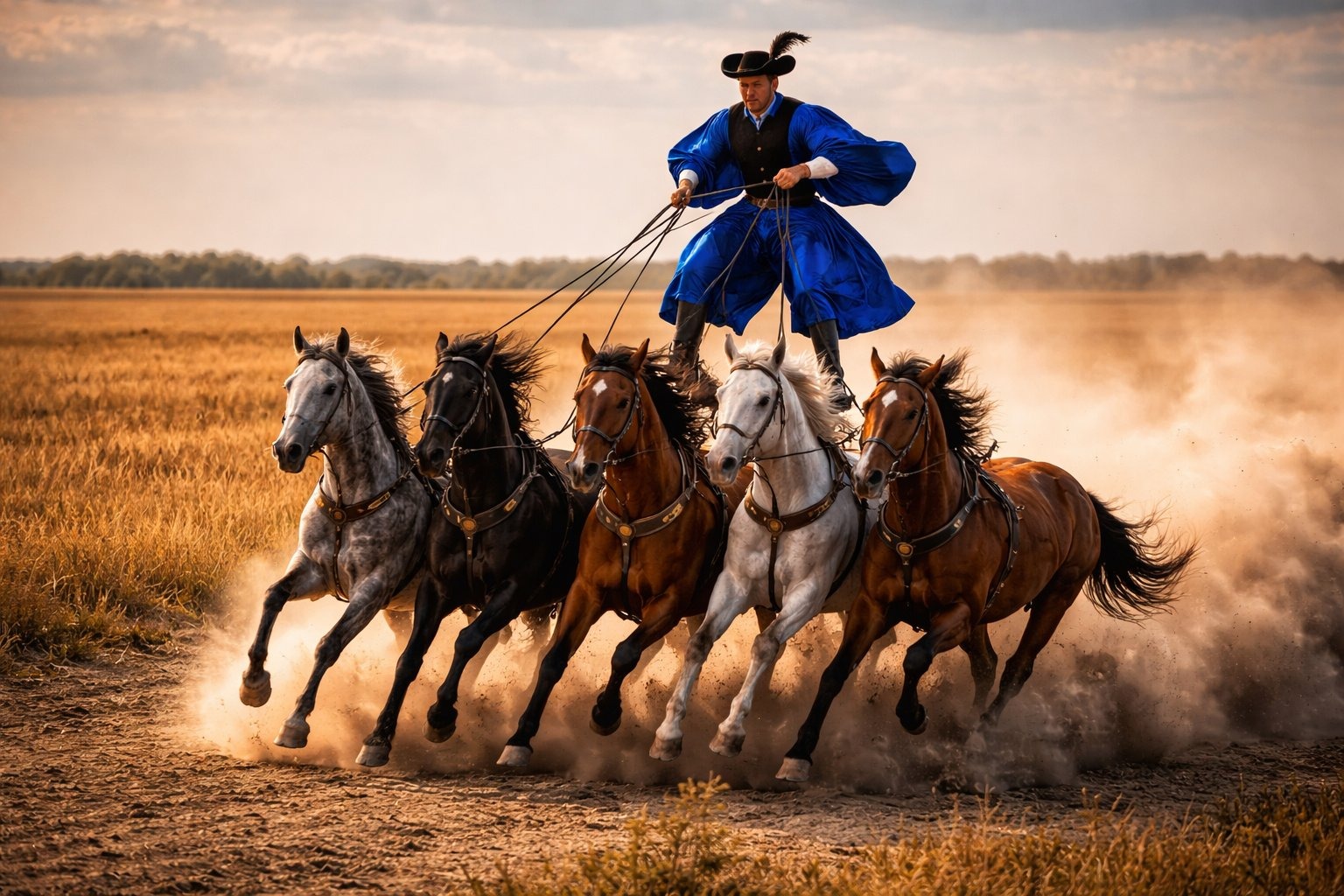
The puszta: 800 km² of protected grassland, Europe's largest continuous natural pasture, a UNESCO cultural landscape and a Dark Sky park. Grey longhorn cattle, racka sheep with corkscrew horns, water buffalo, and one of Europe's great crane migrations — up to 100,000 birds staging here each October. The nine-arch bridge of 1833 is the longest stone road bridge in the country and is on the banknotes.
Pécs
The best city in Hungary after Budapest and the one most people skip. A UNESCO-listed early Christian necropolis from the fourth century under the cathedral square, the mosque of Pasha Qasim on the main square — still shaped like a mosque, now a Catholic church, with the mihrab visible inside — the Zsolnay ceramics factory and museum, and a Mediterranean feel that comes from being 40 km from Croatia.
Eger and the north
Eger for the castle, the minaret, the baroque centre and the Szépasszony-völgy — the Valley of the Beautiful Women — a horseshoe of dozens of cellars cut into the hillside where you can taste Bikavér straight from the barrel for very little. Around it: the Mátra and Bükk hills, Lillafüred, and the Aggtelek caves.
Tokaj and the east
The Tokaj hills and their cellars, two and a half hours north-east of Budapest. Debrecen, the Calvinist second city with its Great Church. Szeged in the far south, rebuilt in a single unified style after the flood of 1879, with the best paprika, the best salami and a fine art nouveau centre. And Pannonhalma, a Benedictine archabbey founded in 996 and continuously inhabited since — UNESCO-listed, with a working school and a very good winery.
🏆 Sport: Water Polo and the Golden Team
Hungary is, per head of population, one of the most successful Olympic nations in history — around 190 gold medals from a country of under ten million, which puts it in the top ten of the all-time table. The strength is concentrated in a handful of disciplines and is not evenly distributed at all.
Water polo
The national sport, and Hungary is the most successful country in Olympic history in it — nine golds, including a run of three in a row from 2000 to 2008. The 1956 Blood in the Water semi-final against the Soviet Union, played six weeks after the tanks rolled into Budapest and abandoned with a Hungarian player bleeding, is the single most famous match in the sport's history.
Fencing, swimming, canoeing
Hungarian sabre fencing dominated the twentieth century — Aladár Gerevich won gold at six consecutive Olympics across 28 years, which no athlete in any sport has matched. Katinka Hosszú, the "Iron Lady", took three golds in Rio. And Hungary is a perennial power in flatwater kayak and canoe, which is where a good share of those medals come from.
The Golden Team
The Aranycsapat of the early 1950s — Puskás, Kocsis, Hidegkuti, Bozsik — went unbeaten for 32 matches over four years, beat England 6–3 at Wembley in 1953 (England's first ever home defeat by a continental side) and 7–1 in Budapest six months later, and then lost the 1954 World Cup final to West Germany after leading 2–0. That match is called the Miracle of Bern in Germany and something much less polite in Hungary.
Football since
A long decline after 1956 scattered the team — Puskás went to Real Madrid and won three European Cups — followed by decades of nothing. It has improved: Hungary reached the Euros in 2016, 2020 and 2024, drew with France and Germany in a group nobody expected them to survive, and the Puskás Aréna is a genuinely good stadium with a genuinely loud crowd.
🚆 Getting There and Around
Hungary is in the EU and in Schengen, so from anywhere in central Europe there is no border formality at all. From Prague it is close enough that flying makes very little sense.
By train
Prague to Budapest is about 6 hours 45 minutes direct, via Brno and Bratislava, several times a day, with EuroCity trains and RegioJet both running the route. Booked ahead the fare is genuinely cheap. From Vienna it is 2h40, from Bratislava 2h20 — the three capitals form the easiest rail triangle in Europe.
By car
530 km from Prague, about five and a half hours via Brno, Bratislava and the M1. The critical thing: Hungary requires an electronic motorway vignette (e-matrica), bought online or at a petrol station before you get on the motorway and registered against your number plate. There is no windscreen sticker and no toll booth — the cameras simply check. A 10-day national vignette costs a modest amount; county vignettes are cheaper if you are only crossing one or two.
By air
Budapest Ferenc Liszt (BUD) is 25 km south-east of the centre, served by most European carriers and the low-cost airlines. The 100E express bus runs to Deák Ferenc tér in about 40 minutes for a modest flat fare and is the sensible option; ordinary bus 200E plus the M3 metro is cheaper still. Debrecen has a small international airport, which is useful for the east.
Getting around
MÁV trains are slow but cheap and reach almost everywhere; the intercity services to Debrecen, Pécs, Szeged and Győr are decent. Long-distance Volánbusz coaches cover what the trains don't. In Budapest, four metro lines, an excellent tram network and the same ticket for all of it — buy a 24- or 72-hour travelcard, validate paper tickets before boarding, and be aware that inspectors are numerous and unsentimental.
💰 What It Costs
Hungary is one of the cheaper EU countries, though central Budapest has caught up with Prague and in a few things overtaken it. The countryside has not, and the gap between the capital and everywhere else is large.
Money
The forint (HUF) — Hungary is in the EU but not the eurozone and shows no intention of joining. Roughly 16 forints to the Czech crown, so 1,000 HUF is about 63 Kč. Cards are accepted almost universally, including on public transport. Do not change money on the street or in the exchange booths on Váci utca, which are a long-running rip-off; use a bank, an ATM or a reputable exchange office away from the tourist streets.
Eating
A two-course lunch menu (napi menü) in an ordinary place: 90–160 Kč. A proper dinner in a good Budapest restaurant: 400–800 Kč a head without wine. A lángos: 60–90 Kč. A beer: 60–110 Kč in Pest, less outside. Coffee: 50–90 Kč. Hungary also has an unusual number of genuinely good-value Michelin-starred restaurants — a tasting menu in Budapest costs a fraction of the equivalent in Vienna.
Sleeping and seeing
A mid-range Budapest double: 1,600–3,000 Kč a night, considerably less outside the summer and outside the capital. Széchenyi baths: around 500–650 Kč for a day with a cabin. Opera tickets from 200 Kč in the upper tiers. Parliament tour: about 350 Kč for EU citizens. Museums: 150–350 Kč.
A realistic daily budget
Backpacker: 1,100–1,600 Kč a day. Comfortable: 2,500–4,000 Kč. Outside Budapest, take 30–40% off. Note that the tourist tax in Budapest is 4% of the room rate and that many restaurants add a 12–15% service charge — check the bill before adding a tip on top of it, because double-tipping is the standard visitor error.
📋 Practical Information
Entry and documents
EU citizens including Czechs need only an ID card; Hungary is in Schengen so there are no checks on arrival from Austria, Slovakia, Slovenia, Croatia or Romania. Non-EU visitors follow the standard Schengen rules. Nothing special applies.
Health
The European Health Insurance Card covers state care on the same terms as for Hungarians, which means it covers emergencies and not much comfort — commercial travel insurance is still worth having. Pharmacies (gyógyszertár) are good and there is a duty pharmacy in every town. Tap water is safe everywhere. Emergency number 112.
Driving
Drive on the right. Headlights on at all times outside built-up areas. Zero alcohol tolerance — 0.0‰, enforced strictly, and a single glass of wine will lose you your licence. Limits are 50 in towns, 90 on ordinary roads, 110 on dual carriageways and 130 on motorways. The e-vignette is mandatory on motorways; police fines for driving without one are automated and arrive by post.
Manners and money
Greet with jó napot on entering a small shop. Tipping is 10% where no service charge has been added — and it is normal to say the total you want to pay when handing over the card, rather than leaving cash on the table. Do not clink beer glasses (see the 1848 section). And do not assume Hungarian is like Slovak or Czech: it is not related to either and a Czech phrasebook will get you nowhere at all.
For Czech travellers: the Czech Embassy in Budapest is on Rózsa utca in District VI — check the current address and emergency line on mzv.cz. MZV ČR issues no travel warning for Hungary beyond ordinary caution. Registration in DROZD is free and takes two minutes, and is more use than most people assume when a car breaks down 200 km from anywhere.
❓ Misconceptions
"Goulash is a stew."
Gulyás is a soup. The thick stew served in every European restaurant under the name is pörkölt, and the version served in a hollowed loaf of bread is a Czech and Slovak invention that Hungarians find mildly funny. The word gulyás originally meant the herdsman, not the dish.
"Hungarian is a Slavic language."
It is Uralic — not Indo-European at all, and therefore not related to Czech, Slovak, Serbian, German or Romanian in any way. Its nearest relatives are two small languages spoken in western Siberia. A thousand years of contact has produced plenty of loanwords in both directions, and that is the whole of the connection.
"Hungarians are descended from the Huns."
The similarity of the names is a medieval confusion, probably reinforced by chroniclers who found the descent flattering. The Magyars arrived in the Carpathian Basin around 895, four and a half centuries after Attila died. The name "Hungary" most likely derives from a Turkic term for a tribal confederation, not from the Huns.
"Budapest is one old city."
It is three towns merged in 1873, and almost everything a visitor photographs was built in the forty years after that. Budapest has very little medieval fabric outside the Castle District, because the reconquest of 1686 flattened it. Its grandeur is Victorian, and it is grander than it needed to be because it was built as the co-capital of an empire.
"Balaton is a nice little lake."
It is 592 km² — nearly eight times the area of Lake Geneva's Hungarian equivalent in the popular imagination, and the largest lake in central Europe. What it is not is deep: the average is 3.3 m, which is why it warms up like a bath and why it looks green rather than blue.
"You can pay in euros."
Occasionally, badly, at a punitive rate. Hungary uses the forint and has no timetable for joining the euro. Pay by card or in forints, and avoid the exchange booths on the tourist streets, which are among the worst-value in Europe.
✍️ Author's Note
Hungary is the neighbour Czechs think they know and mostly do not. It is close, it is cheap, it is easy — six and three quarter hours by train, no border, no visa, cards everywhere — and a very large number of Czech visitors get as far as Budapest for a weekend, do the castle and the baths, and never come back. That is a waste of a country whose interior is emptier, older and considerably odder than the capital.
It is also a country whose politics are impossible to leave out of an honest description, and I have not left them out. What has happened to the constitution, the courts, the electoral system, the media and the universities since 2010 is set out above from the record, as is the ongoing dispute with the EU over frozen funds. Equally on the record: Hungary is safe, functional and welcoming, none of this touches a visitor, and treating nine and a half million people as an extension of their prime minister is both rude and wrong. Hungarians argue about this more fiercely than any foreigner does.
Practically: go in May, June or September. Give Budapest three days minimum and split them between the two banks. Do a bath and do it properly — early morning at Széchenyi, or Rudas at sunset. Then get out of the capital: Eger for the cellars, Pécs for the best small city in the country, the Danube Bend for an easy day, and Balaton's north shore rather than its south. Order the soup and the stew by their right names, drink the Furmint dry, and if someone hands you a small glass of pálinka at ten in the morning, that is not a test — it is just how the day starts.
On the images
The photographs here are illustrative reconstructions rather than documentary images, and this set is unusually accurate — Buda Castle, the Chain Bridge, Széchenyi, Heroes' Square, Eger's minaret, Tihany, Hollókő and the puszta horsemen are all recognisably themselves. Three captions carry corrections that matter: the "goulash" images show pörkölt and, in one case, a Czech bread bowl; the paprikás sauce should be pink from sour cream rather than red from tomato; and Balaton is green-grey rather than turquoise. Nothing was rejected. The wine bottle's label, like most generated lettering, does not read as real text.
Support This Project 🌍
This World Travel Factbook is a labor of love – free to use for all travelers. If you find it helpful, consider supporting its continued development.