🏛️ UNESCO & World Heritage
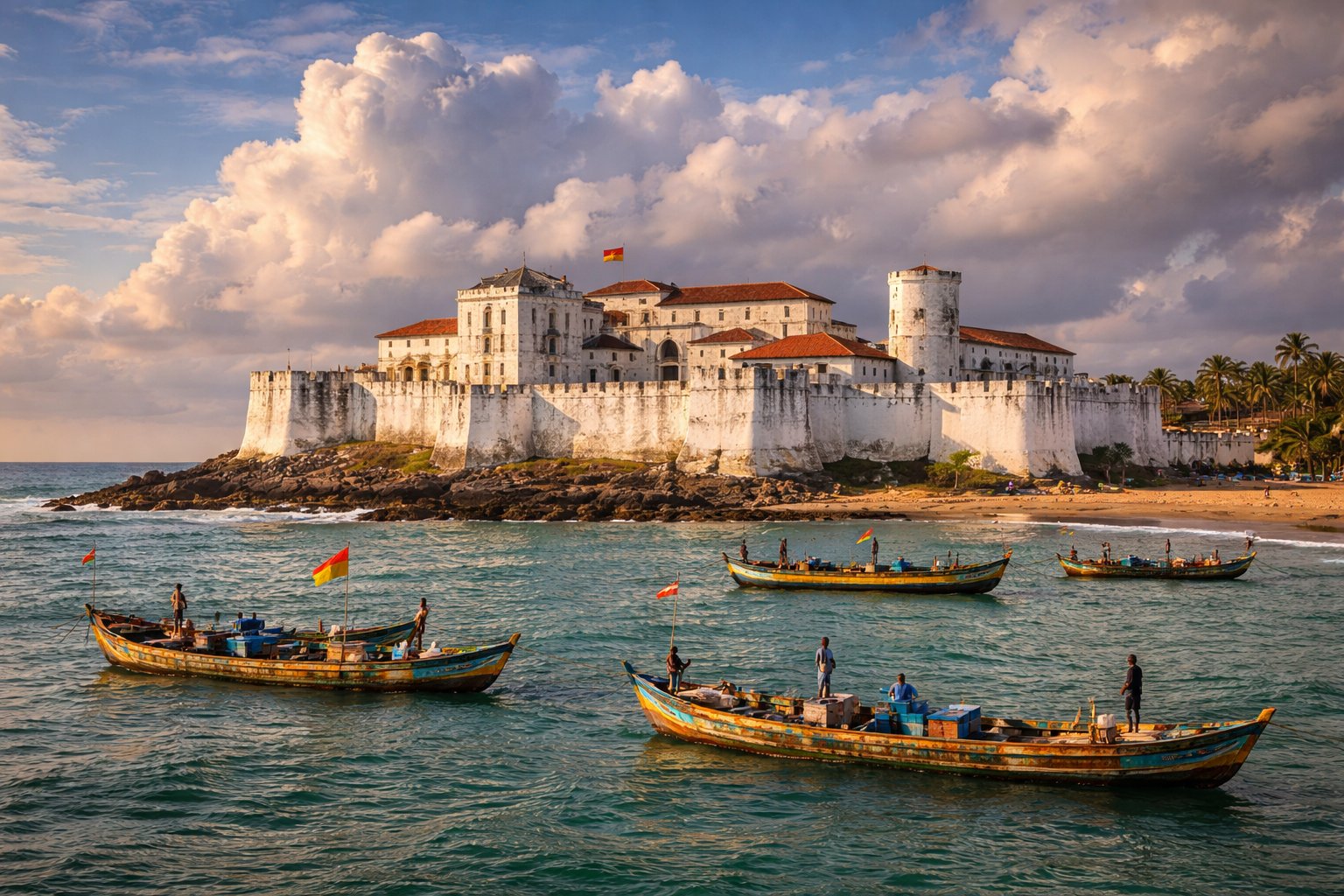
Elmina Castle
The oldest European structure in sub-Saharan Africa, part of Ghana's Forts and Castles UNESCO site.
Ghana has two inscribed UNESCO World Heritage Sites:
1. Forts and Castles, Volta, Greater Accra, Central and Western Regions (inscribed 1979) — a serial property covering some 28 European forts and castles built between 1482 and the late 18th century along 500 km of coast. Elmina Castle (Portuguese, 1482), Cape Coast Castle (British) and Fort Christiansborg (Danish) are the most famous and open to the public.
2. Asante Traditional Buildings (inscribed 1980) — thirteen surviving traditional shrines and buildings around Kumasi, mostly in villages such as Besease, Ejisu, Adarko Jachie and Patakro. They represent the last material remains of the great 18th-century Ashanti civilisation, decorated with the distinctive adinkra-inspired bas-relief walls.
Ghana also maintains several sites on its tentative list, including the Navrongo Mud Cathedral, the Larabanga Mosque, and the Tongo-Tengzuk cultural landscape.
🏰 Beyond the Big Three
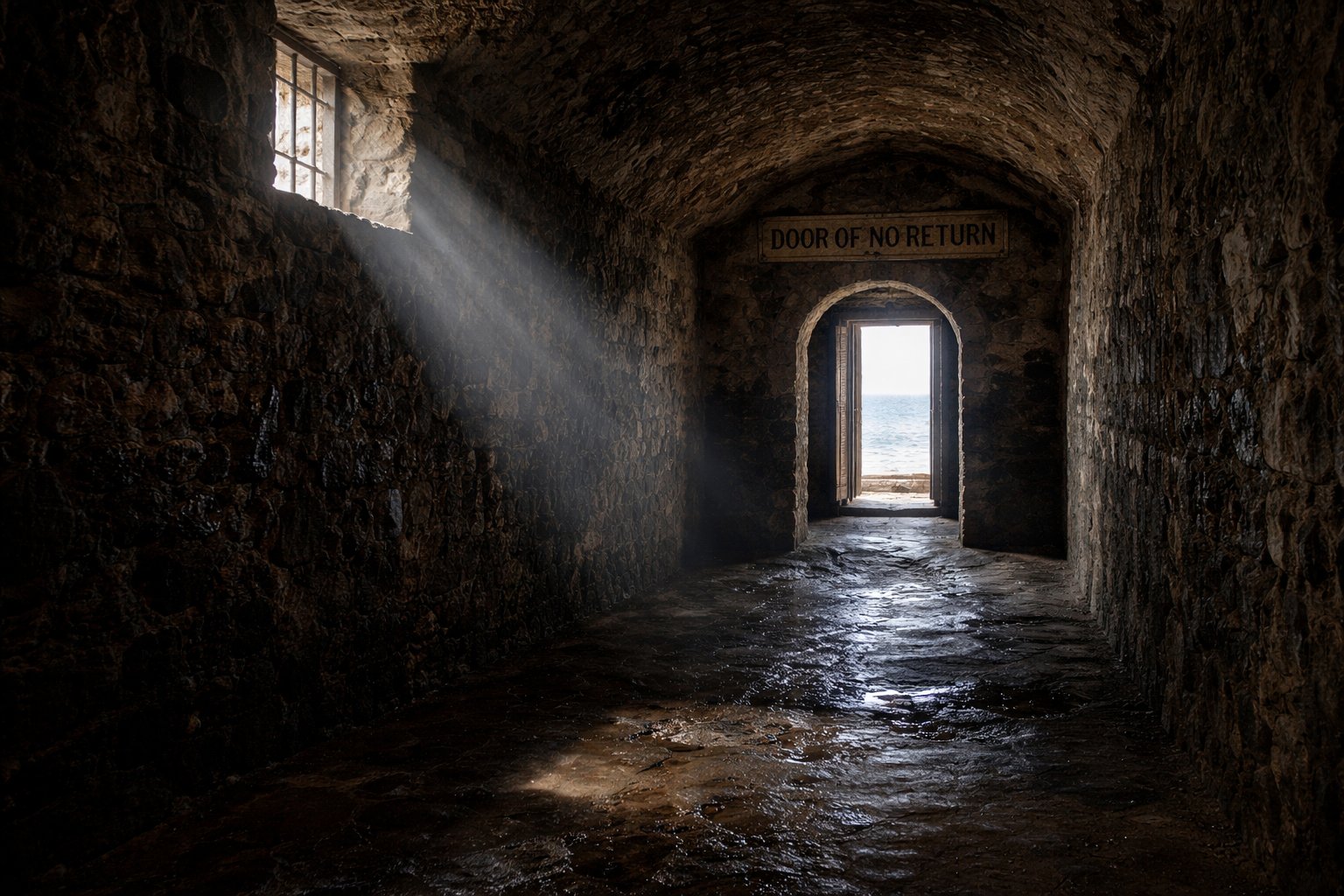
Cape Coast Castle
One of roughly 28 forts along Ghana's coast, preserved as a memorial to the transatlantic slave trade.
Elmina, Cape Coast, and Fort Christiansborg get the visitors, but the Forts and Castles serial listing covers roughly 28 structures along 500km of coastline, built by the Portuguese, Dutch, British, Danish, Swedish, and Brandenburger-Prussian trading powers who all competed for a foothold here. Fort São Sebastião at Shama, Fort Metal Cross at Dixcove, and Fort Amsterdam at Abandze are far less visited but structurally intact — worth the detour if Elmina and Cape Coast feel too crowded with tour groups.
All of these sites share the same weight of history: they were the last structures enslaved people passed through before the transatlantic crossing. Cape Coast Castle's "Door of No Return" and its dungeons are preserved specifically as a memorial, not a sanitized museum piece — expect the visit to be heavy, and budget real time for it rather than a quick photo stop.
🛖 The Ashanti Buildings, In Practice
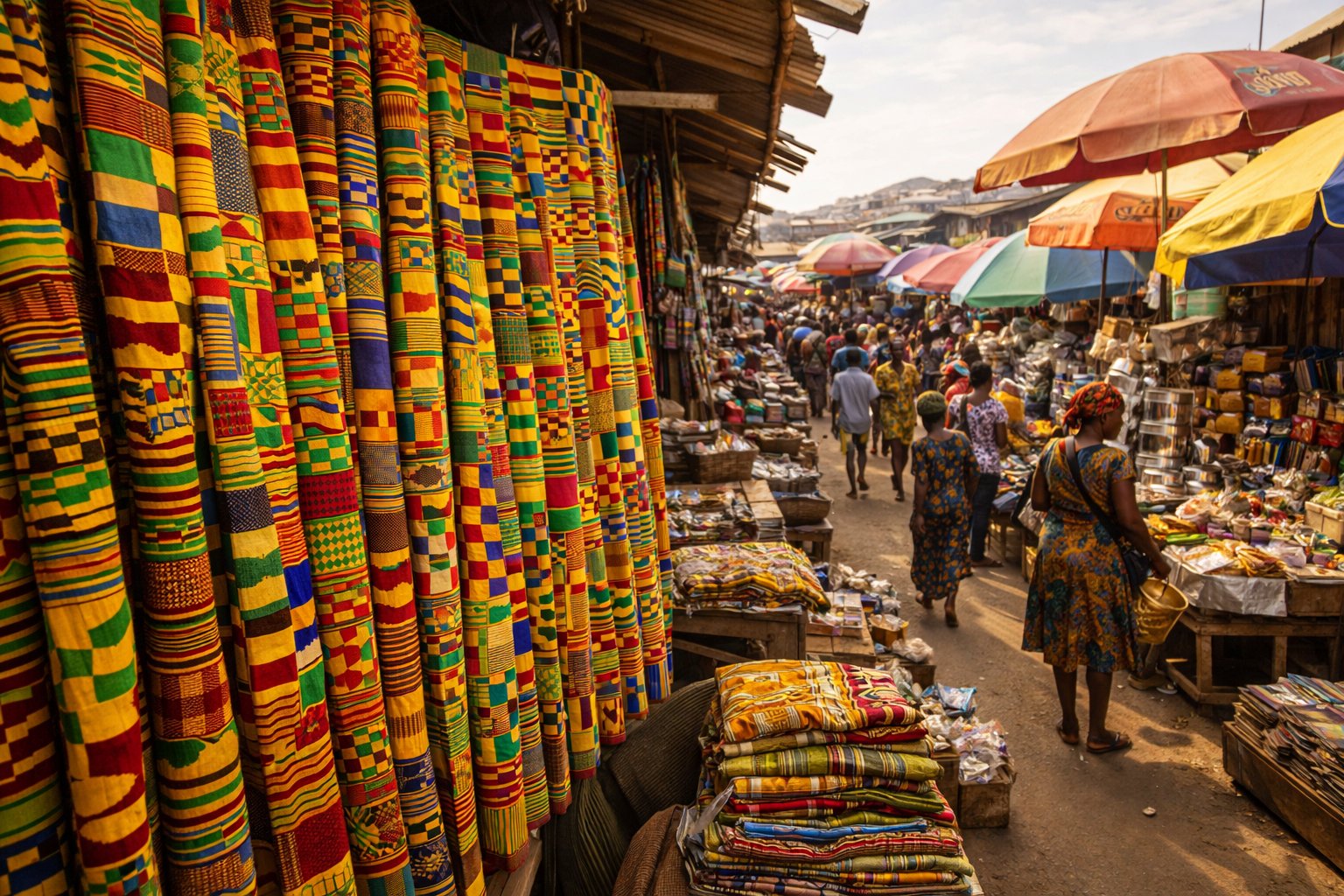
Kumasi, Ashanti Heartland
Gateway to the surviving Asante Traditional Buildings scattered in nearby villages.
The thirteen Asante Traditional Buildings are scattered in villages a short drive from Kumasi — Besease, Ejisu, Adarko Jachie, and Patakro among them — and most travelers see two or three rather than all thirteen in one trip. They're built in an earth-and-timber technique called wattle and daub, with steeply pitched thatched roofs and bas-relief walls carrying adinkra symbols, the same visual language used on Kente cloth and Ghanaian funerary art. Unlike the coastal forts, these are still occasionally used for their original ceremonial and religious functions, so ask locally before assuming a building is open to visitors.
