

🇬🇫 French Guiana at a Glance
🌍 Overview — Why French Guiana
French Guiana is not a country and does not want to be. It is a French department and an outermost region of the European Union, on the north-east shoulder of South America, between Brazil and Suriname. Its people are French citizens, they vote in French elections, they use the euro, the EU flag flies over the prefecture in Cayenne, and the roads carry the same signs as the Dordogne.
It is also 83,534 km² — larger than Austria, larger than Czechia — with about 300,000 people, almost all of them on a narrow coastal strip, and 96% of it is Amazon rainforest. Behind the coast road there is essentially nothing but forest and rivers for four hundred kilometres, and the only way in is by pirogue or light aircraft.
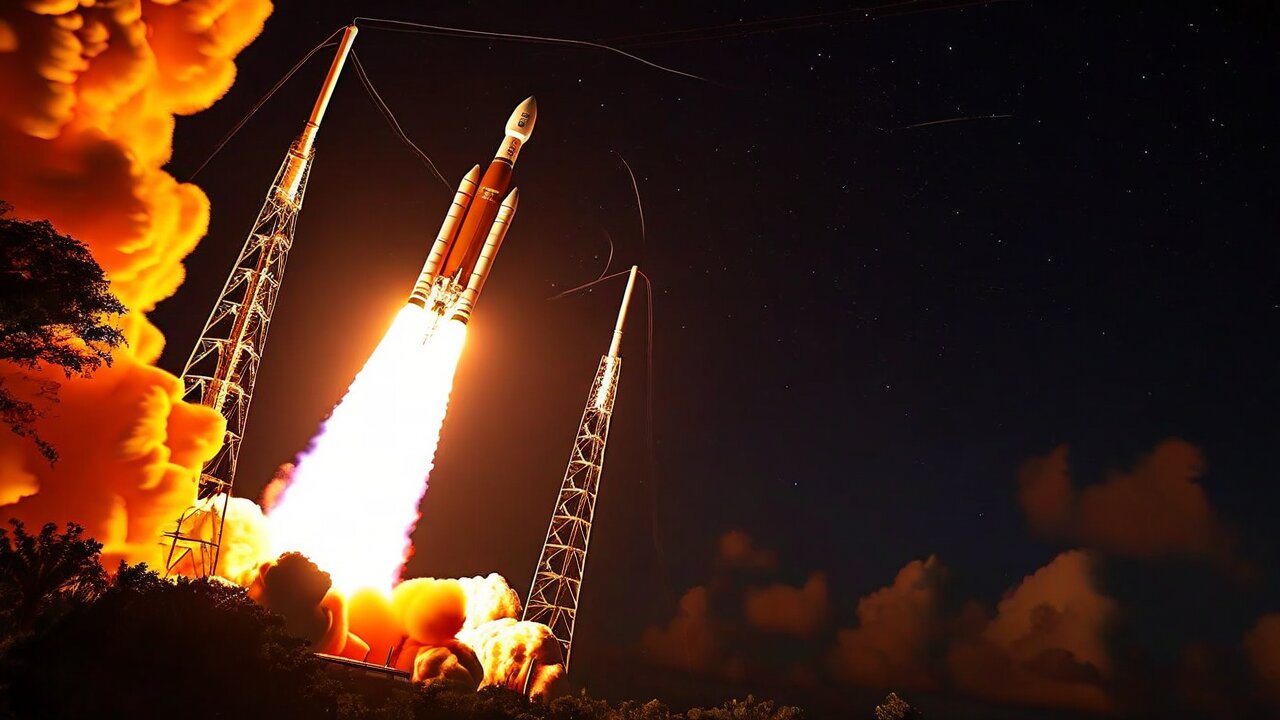
Two things brought the outside world here and both are extraordinary. The first was the bagne — the penal colony that swallowed 70,000 convicts between 1852 and 1953 and killed most of them, and which the world knows through Papillon and Dreyfus. The second, on almost the same coast, is the Guiana Space Centre: because Kourou sits at 5° north, a rocket launched from here gets a free kick from the Earth's rotation, and Europe has been putting its satellites into orbit from a jungle clearing since 1968.
Very few travellers come. There are no beach resorts, the coast is muddy Atlantic rather than Caribbean, prices are French, and the interior is genuinely difficult. What you get in exchange is a place where the EU meets the Amazon, where a rocket launch is a public event, and where you can be in an Amerindian village on a brown river four hours after leaving a supermarket that sells Camembert.
Best for
A rocket launch, the penal-colony sites, rainforest and river travel, sea turtles in season, and anyone who collects places that make no sense on a map.
Not so good for
Beaches — the Atlantic here is silt-brown from the Amazon. Also budget travellers: this is French pricing in a place where everything is shipped in.
Language
French, and much less English than in metropolitan France. Creole is the everyday language of much of the population, and there are six Amerindian languages plus Businenge Tongo among the Maroons.
The single best decision
Time your visit around a launch. The schedule is published, viewing sites are free and public, and it is one of the great spectacles available to an ordinary traveller anywhere.
🏷️ Guyane, and What It Is
Locally it is simply la Guyane — the French qualifier is for outsiders who might confuse it with Guyana next door but one, or with Suriname, which was Dutch Guiana. The name comes from an Amerindian word usually glossed as "land of many waters", which is exactly right.
Not a colony, legally
Since 1946 it has been a full French département d'outre-mer, one of five. That was a decision taken by its own elected representatives, led by the poet Gaston Monnerville, who wanted equality with France rather than independence.
An EU outermost region
EU law applies with adaptations, the euro is the currency, and the EU has co-funded roads, the space centre and hospitals here. This makes French Guiana the only piece of the European Union on the South American mainland.
Not Schengen
Despite being fully French and fully EU, French Guiana is outside the Schengen area. In practice this matters for non-EU visitors, who may need a separate visa; for EU citizens it does not.
The three Guianas
Guyana (formerly British), Suriname (Dutch), and French Guiana. The historical Guiana region also extends into Venezuela and Brazil. Only the French one is still governed from Europe.
The 2017 crisis
A month-long general strike shut the territory down in spring 2017 over crime, schools, hospitals and the sense that Paris ignored it. It ended with a €2.1 billion agreement and is the essential context for local politics.
What people call themselves
Guyanais. Creole identity is strong, and the relationship with metropolitan France — l'Hexagone — is affectionate, resentful and complicated in roughly equal measure.
🗺️ Geography
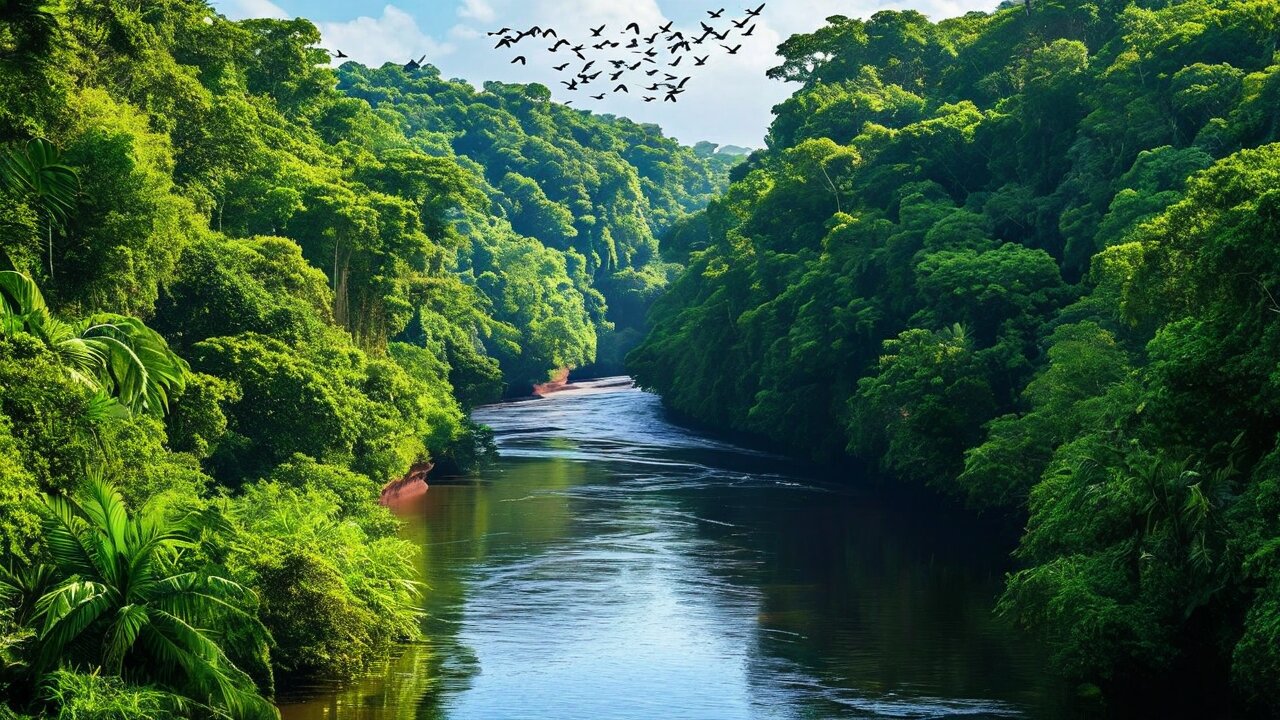
A coastal strip and then forest. Almost the entire population lives within a few kilometres of the Atlantic or of the two border rivers, and the rest of the territory — an area the size of Austria — has essentially no roads at all.
The coast
About 350 km of muddy Atlantic shore, constantly rebuilt by silt carried north-west from the Amazon. The mud banks migrate along the coast over years, which is why the beaches change and why the sea is brown, not blue.
The two border rivers
The Maroni (Marowijne) forms the Suriname border for 520 km; the Oyapock forms the Brazilian border. Both are frontier and highway at once — everything moves by pirogue.
The RN1 and RN2
One road along the coast, from Saint-Laurent through Kourou and Cayenne to Saint-Georges on the Brazilian border. That is essentially the entire road network, about 400 km of it.
The interior
Rainforest, inselbergs and low hills. The high point, Bellevue de l'Inini, is only 851 m. The Amazonian Park of French Guiana, created in 2007, covers 34,000 km² and is one of the largest national parks on Earth.
Biodiversity
Around 5,800 plant species, 700 birds, 480 fish and 190 mammals, including jaguar, giant anteater, giant otter and tapir. This is some of the least-disturbed rainforest anywhere, largely because so few people live in it.
Position
Between 2° and 6° north — deep tropics, no seasons in the temperature sense, and 12-hour days year-round. Cayenne is 7,100 km from Paris and 400 km from the mouth of the Amazon.
🗺️ Map of French Guiana
Everything a visitor does happens on the coastal road between Saint-Laurent-du-Maroni and Cayenne, plus a boat trip to the Îles du Salut and, if you have time, up one of the rivers. Distances look small and take longer than they should.
Cayenne → Kourou
65 km, about an hour on the RN1. The space centre and the boats to the Îles du Salut both leave from here.
Cayenne → Saint-Laurent-du-Maroni
250 km, three and a half hours, and the drive that shows you the whole coastal strip.
Kourou → Îles du Salut
15 km offshore, about an hour by catamaran. Book ahead; boats do not run in all conditions.
Cayenne → Saint-Georges
190 km south-east to the Brazilian border and the Oyapock bridge, which took a decade to open because neither side finished the road.
📜 History — Colony, Sugar, Slavery
French Guiana's history is one long sequence of attempts to make it profitable, almost all of which failed catastrophically, followed by a century of using it as a place to put people France wanted to forget.
Before Europe
Kalina, Wayana, Wayampi, Teko, Palikur and Lokono peoples had lived here for millennia. Around 10,000 Amerindians remain today, in six recognised groups, and several communities in the interior still live largely by the rivers.
French settlement · from 1604
Repeated failed attempts. The colony was fought over by the Dutch, English and Portuguese, and never developed the plantation wealth of the Caribbean islands, largely because of disease.
The Kourou disaster · 1763
France, having lost Canada, sent 12,000 settlers to Kourou to build a new colony. Within two years around 9,000 were dead of yellow fever and dysentery, and the survivors sheltered on the offshore islands — which were renamed the Îles du Salut, the Islands of Salvation, for that reason.
Slavery and abolition
Sugar and later gold worked by enslaved Africans. Slavery was abolished in 1794, restored by Napoleon in 1802, and abolished for good on 10 June 1848, which is still the territory's most important public holiday.
The Maroons
Enslaved people who escaped Dutch plantations in Suriname from the seventeenth century and built independent societies in the forest along the Maroni. Aluku, Ndyuka, Saramaka and Paramaka communities are still there, with their own languages, law and remarkable woodcarving tradition.
The gold rush
From the 1850s, and never really over. Legal mining continues, and illegal gold mining — orpaillage — by garimpeiros from Brazil is today the single biggest environmental and security problem in the interior, with mercury contamination reaching Amerindian communities downstream.
🕰️ From the Bagne to the Spaceport
In the space of fifteen years French Guiana went from being the place where France disposed of its convicts to the place from which Europe reaches space. The two facilities are 25 km apart, and the second was built partly because the first had left the territory with nothing else.
The penal colony · 1852–1953
Napoleon III's decision. Around 70,000 convicts were shipped over a century, to Saint-Laurent, the Îles du Salut and forest camps. Mortality was catastrophic — most died within a few years — and the doublage rule forced survivors to remain in the colony for as long again as their sentence.
Dreyfus · 1895–99
Captain Alfred Dreyfus spent four years in solitary confinement on Devil's Island, wrongly convicted of treason, in a hut where he was for a period shackled to his bed at night. The affair split France and reshaped its politics.
Papillon
Henri Charrière's 1969 memoir of escape made the bagne world-famous. Much of it is now believed to be borrowed from other prisoners' experiences, but the conditions it describes were real.
Closure
Abolished in principle in 1938, with the last convicts finally repatriated in 1953. The buildings were left to the forest and are only now being stabilised.
Departmentalisation · 1946
French Guiana, Martinique, Guadeloupe and Réunion became French departments. Gaston Monnerville, born in Cayenne, drove the law through and later became president of the French Senate — for a time the second most senior figure in the Republic.
The space centre · from 1964
When Algeria's independence closed France's Sahara launch site, the search for a replacement found Kourou. First launch 1968, first Ariane 1979, and today the site supports Ariane 6, Vega-C and about 15% of the territory's economy.
🚀 The Guiana Space Centre
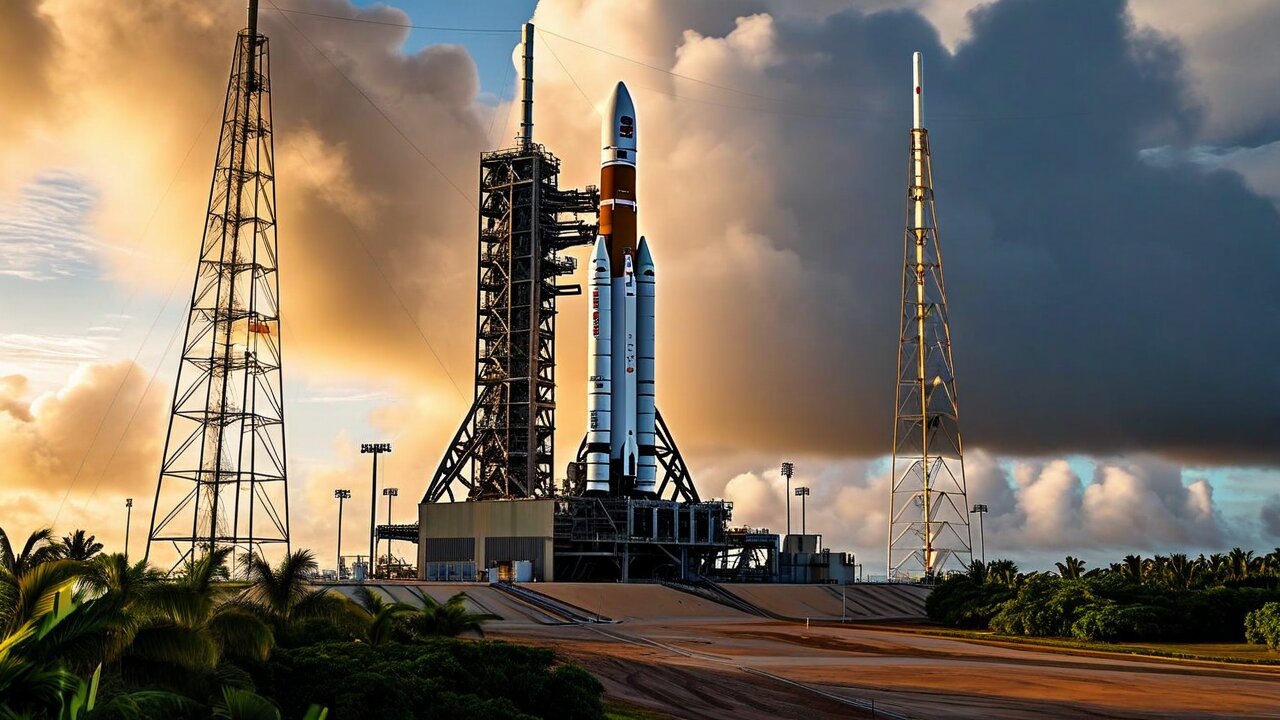
Europe's spaceport, and the reason most people have heard of French Guiana at all. The Centre Spatial Guyanais occupies about 700 km² of coast and forest near Kourou, and it exists here for one reason: geography.
Why here
Kourou is at 5° north, close to the equator, where the Earth's rotation is fastest. A launch eastward from here gets roughly 460 m/s of free velocity — worth about 15% more payload to geostationary orbit than from Cape Canaveral, and far more than from anywhere in Europe.
And the sea
The pads face 3,000 km of open Atlantic to the east and north, so spent stages and any failure fall into empty ocean. There is also almost no seismic activity and no hurricane track this far south.
Who uses it
The European Space Agency, the French space agency CNES and Arianespace. ESA funds two thirds of the site's budget. Ariane 6 and Vega-C fly from here; Russian Soyuz did too until 2022, when cooperation ended over Ukraine.
What it means locally
Around 15% of the territory's GDP and some 9,000 direct and indirect jobs, in a place with high unemployment. It also created Kourou, which grew from a village of a few hundred to a town of 25,000.
The museum
The Musée de l'Espace in Kourou is open to everyone, has real hardware including an Ariane 5 booster, and is a decent hour even if you cannot get onto the site itself.
Notable launches
The James Webb Space Telescope left from here on Christmas Day 2021 — the Ariane 5 injection was so precise it roughly doubled the telescope's expected fuel lifetime. Rosetta, Herschel and Galileo also launched from Kourou.
🎟️ Watching a Launch
This is the single best reason to plan a trip around a date, and it is far more accessible than most people assume. Launches are public events, the viewing is free, and the schedule is published months ahead.
How often
Roughly 8 to 12 launches a year, though the number has varied a great deal during the transition from Ariane 5 to Ariane 6. Check the Arianespace and CNES sites, and expect the date to move — slips of days or weeks are normal.
Free public sites
Toucan and Ibis viewing sites are 7 and 15 km from the pad, free, and require registration with CNES in advance (online, some weeks ahead, passport details needed). Places are limited and go quickly for high-profile launches.
Sites you do not need a pass for
The Carapa viewpoint and the Kourou beach and town waterfront, where a large part of the population watches. Further away, but you still see and — several seconds later — feel it.
Guided site tours
CNES runs free three-hour tours of the space centre on weekday mornings, including the Ariane and Vega launch complexes and the Jupiter control room. Book weeks ahead online; bring your passport; closed shoes required and no tours in the days around a launch.
What it is actually like
A night launch is better than a day one. The light arrives instantly, the sound about 20 seconds later, and it is a physical low-frequency thump rather than a noise. It is over in three minutes and people applaud.
Practical
Book accommodation in Kourou the moment a launch date is confirmed — the town fills. Bring insect repellent; you will be standing still outdoors at dusk in a swamp.
⛓️ The Bagne
For a hundred years French Guiana was where France sent people it wanted to stop thinking about. Around 70,000 convicts arrived between 1852 and 1953 and the majority never left. The remains are extensive, largely unrestored, and the most affecting thing in the territory.
Camp de la Transportation
At Saint-Laurent-du-Maroni: the reception camp where every convict arrived and was assigned. The cells, the punishment blocks and the guillotine yard are there, with prisoners' graffiti still on the walls — including the cell where Papillon is said to have been held. Guided tours run several times a day and are worth taking.
Saint-Laurent itself
The town was built as a penal administration and looks it: a grid of colonial buildings, a hospital, and streets far too grand for the population. It is now the second city of the territory and the crossing point to Suriname.
The conditions
Malaria, yellow fever, dysentery and forced labour in the forest. Estimates of mortality vary, but for many camps the majority of arrivals died within a few years. Escapees who reached Dutch or Brazilian territory were routinely returned.
Doublage
The rule that a convict sentenced to less than eight years had to remain in the colony as a free man for the same period again; those with longer sentences stayed for life. It was designed to populate the colony and it failed at that too.
The women
Around 2,000 women were transported in the nineteenth century, in an attempt to create a settler population by marriage. The programme was abandoned as a failure in 1907.
Why it matters
It is the reason the territory's population and economy were what they were in 1946, and the reason older Guyanais families often have complicated relationships with the sites. Treat them as what they are: a place where tens of thousands of people died.
🏝️ The Îles du Salut
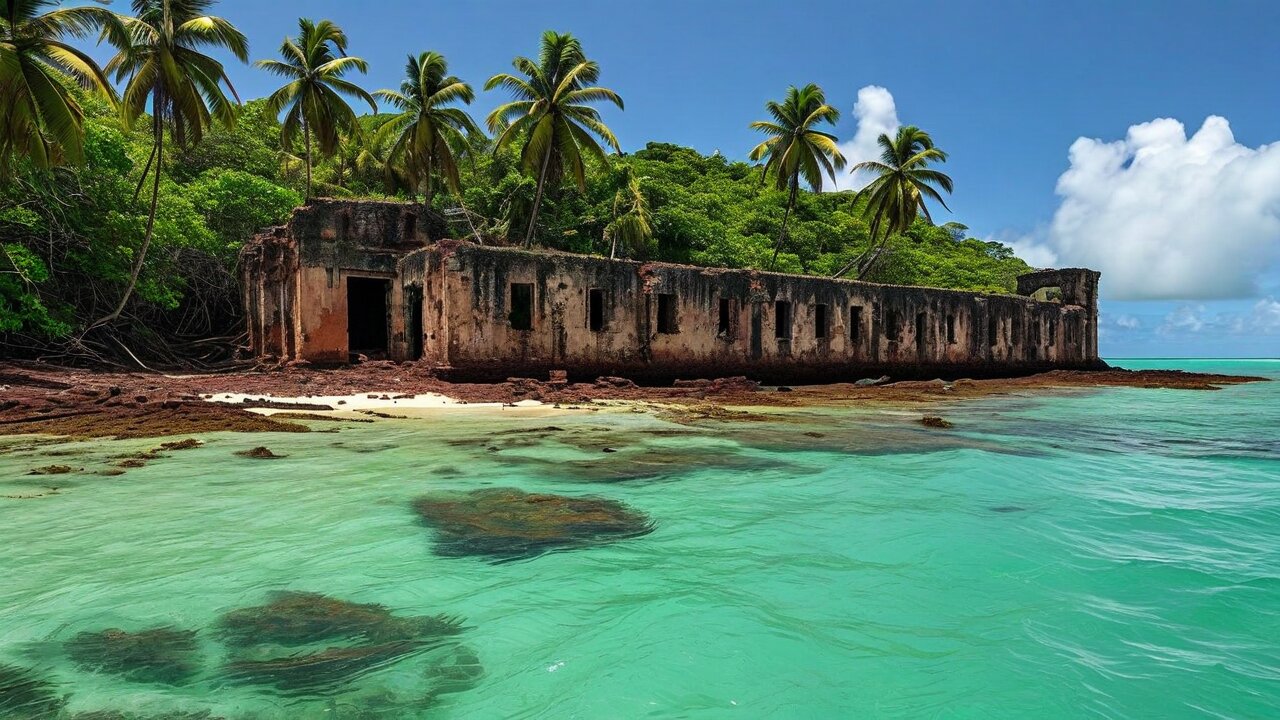
Three small islands 15 km off Kourou — Royale, Saint-Joseph and the famous Île du Diable, Devil's Island. The name means Islands of Salvation and comes from 1763, when survivors of the Kourou catastrophe fled here to escape the mainland fevers. A century later they became the most feared part of the penal system.
Île Royale
The largest and the administrative centre, with the hospital, the chapel, the warders' houses and the lighthouse. Today it has the only accommodation — a hotel in the former warders' mess — plus free-roaming agoutis, macaws and capuchin monkeys.
Île Saint-Joseph
The punishment island: réclusion cells where men were held in silence and solitary confinement, often until they lost their minds. The cell blocks are roofless and full of trees now, and it is the most disturbing of the three.
Île du Diable
The smallest, reserved for political prisoners, and where Dreyfus spent four years. You cannot land on it — the channel current is lethal and there is no jetty; the transfer was made by cable car. You see it from Royale, a few hundred metres away.
Getting there
Catamarans from Kourou, about an hour, most days. Day trips are the norm; staying a night on Royale after the boats leave is a genuinely strange and worthwhile experience.
The launch connection
The islands sit under the flight path and are evacuated before every launch, which is the other reason they are worth checking dates for.
Swimming
Officially discouraged and in places dangerous — currents and sharks. There is one small sheltered bay on Royale where people do swim; ask locally rather than assuming.
🏘️ Cayenne
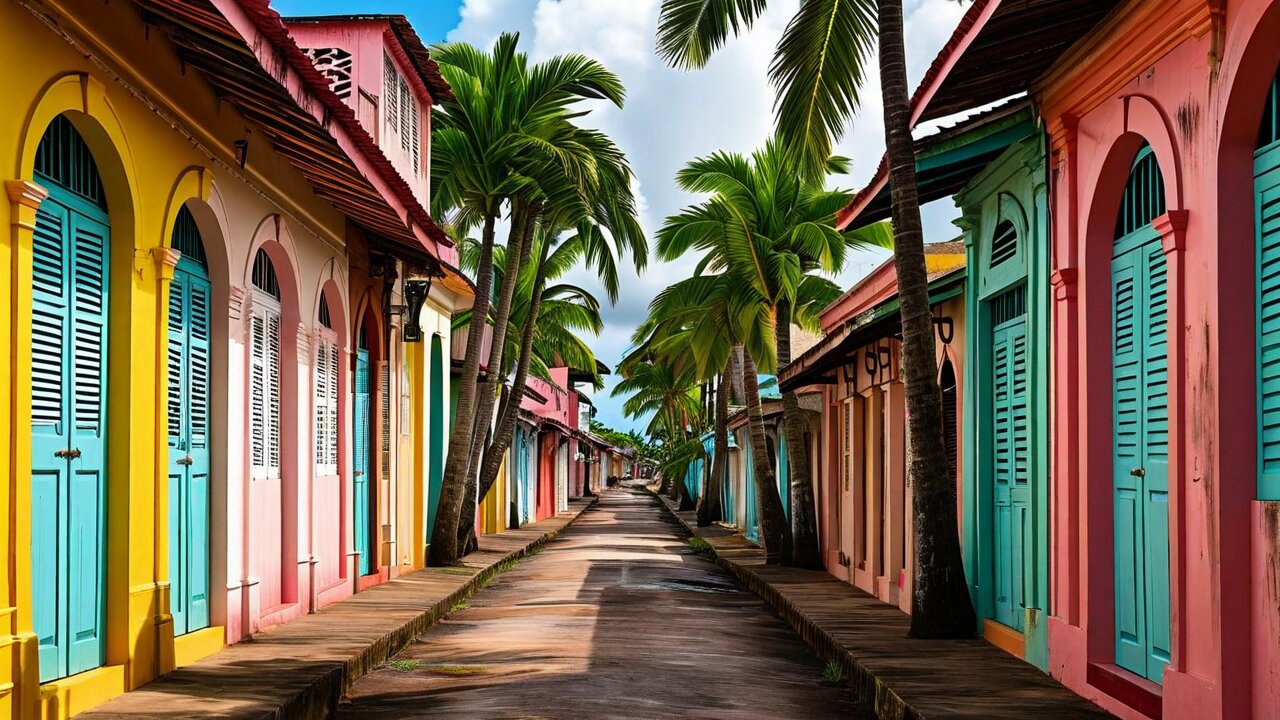
The capital, and a genuinely Creole city rather than a French one transplanted. About 65,000 people in the commune and perhaps 150,000 in the wider area — over half the territory's population lives in and around it.
Place des Palmistes
The central square, planted with royal palms, and the social heart of the city — food vans in the evening, families, and the place everything else is measured from.
Fort Cépérou
The seventeenth-century French fort on the hill above the port, mostly ruined, with the best view over the city and the estuary.
The market
Marché de Cayenne, Wednesday, Friday and Saturday mornings: Hmong vegetable growers from Cacao, Creole cooks, Brazilian and Surinamese traders, and the best soupe chinoise and bo bun in the territory. Go early.
Museums
The Musée des Cultures Guyanaises and the Musée Alexandre-Franconie, both small, both good on the Amerindian, Maroon and Creole strands of the population.
Rémire-Montjoly
The suburb east of the city with the territory's usable beaches, the Rorota walking trail, and turtle nesting in season.
Practicalities
Cayenne has real petty crime and the usual advice applies — do not walk alone at night, particularly around the Village Chinois district. It is also where every road, flight and errand in the territory ends up.
👥 The Peoples of Guyane
For 300,000 people this is an extraordinarily plural society — probably the most ethnically varied part of the European Union. Roughly half the population was born outside the territory, and a third are foreign nationals, mostly from Suriname, Brazil and Haiti.
Creoles
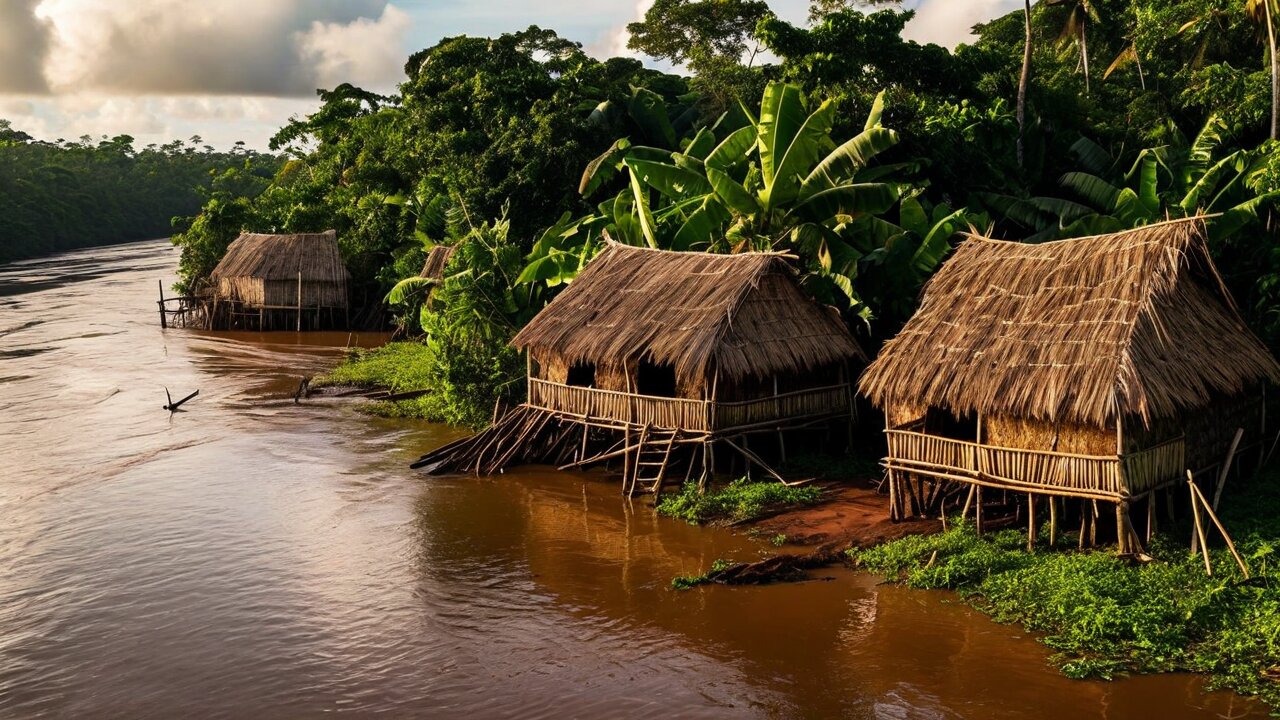
Descendants of enslaved Africans and the historic core of Guyanese identity, with their own language (Guianese Creole), cuisine and carnival. Long the politically dominant group, and now a minority in their own territory.
Maroons
Aluku, Ndyuka, Saramaka, Paramaka — descendants of people who escaped Dutch plantations and built independent forest societies. They are the fastest-growing group, concentrated along the Maroni, and their woodcarving and textile traditions are among the strongest surviving African-derived art forms in the Americas.
Amerindians
Around 10,000 people in six groups: Kalina, Lokono, Palikur, Teko, Wayana and Wayampi. Communities in the upper Maroni and Oyapock are among the most isolated in the EU, and access to them is legally restricted — for their protection.
Hmong
Refugees from Laos resettled in 1977 at Cacao and Javouhey. Two generations later they grow most of the territory's fruit and vegetables, and the Sunday market at Cacao is one of the strangest and best things in French Guiana.
Métros and others
Métropolitains from mainland France — often on posting to the space centre, hospitals or administration — plus Haitians, Brazilians, Surinamese, Chinese, Lebanese and Guyanese. Almost every shop in Cayenne has a different origin story.
Access rules
Travelling into the interior beyond certain points requires authorisation from the prefecture, and visiting Amerindian communities generally requires an invitation or a licensed operator. These rules are not bureaucratic obstruction; they exist because of disease, mercury poisoning and the pressure of illegal mining.
🌿 The Rainforest
Ninety-six per cent of the territory is primary Amazon rainforest, and unlike almost anywhere else in the Amazon basin, most of it has never been logged. This is because there was never enough population, road or economic pressure to reach it — an accident of history that has produced one of the best-preserved tropical forests on the planet.
The Amazonian Park
Created in 2007, 34,000 km² in the southern interior — one of the largest national parks on Earth and larger than Belgium. It is co-managed with the Amerindian and Maroon communities who live inside it.
The Nouragues reserve
A research station in the forest around a granite inselberg, used by scientists from across Europe. Not open to casual visitors, but the research from it is why so much is known about this forest.
Trésor and Kaw
The accessible ones: the Trésor nature reserve has a good boardwalk trail an hour from Cayenne, and the Kaw marshes below it are the territory's best wildlife destination, with night trips to see black caimans.
How you actually see it
By river, on foot with a guide, or from a carbet — an open-sided shelter where you sleep in a hammock. Hammock, mosquito net and a guide are the standard kit, and most operators supply all three.
Cacao and the trails
The Hmong village of Cacao, 75 km from Cayenne, has forest trails, a small insect museum and the Sunday market. It is the easiest introduction to the interior and can be done in a day.
The threat
Not logging but illegal gold mining. Thousands of garimpeiros work clandestine sites in the interior, using mercury to separate gold; the mercury reaches the rivers and then the fish and then the Amerindian communities who eat them. The French army runs a permanent operation against it and the problem persists.
🐆 Wildlife
Jaguar, puma, tapir, giant anteater, giant otter, harpy eagle, black caiman and around 700 bird species. You will not see most of it — this is dense forest and the animals are shy — but the concentration is extraordinary and the accessible sites are very good.
The Kaw marshes
The single best wildlife destination: a huge coastal wetland reached by pirogue, with black caimans up to five metres, scarlet ibis, hoatzin and giant otters. Night trips with a spotlight are the standard and they deliver.
Birds
Scarlet ibis in flocks over the mudflats, harpy eagles in the deep forest, cock-of-the-rock at Saül, toucans and macaws almost everywhere. The Pointe Isère and Awala mudflats hold enormous numbers of migratory shorebirds.
Monkeys
Eight species including howlers, spider monkeys, squirrel monkeys and capuchins. The capuchins on Île Royale have lost all fear of people and will take your lunch — do not feed them.
Cats
Jaguar, puma, ocelot, margay and jaguarundi are all present. Sightings are rare and mostly a matter of luck on a night drive on the RN2.
The small and dangerous
Bullet ants, several pit vipers including the fer-de-lance, electric eels and candiru. None of it should stop you going; all of it is a reason to wear boots and use a guide off-trail.
Mosquitoes
The real daily issue. Dengue and chikungunya circulate, and while French Guiana was declared malaria-free of local transmission in the coastal zone, the interior and the border rivers still carry risk. Repellent, long sleeves at dusk and a net.
🐢 The Leatherbacks
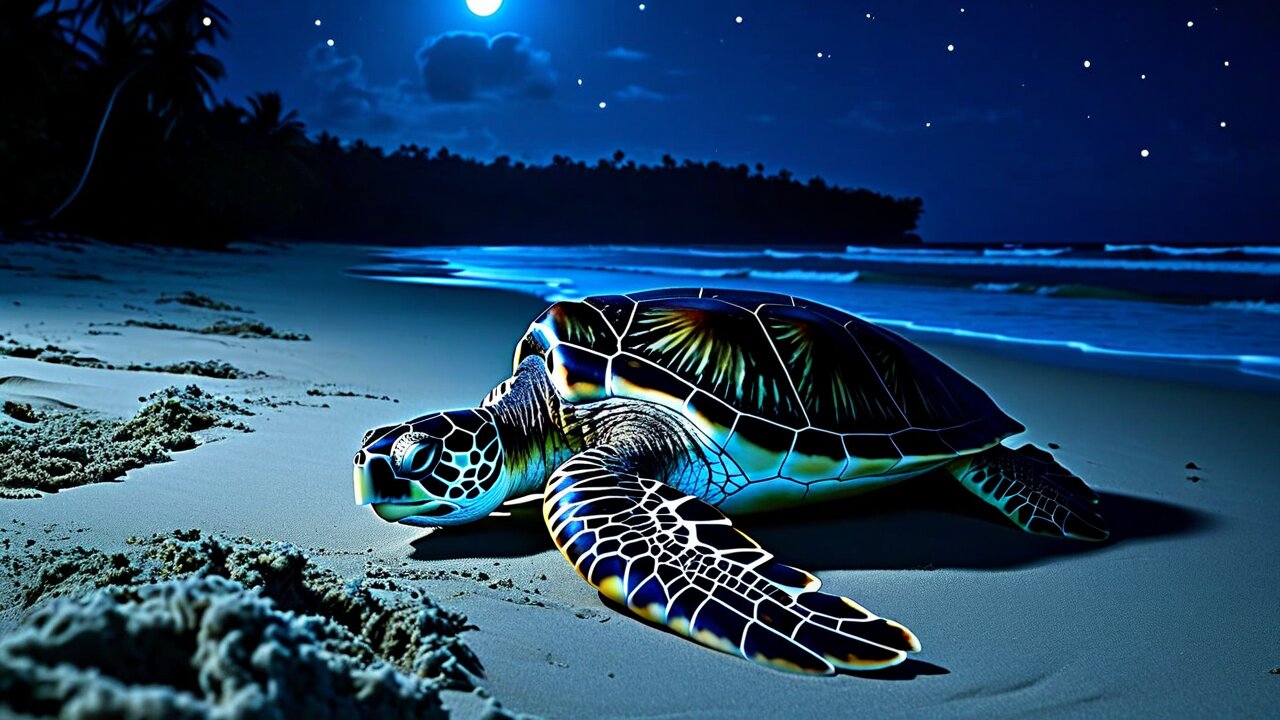
The beaches at Awala-Yalimapo, at the mouth of the Maroni, are one of the world's most important nesting sites for the leatherback turtle — the largest turtle alive, up to 2.5 metres and 900 kg. In a good season several thousand nests are laid on a few kilometres of sand.
When
Nesting from March to July, peaking in April and May; hatchlings emerge roughly two months after each nest, so June to August is the time to see them run for the sea. Green and olive ridley turtles also nest here.
Where
Plage des Hattes at Awala-Yalimapo, a Kalina Amerindian commune four hours from Cayenne, and secondarily at Rémire-Montjoly near the capital, where nesting happens within sight of the city.
How to watch
At night, with a local guide, no white light — red filters only — and no flash. Do not stand in front of a turtle, do not touch, and stay behind her once she starts digging. Guided walks are organised by the commune and by conservation groups.
Why it matters
The Atlantic leatherback population has declined sharply, and the Guianas hold a large share of what remains. Nest predation by dogs, coastal erosion and bycatch in fishing nets are the main pressures.
Awala-Yalimapo itself
A Kalina village and a nature reserve, and one of the few places where a visitor sees Amerindian French Guiana without a permit. Treat it as someone's home, because it is.
The mud
The beaches here shift as Amazon silt banks migrate along the coast; a good nesting beach one decade can be mangrove the next. It is a reminder that this coast is not a fixed thing.
🛶 The Maroni
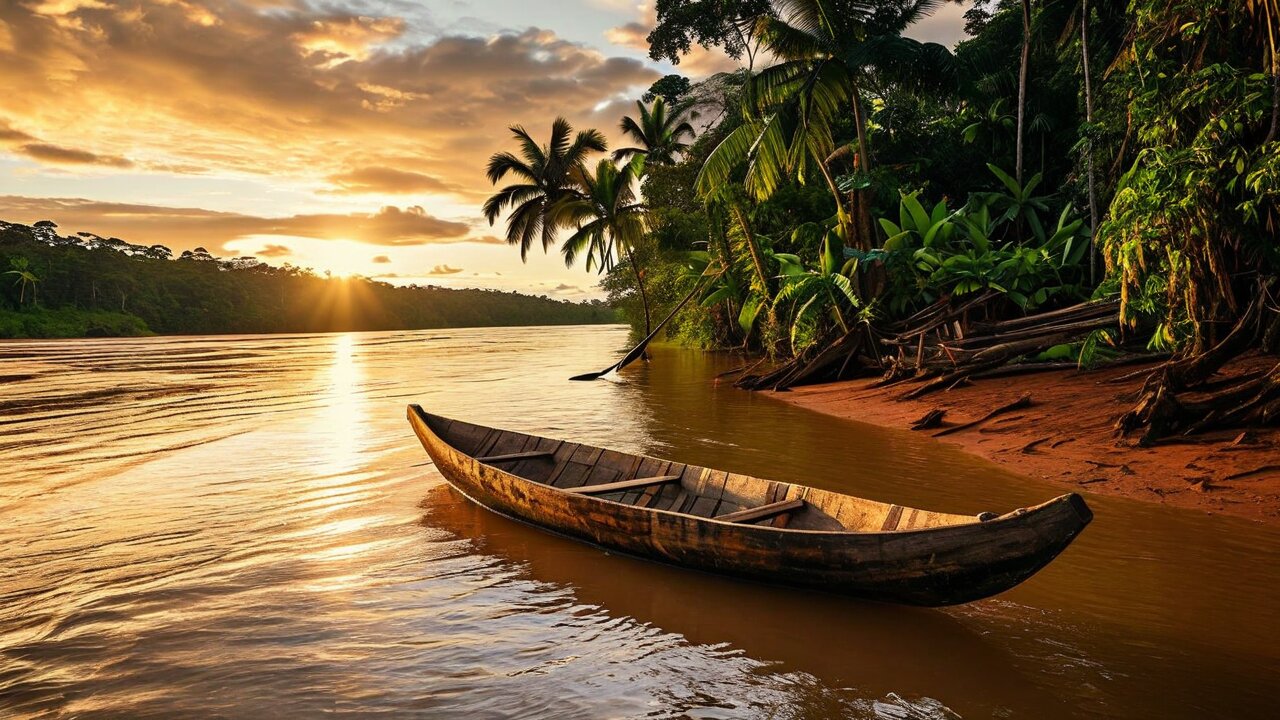
The river that is both the Suriname border and the main street of western French Guiana. It runs 520 km, it has no bridge along its entire length, and everything — people, shopping, school, medicine, contraband — moves by pirogue.
Saint-Laurent-du-Maroni
The base: the old penal town, the Camp de la Transportation, and the pirogue landing where boats cross to Albina in Suriname in ten minutes for a few euros — an EU external border crossed daily by hundreds of people in wooden canoes.
Upstream
Apatou, Grand-Santi, Papaïchton and Maripasoula, all reachable only by boat or light aircraft. The journey to Maripasoula takes a full day of pirogue through rapids and is one of the great river trips available anywhere.
The Maroon villages
Aluku and Ndyuka communities line both banks. Their tembe woodcarving — interlocking geometric patterns on boats, houses and doors — is a living tradition and unlike anything else in the Americas.
The rapids
The sauts break the river into stretches, and running them in a loaded pirogue is the standard way to travel. Boatmen stand to read the water; passengers sometimes get out and walk around the worst.
Permissions
Travel above certain points needs prefectural authorisation, and the upper Maroni is a controlled zone because of illegal mining. Go with a licensed operator who handles the paperwork.
The Oyapock
The other border river, facing Brazil, with Saint-Georges and the Oyapock bridge — completed in 2011 and not opened until 2017, because neither country finished the road on the far side. A very good illustration of how this frontier works.
🌊 Along the Coast Road
The RN1 runs 250 km from Cayenne to Saint-Laurent and is the spine of the territory. Everything a visitor without a plane can reach is on it or just off it, and it is a far better drive than the map suggests — savannah, mangrove, creek crossings and a string of small towns with more history than population.
Kourou
Twenty-five thousand people, half of them working for or around the space centre, and the only town in French Guiana that looks planned. The old Creole quarter by the river is worth an hour, and the pirogue landing and the beach both face the Îles du Salut.
Sinnamary
A quiet Creole town on an estuary, with the Petit-Saut dam upstream — a hydroelectric reservoir of 350 km² flooded in 1994 and now, for better and worse, a curious drowned-forest landscape.
Iracoubo
The church of Saint-Joseph, painted inside between 1893 and 1898 by Pierre Huguet, a convict of the bagne who was given the commission by the parish priest. It is naive, ambitious and completely unexpected, and it is the best single building in the territory.
Mana and Awala-Yalimapo
Mana is a small colonial town founded as a settlement for freed slaves; Awala-Yalimapo beyond it is the Kalina commune with the turtle beaches. This is where the coast road effectively ends.
Rémire-Montjoly
Cayenne's eastern suburb, with the Rorota trail over the hill, the Loyola Jesuit plantation ruins, and the closest thing to a swimming beach in the territory — brown water, but a genuine beach.
Driving it
Roads are French-standard and empty. Fuel up in the towns, watch for potholes on the eastern stretch to Saint-Georges, and never drive the RN2 at night if you can avoid it — animals, and no lighting for a hundred kilometres.
🏞️ Saül and the Deep Interior
If the coast is French Guiana's front room, the interior is what the territory actually is: 80,000 km² of forest with a few thousand people in it, reachable by aircraft and river only.
Saül
A village of about 150 people at the geographic centre of the territory, with no road to anywhere. It exists because of gold, and it now has the best-maintained network of hiking trails in French Guiana — over 100 km of marked paths through primary forest, with carbets to sleep in.
Getting to Saül
A 45-minute flight from Cayenne on a small aircraft, several times a week. It is the easiest genuine rainforest trek in the territory and requires no special permit.
Maripasoula
The largest interior commune, on the upper Maroni, and by area the largest commune in France — 18,760 km², bigger than several EU member states. Reached by a day's pirogue or a light aircraft.
Camopi and the Oyapock
Wayampi and Teko communities on the Brazilian border, with access restricted to protect them. Visiting requires prefectural authorisation and an invitation.
Inselbergs
Isolated granite domes rising above the canopy, with their own dry-adapted plant communities found nowhere else. The Nouragues and Mitaraka inselbergs are the famous ones and are mostly the preserve of scientific expeditions.
What it costs to go
A lot. Interior flights, licensed guides and pirogue fuel are expensive, and there is no budget version of the deep interior. Saül is the exception and the one to aim for.
🍽️ Guyanese Food
One of the most genuinely mixed cuisines anywhere: Creole at the base, with Amerindian, Maroon, Brazilian, Hmong, Chinese and Lebanese layers, and French technique running through all of it. In Cayenne you can eat a Vietnamese soup for breakfast, a Creole fish stew for lunch and a French tasting menu for dinner, all within a few streets.
Bouillon d'awara
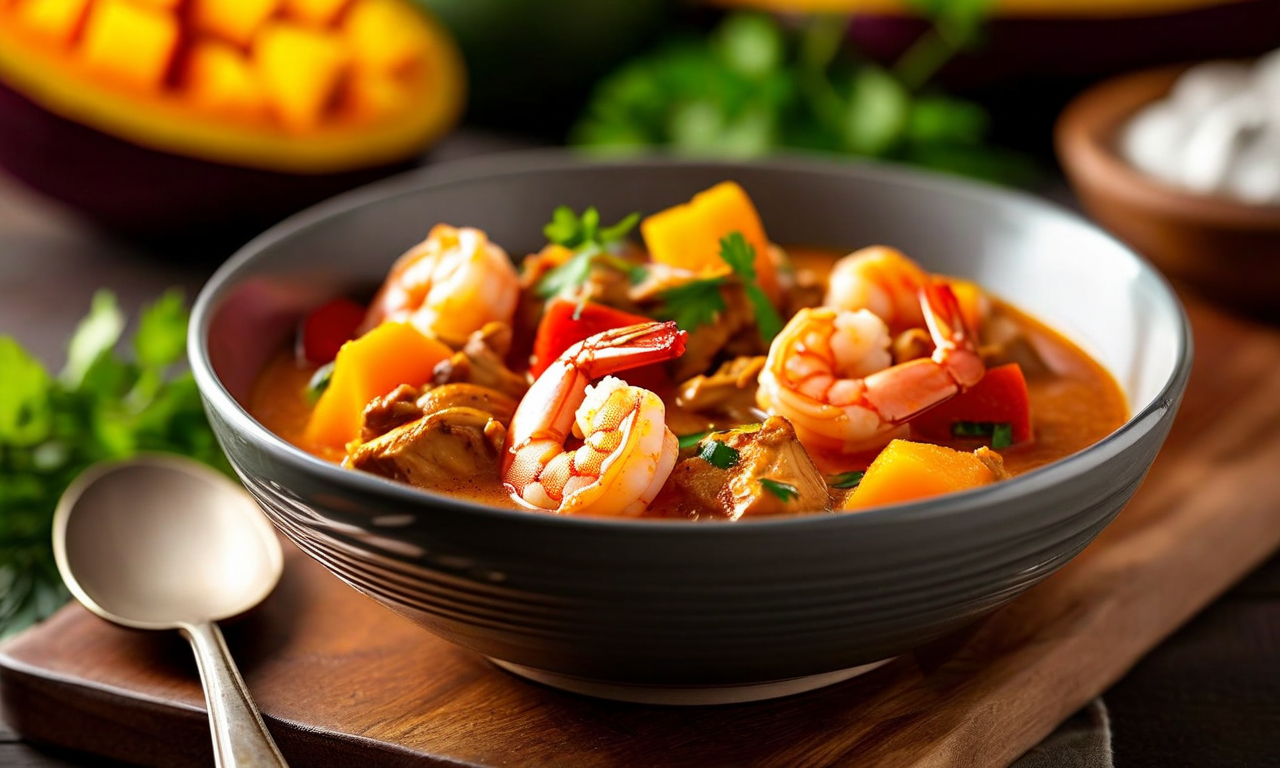
The national dish, cooked at Easter and almost only then. The pulp of the awara palm fruit is boiled down for hours into a dark orange paste, then loaded with smoked fish, salted meat, chicken, prawns and vegetables. Legend says whoever eats it will return to Guyane.
Fish and the river
Atipa, an armoured catfish stewed in its own plates; aïmara, a large river predator; and the coastal acoupa. Blaff is the standard Creole preparation — fish poached in a broth of lime, chilli, garlic and herbs.
Colombo and fricassée
Colombo is the Caribbean curry brought by indentured Indian labourers, made with chicken or goat. Fricassée covers a family of Creole braises, often of chicken or game.
Cassava
The Amerindian staple, still made the old way: grated, pressed to remove the cyanide, and baked into flat cassave bread or toasted into couac, the coarse yellow semolina that goes with everything.
The Asian layer
Hmong market gardens at Cacao, Chinese and Vietnamese shops in Cayenne, and soupe chinoise and bo bun as everyday Guyanese food. The Cacao Sunday market is the best eating in the territory.
Game
Bushmeat — agouti, peccary, caiman — is served in some restaurants. Much of it is legal and traditional and some of it is not; if you would rather not participate in wildlife pressure, the fish is better anyway.
Blaff de poisson
Creole poached fish · serves 4 · 30 min plus marinating
Ingredients: 800 g firm white fish steaks (snapper, grouper, or a river fish); juice of 4 limes; 4 cloves garlic, crushed; 1 antillais chilli, whole and unbroken; 2 spring onions; 1 sprig thyme; 2 bay leaves; 4 allspice berries; 1 onion, sliced; salt; a little vinegar.
Method: Rub the fish with lime juice, half the garlic and salt and leave 30 minutes. Bring a litre of water to the boil with the onion, remaining garlic, thyme, bay, allspice, spring onion, a splash of vinegar and salt; simmer 10 minutes. Add the fish and the whole chilli and poach very gently 8–10 minutes. Lift out the chilli before it bursts. Serve in the broth with rice and couac.
💡 The chilli must go in whole and come out whole — a burst antillais pepper makes the dish inedible. The lime marinade is what makes it a blaff rather than a fish soup.
Poulet colombo
Guyanese-Caribbean curry · serves 4 · 1 hour
Ingredients: 1 kg chicken thighs; 2 tbsp colombo powder (or curry powder with extra turmeric, coriander and mustard); 3 cloves garlic; 1 onion; 2 spring onions; thyme; 1 aubergine, cubed; 2 potatoes, cubed; 1 courgette; juice of 1 lime; 1 tbsp tamarind paste; oil; salt.
Method: Marinate the chicken in lime, garlic, thyme and half the colombo powder for an hour. Brown it in oil, remove, then soften the onion and add the remaining spice, cooking a minute until fragrant. Return the chicken with water to half-cover, add the vegetables and simmer 35–40 minutes. Stir in the tamarind at the end and check the salt.
💡 Colombo powder is not curry powder — the mustard and the tamarind are what distinguish it. Serve with rice and a spoonful of chilli paste on the side, never stirred in.
🥃 Rum and What Else
This is rum country, and specifically rhum agricole country — distilled from fresh cane juice rather than molasses, which is the French Caribbean method and produces something grassier and sharper than Jamaican or Cuban rum.
Rhum agricole
The local distillery is Rhum Saint-Maurice at Saint-Laurent, the only one still operating in French Guiana, working cane grown on the Maroni. Cheap, strong and genuinely good.
Ti-punch
The ritual: white rhum agricole, a spoon of cane syrup, a disc of lime peel squeezed over it, no ice or barely any. Mixed by the drinker, not the barman — you are handed the bottle and left to it.
Planteur and rhum arrangé
Planteur is rum with tropical fruit juice. Rhum arrangé is rum infused for months with vanilla, cinnamon, wild fruits or — locally — the awara palm fruit. Every household has a jar.
Beer
Imported French and Caribbean lagers, plus Brazilian and Surinamese brands smuggled or traded across the rivers. There is no significant local brewery.
Non-alcoholic
Fresh juices of maracuja, soursop, cashew fruit and acerola; jus de canne pressed at the market; and very strong coffee. Coconut water is sold from the shell by the roadside.
Rules and prices
French law, drinking age 18, 0.5 g/l driving limit. Alcohol is taxed as in France and imported wine is expensive; local rum is not.
🎭 Carnival
French Guiana's carnival is longer, stranger and less touristic than anything in the Caribbean — it runs for two months, from Epiphany on 6 January to Ash Wednesday, and its central figure is unlike any other carnival tradition in the world.
The touloulou
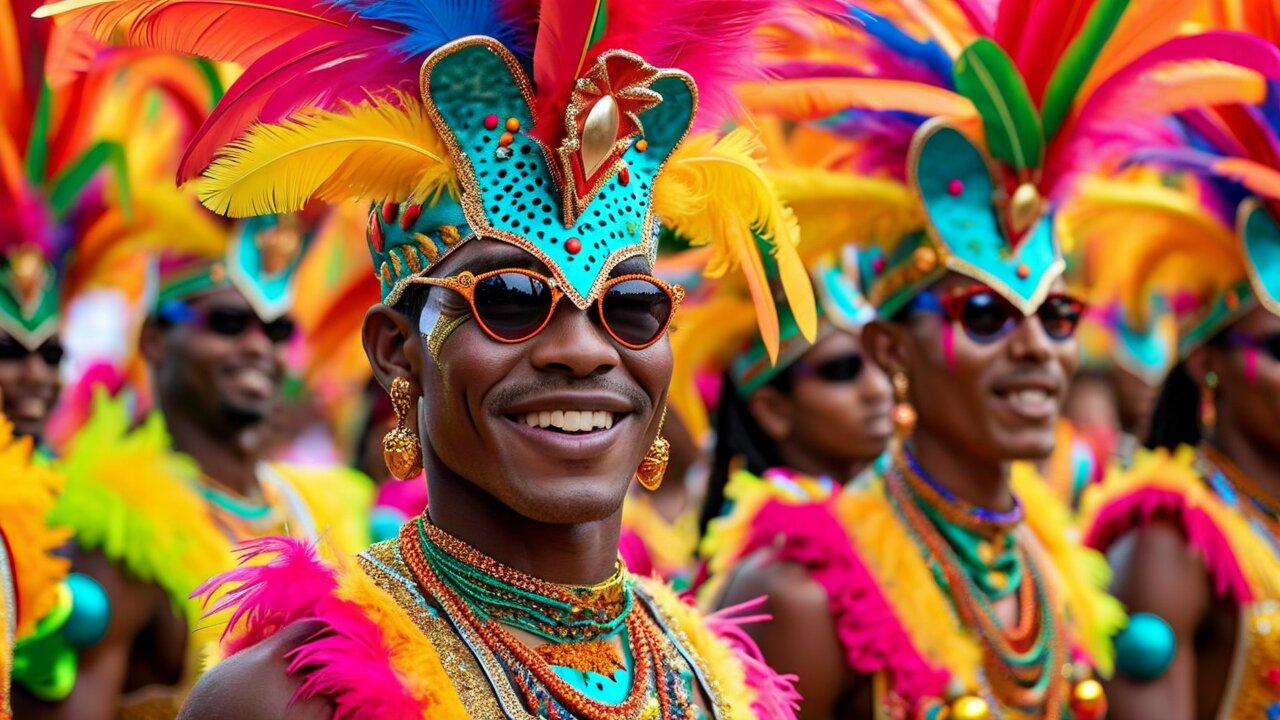
A woman entirely disguised — gloves, mask, headdress, layered petticoats, not a centimetre of skin showing — who goes to the Saturday-night bals paré-masqué, invites a man to dance, and cannot be turned down. She is unrecognisable and unaccountable; he is neither. The inversion is the whole point.
The dance halls
The universités — Polina, Nana, La Cabane — open every Saturday night through the season, playing mazouk and biguine played live. Men pay, women in touloulou costume enter free.
The weekly figures
Each Sunday parade has its own characters: Nèg'marrons covered in oil and molasses, the Karolin, the Jé Farin in flour, and the Bobi, a man led on a chain as a bear.
The last days
Sunday's grand parade, Monday's mock weddings in which the roles and genders are reversed, Tuesday in red and black — and then Vaval, the carnival king, is burned on Ash Wednesday while the crowd, dressed in black and white, mourns him.
How to take part
The parades in Cayenne, Kourou and Saint-Laurent are free and public. The bals are open to anyone; if you want to be a touloulou, costumes can be hired, and the anonymity is taken seriously.
Timing
It depends on Easter — carnival ends 46 days before it, so February or early March. It is the busiest tourist period of the year and accommodation should be booked months ahead.
🎉 The Rest of the Calendar
10 June · Abolition of slavery
The territory's most important public holiday, marking the 1848 abolition. Ceremonies, music and a strong political charge.
Easter and the awara
The bouillon d'awara is cooked on Easter Monday and eaten on the beach — the whole coast decamps for the day. It is the single most Guyanese thing in the calendar.
14 July
Bastille Day, observed as in France, with a parade in Cayenne including the Foreign Legion's jungle warfare school from Régina.
Cacao Sunday market
Not a festival but a weekly institution: Hmong producers, Laotian food, and the best fruit and vegetables in the territory, every Sunday morning 75 km from Cayenne.
Turtle season
March to July, and treated locally as a season rather than an event — school groups, night patrols and conservation volunteering at Awala-Yalimapo.
Launch nights
Not on any calendar, but they function as public occasions: the town of Kourou empties onto the beach and the roadside, and there is a genuine communal atmosphere.
🏭 Space, Gold and Transfers
An economy that looks European on paper and behaves like an isolated territory in practice. GDP per head is roughly half the French average but several times that of neighbouring Suriname or Brazil's northern states — which is why the borders are what they are.
The space centre
About 15% of GDP and the largest single employer, with ESA and CNES funding flowing in from Europe. When launch rates drop, the whole territory feels it.
Public sector and transfers
The state — schools, hospitals, administration, the army — is by far the biggest employer, and public spending and social transfers from France are the largest component of the economy.
Gold
Legal mining produces a couple of tonnes a year; illegal mining is thought to produce as much or more and does far greater damage. The Montagne d'Or open-pit project was abandoned in 2019 after fierce opposition.
Fishing and forestry
Shrimp and snapper for export, and a small certified timber industry. Both are limited by the same thing everything else is: distance, cost and the lack of infrastructure.
The hard numbers
Unemployment around 18–20%, youth unemployment far higher, and about half the population under 25. Prices are 15–40% above mainland France because almost everything is shipped in.
Why it stays French
There is no serious independence movement. The 2010 referendum on greater autonomy was rejected by 70%, and the 2017 crisis was a demand for more France — more police, more hospitals, more schools — not less.
🌦️ Climate
Equatorial: hot, humid and consistent, with 25–32 °C all year and humidity that rarely drops below 80%. There is no cool season. What changes is the rain, and it changes a lot.
The long dry season · August–November
The best time to visit: least rain, easiest roads and river travel, and the most reliable weather for launch viewing. Also the hottest and dustiest.
The long rains · April–July
Up to 400 mm a month on the coast and more inland. Roads flood, forest trails become impassable, and mosquitoes peak. It is also turtle season, which is the trade-off.
The little dry season · March
A short break in the rains — petit été de mars — which is unreliable but real, and coincides with carnival.
The short rains · December–February
Heavy but broken. Carnival runs through it and nobody stops for weather.
Rainfall totals
Cayenne gets around 3,000 mm a year, and parts of the interior over 4,000. For comparison, Prague gets about 500.
What to pack
Light quick-drying clothing, long sleeves and trousers for dusk, a proper rain shell rather than an umbrella, boots for the forest, strong DEET, and a dry bag. Nothing you own will ever be quite dry.
🇨🇿 From the Czech Republic
There is no short way. Prague to Cayenne means Paris and then a long-haul flight across the Atlantic — total journey time 14 to 18 hours with one connection, and it is essentially a domestic French flight at the far end. The time difference is 5 hours behind Czech winter time, 6 in summer.
The route
Prague to Paris Orly (not Charles de Gaulle — the Guiana flights leave from Orly), then Air France or Air Caraïbes direct to Cayenne-Félix Éboué, about 8 h 45. Allow a long connection; the change of Paris airport is the usual failure point.
Cost
Expect 18,000–35,000 Kč return. It is an internal French route with limited competition, so fares are high year-round and worst around Easter and carnival. Book several months ahead.
Documents
Czech citizens need only an ID card or passport — this is France. But note that French Guiana is outside Schengen, so there is a passport check on arrival, and a passport rather than an ID card is the safer document.
Vaccination
Yellow fever vaccination is mandatory for everyone over one year old and is checked — this is the one requirement people are caught out by. Get it at least ten days before travel. Hepatitis A and typhoid are recommended, and antimalarials for the interior.
Health cover
The European Health Insurance Card works — French Guiana is in the French health system, and Cayenne hospital is a proper French hospital. Take commercial insurance as well for evacuation from the interior, which the EHIC will not cover.
Czech consular cover
There is no Czech representation in French Guiana. The accrediting mission is the Czech Embassy in Paris. Register in DROZD before travelling, particularly for any river or interior travel — this is somewhere it genuinely matters.
✈️ Getting There and Around
Flights in
Air France and Air Caraïbes from Paris Orly, plus regional connections to Fort-de-France (Martinique), Pointe-à-Pitre (Guadeloupe), Belém (Brazil) and Paramaribo (Suriname). There is no cheap way in.
Overland
Possible and adventurous. From Suriname, cross the Maroni by ferry or pirogue at Albina–Saint-Laurent. From Brazil, the Oyapock bridge at Saint-Georges. Both are real international borders with real formalities despite the EU status.
Car hire
The only practical way to see the coast. Book ahead — the fleet is small and launch weeks empty it. Expect €50–80 a day. Driving is on the right, French rules, French signs.
Buses and taxis
There is a limited bus network along the coast and shared taxis (taxis collectifs) between the towns. Both are cheap and slow. Do not count on either for a schedule.
Internal flights
Air Guyane flies small aircraft to Maripasoula, Saül, Grand-Santi and Saint-Georges. Baggage limits are tight, flights are weather-dependent, and they are the only way into most of the interior.
Pirogues
The real transport network. Scheduled and chartered dugouts on the Maroni and Oyapock. Arranged through operators in Saint-Laurent or Saint-Georges, and priced by fuel, which is expensive upstream.
🧭 Practical French Guiana
Money
The euro. Cards work in Cayenne, Kourou and Saint-Laurent; carry cash beyond them, because in the interior there are no ATMs at all and often no card terminals.
Language
French, and less English than you would like. Learn enough French to manage, or travel with someone who has it. Guianese Creole is everywhere but nobody will expect it of you.
Connectivity
Good 4G along the coast, nothing in the interior. EU roaming applies for Czech SIMs — French Guiana is an EU outermost region, so your Czech plan works at no extra cost, which surprises people.
Electricity
230 V, French two-pin sockets. No adapter needed from Czechia.
Water and health
Tap water is drinkable on the coast and should be filtered or treated elsewhere. Dengue and chikungunya are the practical risks; take repellent seriously and use a net in the interior.
Permits
Travel into the interior and to the border river communes above certain points requires prefectural authorisation. Apply well ahead or, more simply, book through an operator who does it for you.
💰 Costs
Expensive, and there is no way around it. This is French pricing at the end of a very long supply chain, in a place with no budget tourism infrastructure. Assume it will cost more than an equivalent trip to mainland France.
Accommodation
Simple hotel in Cayenne €70–110 (1,700–2,700 Kč). Kourou similar and higher during launches. Carbet with hammock €15–30. The hotel on Île Royale runs €130–180 for the experience of being alone on the island.
Food
Bakery lunch €6–9. Creole restaurant main €15–25. A market meal at Cacao or Cayenne €8–12 and much the best value. Supermarket prices are 20–40% above mainland France.
Transport
Car hire €50–80 a day plus expensive fuel. Boat to the Îles du Salut €65–75 return. Internal flight to Saül around €200 return. Chartered pirogue on the Maroni €200–500 a day depending on distance.
Tours
Kaw marshes overnight with pirogue and carbet €120–180. Guided rainforest day €70–120. The CNES space centre tour and the public launch viewing are both free, which is the best deal in the territory.
Realistic budget
There is no backpacker tier. Basic independent travel with a shared car €90–130 a day (2,200–3,200 Kč). Comfortable with tours €180–260. Interior travel is a separate and much larger line.
Where the value is
The free things: the space centre tour, launch viewing, the Iracoubo church, the Camp de la Transportation tour, the Cacao market, and walking the trails at Saül once you have got there.
🛡️ Safety
French Guiana has a genuinely higher crime rate than mainland France — homicide rates are several times the metropolitan figure — and this is one of the few places in this factbook where the standard advice needs to be taken literally rather than as boilerplate.
Cities
Do not walk at night in Cayenne, particularly around the Village Chinois and the eastern quarters, and be careful in Saint-Laurent after dark. Use taxis. Most violence is not directed at visitors, but robbery is opportunistic.
Cars
Do not leave anything visible in a parked car anywhere, including at trailheads and beaches. Break-ins are the commonest loss.
The interior
The risk here is not crime but logistics: illegal mining camps, no phone signal, no rescue, and rivers with real rapids. Do not go into the forest without a guide, and tell someone your route.
Health risks
Dengue, chikungunya and Zika circulate; malaria persists in the interior and along the border rivers. Yellow fever vaccination is compulsory. Leptospirosis after flooding is a real risk in rivers.
Wildlife
Nothing hunts you. Snakes, bullet ants and caimans are the things to respect, and boots plus a guide handle almost all of it. Do not swim in rivers without local advice.
Emergency
112, and the French emergency system works. Cayenne's hospital is properly equipped; anything serious from the interior means an evacuation flight, which is why insurance matters.
🏨 Where to Stay
Cayenne
A handful of business hotels plus guesthouses in the centre and at Rémire-Montjoly. Nothing luxurious; book ahead because the supply is genuinely small.
Kourou
Where you stay for a launch, and it fills the instant a date is announced. The Hôtel des Roches and the Mercure are the established options.
Île Royale
The Auberge des Îles du Salut in the former warders' mess. Simple, expensive for what it is, and the only way to have the islands after the day boats leave — which is the entire point.
Carbets
Open-sided shelters with hammock hooks, at forest and river sites throughout the territory. You bring or hire a hammock and mosquito net. This is the standard interior accommodation and it is genuinely comfortable once you accept it.
Saint-Laurent-du-Maroni
Several small hotels and guesthouses, including one inside a restored colonial building near the Camp de la Transportation. A good base for two nights.
Gîtes and ecolodges
A growing network of small family-run places on the coast road and near Kaw and Cacao. Often the best value and the best food.
🗺️ Suggested Itineraries
Five days · the essentials
Cayenne and its market, the Îles du Salut for a day (or a night), the space centre tour at Kourou, and the Kaw marshes overnight. A hire car makes all of it straightforward.
One week · coast to border
Add Saint-Laurent-du-Maroni for two nights — the Camp de la Transportation, a pirogue across to Suriname, and a day up the Maroni — plus the Iracoubo church and Awala-Yalimapo on the way.
Ten days · with the forest
The above plus Saül: fly in, walk the trails for three or four days sleeping in carbets, fly out. This is the trip that shows you what the territory actually is.
Built around a launch
Fix the dates once a launch is confirmed, register for the Toucan or Ibis site weeks ahead, and use the surrounding days for the islands, the space museum and Kaw. Build in slack: launches slip.
In turtle season
March to July. Base at Awala-Yalimapo for two or three nights and do the night patrols, then the coast road east. Accept that it will rain.
Combining
Suriname is genuinely easy from Saint-Laurent and Paramaribo is a fine city; Brazil via the Oyapock bridge is harder but possible. Both need visas checked in advance — the EU status does not travel with you.
🤯 Fascinating Facts
The EU's longest border is with Brazil
Because French Guiana is France, the 730 km French–Brazilian border is the European Union's longest external land border — longer than any in Europe itself.
The largest commune in France
Maripasoula covers 18,760 km² — larger than several EU member states, and reachable only by river or light aircraft.
Rockets get a free push here
At 5° north, the Earth's rotation gives an eastward launch about 460 m/s of extra velocity — roughly 15% more payload to geostationary orbit than from Cape Canaveral.
96% forest, and almost none of it logged
One of the highest forest-cover percentages of any territory on Earth, and among the least disturbed rainforest anywhere.
The Islands of Salvation were named after a catastrophe
Survivors of the 1763 Kourou expedition, in which around 9,000 of 12,000 settlers died, sheltered on the offshore islands to escape the fevers — hence Îles du Salut.
Devil's Island cannot be visited
The channel between Royale and the Île du Diable is short and lethally fast. Prisoners and supplies crossed by an aerial cable car; there has never been a landing stage.
Cayenne pepper is not from here
The chilli took the city's name in Europe but the plant is South American generally. What Guyane does grow is the fierce piment végétarien and the antillais pepper.
A president of the Senate from Cayenne
Gaston Monnerville, born here in 1897, led the 1946 departmentalisation and served as president of the French Senate for 21 years — second in the order of precedence of the Republic.
Webb launched from a jungle clearing
The James Webb Space Telescope left Kourou on 25 December 2021, and the Ariane 5's precision saved so much of the telescope's own fuel that its expected working life roughly doubled.
👤 Notable Figures
Gaston Monnerville (1897–1991)
Born in Cayenne, grandson of an enslaved man, lawyer, résistant, architect of the 1946 law that made Guyane a French department, and president of the French Senate from 1958 to 1968.
Félix Éboué (1884–1944)
Born in Cayenne, colonial administrator, and the first black governor in the French empire. In 1940 he brought Chad over to de Gaulle — the first territory to rally to Free France — and Cayenne's airport is named after him.
Alfred Dreyfus (1859–1935)
Not Guyanese, but the territory's most famous prisoner: four years in solitary confinement on the Île du Diable for a treason he did not commit, and the centre of the affair that reshaped French politics.
Henri Charrière, "Papillon" (1906–1973)
Convict, escaper and author of the 1969 memoir that made the bagne world-famous. Scholars now think much of the book collects other men's escapes; the conditions, however, were as described.
Léon-Gontran Damas (1912–1978)
Born in Cayenne, poet, and with Césaire and Senghor one of the three founders of the Négritude movement. His 1937 collection Pigments was banned by the French state.
Christiane Taubira (b. 1952)
Born in Cayenne, deputy for Guyane, and as justice minister the author of the 2001 law recognising the Atlantic slave trade as a crime against humanity and of the 2013 law legalising same-sex marriage in France.
Malia Metella (b. 1982)
Born in Cayenne, Olympic silver medallist in the 50 m freestyle at Athens in 2004 — the territory's best-known athlete.
Awa (Ndyuka carvers)
Not one person but a tradition: the Maroon tembe carvers of the Maroni, whose interlocking geometric designs on boats, doors and paddles form one of the strongest surviving African-derived art traditions in the Americas.
🧭 Visiting Responsibly
A small population, fragile communities and a forest under real pressure. What a visitor does here matters more than in most places, simply because there are so few visitors and so few people.
Amerindian communities
Access restrictions exist to protect people from disease and from the pressure of mining and tourism, not to be circumvented. Do not travel into restricted zones without authorisation, and do not photograph people without asking.
Turtles
No white light, no flash, no touching, and never in front of a nesting female. Follow the local guides at Awala-Yalimapo; the rules are theirs and they are enforced by the commune.
Gold
Do not buy gold of unknown origin. Illegal mining and the mercury it uses is the single largest environmental and human-health problem in the interior, and the market is what funds it.
Bushmeat
Agouti, peccary and caiman appear on menus, some legally and some not. Eating fish instead is the simple way to stay out of it.
Buy local
Maroon tembe carving, Amerindian basketry and Hmong produce are made here and the money stays here. Almost everything else in a Cayenne shop was shipped from France.
Waste
There is very limited recycling and waste management is a live local grievance. Carry your rubbish out of the forest and off the islands; nobody else is going to.
✍️ Author's Note
French Guiana is the strangest place in the European Union and almost nobody goes. You land at an airport named after a black governor from Cayenne who brought Chad over to de Gaulle in 1940, you drive past road signs identical to the ones in Normandy, and within an hour you are looking at a river that has no bridge along five hundred kilometres and that people cross in dugout canoes to go shopping.
The two things it is famous for sit twenty-five kilometres apart and say everything. On one side of the road, the ruins of a penal colony that killed most of the seventy thousand men France sent to it, left to the forest and only now being propped up. On the other, the pad from which Europe launched the James Webb Space Telescope. The same coast, a century apart, and the second was built partly because the first left the place with nothing.
Two pieces of advice. First, go for a launch if you possibly can. It is free, it is public, half of Kourou is on the beach with you, and the sound reaches you twenty seconds after the light in a way no video conveys. Second, get on a river. The coast is the administrative version of this territory; the Maroni is the real one, and half a day in a pirogue tells you more than a week of driving.
And go to Iracoubo. It is a village church on the coast road, unlocked, empty, and painted floor to ceiling by a convict who was given the job by a priest who thought he might as well be useful. It is naive, enormous and completely sincere, and it is the only place in French Guiana where the bagne produced something other than graves.
— Radim Kaufmann
Support This Project 🌍
This World Travel Factbook is a labor of love – free to use for all travelers. If you find it helpful, consider supporting its continued development.