🌍 Bhutan at a Glance
🌏 Overview
Bhutan is a tiny Buddhist kingdom nestled in the eastern Himalayas between China and India. Known as the "Land of the Thunder Dragon," it measures national success by Gross National Happiness rather than GDP, and remained almost entirely closed to outsiders until the 1970s.
The country's dramatic landscapes range from subtropical plains in the south to towering Himalayan peaks exceeding 7,000 meters. Ancient dzongs (fortress-monasteries) crown ridgelines, prayer flags flutter in mountain passes, and traditional architecture is mandated by law—making Bhutan feel like a kingdom suspended in time.
Tourism is carefully managed through a mandatory Sustainable Development Fee — currently USD 100 per person per night for international visitors (half the headline rate of $200, discounted by royal government policy through 31 August 2027), INR 1,200 per night for Indian nationals, and USD 15 per night for the first 15,000 Bangladeshi visitors each year under a scheme running from June 2024 to 2027 — ensuring that Bhutan remains one of the most pristine and authentic destinations on Earth. Every visit directly supports free healthcare, education, and environmental conservation for Bhutanese citizens.
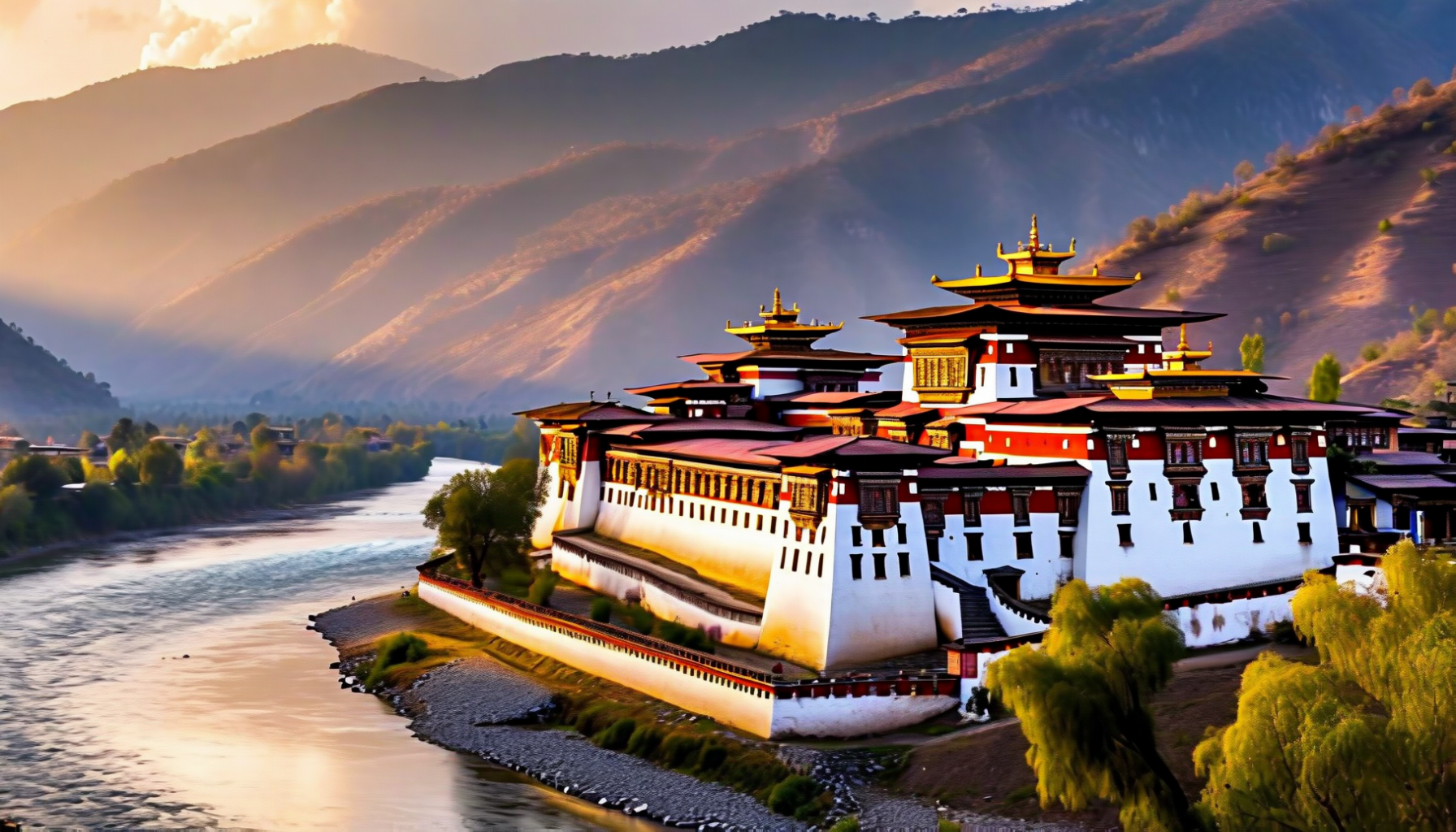
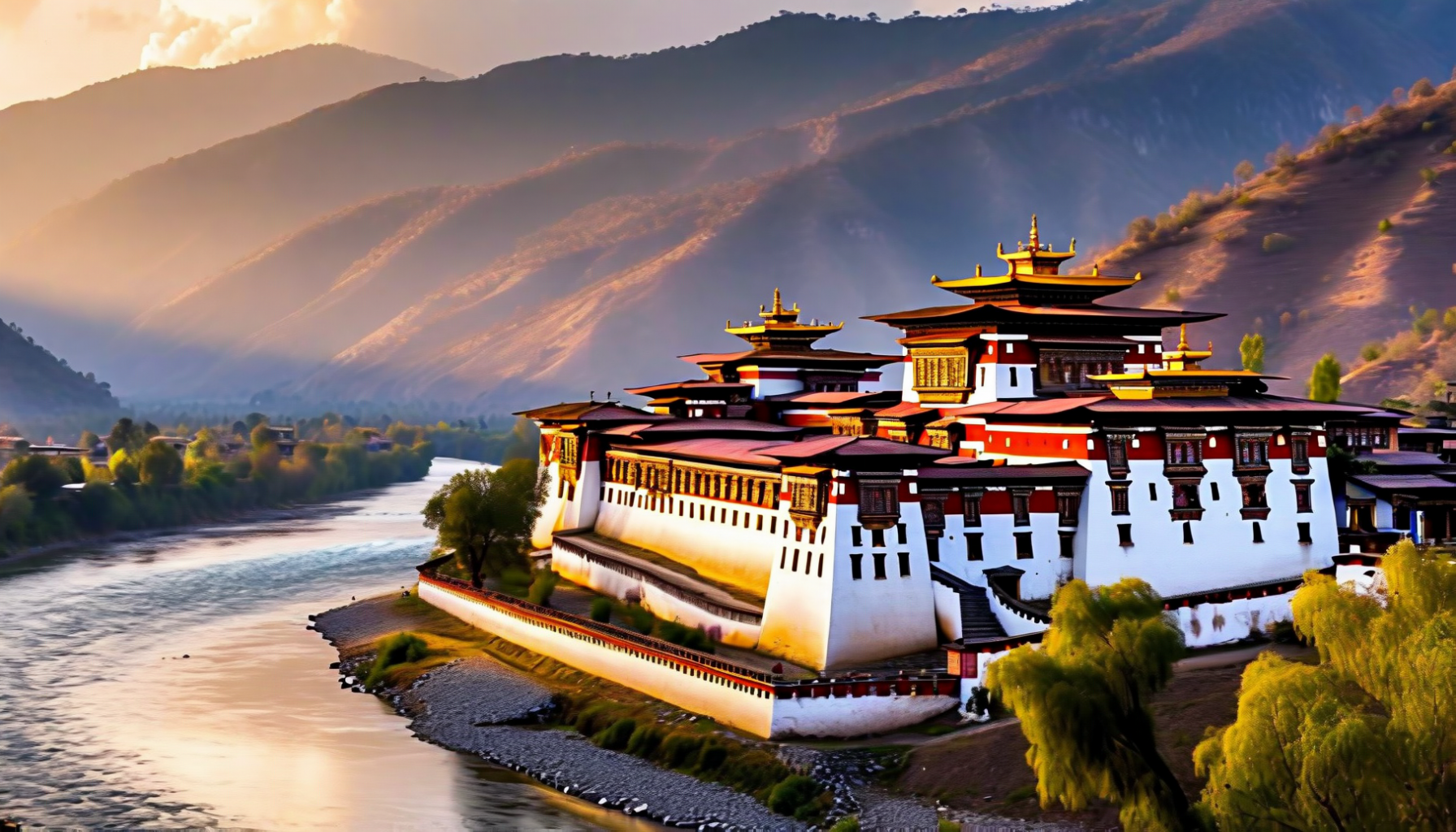
Punakha Dzong at the Confluence of Two Rivers
The "Palace of Great Happiness" — Bhutan's most beautiful dzong
🏷️ Name & Identity
Bhutanese call their country Druk Yul, meaning "Land of the Thunder Dragon." The thunder heard in Himalayan valleys was believed to be the voice of dragons, and the dragon remains the national symbol, appearing on the flag and in everyday culture.
The name "Bhutan" likely derives from the Sanskrit Bhotanta, meaning "end of Tibet." The country fiercely maintains its cultural identity through a policy of Gross National Happiness, mandatory national dress code, and preservation of Dzongkha language and Buddhist traditions.
🗺️ Geography & Regions
Bhutan spans 38,394 square kilometers but contains extraordinary geographic diversity. The southern foothills along the Indian border sit at 200 meters elevation with subtropical forests, while the northern frontier with Tibet features peaks above 7,000 meters, including Gangkhar Puensum—at 7,570 meters, the world's highest unclimbed mountain.
The country divides into three zones: the southern Duars plains, the central Inner Himalayas with fertile valleys (where most Bhutanese live), and the northern Great Himalayas. The Paro, Thimphu, and Punakha valleys form the cultural heartland. Dense forests cover over 70% of the land, constitutionally protected to remain above 60%.
🗺️ Map
Thimphu and Paro in the west, Punakha and Dochula between them, Phobjikha and Trongsa in the centre, Bumthang and Lhuentse in the east; the three southern border towns (Phuentsholing, Gelephu, Samdrup Jongkhar) and the eight Tentative-List sites are marked. Scroll-zoom is off — use the +/− buttons.
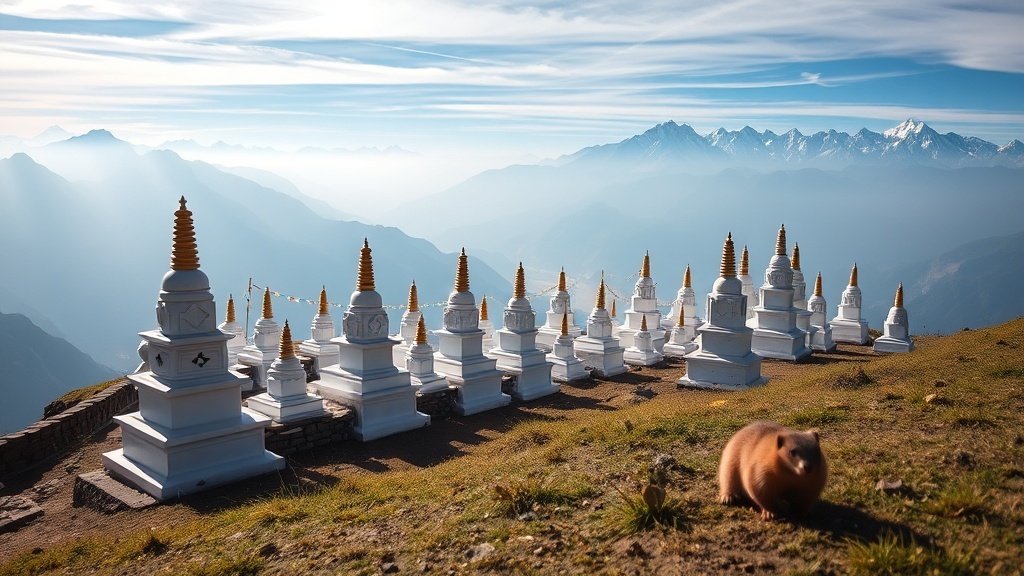
Prayer Flags Against Himalayan Peaks
Where the wind carries prayers across the rooftop of the world
📜 History
Bhutan's recorded history begins with the arrival of Buddhism in the 7th century, when the Tibetan king Songtsen Gampo built Kyichu and Jambay Lhakhang, and its consolidation in the 8th century, when Guru Rinpoche (Padmasambhava) flew to Paro on a tigress—landing at what became Taktsang (Tiger's Nest) Monastery. Buddhism became the organizing principle of Bhutanese civilization.
In 1616, Zhabdrung Ngawang Namgyal unified warring fiefdoms and established the dual system of religious and civil governance, building the great dzongs that still serve as administrative and monastic centers. This system persisted until 1907 when Ugyen Wangchuck became the first hereditary king.
Modern Bhutan emerged under the fourth king, Jigme Singye Wangchuck, who introduced Gross National Happiness, voluntarily transitioned to constitutional monarchy in 2008, and opened the country to carefully managed tourism through a daily sustainable development fee.
👥 People & Culture
Bhutan's roughly 800,000 people (727,145 at the 2017 census; UN 2026 estimate about 802,000) are predominantly Buddhist, with Vajrayana Buddhism permeating every aspect of daily life. Monasteries are active centers of learning, prayer wheels spin at every corner, and religious festivals (tshechus) featuring masked dances are the highlights of the social calendar.
Traditional dress—the gho for men and kira for women—is mandatory in government buildings, schools, and official occasions. Archery is the national sport, played with intense competitive spirit at every village celebration.
Bhutanese cuisine centers on ema datshi (chili and cheese), red rice, and butter tea. Hospitality runs deep—visitors are welcomed with ara (local spirit) and elaborate meals. The concept of driglam namzha (traditional etiquette) governs social interactions with warmth and formality.
🏛️ Thimphu — The Capital
Thimphu is one of the world's smallest and most unusual capitals—a city of roughly 115,000 people without a single traffic light (a policeman in a booth directs traffic at the main intersection). Nestled in a valley at 2,320 meters, it blends traditional architecture with modest modernization.
Key landmarks include the massive Tashichho Dzong (seat of government and the summer residence of the monastic body), the towering Buddha Dordenma statue overlooking the valley, and the weekend market where farmers sell red rice, dried yak cheese, and bundles of incense. The National Memorial Chorten is the spiritual heart of the city, circled by elderly Bhutanese spinning prayer wheels from dawn to dusk.
Despite modernization, Thimphu retains its character—all buildings must feature traditional Bhutanese architecture by law. The city offers a gentle introduction to Bhutanese culture before venturing into the dramatic valleys and mountain passes beyond.
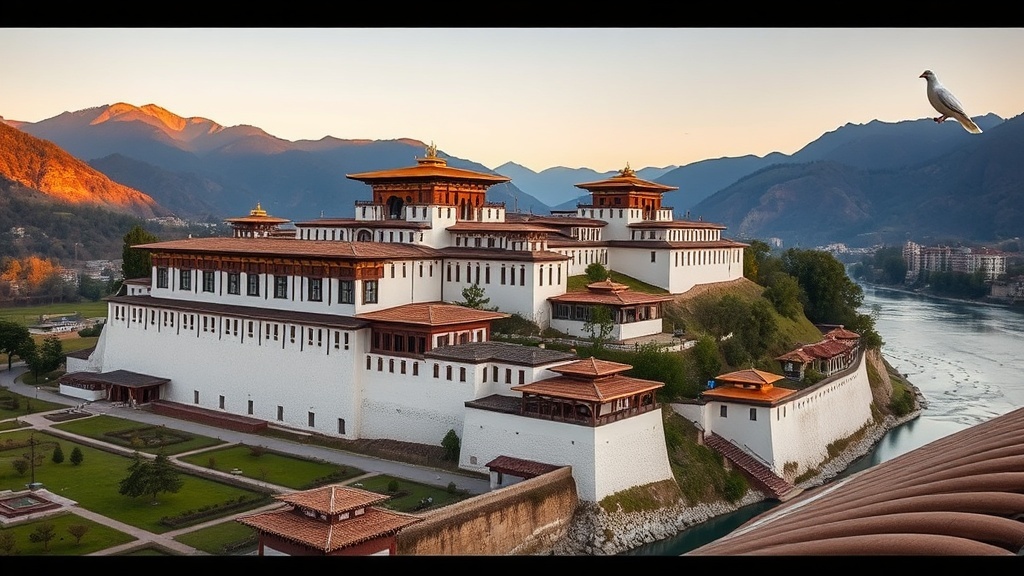
Tashichho Dzong — Seat of Government
Where Buddhism and governance have intertwined for centuries
🐯 Tiger's Nest — Taktsang Monastery
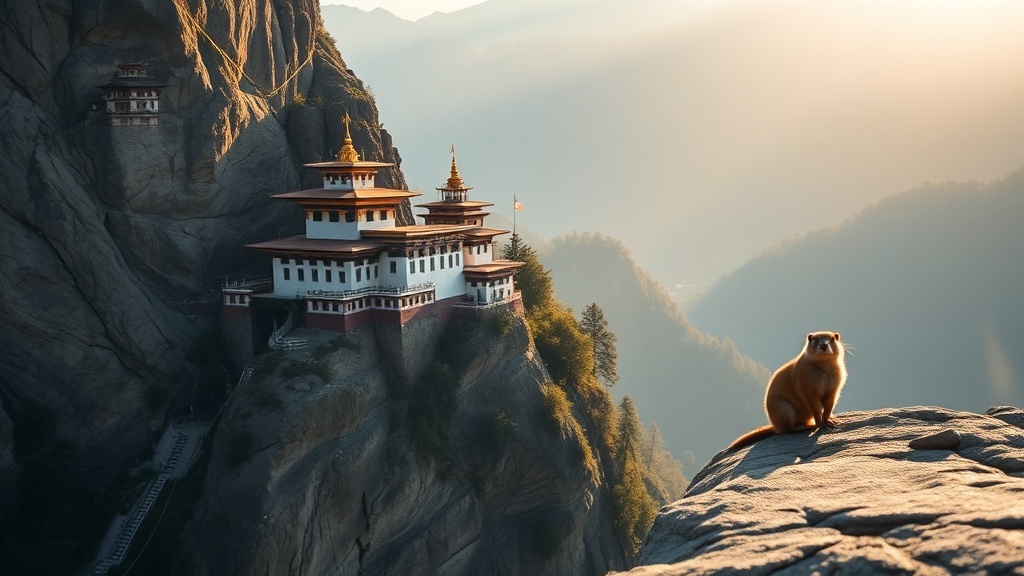
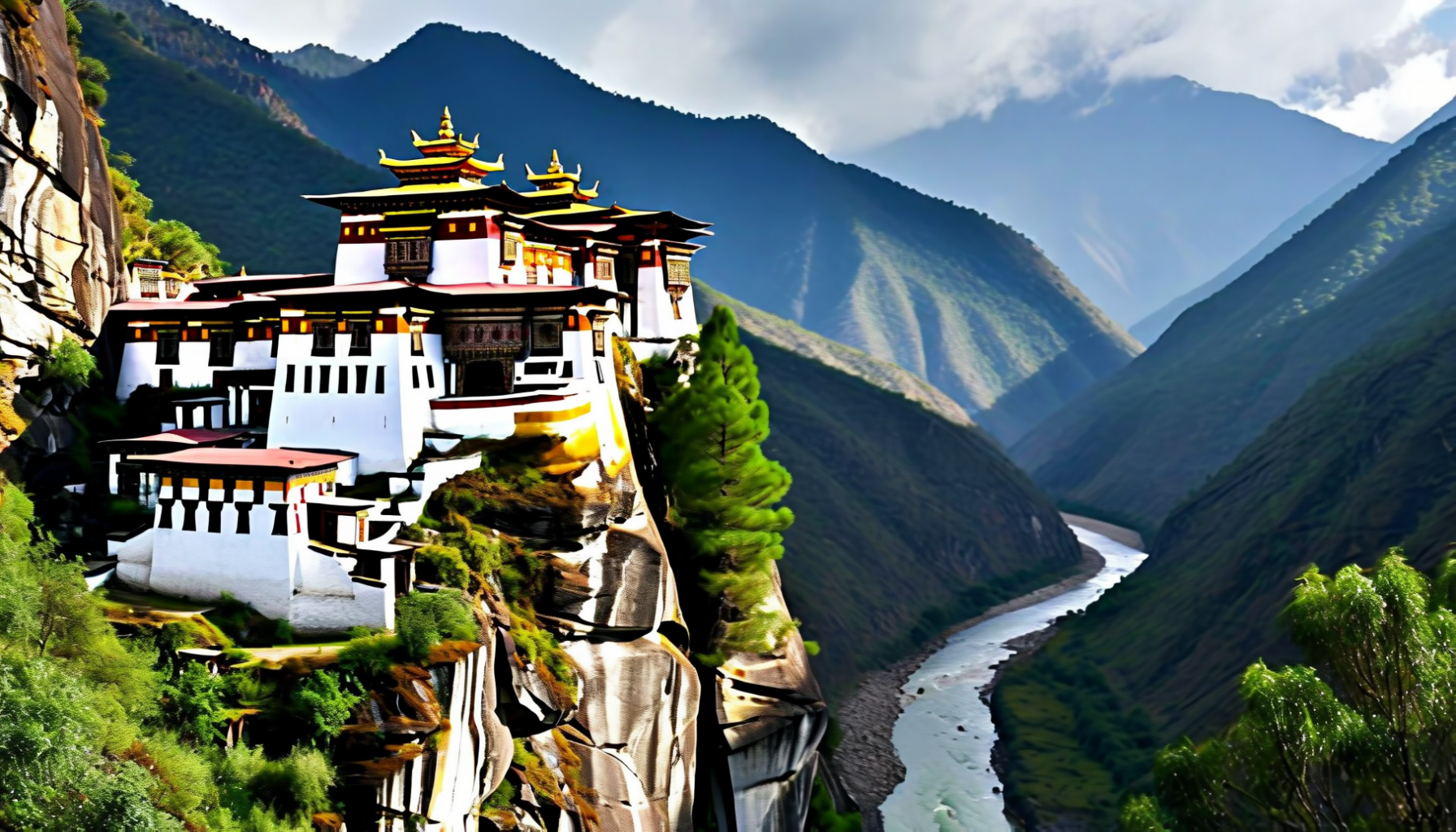
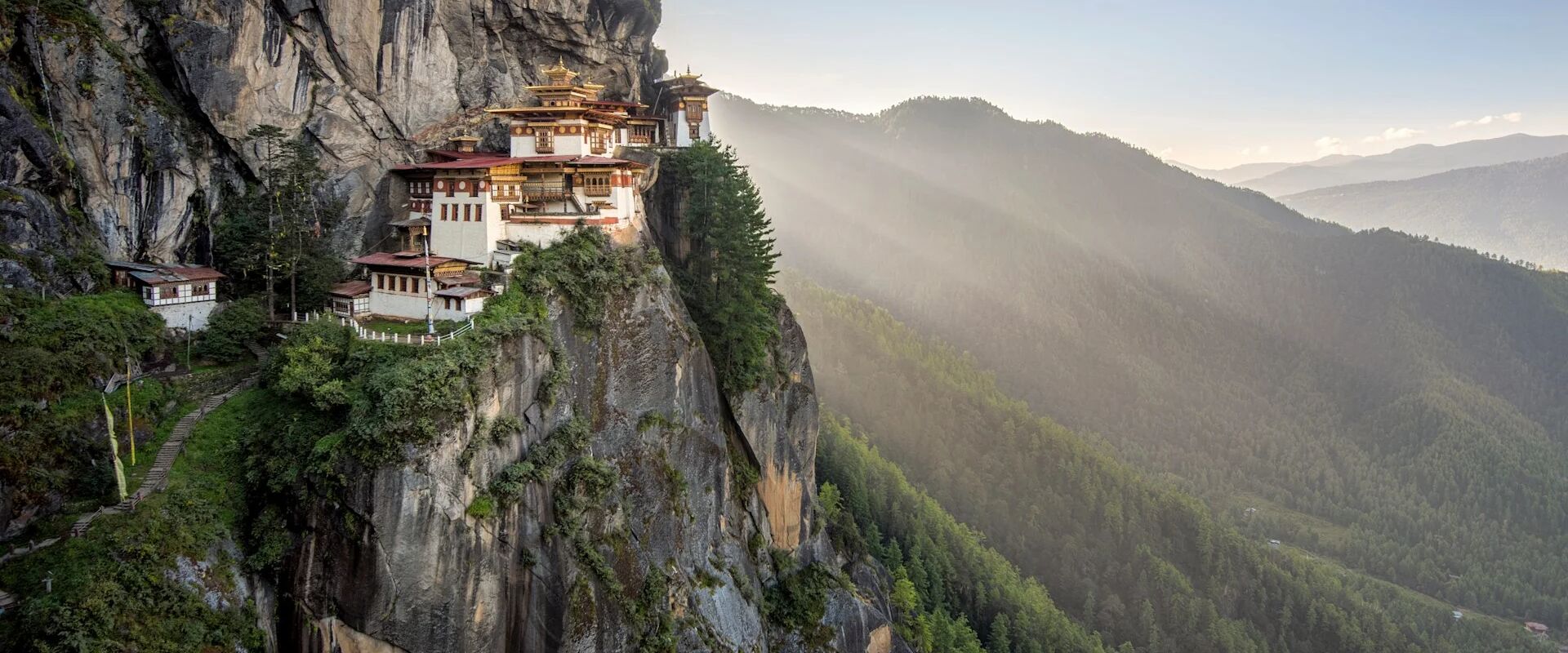
Clinging impossibly to a sheer cliff face 900 meters above the Paro Valley floor, Taktsang Palphug Monastery—the Tiger's Nest—is Bhutan's most iconic sight and one of the holiest Buddhist pilgrimage sites in the Himalayan world. Legend holds that Guru Rinpoche flew here on the back of a tigress in the 8th century to meditate for three months in a cave.
The hike to Tiger's Nest takes 2–3 hours uphill through blue pine forest, with the monastery appearing and disappearing through the mist as you climb. The complex of four main temples and residential shelters was gutted by fire in April 1998 and rebuilt over the following years, reconsecrated in 2005 with its original splendour faithfully restored. Inside, butter lamps flicker before golden Buddhist statues in dimly lit prayer halls.
Arriving at Tiger's Nest—breathless from altitude and exertion, confronted by the sheer audacity of its construction—is one of travel's genuinely transformative moments. Early morning visits offer the best light and fewest crowds.
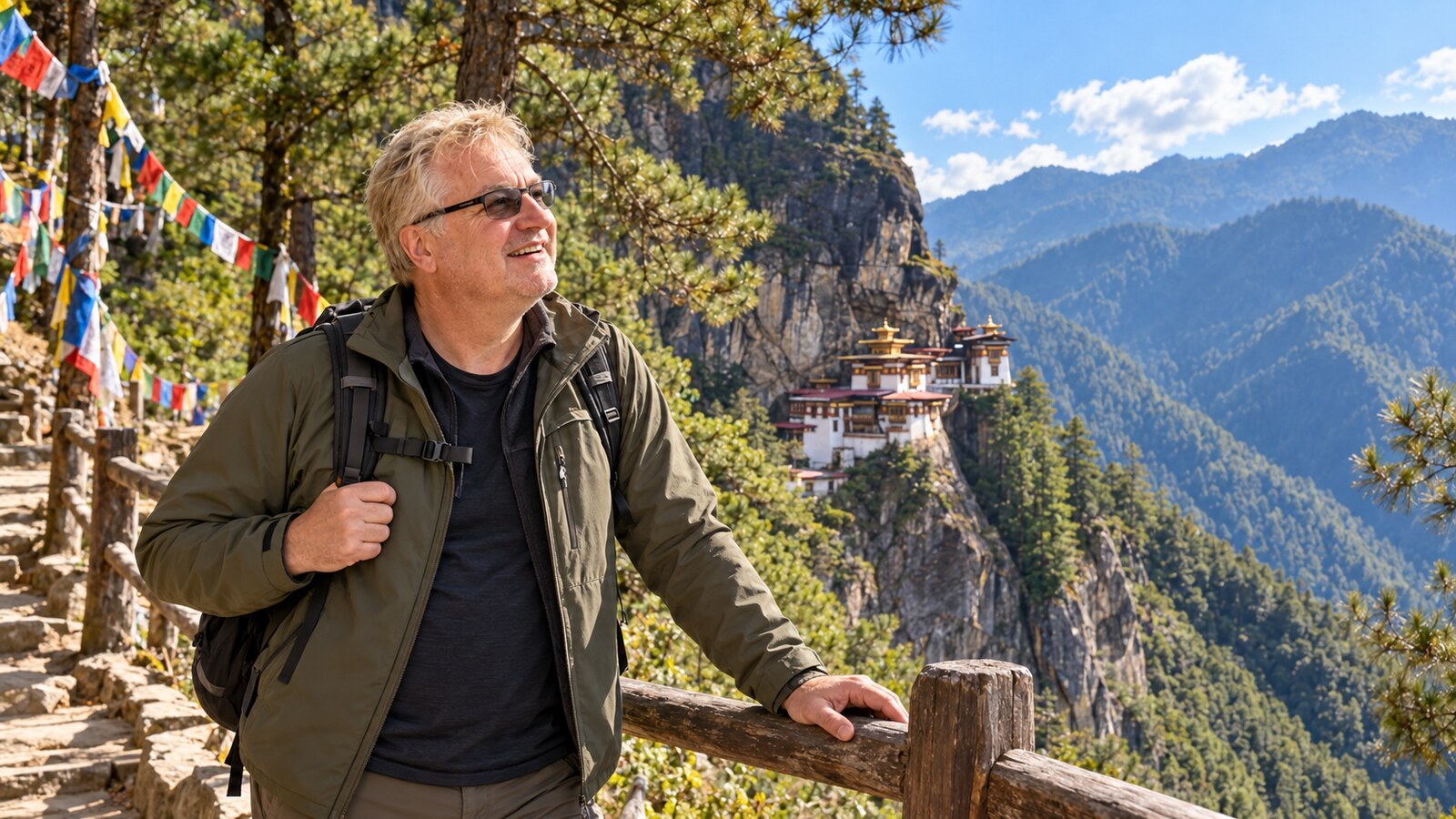
On the Trail to Tiger's Nest
AI-created editorial image by Kaufmann Creative AI Studio©. This is not a documentary record of an actual visit.
🏯 Punakha Dzong — Palace of Great Happiness
Punakha Dzong is widely considered the most beautiful dzong in Bhutan. Built in 1637 by Zhabdrung Ngawang Namgyal at the confluence of the Mo Chhu (Mother River) and Pho Chhu (Father River), it served as the capital and seat of government until 1955. The dzong remains the winter residence of the central monastic body.
The approach across a traditional wooden cantilever bridge is breathtaking, with the massive whitewashed fortress rising above the river junction. Inside, the dzong houses sacred relics including the preserved body of Zhabdrung Ngawang Namgyal, as well as stunning Buddhist murals, intricate woodwork, and a three-story tower containing a giant Buddha statue.
The Punakha Drubchen festival, held here each spring, features dramatic reenactments of the 17th-century battle against Tibetan invaders with warriors in traditional armor—one of Bhutan's most spectacular cultural events.
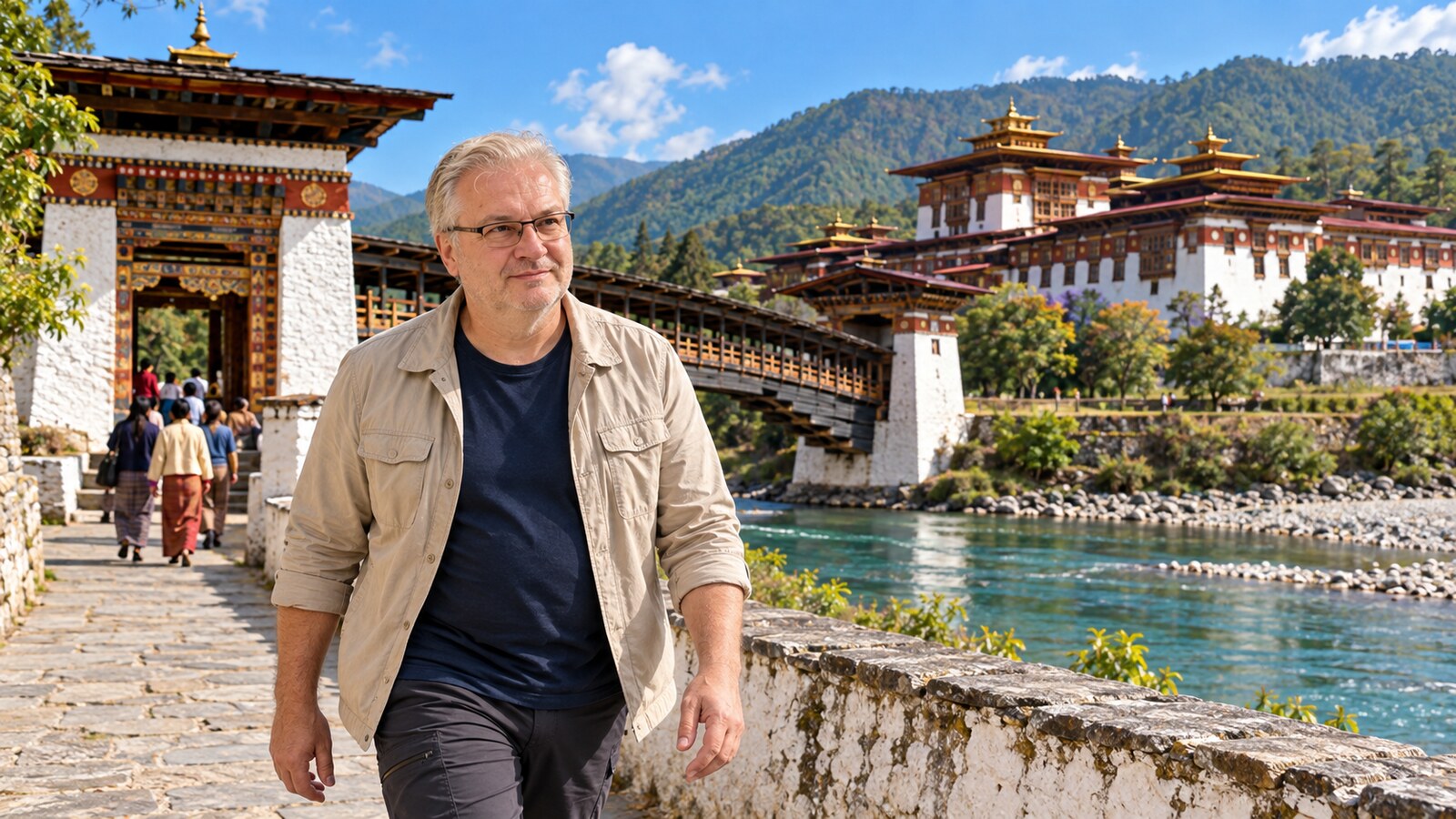
Approaching Punakha Dzong
AI-created editorial image by Kaufmann Creative AI Studio©. This is not a documentary record of an actual visit.
✈️ Paro Valley — Gateway to Bhutan
Paro Valley is home to Bhutan's only international airport, where pilots must be specially certified to navigate one of the world's most challenging approaches—threading between Himalayan peaks at 2,236 meters altitude with only a visual approach permitted. The valley itself is one of Bhutan's most fertile and historically significant regions.
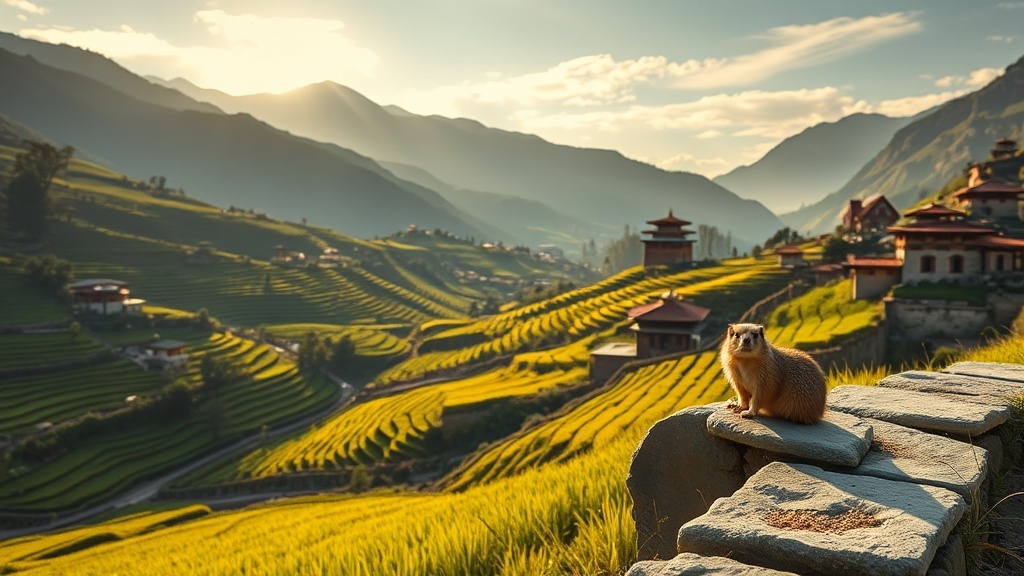
Beyond Tiger's Nest, Paro offers the imposing Paro Dzong (Rinpung Dzong), the ruins of Drukgyel Dzong overlooking the valley toward Tibet, and the National Museum housed in an ancient watchtower. The valley floor is a patchwork of emerald rice paddies dotted with traditional farmhouses, their whitewashed walls decorated with elaborate Buddhist paintings.
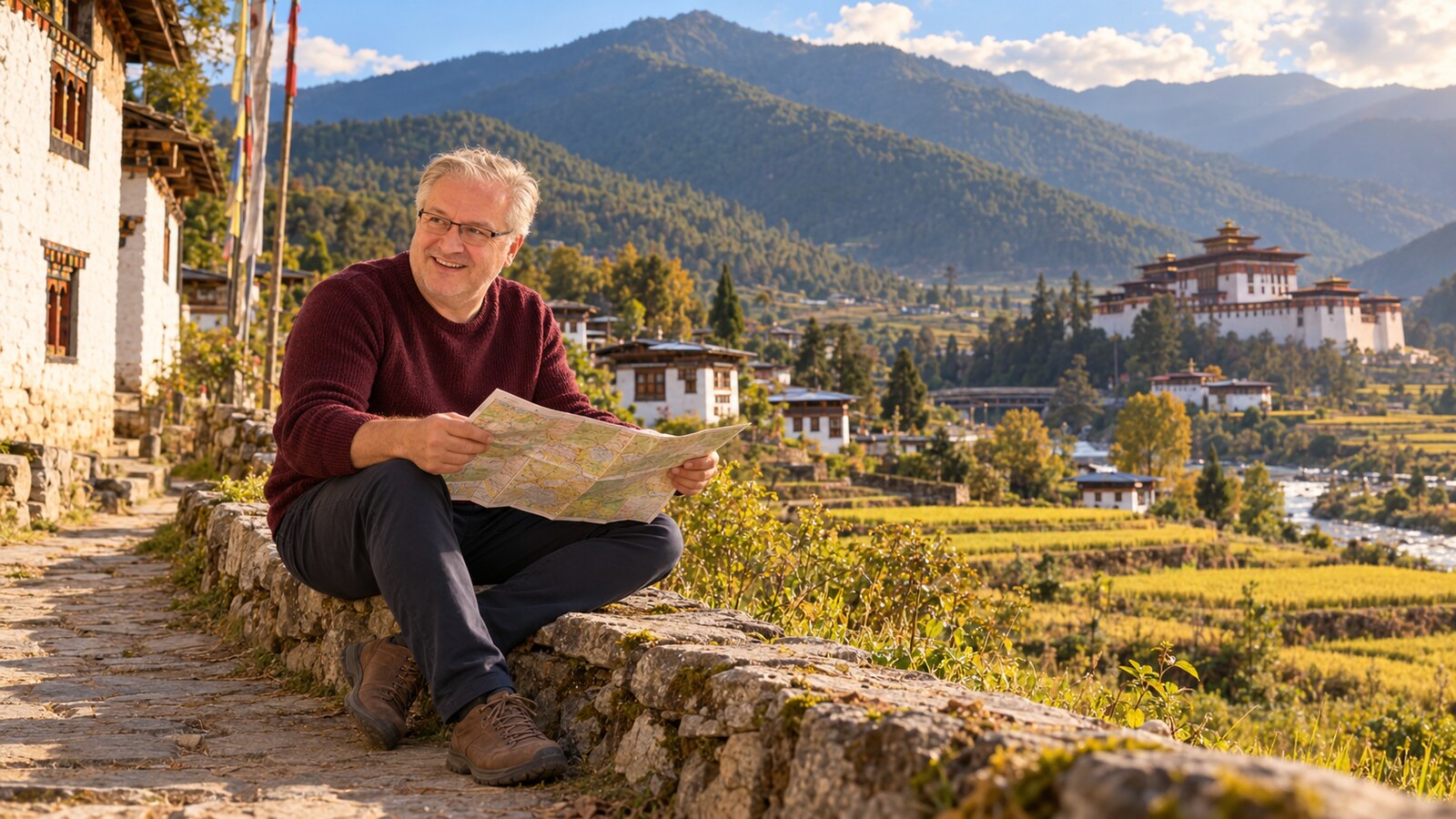
A Quiet Afternoon in Paro Valley
AI-created editorial image by Kaufmann Creative AI Studio©. This is not a documentary record of an actual visit.
🏔️ Bumthang Valley — Spiritual Heartland
Bumthang, in central Bhutan, is the spiritual heartland of the kingdom—a complex of four valleys (Chokhor, Tang, Ura, and Chumey) filled with the country's oldest and most sacred temples. This is where Guru Rinpoche first brought Buddhism to Bhutan, and the region pulses with religious significance.
Jambay Lhakhang, founded in the 7th century, is one of Bhutan's oldest temples and hosts the famous Jambay Lhakhang Drup festival featuring the legendary midnight fire ceremony (mewang) and the naked dance (tercham) — performed by masked village men, not monks. Kurjey Lhakhang contains the body print of Guru Rinpoche in rock. The valley is also known for its Swiss-style cheese and honey production, and for being the birthplace of Bhutanese brewing.
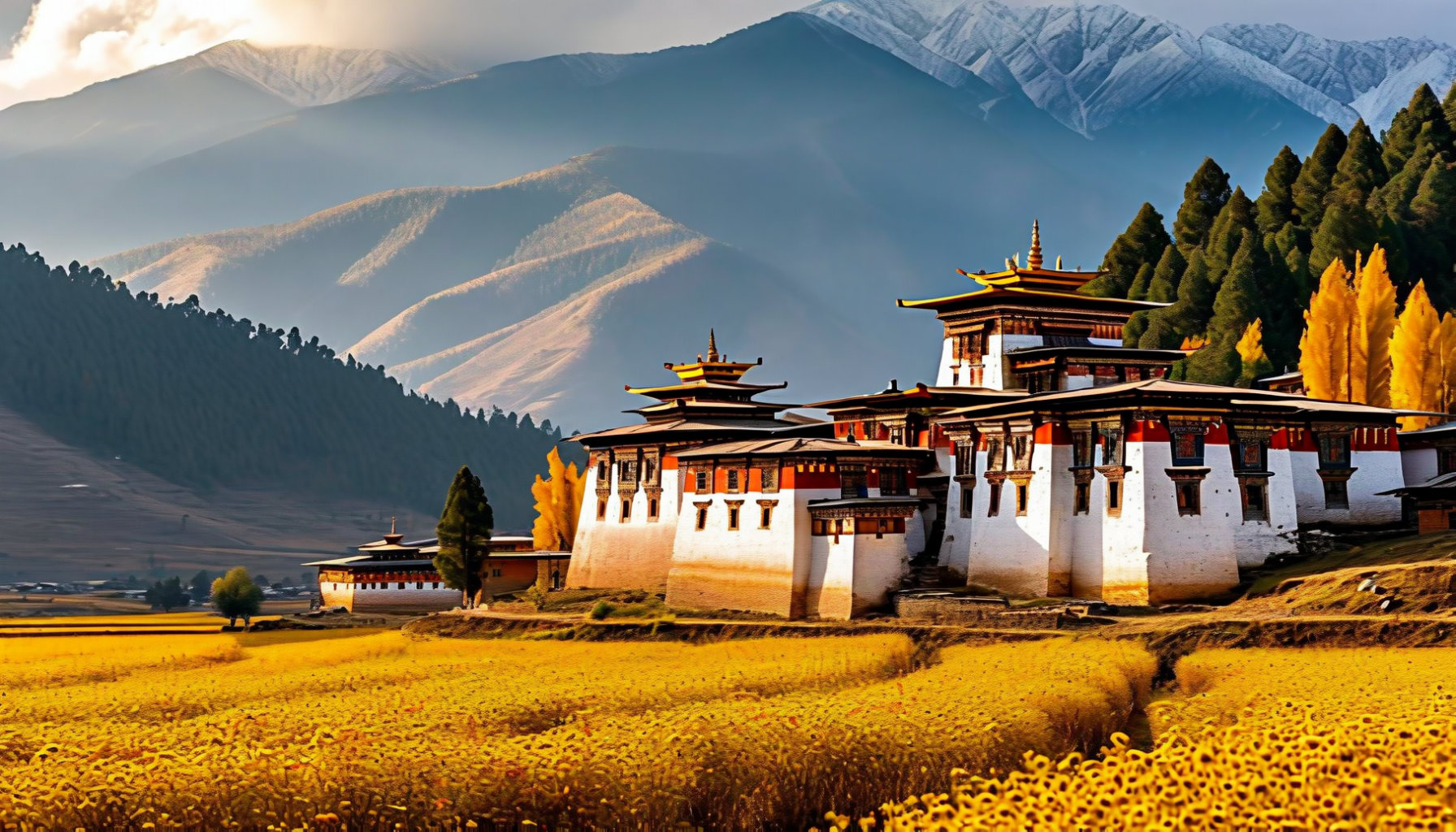
Bumthang — Spiritual Heartland
Four sacred valleys where Guru Rinpoche brought Buddhism to Bhutan
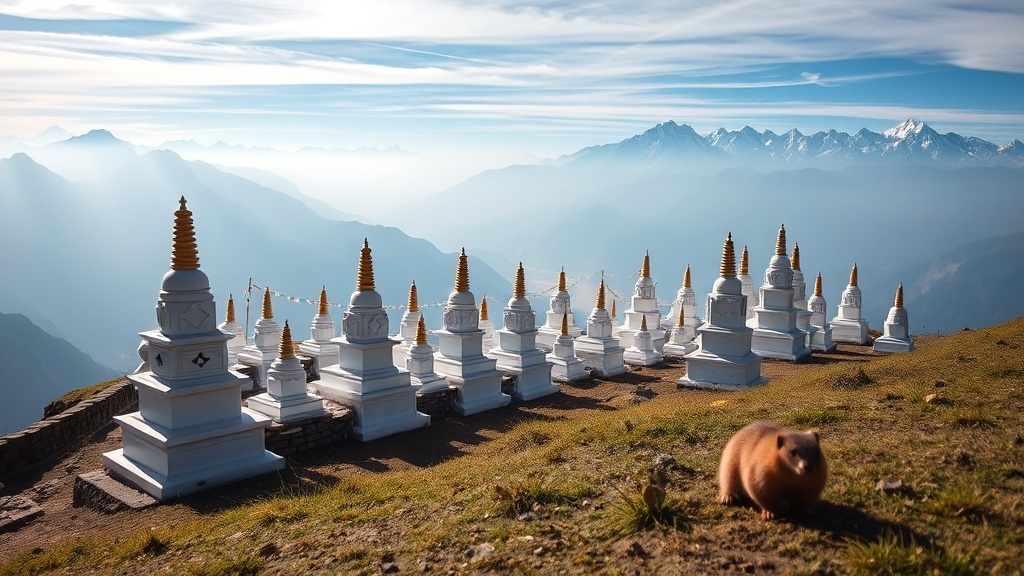
🏔️ Dochula Pass — 108 Stupas in the Sky
Dochula Pass sits at 3,100 meters on the road between Thimphu and Punakha, crowned by 108 memorial chortens (stupas) built in 2004–05. On clear days—particularly in autumn and winter—the pass offers one of Bhutan's most spectacular panoramas: an unbroken wall of snow-capped Himalayan peaks stretching across the horizon, including the sacred Gangkhar Puensum.
The 108 Druk Wangyal Chortens were built by the eldest Queen Mother to honor Bhutanese soldiers who fell in a 2003 military operation against Indian insurgents. Adjacent stands the Druk Wangyal Lhakhang temple with vivid modern murals depicting Bhutan's recent history. The pass is frequently wreathed in dramatic clouds, with prayer flags snapping in the wind—an unforgettable sight.
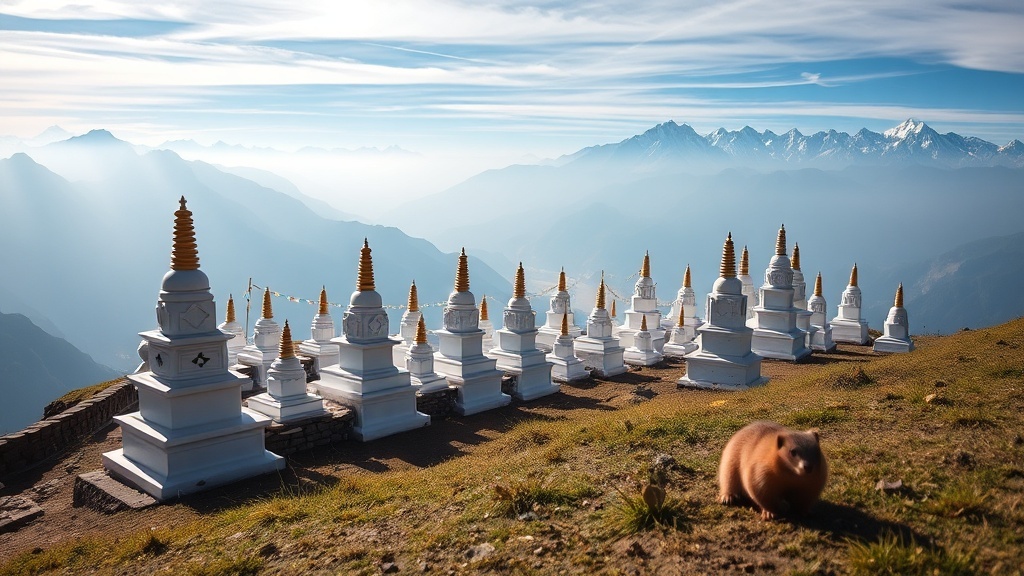
108 Chortens at Dochula Pass
Where prayer meets panorama at 3,100 meters above sea level
🍜 Cuisine
Bhutanese cuisine is defined by one ingredient above all others: chili. In Bhutan, chilies are not a condiment—they are a vegetable, consumed in enormous quantities at every meal. The national dish, ema datshi, is simply large green or red chilies stewed in a rich sauce of local farmer's cheese. It is delicious, fiery, and utterly addictive.
Signature Dishes: Ema datshi – chili cheese stew, the national dish. Phaksha paa – pork strips with dried red chilies and radish. Jasha maru – spicy minced chicken. Momos – steamed dumplings filled with pork, beef, or cheese. Shakam paa – dried beef with chilies and cheese. Everything is accompanied by red rice, Bhutan's nutty, earthy staple grain grown in the Paro valley.
Beverages: Suja – yak butter tea with salt (an acquired taste for visitors). Ara – home-distilled spirit from rice, maize, or wheat. Bangchang – fermented grain beer. Druk 11000 and Red Panda are the local commercial beers. Tea and doma (betel nut) accompany every social occasion.
Ema Datshi
Chili Cheese Stew — The National Dish
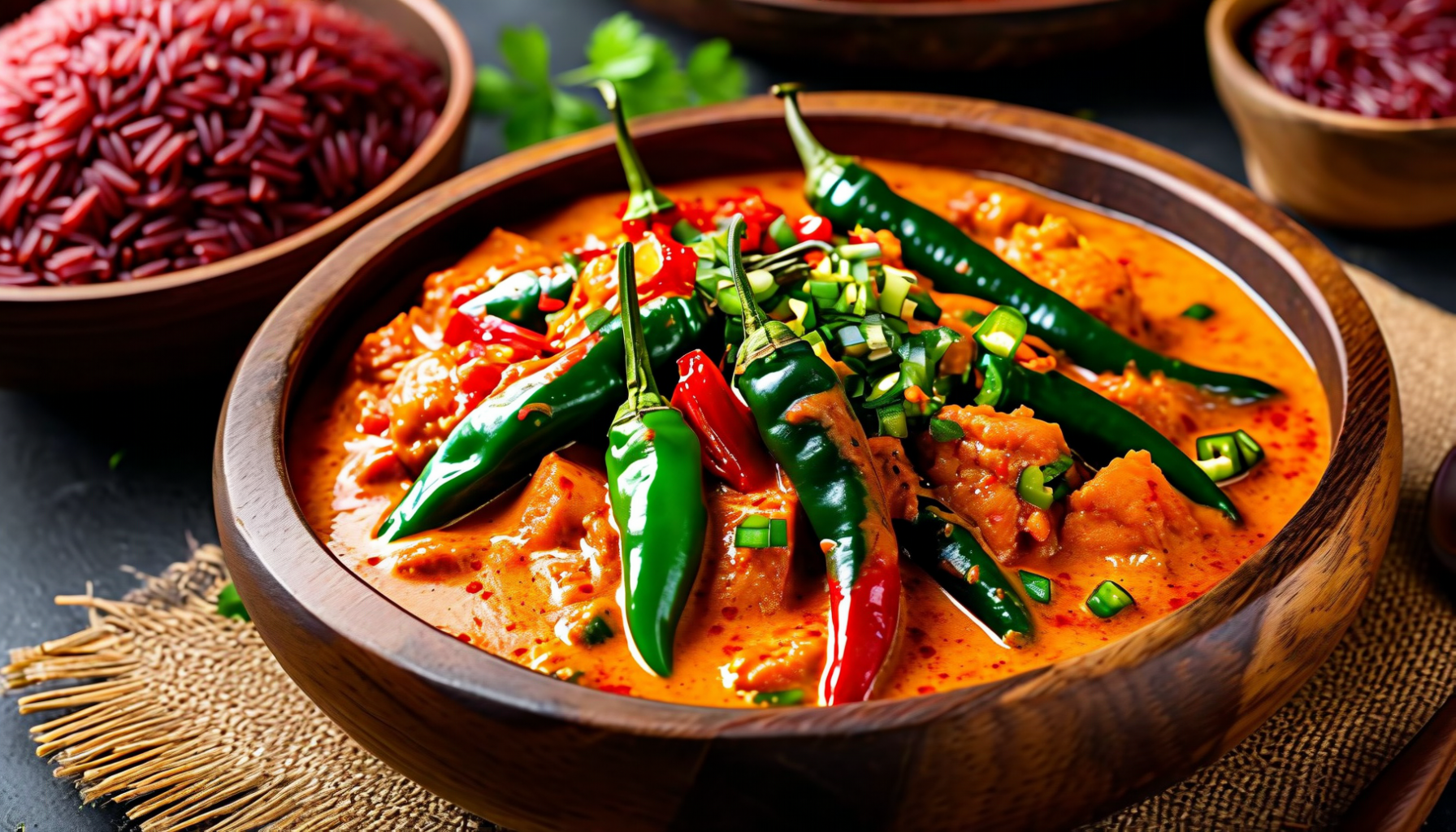
Bhutan's fiery national dish—whole chilies cooked in creamy local cheese sauce.
Ingredients: 8 green chilies (halved and deseeded for milder), 200g farmer's cheese (datshi), 1 tomato (diced), 1 onion (sliced), 30g butter, water, salt to taste.
Preparation: Sauté onion in butter until soft. Add chilies and tomato with a splash of water, simmer until chilies are tender. Crumble in cheese, stir gently until melted and creamy. Do not boil after adding cheese. Serve immediately with steaming red rice.
💡 Adjust chilies to your heat tolerance—traditional Bhutanese ema datshi is intensely spicy!
Momos
Steamed Himalayan Dumplings
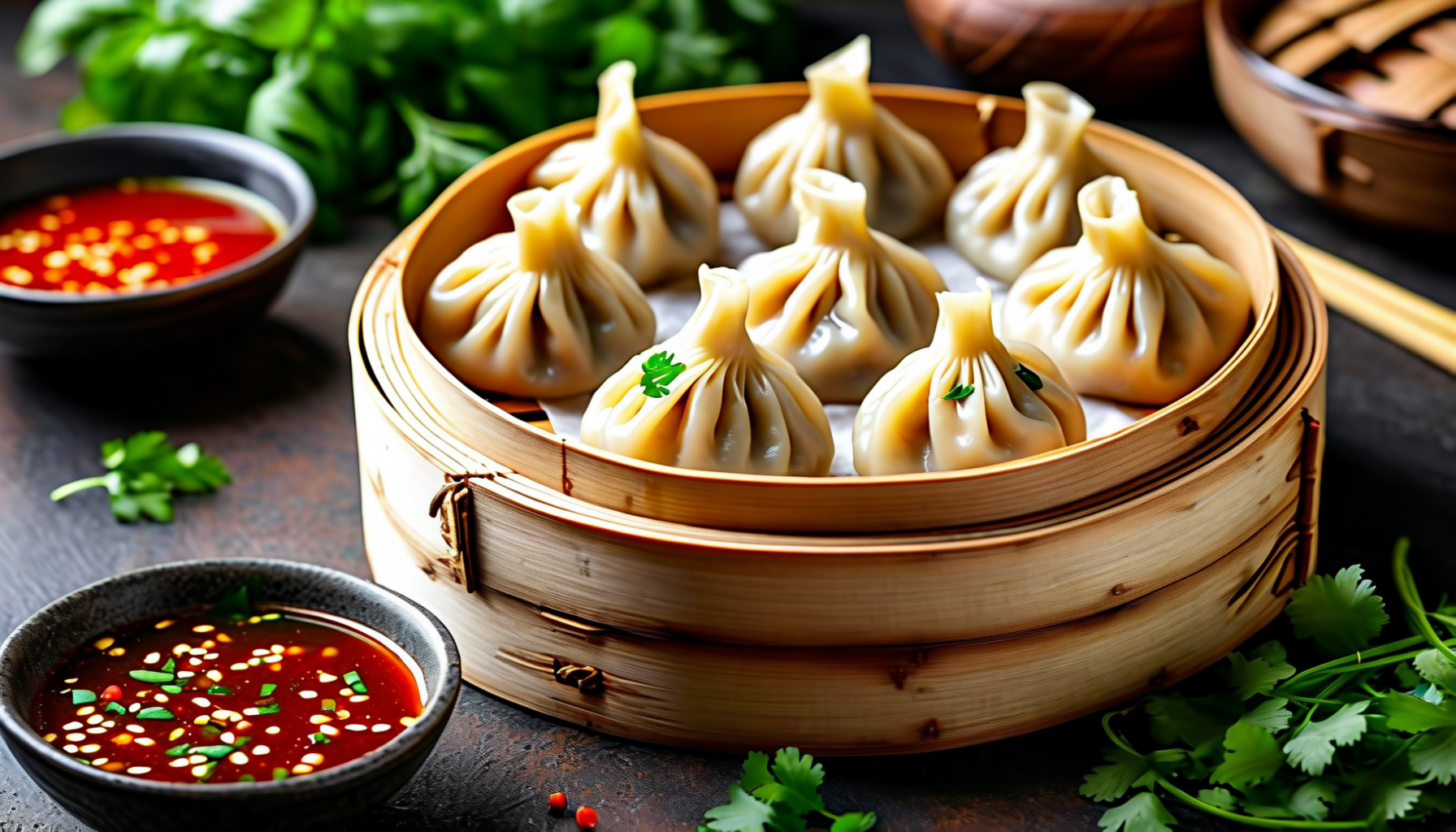
Tibetan-style dumplings filled with seasoned pork, beef, or cheese.
Ingredients: 240g flour, water for dough, 200g minced pork or beef, 1 onion (minced), ginger, garlic, soy sauce, cilantro, chili dipping sauce.
Preparation: Make soft dough and rest 30 minutes. Mix meat with onion, ginger, garlic, chopped cilantro, and soy sauce. Roll thin circles, fill, pleat and seal into crescent shapes. Steam for 15 minutes. Serve with spicy ezay (chili dipping sauce).
💡 The pleating technique takes practice—start with simple half-moons!
Red Rice with Shakam Paa
Bhutanese Dried Beef with Red Rice
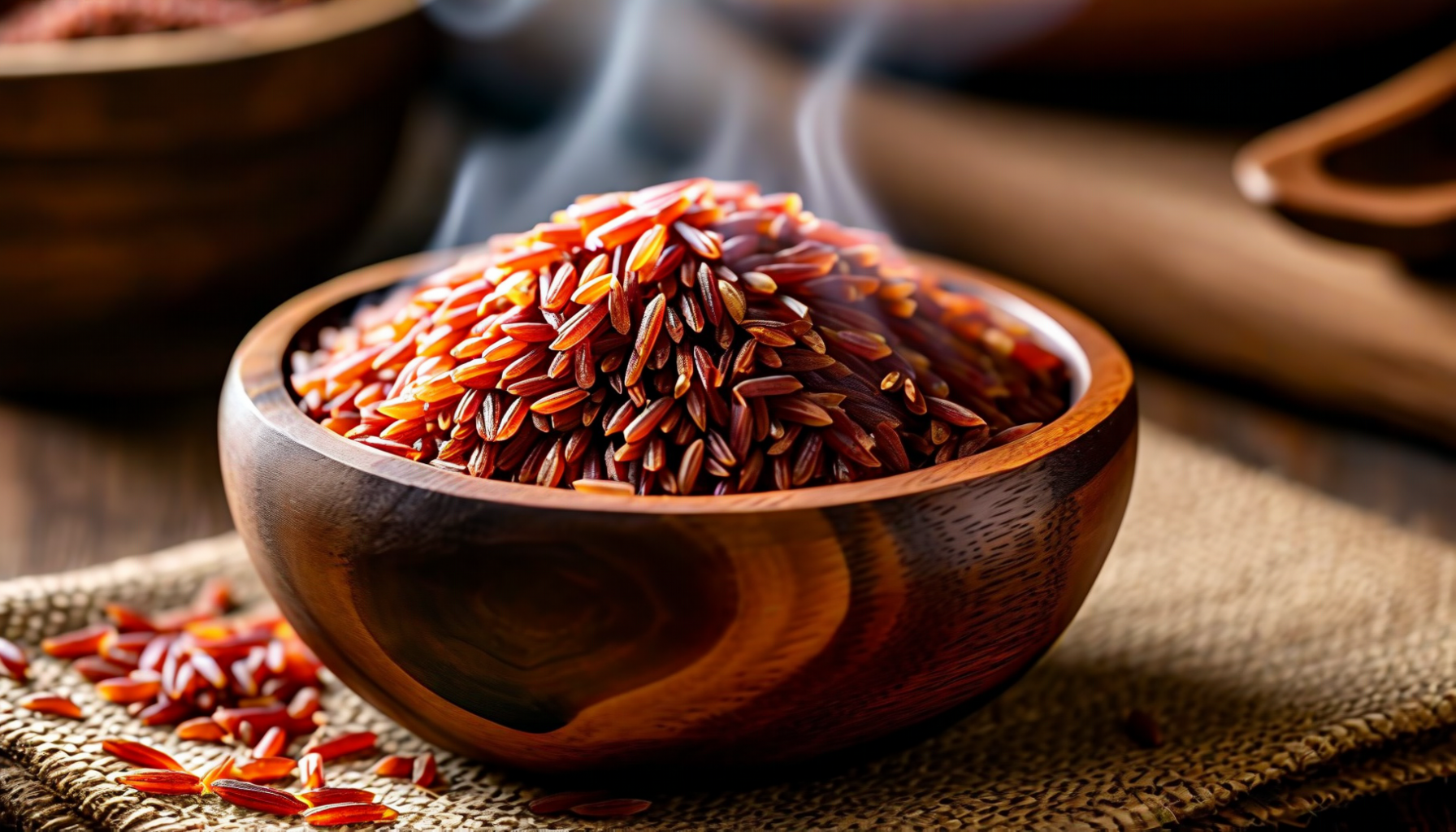
Nutty Bhutanese red rice paired with strips of dried beef, chilies, and cheese.
Ingredients: 240g Bhutanese red rice, 480ml water, salt, 200g dried beef (shakam), dried chilies, 100g cheese, butter, radish slices.
Preparation: Rinse rice well, bring water to boil with salt, add rice and simmer covered for 25 minutes. Meanwhile, soak dried beef, then sauté with butter, chilies, and radish. Crumble in cheese. Serve beef over fluffy red rice.
💡 Red rice takes longer than white—patience rewards with a beautiful nutty flavor.
🍷 Wine, Spirits & Drinking Culture
Bhutan is the world's newest wine-producing country. The Bhutan Wine Company, founded in 2019 with American winemaking partners, planted vineyards between roughly 1,200 and 2,700 metres and released the first wine ever made in the kingdom in October 2024 — a commemorative blend of six red and four white grapes from four vineyards, sold under the label Ser Kem ("an alcoholic offering to the gods"). Bonhams auctioned the historic First Barrel bottles in April 2025, one Himalayan-format bottle fetching $18,750. The 2024 vintage brought the first genuinely commercial releases: an off-dry Riesling, a dry Sauvignon Blanc, a Chenin Blanc, a Chenin/Chardonnay blend, a Traminette and a Syrah rosé. Production is still measured in thousands of bottles, so a glass in Thimphu is a lucky find rather than a menu staple.
Everything else in the Bhutanese glass is far older. Ara (a traditional distilled spirit made from rice, maize, millet, or wheat) is the kingdom's most important traditional beverage — consumed at festivals, religious ceremonies, and social gatherings. It ranges from mild to powerful depending on the distiller, and is often served warm with a knob of butter or a fried egg stirred in.
Bangchang (fermented rice beer) and singchang (fermented millet or barley beer) are widely consumed in rural areas. Druk 11000 and Red Panda are the local commercial beers, both surprisingly good. Butter tea (suja, made with yak butter and salt) is the daily staple consumed throughout the day, offering warmth and calories at altitude.
Bhutan's emphasis on Gross National Happiness extends to a measured approach to alcohol—regulations limit advertising and availability, and drinking is generally moderate. However, at festivals and celebrations, ara flows freely with heartfelt toasts.
🏆 Kaufmann Wine Score — Bhutan
Rated on four criteria: Aroma (/25), Taste (/30), Finish (/20), Value (/25) — Total /100. The world's youngest wine industry: every bottle below comes from the Bhutan Wine Company, whose vineyards climb to roughly 2,700 m in the Himalayas.
| Wine | 🔴 Aroma | 🟡 Taste | 🟢 Finish | 🔵 Value | Total |
|---|---|---|---|---|---|
| Ser Kem Riesling 2024 — off-dry, single varietal | 22 | 26 | 17 | 19 | 84 |
| Ser Kem "First Barrel" Red Blend 2023 — six red varieties, four vineyards | 22 | 26 | 17 | 18 | 83 |
| Ser Kem Chenin Blanc 2024 — first commercial release | 21 | 25 | 16 | 20 | 82 |
| Ser Kem Syrah Rosé 2024 | 21 | 25 | 16 | 20 | 82 |
| Ser Kem Sauvignon Blanc 2024 — dry | 20 | 24 | 15 | 19 | 78 |
95–100 Legendary · 90–94 Outstanding · 85–89 Very Good · 80–84 Good · 75–79 Average · <75 Below Average
Scores reflect bottles from the 2023 and 2024 vintages. Volumes are tiny and prices are collector-driven, which is what holds the Value column down — not the winemaking.
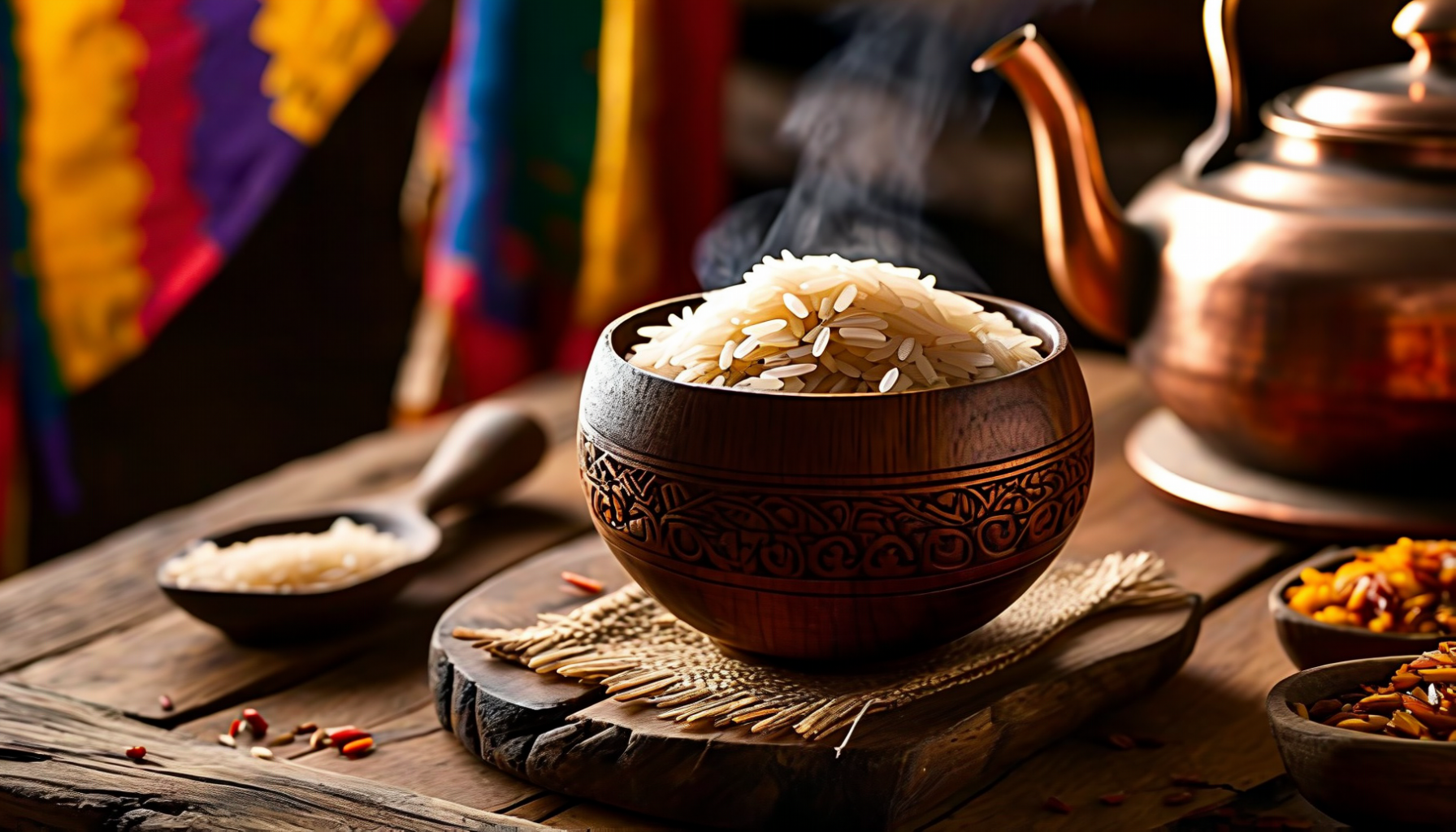
Ara — The Spirit of the Mountains
Traditional distilled rice spirit served warm at festivals and gatherings
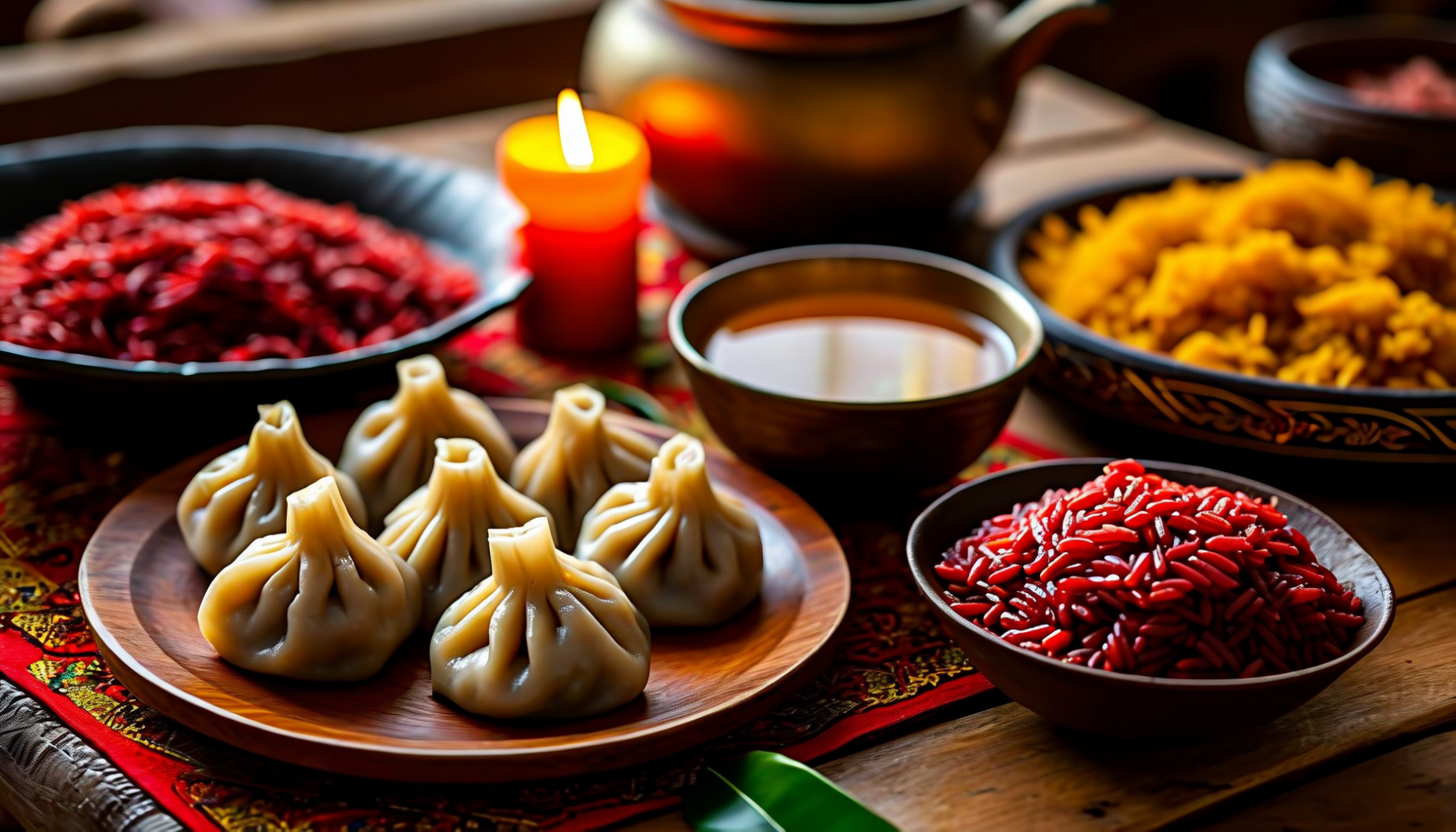
A Traditional Bhutanese Feast
Ema datshi, red rice, momos, and butter tea — the soul of Bhutanese cuisine
🌡️ Climate & Best Time to Visit
Bhutan's climate varies dramatically with altitude. The southern plains are subtropical and hot (up to 40°C in summer), central valleys enjoy temperate seasons (15–25°C in summer, 0–10°C in winter), while the alpine north is cold year-round with heavy snowfall above 4,000 meters.
Best time to visit: Spring (March–May) brings blooming rhododendrons and clear skies. Autumn (September–November) offers the best mountain visibility and pleasant temperatures. Monsoon (June–August) brings heavy rain to central valleys. Winter (December–February) is cold but offers clear skies and fewer tourists—ideal for valley visits.
Festival seasons: The major tshechus fall in spring (Paro Tshechu) and autumn (Thimphu Tshechu), making these the peak tourist seasons — the SDF is a flat rate year-round, but Drukair seats and the better hotels sell out months ahead.
✈️ How to Get There
By Air: Paro Airport (PBH) is Bhutan's only international airport, served by Drukair and Bhutan Airlines with flights from Delhi, Kolkata, Kathmandu, Bangkok, Singapore, and Dhaka. The approach through narrow Himalayan valleys is legendary—only a handful of pilots worldwide are certified for it. Domestic flights connect Paro to Bumthang, Gelephu, and Yongphulla.
By Land: Entry points exist at Phuentsholing (from India's West Bengal) and Samdrup Jongkhar (from Assam). Indian nationals can enter with a passport or voter ID; all others need a visa, which since the 2022 reform can be applied for online without a tour operator. Independent travellers can book their own hotels, but a licensed guide is required for travel beyond Thimphu and Paro and on all treks. The Sustainable Development Fee is USD 100 per person per night for international visitors (INR 1,200 for Indian nationals; USD 15 for the first 15,000 Bangladeshis a year), children aged 6–12 pay half and under-6s are exempt; Indian day-trippers to the border towns are exempt for stays under 24 hours. A 5% GST, in force since 1 January 2026, is added to hotels, guides, transport and meals on top of the SDF. Gelephu International Airport, the kingdom's second international gateway, broke ground on 8 July 2025 and is scheduled to open in December 2029.
📋 Practical Information
Visa: Required for all except Indian, Bangladeshi and Maldivian nationals. Apply online through the Department of Immigration portal (or let a licensed operator do it); the $40 visa fee is one-off and separate from the Sustainable Development Fee of USD 100 per person per night (INR 1,200 for Indian nationals; half price ages 6–12, free under 6). The $100 rate is a policy discount off the statutory $200 and is fixed through 31 August 2027. Currency: Bhutanese Ngultrum (BTN), pegged 1:1 to Indian Rupee. Indian Rupees widely accepted. ATMs in Thimphu and Paro; cash essential elsewhere.
Communications: TashiCell and B-Mobile provide coverage in valleys and towns. Internet available in hotels and cafes in Thimphu and Paro. Altitude ranges from 200m to 7,570m—acclimatization needed for high passes. Health: No special vaccinations required, but altitude sickness possible above 3,000m. Free healthcare at hospitals in Thimphu; basic clinics in district towns.
💰 Cost of Living
Bhutan is not a budget destination due to the mandatory USD 100-per-night Sustainable Development Fee for international tourists (the statutory $200 rate is discounted through 31 August 2027), plus the 5% GST added in January 2026. However, this fee supports free healthcare, education, and environmental conservation for Bhutanese citizens. Beyond the SDF, prices for food and accommodation are moderate by Asian standards.
🏨 Accommodation
Accommodation ranges from simple guesthouses ($30–50) to world-class luxury lodges operated by Amankora, Six Senses, and Como ($800–2,000+/night). Most tourists stay in comfortable 3-star hotels ($80–150) arranged through their tour operator. Farmhouse homestays offer authentic experiences in rural valleys—sleeping on traditional mattresses, sharing meals with families, and waking to mountain views.
Thimphu: Hotel Druk ($80–120), Terma Linca ($150–250), Taj Tashi ($200–400). Paro: Gangtey Palace ($100–180), Uma by COMO ($300–600), Tiger's Nest Resort ($120–200). Punakha: Meri Puensum Resort ($80–150), Dhensa Boutique Resort ($200–350).
🎭 Festivals & Events
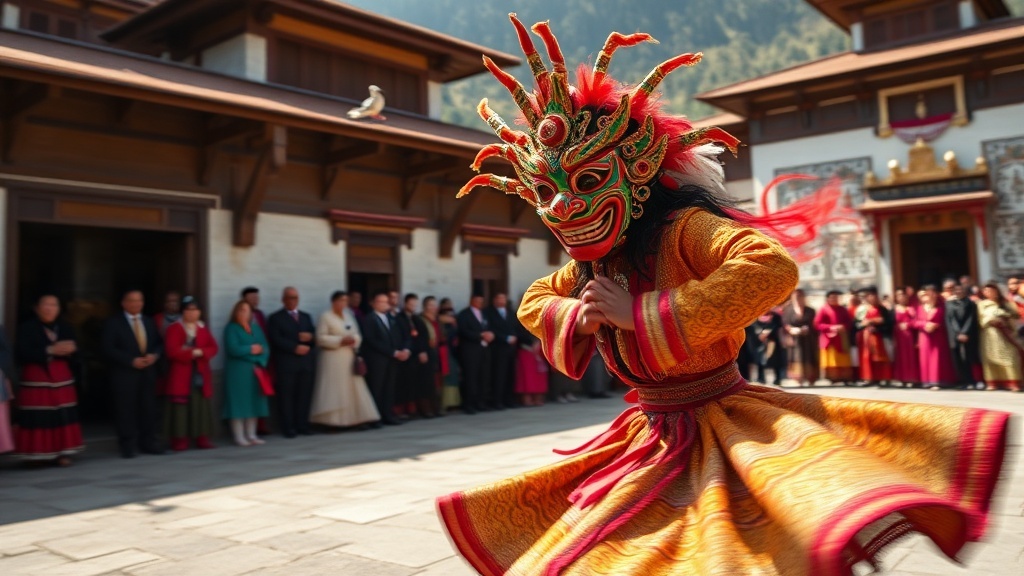
Tshechus are the highlight of Bhutanese culture—multi-day religious festivals held at dzongs across the country featuring sacred masked dances (cham) performed by monks. The Paro Tshechu (spring) and Thimphu Tshechu (autumn) are the most spectacular, attracting Bhutanese in their finest traditional dress.
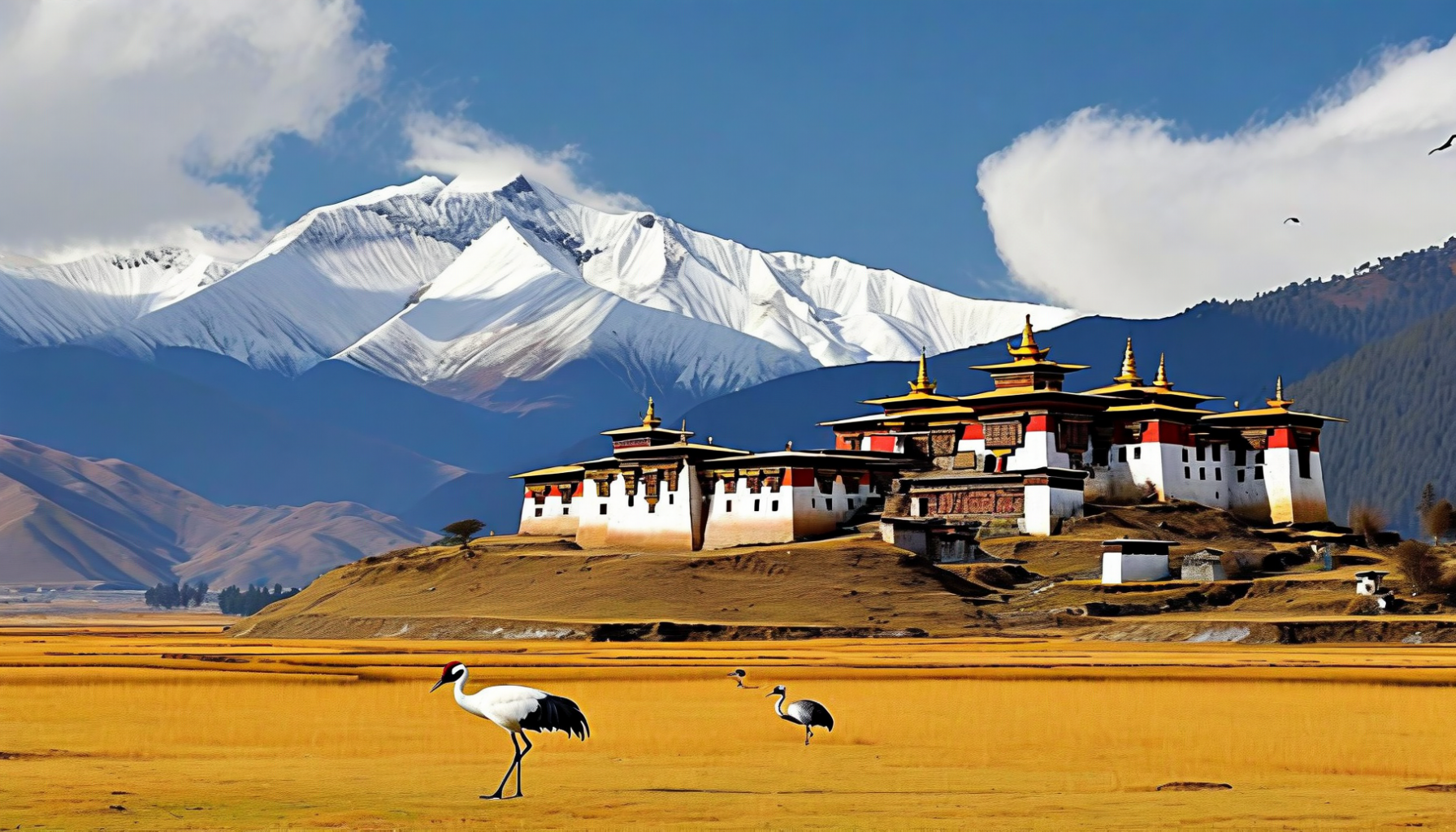
Other celebrations: Punakha Drubchen (reenactment of a 17th-century battle), Jambay Lhakhang Drup (featuring the famous naked fire dance), and Black-Necked Crane Festival in Gangtey Valley (November) celebrating the arrival of endangered cranes from Tibet.
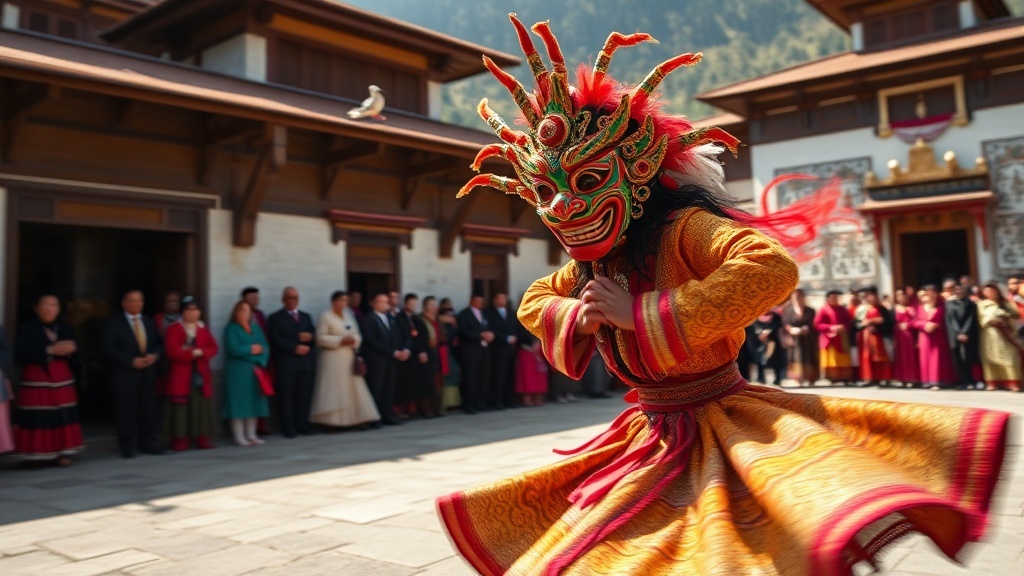
Sacred Masked Dances at a Tshechu Festival
Centuries-old rituals performed in the courtyards of ancient dzongs
🏛️ UNESCO Heritage
Bhutan currently has no inscribed UNESCO World Heritage Sites, but maintains eight sites on the Tentative List awaiting formal nomination, plus one element on the UNESCO Intangible Cultural Heritage List: the Mask Dance of the Drums from Drametse. Each tentative site below was officially submitted by the Royal Government of Bhutan.
1. The Great Dzongs of Bhutan
Five fortress-monasteries — Punakha, Wangdue Phodrang, Paro (Rinpung), Trongsa, and Dagana Dzongs — submitted as a serial nomination representing the unique Bhutanese tradition of dzongs as combined centres of temporal administration and Buddhist monasticism. Built between the 16th and 17th centuries by Zhabdrung Ngawang Namgyal and his successors, they remain functioning seats of district government and religious authority.
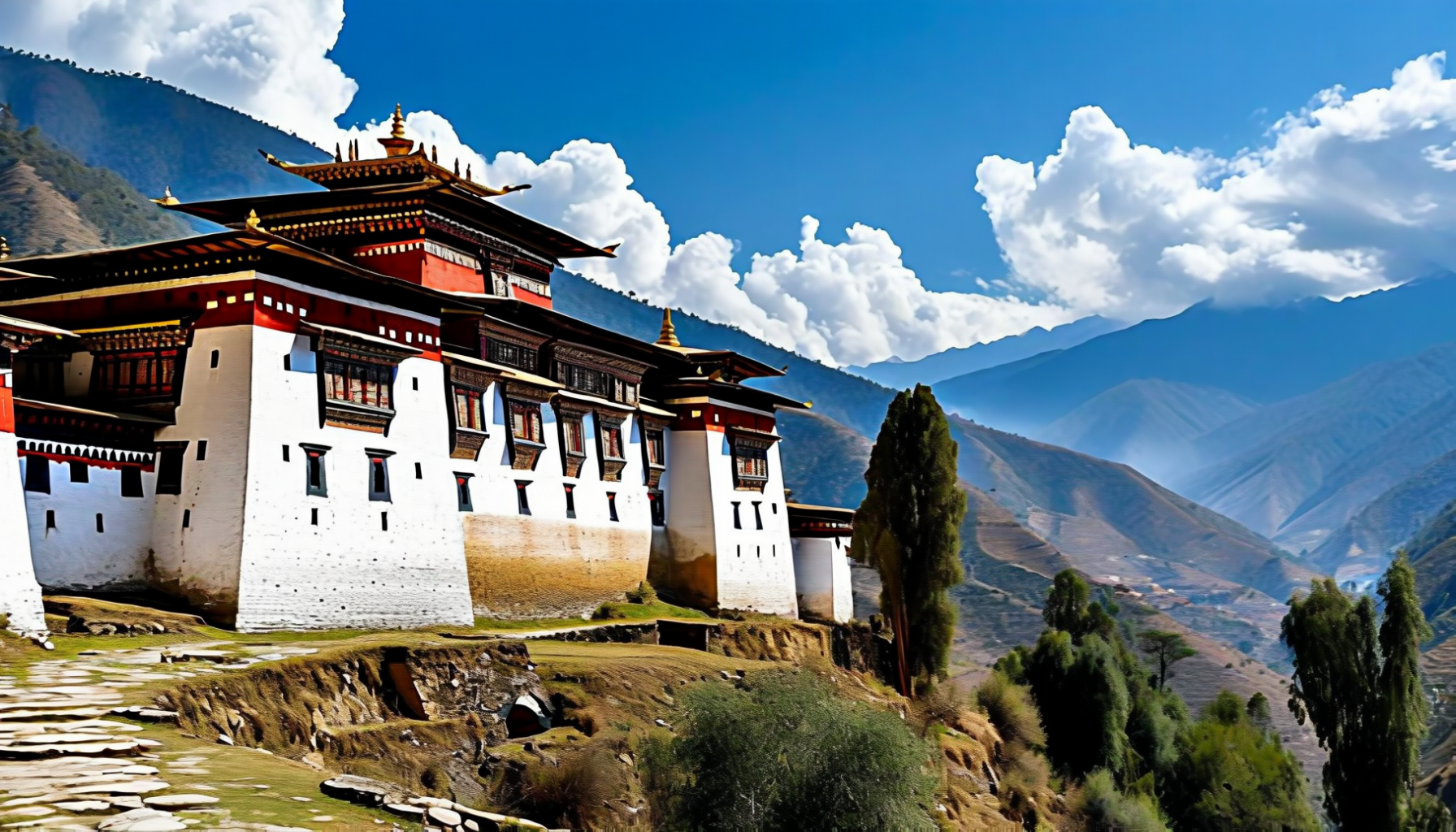
Wangdue Phodrang Dzong
One of the five great dzongs proposed for inscription
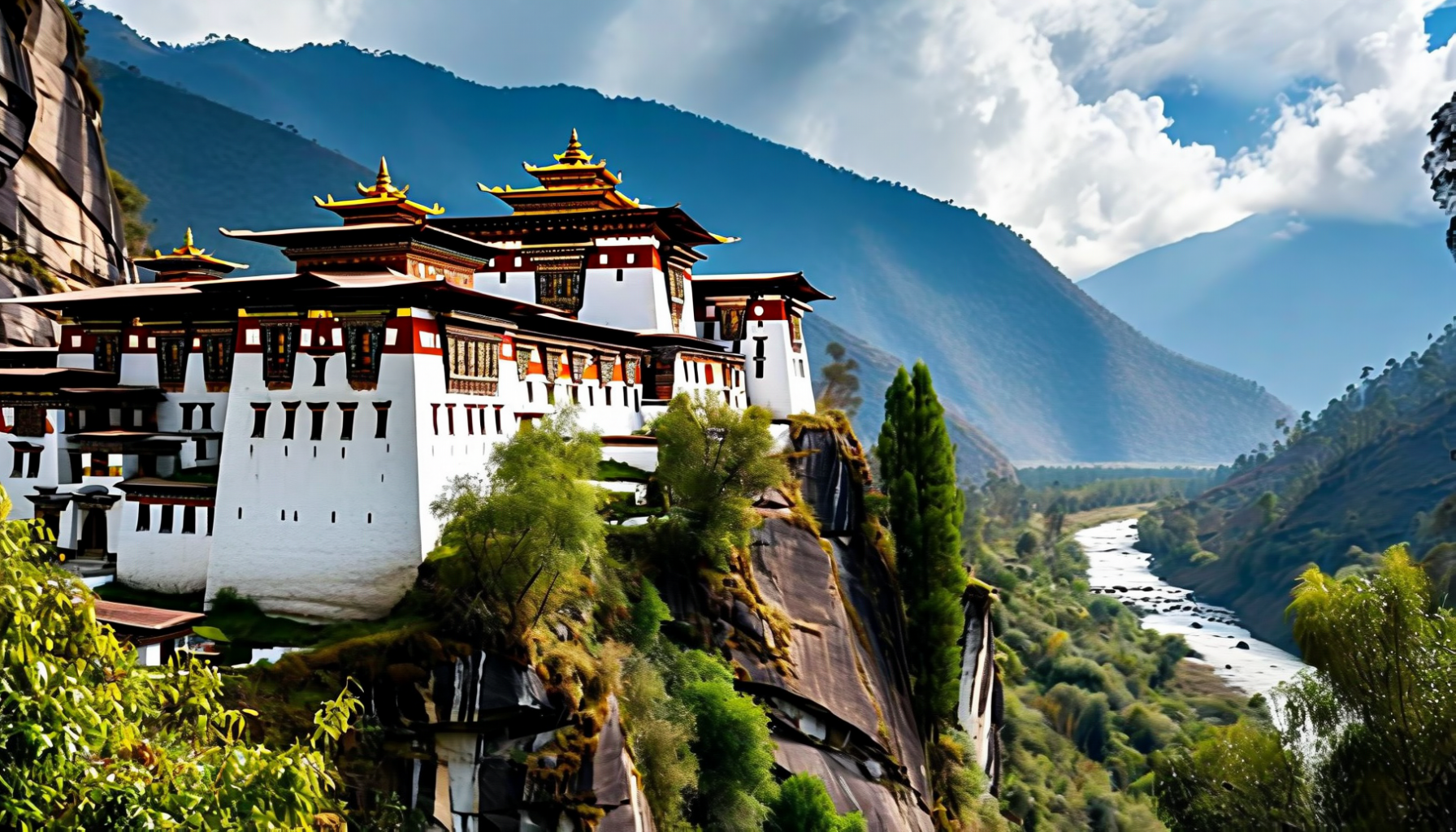
Trongsa Dzong
The ancestral seat of Bhutan's royal Wangchuck dynasty
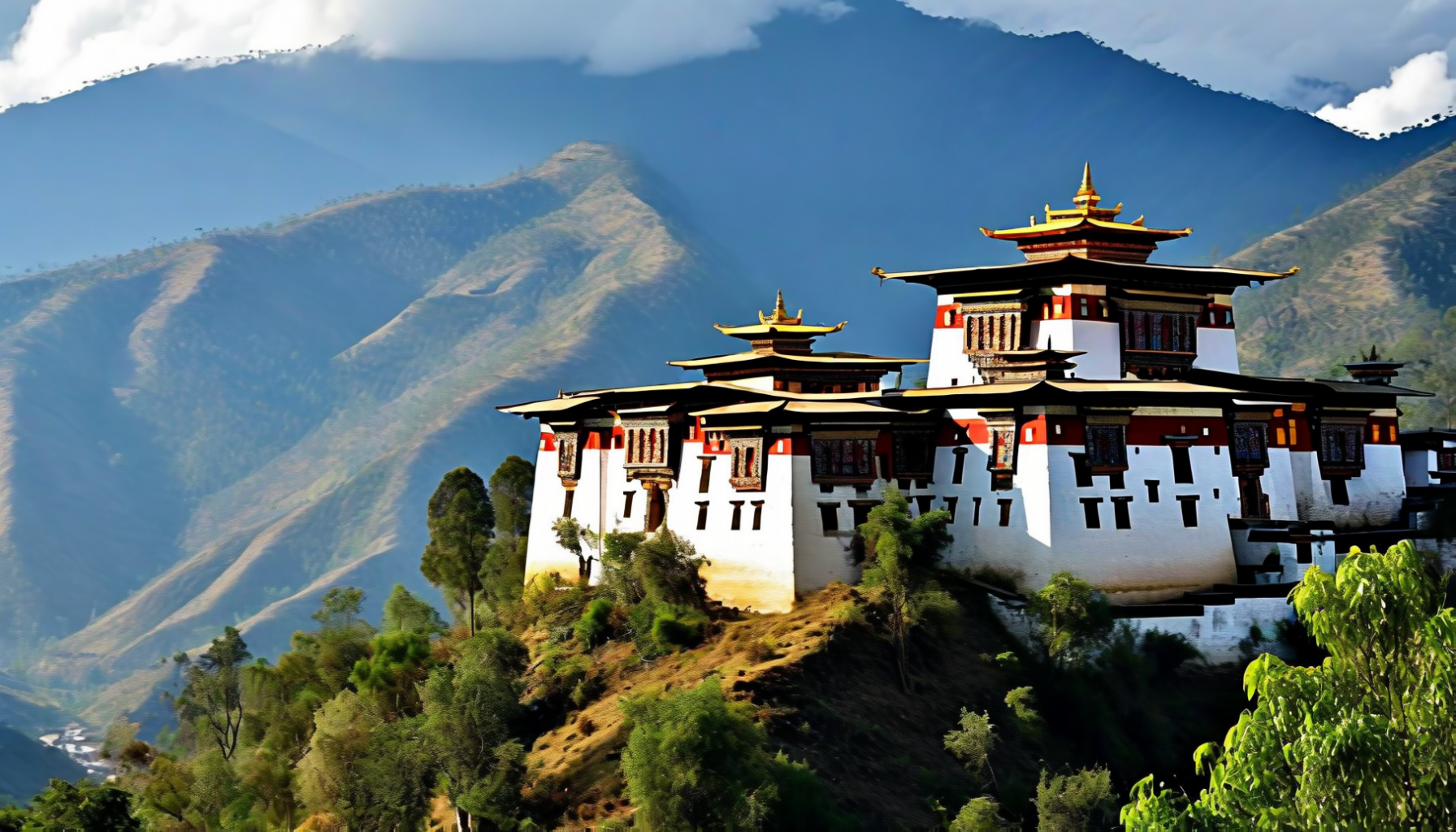
Dagana Dzong
17th-century fortress monastery in southern Bhutan
2. Ancient Ruin of Drukgyel Dzong
The "Fortress of the Victorious Druk", built in 1649 to commemorate Bhutan's victory over invading Tibetan forces, dominates the upper Paro Valley on the route to Tibet. Largely destroyed by fire in 1951, the romantic ruins are currently undergoing reconstruction. Its strategic position guarding a key Himalayan pass and its symbolic role in Bhutanese national identity make it a candidate for inscription.
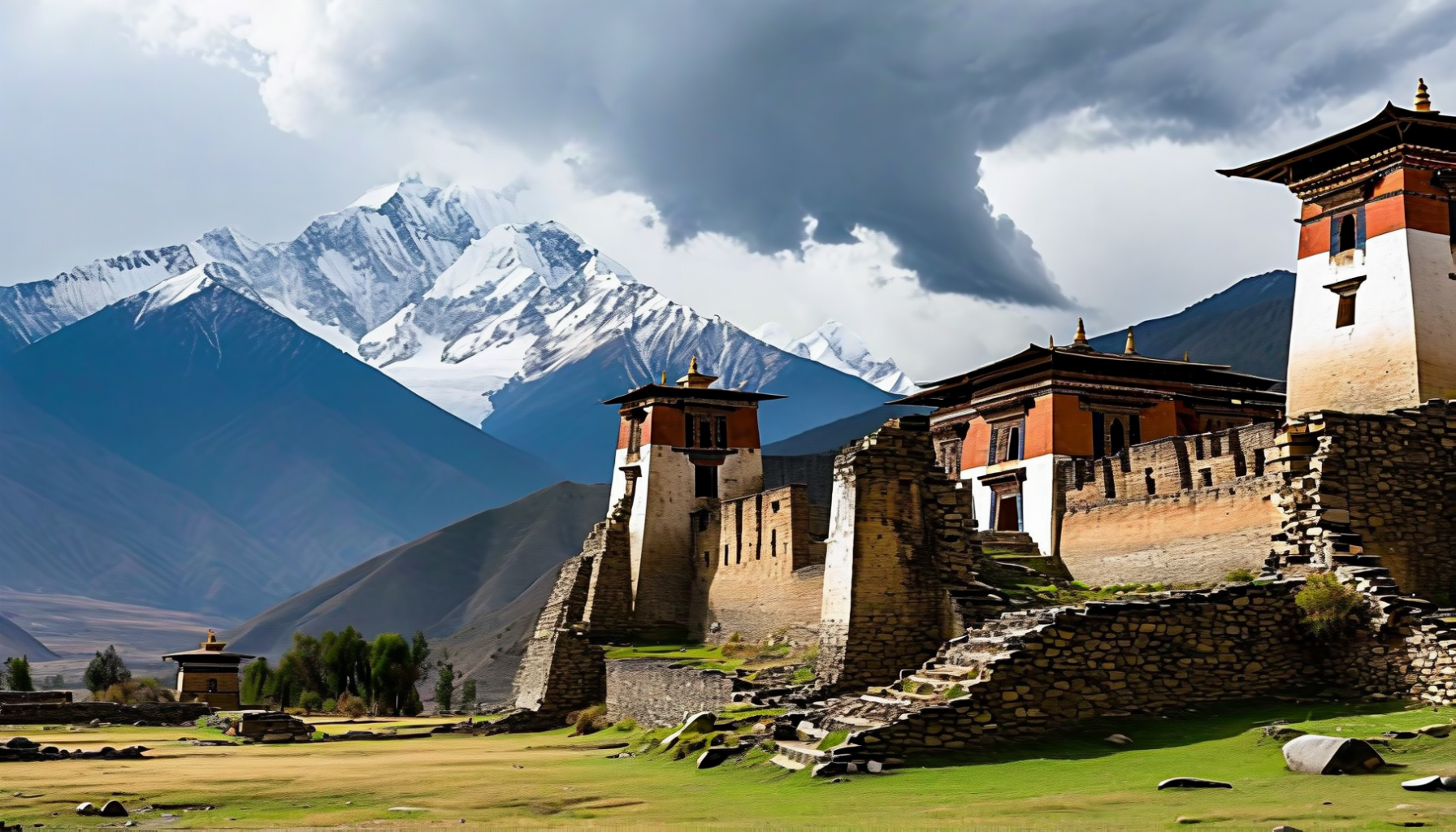
Drukgyel Dzong
The Fortress of the Victorious Druk, guarding the road to Tibet
3. Sacred Sites associated with Phajo Drugom Zhigpo and his Descendants
A network of temples and meditation caves linked to the 13th-century Tibetan saint Phajo Drugom Zhigpo, who introduced the Drukpa Kagyu school of Buddhism to Bhutan. These sites form the spiritual foundation of Bhutan's dominant Buddhist lineage and remain active pilgrimage destinations.
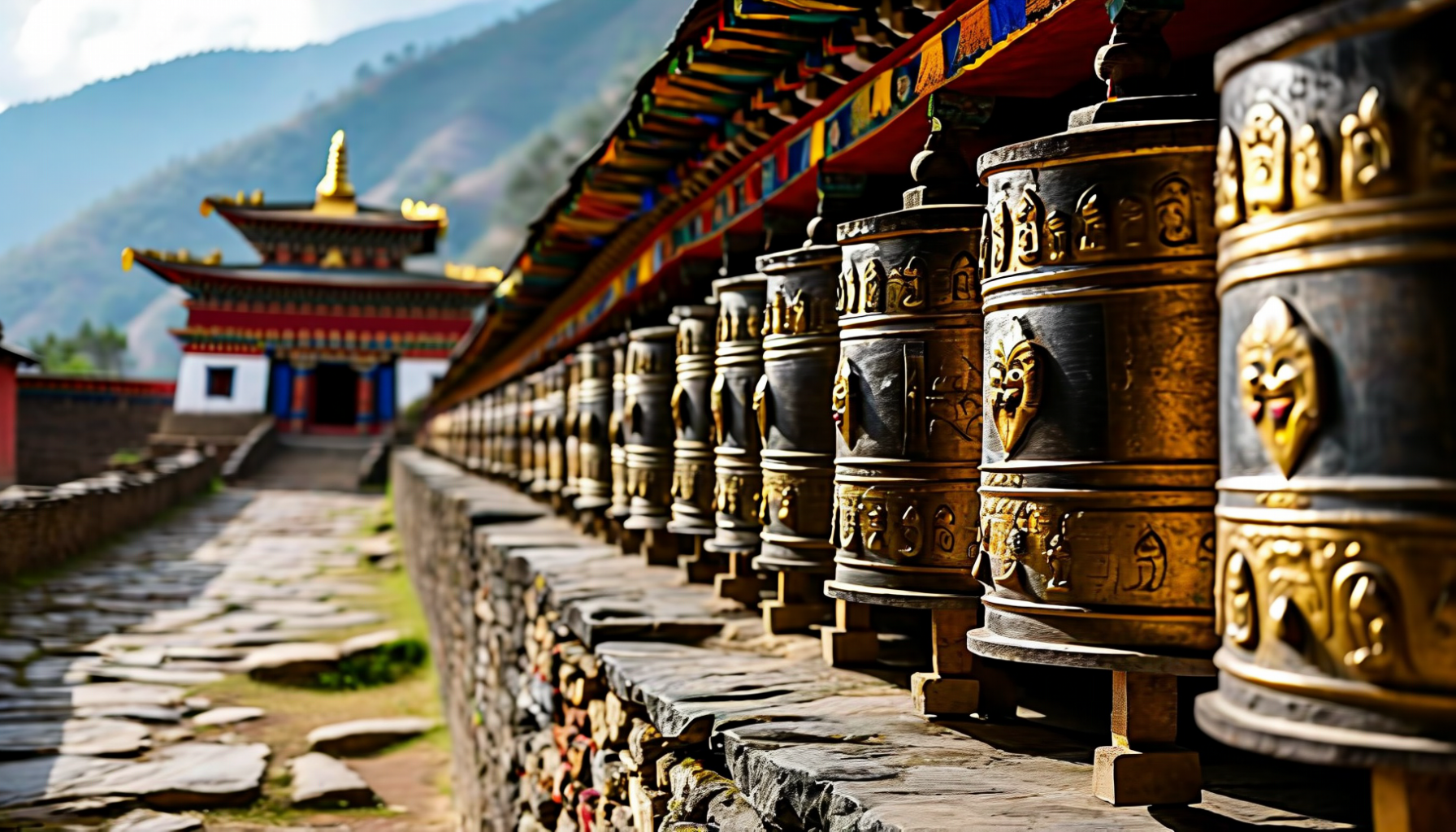
Sacred Sites of Phajo Drugom Zhigpo
13th-century cradle of Bhutan's Drukpa Kagyu Buddhism
4. Tamzhing Lhundrup Choling Monastery
Founded in 1501 by the great treasure-revealer (terton) Pema Lingpa in the Bumthang Valley, Tamzhing preserves some of the oldest Buddhist murals in the kingdom, painted by Pema Lingpa himself, and houses a famous heavy chain-mail garment said to have been forged by the saint as an act of penance.
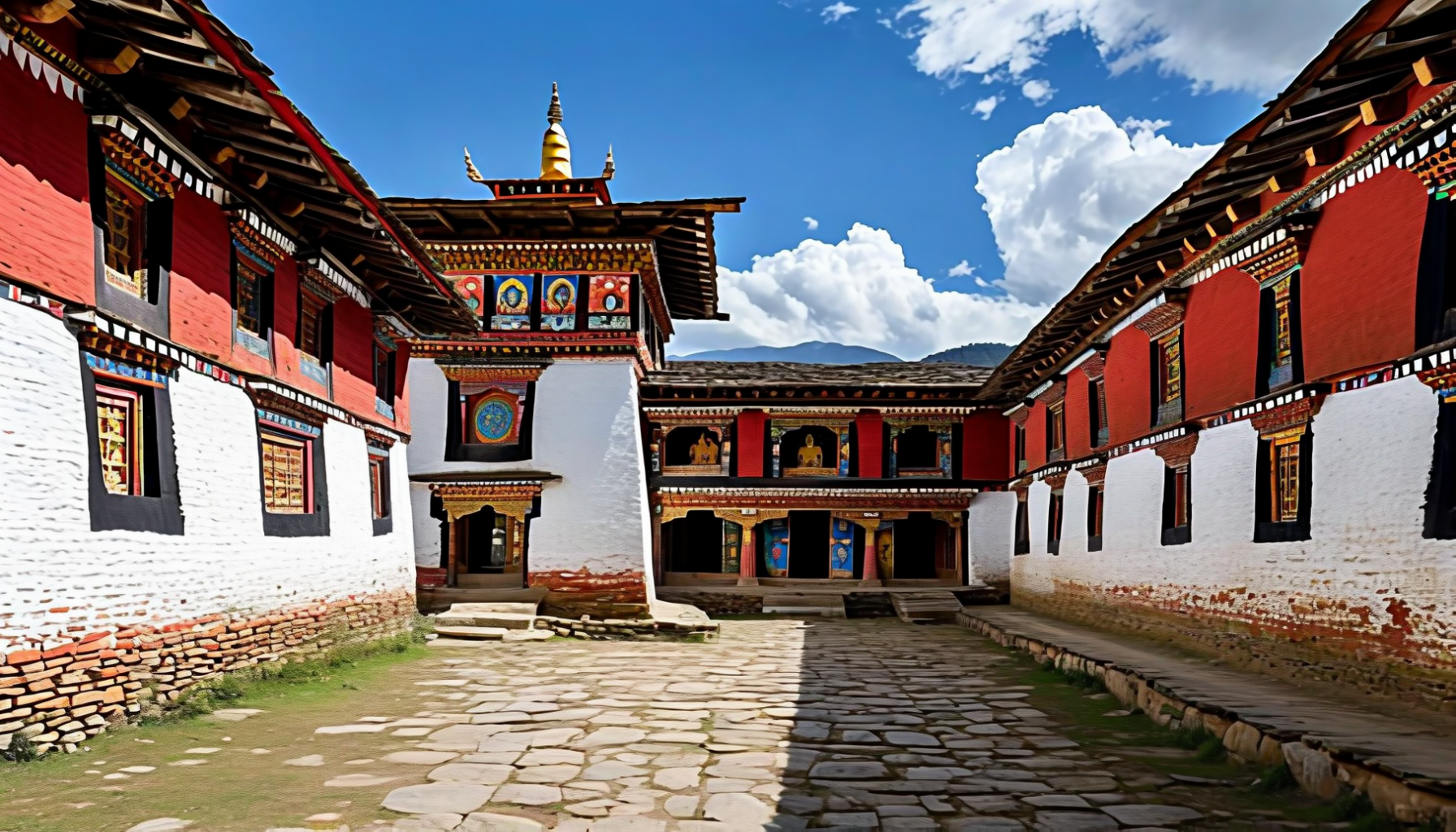
Tamzhing Monastery
16th-century monastery of the treasure-revealer Pema Lingpa
5. Jigme Dorji National Park
Bhutan's second-largest protected area (4,316 km²) spanning subtropical forests to permanent ice fields above 7,000 m. Home to the snow leopard, Bengal tiger, takin (Bhutan's national animal), red panda, and over 300 bird species. The park also protects sacred peaks including Jomolhari and Jichu Drake.
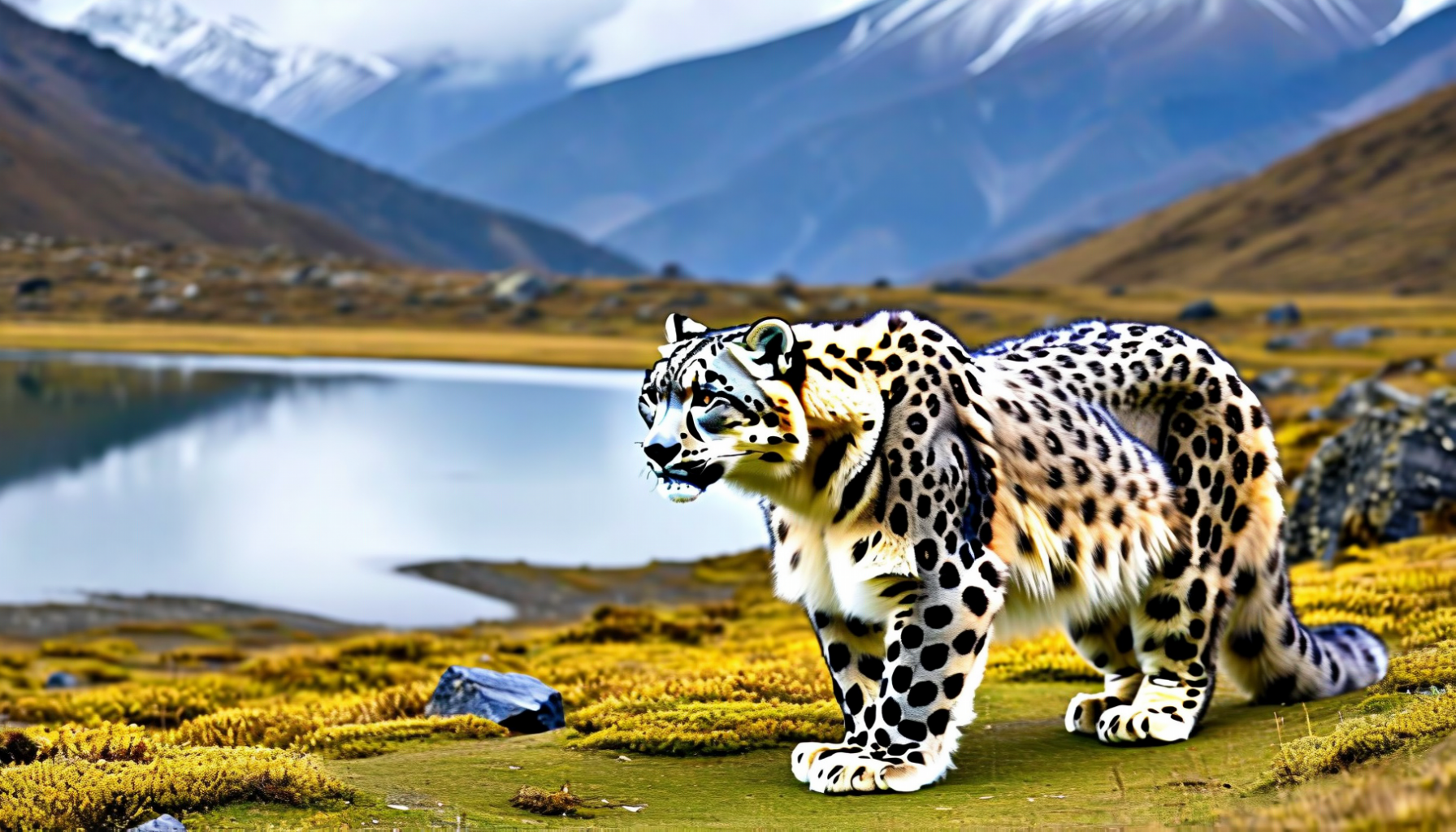
Jigme Dorji National Park
Snow leopards, takins, and sacred Himalayan peaks
6. Royal Manas National Park
Bhutan's oldest national park (1,057 km²), contiguous with India's Manas Tiger Reserve, protects subtropical jungle home to Bengal tigers, Asian elephants, gaur, golden langurs, and the rare pygmy hog. A critical biodiversity corridor in the Eastern Himalayas.
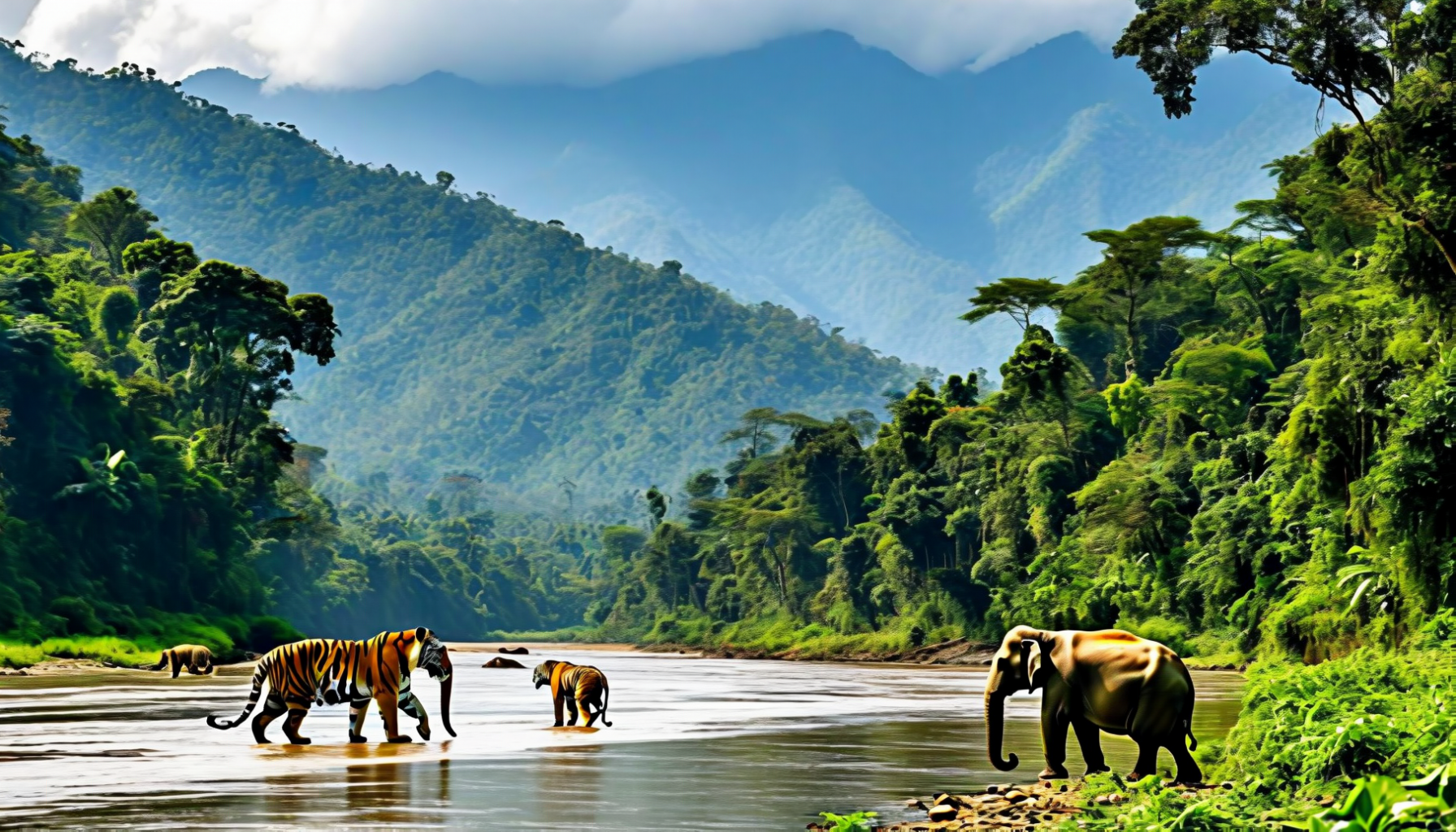
Royal Manas National Park
Tigers and elephants in Bhutan's oldest protected jungle
7. Sakteng Wildlife Sanctuary
A 740 km² sanctuary in far-eastern Bhutan, home to the semi-nomadic Brokpa yak herders of Merak and Sakteng, alpine meadows, and the largest blooming rhododendron forests in the country. Famously also designated as habitat for the migoi — the Bhutanese yeti.
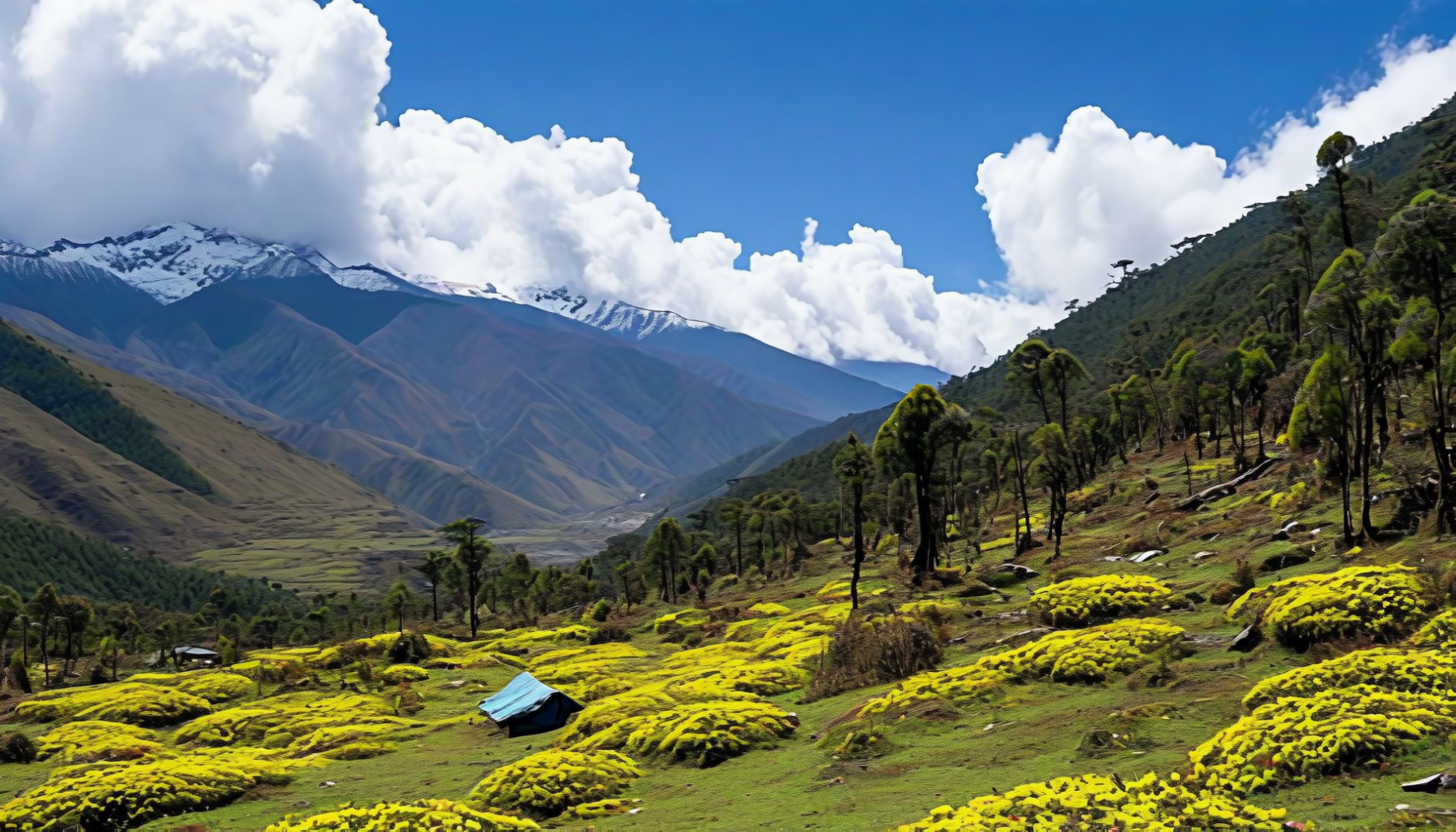
Sakteng Wildlife Sanctuary
Land of the Brokpa nomads — and reputedly of the migoi
8. Bumdelling Wildlife Sanctuary
A 1,520 km² sanctuary in north-eastern Bhutan and the most important wintering ground for the endangered black-necked crane after Phobjikha. It also protects red panda, snow leopard, and the source watershed of the Kulong Chhu river.
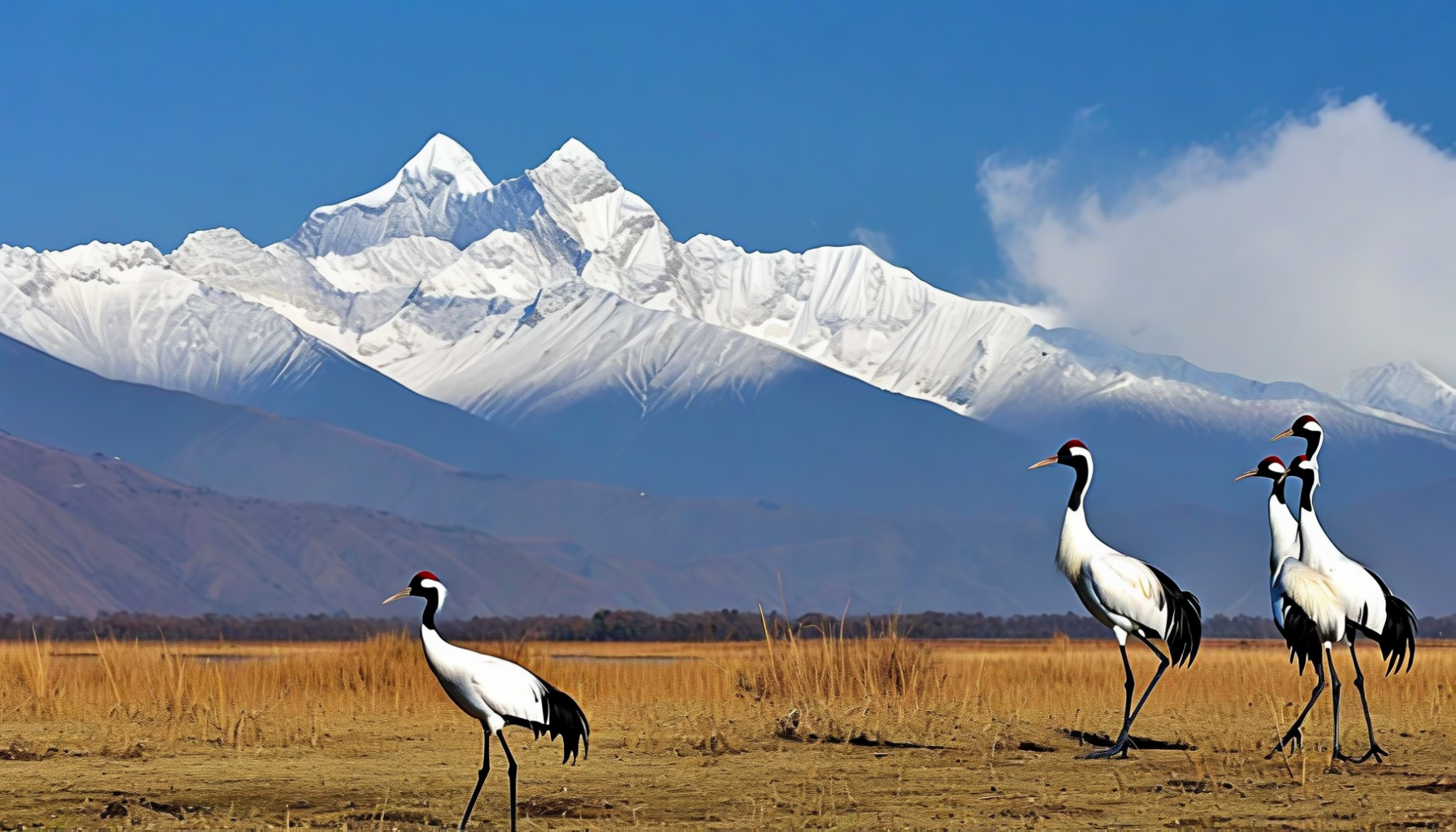
Bumdelling Wildlife Sanctuary
Winter refuge of the sacred black-necked crane
Many argue that all of Bhutan itself deserves World Heritage status — a country that constitutionally protects 60% forest cover, measures success by Gross National Happiness, and maintains living cultural traditions unchanged for centuries.
🎒 Packing Tips
Essential: Valid passport (6+ months validity), printed visa clearance, cash in USD or Indian Rupees (BTN available at hotels and banks), travel insurance with evacuation coverage, altitude medication (Diamox if prone to altitude sickness).
Clothing: Layers are essential (valley warmth to mountain cold within hours), sturdy hiking boots for Tiger's Nest, rain jacket, warm fleece for evenings, modest clothing for dzong visits (long sleeves, covered legs mandatory). Health: Sunscreen (high altitude UV), lip balm, insect repellent, basic first aid, any prescription medications.
What NOT to bring: Large quantities of tobacco (the 2004 sales ban was lifted in July 2021 and cigarettes are now sold legally, but personal imports remain quantity-limited and smoking is banned in public places), plastic bags (banned since 2019), drone (strictly regulated), expectations of WiFi reliability outside Thimphu and Paro.
🌐 Useful Resources
Official: Department of Tourism (formerly the Tourism Council of Bhutan) for visa applications and SDF payment. Department of Immigration for visa status. US citizens consult travel.state.gov for the latest advisories.
Tour Operators: A packaged tour is no longer compulsory, but most visitors still use a licensed Bhutanese operator for guides, permits and transport. Reputable agencies include Bhutan Travel Club, Druk Asia, and Wind Horse Tours. Maps: Maps.me (works offline—essential in Bhutan), Google Maps (download offline area maps before your trip).
Online: Wikivoyage: Bhutan, Lonely Planet Bhutan, r/bhutan (Reddit). News: Kuensel (Bhutan's national newspaper), BBS (Bhutan Broadcasting Service).
📚 Recommended Reading
Non-Fiction: "The Geography of Bliss" by Eric Weiner — includes an insightful chapter on Bhutan. "Beyond the Sky and Earth: A Journey into Bhutan" by Jamie Zeppa — a Canadian teacher's transformative years in rural Bhutan. "Bhutan: Land of the Thunder Dragon" by Françoise Pommaret — comprehensive cultural overview.
Fiction & Film: "The Cup" (Khyentse Norbu, 1999) — charming film about young monks desperate to watch the World Cup. "Travellers and Magicians" (Khyentse Norbu, 2003) — first feature film shot entirely in Bhutan. "Lunana: A Yak in the Classroom" (Pawo Choyning Dorji, 2019) — Bhutan's first Oscar nominee, filmed in the country's most remote village school. Photo Books: "Bhutan: A Visual Odyssey Across the Last Himalayan Kingdom" by Michael Hawley.
🎬 Videos
Explore Bhutan through these recommended videos and documentaries:
🎥 "The Happiest Country in the World" — National Geographic documentary exploring how Gross National Happiness shapes Bhutanese life, from dzong architecture to the ban on plastic bags.
🎥 "Tiger's Nest: Bhutan's Sacred Monastery" — Stunning aerial and hiking footage of the approach to Taktsang Monastery, with insights from resident monks.
🎥 "Landing at Paro Airport" — Cockpit footage of the famously challenging approach, threading through Himalayan peaks with only visual navigation allowed.
🤯 Fascinating Facts
🚫 No Traffic Lights
Thimphu is famous as a capital without a single traffic light — a distinction shared only with a few micro-state capitals, none of this size. A single traffic policeman directs cars at the main junction—a traffic light was once installed but removed because residents found it too impersonal.
🌲 Carbon Negative
Bhutan was the first country to declare itself carbon-negative, and remains one of only a handful (Suriname and Panama make the same claim). Its constitution mandates 60% forest cover, and its hydroelectric power exports offset more carbon than the nation produces.
📺 Last to Get TV
Bhutan was the last country in the world to introduce television, in 1999. The internet arrived the same year, leapfrogging the nation from medieval isolation to the digital age in a single step.
🏔️ Highest Unclimbed Peak
Gangkhar Puensum (7,570m) is the world's highest unclimbed mountain. Bhutan banned all mountaineering above 6,000 meters in 2003 out of respect for the spirits believed to inhabit the peaks.
🐉 Dragon on the Flag
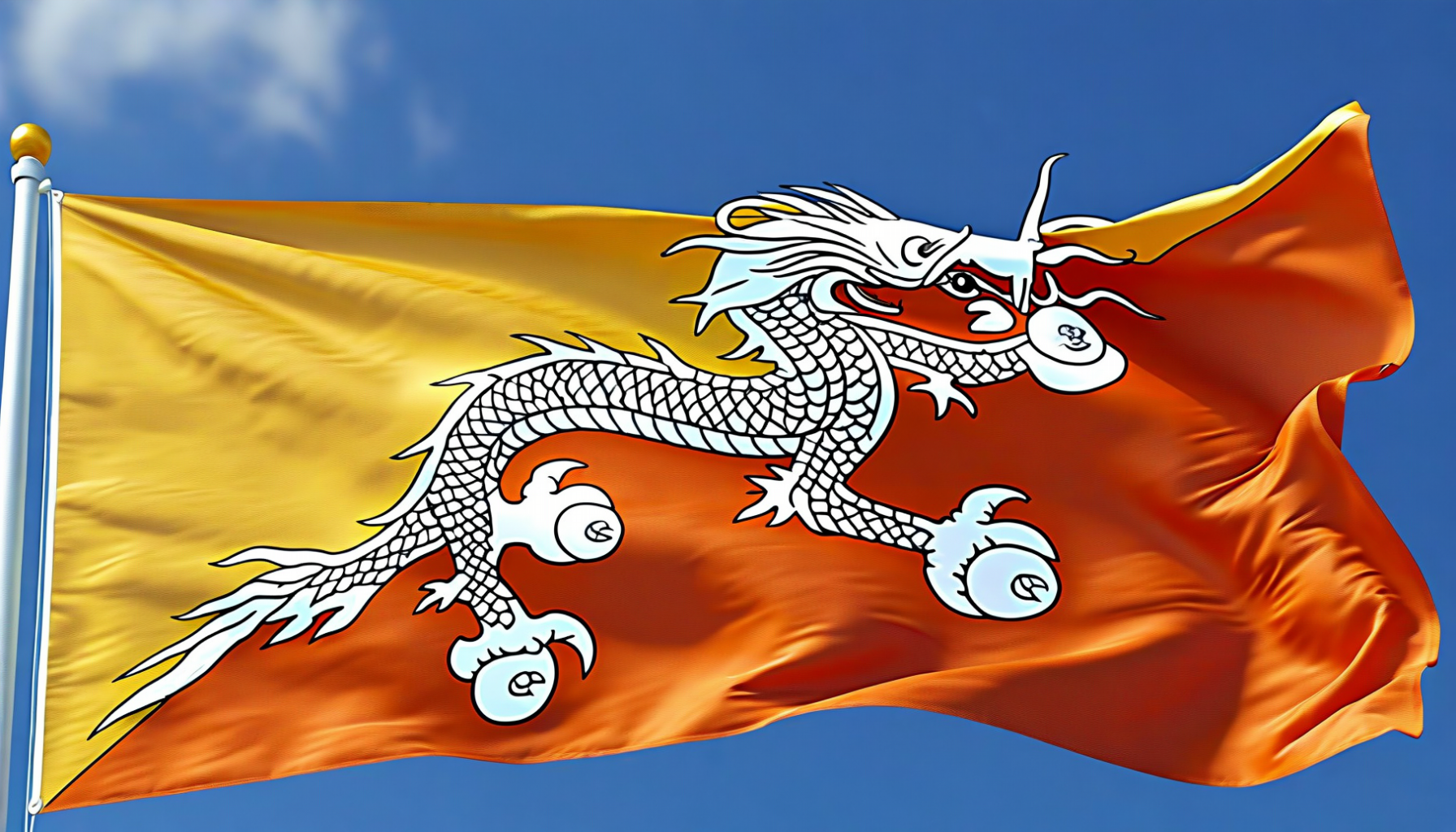
Bhutan's flag features Druk, the Thunder Dragon, holding jewels in its claws. The dragon's white color symbolizes purity, while the jewels represent the country's wealth. The saffron and orange halves represent temporal and spiritual authority.
⭐ Notable People
King Jigme Khesar Namgyel Wangchuck — The fifth and current Dragon King, educated at Oxford, known as the "People's King" for his accessibility and environmental advocacy. Jigme Singye Wangchuck — The fourth king who coined "Gross National Happiness" and voluntarily relinquished absolute power for democracy in 2008.
Khyentse Norbu (Dzongsar Jamyang Khyentse Rinpoche) — Buddhist lama and acclaimed filmmaker ("The Cup," "Travellers and Magicians"). Pema Lingpa (1450–1521) — The great "Treasure Revealer" of Tantric Buddhism, whose sacred dances are still performed at tshechus. Zhabdrung Ngawang Namgyal (1594–1651) — The great unifier of Bhutan who established the dzong system and dual governance. Pawo Choyning Dorji — Director of Lunana: A Yak in the Classroom, which in 2022 earned Bhutan its first Academy Award nomination (Best International Feature), and The Monk and the Gun (2023).
⚽ Sports
Archery (dha) is Bhutan's national sport and a source of fierce pride. Competitions are social events with dancing, singing, and elaborate celebrations for each bullseye. Traditional bamboo bows are being replaced by compound bows, but the passion remains unchanged.
Other popular sports include khuru (dart throwing), degor (similar to shot put), and increasingly, football and cricket. Bhutan's national football team gained fame as one of FIFA's lowest-ranked teams, yet attracts devoted supporters. In 2002, Bhutan played "The Other Final"—a match against Montserrat at Changlimithang Stadium in Thimphu on the same day as the World Cup Final, and won 4–0.
Bhutan has competed at every Summer Olympics since 1984 without yet winning a medal; at Paris 2024 it sent three athletes, in archery, athletics and swimming. Recent bright spots are on the women's side: the futsal team finished third at the 2026 SAFF Women's Futsal Championship, and Thimphu was scheduled to host the 2026 SAFF U-17 Women's Championship in May.
📰 Media & Press Freedom
Bhutan has a small but growing media landscape. Kuensel, founded in 1965, is the national newspaper, publishing in both Dzongkha and English. The Bhutan Broadcasting Service (BBS) operates television and radio. Several private newspapers emerged after democratization in 2008, including The Bhutanese and Bhutan Times.
Freedom House rates Bhutan as "Partly Free," and Reporters Without Borders placed it 150th of 180 in its 2026 World Press Freedom Index — up two places from a record-low 152nd in 2025, but a long fall from 33rd in 2021. While the constitution guarantees press freedom, media remains constrained by limited resources, small market size, and cultural norms of deference to authority. Social media (especially Facebook) has become an increasingly important platform for public discourse. Human Rights: Key concerns include the historical displacement of ethnic Nepali-speaking Lhotshampa communities in the 1990s, limited political opposition, and ongoing debates about balancing modernization with cultural preservation.
🏛️ Government & Politics
Bhutan is a constitutional monarchy and one of the world's youngest democracies. The head of state is King Jigme Khesar Namgyel Wangchuck, the fifth Druk Gyalpo (Dragon King), who ascended the throne in 2006 and was crowned in November 2008 — the same year his father, the fourth king, handed the country a written constitution and its first parliamentary elections. The king is married to Queen Jetsun Pema; the heir apparent is Crown Prince Jigme Namgyel Wangchuck, born in 2016.
Parliament is bicameral: the National Assembly (47 elected members) and the non-partisan National Council (25 members, 20 elected and 5 appointed by the king). In the January 2024 general election the People's Democratic Party (PDP) won 30 of 47 seats against 17 for the Bhutan Tendrel Party (BTP), and Tshering Tobgay was sworn in as prime minister on 28 January 2024 — his second term, after 2013–2018. The government's second half has been bumpier: in August 2026 Speaker Lungten Dorji resigned to join the cabinet as Home Minister, and on 19 August the opposition BTP's Tempa Dorji won the Speaker's chair 24–23 over Health Minister Tandin Wangchuk, meaning at least eight ruling-party MPs broke ranks in the secret ballot. Voting is compulsory in practice through strong social expectation, and campaigning is deliberately low-key: public funding, strict spending caps and televised debates rather than billboards.
Two projects dominate the current agenda. The Gelephu Mindfulness City, announced by the king in December 2023, is a planned special administrative region of about 2,500 km² on the southern border with India — its own legal and regulatory system, aimed at pulling investment and young Bhutanese back home. Alongside it sit the government's "Diamond Strategy" and 21st Century Economic Roadmap, presented again in the prime minister's State of the Nation report to Parliament in June 2026. Bhutan graduated from the UN's Least Developed Country category in December 2023, and the state has quietly become one of the larger sovereign holders of bitcoin, mined with surplus hydropower — in December 2025 the king pledged up to 10,000 BTC (then roughly $1 billion) to capitalise Gelephu, and in August 2026 the city hired Toronto-based 3iQ to manage part of that treasury.
Foreign policy is defined by geography. Bhutan has close treaty ties with India, its main trading partner and the buyer of most of its hydroelectricity, and has no formal diplomatic relations with either China or the United States — boundary talks with Beijing continue, and American consular matters are handled through the U.S. Embassy in New Delhi. Bhutan's unresolved human-rights chapter remains the expulsion of much of the ethnic-Nepali Lhotshampa population in the early 1990s.
⚠️ Travel Advisory
U.S. State Department: Level 1 — Exercise Normal Precautions
The advisory was last reissued unchanged on 20 October 2025, and Bhutan has carried the lowest rating the State Department issues for years. Violent crime against visitors is rare, and the tourism system — licensed guides, vetted hotels, a fixed daily fee — keeps most travellers inside a well-supervised bubble. The real risks here are physical and logistical, not criminal.
Altitude. Trekking routes routinely cross 4,000–5,000 m passes and the Snowman Trek stays above 4,500 m for days. Acute mountain sickness is the single most common serious problem for visitors. Build in acclimatisation days, and remember that evacuation from the high valleys usually means a helicopter, weather permitting.
Roads and flights. The east–west highway is a sequence of switchbacks with landslide-prone sections, particularly during the June–September monsoon; a Thimphu–Bumthang drive can take ten hours. Paro is one of the most demanding commercial airports in the world — a handful of certified pilots, visual approaches only, and cancellations whenever cloud sits in the valley. Never book a same-day onward international connection out of Paro.
Earthquakes and glacial lakes. Bhutan sits on the Himalayan seismic front: a magnitude 5.5–5.8 quake centred beneath Punakha late on 7 June 2026 damaged 404 households, schools, clinics and monuments across the country, though nobody was killed. Glacial-lake outburst floods are the other headline hazard, especially along the Pho Chhu into the Punakha valley.
No U.S. embassy. There is no American diplomatic presence in Bhutan; consular assistance runs through the U.S. Embassy in New Delhi, which adds a day or more to any emergency. Comprehensive travel and medical-evacuation insurance is not optional here, and most licensed operators will require proof of it.
Local rules worth taking seriously. Drones are effectively banned without prior government permission. Photography inside temples and dzong sanctuaries is prohibited. Tobacco sale is restricted and imports are taxed and quantity-limited. Removing or buying religious artefacts and antiques is illegal. Dress modestly at religious sites — long sleeves, covered legs, hats and shoes off before entering.
Health. No vaccinations are required for entry from most countries, though hepatitis A, typhoid and routine boosters are sensible; the southern belt around Phuentsholing and Gelephu carries a low seasonal malaria and dengue risk. Medical care is free but basic outside Thimphu's national referral hospital, and serious cases are flown to Bangkok or Delhi.
📸 Photo Gallery
Share your Bhutan photos! Send to photos@kaufmann.wtf to be featured.
✍️ Author's Note
Bhutan does something no other country manages—it makes you question what progress means. In a world racing toward bigger, faster, more connected, here is a kingdom that asks: but are you happy? The answer, whispered by prayer flags on mountain passes, seen in the smiles of monks at dawn, felt in the impossible beauty of Tiger's Nest emerging from morning mist—is yes, in a way that transcends GDP and Instagram metrics.
The $100-a-night fee filters out casual visitors, and that's precisely the point. Bhutan doesn't want volume tourism—it wants people who will walk slowly through dzong courtyards, share butter tea with farmers, and leave understanding that happiness isn't something you chase but something you cultivate. After Bhutan, every other destination feels slightly louder, slightly faster, slightly less considered.
"Druk Yul" — Land of the Thunder Dragon
—Radim Kaufmann, 2026
Support This Project 🌍
This World Travel Factbook is a labor of love – free to use for all travelers. If you find it helpful, consider supporting its continued development.
