Jewel of the Caribbean — the Great Blue Hole, the hemisphere's largest barrier reef, ancient Maya cities, and the only English-speaking nation in Central America.
Belize is Central America's hidden gem — a tiny English-speaking nation tucked between Mexico and Guatemala, where ancient Maya temples rise above dense jungle canopy, the world's second-largest barrier reef teems with marine life, and a remarkable cultural mosaic of Creole, Mestizo, Garifuna, and Maya communities creates one of the Caribbean's most diverse societies.
With roughly 430,000 people (UN mid-2026 estimate; the 2022 census counted 397,483) spread across 22,966 square kilometers, Belize feels wonderfully uncrowded. Over 40% of its territory is protected — pristine rainforests shelter jaguars, howler monkeys, and scarlet macaws, while offshore atolls and the Great Blue Hole attract divers from around the world. The country packs an extraordinary range of experiences into a small footprint: snorkel the barrier reef at dawn, explore an underground Maya underworld by afternoon, and dance to Garifuna drumming by nightfall.
What makes Belize unique in Central America is its English-speaking Caribbean character overlaid on a Mesoamerican foundation. Kriol culture dominates the coast, Maya villages dot the western highlands, Garifuna communities line the southern shore, and German-speaking Mennonite farmers work the northern plains. This improbable diversity, combined with world-class natural attractions and a refreshingly laid-back atmosphere, makes Belize one of the region's most rewarding destinations.
The origin of the name "Belize" is debated — it may derive from the Maya word "belix" (muddy water), from the Spanish pronunciation of the Scottish buccaneer Peter Wallace who settled at the river mouth, or from the Maya word "beliz" (land facing the sea). The country was known as British Honduras until 1973, and full independence came in 1981.
Belizeans are proud of their national identity, often summarized as "the jewel" — the nickname appears everywhere from tourism slogans to local pride. The national symbols reflect the cultural blend: the coat of arms features a mahogany tree (recalling the logging industry that built the colony), two woodcutters, and the motto "Sub Umbra Floreo" (Under the Shade I Flourish).
03
🗺️ Geography & Regions
Belize stretches from the Rio Hondo border with Mexico south to the Sarstoon River at Guatemala, encompassing coastal lowlands, pine savannas, the Maya Mountains (rising to 1,124m at Doyle's Delight), and over 400 offshore cayes along the barrier reef. The Belize Barrier Reef — a UNESCO World Heritage Site — extends 300 kilometers along the coast and supports three offshore atolls: Turneffe, Lighthouse Reef (home to the Great Blue Hole), and Glover's Reef.
The Cayo District in the west harbors the famous Actun Tunichil Muknal (ATM) Cave, extensive cave systems, and the Mountain Pine Ridge Forest Reserve with waterfalls and granite landscapes. The flat northern districts produce sugarcane and citrus. The southern Toledo District remains the most remote and traditional, home to Kekchi and Mopan Maya communities living much as their ancestors did.
03b
🗺️ Map
Belize City and the airport on the central coast; Belmopan and San Ignacio inland in Cayo; Ambergris Caye and Caye Caulker offshore; the three atolls — Turneffe, Lighthouse Reef with the Blue Hole, Glover's — beyond the barrier reef; Dangriga, Hopkins and Placencia down the Stann Creek coast; Punta Gorda and the Sapodilla Cayes in the far south. Scroll-zoom is off — use the +/− buttons.
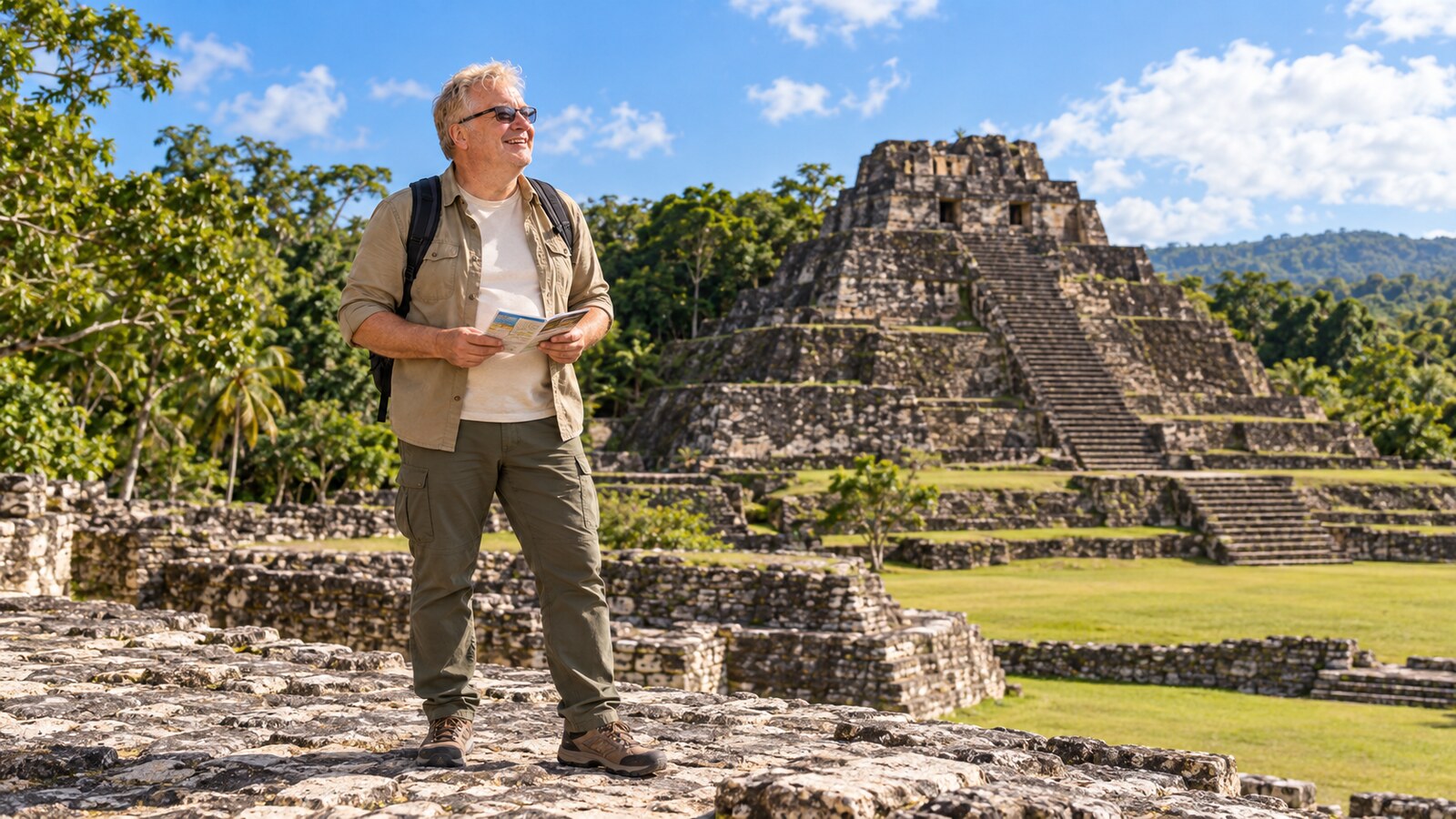
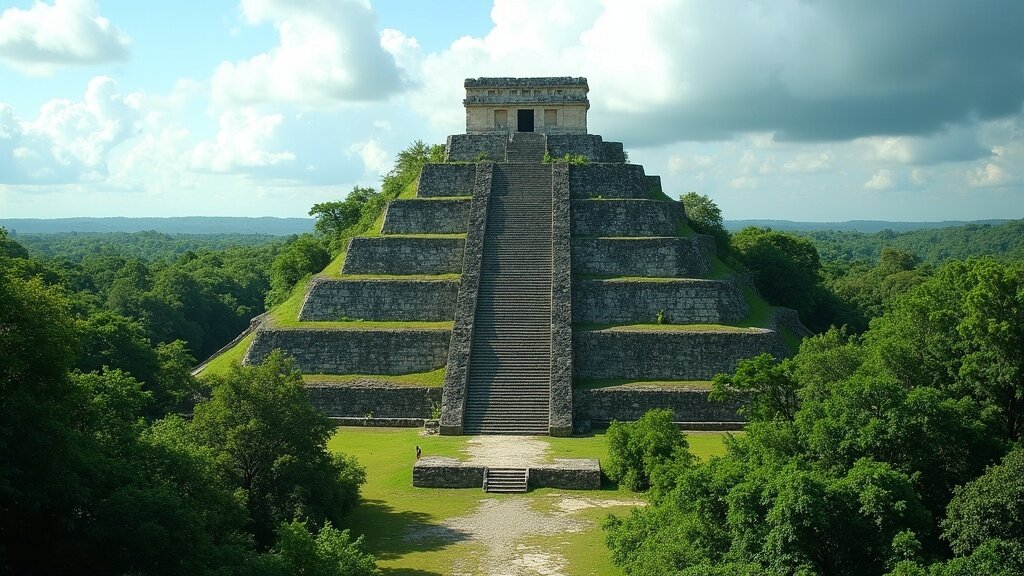
Xunantunich — the Maya city whose name means "Stone Woman," overlooking the Mopan River near the Guatemalan border
04
📜 History
Belize was the heartland of the ancient Maya civilization. Caracol, the country's largest Maya site, once rivaled Tikal and housed over 150,000 people. Lamanai ("Submerged Crocodile") was continuously occupied for over 3,000 years. Xunantunich, Altun Ha, and dozens of smaller sites testify to a sophisticated civilization that flourished here for millennia before the Spanish arrived.
Unlike most of Central America, Belize was colonized by the British rather than the Spanish. English and Scottish buccaneers and baymen established logging settlements in the 17th century, harvesting logwood and later mahogany. The Battle of St. George's Caye in 1798, when baymen and their enslaved workers repelled a Spanish invasion fleet, is celebrated as a national holiday. Slavery was abolished in 1838, and the colony of British Honduras was formally established in 1862.
Self-governance came in 1964 under George Cadle Price, the "Father of the Nation," and full independence on September 21, 1981 — the last British colony on the American mainland. Guatemala's territorial claim persisted for decades and was referred to the International Court of Justice in 2019, where it is still awaiting judgment (see Government & Politics).
05
👥 People & Culture
Belize's roughly 430,000 people represent an extraordinary cultural tapestry: Mestizo (52%), Creole (26%), Maya (11%), Garifuna (6%), and smaller communities of Mennonites, East Indians, Chinese, and Lebanese. This diversity creates a vibrant social fabric where Kriol, Spanish, Maya, and Garifuna languages mix freely — though English remains the official language.
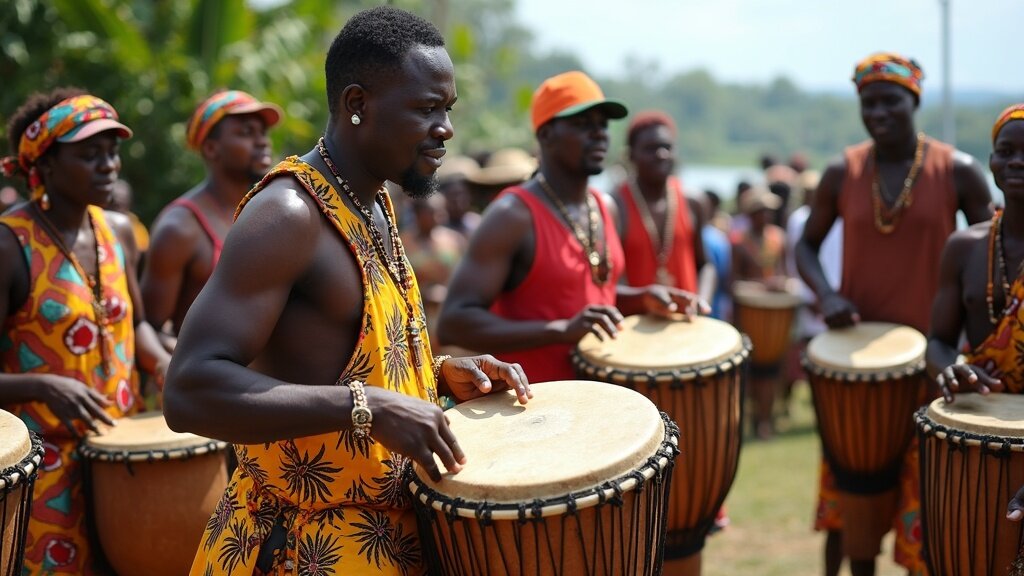
The Garifuna people — descendants of West African and Carib/Arawak islanders — maintain a distinct culture along the southern coast, with their own language, music, and spiritual traditions. Garifuna Settlement Day (November 19) celebrates their 1832 arrival with drumming, dancing, and reenactments. UNESCO recognized Garifuna language, dance, and music as a Masterpiece of Oral and Intangible Heritage in 2001.
Punta rock, pioneered by Andy Palacio and Pen Cayetano, fuses Garifuna rhythms with modern production and has become Belize's musical signature. Brukdown is the older Creole folk tradition, built on rhythms beaten out on a donkey jawbone. The annual September Celebrations — combining Independence Day and the Battle of St. George's Caye — feature carnival parades across the country.
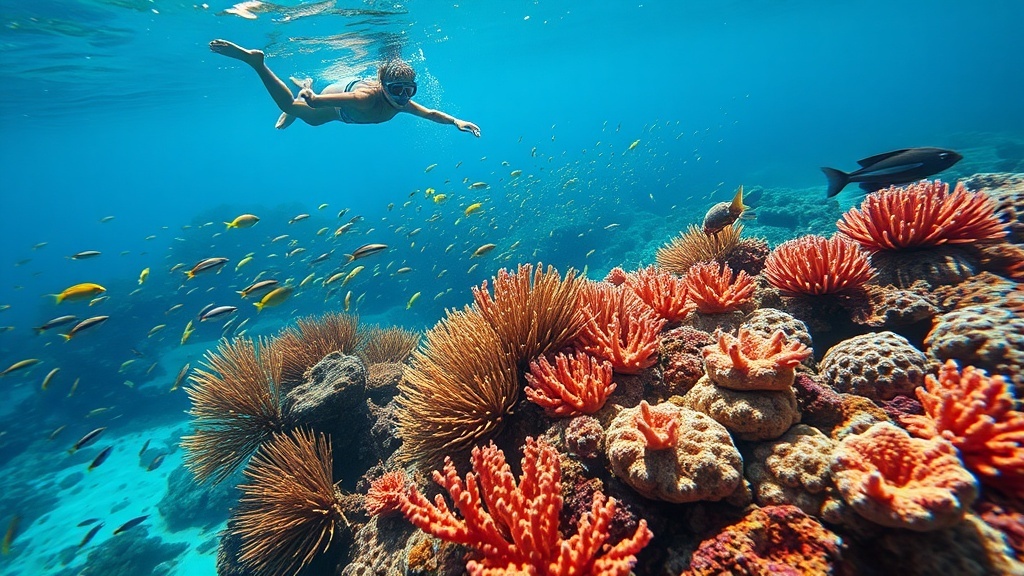
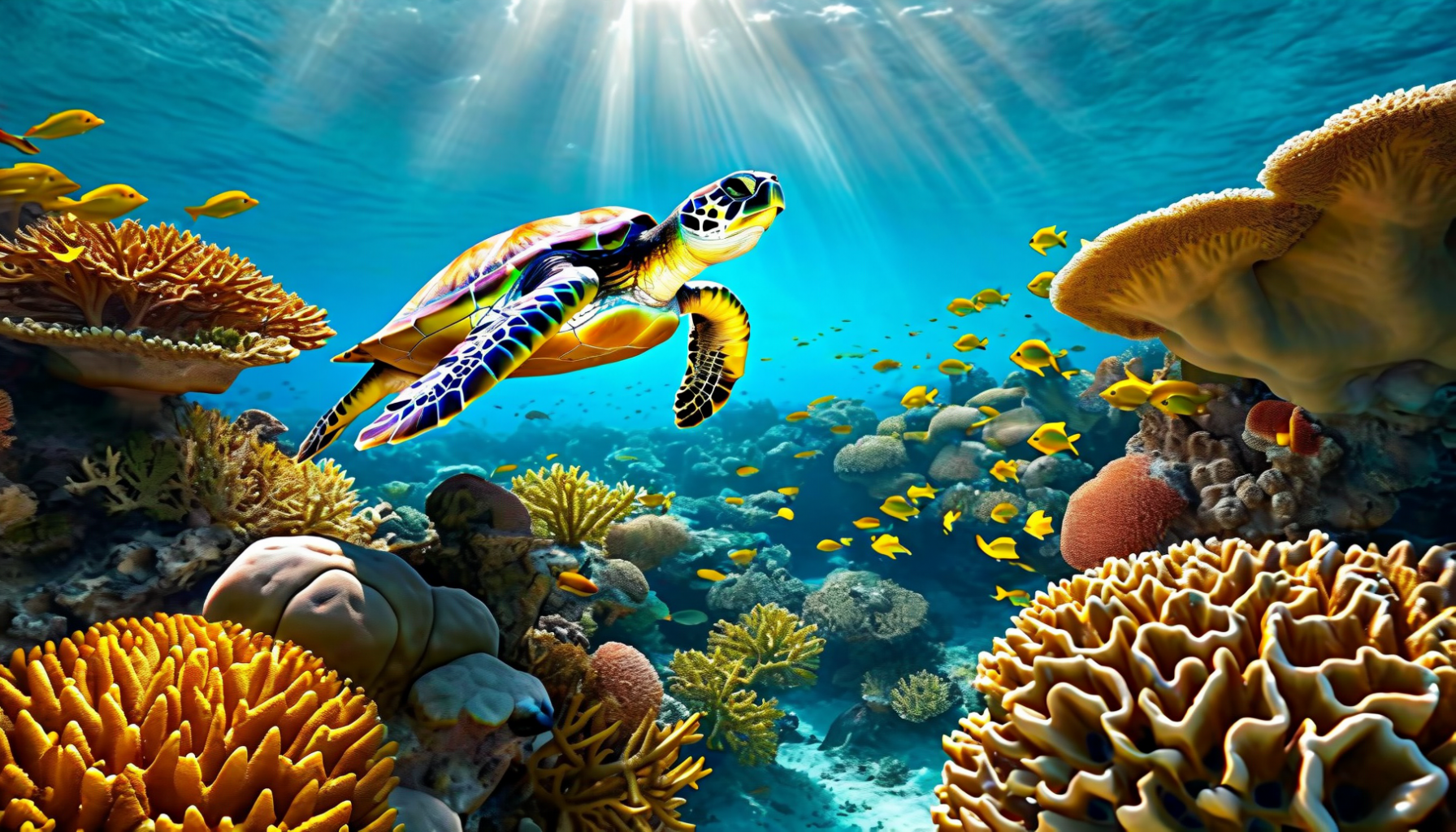
The Belize Barrier Reef — the Western Hemisphere's largest, teeming with over 500 species of fish and 100 types of coral
06
🏛️ Belize City & Belmopan
Belize City, the former capital and still the country's largest settlement (67,169 at the 2022 census), sits at the mouth of Haulover Creek with a distinctly Caribbean character — wooden colonial buildings, the famous Swing Bridge, and the excellent Museum of Belize housed in a former prison. While not a typical tourist destination, the city is the gateway to the cayes and offers authentic Creole culture.
Belmopan, the purpose-built capital created after Hurricane Hattie devastated Belize City in 1961, lies 80 kilometers inland in the Cayo District. With 20,754 residents at the 2022 census, it is one of the world's smallest capital cities. San Ignacio, further west near the Guatemalan border, serves as the hub for Cayo adventures — cave tubing, Maya ruins, and jungle lodges.
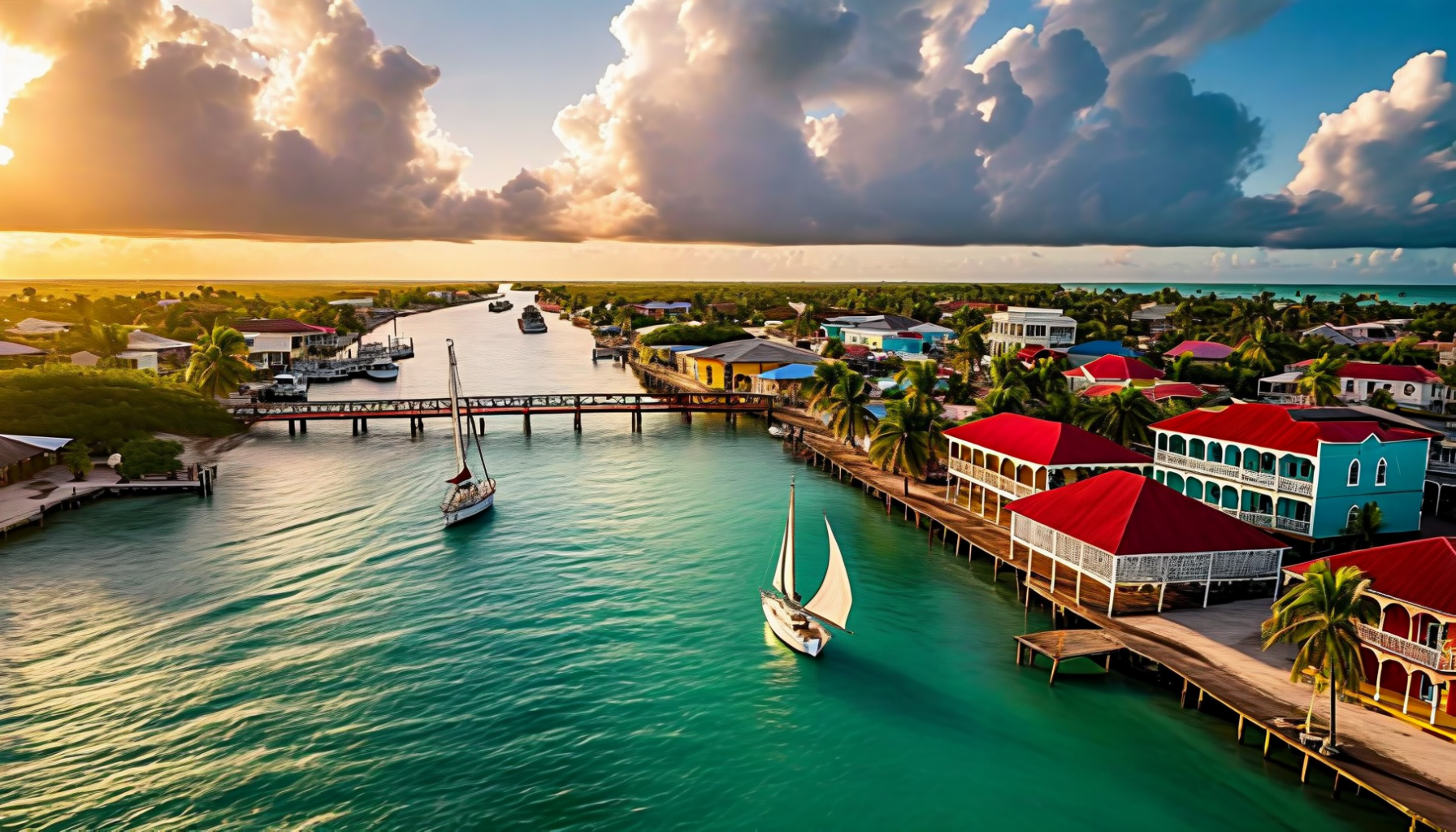
Belize City — colonial wooden houses, the iconic Swing Bridge, and the Caribbean stretching to the horizon
07
🏝️ The Cayes & Great Blue Hole
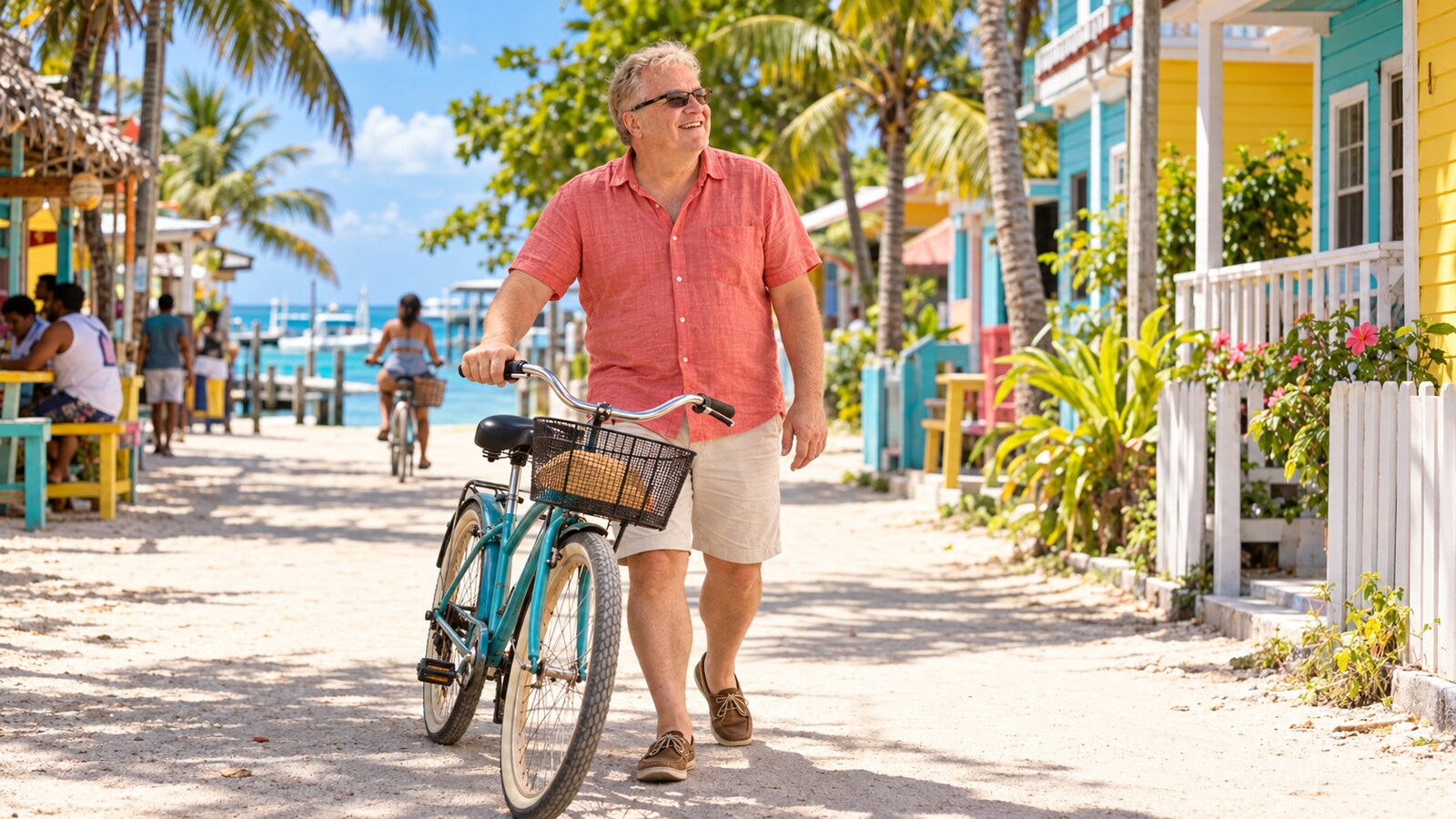
Ambergris Caye, the largest island, centers on San Pedro — a sandy-street town with Caribbean charm, excellent restaurants, and easy access to Hol Chan Marine Reserve and Shark Ray Alley. Caye Caulker, its backpacker-friendly neighbor, lives by the motto "Go Slow" — no cars, no shoes required, and some of the best snorkeling within swimming distance of shore.
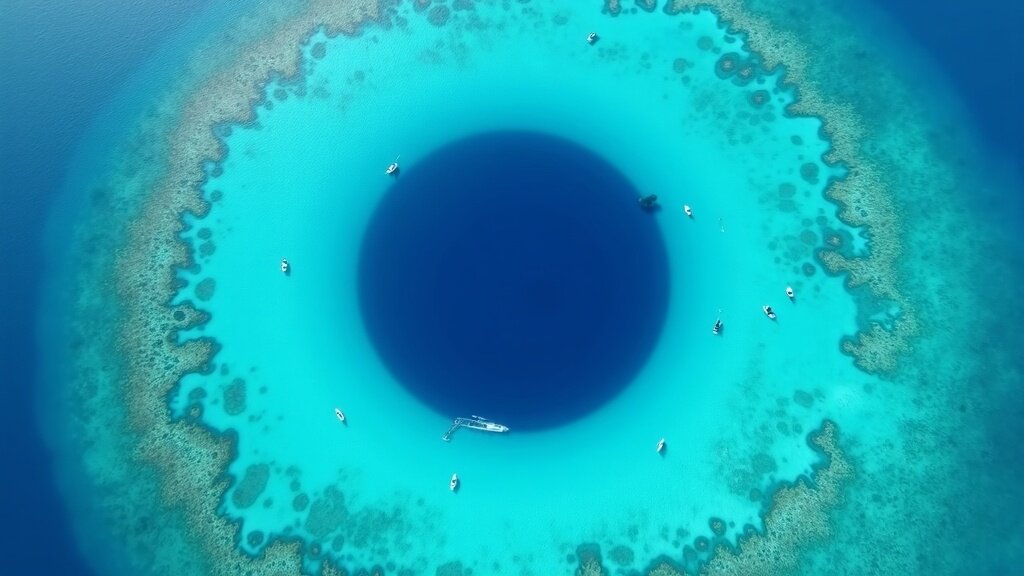
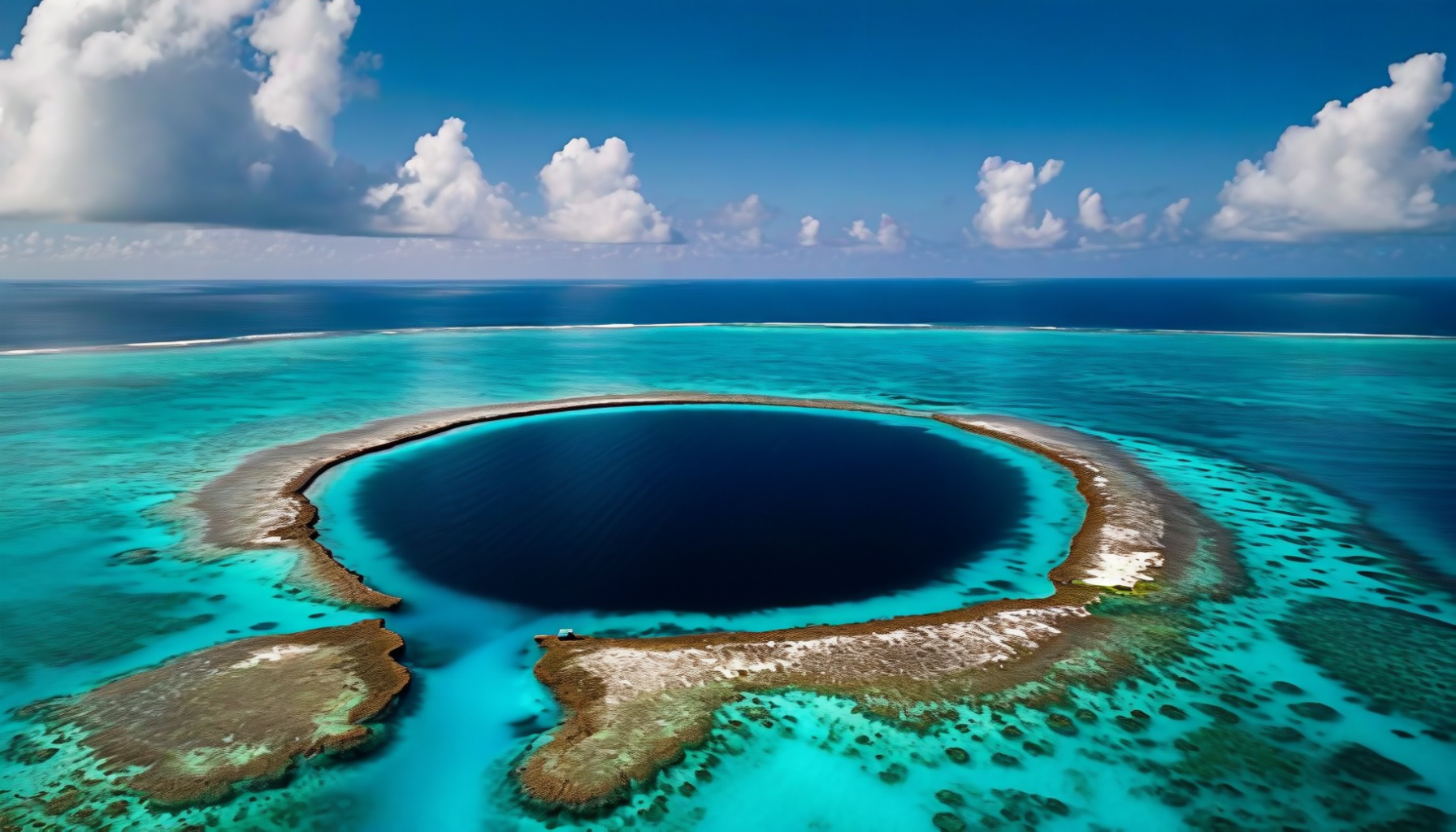
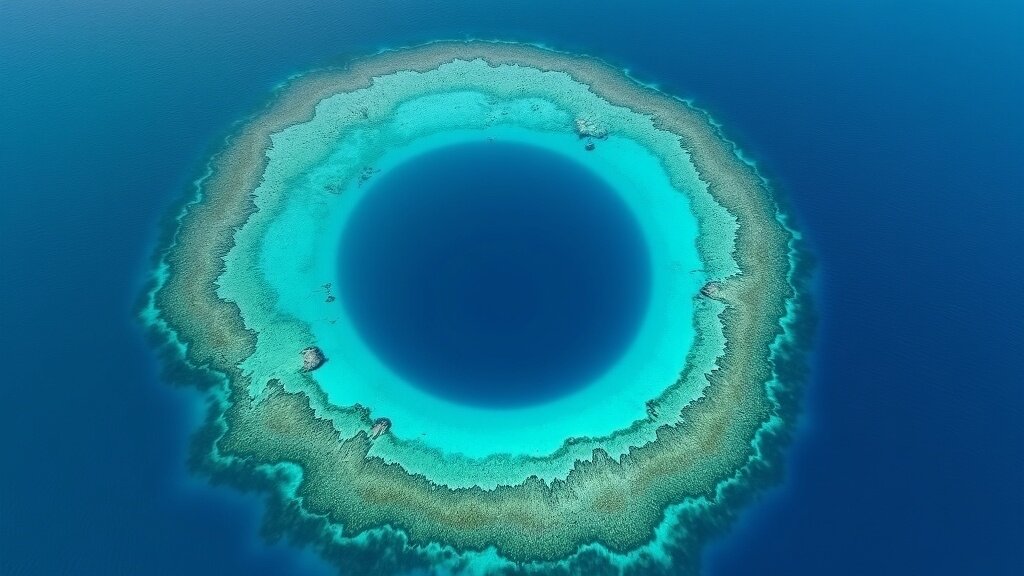
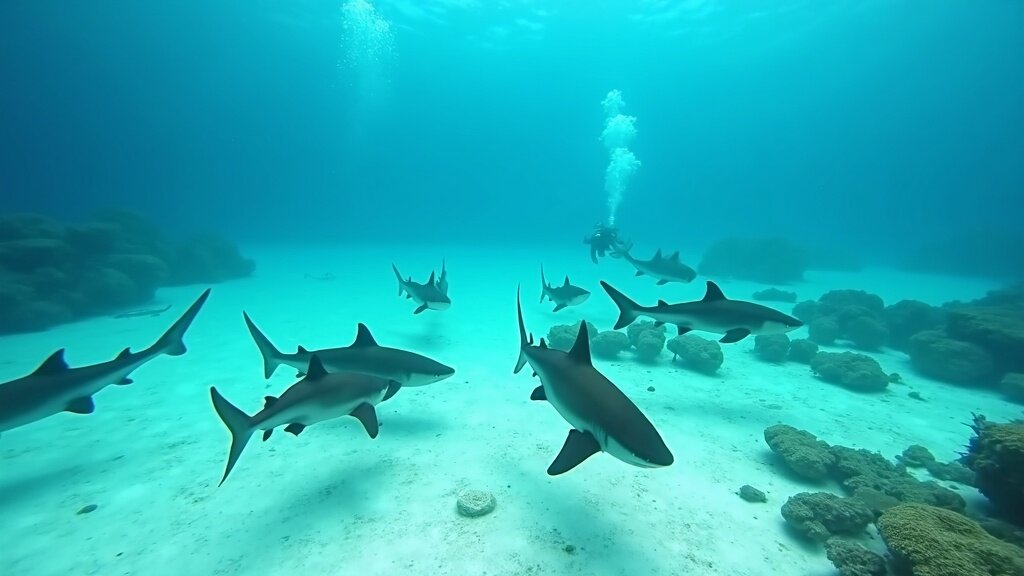
The Great Blue Hole, a 300-meter-wide, 125-meter-deep underwater sinkhole in Lighthouse Reef Atoll, is one of the planet's most iconic dive sites. Jacques Cousteau declared it one of the top ten diving locations in the world. The circular formation — a collapsed limestone cave from the last Ice Age — reveals stalactites at depth and attracts reef sharks, giant groupers, and hammerheads. The three offshore atolls (Turneffe, Lighthouse Reef, Glover's Reef) offer wall diving, drift diving, and pristine coral gardens far from shore.
Belize contains some of the most atmospheric Maya sites in Mesoamerica. Caracol, the largest, sprawls across 200 square kilometers of jungle with Caana ("Sky Palace") still the tallest man-made structure in Belize at 43 meters. Lamanai sits dramatically on the shore of the New River Lagoon, reachable by a boat ride through jungle and wetlands. Xunantunich's El Castillo offers panoramic views into Guatemala, and Altun Ha (featured on the Belikin beer label) is the most accessible from Belize City.
The Actun Tunichil Muknal (ATM) Cave is Belize's most extraordinary archaeological experience. Visitors wade and swim through an underground river before entering a cathedral-sized chamber filled with Maya pottery, stoneware, and the crystallized skeletal remains of sacrificial victims, including the famous "Crystal Maiden." It's one of the few places in the world where you can touch 1,000-year-old artifacts in situ. Cave tubing on the Caves Branch River offers a more relaxed underground adventure.
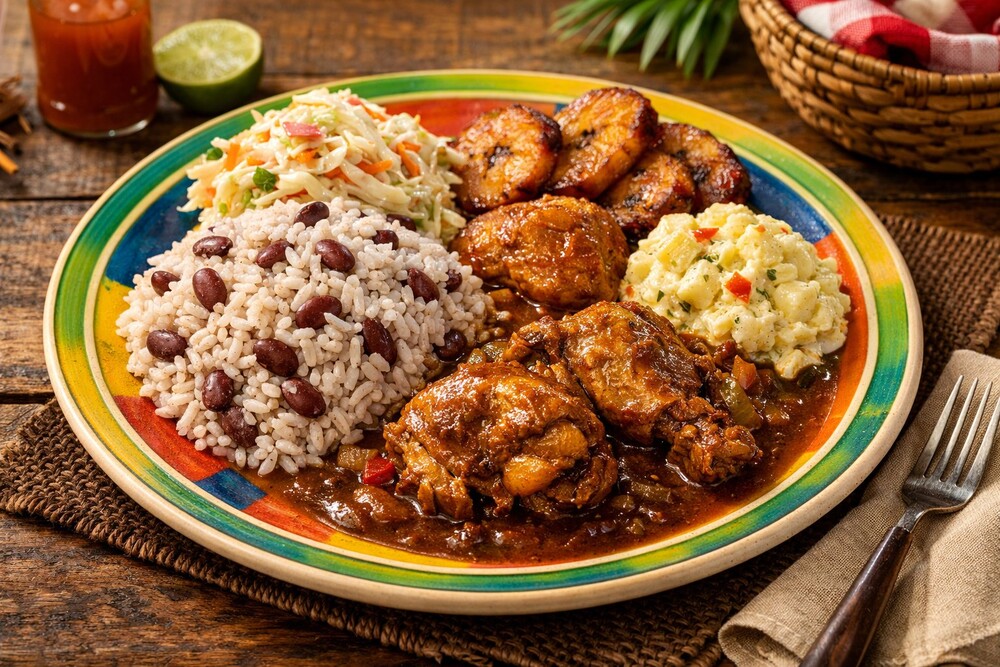
Rice and beans (cooked in coconut milk) with stew chicken is the undisputed national dish, served daily across the country. Garnaches (fried tortillas topped with refried beans, cheese, and cabbage slaw) are the quintessential street snack. Tamales wrapped in banana leaves, panades (fried corn shells with fish), and salbutes (puffed tortillas) represent the Mestizo and Maya contributions.
Garifuna cuisine features hudut (mashed plantain with coconut fish stew), cassava bread, and darasa (green banana tamales). Fry jacks — pillowy fried dough — are the beloved breakfast staple, served with refried beans, eggs, or jam. Seafood is abundant: lobster season (June-February) is cause for celebration, and the Placencia Lobster Fest each June draws thousands. Belikin beer and local rum (One Barrel, Travellers) fuel the social scene.
COOKBOOK NOTE -- Radim Kaufmann
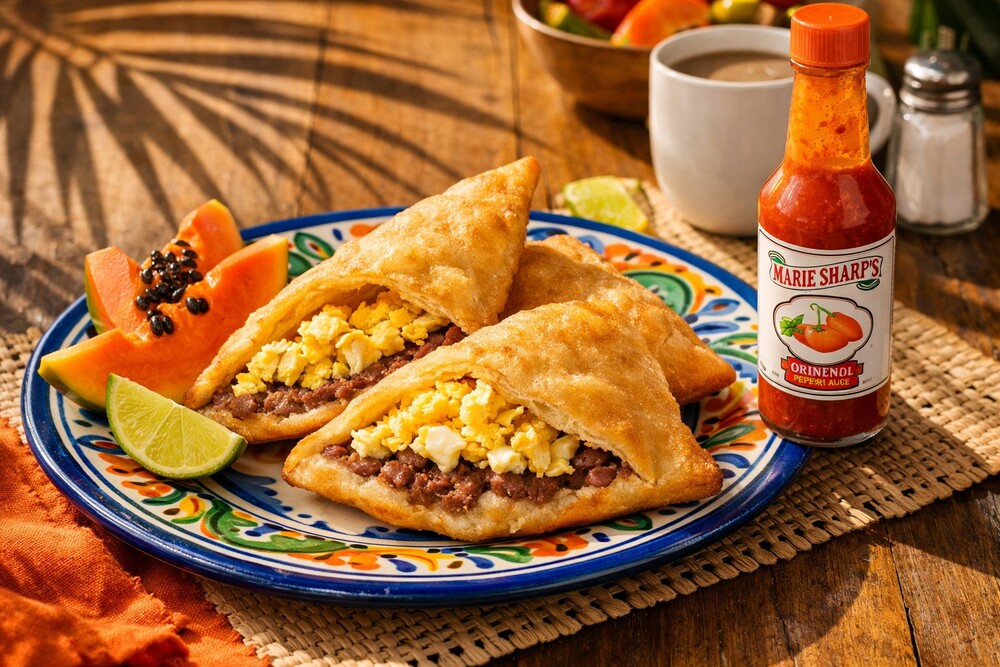
Belize is where the Caribbean meets Central America on a plate. Creole stew chicken with rice and beans cooked in coconut milk is the Sunday religion, but walk a few streets and you will find Mestizo tamales, Garifuna hudut, Maya caldo, and East Indian curry — all claiming equal space in the national identity. At a roadside shack outside San Ignacio, I had fry jacks stuffed with refried beans and scrambled eggs, doused in Marie Sharp's habanero sauce, and washed down with bitter Belizean coffee. It cost two dollars and it was perfect.
Rice and Beans KCS 80
National Dish
The Sunday foundation of every Belizean plate — long-grain rice simmered with red kidney beans in thick coconut milk, scented with thyme and a whole, unpierced habanero. Serves 6.
Ingredients: 250 g dried red kidney beans, 400 g long-grain white rice, 400 ml full-fat coconut milk, 2 tbsp coconut oil, 1 onion, 2 cloves garlic, 1 sweet pepper, sprig of thyme, 1 whole habanero, 1 tsp salt, ½ tsp black pepper, pinch of cumin, water or reserved bean liquid.
Preparation: The night before, soak 250g of dried red kidney beans in plenty of cold water. The next day, drain and place in a heavy pot with fresh water. Bring to a boil and simmer for about one hour until the beans are tender but not mushy. Drain, reserving some of the cooking liquid. In the same pot, heat two tablespoons of coconut oil over medium heat. Add one diced onion, two cloves of minced garlic, one diced sweet pepper, and a sprig of fresh thyme. Cook for five minutes until the onion is translucent. Add 400ml of coconut milk — use the thick, full-fat kind from a can, not the thin drinking variety. Stir in the cooked beans and bring to a gentle simmer. Add 400g of long-grain white rice that has been rinsed until the water runs clear. Add a whole habanero pepper (do not pierce it — you want the fragrance, not the full heat), a teaspoon of salt, half a teaspoon of black pepper, and a pinch of ground cumin. Add enough water or reserved bean liquid to cover the rice by about two centimetres. Bring to a boil, then immediately reduce heat to the lowest setting. Cover tightly with a lid wrapped in a tea towel to catch condensation. Cook without lifting the lid for 20 to 25 minutes until all the liquid is absorbed and the rice is fluffy. The coconut milk gives each grain a subtle richness and the beans stain the rice a beautiful pale pink. Remove the habanero (it can be served whole on the side for the brave), fluff the rice gently with a fork, and let it rest covered for five minutes. In Belize, rice and beans is never served alone — it is the foundation of the Sunday plate, always accompanied by stew chicken, fried plantains, coleslaw, and potato salad. The whole ensemble is the true national dish, greater than the sum of its parts. A generous splash of Marie Sharp's hot sauce is not optional — it is expected.
TIP: The coconut milk makes this distinctly Belizean.
Stew Chicken KCS 78
Creole Chicken
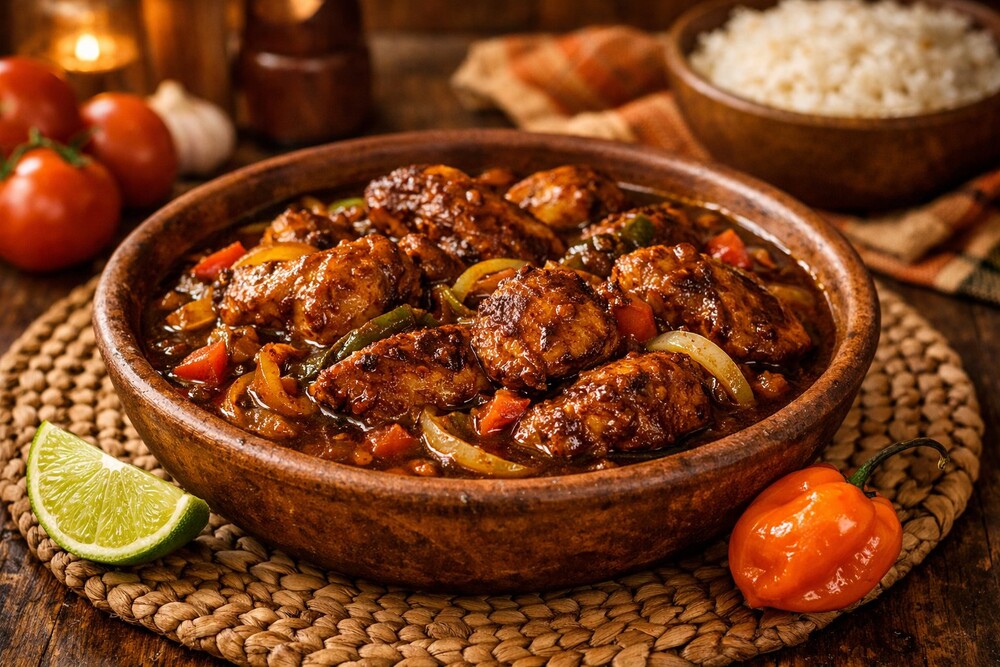
Creole stew chicken owes its mahogany colour to "browning" — sugar caramelised almost to black before the recado-marinated chicken hits the pot. Serves 4–6.
Ingredients: 1 whole chicken cut into 8 pieces (or 1.2 kg bone-in thighs and drumsticks), 2 tbsp red recado (achiote) paste, juice of 1 lime, 2 cloves garlic, 1 tsp dried oregano, 3 tbsp vegetable oil, 2 tbsp white sugar, 1 large onion, 1 green bell pepper, 2 tomatoes, 1 whole habanero, 1 tbsp Worcestershire sauce, 200 ml warm water, pinch of cumin, salt and black pepper.
Preparation: Cut a whole chicken into eight pieces, or use 1.2kg of bone-in thighs and drumsticks. Season generously with salt, black pepper, a tablespoon of red recado paste (achiote paste), the juice of one lime, two cloves of minced garlic, and a teaspoon of dried oregano. Rub the seasoning into every crevice and marinate for at least one hour, preferably overnight in the fridge. The key to Belizean stew chicken is the 'browning' — a technique of caramelising sugar until dark to create the characteristic deep mahogany colour. Heat three tablespoons of vegetable oil in a large heavy pot over medium-high heat. Add two tablespoons of white sugar and stir constantly as it melts and turns from amber to dark brown — this takes about three minutes and requires your full attention. The sugar should be very dark but not burnt. Immediately and carefully add the seasoned chicken pieces to the hot caramelised sugar. Be cautious — it will sizzle violently. Turn the chicken to coat all sides in the dark caramel. Brown for about four minutes per side until the chicken develops a deep, almost lacquered appearance. Add one large sliced onion, one diced green bell pepper, two diced tomatoes, and a whole habanero pepper (left intact). Stir in a tablespoon of Worcestershire sauce, a tablespoon of red recado paste dissolved in 200ml of warm water, and a pinch of ground cumin. The liquid should come about halfway up the chicken. Bring to a gentle simmer, cover, and cook for 35 to 40 minutes, turning the chicken once, until the meat is tender and falling from the bone. The sauce should reduce to a thick, glossy, almost black gravy that clings to the chicken. If it is too thin, remove the lid for the last ten minutes. Remove the habanero before serving. Arrange the chicken pieces in a deep bowl or clay dish, spoon the rich gravy over the top, and serve alongside rice and beans, fried ripe plantains, coleslaw, and potato salad. A wedge of lime and Marie Sharp's hot sauce complete the plate. This is Sunday dinner in Belize — every family has their version, and every version is claimed to be the best.
TIP: The recado gives characteristic red color.
Fry Jacks KCS 72
Fried Bread
The national breakfast — triangles of soft dough that balloon in hot oil, split and stuffed with refried beans and eggs. Makes 12.
Ingredients: 300 g plain flour, 2 tsp baking powder, ½ tsp salt, 1 tbsp softened lard or butter, about 150 ml warm water, vegetable oil for deep-frying.
Preparation: In a large bowl, combine 300g of plain flour, two teaspoons of baking powder, half a teaspoon of salt, and a tablespoon of softened lard or butter. Rub the fat into the flour with your fingertips until the mixture resembles coarse breadcrumbs. Gradually add about 150ml of warm water, mixing with your hands until a soft, slightly sticky dough forms. You may not need all the water — the dough should be pliable but not wet. Knead the dough on a lightly floured surface for about five minutes until smooth and elastic. Form into a ball, cover with a damp cloth or cling film, and let it rest for at least 30 minutes. This resting period allows the gluten to relax, making the fry jacks lighter and puffier. Divide the dough into six equal portions. Roll each one out on a floured surface into a thin circle about 15 centimetres in diameter and about three millimetres thick. Cut each circle in half to form two semicircles, or into triangles by cutting into quarters — the triangular shape is the most traditional in Belize. Heat vegetable oil in a deep heavy pan to about 180 degrees — the oil should be at least five centimetres deep. Carefully slide one piece of dough into the hot oil. It will sink briefly, then quickly puff up and float to the surface. Using a slotted spoon, gently spoon hot oil over the top surface to encourage even puffing. Flip once and fry until both sides are golden brown, about one to two minutes total. The fry jack should be dramatically puffed, hollow inside, and light golden with darker blistered spots. Drain on paper towels and repeat with the remaining pieces. Serve immediately — fry jacks deflate slightly as they cool, though they remain delicious. Split each one open along the edge like a pocket and stuff generously with refried red beans, scrambled eggs, and crumbled queso fresco. In Belize, fry jacks are the quintessential breakfast. Every cook, every mother, every roadside vendor makes them, and the debate over whose are the best is endless. They can be served sweet — drizzled with honey or condensed milk — but the savoury version with beans, eggs, and a liberal dousing of Marie Sharp's habanero pepper sauce is the national standard. A cup of strong Belizean coffee on the side is mandatory.
TIP: Dough should be soft—fry jacks puff best when tender.
10
🐆 Wildlife & Conservation
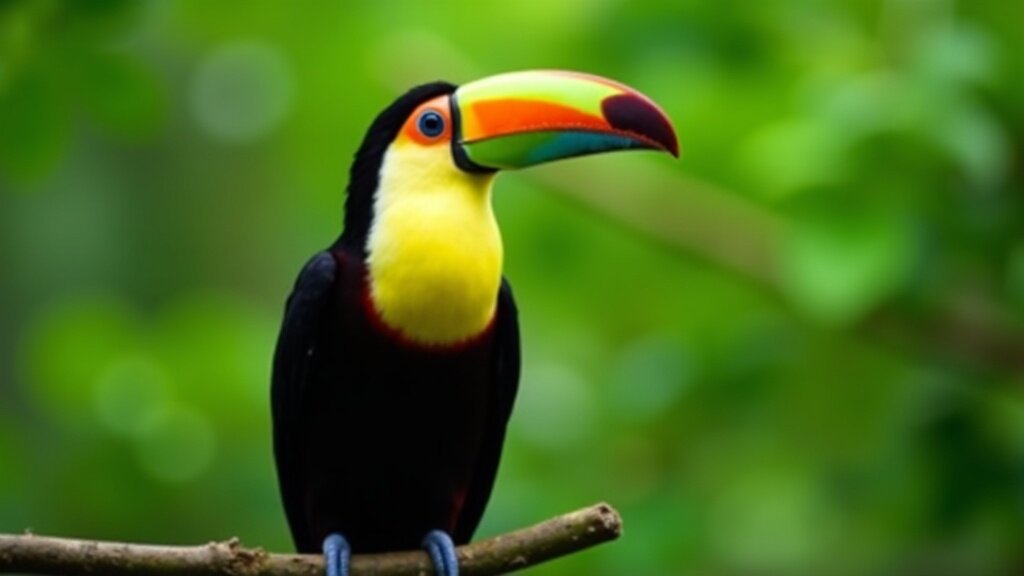
Belize harbors one of the healthiest jaguar populations in Central America, protected within the Cockscomb Basin Wildlife Sanctuary — the world's first jaguar preserve (1986). Alan Rabinowitz's 1982–84 survey recorded what was then the highest density ever measured; modern camera-trap studies put Cockscomb at roughly 1.5–3 jaguars per 100 km², below the Brazilian Pantanal, so treat "highest in the world" as a 1980s claim, not a current one. The country's forests shelter all five Central American cat species, Baird's tapir (the national animal), howler monkeys (called "baboons" locally), and over 570 bird species including keel-billed toucans, jabiru storks, and scarlet macaws.
Marine conservation is equally impressive. The Belize Barrier Reef Reserve System, a UNESCO World Heritage Site, protects nurse sharks, manatees, three species of sea turtle, and vast coral gardens. The Community Baboon Sanctuary — a grassroots conservation success — has protected black howler monkeys through voluntary agreements with landowners since 1985.
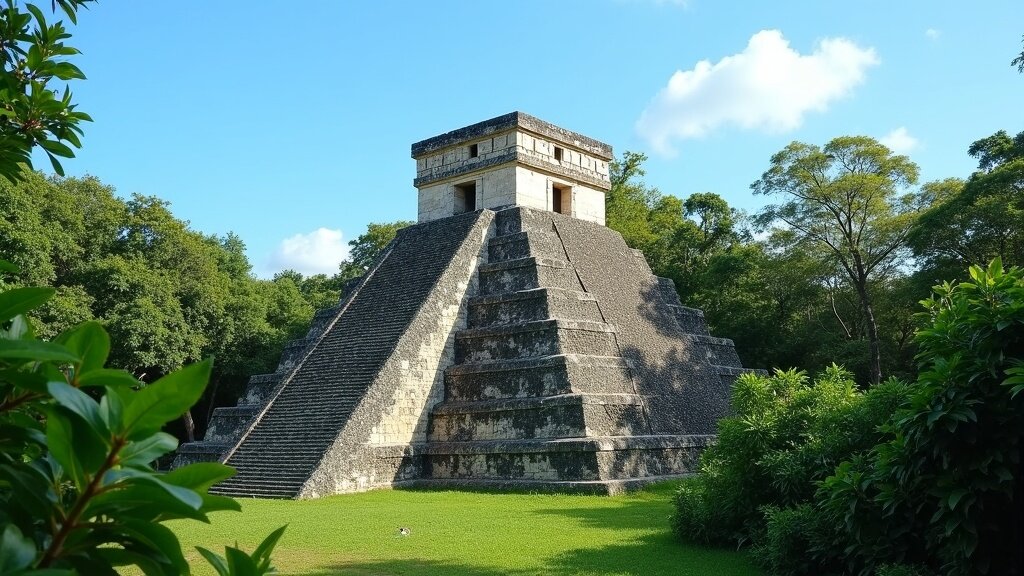
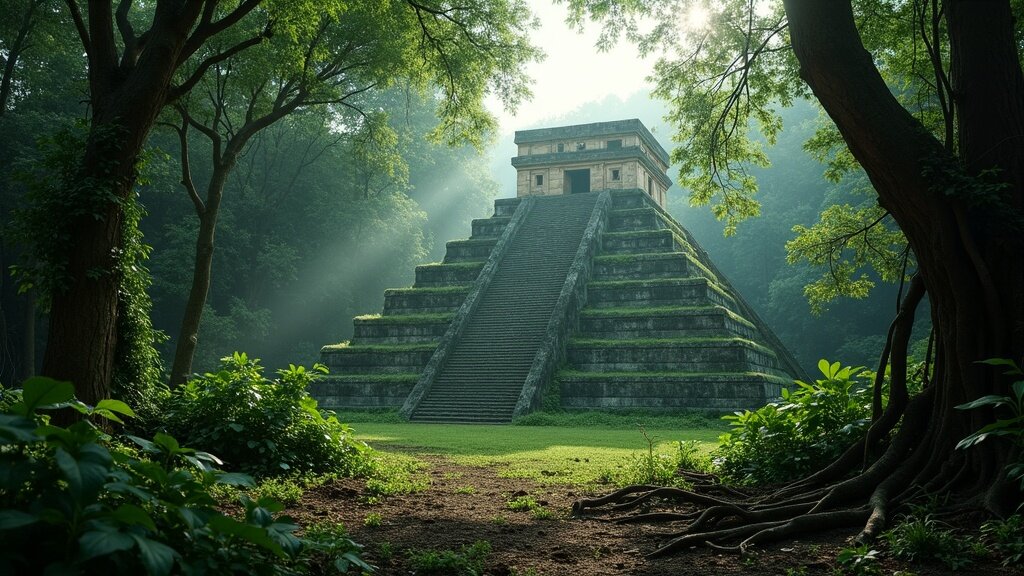
A Maya temple emerging from the jungle canopy — Belize's rainforests still hide undiscovered archaeological sites
11
🌡️ Climate
Subtropical with temperatures of 24-30°C year-round. The dry season (February-May) offers the best weather, while the wet season (June-November) brings afternoon showers and hurricane risk. The coast stays cooled by trade winds, while inland Cayo can be hotter. Water visibility on the reef peaks in April-June.
12
🍷 Wine, Spirits & Drinking Culture
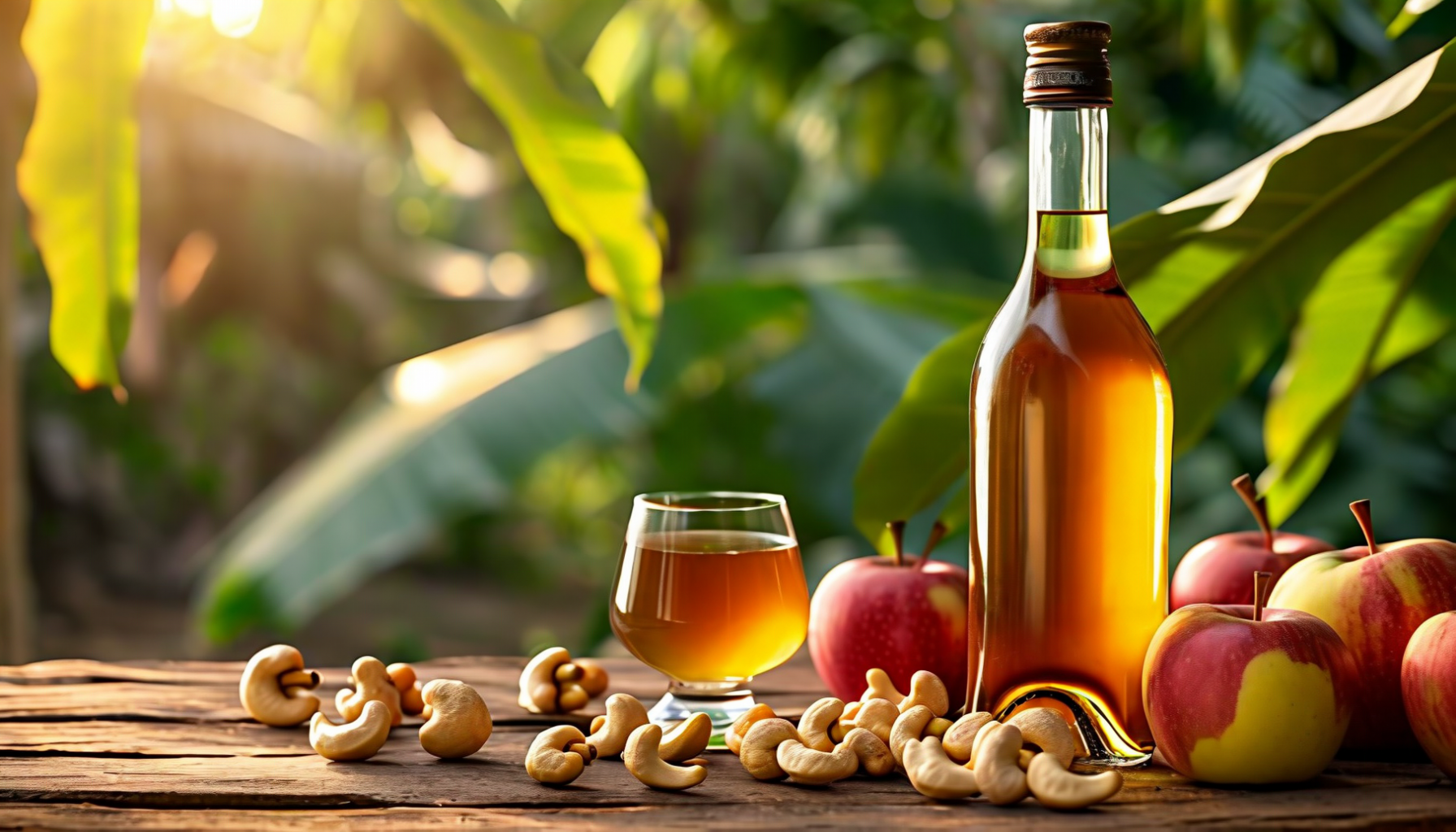
Belize has no wine production. The Central American nation — tropical, Caribbean-influenced — has a climate unsuited to grape cultivation. Belikin Beer (the national beer, brewed by Belize Brewing Company since 1969 — no longer the only one: Two-5 Brewing in Ladyville, Hobbs in Placencia and Island Time on Ambergris Caye make craft ales) and One Barrel Rum (Travellers Liquors, an excellent locally produced rum) are the cornerstones of Belizean drinking culture. Cashew wine (fermented from the cashew apple, a Belizean specialty made above all around Crooked Tree and in the Cayo District) is a distinctive local specialty. Seaweed shakes, lime juice, and rum punch are ubiquitous.
Cashew wine — fermented from the cashew apple in the Cayo District, Belize's most distinctive native drink
13
🍹 Cocktails & Mixed Drinks
Belize's cocktail scene revolves around One Barrel Rum from Travellers Liquors and the ever-present Belikin Beer. Coastal bars on Caye Caulker, Ambergris Caye, and Placencia perfected tropical mixology long before it was fashionable.
🍹 Panty Ripper
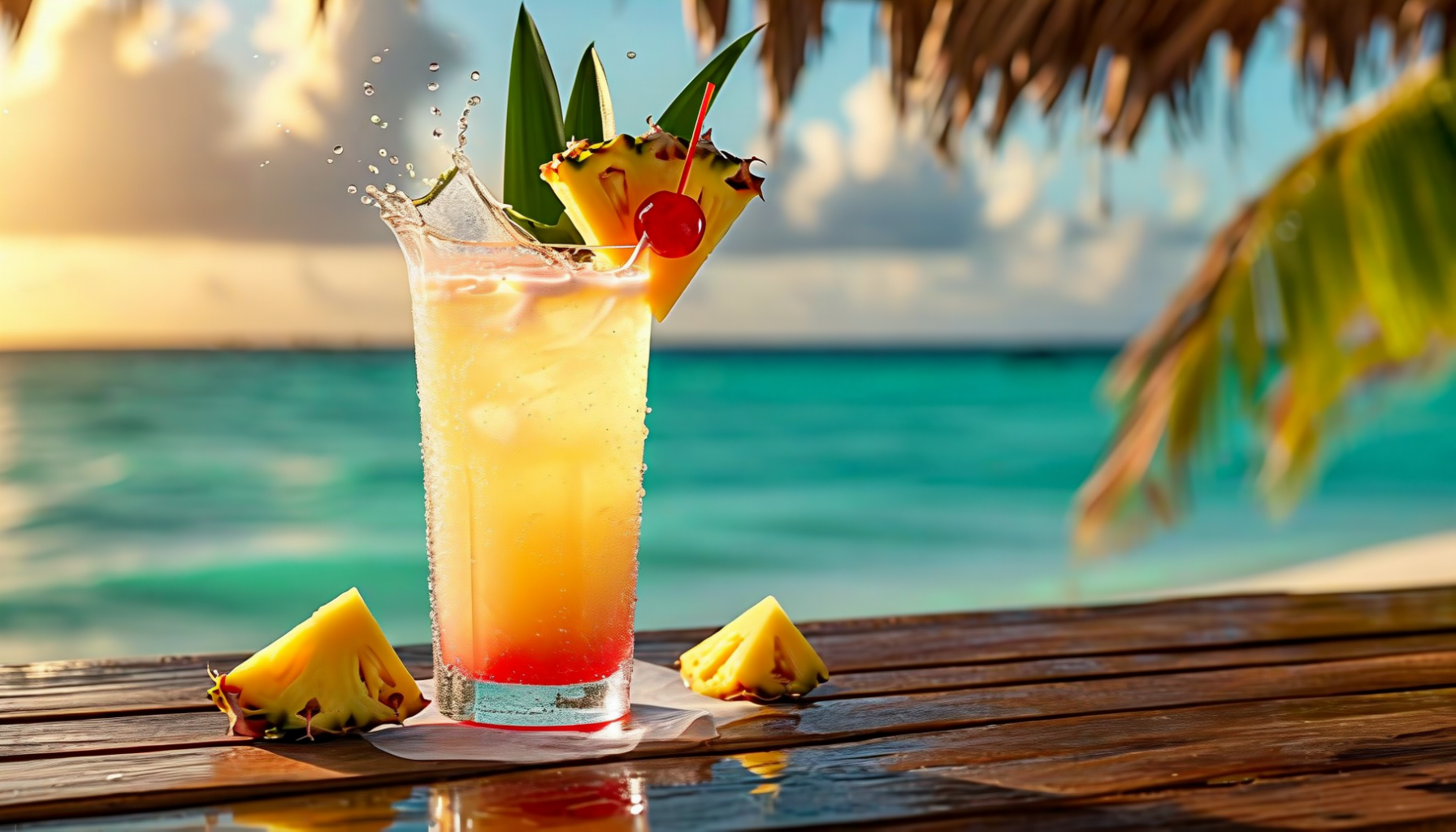
The unofficial national cocktail. Recipe: 2 oz coconut rum (Travellers' Cuello's Caribbean Coconut is the local pour; One Barrel is a dark rum and not the classic base), 4 oz fresh pineapple juice, splash of grenadine. Shake with ice, serve in a tall glass with a pineapple wedge.
🍹 Rum Punch Belizean
Recipe: 2 oz One Barrel rum, 1 oz fresh lime, 1 oz orange juice, 1 oz pineapple, dash of grenadine, grated nutmeg on top. Serve over crushed ice.
🍹 Cashew Wine Spritz
Recipe: 3 oz Cayo cashew wine, 1 oz soda water, slice of lime. A Cayo District specialty using fermented cashew apple — fruity, slightly tart, uniquely Belizean.
🍹 Seaweed Shake
Non-cocktail but iconic. Recipe: Blend dried Eucheuma seaweed (soaked overnight), condensed milk, cinnamon, nutmeg, vanilla, and a shot of rum. Tastes like vanilla pudding with depth.
Panty Ripper — Belize's unofficial national cocktail: coconut rum, fresh pineapple juice, sunset on Caye Caulker
14
✈️ Getting There
By air: Philip S.W. Goldson International Airport (BZE), 16 km from Belize City, is the only international gateway. United, American, Delta, Southwest, Copa, and TAG Airlines operate daily flights from Houston, Miami, Dallas, Atlanta, Newark, Charlotte, Panama City, and Guatemala City. From BZE, Tropic Air and Maya Island Air fly small Cessna Caravans to San Pedro, Caye Caulker, Placencia, Dangriga, Punta Gorda, and San Ignacio.
By land: Buses run from Chetumal (Mexico) and Flores/Melchor de Mencos (Guatemala). Border crossings are straightforward but slow; expect 1–2 hours.
By sea: Water taxis link Belize City with Caye Caulker (45 min) and San Pedro (90 min). Seasonal ferry from Puerto Cortés (Honduras) to Placencia.
15
💰 Cost of Living & Travel Budget
Belize is significantly more expensive than its Central American neighbors — closer to Caribbean prices. The Belize dollar is pegged 2:1 to the USD, and US dollars are accepted everywhere. Prices have climbed through 2026 — electricity tariffs, fuel and bus fares all rose over the summer, and the cost-of-living squeeze is the dominant domestic political issue.
Budget traveler: US$45–70 / day (hostels, street food, public buses)
Mid-range: US$120–200 / day (boutique hotels, dive trips, restaurants)
Luxury: US$350+ / day (private island resorts, helicopter tours)
Belikin beer: BZ$5 (US$2.50)
Local meal: BZ$10–15 (US$5–7.50)
Snorkel half-day Hol Chan: US$45–60
Great Blue Hole dive trip: US$280–350
ATM Cave full-day tour: US$95–120
16
🏨 Accommodation
Belize covers the full spectrum: thatched-roof beach cabanas on Caye Caulker for US$25, eco-lodges deep in the Cayo jungle (Chaa Creek, Ka'ana), and ultra-luxury private islands (Cayo Espanto, Thatch Caye) at US$2,000+ per night. Budget travelers gravitate to Caye Caulker, San Ignacio, and Hopkins. Divers base in San Pedro (Ambergris Caye). Honeymooners and rainforest seekers head to Placencia and the Mountain Pine Ridge.
17
🎉 Festivals & Events
September Celebrations — Battle of St. George's Caye Day (Sep 10) and Independence Day (Sep 21). The biggest party of the year, with parades, jump-ups, and Belikin in every hand.
Garifuna Settlement Day (Nov 19) — Dangriga and Hopkins erupt in drumming, punta dancing, and reenactments of the Garifuna arrival from Honduras in 1832. UNESCO-recognized intangible heritage.
La Ruta Maya River Challenge (March) — A four-day, 290 km canoe race from San Ignacio to Belize City along the Macal and Belize Rivers.
Lobster Festivals (June/July) — Caye Caulker, San Pedro, and Placencia each celebrate the opening of lobster season with their own weekend bash.
Cashew Festival (Crooked Tree, May) — Cashew wine tasting, music, and birding in the Crooked Tree Wildlife Sanctuary.
Chocolate Festival of Belize (Punta Gorda, May) — Toledo's cacao farmers showcase Belize's bean-to-bar revival.
Carnival (September) — Belize City's J'ouvert and road march parade mark Independence weekend.
18
💎 Hidden Gems
Sarteneja — A sleepy Mestizo fishing village on the Corozal coast, gateway to Shipstern Conservation Area. Almost no tourists.
Cerros Maya Ruins — A late Preclassic Maya site directly across Corozal Bay, reachable by boat. Unexcavated, atmospheric, often deserted.
Lubaantun — The "Place of Fallen Stones" in Toledo, where the controversial Crystal Skull was supposedly found in 1924.
Five Blues Lake National Park — A cenote-fed jungle lake near St. Margaret's, off the Hummingbird Highway. Swimming, kayaking, no crowds.
Río Blanco Falls (Toledo) — A perfect natural swimming pool in Maya country, with Q'eqchi' villages nearby.
Half Moon Caye — A red-footed booby colony on the Lighthouse Reef Atoll, reachable only by liveaboard or long day-trip from San Pedro.
Barton Creek Cave — A canoe-only Maya ceremonial cave near San Ignacio, far less visited than ATM but equally otherworldly.
Half Moon Caye — red-footed booby sanctuary on the Lighthouse Reef Atoll, reachable only by liveaboard or long boat trip
19
🎒 Packing Tips
Belize is hot, humid, and buggy. Pack light, breathable, quick-dry clothing, a wide-brim hat, reef-safe sunscreen (mandatory inside marine reserves), DEET or picaridin insect repellent (sandflies are vicious on the cayes), water shoes for reef walks, a dry bag for boat transfers, and a headlamp for ATM Cave or jungle lodges. A light rain jacket is useful June–November. Bring your own snorkel gear if you have it — rentals are everywhere but quality varies.
20
📖 Recommended Reading
Beka Lamb — Zee Edgell (1982). The first widely published Belizean novel, set in 1950s colonial Belize City.
The Sinner's Bossanova — Glen Godfrey. Contemporary Belizean fiction.
Time Among the Maya — Ronald Wright. A travel-literature classic crossing Belize, Guatemala, Honduras, and Mexico.
Maya Cosmos — David Freidel, Linda Schele, Joy Parker. The definitive work on Maya religion and ritual landscape.
Jaguar: One Man's Struggle to Establish the World's First Jaguar Preserve — Alan Rabinowitz. The story of Cockscomb Basin.
The Belize Times and Amandala — the country's main weekly papers, both online.
21
📺 YouTube Videos
Search: "Great Blue Hole Belize Aquatica" — Fabien Cousteau and Aquatica Submarines documented the bottom of the Blue Hole in 2018.
Search: "Belize travel guide" — Drew Binsky, Hey Nadine, and Kara & Nate all have full-length episodes.
Search: "Caye Caulker Go Slow" — Drone footage of the island and reef.
Search: "Garifuna drumming Dangriga" — Field recordings of traditional Garifuna percussion and punta.
22
⭐ Notable People
George Cadle Price (1919–2011) — Father of the Nation, first Prime Minister, led Belize to independence in 1981.
Zee Edgell (1940–2020) — Novelist, author of Beka Lamb, Belize's most internationally recognized writer.
Andy Palacio (1960–2008) — Garifuna musician whose album Wátina brought Garifuna music to global audiences.
Marion Jones (b. 1975) — Olympic sprinter born in Los Angeles to a Belizean mother; she has long identified with her Belizean heritage.
Shyne (Jamal Barrow) — Rapper turned politician; UDP leader and Leader of the Opposition 2022–2025, son of former PM Dean Barrow. He lost his Mesopotamia seat in the March 2025 general election.
Dean Barrow — Belize's longest-serving Prime Minister (2008–2020), the country's first Black PM.
Sir Colville Young (1932–2022) — Linguist, composer, and longest-serving Governor-General (1993–2021).
23
⚽ Sports
Football (soccer) is the dominant sport — the national league is the Premier League of Belize, and the national team plays in CONCACAF. Cycling has cult status: the annual Cross Country Cycling Classic from Belize City to San Ignacio and back (since 1928) is the country's biggest sporting event after September Celebrations. Basketball is rising in popularity, and Belize punches above its weight in cricket thanks to Caribbean ties. The La Ruta Maya River Challenge canoe race is the most quintessentially Belizean competition.
Recent scorecard: the Jaguars' only Gold Cup appearance remains 2013; they were eliminated from 2026 World Cup qualifying in June 2025 (0–1 to Montserrat, 0–2 to Panama in Belmopan, no points from four matches), so Belize watched the 2026 tournament from home. At the Glasgow 2026 Commonwealth Games (23 July–2 August) the team went home without a medal. The 2026 Holy Saturday Cross Country Classic was won by Britain's Jim Brown for the second year running, Jyven Gonzalez the first Belizean home; in the women's race Bermuda's Gabriella Arnold set a course record.
24
📰 Media & Press Freedom
Belize ranks among the freer Central American media environments, but the trend is down: Reporters Without Borders placed it 66th of 180 in its 2026 World Press Freedom Index (score 61.66), a fall of 19 places from 47th in 2025, driven by a collapse in the security indicator after police assaulted journalist Louis "Ljay" Wade in March 2025. Major outlets include Amandala (the country's largest weekly), The Belize Times (PUP-aligned), The Reporter, Channel 5 News, and Channel 7 News. Journalists are occasionally threatened, most often by defendants in the criminal cases they cover, and the threat of costly defamation suits is used to chill critical reporting, while small market size and political party ownership of outlets create informal pressure. Internet penetration is high and largely unrestricted.
25
🏛️ Government & Politics
Belize is a parliamentary constitutional monarchy and a Commonwealth realm. The head of state is King Charles III, represented locally by the Governor-General, Dame Froyla Tzalam, who took office on 27 May 2021 — a Mopan Maya anthropologist and only the third person to hold the post since independence.
Executive power rests with the Cabinet, led by Prime Minister John "Johnny" Briceño of the People's United Party (PUP), in office since 12 November 2020. Briceño was returned for a second consecutive term at the general election of 12 March 2025, in which the PUP won a commanding majority in the House.
The National Assembly is bicameral: a 31-seat House of Representatives elected on a first-past-the-post basis, and a Senate of appointed members. Since 14 March 2025 the Leader of the Opposition is Tracy Panton of the United Democratic Party (UDP) — the first woman to lead a major Belizean political party, following a bruising split that unseated her predecessor Shyne Barrow.
Belize became independent on 21 September 1981, having been British Honduras until 1973. The capital moved inland from Belize City to purpose-built Belmopan in 1970 after Hurricane Hattie devastated the coast in 1961. Belize is a member of the Commonwealth, CARICOM, SICA and the United Nations, and holds the rotating SICA Pro Tempore Presidency for the second half of 2026. A People's Constitution Commission delivered its report on constitutional reform to the Prime Minister on 16 May 2025 — including the question of whether Belize should become a republic — but no change to the monarchy has been legislated. The UDP opposition remained fractious into 2026, with a run of resignations in August 2026 that Panton insisted did not threaten her leadership.
The Guatemala claim: Guatemala has historically claimed all or part of Belizean territory. Both countries held referendums — Guatemala in 2018, Belize in 2019 — agreeing to submit the dispute to the International Court of Justice in The Hague. The written phase of Guatemala's Territorial, Insular and Maritime Claim (Guatemala/Belize) closed with the rejoinders ordered in 2022, and the case awaits oral hearings and judgment. A second case runs alongside it: in 2022 Belize sued Honduras over the Sapodilla Cayes at the southern tip of the reef, and on 19 March 2026 the ICJ unanimously allowed Guatemala to intervene as a non-party — Guatemala now asserts a claim to every caye in Belizean waters. Day-to-day the border is open and heavily travelled, but the Sarstoon River area in the far south sees periodic friction and is best avoided by independent travellers.
26
⚠️ Travel Advisory
🇺🇸 U.S. Department of State — Level 2: Exercise Increased Caution
Belize is rated Level 2 (Exercise Increased Caution) due to crime. The current advisory was issued on 12 March 2026; U.S. travel guidance was updated on 18 June 2026.
One area is rated higher:Southside Belize City — Level 3, Reconsider Travel. This is the area south of the Haulover Creek Canal down to Fabers Road, where gang violence is concentrated. It does not overlap with the tourist route — the cayes, San Ignacio and Cayo, Placencia, Hopkins and Dangriga are not affected, and the water-taxi terminal and cruise port sit outside it.
Practical notes: most crime against visitors is opportunistic theft. Police response outside Belize City and San Pedro can be slow. Medical facilities are limited outside the main towns, and the country's hyperbaric chamber is on Ambergris Caye — divers should carry evacuation cover. Riptides, unmarked boat channels and road conditions after dark are bigger practical risks than crime for most travellers.
Advisory levels change. Verify at travel.state.gov and with your own foreign ministry before you fly. Last checked: 19 September 2026.
27
📋 Practical Info
Getting there: Philip Goldson International Airport (BZE) near Belize City receives flights from US cities (Houston, Miami, Dallas, LA, Atlanta, Denver). Maya Island Air and Tropic Air connect domestic destinations. Water taxis serve the cayes.
Visa: Citizens of the US, EU, UK, Canada, Australia, CARICOM and Central American states enter visa-free and receive 30 days on arrival. U.S. passports must be valid for the length of the stay and contain at least one blank page; proof of onward travel and sufficient funds may be requested. Extensions cost US$100 per 30 days at an Immigration office, up to a maximum stay of six months.
iDeclare: Travelers may complete the Belize immigration and customs form on paper on arrival or submit the official online form in advance; an online submission is not the only accepted method.
Departure tax: Roughly US$73.50 by air (usually bundled into international ticket prices — check before you assume) and US$20 at land borders, payable in cash. Belizean citizens and residents pay a reduced rate.
Currency: Belize Dollar (BZD), pegged at 2:1 to the US dollar. US dollars are accepted almost everywhere; you will often be quoted a price without being told which dollar is meant — always ask. Cards work in tourist areas; carry cash for villages, buses and the smaller cayes.
Budget: Expensive by Central American standards. Budget $50–80/day, mid-range $100–200, luxury $300+. Reef trips, cave tours and domestic flights are what break a budget here, not accommodation.
Health: No vaccination certificate is required for most travellers. Tap water is treated in the main towns but bottled is the norm elsewhere. Dengue is present year-round; sandflies on the cayes are more of a daily nuisance than mosquitoes. Serious cases are evacuated to Belize City or the US — carry medical evacuation cover, especially if diving.
Safety: See the Travel Advisory section above. Exercise increased caution throughout Belize due to crime and reconsider travel to Southside Belize City. Avoid driving between cities after dark and follow current official guidance.
28
🏛️ UNESCO World Heritage
Belize Barrier Reef Reserve System (1996) — Seven marine protected areas encompassing the Western Hemisphere's largest barrier reef, including the Great Blue Hole, and supporting an extraordinary array of marine species including manatees, marine turtles, and the American marine crocodile. The seven components are Bacalar Chico, Blue Hole Natural Monument, Half Moon Caye, South Water Caye, Glover's Reef, Laughing Bird Caye and Sapodilla Cayes. The site spent 2009–2018 on the List of World Heritage in Danger and was removed on 26 June 2018 after Belize legislated a moratorium on offshore oil exploration across its entire maritime zone.
Intangible heritage:Language, dance and music of the Garifuna — proclaimed a Masterpiece in 2001 and inscribed on the Representative List in 2008, shared with Guatemala, Honduras and Nicaragua. Belize has no cultural World Heritage Site; its Maya cities remain on the Tentative List.
The Great Blue Hole — a 300-metre marine sinkhole at the heart of the Lighthouse Reef Atoll, made famous by Jacques Cousteau in 1971
The Belize Barrier Reef — the Western Hemisphere's largest barrier reef, spanning 300 km along the coast and home to seven UNESCO-protected marine reserves
29
🤯 Fascinating Facts
🕳️ The Great Blue Hole is a perfect circle 300m across — a collapsed cave system from the last Ice Age
🐆 The Cockscomb Basin Wildlife Sanctuary was the world's first jaguar preserve (1986) — Belize's forests still hold all five Central American wild cats
🗣️ Belize is the only English-speaking country in Central America
⛪ Mennonite communities farm with horse and buggy in northern Belize, producing most of the country's dairy and poultry
💀 The ATM Cave contains crystallized Maya human remains over 1,000 years old — visitors walk among them
🏛️ Caracol's "Sky Palace" (43m) is still the tallest man-made structure in the entire country
"Floating through the ATM Cave — swimming underground rivers, climbing into a chamber of ancient Maya sacrifice — was one of the most surreal experiences of my traveling life. And that same afternoon, I was snorkeling with nurse sharks on the reef. Belize compresses an absurd range of adventures into a country smaller than New Hampshire."
"But what stays with me is the warmth. The Garifuna grandmother who served hudut in Dangriga, the Creole fisherman in Caye Caulker who told stories until the stars came out, the Maya guide who knew every bird call in the Cockscomb. Belize doesn't try to impress — it just quietly delivers."
— Radim Kaufmann, 2026
Support This Project 🌍
This World Travel Factbook is a labor of love – free to use for all travelers. If you find it helpful, consider supporting its continued development.