Nine World Heritage properties
The UNESCO World Heritage register lists nine properties in Thailand as checked on 26 September 2026: six cultural and three natural. The newest entry is Wat Phra Mahathat Woramahawihan, Nakhon Si Thammarat, inscribed in 2026. The former four-site list was incomplete. The years below are inscription years, not construction dates. A serial property can include several locations while counting as one inscription.
Sources: UNESCO · Thailand country register
Ban Chiang Archaeological Site
Cultural · 1992
In Udon Thani, settlement and burial evidence connects pottery, farming and metalworking. The museum and excavated remains help explain a prehistoric society rather than a royal capital.
Sources: UNESCO · 575
Historic City of Ayutthaya
Cultural · 1991
Temple towers, monasteries and the river setting recall a cosmopolitan trading capital destroyed in 1767. Read the ruins as part of a planned urban landscape, not as isolated photo stops.
Sources: UNESCO · 576
Historic Town of Sukhothai and Associated Historic Towns
Cultural · 1991
This property links Sukhothai with Si Satchanalai and Kamphaeng Phet. Its temples and water-management landscapes reveal related centers rather than one archaeological park alone.
Sources: UNESCO · 574
Phu Phrabat, a testimony to the Sīma stone tradition of the Dvaravati period
Cultural · 2024
Sandstone formations and sacred boundary stones show how a natural landscape became a Buddhist ritual space. The inscription concerns this cultural relationship, not simply unusual rocks.
Sources: UNESCO · 1507
The Ancient Town of Si Thep and its Associated Dvaravati Monuments
Cultural · 2023
The ancient town, Khao Klang Nok and Khao Thamorrat connect urban settlement with religious monuments. Allow time to understand the related components instead of assuming the whole property is at one entrance.
Sources: UNESCO · 1662
Wat Phra Mahathat Woramahawihan, Nakhon Si Thammarat
Cultural · 2026
This southern Buddhist temple joined the World Heritage List in 2026. It remains a place of worship: visiting the monument also means sharing space with pilgrims and religious activity.
Sources: UNESCO · 1761
Dong Phayayen-Khao Yai Forest Complex
Natural · 2005
A connected forest property protects varied habitats across several protected areas. A visit to Khao Yai National Park reaches one part of a much larger conservation landscape.
Sources: UNESCO · 590
Kaeng Krachan Forest Complex
Natural · 2021
Forests along the Tenasserim range support exceptional biological diversity. Access depends on the particular protected area and current conditions; a UNESCO inscription is not permission to enter every zone.
Sources: UNESCO · 1461
Thungyai-Huai Kha Khaeng Wildlife Sanctuaries
Natural · 1991
These western wildlife sanctuaries protect extensive forest ecosystems. Their primary purpose is conservation, with more restricted access than a conventional visitor park; wildlife sightings can never be guaranteed.
Sources: UNESCO · 591
Tentative, intangible and other protection
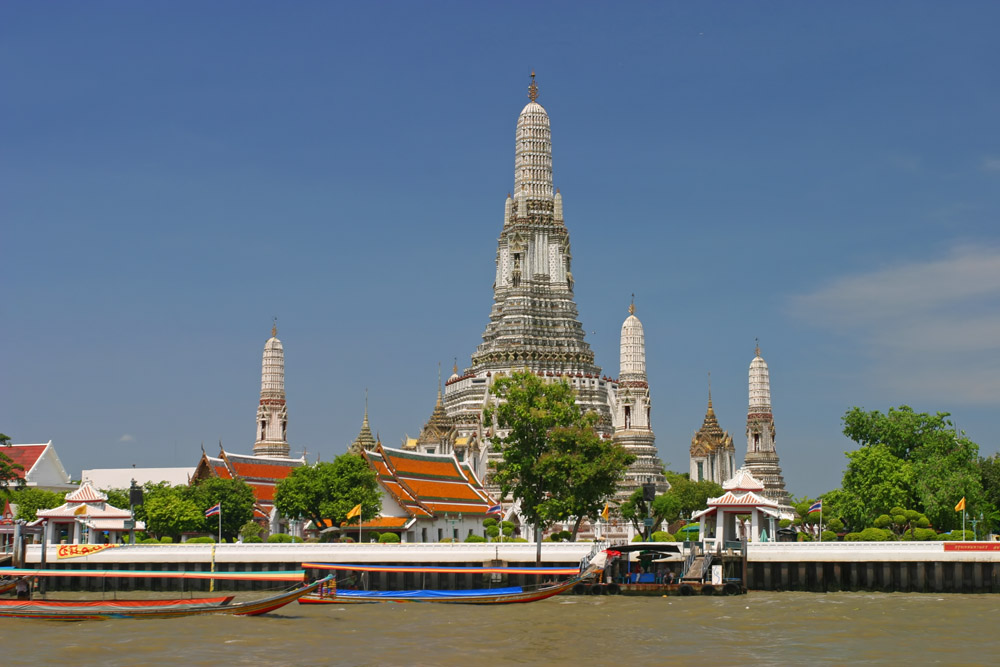
A Tentative List entry is a possible future nomination, not an inscription. Thailand's current tentative register includes Chiang Mai, Phra That Phanom, the Phanom Rung–Muang Tam–Plai Bat ensemble, Andaman Sea nature reserves, Songkhla and its lagoon settlements, and the prang of Wat Arun. Wat Arun in this page's photograph is therefore not presented as an inscribed World Heritage property.
Intangible cultural heritage concerns living practices and knowledge under a different UNESCO convention. Biosphere reserves, geoparks and national parks also have separate systems. None of these labels adds another site to the nine-property World Heritage total. Check the relevant register and visitor rules for the particular place or practice.
Sources: UNESCO · Thailand country register
Reviewed 26 September 2026. Check current entry and visitor rules before traveling.