

🇲🇩 Moldova at a Glance
🌍 Overview — Small, Green and Consequential
Moldova is 33,846 km² — a little smaller than Belgium, a little larger than Moravia — with about 2.4 million people, no coastline, no mountains worth the name, and no natural resources beyond the best agricultural soil in Europe. It is consistently the least-visited country in Europe.
It is also, at this moment, one of the most consequential. A country of two and a half million on the Ukrainian border is holding an EU accession process open under sustained Russian pressure, and in September 2025 its voters returned a pro-European majority anyway.
Where it is
Landlocked between Romania to the west, across the Prut, and Ukraine on every other side. Odesa is two and a half hours from Chișinău by road; the Ukrainian border is 40 km from the capital. The war next door is not an abstraction here.
What it looks like
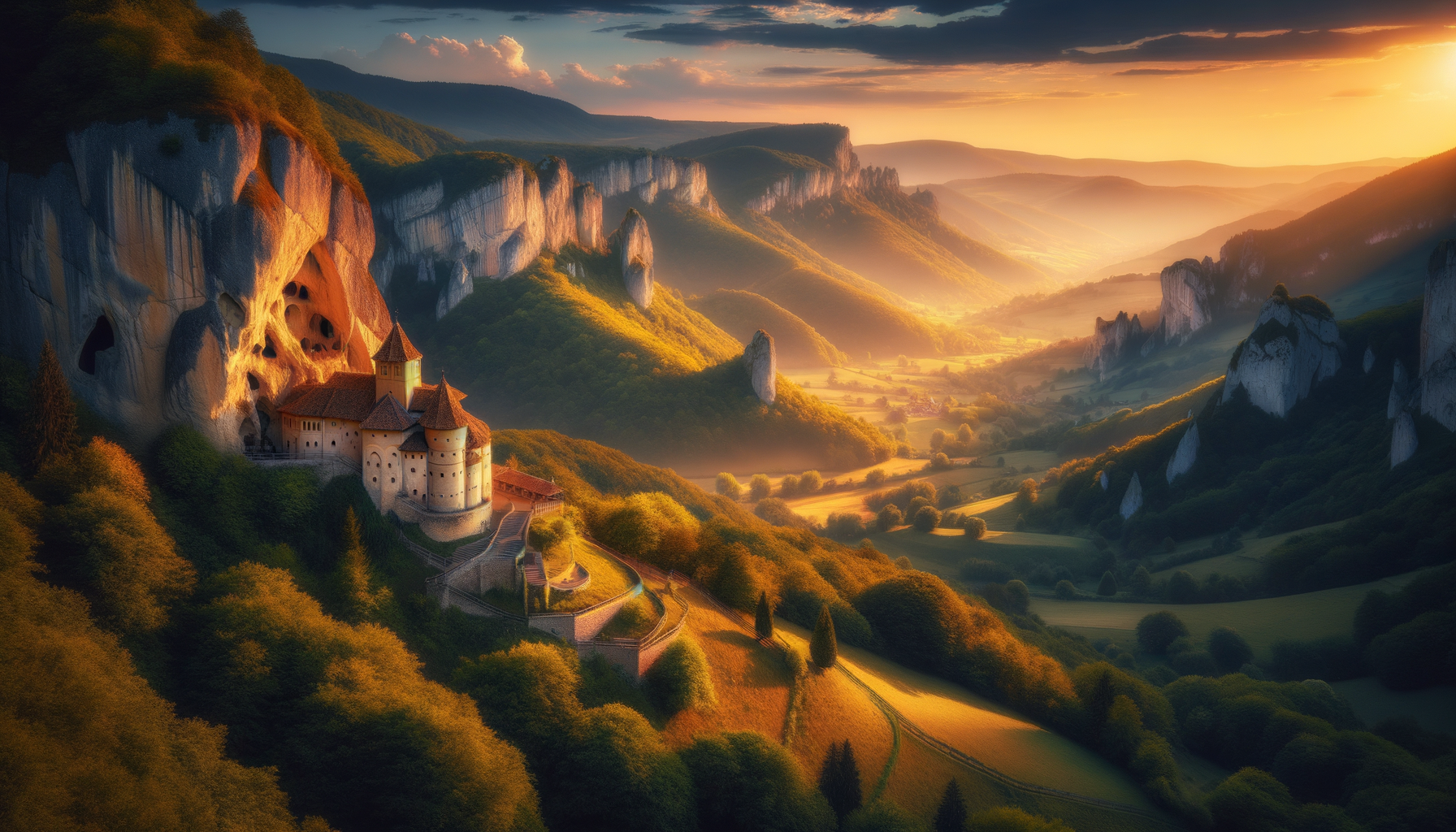
Rolling hills, deep river valleys, oak and beech forest in the Codru belt through the middle, and an enormous quantity of vineyard, orchard and sunflower. The highest point is Bălănești Hill at 430 m. It is one of the greenest and most agricultural countries in Europe.
Who lives there
About 2.4 million in government-controlled territory, plus roughly 350,000 in the breakaway Transnistrian region. The population has fallen by something close to a third since independence, almost entirely through emigration — several hundred thousand Moldovans hold Romanian passports and work in the EU.
The language question
The official language is Romanian — the constitution was amended in March 2023 to say so, replacing the Soviet-era term "Moldovan", which described the same language. Russian remains widely spoken, particularly in Chișinău, the north and Transnistria, and is the first language of a substantial minority.
The wine
Moldova has around 140,000 hectares under vine, one of the highest ratios of vineyard to territory of any country, and it holds the two largest wine cellars in the world — Mileștii Mici and Cricova — both of them former limestone mines with roads you drive along underground.
2026 in one line
Maia Sandu is president, re-elected in November 2024; her PAS party won the parliamentary election of September 2025; Alexandru Munteanu heads the government; EU accession negotiations opened in June 2024 and the declared aim is to conclude them by 2028 and join by 2030.
🏷️ Moldova, Moldavia, Bessarabia
Three names, three things
Moldavia was the medieval principality of Stephen the Great, covering today's Moldova, north-eastern Romania and parts of Ukraine. Bessarabia is the land between the Prut and the Dniester, which Russia took from the Ottomans in 1812. Moldova is the modern republic, which is most of Bessarabia plus a strip beyond the Dniester. Confusing them is the standard error in writing about the country.
The name itself
From the river Moldova in what is now Romanian Suceava county — the heartland of the old principality, which is outside the modern republic. The legend involves Prince Dragoș, an aurochs hunt and a hound called Molda that drowned in the river; the aurochs head is still on the coat of arms.
"Moldovan" as a language
The Soviet Union insisted that Moldovan was a separate language from Romanian, wrote it in Cyrillic, and used the claim to justify a separate Moldovan nationhood. Linguistically it was never true — they are the same language. The Constitutional Court settled it in 2013 and parliament amended the constitution in 2023. Transnistria still writes Romanian in Cyrillic.
Romania, and unification
Moldova and Romania share a language, a history and, for most of the interwar period, a state. Unionism is a real if minority political current, and in April 2026 President Sandu observed publicly that reunification with Romania could speed Moldova's EU accession — a remark that made news precisely because Moldovan presidents do not usually say it out loud.
The passports
Anyone who can show descent from an interwar Romanian citizen may claim Romanian citizenship, and hundreds of thousands of Moldovans have. That makes them EU citizens today, which shapes emigration, remittances and, quietly, the politics of accession.
What Moldovans call themselves
It depends who is asking and where they are from, and the question is genuinely contested rather than merely awkward. A large majority identify as Moldovan; a significant minority as Romanian; Russian, Ukrainian, Gagauz and Bulgarian minorities identify as themselves. Do not assume, and do not push it in conversation.
🗺️ The Best Soil in Europe
The land
A plateau of rolling hills between the Prut and the Dniester, cut by deep river valleys. Nothing is high — 430 m at Bălănești — but very little is flat either, and the combination of slope, aspect and soil is what makes the wine work.
The chernozem
Around three quarters of Moldova is covered in chernozem, the deep black soil that is among the most fertile on earth. It is the country's real natural resource and the reason agriculture is still roughly a tenth of the economy and a much larger share of employment. It is also being lost to erosion at a rate that alarms soil scientists.
The Codru
The forested belt of oak, beech and hornbeam across the centre of the country, once continuous and now fragmented — Moldova is only about 11–12% forested, one of the lowest figures in Europe. The Codru Nature Reserve preserves the best of what is left.
The limestone
Under a great deal of the country lies soft limestone, and it explains more than geology: the toltry reefs of the north are fossil coral from the Sarmatian sea, the Răut gorge at Orheiul Vechi is cut through it, the cave monasteries are dug into it, and the wine cellars at Cricova and Mileștii Mici are the mines it was quarried from.
The rivers
The Dniester (Nistru) along the east, the Prut along the west, both eventually reaching the Black Sea. Moldova has about 430 m of coastline on the Danube at Giurgiulești, acquired in a 1999 land swap with Ukraine, and it is enough for one port.
Climate
Moderate continental: hot summers around 25–30 °C and often higher, cold winters down to −10 °C or below, and roughly 500 mm of rain a year, falling mostly in summer. Drought is the recurring agricultural risk and has become markedly worse; 2020 and 2022 were both severe.
📜 Between Three Empires
The principality
Medieval Moldavia, founded in the fourteenth century, reached its height under Ștefan cel Mare — Stephen the Great, 1457–1504 — who fought the Ottomans, the Poles and the Hungarians, built fortresses and monasteries, and is the national hero of both Moldova and Romania. His statue stands at the head of Chișinău's main boulevard.
Ottoman then Russian
Moldavia became an Ottoman vassal in the sixteenth century. In 1812 Russia took the eastern half — Bessarabia — at the Treaty of Bucharest, and held it for a century, russifying the administration and settling Bulgarians, Gagauz and Germans in the south.
1918 and the interwar years
After the Russian Revolution, Bessarabia declared independence and then voted to unite with Romania in 1918 — the interwar period is the historical reference point unionists appeal to. The Soviet Union never recognised it, and created a token "Moldavian ASSR" on the far bank of the Dniester in 1924, in what is now Transnistria.
1940 and the war
The Molotov-Ribbentrop Pact assigned Bessarabia to the USSR, which annexed it in June 1940 and created the Moldavian SSR. Romania retook it in 1941 as a German ally and participated in the deportation and murder of the region's Jews; the Soviets returned in 1944. Deportations to Siberia followed in 1941, 1949 and 1951, and a famine in 1946–47 killed well over a hundred thousand people.
Independence, 1991
Moldova declared independence on 27 August 1991. In 1992 a short war on the Dniester — several hundred to a thousand dead — ended with Russian 14th Army intervention and the de facto separation of Transnistria, which has not been resolved since.
The thirty years after
Europe's poorest country for most of the period, with mass emigration, oligarchic capture — the one-billion-dollar bank fraud of 2014 removed roughly an eighth of GDP — and a politics oscillating between Moscow and Brussels. The 2020 election of Maia Sandu and the war in Ukraine settled that oscillation, at least for now.
🚩 Transnistria
A strip of land on the east bank of the Dniester, about 4,163 km² and 350,000 people, which declared independence in 1990, fought a short war in 1992, and has functioned as an unrecognised state ever since. No country recognises it, including Russia.
What it is like
It has its own currency (the Transnistrian rouble, worthless outside), its own passports, its own police and army, and a flag with the hammer and sickle — one of the last places in the world where Soviet iconography is state symbolism rather than nostalgia. Lenin still stands outside the parliament in Tiraspol.
Who is there
Roughly equal thirds of Russians, Ukrainians and Moldovans, plus a Russian "peacekeeping" contingent of around 1,500 troops and the Cobasna arms depot — one of the largest Soviet ammunition dumps in Europe, still guarded, still unsafe, and still there.
Sheriff
Much of the economy belongs to a single conglomerate, Sheriff — supermarkets, petrol stations, telecoms, a football club that beat Real Madrid at the Bernabéu in 2021. The overlap between the company and the administration is the defining fact of Transnistrian political economy.
The energy shock
On 1 January 2025, Russian gas transit through Ukraine ended and Transnistria — which had received Russian gas free for thirty years and used it to subsidise everything — lost its supply. Heating and power collapsed in midwinter; industry stopped; the EU stepped in to finance emergency gas. It was the largest change in Transnistria's situation since 1992.
Visiting
Entirely possible and routine. Day trips from Chișinău take about ninety minutes each way. You get an entry slip at the de facto border, valid for a stated number of hours; keep it, and do not overstay. Bring cash in lei or euros — foreign cards do not work — and expect to change money into Transnistrian roubles for anything local.
The honest warning
Your embassy has no consular access there; Czech diplomats cannot help you inside Transnistria. Do not photograph soldiers, checkpoints or official buildings. Do not carry drones, GPS trackers or anything that looks like surveillance equipment. Behave, and it is an unremarkable and genuinely interesting half-day.
🌾 Gagauzia
What it is
An autonomous territorial unit in the south, about 1,850 km² and 130,000 people, centred on Comrat. Unlike Transnistria it is legally part of Moldova, with a settlement negotiated peacefully in 1994 — one of the few genuinely successful autonomy arrangements in the post-Soviet space.
Who the Gagauz are
A Turkic-speaking Orthodox Christian people, which is an unusual combination — most Turkic peoples are Muslim. They arrived in Bessarabia from the Balkans in the early nineteenth century under Russian resettlement. The Gagauz language is close to Turkish and is endangered; most people's working language is Russian.
The politics
Consistently the most pro-Russian part of Moldova, voting heavily against the pro-European parties. Gagauzia's relations with Chișinău have been strained, and the region has been at the centre of several Russian-linked electoral interference and illicit-financing cases in recent years.
Why the autonomy worked
Because it was negotiated before it became a war, and because it gave the Gagauz language status, a regional assembly and a governor while keeping the territory inside Moldova. It is the counter-example to Transnistria and it is studied as such.
Visiting
Comrat is two hours from Chișinău and gets very few visitors. There is a small museum, a Turkish-funded university, wine at Gagauzia's cooperatives, and a distinctly different feel from the rest of the country. It is entirely safe and entirely ordinary.
The wider south
Beyond Gagauzia the south holds Moldova's Bulgarian minority around Taraclia, the Danube port at Giurgiulești, and the Purcari wine estate — the country's most internationally recognised, supplying the British royal household and with a history going back to 1827.
🏛️ Sandu, PAS, and the September 2025 Vote
The system
A parliamentary republic with a directly elected president. A single-chamber Parliament of 101 seats elected by proportional representation; the government is answerable to it. The president's formal powers are limited and Maia Sandu has nonetheless been the dominant political figure of the past six years.
Maia Sandu
A former World Bank economist and education minister, president since 2020 and re-elected in November 2024 in a runoff conducted alongside a referendum on writing the EU objective into the constitution — both won narrowly, and both under documented, large-scale vote-buying and disinformation operations directed from Russia.
The September 2025 election
The parliamentary election was the real test, and Sandu's Party of Action and Solidarity (PAS) won it, returning a clear pro-European majority. It was fought against an intense interference campaign, and the result gave the government a mandate to run the whole accession process within one parliamentary term.
The government
Alexandru Munteanu became prime minister after that election, succeeding Dorin Recean. The government's stated central task is to complete EU accession negotiations by 2028 — an aim that requires a rate of legal and institutional reform Moldova has never previously managed.
The opposition
Fragmented and substantially compromised. The Socialists under Igor Dodon remain the main pro-Russian force; several parties and blocs linked to the fugitive oligarch Ilan Șor have been banned or excluded for illicit foreign financing. Moldova is trying to defend an election against a hostile state while remaining a democracy, and the tensions in that are real.
Corruption and the courts
The binding constraint. Justice-sector reform — vetting judges and prosecutors — is the hardest chapter of the accession process and the one where Moldovan governments have repeatedly stalled. The 2014 bank fraud, in which roughly a billion dollars vanished, remains only partly prosecuted and is still the reference point for public distrust.
🇪🇺 The Accession Process
Moldova applied for EU membership on 3 March 2022, three days after the invasion of Ukraine. It was granted candidate status that June and accession negotiations opened on 25 June 2024. The government's target is to conclude negotiations by 2028 and to be ready to join by 2030.
Where it stands
Screening of the acquis is done or well advanced across the chapters, and Moldova has consistently been assessed as moving faster than most previous candidates. The obstacles are not enthusiasm but capacity: a state administration of a small, poor country has to absorb and implement an enormous body of law.
The hard chapters
Judiciary and fundamental rights, justice, freedom and security, and the fight against corruption and organised crime. These are opened first and closed last by design, and they are exactly where Moldova's record is weakest.
The Transnistria question
Often assumed to be a blocker and increasingly treated as not one. EU High Representative Kaja Kallas has stated that Transnistria will not be allowed to obstruct Moldova's European future, and Sandu has publicly raised the possibility of joining without the region — the Cyprus precedent, where EU law is suspended in the part the government does not control.
The Romania option
In April 2026 Sandu said openly that reunification with Romania could accelerate accession — since Moldova would simply become part of an existing member state. It is a minority position, it alarms Moldova's Russian-speaking minority, and the fact that a sitting president raised it at all is a measure of how the debate has shifted.
What has already changed
Visa-free travel to the EU since 2014; the Association Agreement and DCFTA since 2014; and since 2022 a rerouting of trade toward the EU that has genuinely worked — the EU now takes the great majority of Moldovan exports, replacing a Russian market that was closed by embargo in any case.
The risk
Enlargement fatigue in the EU, and the possibility that Moldova does everything asked of it and still waits. Sandu has publicly asked Brussels for "clarity and engagement", which in diplomatic language means a date. Without one, the domestic argument that Europe is a mirage becomes easier to make — and that is precisely the argument Moscow funds.
💵 Europe's Poorest, and Slowly Less So
The scale
A GDP of roughly 16–18 billion dollars — smaller than a mid-sized European city — and for most of the past thirty years the lowest GDP per head in Europe. That has begun to change: growth has been real if erratic, and Ukraine's wartime disruption has ended Moldova's long-standing position at the very bottom of the table.
What it lives on
Agriculture and food processing — wine, fruit, walnuts, sunflower, grain — plus a growing IT sector (the Moldova IT Park is a genuine success and one of the country's few high-wage employers), light manufacturing for European supply chains, and remittances, which have historically been worth over a tenth of GDP.
The emigration
The defining economic fact. Something approaching a third of the population has left since 1991, mostly to Italy, Romania, Russia and Germany. Villages are half empty and the age structure is badly distorted. The money comes back; the people mostly do not.
The energy break
Moldova was almost entirely dependent on Russian gas and on electricity from the Transnistrian power station burning it. Since 1 January 2025 that supply has ended. Moldova now buys gas on European markets through the Trans-Balkan and Romanian routes, and has interconnected its grid with Romania — expensive, painful, and a strategic vulnerability removed.
Wine as export
Russia used wine embargoes as political pressure in 2006 and 2013, and the effect was the opposite of the intention: Moldovan producers were forced to raise quality and find European buyers, and the industry that emerged is far better than the one that was punished. Wine is now a genuine export success and a national brand.
What holds it back
Corruption, a small domestic market, poor roads, the cost of the energy transition, and the shadow of the war. Also the plain fact that a landlocked country of 2.4 million people next to a war zone is a hard sell to investors, however good the reforms.
🎯 The Interference Campaign
Moldova is the most intensively targeted country in Europe for Russian political interference, and the scale of it is documented rather than alleged. Understanding it explains most of Moldovan politics since 2022.
Vote-buying
In the 2024 presidential election and referendum, Moldovan authorities and international observers documented an organised scheme — money moved through a sanctioned bank into tens of thousands of individual accounts, coordinated through networks linked to the fugitive oligarch Ilan Șor. Estimates of the sums involved ran into the tens of millions of dollars, in a country of 2.4 million people.
Disinformation
Sustained campaigns on Telegram and TikTok, cloned news sites, and paid local influencers. The recurring themes are that the EU will impose sexual minorities and take Moldovan land, that Sandu will drag the country into the war, and that Russia is the only guarantor of cheap energy — an argument the January 2025 gas cut made considerably harder to sustain.
Energy as leverage
Thirty years of subsidised gas to Transnistria and dependence on Transnistrian electricity gave Moscow a switch it could throw. It threw it. The result accelerated exactly the decoupling it was meant to prevent, and the EU financed the emergency supply.
Destabilisation attempts
Moldovan authorities have reported and prosecuted plots involving paid protest organisers, recruited saboteurs and training abroad. The pattern is consistent with what has been documented elsewhere in the region and it has, so far, not produced the intended result.
Why it has not worked
Partly because Moldovans can see Ukraine from their own territory; partly because the Romanian passport and EU work give a large share of families direct experience of the alternative; and partly because the interference is clumsy enough to be visible. The margins have nonetheless been narrow, and nobody in Chișinău treats the outcome as settled.
For a visitor
None of this affects you. Moldova is a safe, calm country to travel in and the interference is a matter of money, media and courts rather than of anything visible on the street. It is, however, worth knowing about, because it is the single most interesting thing happening in the country.
🏙️ Chișinău
A city of around 700,000 — a third of the country — rebuilt almost entirely after the Second World War, laid out on a Soviet grid, and far greener and more relaxed than that description suggests. It is not beautiful in the way Lviv or Sibiu are beautiful, and it is a genuinely pleasant place to spend three days.
The centre
Bulevardul Ștefan cel Mare runs the length of it: the Nativity Cathedral and its free-standing bell tower in the central park, the Triumphal Arch, the government buildings, and the statue of Stephen the Great at the entrance to the park. It is all walkable in an afternoon.
The parks
Chișinău is one of the greenest capitals in Europe. Grădina Publică Ștefan cel Mare in the middle, with the Alley of Classics — busts of Romanian and Moldovan writers under the trees — and Valea Morilor, a large park around a lake with a stepped promenade, ten minutes from the centre.
Museums
The National Museum of History (with a full-size diorama of the 1944 Iași-Chișinău offensive that is worth the entry on its own), the National Museum of Ethnography and Natural History in a spectacular Moorish-revival building, and the Pushkin House, where the poet spent three years of exile and was reportedly bored out of his mind.
What survived the war
Not much, and what did is worth seeking out: pockets of nineteenth-century Bessarabian architecture on the side streets below the centre, the Mazarakii church from 1752 — the oldest building in the city — and the water tower in the old quarter.
Eating and drinking
Far better than expected and very cheap: proper Moldovan restaurants, a good wine-bar scene that has grown up around the export success of the past decade, Georgian and Turkish food, and a café culture that fills the streets from May. Look for Carpe Diem and the wine bars around the centre for tasting flights.
Getting around
Walk in the centre; trolleybuses and marshrutkas beyond it; Yandex Go and local ride apps are cheap and reliable. The airport is 13 km out and there is a bus, but a taxi is a couple of euros.
⛪ Orheiul Vechi
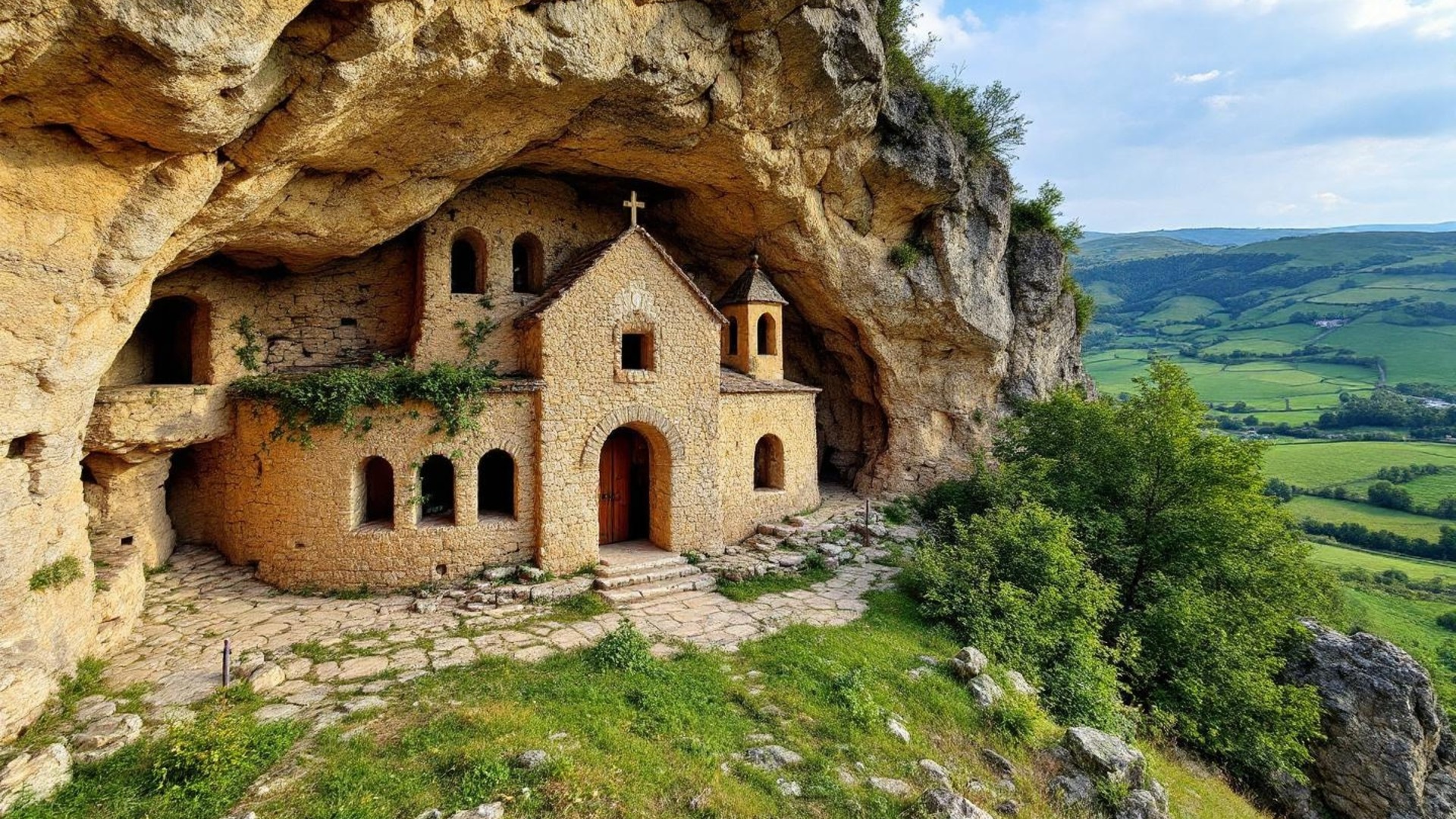
The one unmissable place in Moldova: a bend of the Răut river cutting a limestone gorge, with a cave monastery dug into the cliff, a small church on the promontory above, and a village of stone houses below. It is on the UNESCO tentative list and is Moldova's strongest candidate for full inscription.
What is there
The cave monastery cut into the cliff at Butuceni, reached along a path and entered through a low doorway; the Church of the Ascension of St Mary, a small whitewashed church of 1904 on the clifftop; and the whole layered archaeology beneath — Geto-Dacian fortifications, a fourteenth-century Golden Horde town called Shehr al-Jedid, and a Moldavian fortress.
The landscape
This is the point as much as the buildings. The Răut loops through a limestone canyon with terraced slopes, and from the clifftop the view runs for kilometres over the meander, the village of Butuceni and the fields. Go at either end of the day.
Butuceni and Trebujeni
Two villages of stone-built houses with vine-shaded courtyards, and the best rural guesthouses in Moldova — the pensiuni here serve their own wine, their own placinte and their own everything, and staying overnight is much better than the day trip most people do.
Getting there
About 60 km north of Chișinău, an hour by car. There are marshrutkas to Trebujeni but they are infrequent and awkward; most visitors either drive, take a tour, or arrange a transfer through a guesthouse. Allow a full day, and preferably a night.
Practical notes
The monastery is an active religious site: cover shoulders and knees, women may be asked to cover their heads, and there is no charge but there is a donation box. The cave is low, dark and slippery. There is very little shade on the clifftop in summer.
Nearby
Curchi Monastery, one of the finest baroque monastic complexes in the country, and Țîpova — another cave monastery, further north above the Dniester, harder to reach and even less visited.
🍷 The Underground Cities
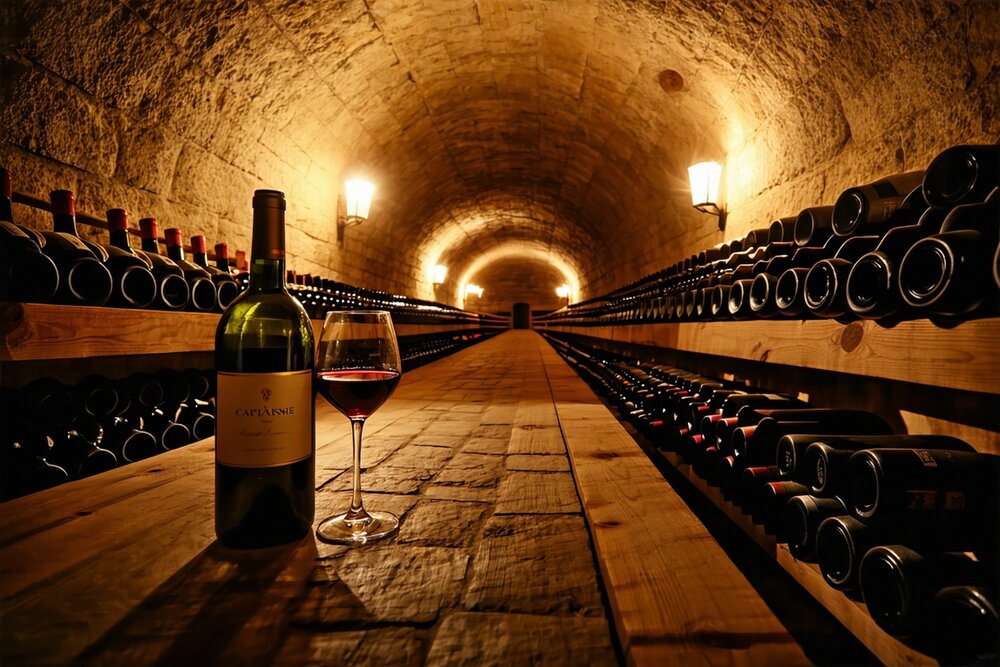
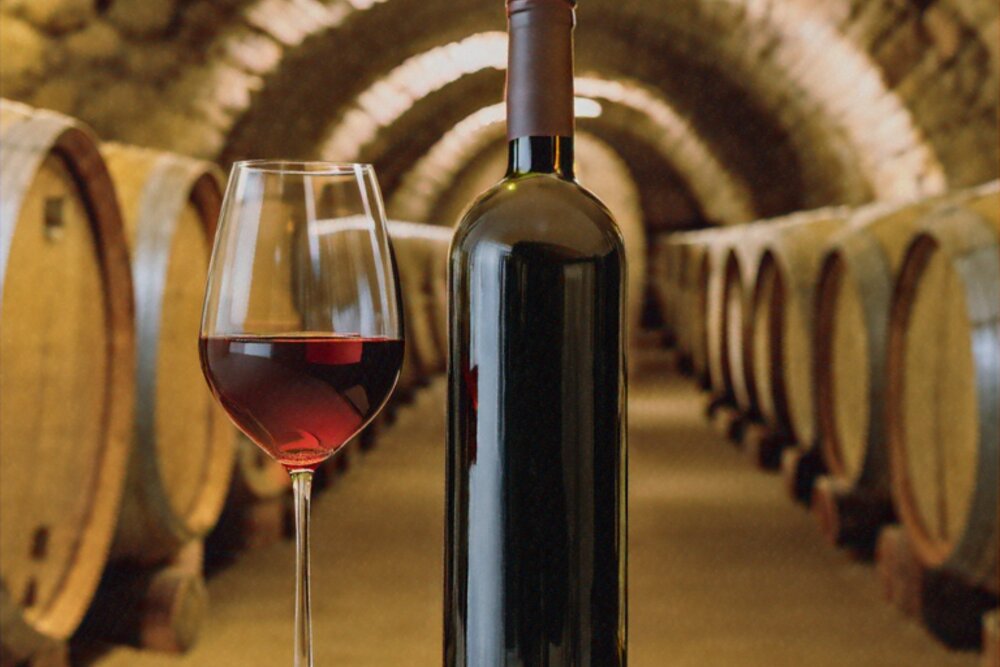
Moldova holds the two largest wine cellars in the world, and both are the same thing: disused limestone mines, quarried for the stone that built Chișinău, and then filled with wine because the temperature underground is a constant 12–14 °C and the humidity is perfect.
Mileștii Mici
The record holder: around 200 km of galleries, of which some 55 km are in use, and a collection of roughly two million bottles — the largest in the world by the Guinness count. You drive through it. Tours are by car with a guide, and you should book ahead.
Cricova
The famous one, 15 km north of Chișinău and easier to reach: about 120 km of galleries with streets named Cabernet, Feteasca, Pinot. It holds a collection put together partly from wines looted by the Soviets, including bottles from Göring's cellar, and a set of private cellars belonging to assorted heads of state. Yuri Gagarin famously got lost in it for two days in 1966.
Cojușna and Brănești
The smaller alternatives — Cojușna is a short hop from Chișinău and Brănești is a mine complex near Orheiul Vechi with a restaurant underground. Both are cheaper, quieter and perfectly good.
Purcari
Not a mine but the country's most internationally known estate, founded in 1827 in the south-east near the Dniester, historically a supplier to the Russian imperial court and later to the British royal household. It has a hotel, and the Negru de Purcari blend is the wine most likely to be poured for you at an embassy.
How to visit
Book ahead, in every case — these are working wineries and tours run to a schedule. It is cold underground (12–14 °C) whatever the surface temperature; take a jacket even in August. And take a driver: tastings are generous and the police are not relaxed about drink-driving.
National Wine Day
The first weekend of October, in the main square in Chișinău: essentially every producer in the country pouring at once, plus food and music. It is the best time to be in Moldova and accommodation books out well in advance.
🕍 Monasteries and the Countryside
Căpriana
The oldest monastery in Moldova, founded in the fifteenth century under Stephen the Great, in oak forest 40 km from Chișinău. Closed under the Soviets, restored in the 2000s, and the burial place of the Moldavian metropolitan Gavriil Bănulescu-Bodoni.
Curchi
The most architecturally impressive: a large baroque complex begun in the eighteenth century, used as a psychiatric hospital under the Soviets, and restored over the past two decades. The main church is genuinely grand in a way little else in the country is.
Țipova
A cave monastery above the Dniester, cut into the cliff on several levels and reached by a path down a wooded gorge with waterfalls. Local legend has it as the place where Stephen the Great married Maria Voichița, and — with less evidence — where Orpheus is buried. Harder to reach than Orheiul Vechi and correspondingly empty.
Saharna
Nearby: a monastery in a ravine with a stream and a series of waterfalls, a set of caves, and a footprint in the rock traditionally attributed to the Virgin. It is the country's main pilgrimage site and is busy on feast days.
Soroca
In the north on the Dniester: a well-preserved circular fortress of 1499, built by Stephen the Great and restored to a high standard, and the town's Roma hill — a district of extravagant mansions built by Roma families, several modelled on buildings their owners had seen abroad, including the Bolshoi Theatre. It is unlike anything else in Europe.
The villages
The real texture of the country: stone or clay-and-straw houses with painted gates and vine-covered courtyards, an Orthodox church, a well, and an enormous amount of wine made at home. Rural tourism (pensiuni agroturistice) has grown considerably and is the best way to see it. Every household makes wine, and you will be given some.
👥 Who Lives Here
The mix
Roughly three quarters identify as Moldovan or Romanian; the rest are Ukrainian, Russian, Gagauz, Bulgarian and Roma. The minorities are concentrated — Gagauz in the south, Bulgarians around Taraclia, Ukrainians in the north and east, Russians in the cities and Transnistria.
Language in practice
Romanian is official and universal in government and education. Russian is the everyday language of a large minority and the lingua franca between minorities, and remains dominant in Transnistria and Gagauzia. Most Moldovans under forty speak both; older people in the north and east often speak only Russian. English is limited outside Chișinău and the tourism sector.
Religion
Overwhelmingly Orthodox Christian, and split between two jurisdictions: the Metropolis of Chișinău and All Moldova, under the Moscow Patriarchate, and the Metropolis of Bessarabia, under Bucharest. Since 2022 parishes have been moving from the first to the second, which is a religious dispute and unmistakably also a political one.
The diaspora
Something close to a third of Moldovans live abroad — Italy, Romania, Russia, Germany, Israel, the UK. They vote, and their votes are consistently and decisively pro-European, which is why access to overseas polling stations is itself a contested political issue at every election.
The Jewish past
Chișinău had a Jewish population of around a half of the city before the twentieth century, and the Kishinev pogrom of 1903 was an event of international significance that helped drive Jewish emigration to Palestine and America. The Holocaust in Bessarabia and Transnistria, carried out under Romanian administration, killed the great majority of those who remained. A small community survives; the Jewish cemetery and the memorial are worth the visit.
Everyday life
Formal, courteous and hospitable in a way that surprises visitors: you will be fed, and you will be given wine, and refusing either is difficult. Family and village networks matter enormously. So does the fact that almost every family has someone working abroad.
🌻 North and South
The north
Bălți, the second city and an industrial centre; the toltry — fossil coral reefs of the Sarmatian sea, exposed as limestone ridges along the Prut, one of the more unusual geological features in Europe; and the Padurea Domneasca reserve with its floodplain oak forest and heron colony.
Rezervația Naturală Codru
The country's oldest reserve, in the central forest belt: oak, beech, hornbeam, and a good deal of what Moldova looked like before it was ploughed. There is a small museum and marked trails, and it is an easy half day from Chișinău.
The Dniester valley
The scenic spine of the country: limestone bluffs, cave monasteries at Țipova and Saharna, the fortress at Soroca, and villages along the water. If you have a car and three days, this is the drive to do.
The south and the wine road
The warmest and driest part of the country, and where the best red wine comes from: Ștefan Vodă and the Purcari zone near the Dniester, Valul lui Traian in the south-west. Several estates now have hotels and restaurants, and the Drumul Vinului wine route links them.
Giurgiulești
Moldova's 430 metres of Danube frontage and its only port, acquired in a land swap with Ukraine in 1999. It is not a tourist destination and it is a good piece of trivia and a genuinely important piece of infrastructure.
What is missing
There is no seaside, no skiing, no mountains and no great city. Moldova's appeal is wine, countryside, monasteries and the sheer absence of other tourists. Anyone expecting more will be disappointed; anyone who wants that will find it does it very well.
🎻 Doina, Martisor and the Wedding
The music
Doina, the improvised lyrical song form shared with Romania and inscribed on UNESCO's intangible heritage list, and the lăutari tradition of professional village musicians — violin, cimbalom, accordion, double bass, and increasingly brass. It is fast, ornamented, technically formidable and played at every wedding in the country.
Mărțișor
1 March. Everyone wears a small red-and-white twisted thread, given as a token of spring, pinned to the coat and worn for the month. It is on the UNESCO list, shared with Romania, Bulgaria and North Macedonia, and it is the most visible living folk custom in the country. There is also a music festival of the same name.
The wedding
The central social institution, and enormous: several hundred guests is normal, it runs all night, there is a formal sequence of dances and gift-giving, and the whole village is involved. If you are invited to one, go — and bring an envelope.
Crafts
Carpet weaving with the geometric and floral patterns of Bessarabia, pottery from Hoceni and Iurceni, carved wooden gates, and the painted village gate as an art form in itself. The ethnography museum in Chișinău is the place to see it properly.
Literature and the alphabet
The literature is shared with Romania — Eminescu above all, whose bust stands on the Alley of Classics. The 1989 language law restoring the Latin alphabet after fifty years of enforced Cyrillic was the founding act of the independence movement, and the date, 31 August, is still a national holiday, Limba Noastră — Our Language.
Modern culture
A small but real film and music scene, a strong tradition in chess and in wrestling, and — the export everyone knows without knowing it is Moldovan — O-Zone, whose 2003 single became one of the most-played songs in the world. Moldova has also become an unusually committed Eurovision country.
🍽️ Maize, Cabbage, Cheese and Dill
Moldovan cooking is Romanian at its base, with strong Ukrainian, Russian, Turkish and Balkan layers and a great deal of preserving. It is peasant food in the best sense: seasonal, generous, heavy on vegetables in summer and on pickles and pork in winter, and built around a table that nobody is allowed to leave hungry.
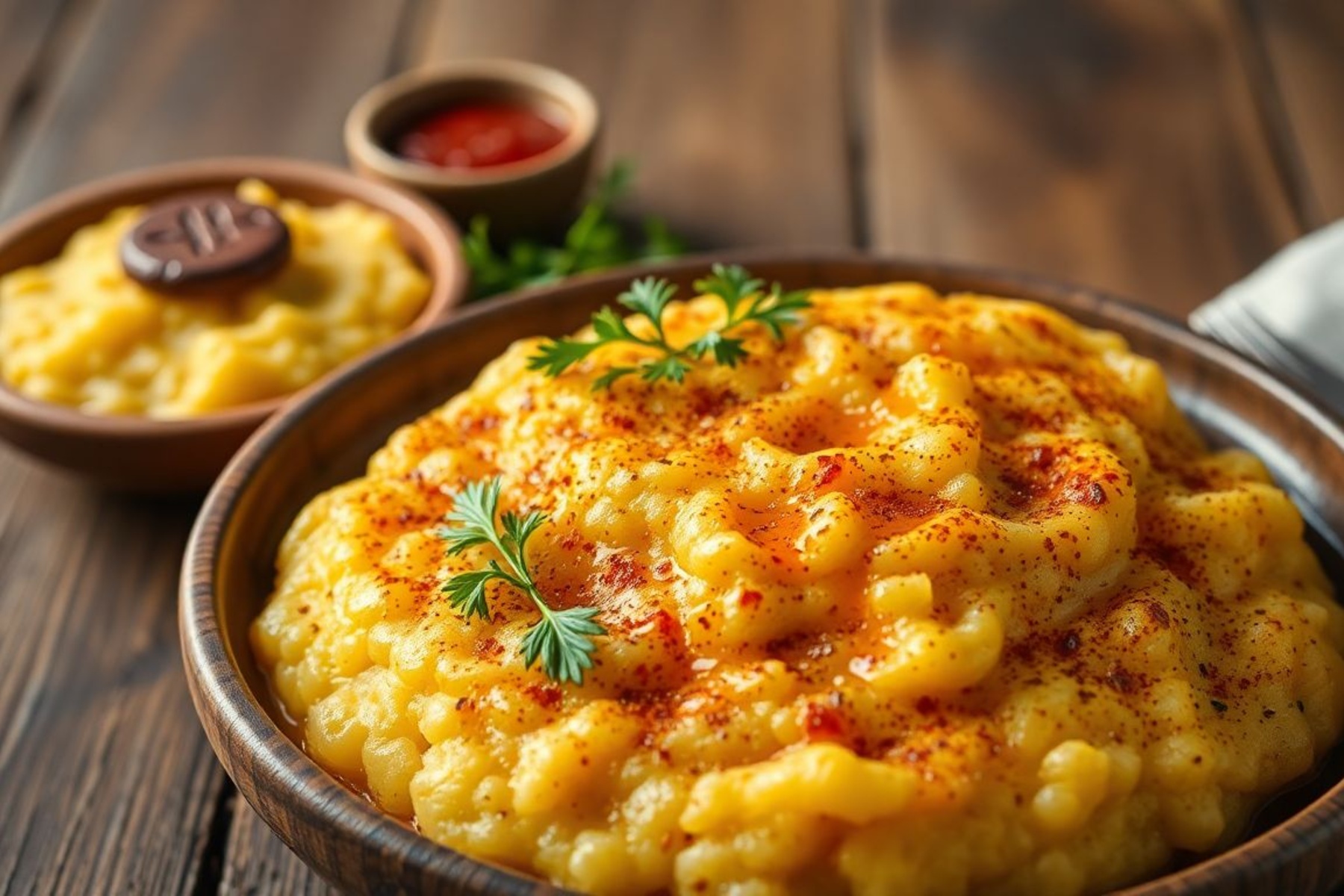
Mămăligă
Maize porridge, stiff enough to hold its shape, eaten with brânză (salty sheep's cheese), smântână (sour cream) and jumări (pork scratchings), or as the starch beside anything. Maize arrived in the seventeenth century and displaced millet; it kept the peasantry alive and also gave them pellagra, which is a piece of history worth knowing.
Sarmale
Cabbage rolls: minced pork and rice with onion, wrapped in pickled cabbage leaves or in vine leaves and slow-cooked for hours in tomato. The vine-leaf version is more Moldovan than Romanian and is smaller — the size of a thumb. Served with mămăligă and sour cream.
Plăcinte
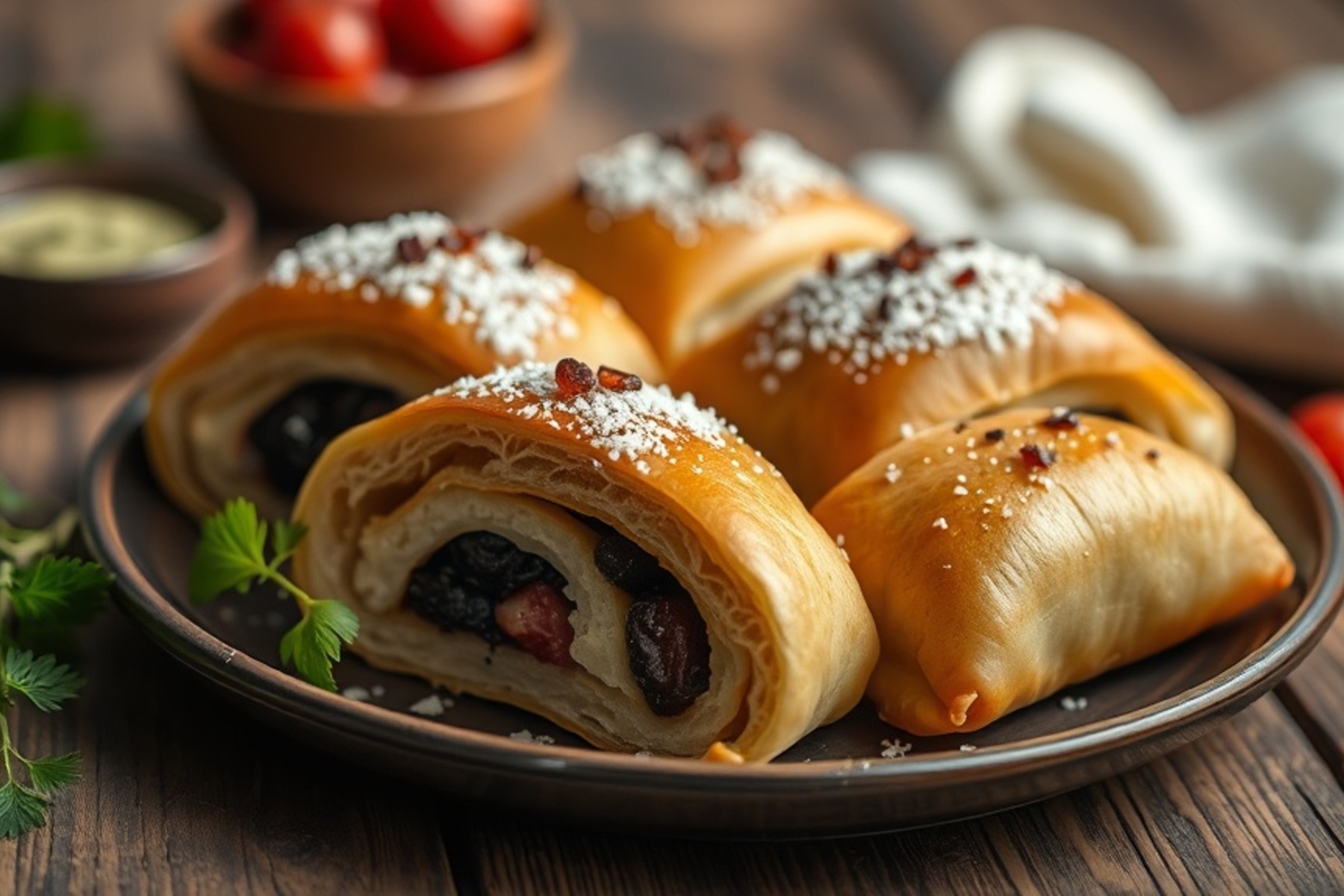
The everyday pastry and the thing you will eat most: a flat round or square pan-fried pie of thin dough, filled with sheep's cheese, cabbage, potato, pumpkin or sour cherries. Sold from every market and bakery, eaten warm, and one of the great cheap foods of Europe.
Soups
Zeamă, the national chicken soup, soured with borș — fermented wheat bran liquid, not beetroot — with homemade noodles and a great deal of lovage. Ciorbă more generally. Both are eaten year-round and both are better than they sound.
The rest
Mititei, skinless grilled minced-meat rolls; friptură, roast pork; carp and other river fish; vinete, aubergine salad; and an enormous repertoire of preserves — pickled cabbage, tomatoes, cucumbers, peppers, and jam from everything. Walnuts are everywhere, and Moldova is one of Europe's largest exporters of them.
How to eat
At a village guesthouse if you possibly can. Restaurant Moldovan food in Chișinău is good; home cooking at a pensiune in Butuceni or on the wine route is in a different category, costs almost nothing, and comes with the household's own wine, which you will not be permitted to decline.
👨🍳 Two Recipes You Can Actually Make
Plăcinte cu Brânză — Moldovan Cheese Pies
Makes 6 · 25 min prep · 1 h resting · 20 min frying · the everyday food of the country
Ingredients: Dough: 400 g plain flour; 220 ml warm water; 3 tbsp sunflower oil; 1 tsp salt; 1 tsp sugar. Filling: 400 g firm salty sheep's or goat's cheese — Moldovan brânză de oi; feta rinsed of some of its salt is the closest widely available substitute; 2 eggs; a large bunch of dill, chopped; black pepper. Plus sunflower oil for frying.
Method: Mix the flour, salt and sugar, add the water and oil, and knead to a soft smooth dough — about eight minutes. Rub it with a little oil, cover, and rest it for an hour; this is what makes it stretchable and it is not optional. Crumble the cheese and mash it with the eggs, the dill and plenty of pepper — no salt, the cheese has enough. Divide the dough into six, and on a well-oiled surface stretch each piece by hand until it is almost transparent, the size of a dinner plate or larger. Put a portion of filling in the middle and fold the edges over it, envelope-fashion, into a flat square or round parcel. Fry in a heavy pan in a few millimetres of hot oil, 4–5 minutes a side, until deep gold and blistered.
💡 Eat them hot, with sour cream. They are pan-fried, not baked, and they are flat — a plăcintă is a disc or a square you can hold in one hand, not a rolled log. The same dough takes cabbage, potato, pumpkin or sour cherries.
Zeamă de Găină — Moldovan Sour Chicken Soup
Serves 6 · 20 min prep · 1½ h cooking · the soup eaten in every house in the country
Ingredients: 1 chicken, jointed, or 6 thighs on the bone; 2 carrots; 1 parsnip or parsley root; 1 onion; 1 red pepper; 2 potatoes, diced; 200 ml borș acru — fermented wheat-bran liquid, sold in Romanian and Moldovan shops; failing that, 3 tbsp lemon juice plus 100 ml sauerkraut brine, which gets you most of the way; a large bunch of lovage (leuștean) — this is the defining flavour and parsley is not a substitute; 100 g homemade noodles or fine egg noodles; salt.
Method: Cover the chicken with 2.5 litres of cold water, bring slowly to a simmer and skim carefully — a clear broth matters here. Add the whole onion, the carrots, the parsnip and the pepper and simmer gently for an hour. Lift out the chicken, shred the meat off the bone and return it; discard the onion, dice the vegetables and return those too. Add the potatoes and cook 10 minutes, then the noodles and cook until just done. Bring the borș to the boil separately and add it to the soup to taste — it should be distinctly, cleanly sour. Take the pot off the heat and throw in a great deal of chopped lovage.
💡 Serve with fresh chilli and bread, and mămăligă if you are being serious about it. The soup should be sour enough to make you blink; Moldovan cooks add more borș, not less.
🍇 Fetească, Rara Neagră and the Comeback
Moldova has been making wine for around 5,000 years and has about 140,000 hectares under vine. What matters for a visitor is that the last twenty years have been transformative: Russian embargoes forced the industry to abandon volume and chase quality, and the wine now being made is genuinely good and absurdly cheap.
The native grapes
Fetească Albă and Fetească Regală (white, floral, shared with Romania), Fetească Neagră (red, dark-fruited, structured, the best of them), and Rara Neagră — the rare native red, light and perfumed, and the one to try if you want something you cannot get anywhere else. Also Viorica, an aromatic white created in Moldova.
The international ones
Cabernet Sauvignon, Merlot, Chardonnay, Sauvignon Blanc and Pinot Noir are all planted extensively and often well made. Negru de Purcari — a Cabernet, Saperavi and Rara Neagră blend — is the country's flagship and has been since the nineteenth century.
The regions
Codru in the centre (cooler, whites and sparkling), Ștefan Vodă in the south-east near the Dniester (the best reds, including Purcari), and Valul lui Traian in the south-west (warm, full-bodied reds). Small volumes also from the north.
Sparkling
A serious tradition: Cricova has made traditional-method sparkling since the 1950s and it is still one of the country's better products. Spumant made properly, at a fraction of Champagne prices.
Divin and the rest
Divin is Moldovan brandy — the same thing as cognac, renamed for trademark reasons — and it is good and cheap. Then rachiu and țuică, the fruit spirits, made at home in industrial quantities, and vin de casă, the household wine that every family makes and that you will be given by the jug.
Buying it
Prices in Moldova are startling by European standards: excellent bottles from €4–10, the country's best for €15–30. Take some home — it travels, and almost nobody in Central Europe has tried it. Ask specifically for Rara Neagră and Fetească Neagră, which is where the interest is.
🏛️ What Is Protected
The one World Heritage site
The Struve Geodetic Arc, a transnational inscription covering survey points from Norway to the Black Sea, of which Moldova holds two — at Rudi and Nekrasovka. It is a genuine piece of scientific history and, as a visitor attraction, it is two marked stones in fields.
What ought to be on the list
Orheiul Vechi — the whole cultural landscape of the Răut gorge, the cave monastery, the archaeology and the villages — has been on the tentative list since 2017 and is by far Moldova's strongest candidate. A full nomination has been in preparation for years.
Intangible heritage
Moldova does well here, mostly through shared inscriptions with Romania: the doina, the mărțișor custom, traditional wall-carpet craftsmanship, and the practices around the lăutari ensembles. These are living traditions rather than museum pieces.
The monasteries
Căpriana, Curchi, Hîncu, Saharna, Țipova and the cave complexes are nationally protected, and most have been restored since 2000 after decades of Soviet closure and neglect. The restorations vary from careful to enthusiastic.
What is disappearing
The village vernacular: clay-and-straw houses, painted gates, carved posts, water wells with roofs — abandoned as families emigrate and replaced with concrete when they send money home. There is no effective protection for it and there is very little money to provide any.
The Soviet layer
Chișinău's post-war architecture, the mosaics on apartment blocks and bus stops, the monumental buildings — increasingly recognised as heritage rather than embarrassment, and increasingly demolished before that recognition arrives. Worth looking at while it is there.
🌿 Steppe, Forest and Fossil Reefs
The problem first
Moldova is one of the most intensively farmed countries in Europe — around three quarters of the land is agricultural — and only about 11–12% is forested. Whatever wild nature exists here exists in fragments, and the fragments are what the reserves protect.
Codru Reserve
The oldest and best: 5,000 hectares of oak, beech and hornbeam in the central hills, with deer, wild boar, badger and a good bird list. There is a small museum, marked paths and almost nobody. An easy half day from Chișinău.
Pădurea Domnească
"The Princely Forest" on the Prut floodplain in the north: ancient oaks, seasonal wetland, a large heron and cormorant colony, and one of the last pieces of the floodplain forest that once lined the river. Also a bison enclosure.
The toltry
The most unusual landscape in the country: fossil coral reefs from the Sarmatian sea of fifteen million years ago, now exposed as limestone ridges and crags along the Prut in the north around Rudi and Trinca. There is nothing else like them in this part of Europe and almost nobody goes.
Prutul de Jos and the lakes
In the far south, the Lower Prut Ramsar wetland around Lake Beleu — reedbed, pelicans, and a stopover on a major migration route. Combined with the Danube frontage at Giurgiulești it is the country's most important bird habitat.
Wildlife realistically
Roe and red deer, wild boar, fox, badger, and a small and struggling population of European bison reintroduced at Pădurea Domnească. Birds are the strength: over 280 species, including the eastern imperial eagle and the great bustard on the southern steppe. Bring binoculars; do not expect big mammals.
📅 When to Go
May and June
The best of it: green, warm without the summer heat, everything in flower, and the countryside at its most attractive. Long days, comfortable walking, and no crowds because there are never crowds.
September and October
Equally good and arguably better, because this is harvest. Wineries are working, villages are pressing grapes, the light is superb, and National Wine Day falls on the first weekend of October in Chișinău. Book accommodation early for that weekend and for nothing else all year.
July and August
Hot — regularly above 30 °C and increasingly above 35 — with little shade in the countryside and no coast to escape to. Chișinău's parks and the underground cellars are the refuge. Perfectly doable, just plan around the middle of the day.
November to March
Cold, grey and quiet, with temperatures well below zero in January and February. Rural roads can be difficult. It is the cheapest time and the wine cellars are the same temperature all year, but the countryside — which is the point of Moldova — is not at its best.
Dates worth knowing
1 March Mărțișor; Easter (Orthodox calendar) and especially Paștele Blajinilor, the Monday a week later, when families eat and drink at the graves of their relatives — an extraordinary custom and a strange one to intrude on; 27 August Independence Day; 31 August Limba Noastră; first weekend of October National Wine Day.
How long
Three to four days covers Chișinău, Orheiul Vechi, a cellar and a day trip to Transnistria. A week lets you add the Dniester valley, Soroca, the south and the wine route properly, which is the version worth doing.
✈️ Getting There and Getting Around
By air
Chișinău International (KIV), 13 km from the centre. Wizz Air, Ryanair, HiSky, Air Moldova successors and several others fly from across Europe. There is no direct flight from Prague at time of writing; the usual routings are via Vienna, Warsaw, Budapest, Bucharest, Munich or Istanbul, about 5–7 hours door to door.
The airspace caveat
Moldovan airspace borders Ukraine's and has been closed at short notice during the war, and drone and missile debris has fallen on Moldovan territory more than once. Flights are operating normally, but buy flexible tickets and travel insurance that covers disruption, and check before you go.
By land
Excellent bus connections to Bucharest, Iași, Cluj and across Romania, and to Ukraine where the situation allows. From Iași it is about three hours to Chișinău and Iași has good European connections — for many travellers this is the cheaper and more reliable route.
By train
A slow overnight sleeper from Bucharest and services to Iași; the network is Soviet-gauge in places and there are gauge changes. It is atmospheric and it is not a fast way to travel. There is no rail link to Ukraine in normal operation.
Getting around
Marshrutkas — shared minibuses — go everywhere, cost almost nothing, leave when full and are the way Moldovans travel. Buses between towns are fine. For the countryside, the monasteries and the wine route, hire a car or hire a driver for the day, which costs €50–80 and is what most visitors end up doing.
Driving
Roads range from good main highways to genuinely bad rural surfaces, and rural driving after dark means unlit horse carts and pedestrians. Zero tolerance on alcohol — 0.0 — which matters in a country where every stop involves being offered wine. Take a driver on cellar days.
🧭 Practical Matters
Entry
Czech and EU citizens travel visa-free for up to 90 days in any 180 and may enter on an ID card. There is no entry fee and the border is straightforward. Note that Moldova is not in Schengen and not in the EU, so this is a real border with a stamp.
Money
The Moldovan leu (MDL). Cards are accepted throughout Chișinău and in most towns; villages, markets and marshrutkas are cash. ATMs are plentiful. Euros are easy to change at the exchange kiosks, which are competitive and everywhere. Transnistria uses its own currency and takes no foreign cards.
Costs
Moldova is the cheapest country in Europe for a visitor, by a clear margin. This is the main practical fact about travelling here and it is covered in detail below.
Health and safety
No vaccinations needed; standard European precautions. Tap water in Chișinău is treated but most residents drink bottled, and rural well water should not be drunk untreated. Medical care is basic outside private clinics in Chișinău — take insurance, and note the EHIC does not apply. Moldova is a very safe country for visitors; the realistic risks are taxi overcharging and rural driving.
Connectivity
Excellent and cheap — Moldova has some of the fastest and least expensive mobile internet in Europe. Local SIMs (Orange, Moldcell) cost a few euros. EU roaming does not apply, so buy one or check your operator's rates before you land.
The war next door
Moldova is not at war and is safe to visit. But the Ukrainian border is 40 km from Chișinău, there are large numbers of Ukrainian refugees, and debris from drones and missiles has landed on Moldovan soil. Register with DROZD, read the MZV ČR advice before you book, and keep an eye on it while you are there.
🛃 Visiting Transnistria
It is one of the more interesting half-days available anywhere in Europe and it needs to be done with a little care. This section is separate because the rules are genuinely different once you cross.
Getting in
Marshrutkas from Chișinău's central bus station to Tiraspol take about 90 minutes and cost a couple of euros. At the de facto border you get off, present your passport, and are issued a migration slip valid for a stated number of hours — usually 24, sometimes less. Keep it; you must hand it back on the way out.
What to see
Tiraspol's main street with the Lenin statue outside the Supreme Soviet, the Soviet-era war memorial with a T-34 on a plinth, the Sheriff sports complex, and Bender (Bendery) across the river with its genuinely impressive Ottoman fortress. Half a day covers all of it.
Money
The Transnistrian rouble — including plastic coins, which are a souvenir in themselves — is the only accepted currency and cannot be obtained or spent outside. Change a small amount of lei or euros at a kiosk and spend it before you leave. No foreign cards work anywhere.
The rules
Do not photograph soldiers, police, checkpoints, military installations or government buildings. Do not bring drones, GPS loggers or professional camera rigs. Do not discuss politics with officials. Do not overstay your slip — the fine and the hassle are real.
The honest risk assessment
Thousands of tourists do this every year without incident, and it is not a dangerous place. The real point is that your embassy cannot help you inside: the Czech Republic has no consular presence and no legal standing there. If something goes wrong you are dependent on the goodwill of an administration nobody recognises. Behave accordingly.
Should you
If you are interested in how a frozen conflict actually looks from the inside, yes — it is a genuinely instructive place and its people are ordinary and hospitable. If you are looking for Soviet cosplay, be aware that 350,000 people live there and have had a very hard few years, most recently the winter of 2025 when the gas stopped.
💶 What It Costs
Moldova is the cheapest country in Europe and it is not close. For a Czech traveller the ground costs are roughly half of Czech prices and a quarter of Western European ones, and the quality — particularly of food and wine — is far better than the price suggests.
Sleeping
A hostel bed €8–14. A good three-star or apartment in central Chișinău €25–45. The best hotels in the country €70–120. A rural pensiune at Orheiul Vechi, including a homemade dinner and the household's wine, €25–45 — and that is the best-value accommodation experience in Europe.
Eating
A plăcintă from a bakery €0.50–1. Lunch in a canteen or cantină €3–5. A full dinner with wine in a good Chișinău restaurant €12–20. It is genuinely difficult to spend a lot of money on food here.
Wine
A very good bottle in a shop €4–10; the country's flagship wines €15–30. A cellar tour with tasting at Cricova €25–40, Mileștii Mici €20–35 depending on how many wines. This is where to spend money and it is still cheap.
Getting about
A marshrutka between towns €1–4. A city bus or trolleybus €0.30. A taxi across Chișinău €2–4. Car hire €25–40 a day. A driver with car for a full day in the countryside €50–80, which is the sensible option for cellar visits.
A realistic daily budget
€30–40 a day backpacking. €60–90 a day comfortably: a good hotel, restaurants, a driver some days, cellar tours. €150 a day is difficult to spend without trying.
In Czech terms
Flights from Prague via a hub typically 4,000–9,000 Kč return, often less on a Wizz Air sale into a nearby airport. On the ground, 1,200–2,000 Kč a day covers a comfortable trip. A week in Moldova including flights is achievable for around 15,000–22,000 Kč — one of the best-value weeks available anywhere in Europe.
🇨🇿 Notes for Czech Visitors
Getting there
No direct flight from Prague. Routings via Vienna, Warsaw, Budapest, Munich, Bucharest or Istanbul, typically 5–7 hours door to door, and often 4,000–9,000 Kč return. Alternatively fly to Iași in Romania and take the three-hour bus, which is sometimes cheaper and is a pleasant way in.
Documents
Czech citizens travel visa-free for 90 days in any 180 and may enter on an ID card. Bring a passport anyway if there is any chance of crossing into Transnistria. Moldova is outside the EU and outside Schengen — it is a proper border.
Money and health
Moldovan leu, cash outside the cities, euros easy to change. The Czech EHIC does not apply: buy commercial travel insurance. Care in Chișinău's private clinics is decent and cheap by Czech standards; rural provision is thin.
MZV ČR and DROZD
The Czech Republic has an embassy in Chișinău, which is more than can be said for most of the destinations in this series. Register in DROZD before you go — Moldova borders a war and airspace has closed at short notice — and read the ministry's current advice, particularly the section on Transnistria, where Czech consular protection does not reach.
Language
Romanian and Russian. English is limited outside Chișinău's centre and the wine industry. Any Slavic language helps enormously — Czech speakers will find Russian easier to pick up here than most, and older Moldovans in the north and east often speak only Russian. A few words of Romanian go down very well.
Why it works from Prague
Because it is close, cheap, safe, and almost nobody goes. A week in Moldova including flights runs around 15,000–22,000 Kč — less than four days in Vienna — for the world's largest wine cellar, a cave monastery, a frozen conflict you can visit on a bus, and food you will talk about afterwards.
🤯 Things That Are Genuinely Strange About Moldova
The world's biggest wine cellar, twice over
Mileștii Mici holds around two million bottles in 200 km of galleries and is in the Guinness Book of Records; Cricova, with 120 km, is second. Both are former limestone mines and both are toured by car, along underground streets with signposts.
Gagarin got lost down there
In 1966 Yuri Gagarin visited Cricova and, by the well-attested account, emerged two days later. The cellar has a room named after him. It is the kind of story that would be apocryphal anywhere else and here has multiple sources.
A flag with two different sides
Moldova is one of a very small number of countries whose flag is not the same on both sides — the coat of arms appears only on the obverse. Paraguay and Saudi Arabia are the other well-known cases.
A country with 430 metres of coastline
Moldova acquired its only access to the Danube — and thus to the sea — in a 1999 land swap with Ukraine. The frontage is about 430 metres, and there is a port on it.
Roma palaces on a hill
In Soroca, an entire district of extravagant mansions built by Roma families, several copied from buildings their owners admired abroad — including a version of the Bolshoi Theatre. Many are unfinished. There is nothing else like it in Europe.
The alphabet is a political question
Romanian in Moldova is written in the Latin alphabet; in Transnistria the same language is still written in Cyrillic, as the Soviet Union insisted. The 1989 law restoring Latin script is commemorated with a national holiday, and schools teaching in Latin script in Transnistria have been harassed for decades.
🔮 What Happens Next
The accession clock
The government intends to close negotiations by 2028 and be ready to join around 2030. That would be the fastest accession in EU history for a country starting where Moldova started, and it depends on judicial reform actually happening rather than being announced.
The date problem
Moldova can do everything asked and still wait, because enlargement is decided by twenty-seven governments with their own politics. Sandu has asked Brussels publicly for clarity and engagement. If Moldovans conclude the door is not really open, the pro-European majority that has held since 2020 becomes much harder to sustain.
Transnistria
The January 2025 energy shock changed the region's position more than thirty years of negotiation did: the subsidy that made de facto independence affordable is gone. Reintegration is not imminent, but the economics now point one way, and the EU's position is that the region will not be allowed to block accession.
The Romanian question
A minority but growing current, given unusual prominence by Sandu's April 2026 remark that reunification could accelerate accession. It is not on any agenda, it alarms the Russian-speaking minority, and it is no longer unsayable — which is itself the change.
Demography
The hardest problem and the one nobody has solved. A third of the population gone, a birth rate far below replacement, villages emptying. EU membership would make leaving easier still — unless it also makes staying worth it, which is the entire bet the country is making.
The realistic outlook
Moldova in 2036 is most likely an EU member or on the doorstep, considerably richer, considerably emptier, with Transnistria reintegrated in law if not entirely in fact. It is one of the few countries in Europe where the next decade genuinely could go either way, and where the people concerned have repeatedly voted for the harder option.
🧳 Should You Actually Go?
Go if
You are interested in wine and want to drink very good bottles for four euros in the cellars they were made in. You want a country with no other tourists. You are curious about a frozen conflict you can visit on a public bus. Or you want the best-value week in Europe by a wide margin.
Don't go if
You want beaches, mountains, ski, or a great historic city — Moldova has none of these. You need everything in English. Or you are uncomfortable travelling near a war, which is a legitimate position even though the country itself is safe.
The four-day version
Two days in Chișinău (centre, parks, museums, wine bars), a day at Orheiul Vechi with a night in a Butuceni guesthouse, and a day split between a cellar — Cricova is the easy one — and a half-day in Tiraspol.
The week
Add the Dniester valley — Țipova, Saharna, Soroca — and the southern wine route through Purcari, plus Comrat if you want to see Gagauzia. With a hire car this is a very good week.
Travelling decently here
Stay in village guesthouses rather than only in Chișinău; the money goes directly to households and the food is better. Buy wine from the producer. Learn a few words of Romanian. And be careful how you talk about identity, Romania and Russia — these are live and painful questions, not conversation starters.
The verdict
The most underrated destination in Europe, and it is not a close contest. Moldova offers world-class wine, a genuinely remarkable monastic landscape, a living rural culture, extraordinary hospitality and prices that seem like an error — and it receives fewer visitors than a single Alpine valley. Go now, while that is still true.
📸 Gallery — Four Local Files, Two of Them the Same Picture
The AWS connection went down again before this country could be listed properly, so the image inventory below was built by HTTPS probing — with one lesson applied from the previous country, where the bucket turned out to contain files named after an entirely different country. Every plausible name was tested, including the Abkhazian naming scheme found in Lithuania, Luxembourg and Micronesia. It does not apply here: Moldova's files are named after Moldova.
Correction: this inventory was built blind
The AWS listing came back after this page was written, and it showed that the HTTPS probing used to build the inventory had missed files in every country in this batch — it can only find names somebody thinks to guess. The real listing for Moldova holds 14 files, not the 4 this page originally listed — including moldova-feteasca.jpg, now used in the wine section, and three separate mangled spellings of mămăligă. The manifest and the images above have been corrected from the authoritative listing, and the probing method is recorded here as unreliable so that no later page relies on it while the AWS connection is available.
The best image is in the wrong place
countries/images/moldova/hero.jpg — a stone church and cave openings under a limestone overhang above a green valley — is a far better likeness of Orheiul Vechi than the file the page is obliged to use as its hero. It is in countries/images/moldova/ rather than images/moldova/, and the build script can only take a hero from the latter. It is therefore used inline in the overview and Orheiul Vechi sections instead, which is the next best thing.
Two files, one picture
wine-culture.jpg is a smaller, lower-resolution copy of milestii-mici-cellar.jpg — the same generated image at 81 KB instead of 180 KB. Only the larger one is used. moldova-wine-regions-map.jpg is a schematic map rather than a photograph and is not used on this page.
The recipe images
Mămăligă: right dish, wrong consistency — the real thing is stiff enough to turn out as a dome and cut with a thread, and it is served with sheep's cheese and sour cream rather than dusted with paprika. Used, with the correction in the caption. Sarmale: right dish, but the cabbage beside it is Chinese leaf rather than the pickled white cabbage actually used, and Moldovan sarmale are usually smaller and often wrapped in vine leaves. Plăcinte: the weakest — it shows rolled sweet pastries, and plăcinte are flat pan-fried pies, most often savoury. Used with an explicit correction rather than dropped, because the recipe above needs something beside it.
A filename curiosity
The old page referenced moldova-m-m-lig.jpg and moldova-pl-cinte.jpg — mămăligă and plăcinte with the diacritics stripped to hyphens by some pipeline that could not handle them. Both those mangled names return 200, as do the correctly spelled moldova-mamaliga.jpg and moldova-placinte.jpg. Either the files are duplicated under both names or the server is lenient; either way it is worth knowing that diacritics have been silently mangled somewhere in the image pipeline, which is a good thing to check across the whole site.
What is missing
There is no image of Chișinău, of Soroca or its Roma hill, of Tiraspol, of a monastery interior, of a vineyard, of the toltry, or of a village. For a country whose appeal is countryside and wine, having one landscape and one cellar is thin — but it is four files rather than the two that HTTPS probing reported for several countries before this one, and no Commons photographs were needed to make the page work.
How this list was made
By systematic HTTPS probing across three directory conventions and about ninety candidate names, because the AWS connection failed again immediately after the previous country. Treat it as a minimum. The lesson of the previous page — that probing finds only the names you think to guess — applies here too, and a proper bucket listing is still owed.
Support This Project 🌍
This World Travel Factbook is a labor of love – free to use for all travelers. If you find it helpful, consider supporting its continued development.