🏛️ 30 Sites and Rising
Iran holds 30 UNESCO World Heritage Sites as of 2026 — among the top ten countries on Earth, and still growing (Alamut Castle and its Historic Fortresses was the latest addition, inscribed in July 2026). Few countries pack this much recognized heritage into one set of borders — ceremonial capitals, ziggurats, fire temples, bazaars, gardens, a railway, and an entire desert.
🧠 Shahr-e Sukhteh — Where They Operated on Brains 5,000 Years Ago
Inscribed in 2014, the "Burnt City" in Sistan-Baluchestan province is one of the most quietly astonishing archaeological sites on Earth. In 1977, Italian archaeologists excavating a Bronze Age grave found the skull of a 13-year-old girl with a precise triangular incision cut into the parietal bone — evidence of a successful cranial surgery performed roughly 4,800 years ago to treat hydrocephalus. Healed bone tissue around the incision shows she survived for months, possibly close to a year, afterward. The same city has yielded the world's oldest known artificial eyeball (bitumen and gold, fitted to a woman's eye socket around 2900 BCE) and what may be the earliest example of animation — a goblet painted with five sequential images of a goat that appear to leap when spun.
Perhaps the strangest fact about Shahr-e Sukhteh is what archaeologists have never found there: not a single sword, spear, arrowhead or shield has turned up anywhere on the site, nor any city wall, fortification or watchtower — a genuine anomaly next to its walled, weaponized neighbors elsewhere in the Bronze Age world. The absence has earned it the nickname "City of Peace" among researchers, who read it as evidence of a cooperative, non-militarized society across the roughly 1,400 years the city was inhabited. Why the city was eventually abandoned, around 2100–2300 BCE, remains debated, but the leading explanation is environmental rather than violent: the Helmand River, the city's lifeline in an otherwise waterless desert, appears to have shifted course, and a broader regional climate shift dried the area out — leaving its residents little choice but to walk away from a city that, unusually for its time, no one ever seems to have attacked.
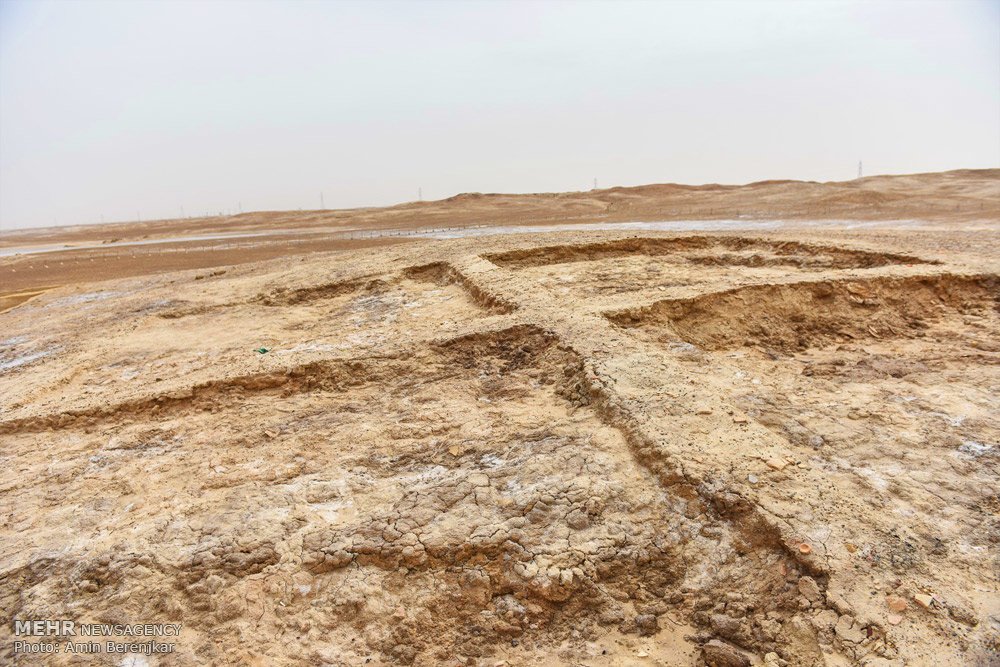
Shahr-e Sukhteh
Photo: Amin Berenjkar / MEHR (CC BY 4.0) — excavated foundations of a 5,000-year-old city where no weapon has ever been found
🏘️ Meymand — 12,000 Years in the Same Caves
Inscribed in 2015 as the Cultural Landscape of Maymand, this village in Kerman province is one of the oldest continuously inhabited settlements anywhere on the planet. Stone engravings around the site date back some 12,000 years, and families still winter in hand-carved cave dwellings their ancestors dug directly into the rock — around 400 kicheh (alleys) leading to roughly 2,500 rooms in total. Villagers, who call themselves Kasha, speak a dialect retaining words from Sassanid-era Middle Persian, and many remain semi-nomadic, moving to summer pastures each year in a rhythm that likely stretches back millennia. It's a genuinely different experience from the better-known but far younger Kandovan troglodyte village near Tabriz (around 700 years old) — Meymand is the real, deep original.
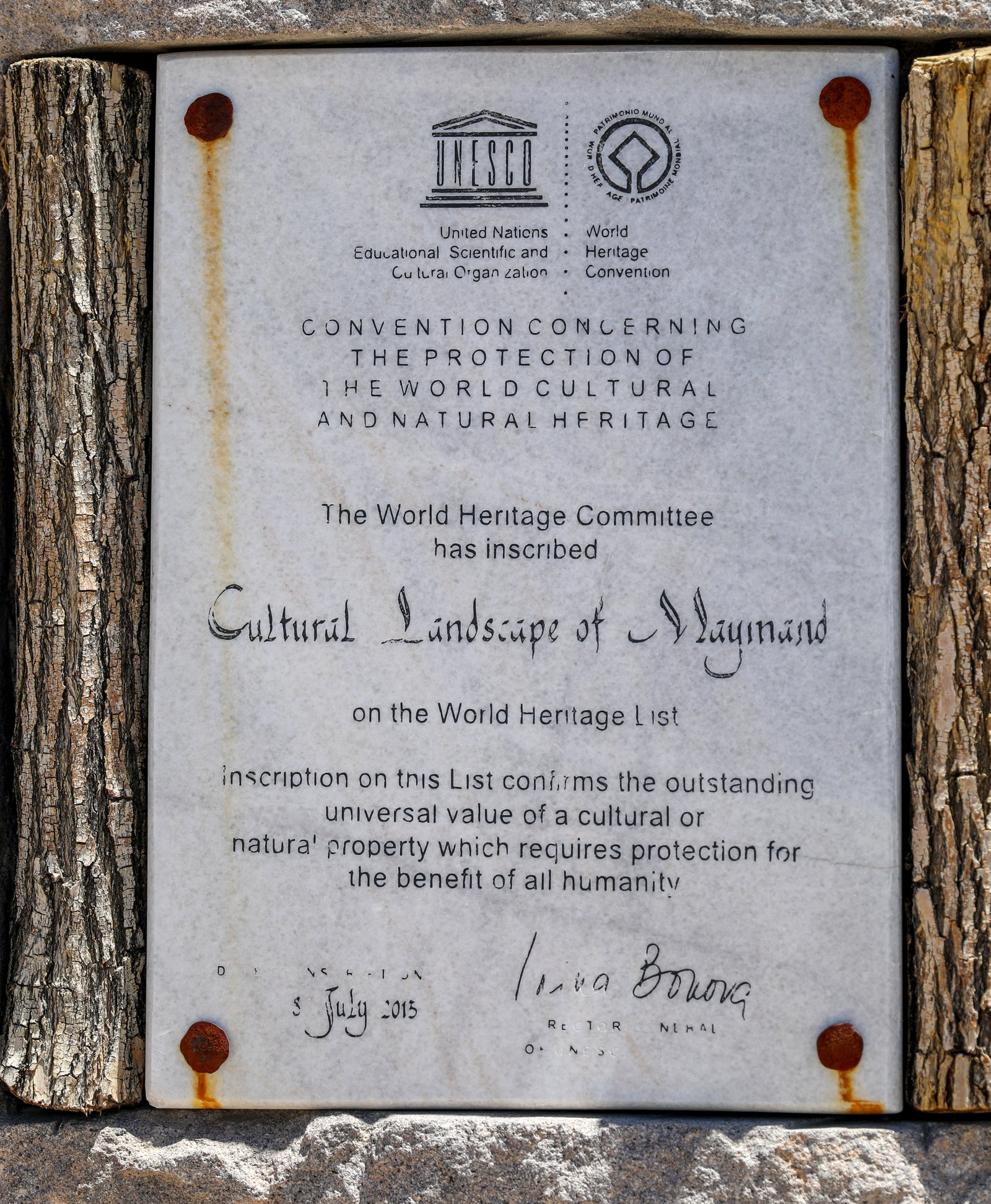
Meymand, Inscribed 2015
Photo: Ninara (CC BY 2.0) — the official UNESCO plaque marking the Cultural Landscape of Maymand
💧 The Persian Qanat — How to Survive Without Rivers
Iran's central plateau has almost no permanent rivers, so 2,700 years ago Persian engineers solved the problem by going underground. A qanat is a gently sloping tunnel, dug entirely by hand, that taps groundwater at the foot of a mountain and carries it by gravity alone — no pumps, no fuel — to fields and villages that can be tens of kilometers away. The oldest and largest system, the Qanats of Gonabad, was built around 700–500 BCE, runs as long as 45 kilometers, and reaches depths of up to 70 meters at its "mother well" — an extraordinary feat of precision surveying for the Iron Age, since a tunnel angled even slightly wrong either runs dry or floods and collapses. It still supplies water today, 2,700 years after the first shovel of earth was moved.
Iran alone is thought to hold somewhere between 280,000 and 400,000 kilometers of qanat tunnel, depending on the estimate — enough, laid end to end, to circle the Earth's equator seven to ten times over. What makes this scale visible is the qanat's most photographed feature: a chain of perfectly round, evenly spaced air and maintenance shafts, drilled down to the tunnel below, marching across the desert floor in an arrow-straight line toward the horizon. Seen from above — as in the famous aerial photography of Georg Gerster, who documented them for his book Paradise Lost: Persia from Above — these shaft-lines look uncannily like a trail of giant footprints pressed into the sand, one of the most striking man-made patterns visible on Earth's surface without the aid of a satellite.
🌳 The Hyrcanian Forests — A 25–50-Million-Year-Old Jungle
Inscribed in 2019, the Hyrcanian Forests stretch along Iran's Caspian coast in a narrow, humid band between the sea and the Alborz Mountains. Botanically, they're a genuine relict: broadleaf forest that has survived essentially unbroken since the Arcto-Tertiary period, somewhere between 25 and 50 million years ago depending on the estimate, making them among the oldest forest ecosystems on the planet and one of the very few places where a visitor can walk through vegetation that predates the Ice Ages in recognizable form. The contrast with the rest of Iran could not be sharper — a subtropical, moss-thick jungle a few hours' drive from some of the driest desert on Earth.
Two residents in particular capture what makes this forest unique. The Persian ironwood (Parrotia persica) — locals simply call it the "iron tree" — is endemic to these slopes alone, its wood so dense and hard that villagers have traditionally carved it into bridge beams, tool handles and telephone poles rather than metal. In autumn its foliage turns a riot of purple, orange and crimson found nowhere else in Iran. And moving silently through the understory, an estimated population of critically endangered Persian leopards — Golestan National Park alone is thought to hold around 20 individuals — makes the Hyrcanian forest one of the last strongholds of the largest leopard subspecies on Earth, an apex predator that has hunted these particular hills since long before the first Persian empire rose on the plateau to the south.
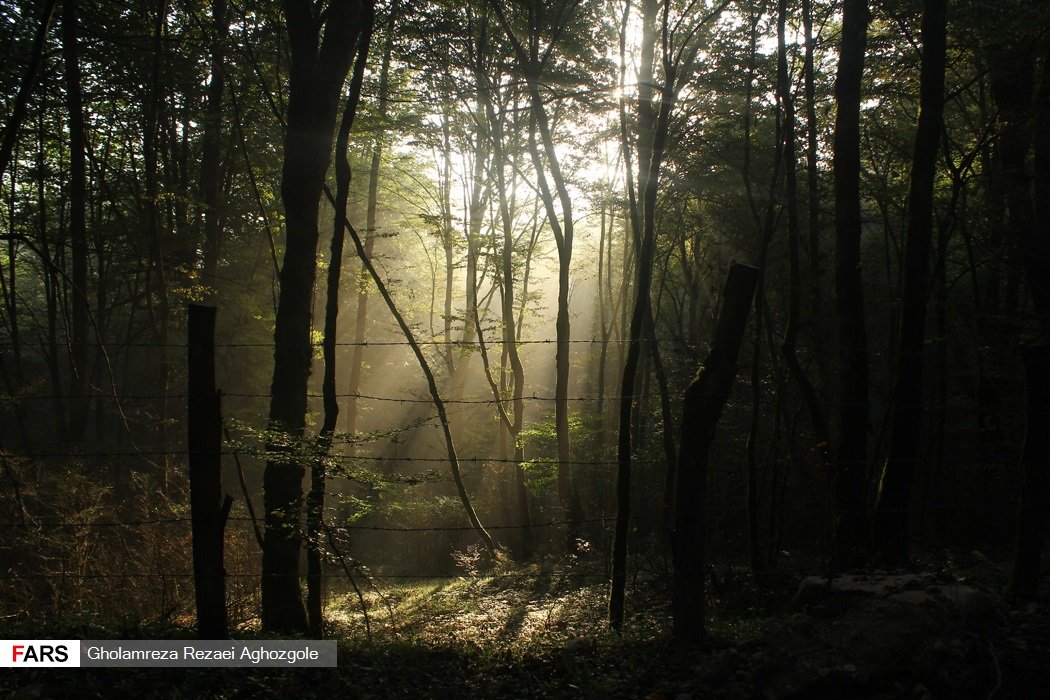
The Hyrcanian Forest
Photo: Gholamreza Rezaei Aghozgole / FARS (CC BY 4.0) — a relict ecosystem tens of millions of years old
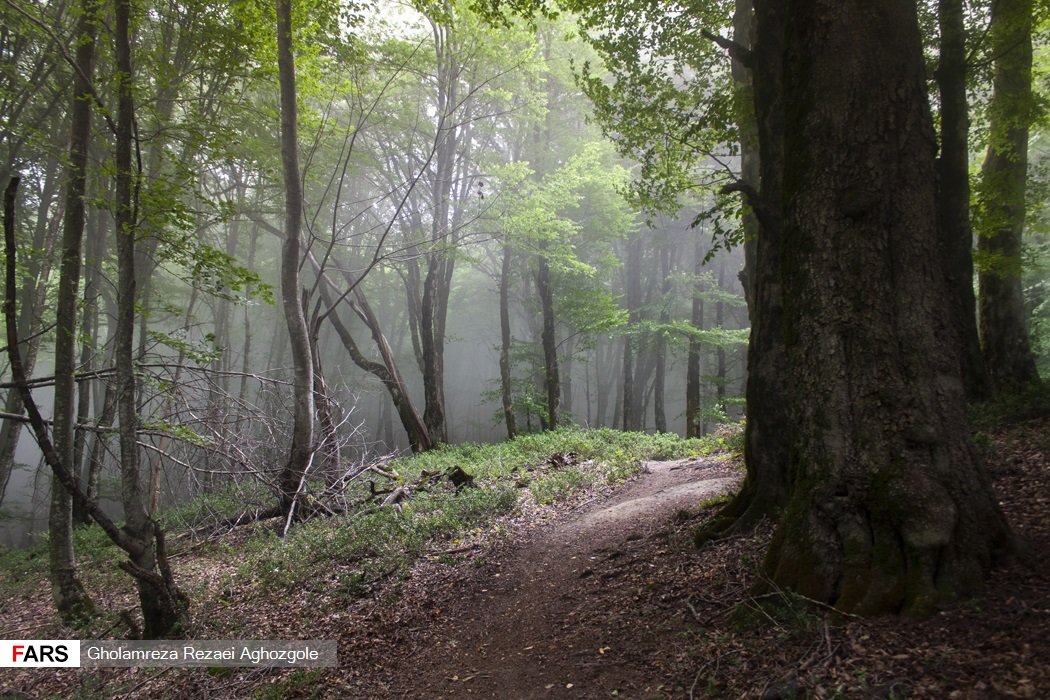
Forest Floor, Caspian Slopes
Photo: Gholamreza Rezaei Aghozgole / FARS (CC BY 4.0) — home to the Persian ironwood and the endangered Persian leopard
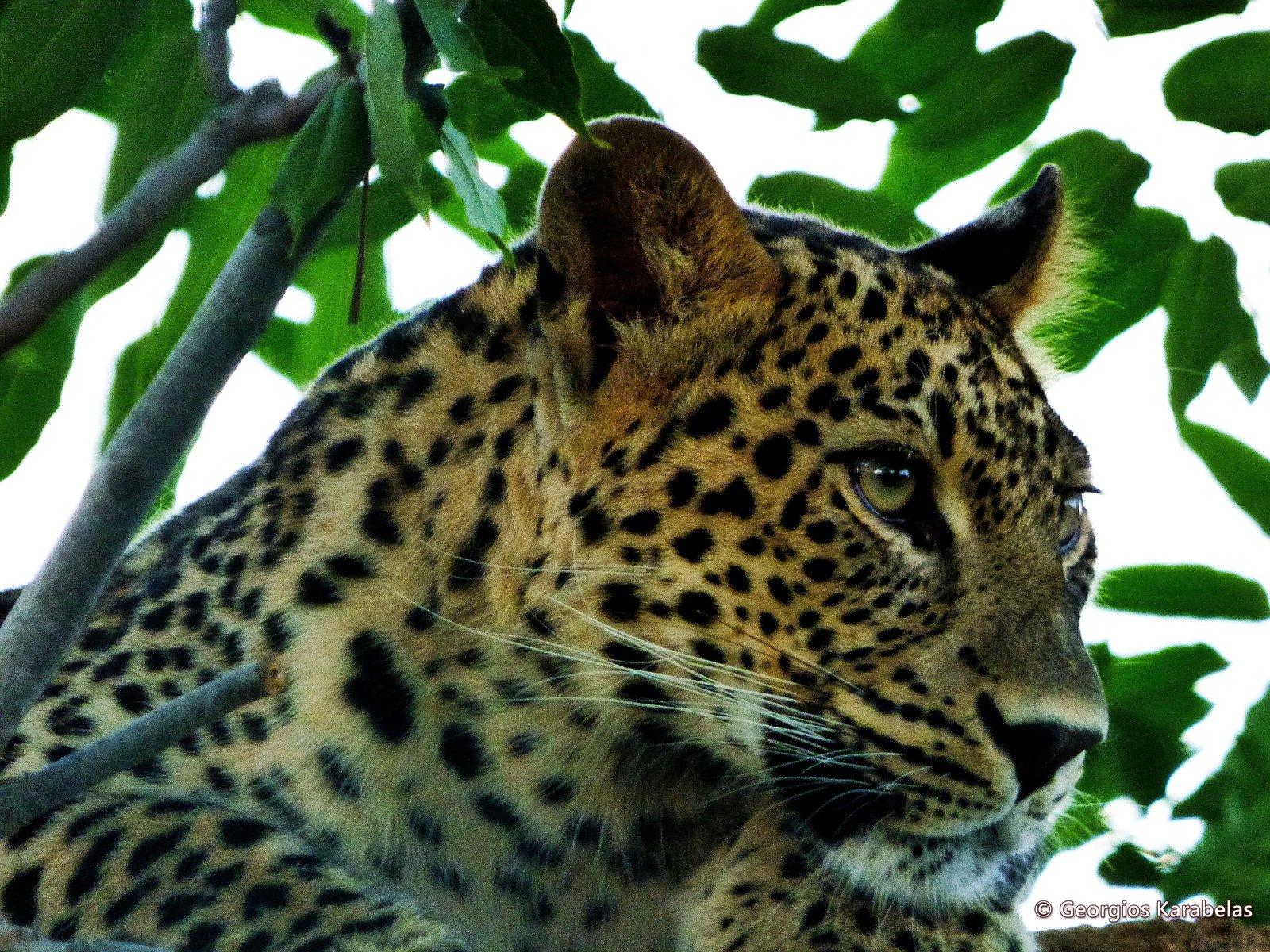
The Persian Leopard
Photo: Georgios Karabelas (CC BY-SA 4.0) — the largest leopard subspecies on Earth, and one of the Hyrcanian forest's last apex predators
🧱 Chogha Zanbil — The Best-Preserved Ziggurat on Earth
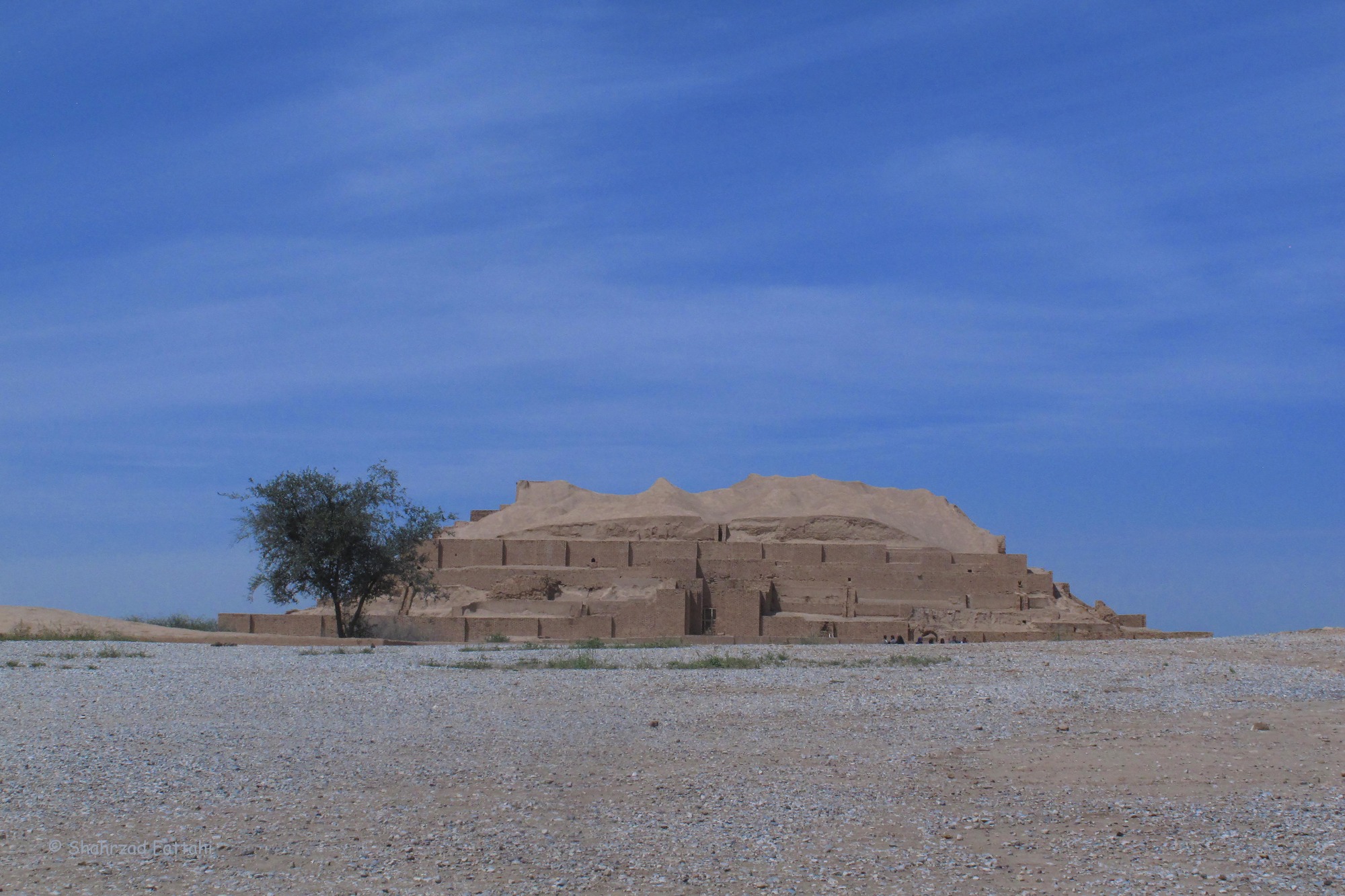
Dur-Untash, City of the God Inshushinak
Built around 1250 BCE, still standing 24 metres tall in the Khuzestan desert.
One of Iran's two original 1979 inscriptions (alongside Persepolis), Chogha Zanbil in Khuzestan province is the largest ziggurat outside Mesopotamia and, by most archaeologists' judgment, the best-preserved anywhere. The Elamite king Untash-Napirisha built it around 1250 BCE as a five-tiered temple to the god Inshushinak — not stacked storey on storey like its Mesopotamian cousins, but raised as a single unified structure from a square base 105 metres on each side. It was never finished; stacks of unused bricks still lie where Assyrian forces left them after sacking the site around 640 BCE.
What survives is genuinely rare: cuneiform-inscribed baked bricks naming Elamite and Akkadian deities, and a scale of preservation that lets you actually climb partway up rather than just admire a footprint. It sits near Susa, on Radim's own list below — the two make an obvious pairing for a single day in Khuzestan.
📜 Susa — Where Iran's Written History Begins
Susa (Shush) was already an old city when Cyrus the Great was born — Elamites were trading with Mesopotamia from here around 3200 BCE, making it one of the oldest continuously significant urban sites on the planet. It later became a capital of the Achaemenid Empire under Darius I, who built a great palace here decorated with glazed-brick friezes of archers and lions, fragments of which now sit in the Louvre and the National Museum of Iran. UNESCO inscribed the site in 2015, citing an almost unbroken settlement record spanning some 5,000 years.
The site today is a sprawling, excavated mound (the Apadana palace platform and the French-built "Shush Castle," a 19th-century archaeological fortress, are the visual anchors) rather than a single dramatic monument — come for the depth of history underfoot, not for postcard architecture.
👑 Pasargadae — The Tomb of Cyrus the Great
Cyrus the Great founded the Achaemenid Empire in 550 BCE and chose this site in Fars province, near where he'd defeated the Median king, as his capital. What survives — inscribed on UNESCO's list since 2004 — includes the royal gardens (an early, possibly the earliest, example of the Persian chahar bagh four-quadrant garden design that echoes centuries later in the Taj Mahal), scattered palace remains, and above all Cyrus's tomb: a plain gabled stone chamber on a stepped plinth, deliberately austere for a man who ruled from the Aegean to the Indus.
Cyrus is remembered for something rarer than conquest — the Cyrus Cylinder, discovered in Babylon and now in the British Museum, records his policy of letting conquered peoples keep their own customs, laws and religions, including permitting exiled Judeans to return to Jerusalem — a policy so significant to Jewish history that the Book of Isaiah calls Cyrus God's mashiach, "anointed one" (Isaiah 45:1), the only Gentile anywhere in the Hebrew Bible given that title. Some historians call the Cylinder the first charter of human rights; whether or not that framing holds up to scrutiny, the tomb's plainness still makes the point better than any inscription could.
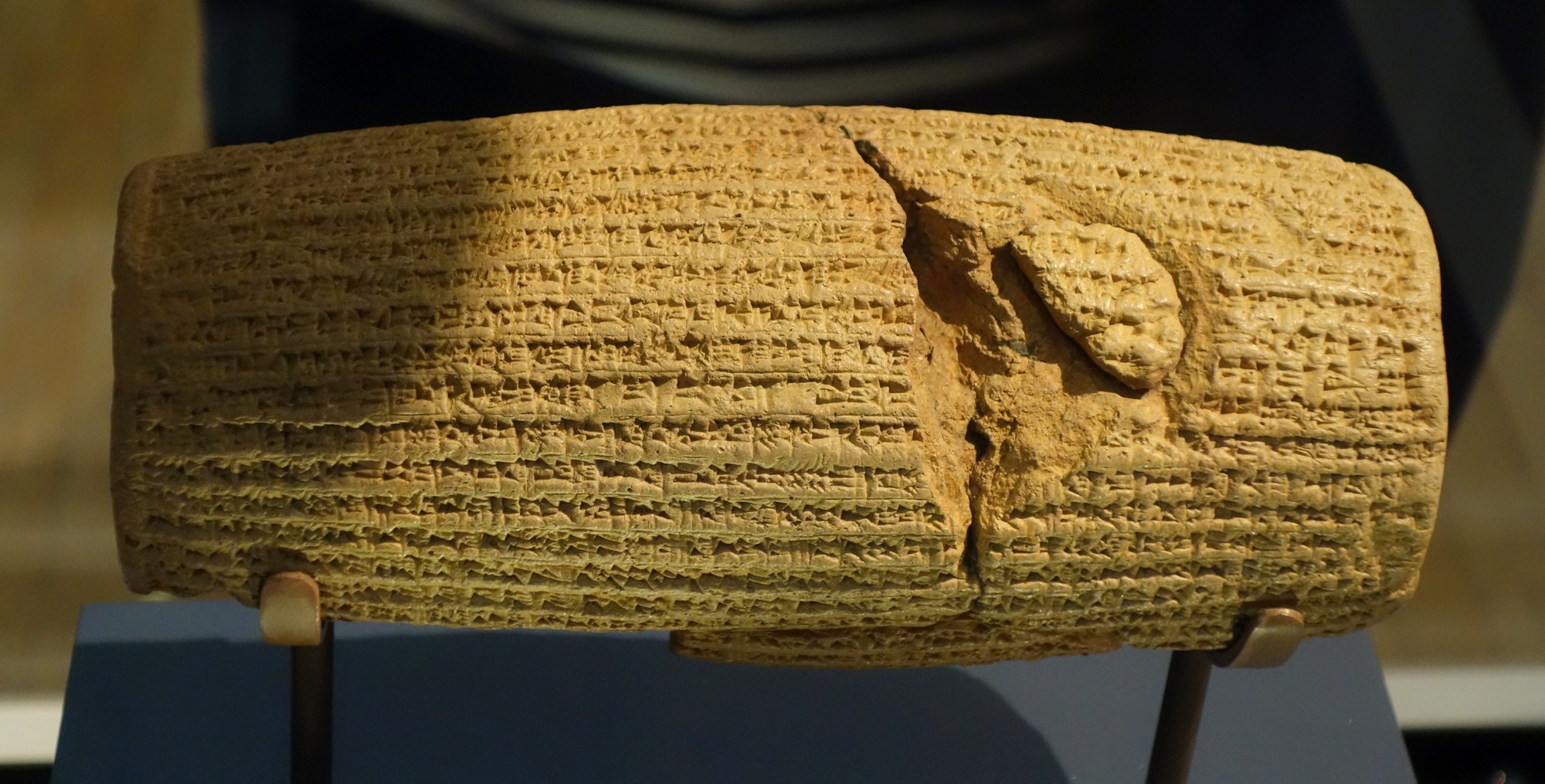
The Cyrus Cylinder, Room 52, British Museum
Baked clay, about 22 cm long, found at Babylon in 1879 — not in Iran at all, but the closest thing Cyrus left to a manifesto.
🗿 Behistun — The Rosetta Stone of Cuneiform
High on a limestone cliff in Kermanshah province, Darius I had himself carved larger than life, one foot on the chest of a defeated pretender, receiving nine bound rebel kings — then had the whole scene captioned in three languages: Old Persian, Elamite, and Babylonian. Carved around 520 BCE and inscribed by UNESCO in 2006, Behistun (Bisotun) did for cuneiform what the Rosetta Stone did for hieroglyphs: 19th-century scholar Henry Rawlinson risked his neck rappelling down the cliff face repeatedly through the 1830s–40s to copy it, and the trilingual text became the key that unlocked Mesopotamian writing for the modern world.
The relief sits roughly 100 metres up a sheer rock face — deliberately unreachable, so it would outlast any vandal. Bring binoculars, or a long lens. A Safavid-era caravanserai (one of the 54 covered below) sits right at the base of the site, so the two pair naturally into one stop.
🔥 Takht-e Soleyman — The Throne of Solomon
Despite the Biblical name (attached centuries later by local legend), this West Azerbaijan site was the Sasanian Empire's most sacred Zoroastrian fire temple — Adur Gushnasp, one of the three "Great Fires" of Zoroastrianism, tended for kings at their coronation. It's built around a genuinely strange natural feature: a spring-fed crater lake, startlingly turquoise and mineral-rich, that the Sasanians walled with a fortified oval enclosure of temples and palaces. UNESCO inscribed it in 2003.
An extinct volcanic cone, Zendan-e Soleyman ("Solomon's Prison"), rises nearby with its own collapsed crater — the pairing of fire temple and volcanic geology is part of what made this spot sacred in the first place.
🌋 Zendan-e Soleyman — Solomon's Prison
A short drive from Takht-e Soleyman stands a strange, hollow volcanic cone rising abruptly out of flat farmland — Zendan-e Soleyman, "Solomon's Prison." It formed the same way its more famous neighbor did: mineral-rich spring water depositing travertine over millennia until it built its own miniature mountain, hollow at the core where the vent once stood. Unlike Takht-e Soleyman's lake, the water here dried up long ago, leaving a deep, sheer-walled pit open to the sky at the cone's summit.
Local legend holds that King Solomon imprisoned demons inside the depths of the cone, sealing them beneath the rock — a folk explanation for a hollow mountain that has no obvious natural counterpart nearby, not a documented historical event. What geologists confirm is more modest but still striking: a spring that built its own volcano-shaped shell around itself and then fell silent, leaving a natural fortress with a hole where its heart used to be. The two sites — one wet and sacred, one dry and cursed — sit close enough together to visit in the same afternoon.
🕳️ Zendan-e Berenjeh — The Prison Pit
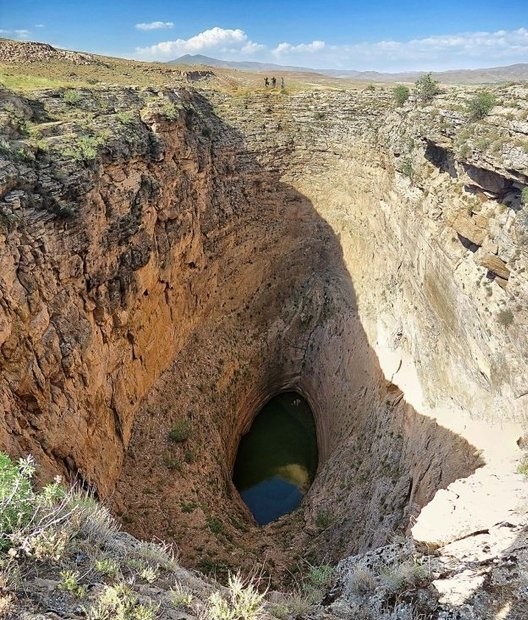
An Oval Chasm 70 Metres Deep
The tiny figures at the rim give a sense of scale that photos alone rarely capture.
No UNESCO plaque marks this one — it isn't even on the list, and there's no signage at the site itself — but it belongs on the map right beside Takht-e Soleyman, 14 km away on the same mountain ridge and formed by the identical geological process: springs depositing travertine over millennia into a tall, hollow cone, which eventually collapsed into an oval sinkhole about 100 by 50 metres across. At the bottom, roughly 70 metres down, sits a small lake of cold, carbonated water — visible from the rim, but functionally out of reach without climbing gear. Divers who have gone in put the water itself at 25-plus metres deep, and found the cavity flares outward below the surface rather than narrowing — so no one has ever mapped its true shape or floor, which is a far more satisfying reason for a "bottomless" legend than access difficulty alone.
The name — zendān means "prison" in Persian — comes from something darker than geology. Local tradition holds that regional khans used the pit to execute villagers and rivals: victims had stones bound to their feet and were thrown in. It's also called Daryā-ye Berenjeh, the "Berenjeh Sea." Registered on Iran's National Heritage list but almost unknown outside it, reaching it means a rough track north of Takab with no marked trailhead — pair it with Takht-e Soleyman and budget an extra half-day.
✝️ The Armenian Monastic Ensembles
In Iran's northwest corner, near the borders with Turkey, Armenia and Azerbaijan, three Armenian Christian monasteries — St. Thaddeus (Qara Kelisa, "Black Church"), St. Stepanos, and the tiny Chapel of Dzordzor — testify to a Christian presence in Iran going back to the earliest centuries of the faith. St. Thaddeus, rebuilt many times since its legendary 1st-century founding, wears black-and-white striped stonework and Armenian khachkar cross-carvings unlike anything else in Iran. UNESCO listed the ensemble in 2008 for exactly this: a living record of Armenian architectural and decorative traditions surviving on the edge of the Iranian plateau, far from Armenia proper.
Every July, Iranian and diaspora Armenians still gather at St. Thaddeus for a pilgrimage feast — one of the few UNESCO sites in Iran that's a living religious site rather than a ruin.
🗼 Gonbad-e Qabus — The Tallest Brick Tower on Earth
A single fired-brick tower rises 53 metres from the Golestan steppe, built in 1006–1007 CE as the tomb of the Ziyarid ruler Qabus ibn Wushmagir — and it's still, over a thousand years later, the tallest purely brick-built tower in the world. Ten triangular buttresses run its full height, giving the tower a star-shaped cross-section that was as much engineering as ornament. There's no other monument like it: no dome, no gilding, no elaborate façade, just a colossal, mathematically precise brick cylinder standing alone against flat farmland. UNESCO listed it in 2012.
Local legend holds that Qabus's coffin was suspended by chains inside the tower rather than buried — never confirmed, but it's the detail every guide will tell you.
🐫 The Persian Caravanserais
Iran's newest major heritage listing, inscribed in September 2023, isn't one site but 54 of them — historic roadside inns scattered across 24 provinces, selected from hundreds of surviving examples that once served Silk Road and pilgrimage traffic from the Sasanian era through the Qajar period. Each caravanserai follows a similar logic: a fortified square or rectangular building around a central courtyard, rooms for travelers and stables for animals, built roughly a day's camel-ride apart. Sa'd al-Saltaneh in Qazvin, added under the Qajars, is the largest indoor caravanserai in the world; the Shah Abbasi caravanserai at Bisotun sits right at the foot of the Behistun relief above.
Most surviving caravanserais have been restored as roadside teahouses, small museums, or even boutique hotels — genuinely one of the more atmospheric ways to break up a long drive between Iran's major cities.
🌟 Essential, But Not (Yet) on the List
Not everything worth seeing has a UNESCO plaque. Alamut Castle — the fabled 11th-century mountain stronghold of the Nizari Ismaili "Assassins," covered in Hidden Gems above — was itself only inscribed in July 2026, Iran's newest addition and proof the list keeps growing. Ali-Sadr Cave in Hamedan province, one of the largest water caves on Earth, is explored by rowboat through illuminated chambers and has never been nominated at all. Nowruz, the Persian New Year, sits on a separate register entirely — UNESCO's Intangible Cultural Heritage list, for living traditions rather than physical sites. And Masuleh's stacked, roof-as-street architecture and Shiraz's Nasir al-Mulk Mosque remain two of Iran's most photographed places without a UNESCO listing to their name — see the Overview page for both.
📋 Planning a UNESCO Circuit
With 30 sites spread across a country three times the size of France, sequencing matters. Here's how the essentials line up for a realistic first-time circuit.
| Site | Region | Time Needed | Priority |
|---|---|---|---|
| Naqsh-e Jahan Square | Isfahan | Half to full day | Essential — do first |
| Persepolis | Near Shiraz | Half day | Essential |
| Historic City of Yazd | Yazd | Full day, best on foot | Essential |
| Golestan Palace | Tehran | Half day | High — easy add-on in the capital |
| Pasargadae | Near Shiraz | 2–3 hours | High — pairs naturally with Persepolis |
| Chogha Zanbil & Susa | Khuzestan | Full day, paired | High — 2 sites, one detour |
| Behistun & its caravanserai | Kermanshah | Half day | High — on the Tehran–Kermanshah road |
| Persian Qanat (Gonabad) | Razavi Khorasan | Half day, guided | For travelers with extra time |
| Cultural Landscape of Maymand | Kerman | Full day from Kerman city | For travelers with extra time |
| Shahr-e Sukhteh | Sistan-Baluchestan | Remote, full day | Specialist interest only |
A realistic two-week itinerary covers Tehran, Isfahan, Yazd, and Shiraz/Persepolis/Pasargadae as a connected loop — all well-served by domestic flights and highways. Meymand, the Qanat sites, and Shahr-e Sukhteh require real detours into eastern and southeastern Iran and are best reserved for a second trip or a dedicated specialist itinerary with a knowledgeable local guide.
Access and guide requirements can change; confirm current arrangements with a licensed Iranian tour operator before finalizing an itinerary. Last checked: August 2026.
