


🌍 Iran at a Glance
🌏 Overview
Few countries on Earth pack in as much sheer variety as Iran. Geographers sometimes describe it as five different worlds in one nation: subtropical Caspian rainforest in the north, the snow-capped Alborz and Zagros ranges cutting through the middle, two vast central deserts (one of them home to the hottest place ever measured on Earth's surface), fertile plains, and a warm Persian Gulf coastline in the south. Few nations this size fit so many climates and landscapes inside one border.
Home to roughly 89 million people across 1,648,195 km², Iran is the 17th-largest country on Earth and the second-largest in the Middle East, after Saudi Arabia — more than three times the size of France — and the cradle of more than 2,500 years of imperial, religious and literary history.
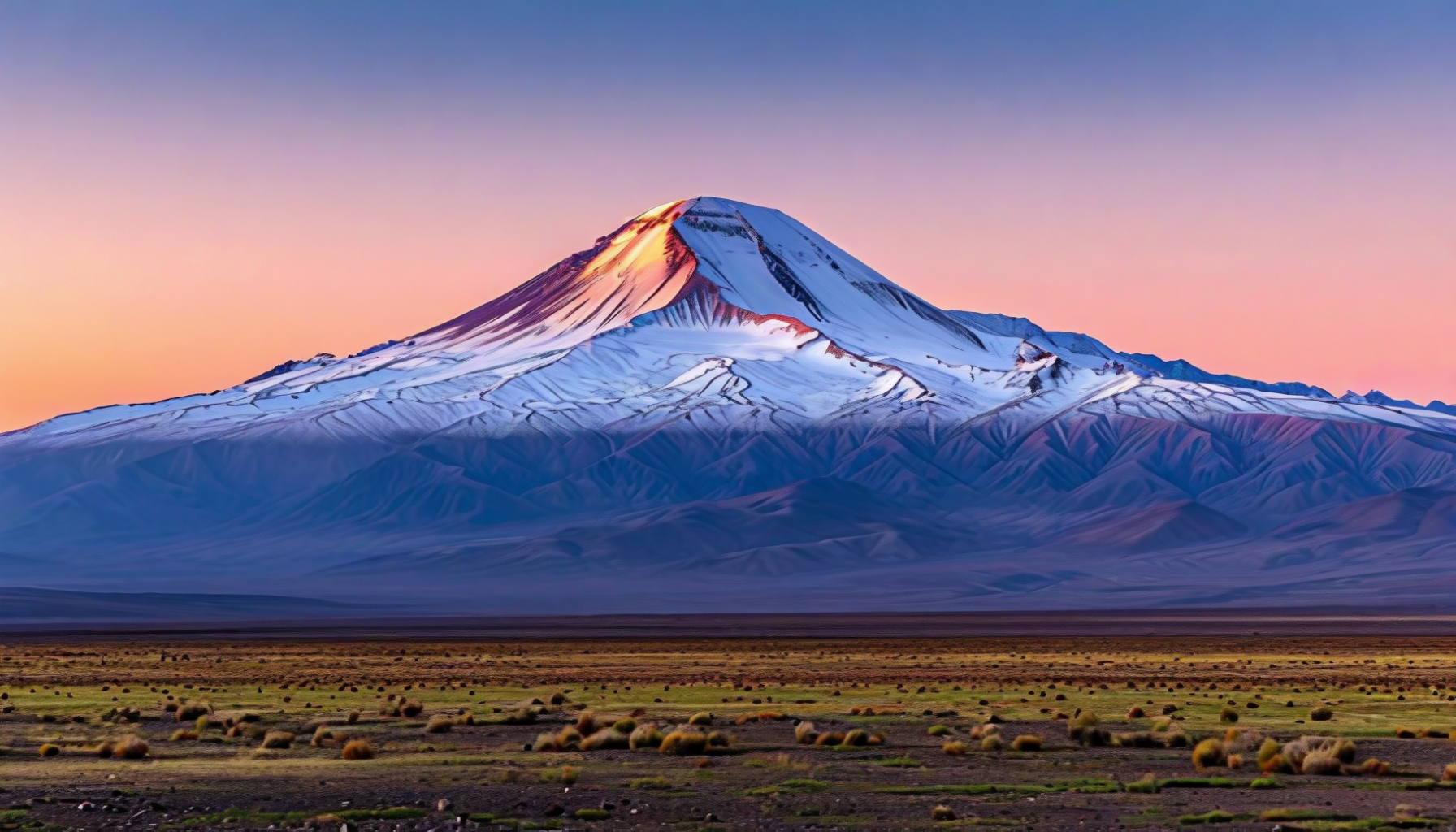
The country's cultural wealth is staggering: the ceremonial ruins of Persepolis, the turquoise tilework of Isfahan, the mud-brick old city of Yazd, the cave-labyrinth bazaar of Tabriz, the mirror-halls of Shiraz, the otherworldly Lut Desert, and the snow-covered cone of Mount Damavand (5,609 m) — all held together by the poetry of Hafez, Rumi, Saadi, Khayyam and Ferdowsi, which Iranians quote as naturally as breathing.
Travelers who make it past the geopolitical headlines discover what is routinely described as some of the warmest hospitality on the planet. Iran is a country of profound contradictions — ancient and modern, strict and subversive, battered by sanctions yet bursting with creative energy — and exactly that tension is what makes it unforgettable.
📛 Name & Identity
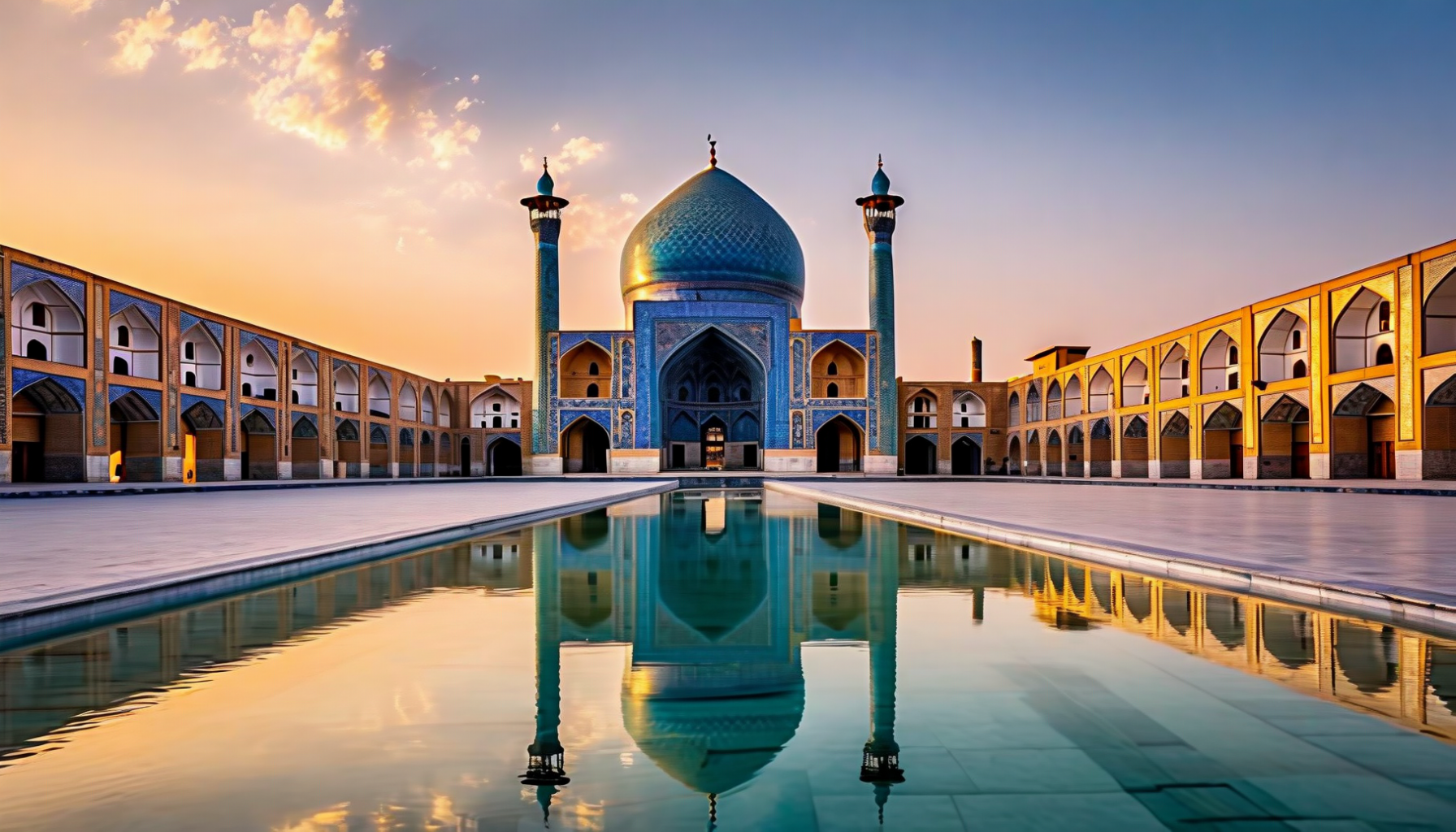
The country is officially the Islamic Republic of Iran (Persian: Jomhuri-ye Eslāmi-ye Irān, جمهوری اسلامی ایران). "Iran" derives from the Middle Persian Ērān, meaning "Land of the Aryans" — a self-designation attested at least since the Sasanian period (3rd century CE) and carved into inscriptions by Shapur I. The shorter Persian name for the land, Irān-zamin, simply means "Iran-land."
Westerners long called the country Persia, a name derived from Pars (modern Fars province), the Achaemenid heartland around Persepolis. In 1935 Reza Shah Pahlavi formally asked foreign governments to use "Iran" in diplomatic correspondence — a political move to emphasize a pan-Iranian identity beyond ethnic Persians. The names Iran and Persia are now used interchangeably, with "Persian" reserved for the language and the cultural heritage.
The national flag carries three horizontal bands — green (Islam, nature, growth), white (peace, honesty) and red (courage, martyrdom) — with the stylized Allāh emblem at the center and the takbir ("Allāhu Akbar") repeated 22 times along the edges, marking the 22nd of Bahman 1357 (11 February 1979), the date of the Islamic Revolution. The national symbol is the lion-and-sun, replaced since 1979 by the red tulip-shaped Allāh emblem.
🗺️ Geography & Regions
More than almost anywhere else on Earth, Iran's terrain has written its history. The country sits on a great tilted plateau ringed by mountains and sealed by deserts — a natural fortress that has repeatedly frustrated invaders, sheltered a distinct civilization for millennia, and shaped a national identity so durable that every conqueror who broke through its defenses was, within a few generations, absorbed by the culture they had come to conquer.
The Zagros mountains alone run for some 1,500 km northwest to southeast and reach up to 300 km wide in places — a barrier so formidable that armies from Alexander the Great's Macedonians to 20th-century invaders found the interior plateau far harder to hold than to enter. The Alborz range arcs along the Caspian coast and culminates in Mount Damavand (5,609 m), the highest volcano in Asia and a potent symbol in Persian mythology, where the legendary tyrant Zahhak is said to lie chained inside the mountain awaiting the end of the world.
Behind these mountain walls lie two enormous, nearly rainless deserts: the salt-crusted Dasht-e Kavir (Great Salt Desert) and the even more hostile Dasht-e Lut, where annual rainfall can be under 30mm and NASA satellites have measured the hottest surface temperatures ever recorded on Earth. Together, mountains and desert form a central plateau that is both Iran's cradle and its shield — hard to reach, harder still to subdue, and easy to retreat into. The Caspian coast in the north is by contrast a humid green strip of rice paddies and tea gardens; the Persian Gulf coast in the south is arid and studded with islands like Qeshm and Hormuz.
Iran shares land borders with Armenia, Azerbaijan and Turkmenistan in the north; Afghanistan and Pakistan in the east; Iraq and Turkey in the west. It is the only country with coastlines on both the Caspian Sea and the Indian Ocean (via the Gulf of Oman), and for over two millennia this position placed it directly astride the trade routes carrying silk, spices and Chinese porcelain between East and West — a geography of both riches and vulnerability that culminates today at the mouth of the Strait of Hormuz. Read the full story →
🗺️ Map
📜 History — A Fortress That Absorbed Every Conqueror
Iran's written history begins with the Elamites around 3200 BCE in what is now Khuzestan, whose city of Susa traded with Mesopotamia. The first great Iranian empire rose in 550 BCE when Cyrus the Great founded the Achaemenid dynasty, which at its height under Darius I stretched from the Indus to the Aegean and from Egypt to Central Asia — the largest empire the world had yet seen, governed through a network of royal roads, a standardized currency, and satraps (provincial governors) answerable to the King of Kings. Its ceremonial heart was Persepolis, founded by Darius around 518 BCE on a vast stone terrace in the Zagros foothills, where thirty subject nations processed each spring bearing tribute — the scene is carved in astonishing detail into the palace's surviving staircases. Cyrus's cylinder, a clay proclamation now in the British Museum, is often called the first charter of human rights for its guarantees of religious tolerance and the freedom of deported peoples to return home.
The empire's mountainous heartland proved its own defense even against history's greatest conqueror. When Alexander the Great invaded in 334 BCE, he defeated Darius III in open battle readily enough — but at the Persian Gates in the Zagros, a small Persian force very nearly stopped him outright, raining boulders down from an "impregnable" position until a local shepherd revealed a hidden mountain path around the defenders. Alexander burned Persepolis in 330 BCE in a symbolic act of revenge, yet the empire's remote eastern satrapies — Bactria and Sogdiana, in the mountains and deserts of what is now Afghanistan and Central Asia — took him three more grinding years of guerrilla warfare to even nominally pacify. Persian identity itself was never extinguished: it survived through the Parthian (247 BCE–224 CE) and Sasanian (224–651 CE) empires, the latter making Zoroastrianism — an early monotheistic faith built around the cosmic struggle of the four elements — the state religion.
This pattern — conquest followed by cultural absorption of the conqueror — repeated itself twice more, each time on a stopwatch of roughly three to four generations. The Arab conquest of the 7th century brought Islam and, for a time, Arabic as the language of administration; yet within about three generations, Persian scholars, poets, viziers and administrators had made themselves indispensable to the Arab caliphate itself, and by the Abbasid period Persian bureaucratic culture, science and literature were driving what is now called the Islamic Golden Age, even as it was recorded in Arabic script. Six centuries later, Genghis Khan's Mongols shattered Iran's cities with a violence still remembered as one of history's worst catastrophes; his grandson Hülegü founded the Ilkhanate in Persia in 1256 after sacking Baghdad. Yet within roughly a century, the Ilkhans had done exactly what the Arabs had done before them: Ghazan Khan converted to Islam in 1295, adopted Persian as his court's written language, and by the dynasty's end in 1335, contemporaries described a "Persian renaissance" — the Mongols never left Iran, they simply became Iranian.
The Safavid dynasty (1501–1736) made Shia Islam the state religion and rebuilt Isfahan into one of the world's most beautiful capitals under Shah Abbas I. The Qajars (1789–1925) lost Caucasus territories to Russia and opened Iran to European imperial pressure. The Pahlavi dynasty (1925–1979) modernized brutally and unevenly, and ended with the Islamic Revolution of 1979, when Ayatollah Ruhollah Khomeini returned from exile and established the current Islamic Republic.
The Iran–Iraq War (1980–1988) killed perhaps a million people and defined a generation. Since then Iran has lived under successive rounds of Western sanctions, a young and restless population, and periodic mass protests (1999, 2009 Green Movement, 2017–18, 2019, and the 2022–23 Woman, Life, Freedom movement sparked by Mahsa Amini's death). In 2026 the country entered its gravest crisis in decades — a direct war with the United States and Israel that reached into the Strait of Hormuz itself. Read the current situation →
👥 People & Culture
Iran is a multi-ethnic mosaic: ethnic Persians (about 61%), Azerbaijanis (16%), Kurds (10%), Lurs, Arabs, Baluchis, Turkmens, Qashqai nomads, Armenians and Assyrian Christians, Jews and Zoroastrians. Persian (Farsi) is the lingua franca; Azeri Turkish is widely spoken in the north-west.
Iranian hospitality — ta'arof — is legendary and ritualized. Shopkeepers may refuse your payment three times ("ghābel nadāre" — "it's not worthy"); you insist three times. Guests are treated as a blessing from God. Poetry holds an almost sacred place: Hafez's Divan is kept in many homes next to the Quran and consulted by fāl-e Hafez (randomly opening the book for guidance).
Persian miniature painting, calligraphy, khātam (inlay work) and enameling are centuries-old crafts still practiced at the highest level. Iran's cinema — Kiarostami, Farhadi, Panahi — is routinely ranked among the world's most important. Dress codes in public are strict (hijab and modest clothing for women, no shorts for men); private life behind walls is vastly more liberal than the public image suggests.
🧵 The Persian Carpet
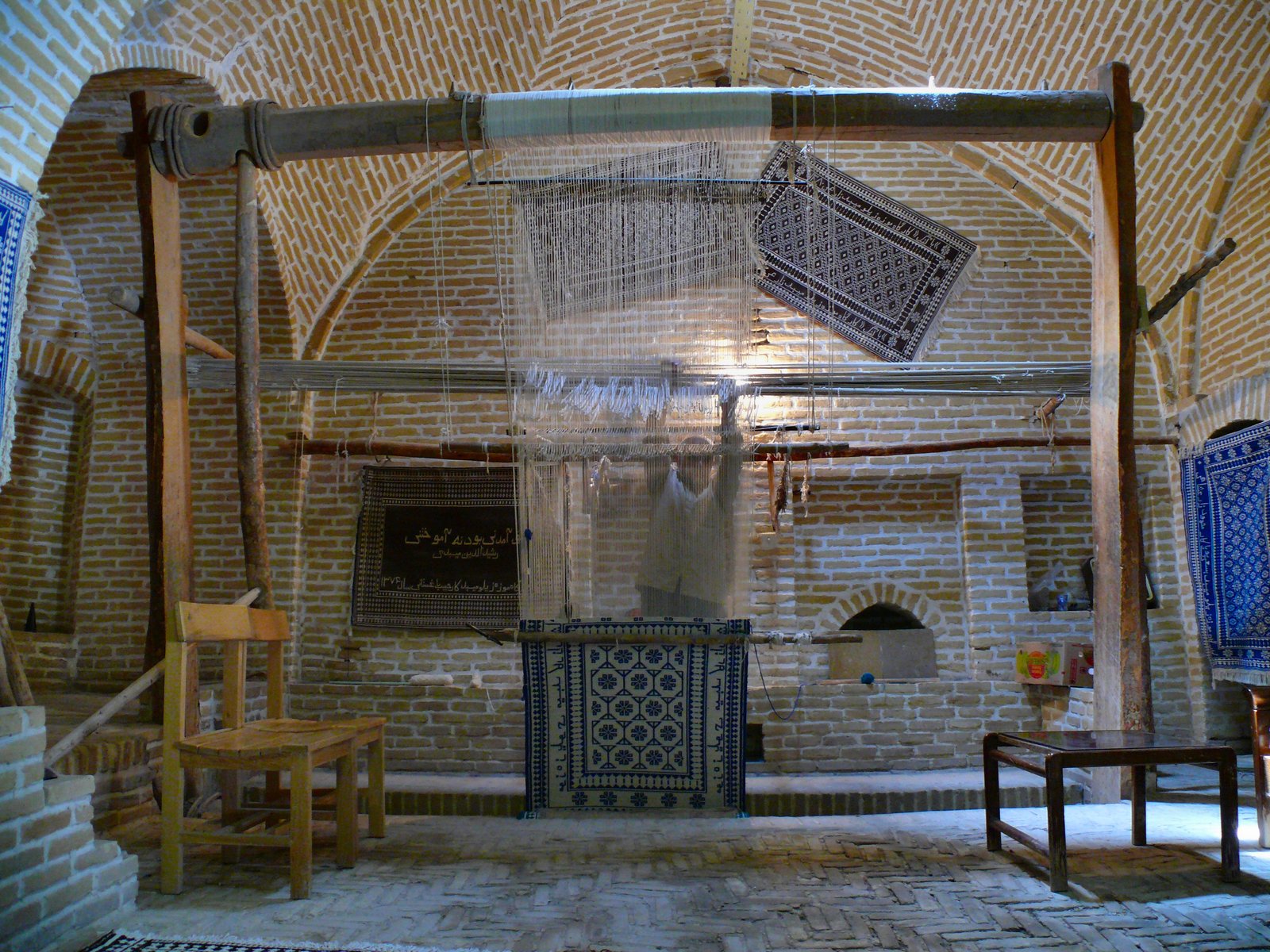
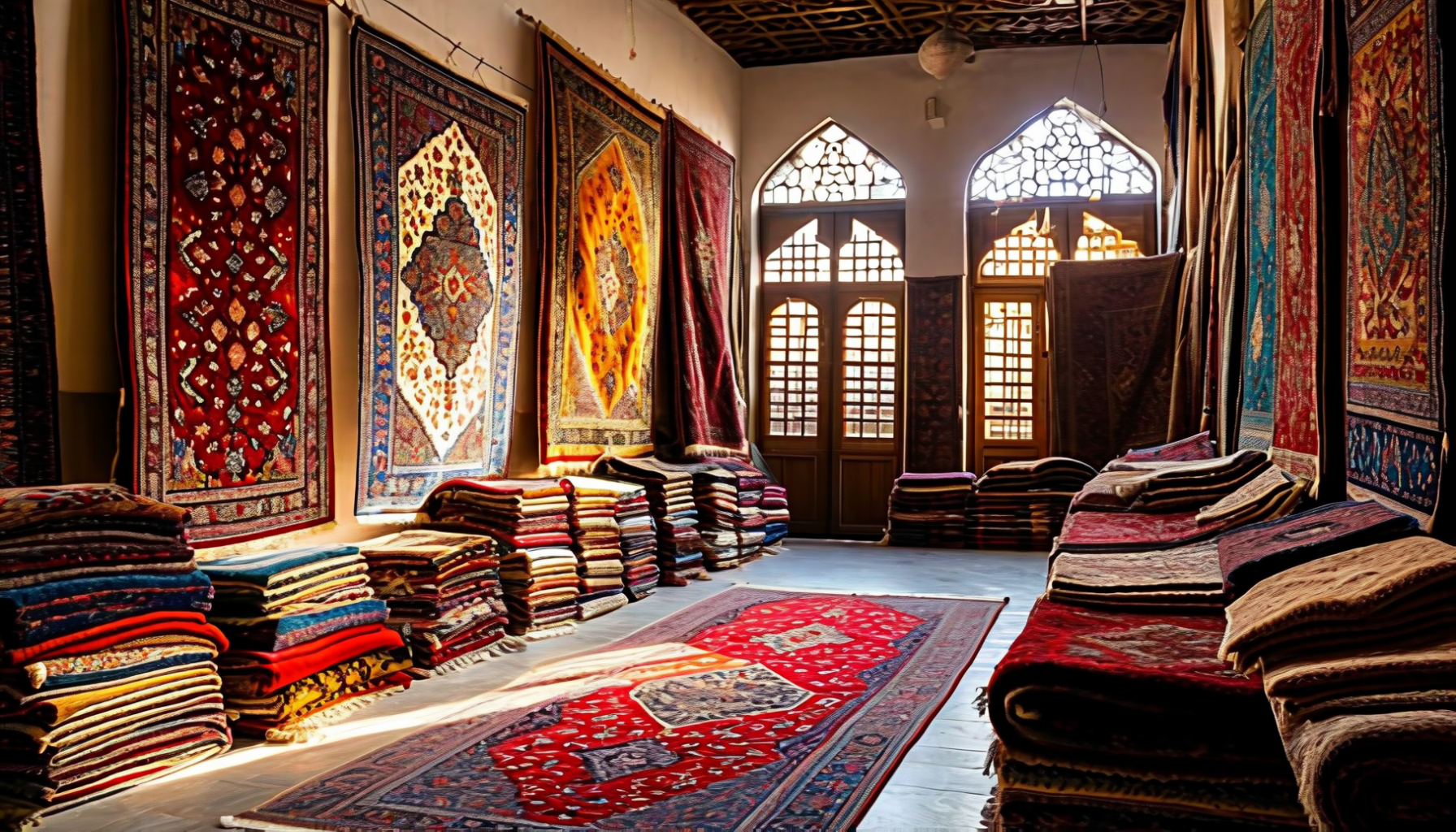
No craft is more identified with Iran than the hand-knotted Persian carpet, woven on upright looms in techniques passed down largely unchanged for over 2,500 years — archaeologists recovered a Persian-style pile carpet from a frozen Scythian tomb in Siberia's Pazyryk Valley dating to roughly the 5th century BCE, still the oldest known knotted carpet on Earth. A single fine rug can take a skilled weaver, working from memory or a hand-drawn pattern, many months to a year to complete, tying tens of thousands of individual knots per square meter by hand; the great regional schools — Tabriz, Isfahan, Kashan, Qom, Nain, and the tribal Qashqai and Baluch traditions — are each recognizable by their own motifs, palettes and knot styles, much as wine regions are recognized by terroir. Carpet weaving remains one of Iran's largest handicraft export industries and a UNESCO-recognized element of intangible cultural heritage, still taught mother-to-daughter in villages across the plateau exactly as it was in antiquity.
The Persian Carpet
Photo: dynamosquito (CC BY-SA 2.0) — hand-knotting on an upright loom, a technique over 2,500 years old
🏛️ Tehran — The Capital
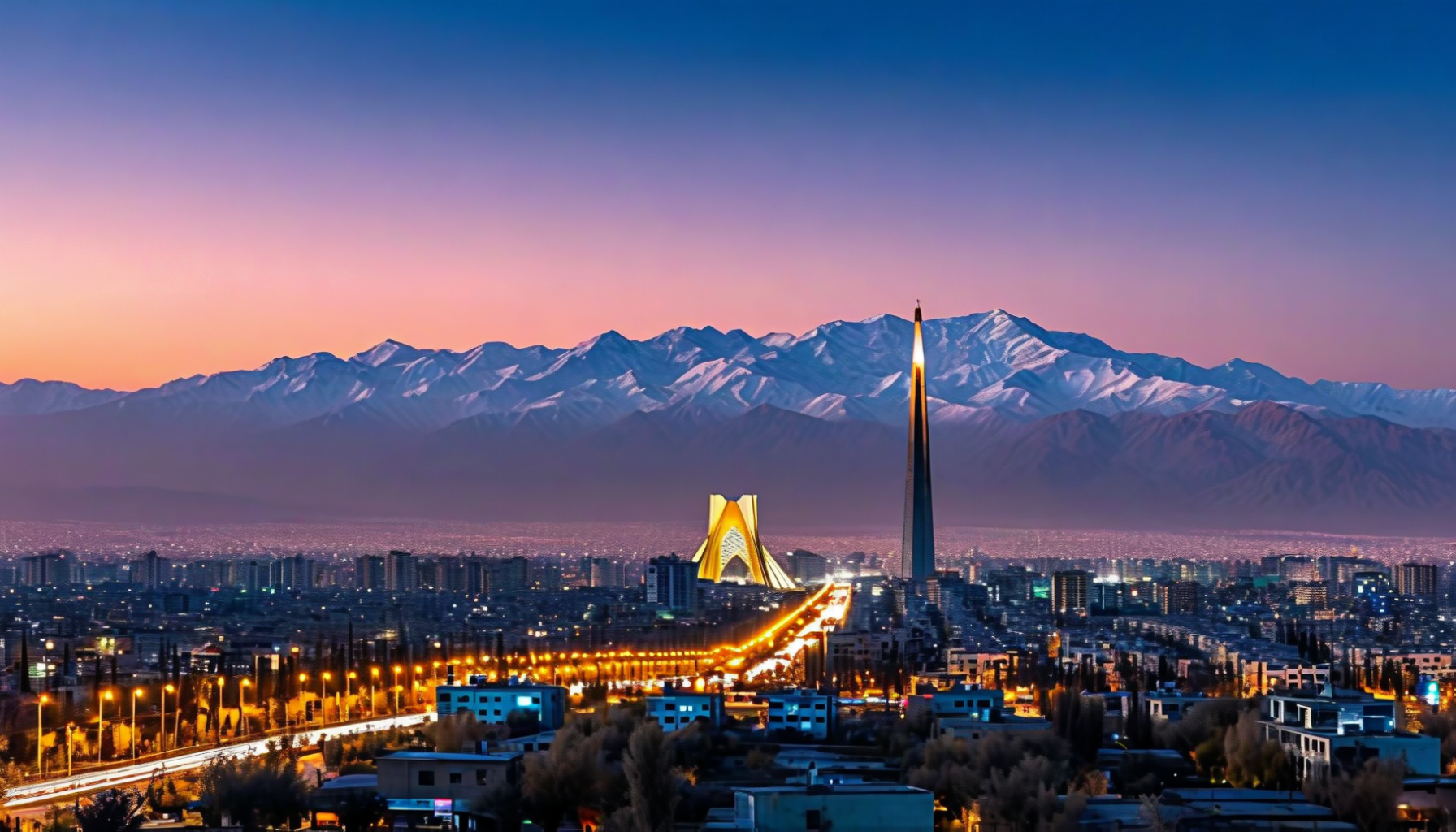
Tehran sprawls across the southern slopes of the Alborz, a megacity of roughly 9 million (15 million metro) that rises about 700 m from the hot southern districts to cool foothill neighborhoods at 1,800 m. It is a traffic-choked, pollution-prone, intellectually electric place where every generation of Iranian political history has left its mark in a boulevard, a mural or a former embassy.
Highlights: Golestan Palace (UNESCO) with its mirror halls and Qajar tilework; the sprawling Grand Bazaar; the National Museum of Iran for 7,000 years of prehistory; the National Jewelry Treasury (the largest collection of royal jewels on Earth — including the 182-carat Daryā-ye Nūr); the Sa'dabad and Niavaran palace complexes; the Azadi and Milad towers; the Tabiat Bridge; and the café and gallery scene of Vali-Asr street — at 17 km, one of the longest in the Middle East.
🕌 Isfahan — Half the World
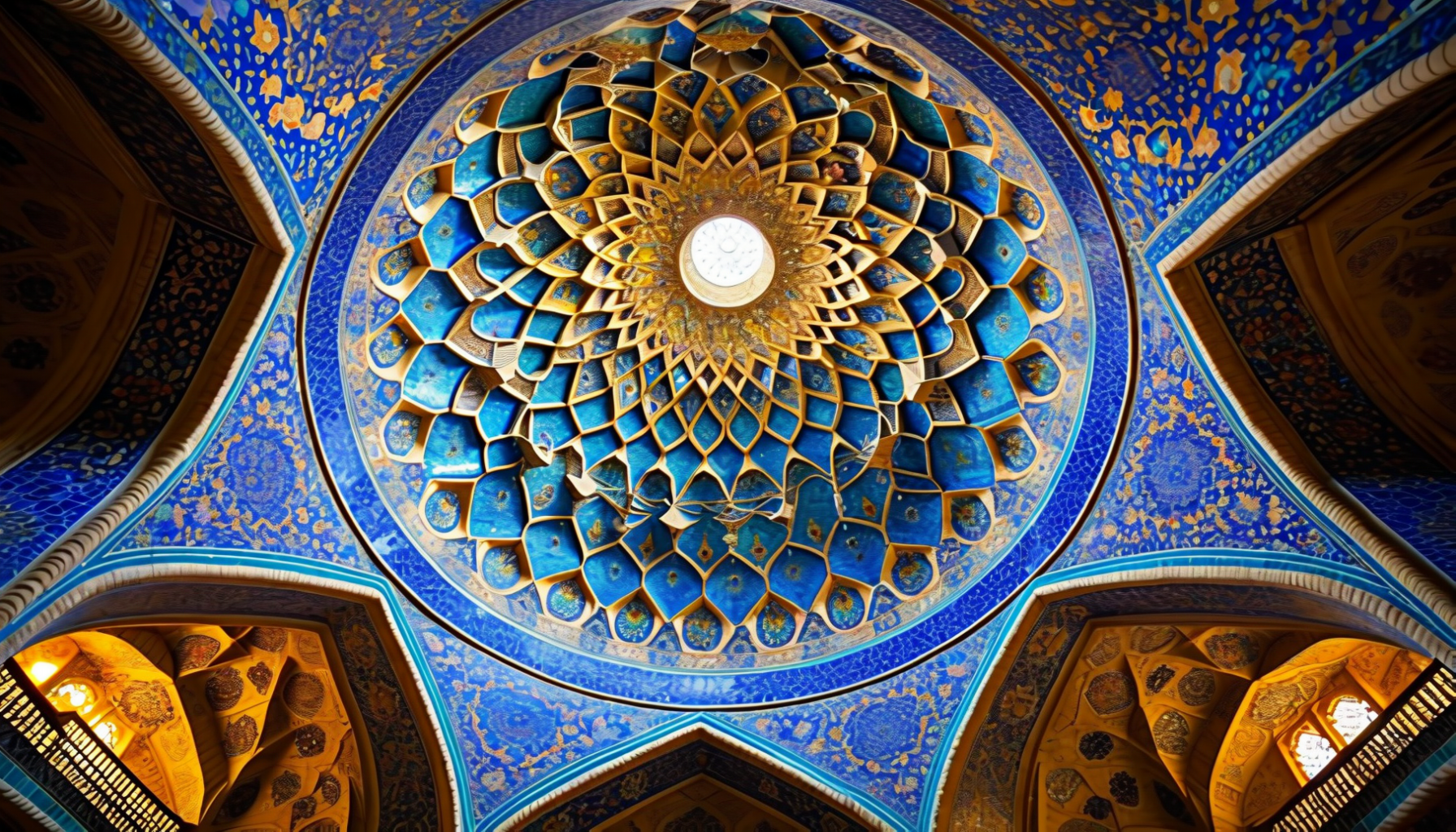
The Persian proverb "Isfahān nesf-e jahān" — "Isfahan is half the world" — is no exaggeration. When Shah Abbas I rebuilt it as the Safavid capital in 1598, European envoys described it as the most beautiful city they had ever seen. The centerpiece is Naqsh-e Jahan Square (UNESCO, 1979), an elongated rectangle 512 × 163 m framed by four masterpieces: the Shah Mosque (Masjed-e Shah), the Sheikh Lotfollah Mosque, the Ali Qapu palace and the Qeysariyeh Bazaar.
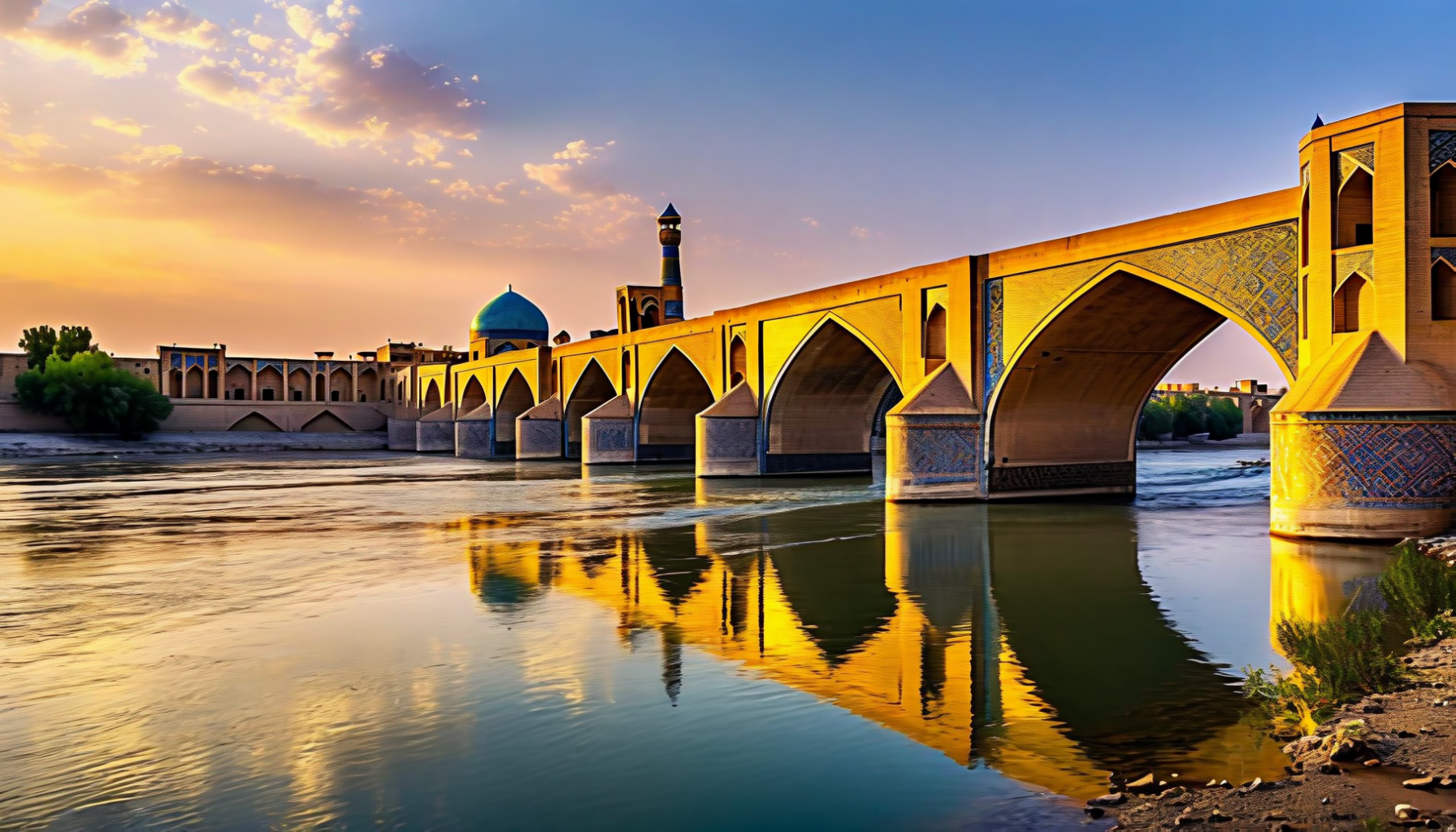
Nearby, the Jameh Mosque of Isfahan (UNESCO) is a twelve-century encyclopedia of Iranian architecture. The old Julfa Armenian quarter still centers on the stunning Vank Cathedral (1606). Eleven historic bridges cross the Zayandeh-rud; the 33-arch Si-o-se-pol and the double-decker Khaju Bridge are evening meeting points for singers, families and lovers — a living Persian scene.
🌹 Shiraz & Persepolis — City of Poets
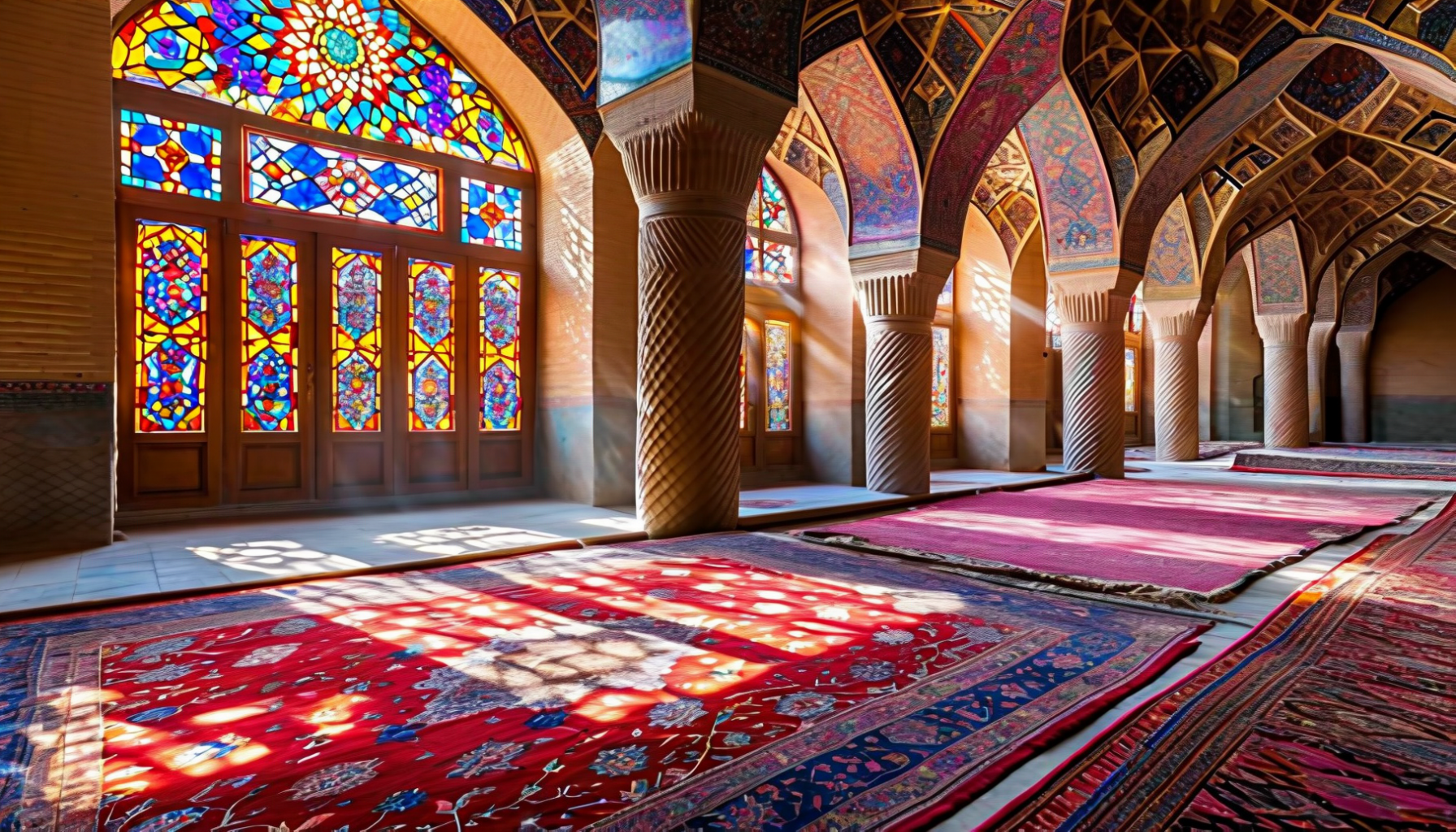
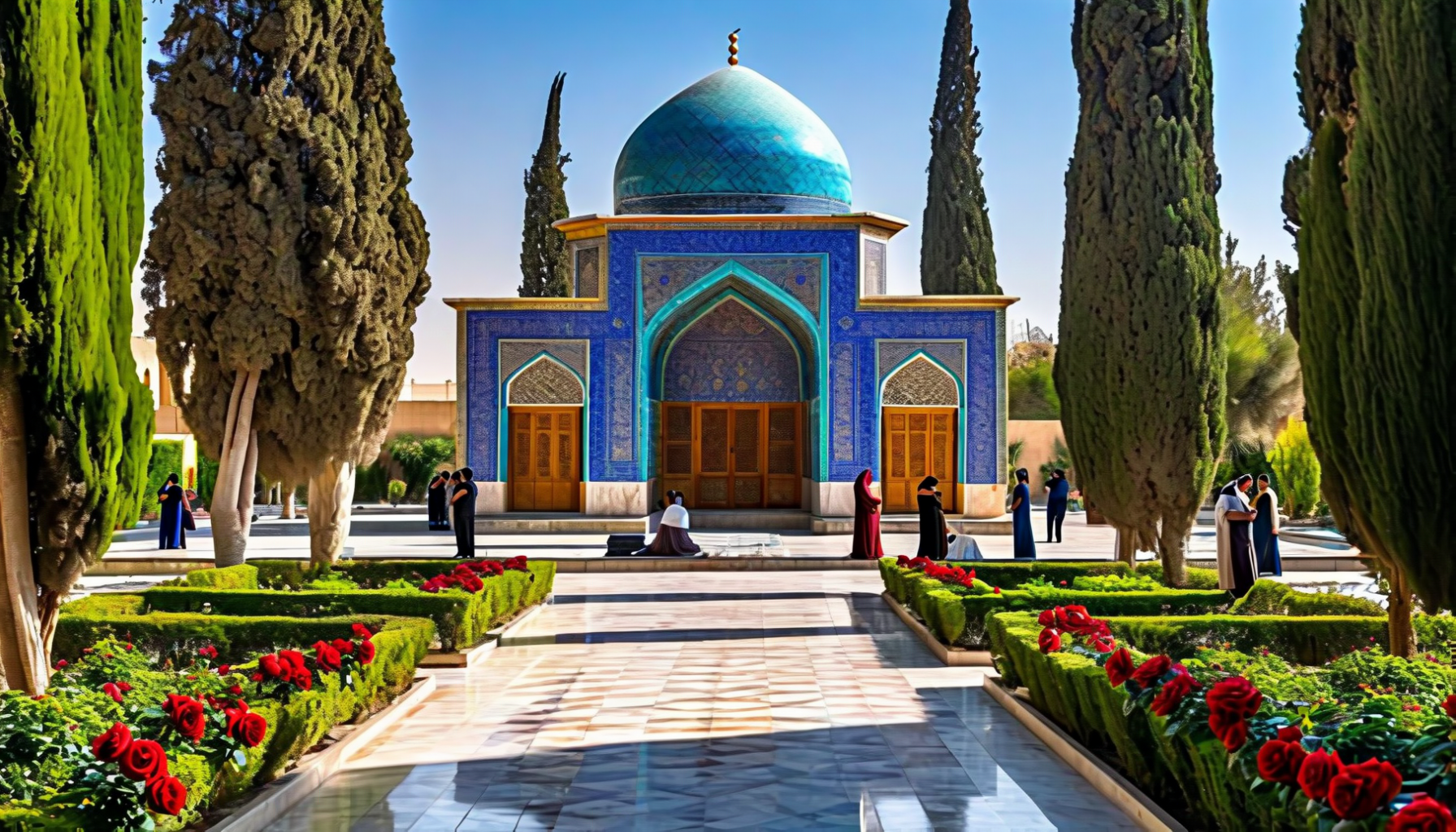
Shiraz is Iran's garden city, famous for nightingales, Shirazi roses, and two of the country's most beloved poets — Hafez (d. 1390) and Saadi (d. 1291). Their tombs are not museums but living shrines; Iranians bring roses, whisper couplets, and pick lines from the Divan for guidance. Don't miss the Nasir al-Mulk ("Pink") Mosque, whose stained-glass windows paint the interior in kaleidoscopic rainbows on sunny mornings, and the Vakil Bazaar and Eram Garden (UNESCO Persian Gardens).
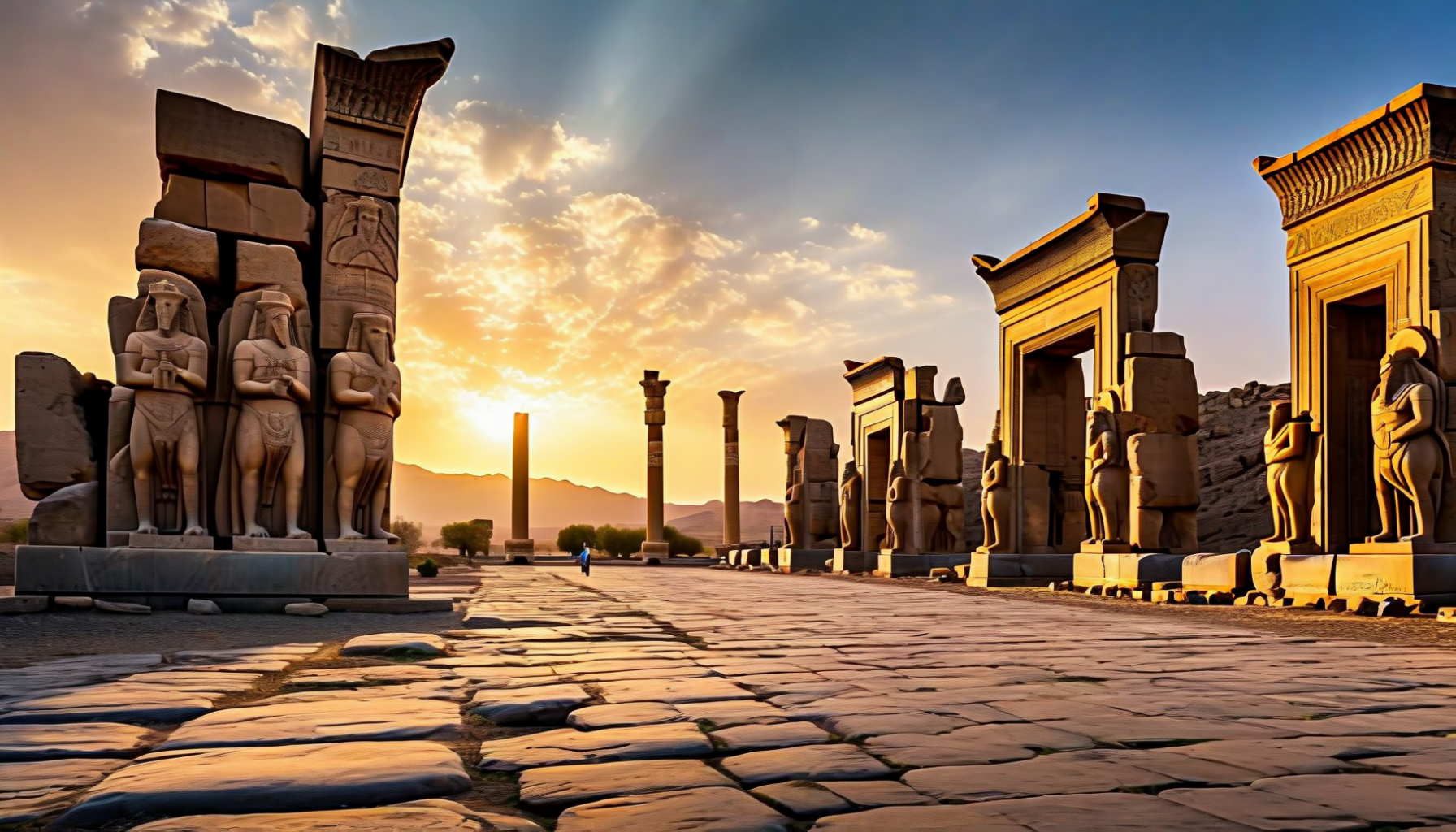
An hour north stands Persepolis (Takht-e Jamshid) — the ceremonial capital of the Achaemenid Empire, begun by Darius the Great around 518 BCE and burned by Alexander in 330 BCE. The Apadana reliefs depict 23 delegations bringing tribute from across the empire; the Gate of All Nations still stands guarded by its colossal winged bulls. Nearby are Naqsh-e Rostam, with the rock-cut tombs of Darius, Xerxes, Artaxerxes and Darius II, and Pasargadae, the tomb of Cyrus the Great — together forming one of the greatest archaeological landscapes on Earth.
🏜️ Yazd — Desert Living Museum
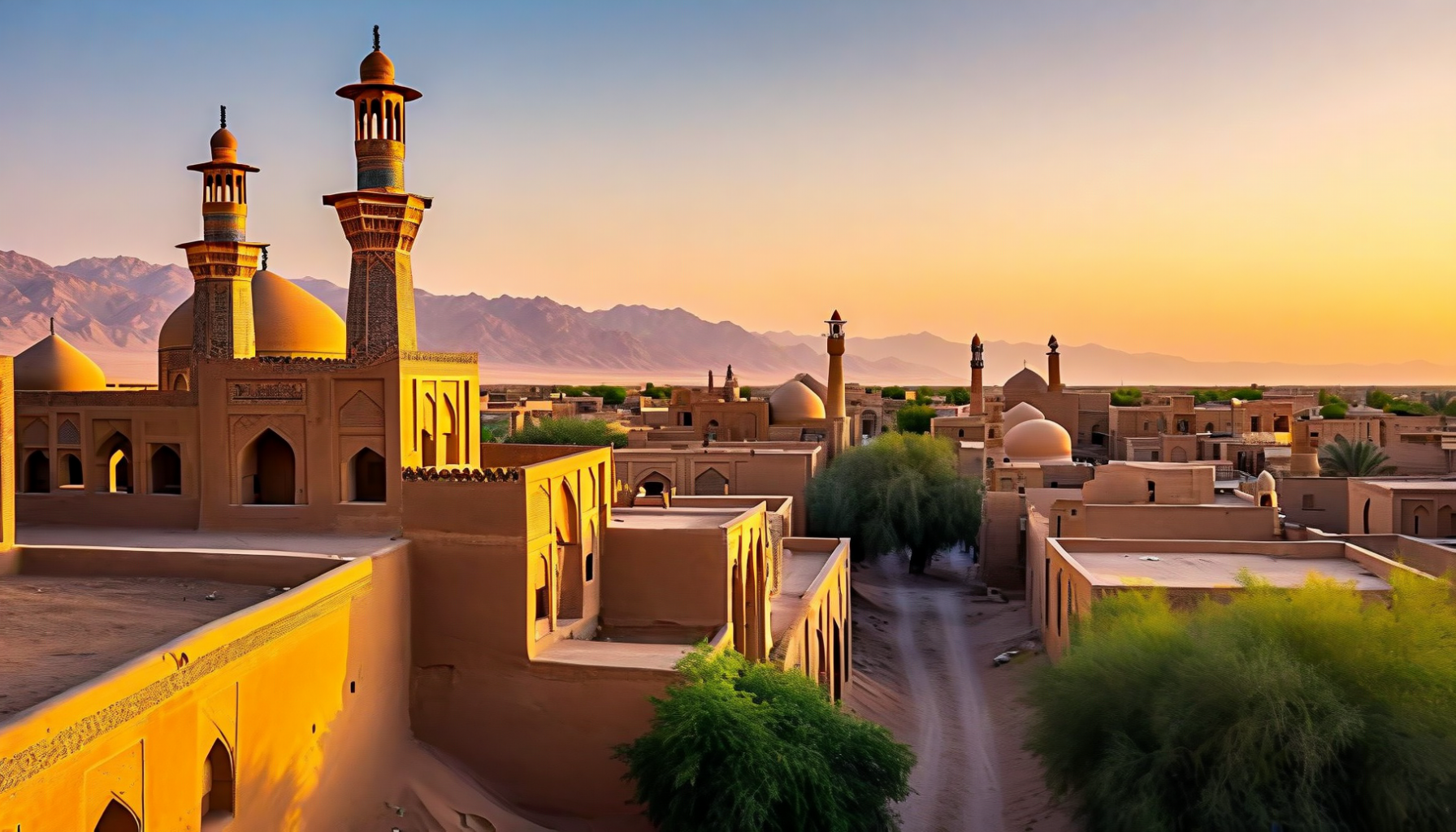
Yazd is the oldest continuously inhabited mud-brick city on Earth and a UNESCO World Heritage Site (2017). Its old town is a labyrinth of adobe walls, vaulted alleys and sun-blasted courtyards, punctuated by the towering badgirs — tall windcatcher chimneys that funnel desert breezes into the rooms below, a 2,000-year-old natural air conditioner. The Jameh Mosque of Yazd has some of the tallest minarets in the country and breathtaking tiled portals.
Yazd is also the heart of Iranian Zoroastrianism, the pre-Islamic religion of Cyrus and Darius. The Ātashkadeh fire-temple holds a sacred flame said to have burned continuously since 470 CE. On the outskirts, the Towers of Silence (dakhmeh) are circular stone platforms where Zoroastrians exposed their dead to the elements — a practice that ended only in the 1960s. The 2,400-km Persian Qanat network (UNESCO) — underground irrigation channels that built desert civilization — is also best understood here.
🌄 Lut Desert — Mars on Earth
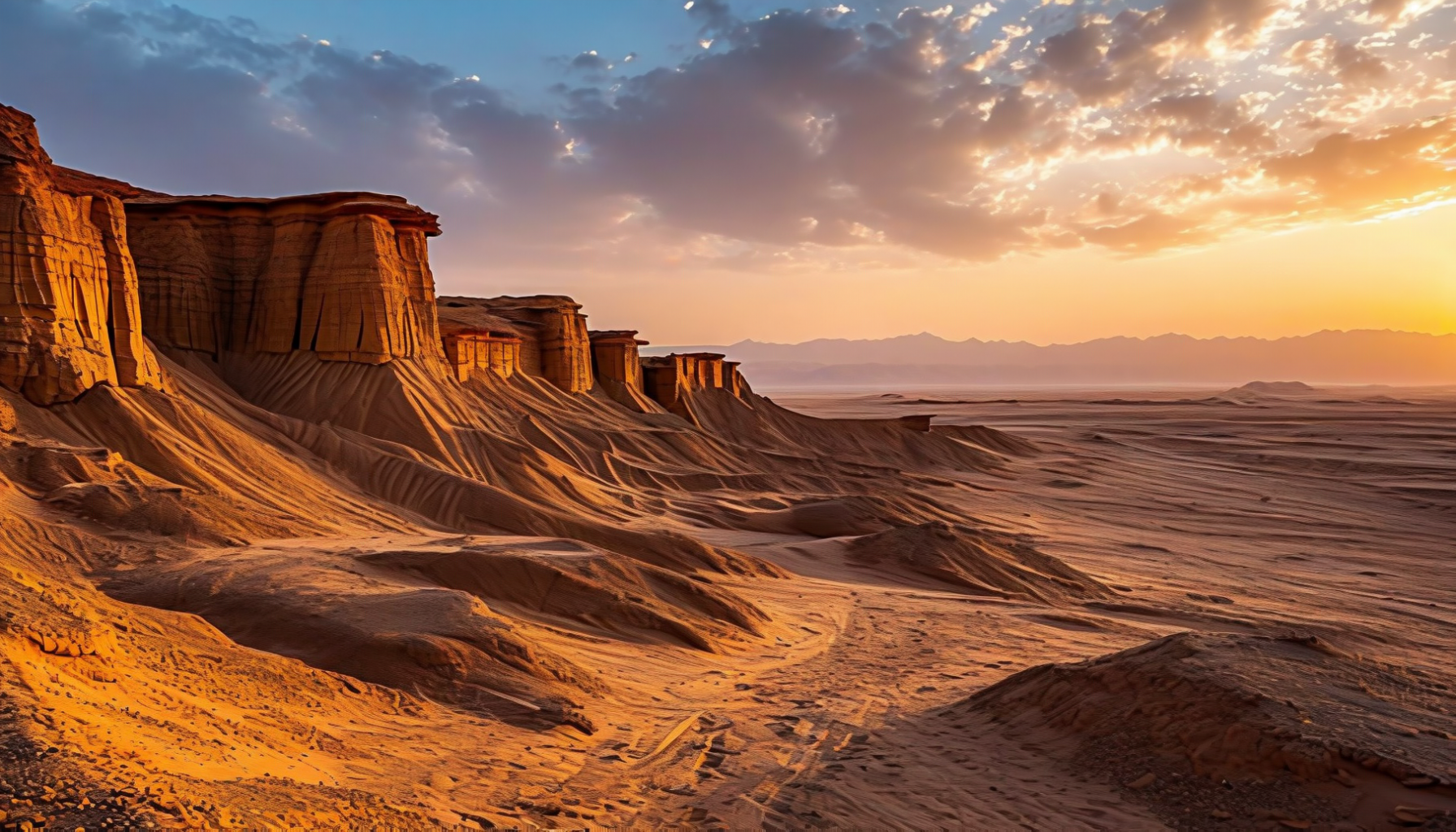
The Dasht-e Lut (UNESCO, 2016) is Iran's great alien landscape — and, per NASA, the hottest place ever measured on Earth's surface. Its Kaluts — vast parallel ridges of wind-sculpted sand and rock stretching for over 300 km — look like another planet, filmed for Martian scenes in documentaries. Most of the visible ridges near Shahdad rise up to about 40 meters, though UNESCO's own survey has measured the very tallest examples at over 150 meters. Dune fields, salt plains and "nebkas" (sand mounds anchored by desert shrubs) complete the scene.
Base yourself in Shahdad or Kerman; local drivers run 4×4 day trips and overnight desert camps. Go only in the cooler months (October–March). Stars at night are extraordinary — the Lut is one of the darkest places accessible to humans.
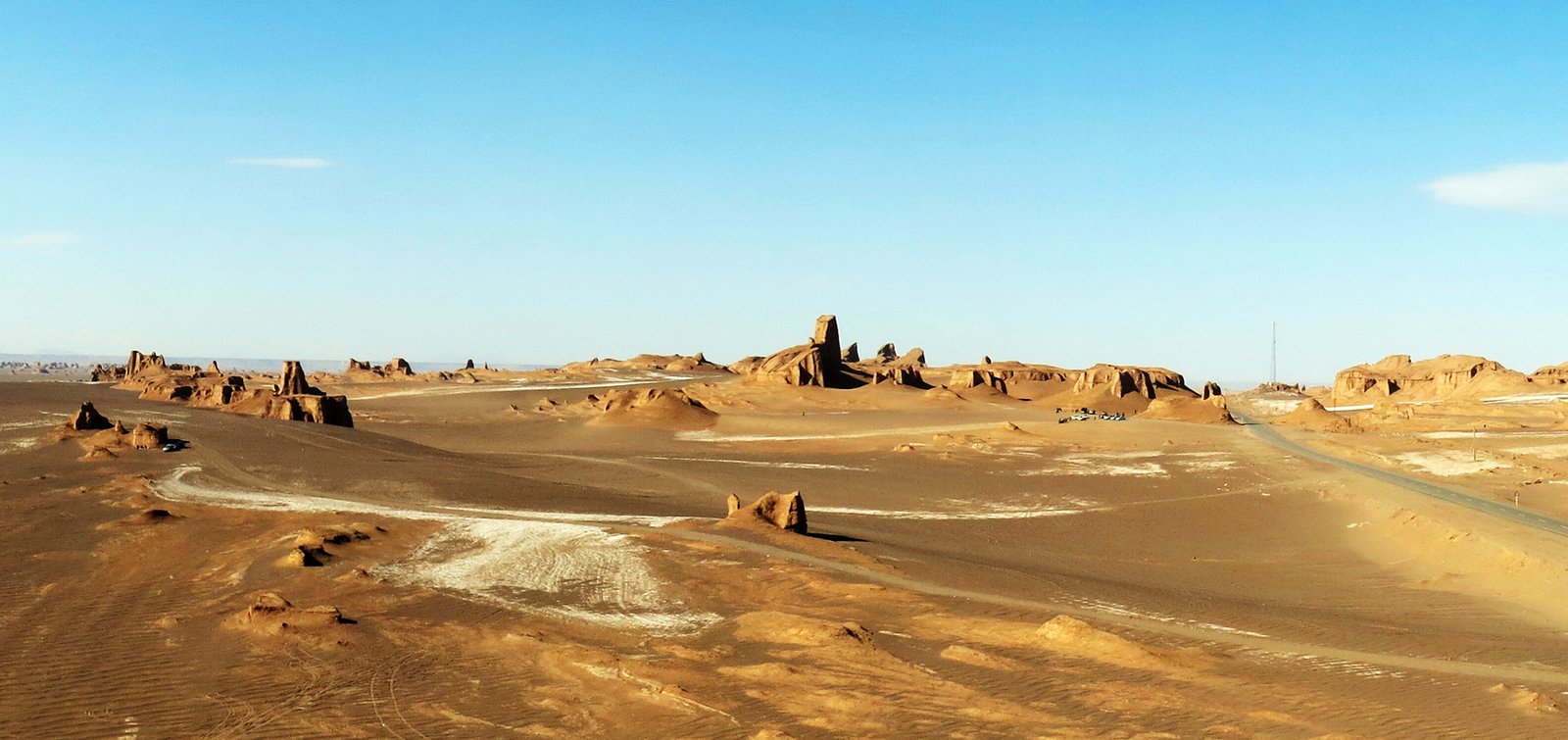
The Kaluts
Photo: Hadi Karimi (CC BY-SA 3.0) — parallel ridges carved by 120 days of relentless Sistan wind each year
🎵 The Voice of the Jinn
Iran's other great desert, the Dasht-e Kavir (Great Salt Desert), holds a stranger phenomenon than heat. In its remote heart lies Rig-e Jenn — literally "Dune of the Jinn" — a 3,800 km² sea of dunes so forbidding that no caravan fully crossed it until 2005. Travelers camping at its edge for centuries reported hearing low voices murmuring in the dark, as if unseen people were talking just out of sight; local Baloch and Kavir-edge nomads call it the voice of the jinn conversing among themselves. Science has since caught up with the legend: this is "singing sand" — dry, uniformly sized grains cascading down a dune face in synchronized layers, the whole slope acting as a giant resonating soundbox to produce a low, cello-like drone that can carry for kilometers. The physics is real. Standing on a dune at dusk as it starts to hum, it's easy to understand why people believed otherwise.
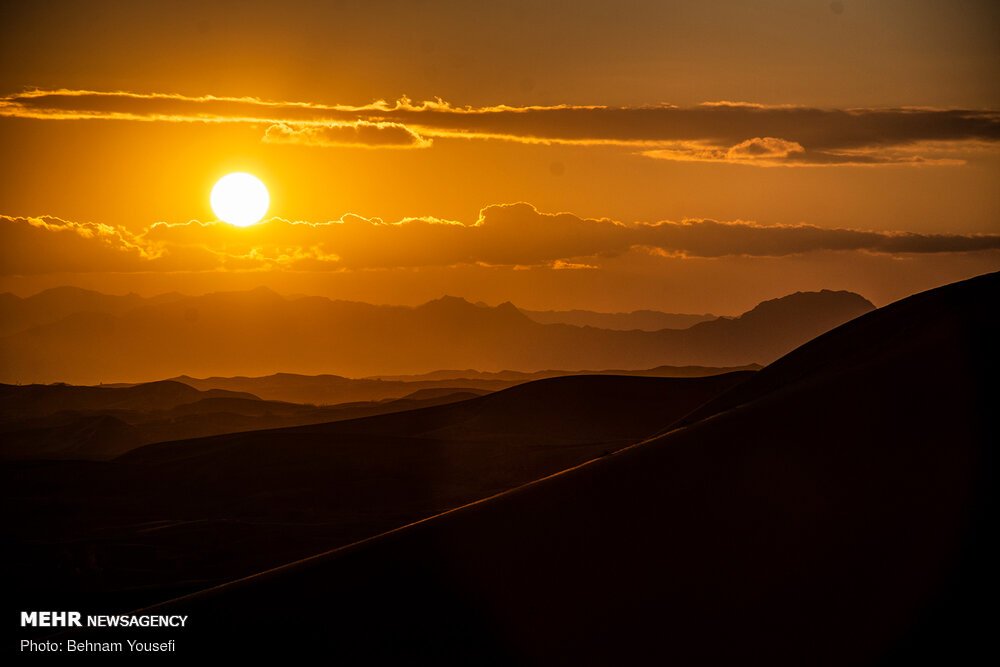
Rig-e Jenn at Dusk
Photo: Behnam Yousefi / Mehr News Agency (CC BY 4.0) — where the "singing sand" gave rise to centuries of jinn folklore
🐫 The Baloch — People of the Desert Edge
The people who actually know these deserts best aren't Bedouin — that's an Arabian term for a different culture entirely — but the Baloch (Balochi: بلۏچ), an Iranian ethnic group native to the southeast, where Sistan-Baluchestan and Kerman provinces meet the edges of the Lut. Speaking Balochi, a West Iranian language related to Persian but distinct from it, an estimated 4.8 million Baloch live in Iran today, many still following a semi-nomadic pastoral rhythm — herding goats and sheep between winter lowland camps and summer highland pastures, much as their ancestors have for centuries. Their reed-and-cloth dwellings, woven textiles, and deep, practical knowledge of the desert's water sources and safe routes are what actually make travel through this terrain possible — tour operators in Kerman and Shahdad still lean on that local knowledge for anything beyond the well-trodden Kalut viewpoints.
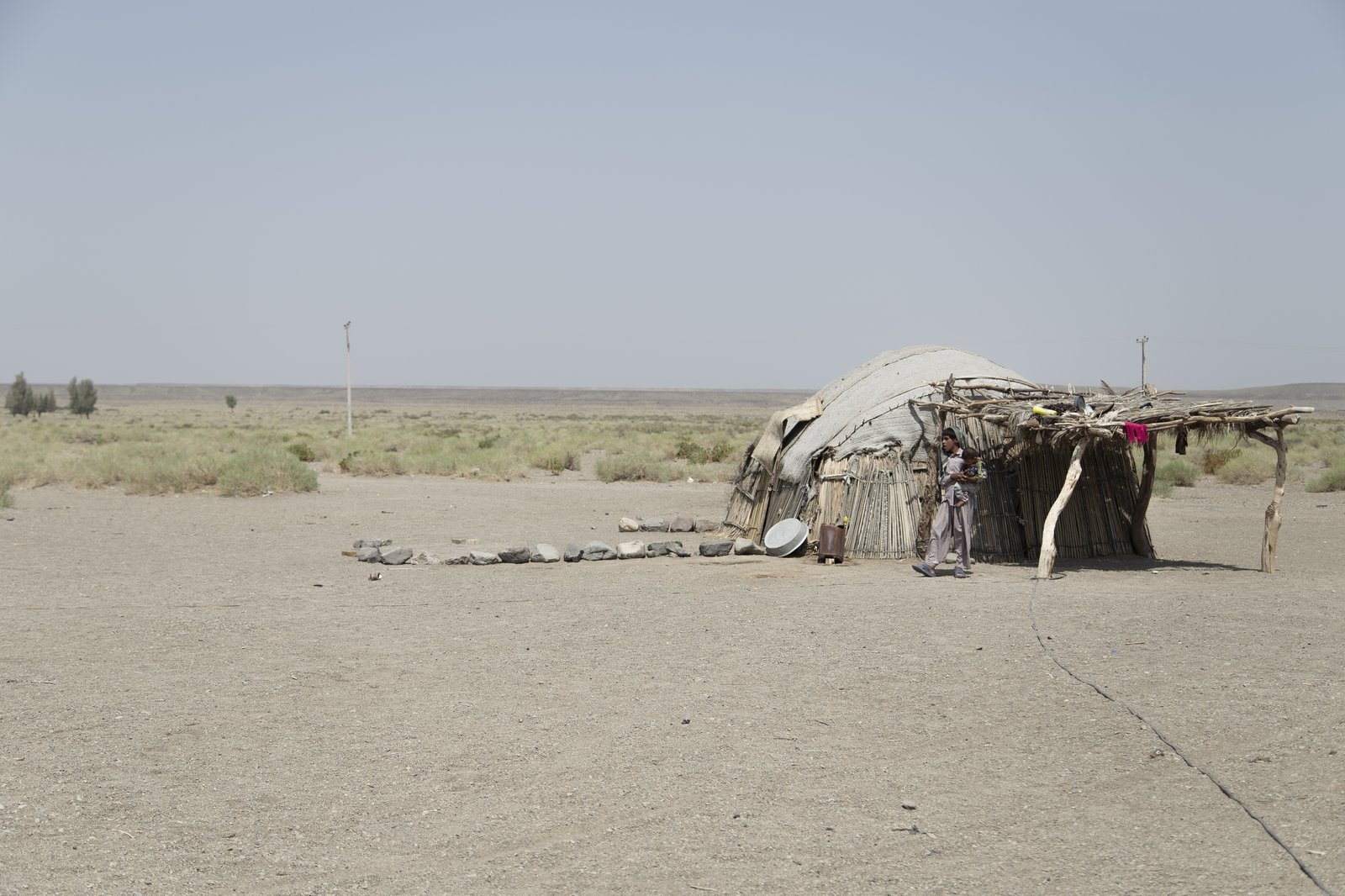
Baloch Desert Life
Photo: Mostafameraji (CC BY-SA 4.0) — a traditional dwelling in Sistan-Baluchestan, on the margins of the Lut
🧱 Tabriz — The Great Bazaar of the Silk Road
Tehran, Isfahan, Shiraz and Yazd all get their own spotlight on this page. Tabriz, historically, deserved one just as much — it was briefly the Safavid capital in the 16th century and has functioned as Iran's gateway to the Caucasus, Anatolia and Europe for over a thousand years. The city anchors Iranian Azerbaijan: Azeri Turkish is the everyday language here as much as Persian, and the culture, cuisine and music carry a distinctly Turkic inflection you won't find further south.
At the center of it all is the Tabriz Historic Bazaar Complex, UNESCO-listed in 2010 — one of the oldest and largest covered bazaars on Earth, a working network of interconnected brick corridors, caravanserais and mosques that Marco Polo is said to have passed through. It has survived earthquakes, an 18th-century loss of status as capital, and, in 2026, a fire that damaged over a hundred shops — and each time, Tabriz rebuilt it. A short walk away, the 15th-century Blue Mosque (Masjed-e Kabud) still shows off the turquoise tilework that gave it its name, despite a devastating 1780 earthquake that left much of it in ruins.
Tabriz has a political weight beyond its architecture, too: the city was a driving force behind Iran's Constitutional Revolution of 1905–1911, and the Constitution House museum tells that story directly. Just outside town, the volcanic cone village of Kandovan (below) makes an easy half-day addition to a Tabriz visit.
🏔️ Western Iran — The Zagros, Kurds & Ancient Persia
Most Iran itineraries run a single line: Tehran, Isfahan, Yazd, Shiraz. That route skips an entire other Persia — the Zagros mountains running along the Iraqi border, home to Iran's Kurdish population and to some of the country's oldest and strangest historical sites. Kermanshah, the region's main city, sits at the center of it: a place where Achaemenid, Sasanian and Kurdish history all overlap in the same set of mountains.
This is Bisotun country — Darius the Great's trilingual cliff-face inscription, the key that unlocked cuneiform for modern scholars, covered in full on the UNESCO & World Heritage page, along with the fire-temple lake of Takht-e Soleyman and the genuinely unnerving travertine pit of Zendan-e Berenjeh, both further north near Takab. Kermanshah itself adds two more essential stops — Taq-e Bostan's Sasanian rock reliefs, just below, and easy access into Hawraman, the Kurdish stepped-village landscape covered further down this page.
👑 Taq-e Bostan — Kings Carved into the Zagros
Five kilometres outside Kermanshah, a cliff face beside a spring-fed pool carries some of the finest surviving Sasanian rock art anywhere in Iran. Taq-e Bostan ("Arch of the Garden") was Parthian royal hunting ground more than 2,000 years ago before Sasanian kings began carving it around the 4th century CE — investiture scenes showing kings crowned by the gods Ahura Mazda and Anahita, and two enormous hunting reliefs: a boar hunt with the king shooting from a boat while elephant-riders drive prey from the reeds, and a deer hunt with rows of musicians and mahouts leading tame stags toward the killing ground.
The largest niche shows Khosrow II, fully armored on horseback — one of the most detailed surviving portraits of a Sasanian king in full battle dress, right down to the horse's own armor. A 19th-century Qajar governor added his own self-glorifying relief to one wall, in noticeably cruder style — later visitors have not been kind about the comparison. The site remains a popular local picnic spot, tea stalls and all, which somehow suits four kings' worth of imperial propaganda carved into a mountain.
🏘️ Hawraman — Villages Built Into the Zagros
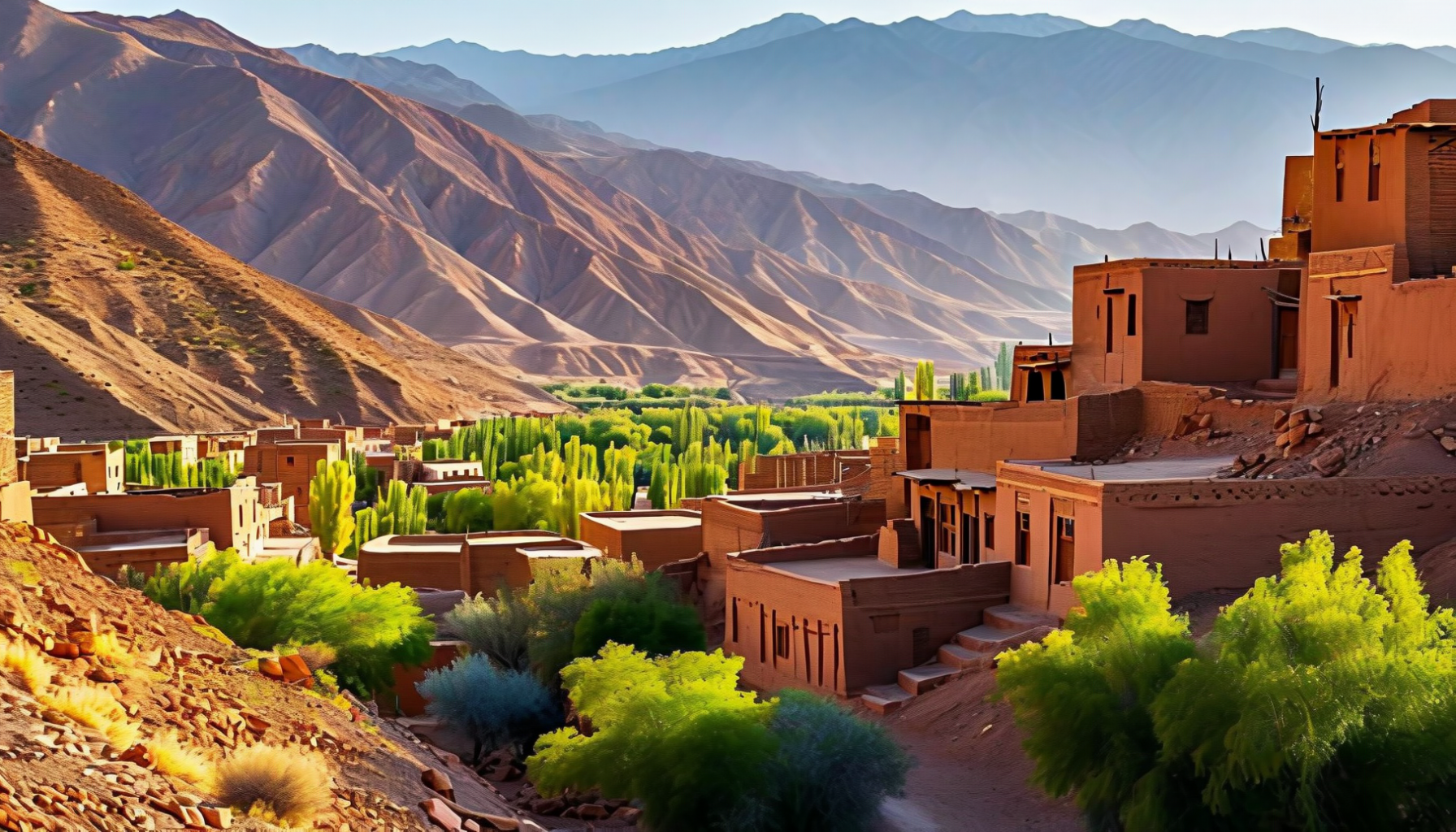
Masuleh, elsewhere on this page, is famous for roofs that double as the street above. Hawraman — a Kurdish mountain region straddling Kurdistan and Kermanshah provinces, inscribed by UNESCO in 2021 — does the same thing at a far larger scale: entire villages stacked against near-vertical limestone cliffs, each house's flat roof serving as the courtyard of the house immediately above it, the whole settlement rising like a stone pyramid toward a hilltop castle.
The Hawrami people, an agropastoral Kurdish group, have worked this landscape since roughly 3000 BCE — terracing near-vertical slopes for wheat, walnuts and pomegranates, and moving flocks seasonally between valley and highland pasture. They speak Hawrami, an endangered branch of Kurdish once used as a literary language; UNESCO separately recognized their winter Pir Shaliar ceremony — three days of communal work, feasting and sung poetry linking the village to a semi-legendary saint-king — on its Intangible Cultural Heritage list. Uraman Takht is the region's historic heart and the most-visited village; Hajij and Palangan, nearby, offer a quieter version of the same stepped architecture.
💧 Shushtar — The Persians Turned a River Into a Machine
In Khuzestan province, on the Karun River — Iran's largest — the Shushtar Historical Hydraulic System does something most ancient engineering doesn't: it still works. Tradition traces its origin to Darius the Great in the 5th century BCE, though its present monumental form is mostly Sasanian. The system diverts the Karun through two main canals, one of which, the Gargar, still supplies the city today via a network of tunnels that once powered dozens of watermills, spilling out over a man-made cliff as a cascade of waterfalls into a downstream basin — floodlit and genuinely spectacular after dark.
UNESCO, inscribing it in 2009, called it "a masterpiece of creative genius." That's not hyperbole: the complex of dams, bridges, tunnels, and the Salasel Castle that once served as its control center enabled 40,000 hectares of orchards and farmland south of the city — an area locals still call Mianab, "Paradise," the same word covered elsewhere on this page. Roman engineering influence has been traced in some of its details, evidence of just how far this piece of hydraulic engineering traveled as a reputation before UNESCO ever got involved.
🏡 Kandovan — A Village Inside the Volcano
Comparisons to Cappadocia are unavoidable and not entirely wrong — Kandovan, a short drive from Tabriz, is a village of homes carved directly into cone-shaped volcanic rock formations, the ash and pumice from an eruption of nearby Mount Sahand softened by centuries of erosion into shapes that look almost organic. What separates Kandovan from most rock-cut settlements elsewhere in the world is simple: people still live in the mountain. Families occupy multi-story homes hollowed from the cones, some inhabited for over 700 years, with the rock's natural insulation keeping interiors cool in summer and warm in winter without any modern climate control at all.
The village sees plenty of day-trippers from Tabriz, drawn by the photogenic karaan (cone) formations and a cold spring reputed for its mineral content, but it remains a real, functioning settlement rather than a preserved museum piece — laundry on the line between troglodyte towers, not velvet ropes.
🍽️ Cuisine, Wine & Drinking Culture
Persian cuisine is one of the world's great culinary traditions, built on saffron, dried limes, pomegranate, walnuts and the prized crunchy rice crust known as tahdig. Iran is also, improbably, one of the birthplaces of wine itself — 5400 BCE tartaric-acid residues at Hajji Firuz Tepe rival Georgia's claim — even though alcohol has been banned since 1979, giving rise to an unusually sophisticated non-alcoholic sharbat culture instead.
🍷 Wine & Spirits
5,400-year-old wine evidence, the modern ban, and three centuries-old sharbat recipes.
Full guide →🌹 Rose Oil — The Kaaba Is Washed With Kashan's Roses
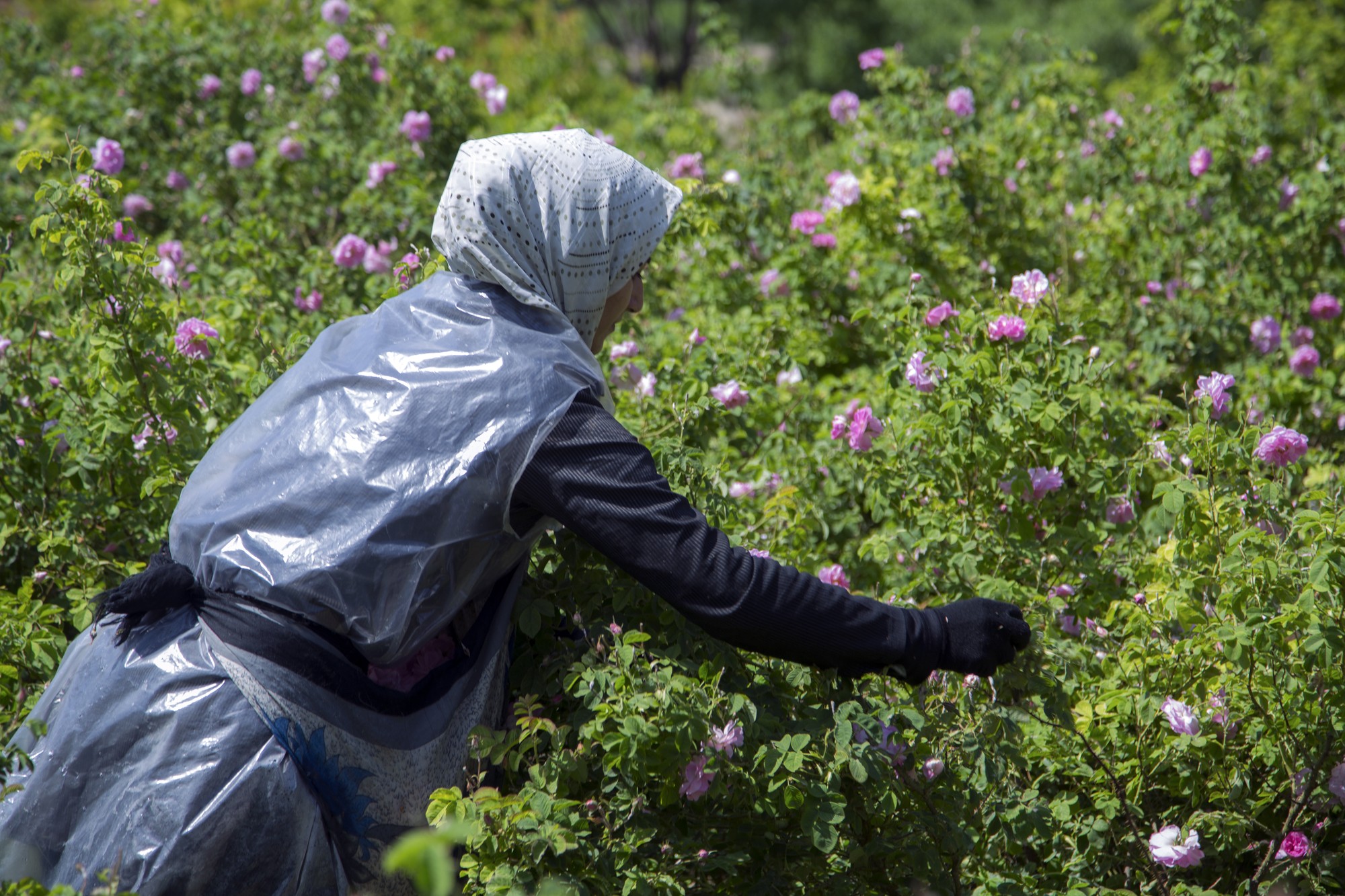
Golabgiri — The Rose Harvest
Qamsar, near Kashan: petals are picked by hand before sunrise, while the oils are still concentrated by the night's cool air.
Every May, the hills around Qamsar, Niasar and Barzak — villages just outside Kashan, in central Iran's Isfahan province — turn pink with Rosa damascena, the Damask rose Iranians call gol-e Mohammadi. For a few weeks the entire local economy revolves around getting the flowers off the bush and into a copper still before the morning heat burns off their scent. Pickers start before dawn; by mid-morning the day's harvest is already being loaded into distillery pots.
The process, called golabgiri, hasn't changed much in centuries: roughly 30 kg of petals go into a large copper vessel called a deg, water is added, the lid is sealed, and the whole thing is heated for hours over a low flame. Steam carries the rose's volatile compounds up through a cooling coil, where they condense back into liquid. What runs out is mostly golab — rosewater — but a small, much more concentrated layer of pure rose oil (attar) collects on top, and that's where the real economics kick in: it takes somewhere between 3,500 and 5,000 kg of petals to produce just one kilogram of oil, a ratio in the same league as saffron. Rosewater sells for a few euros a litre; the oil sells for thousands of euros a kilogram.
Kashan's workshops turn out an estimated 15,000 tonnes of rosewater a year, and Iran now ranks among the world's top Damask rose producers alongside Bulgaria and Turkey — cultivation has spread from roughly 8 provinces a decade ago to about 18 today, though connoisseurs still rate Qamsar's harvest as the benchmark. The oil is exported to perfume houses in France and Bulgaria; the rosewater flavors classic Persian desserts like faloodeh and shows up in traditional medicine for everything from sore throats to heart complaints.
One detail turns this from a nice agricultural fact into a genuinely global one: since the Safavid era, Qamsar's rosewater has been sent to Mecca to ceremonially wash the interior of the Kaaba, Islam's holiest site — a tradition still observed today, alongside Zamzam water and oud. A flower field outside a small Isfahan-province village, it turns out, has been quietly perfuming the center of the Islamic world for roughly four hundred years.
🌳 The Green Iran — Gilan, Mazandaran & the Caspian Forests
Every other region on this page fights for water. Gilan and Mazandaran, the two provinces hugging the Caspian coast, have the opposite problem — some parts receive over 2,000 mm of rain a year, among the highest rainfall totals anywhere in the Middle East. The result is a landscape that looks like it belongs to a different country entirely: rice paddies terracing down toward the sea, tea plantations climbing the foothills, and the Hyrcanian forest — covered in depth on the UNESCO page — a genuinely ancient, sub-tropical woodland unlike anything on the Iranian plateau to the south.
The architecture changes with the climate: steep-pitched wooden roofs built to shed rain and snow, a world away from the flat mud-brick rooflines of Yazd or Kashan. So does the food — Gilaki cuisine leans on rice, fresh herbs, garlic, and Caspian fish rather than the kebabs and stews of the interior. Ramsar, Iran's most famous Caspian resort town, and the hill station of Masuleh, described elsewhere on this page, both sit within this same green belt. The contrast with the Lut Desert — the hottest place ever measured on Earth's surface, a few hundred kilometres south — is the whole point: this is the range that makes "five worlds in one nation" more than a slogan.
🌿 The Persian Garden — Paradise Made Geometric
Nine historic gardens across Iran — including Eram Garden in Shiraz, already mentioned on this page, and the Fin Garden in Kashan — are jointly UNESCO-listed as the Persian Garden, and the design behind all of them is older than any single one: the chahar bagh, a rectangular garden quartered by intersecting water channels representing the four rivers of paradise, with a pavilion or pool at the crossing point. The oldest known example belonged to Cyrus the Great at Pasargadae, covered on the UNESCO page — which makes it, by a fair margin, the oldest deliberately geometric garden design still in active use anywhere on Earth.
The idea outlasted the empire that built it. It's discussed as its own fact card elsewhere on this page, but it bears repeating here: the English word "paradise" comes directly from the Old Persian pairidaeza, "walled garden," by way of Greek and Latin — meaning that every time an English speaker calls something paradise, they're unknowingly quoting a 2,500-year-old description of a Persian king's private orchard. Water, shade, symmetry and scent were never decorative extras in this tradition; they were the entire argument for what a garden — and by extension, heaven — was supposed to be.
💦 Qanat — The Underground Rivers of Persia
Yazd's old city survives in the desert because of a piece of engineering most visitors never actually see. A qanat is, at its core, a gently downward-sloping tunnel — dug entirely by hand — that intercepts groundwater at the base of a mountain or alluvial fan and carries it by gravity alone, no pumps, no fuel, sometimes tens of kilometres to a city or a field. Iranian engineers were building them by 700–500 BCE; the country is thought to hold somewhere between 280,000 and 400,000 kilometres of qanat tunnel in total — enough, laid end to end, to circle the equator seven to ten times over.
The system's signature, visible from any plane window over central Iran, is a dead-straight line of perfectly round shafts marching across open desert — vertical access and ventilation points sunk down to the tunnel below, spaced every few dozen metres. From the air they look uncannily like a chain of giant footprints pressed into the sand. The largest and oldest system, the Qanats of Gonabad — covered in more depth on the UNESCO page — still supplies water today, 2,700 years after the first shaft was sunk, a piece of infrastructure that has quietly outlasted every empire that has ruled the plateau above it.
🐐 Qashqai & Bakhtiari — Iran's Nomads
The Baloch, covered elsewhere on this page, aren't Iran's only nomadic tradition. In the southwest, two Turkic- and Luri-speaking confederations — the Qashqai, based around Fars province, and the Bakhtiari, further north in the central Zagros — still practice a form of seasonal migration, ilrah, that predates the modern Iranian state by centuries. Twice a year, entire households move their flocks between winter lowland pasture and summer highland grazing — for the Bakhtiari specifically, one of the most physically demanding migrations left on Earth, crossing the raging spring snowmelt of the Zagros's rivers and passes on foot, with animals and belongings in tow.
Both groups are famous for their textiles — Qashqai kilims and Bakhtiari carpets are prized well beyond Iran's own carpet trade, woven on portable looms that pack up along with the tents — and both maintain a clan structure that has outlasted repeated 20th-century government efforts at forced settlement. Fewer families make the full migration today than a generation ago, but it hasn't disappeared: spring and early summer still bring genuine nomadic caravans through the Zagros passes, one of the more striking sights available to a patient, well-timed visitor to Fars or Chaharmahal and Bakhtiari province.
🕌 Mashhad — The City of Imam Reza
A travel guide to Iran that skips Mashhad is skipping one of the country's largest cities and its single most important pilgrimage site. Mashhad grew up around the shrine of Imam Reza, the eighth Imam of Twelver Shia Islam, who died here in 818 CE; the shrine complex that has grown around his tomb since is now one of the largest mosque compounds on Earth, drawing an estimated 20 million pilgrims a year — domestic and international — making it one of the most-visited religious sites anywhere in the world, on a scale that rivals Mecca itself for the Shia world specifically.
This is a different Iran than the one most foreign visitors see in Isfahan or Shiraz: less about postcard architecture (though the shrine's gold dome and mirror-work interiors are extraordinary in their own right), more about witnessing a living devotional practice at genuine scale. Non-Muslim visitors can generally access the outer courtyards, though the inner sanctuary is restricted; local guides and the shrine's own international-visitor programs can arrange respectful access. It's worth visiting as what it is — a working center of pilgrimage, not a monument — and treating it with the same cultural care that approach implies.
☕ Everyday Iran — Tea, Picnics & Late-Night Streets
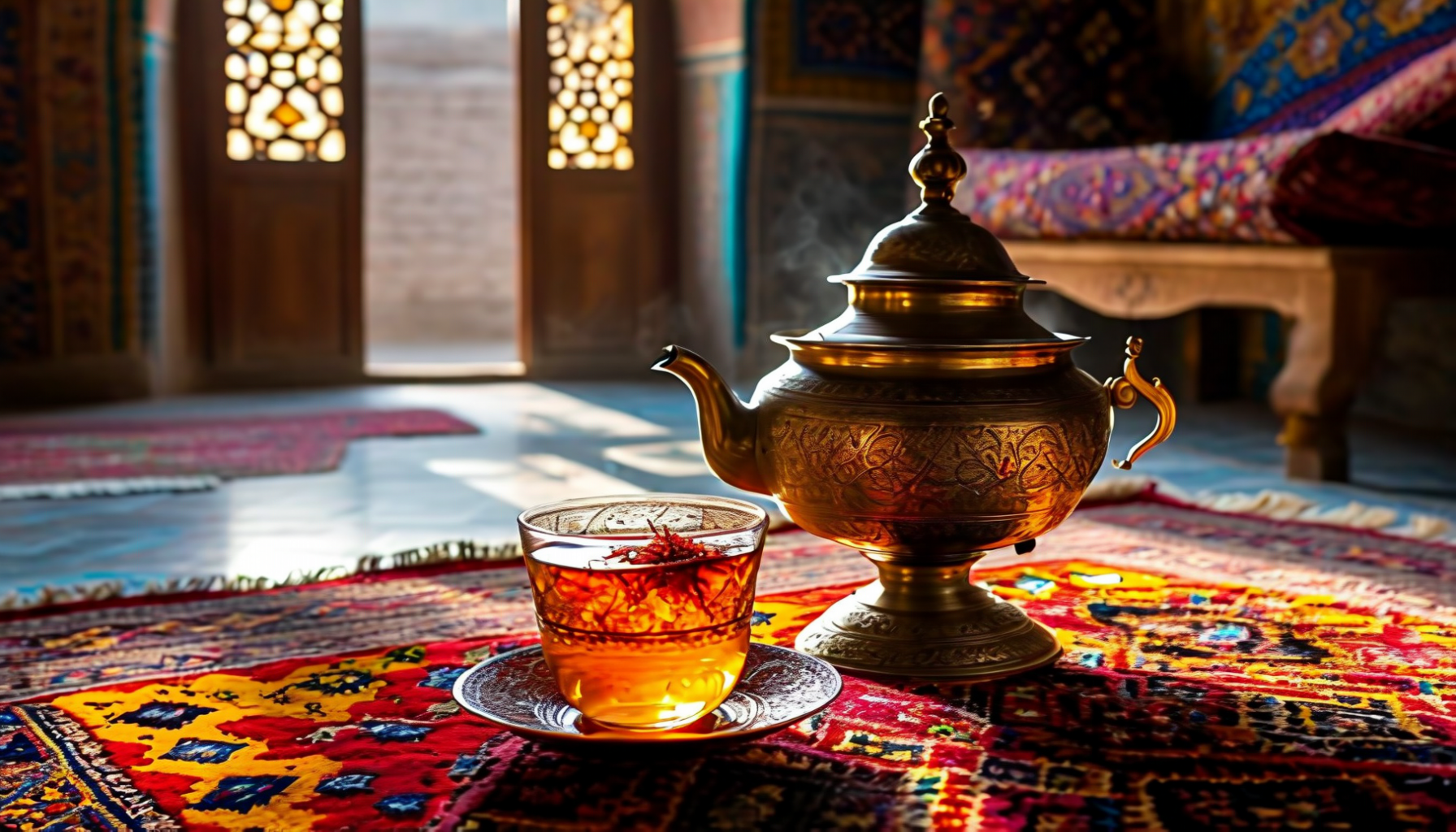
The People & Culture section above covers the big picture. This is the small one. Iranians are serious about tea — brewed strong in a samovar, poured as concentrate and diluted to taste, traditionally sipped through a sugar cube (qand) held between the teeth rather than stirred in. Refusing a second glass is close to a small social offense. Ta'arof, the elaborate ritual of polite refusal-and-insistence that governs everything from paying a taxi fare to accepting food, runs through all of it — a visitor who takes the first "no, please, after you" at face value will spend a confusing first week in the country.
Public and private life split more sharply here than in most places tourists arrive from, and the gap is exactly where the country's real texture lives: family picnics spread across a park median strip on a Thursday night, the traditional teahouse (chaykhaneh) as a genuine social institution rather than a tourist prop, saffron ice cream (bastani sonnati) sold from carts on hot afternoons, and street food — grilled corn, beetroot, lavashak fruit leather — that runs into the small hours in any city large enough to have a proper night shift. None of it shows up on a monument list, and all of it is what makes the country feel inhabited rather than toured.
📖 A Country That Still Quotes Its Poets
Ferdowsi, Hafez, Saadi, Rumi and Omar Khayyam all get mentioned elsewhere on this page, but the fact worth isolating is less about who they were and more about what still happens because of them. Iranians don't treat these poets as school-curriculum history the way most countries treat their classical writers — they quote them in ordinary conversation, cite them to settle arguments, and consult them for guidance. The clearest example is fal-e Hafez, already mentioned on this page: open the Divan of Hafez at random and read the poem as an answer to whatever question you're carrying, a practice performed at Nowruz, at weddings, and by people facing an ordinary hard decision on an ordinary Tuesday.
Ferdowsi's Shahnameh ("Book of Kings"), some 50,000 couplets composed around 1000 CE, single-handedly preserved pre-Islamic Persian language and mythology through centuries of Arabic linguistic dominance — a conscious act of cultural survival, not just literature. Saadi's Bustan and Gulistan supply proverbs still in everyday circulation (a stanza from the Gulistan is carved over the entrance to the UN building in New York). None of this is nostalgia. It's a live practice, still shaping how Iranians talk to each other.
📅 The Persian Calendar — More Accurate Than the Gregorian?
Iran runs on the Solar Hijri calendar, not the Gregorian one — which is why the same day can be written as 1405 in Tehran and 2026 almost everywhere else. The count starts from Muhammad's migration to Medina in 622 CE, same starting point as the Islamic lunar calendar used elsewhere in the Muslim world, but the mechanism is entirely different: Solar Hijri tracks the actual solar year via direct astronomical observation of the vernal equinox, rather than a fixed set of leap-year rules. The result is a calendar that drifts from the true solar year by roughly one day every 110,000 years — by some reckonings, more accurate than the Gregorian calendar most of the world uses.
Nowruz, the Persian New Year, marks the moment of that equinox itself — not a fixed calendar date but the literal instant the sun crosses the celestial equator, calculated anew each year and announced to the minute. It's a UNESCO Intangible Cultural Heritage tradition shared across Iran, Afghanistan, Central Asia and the Kurdish world, built around the haft-sin table (seven symbolic items starting with the Persian letter S) and a full spring-cleaning of the home — khouneh tekouni, literally "shaking the house" — before the year turns.
🌡️ Climate & Best Time to Visit
Iran spans multiple climate zones. The central plateau (Tehran, Isfahan, Yazd, Shiraz) is arid-continental: scorching summers (35–42 °C) and cold winters (snow in Tehran and Tabriz). The Caspian coast is humid subtropical with ~1,500 mm of annual rainfall; the Persian Gulf coast is relentlessly hot and muggy; the Alborz and Zagros mountains receive heavy snow and feed half the country's water supply.
Best time: Spring (mid-March to early June) for flowers, mild temperatures and Nowruz festivities — though the two weeks of Nowruz itself are chaotic. Autumn (late September to early November) for crisp light, harvest colors and empty ruins. Avoid the deep-summer heat in the deserts (May–August); head for Alborz or the Caspian.
✈️ Getting There
Air: Imam Khomeini International Airport (IKA) near Tehran is the main gateway. Direct flights from Istanbul, Doha, Dubai, Frankfurt, Moscow, Beijing, Baku, Yerevan. No direct flights from the US, UK or most of Western Europe since sanctions; connect via Istanbul, Doha or Dubai. Secondary international airports: Mehrābād (THR, domestic + some regional), Mashhad (MHD), Shiraz (SYZ), Isfahan (IFN), Tabriz (TBZ).
Land: Crossings open to most nationalities from Turkey (Bāzargān, Sero), Armenia (Norduz), Azerbaijan (Astara), Turkmenistan (Sarakhs). Overland from Iraq and Pakistan is usually possible but check current security.
Visas: Many nationalities (EU, Australia, Japan, Gulf states) receive 30-day visas on arrival or via e-visa. US, UK, Canadian citizens cannot travel independently — they must book a pre-arranged tour with a licensed Iranian agency, and be accompanied by a guide throughout. Dual nationals face elevated risk (see advisory).
📋 Practical Information
Money: Iranian Rial (IRR) but prices are quoted in toman (1 toman = 10 rials). International cards do not work due to sanctions; bring enough clean USD or EUR cash for the whole trip, or use a prepaid tourist card (e.g. Mah Card, Daric Pay) bought in advance.
Dress code: Women must cover their hair (hijab), neck and arms in public; knee-length or longer coats (manteau). Men: no shorts in public, no sleeveless shirts. Rules have been inconsistently enforced since 2022 but penalties do happen — err on the side of modesty.
Connectivity: Local SIMs (Irancell, MCI, Rightel) are cheap. Most Western services — Facebook, YouTube, X, WhatsApp Web, Netflix, Telegram — are blocked; a VPN is essential (install before arriving; don't download in-country). Time zone: UTC+3:30 (no DST since 2022). Electricity: 230 V, Type C/F plugs. Emergency: 110 (police), 115 (ambulance), 125 (fire).
💰 Cost of Living
Thanks to the collapse of the rial, Iran is among the cheapest countries on Earth for foreign-currency travelers. Shoestring: US$20–30/day. Mid-range: US$50–80/day. Comfortable: US$100–150/day covers boutique courtyard hotels and private guides.
Sample prices (2026): Budget guesthouse US$10–20; mid-range hotel US$30–60; 3-course restaurant meal US$4–10; chelo kabāb in a traditional house US$5–8; intercity VIP bus US$6–15; domestic flight Tehran–Isfahan US$25–40; licensed English-speaking guide US$40–70/day; 4×4 day tour to Lut US$60–100.
🏨 Accommodation
The great Iranian innovation is the traditional courtyard guesthouse (khāne-ye sonnati). Restored Qajar-era merchant houses in Isfahan, Yazd, Kashan and Shiraz have been turned into boutique hotels around citrus-tree courtyards with tiled fountains — often the most atmospheric stays in the country for US$30–80.
Modern chain-quality hotels exist mainly in Tehran, Isfahan and Mashhad. Booking.com, Expedia and most international platforms do not list Iranian properties due to sanctions; use local sites SnappTrip, Eghamat24, HotelYar, or book via your guide. Homestays with Iranian families (sometimes called "eco-lodges") are common in rural areas and in the Kaluts.
🎭 Festivals & Events
Nowruz (20–21 March): Persian New Year — the most important holiday of the year. Haft-sin table of seven symbolic items, two weeks of visiting family. The whole country slows down between roughly 20 March and 3 April.
Chahārshanbe Sūrī (last Wednesday-eve before Nowruz): fire-jumping festival with a pre-Islamic Zoroastrian flavor. Sīzdah Bedar (1 April / 13 Nowruz): the "thirteenth day of Nowruz," everyone picnics outdoors. Yaldā Night (~21 December): winter solstice with pomegranates, watermelon and all-night Hafez readings. Muharram & Āshūrā: mourning processions commemorating Imam Hussein — intensely moving, especially in Yazd and Shiraz. Fajr Film Festival (February): Iran's premier cinema event. Golāb-gīri (May, Kashan): rose-water distillation festival in Qamsar village.
🗡️ Alamut — Eagle's Nest of the Assassins
High in the Alborz mountains northwest of Tehran, the ruined fortress of Alamut ("Eagle's Nest" in the old local dialect) gave the world one of its most enduring words. In 1090 CE, a Persian Ismaili missionary named Hassan-i Sabbah seized this near-impregnable mountaintop castle without a fight and made it the capital of a breakaway Shia sect, the Nizari Ismailis. What Hassan built there was less a kingdom than history's first international network of political assassins: small cells of highly trained agents, the Hashashin, who spent years infiltrating the courts of hostile sultans and caliphs as trusted advisors, soldiers or servants before striking with a dagger in broad daylight — a form of asymmetric warfare so effective that it let a handful of mountain fortresses defy the entire Seljuk Empire for nearly 170 years. Crusader chroniclers who encountered the sect's Syrian branch carried the terror home to Europe, and the word for a political killer entered English, French and half a dozen other languages soon after — most popularly traced to the Arabic "hashish-eaters," though modern scholars argue it more likely comes from asasiyyun, "those faithful to the foundation."
Alamut held out where empires could not reach it for nearly two centuries — until an enemy came who did not care how many months a siege took. In 1256, the Mongol prince Hülegü, grandson of Genghis Khan, surrounded the castle with an army the Ismailis could not hope to match militarily, and after a siege of several months accepted its surrender rather than storming its cliffs. The Mongols demolished the fortress and, according to Persian chroniclers, systematically destroyed Alamut's famous library — reportedly one of the finest scientific and philosophical collections in the Islamic world, lost within days to fire after having survived two centuries of the region's wars. Today only broken walls and cisterns cling to the rock, reachable by a steep hike from Gazor Khan village, with views across the Alamut Valley that explain in an instant why no army before the Mongols ever took it by force. Alamut Castle and its network of related Nizari fortifications were formally added to the UNESCO World Heritage List in July 2026 — Iran's newest inscription, and long overdue for a site that shaped a word used in half the world's languages.
🌈 Hormuz & Qeshm — The Painted Islands
Hormuz Island, in the strait that carries its name, is a single geological showpiece: a salt dome pushed up from deep underground, its surface stained up to seventy different colors by iron oxide, ochre and volcanic minerals. Locals call the red variety gelak — and remarkably, they eat it, grinding it into a spice used in the local tomshi bread and in sauces, valued for both flavor and its traditional reputation for healing properties. After rain, that same red soil washes down the cliffs in torrents, turning the sea along Hormuz's aptly named Red Beach a genuine, startling blood-red — a real, photographed, NASA-documented phenomenon, not an exaggeration.
A short ferry ride away, Qeshm Island — the largest in the Persian Gulf and Iran's only UNESCO Global Geopark — hides the Valley of the Stars (Dareh-ye Setaregan), a canyon of eerie, spire-like formations that local legend says was carved by a falling star. The real explanation is scarcely less dramatic: the entire Hormuz Strait region sits atop ancient salt formations, and as these deep salt domes slowly rose and pushed through younger rock over millions of years, the softer surrounding stone eroded away around them, leaving the harder pillars standing alone — salt tectonics sculpting a landscape that looks, by moonlight, like the ruins of a lost city.
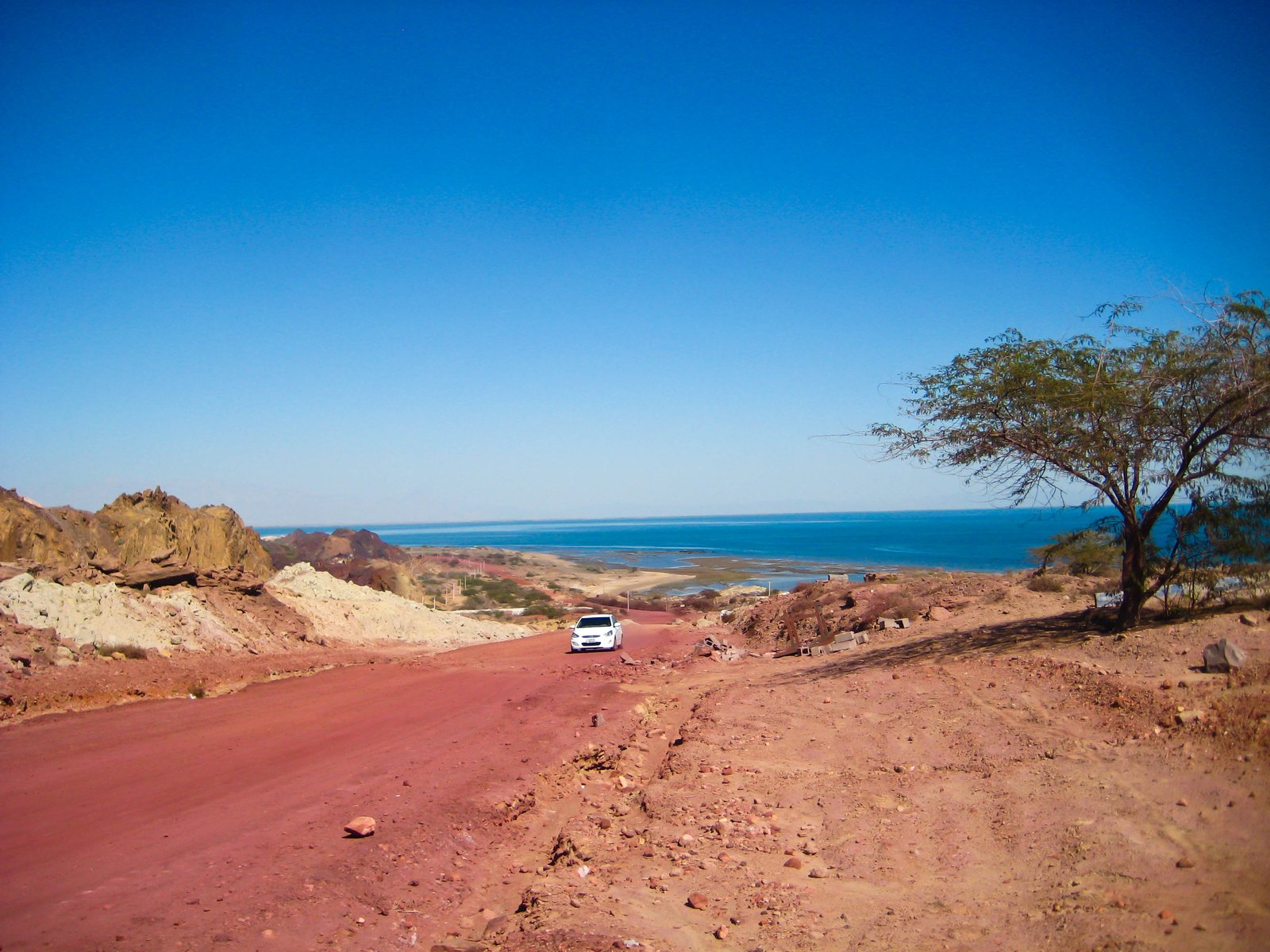
Hormuz's Red Soil
Photo: Qeshmnil (CC BY-SA 4.0) — the iron-rich "gelak" soil that colors the island and, after rain, the sea itself
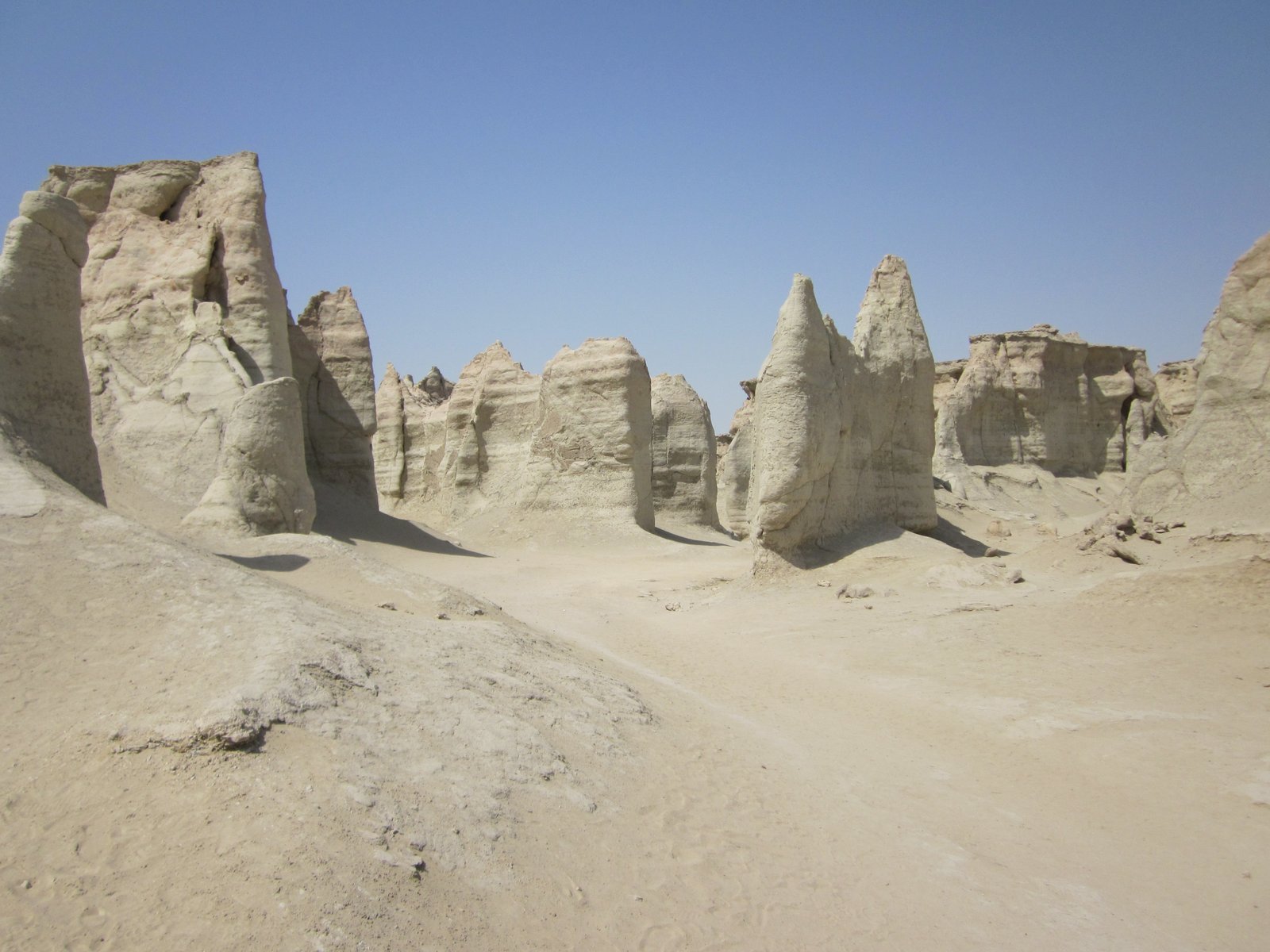
Valley of the Stars
Photo: Petrus Adamus (CC BY-SA 3.0) — spires left behind as softer rock eroded away from ancient salt-dome uplift
🦩 Lake Urmia — A Dying Sea
In Iran's northwest, Lake Urmia was once the largest lake in the Middle East and among the largest hypersaline lakes on Earth — at its 1995 high-water mark, a turquoise expanse of roughly 5,000–6,000 km², ringed by more than 100 islands and a critical stopover for migratory flamingos, pelicans and white-headed ducks. Today it is dying. By 2025 its surface area had collapsed to around 580 km² — a loss of more than 90 percent — leaving vast stretches of its bed as exposed, wind-blown salt flat.
The causes are mostly man-made: more than 50 dams built across the rivers that once fed the lake, especially the Zarrineh-Rud and Simineh-Rud, diverted water to irrigate surrounding farmland; unchecked groundwater pumping for agriculture drew down the water table further; and rising regional temperatures accelerated evaporation on top of it all. The consequences reach far beyond the lake itself — increasingly frequent salt-dust storms now blow off the exposed bed onto nearby cities, linked to rising respiratory illness, while the bird colonies that once made Urmia a Ramsar wetland site of global importance have collapsed along with the water. Iran's official Lake Urmia Restoration Program has slowed the decline in wetter years but has not reversed it.
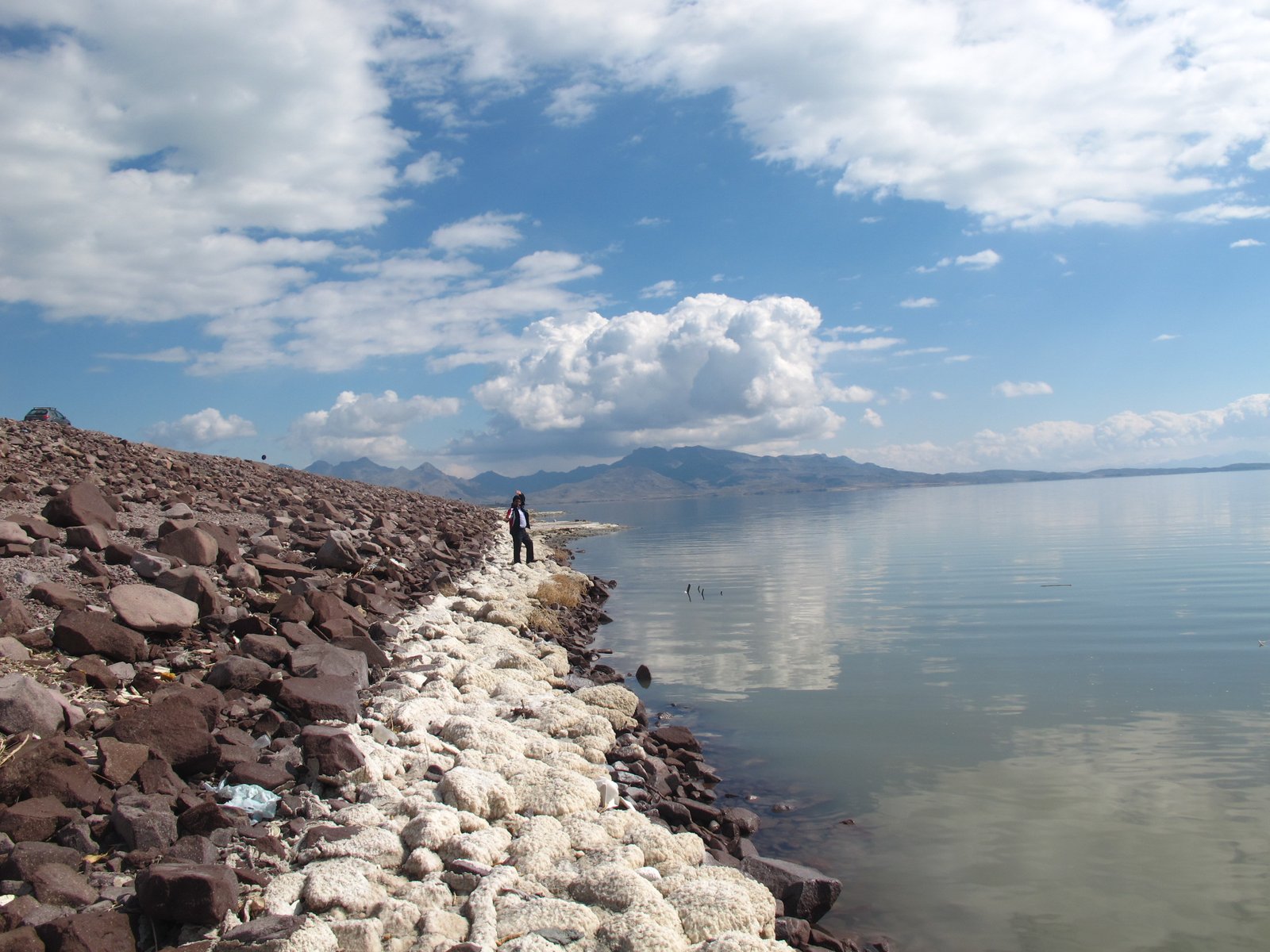
Lake Urmia
Photo: Ehsan Torabi (CC BY 3.0) — once one of the world's largest salt lakes, now reduced by over 90% since 1995
🎒 Packing Tips
Women: A lightweight scarf (large enough to cover the head easily), two long-sleeved tunics / manteau, loose trousers, closed shoes. Avoid bright colors that draw attention. Men: Long trousers always; avoid shorts; T-shirts are fine. Both: A refillable water bottle (tap water is drinkable in most cities), sunscreen, a universal power adapter (Type C/F), a good VPN installed before you arrive, printed copies of your hotel bookings and guide's contact (useful at police checkpoints), and enough US dollars or euros in small, unfolded, post-2013 bills to cover the whole trip.
Do not bring Israeli stamps in your passport, pork products, pornography, or — absolutely not — any alcohol. Medications: bring prescriptions in English; narcotics and some ADHD stimulants are illegal.
🔗 Useful Resources
- Iran Ministry of Foreign Affairs — e-Visa portal
- Ministry of Cultural Heritage, Tourism & Handicrafts
- UNESCO — Iran World Heritage page
- SnappTrip & Eghamat24 — local hotel booking
- Daric Pay / Mah Card — prepaid tourist cards
- OpenStreetMap — free offline maps (Google Maps is partly blocked inside Iran)
- Iran Review & Tehran Times — English-language news
📚 Recommended Reading
- The Shahnameh — Abolqasem Ferdowsi (c. 1010) — the Persian Book of Kings; Dick Davis's abridged translation (Penguin) is the gateway drug.
- The Divan — Hafez; any good bilingual edition.
- The Rubaiyat — Omar Khayyam (FitzGerald's translation).
- Persian Fire: The First World Empire and the Battle for the West — Tom Holland.
- All the Shah's Men — Stephen Kinzer — on the 1953 CIA coup.
- Reading Lolita in Tehran — Azar Nafisi.
- A History of Iran — Michael Axworthy.
- Persepolis — Marjane Satrapi — graphic-novel memoir of the revolution.
- My Uncle Napoleon — Iraj Pezeshkzad — the great comic novel of 20th-century Iran.
- Food of Life — Najmieh Batmanglij — the definitive Persian cookbook in English.
🎬 Videos About Iran
From Persepolis to cave villages carved into cliffsides, six handpicked documentaries and travel films capture Iran's landscapes, daily life and 3,000-year history. Watch them here →
🤯 Fascinating Facts
🔥 Hottest place on Earth
NASA's original 2005 satellite reading measured 70.7 °C (159.3 °F) in the Dasht-e Lut, a record that stood for over a decade. A later reanalysis using higher-resolution MODIS data found the desert reaching 80.8 °C (177.4 °F) in 2018 — either figure is the highest land surface temperature ever measured anywhere on Earth.
🌹 Saffron superpower
Iran produces roughly 90% of the world's saffron. It takes 75,000 Crocus sativus flowers — all hand-picked at dawn — to produce 450 g of dried saffron.
📜 First human-rights charter
Cyrus the Great's cylinder (539 BCE) proclaimed freedom of religion and return of displaced peoples. The UN has called it the world's first charter of human rights.
🪞 Mirror-palaces
The mirror-halls of Golestan Palace and the Shah Cheragh shrine in Shiraz contain literally tens of millions of hand-cut mirror fragments — a Persian art form unique in the world.
🐈 Original Persians
The Persian cat breed originated in Iran's highlands and was brought to Europe by Italian traveler Pietro della Valle in the 17th century.
📚 Poets everywhere
Hafez's tomb in Shiraz receives more visitors than any museum in Iran. A standard Persian wedding quotes Hafez at least three times before the cake.
🗡️ Where "Assassin" Was Born
In 1090 CE, Hassan-i Sabbah seized the mountain fortress of Alamut in the Alborz range and founded a Nizari Ismaili sect whose followers, the Hashashin, gave medieval Europe the word "assassin" — most popularly traced to "hashish-eaters," though modern scholars argue it descends from asasiyyun, "those faithful to the foundation."
🌳 Paradise was a walled garden
The English word "paradise" descends from Old Persian pairidaēza — pairi ("around") plus daēza ("wall") — meaning simply "walled enclosure." Greek borrowed it as parádeisos to describe the royal pleasure gardens of the Achaemenid kings, the same four-quadrant chahar bagh design still visible at Cyrus's garden in Pasargadae.
🧠 Notable People
Cyrus the Great (c. 600–530 BCE) — founder of the Achaemenid Empire. Darius the Great (550–486 BCE) — builder of Persepolis and the Royal Road. Zoroaster / Zarathustra (c. 1500–1000 BCE) — prophet whose dualistic theology shaped later Abrahamic religions. Al-Khwārizmī (c. 780–850) — Persian polymath, founder of algebra (his name gave us algorithm). Ibn Sīnā / Avicenna (980–1037) — author of The Canon of Medicine, the standard European medical text for 500 years. Omar Khayyām (1048–1131) — poet, astronomer, calendar reformer. Rumi / Mowlānā (1207–1273) — the best-selling poet in modern-day America. Hāfez (c. 1315–1390) — the lyric poet quoted in every Iranian home. Saadi (c. 1210–1291) — author of the Gulistan and Bustan.
Modern: Mohammad Mosaddegh (1882–1967) — prime minister who nationalized Iranian oil; Ayatollah Ruhollah Khomeini (1902–1989) — leader of the 1979 revolution; Shirin Ebadi (b. 1947) — lawyer, 2003 Nobel Peace Prize; Maryam Mirzakhani (1977–2017) — first woman to win the Fields Medal in mathematics; Abbas Kiarostami (1940–2016) — among the most influential filmmakers of the last half-century; Asghar Farhadi — two-time Academy Award winner (A Separation, The Salesman); Marjane Satrapi — graphic novelist (Persepolis); Narges Mohammadi — human-rights activist, 2023 Nobel Peace Prize.
⚽ Sports
Football (soccer) is the national obsession. Persepolis FC and Esteghlal, both of Tehran, are the fiercest rivalry in Asian football (the "Sorkhābi" derby). Team Melli — the men's national team — has qualified for six World Cups and remains Asia's most consistent performer. Until 2022 women were banned from most football stadiums; the ban has been partially lifted after FIFA pressure.
Wrestling (koshti) and weightlifting are where Iran dominates internationally. Greco-Roman wrestler Hassan Yazdani, super-heavyweight weightlifter Hossein Rezazadeh (holder of multiple world records) and three-time Olympic gold medalist wrestler Alireza Dabir are national heroes. Zūrkhāneh — the "house of strength" — is Iran's traditional ritualized gymnastic art, inscribed on UNESCO's Intangible Cultural Heritage list. Polo, invented in ancient Persia under the name chogān, is also inscribed by UNESCO.
📰 Media & Press Freedom
Iran consistently ranks among the world's most restrictive media environments. Reporters Without Borders placed Iran 176th of 180 in its 2024 Press Freedom Index. All broadcast media are state-controlled (IRIB). Independent reformist newspapers exist but operate under constant threat of closure; social media and satellite TV are the real news sources for most Iranians despite being officially blocked.
Dozens of journalists and bloggers are routinely in prison. Foreign correspondents work under heavy restrictions; BBC Persian staff and their families in Iran have been formally criminalized. Internet is filtered (Facebook, Twitter/X, YouTube, Telegram, Signal, Instagram all blocked or throttled at various times); VPN use is technically illegal but near-universal. Diaspora Persian-language broadcasters — BBC Persian, VOA Persian, Iran International, Manoto — have enormous in-country audiences via satellite.
📸 Photo Gallery
Share your Iran photos! Send to photos@kaufmann.wtf to be featured.
✍️ Author's Note
✍️ Author's Note Radim Kaufmann
Of all the countries whose image lies furthest from their reality, Iran is my champion. The headlines promise stern men in black turbans; the streets deliver teenagers on rollerblades quoting Rumi, grandmothers who physically refuse to let you pay for your lunch, and a taxi driver outside Yazd who turned off the meter, drove an hour into the desert "because you have to see the stars," and wouldn't accept a single rial afterwards.
Sitting on the steps of the Sheikh Lotfollah mosque as the late afternoon light slid across the peacock dome, I realized I had entirely lost track of what century I was in. Safavid tile-setters, Achaemenid kings, Qajar princes, revolutionary poets and the couple taking selfies beside me existed on the same flat plane of Iranian time. The country does that — it absorbs the visitor into something much older and much larger than a single trip.
Iran is not easy. Sanctions make the rial a rollercoaster, hijab rules are strict, political conversations are dangerous, and Western passports require a chaperone. But if you can accept those constraints, what you get in return is a country that is ancient, literate, generous, and so beautiful it stops conversation. I left reciting Hafez I didn't know I'd learned, carrying three kilos of saffron I'll give away over the next five years, and already plotting how to come back.
"Irān-zamīn" — The Land of Iran
—Radim Kaufmann, 2026
