
🇨🇼 Curaçao at a Glance
🌍 Overview — Why Visit Curaçao
Curaçao is the largest of the Dutch ABC islands and the one that most rewards a traveller who wants a real place rather than a resort. Its capital, Willemstad, is a UNESCO World Heritage city that looks like Amsterdam filtered through Caribbean sunlight; its leeward coast holds thirty-five beaches and sixty-five dive sites, most of which you can simply walk into from the sand; and its 158,000 people speak a creole language, Papiamentu, that exists nowhere else on Earth in quite this form.
Three things set the island apart from its neighbours. It is arid — cactus, divi-divi trees bent permanently by the trade wind, and an interior that looks more like Baja California than a rainforest island. It sits below the hurricane belt, and has never taken a direct hurricane strike in recorded history, which makes it one of the few genuinely year-round Caribbean destinations. And as a constituent country of the Kingdom of the Netherlands it runs on European infrastructure — good roads, clean water, working hospitals — while remaining unmistakably its own place.
What it is not is a mass-tourism island. There are cruise calls and a resort strip, but the visitor numbers are a fraction of Aruba's and the island has not been rebuilt around them — though the numbers are climbing: a record 437,000 stayover visitors in the first half of 2026, a third of them Dutch. You will spend as much time in neighbourhood snèks and plantation-house restaurants as in anything built for you.
This guide covers the whole island: Willemstad's two halves and its four-century history, the beaches and the shore diving that are the main reason most people come, the wild west end at Christoffel and Shete Boka, the flamingos and salt pans of the east, keshi yena and Blue Curaçao, and everything practical from the new currency to the 127-volt sockets.
🪪 Name & Identity
The name's origin is genuinely uncertain. The most durable theory traces it to the indigenous Caquetío, an Arawak people who lived here for over two thousand years, and to a name the Spanish rendered as Curaçao. A competing story derives it from the Portuguese coração, "heart", and a third — the one the tourist board likes — from sailors cured of scurvy on the island's citrus, making it the "island of healing". Take your pick; all three are told locally with conviction.
In Papiamentu the island is Kòrsou and its people are Yu di Kòrsou — "children of Curaçao". The affectionate national shorthand is Dushi Kòrsou: dushi means sweet, lovely, delicious, and is applied with equal sincerity to a person, a plate of food and the island itself. You will hear it within an hour of landing.
Constitutionally, Curaçao has been a constituent country of the Kingdom of the Netherlands since 10 October 2010, when the Netherlands Antilles were dissolved. It governs itself in almost everything; the Kingdom handles defence, foreign policy and nationality. The head of state is King Willem-Alexander, represented locally by Governor Mauritsz de Kort (since 4 November 2025, succeeding Lucille George-Wout); the government is led by Prime Minister Gilmar Pisas of MFK, in office since June 2021 and returned at the election of 21 March 2025 with the first single-party absolute majority in the island's history (13 of 21 seats). Curaçaoans hold Dutch passports and are EU citizens, but the island itself sits outside the European Union as an Overseas Country and Territory — a distinction that matters for visas, customs and mobile roaming.
The flag, adopted in 1984, is blue for sea and sky with a yellow band for the sun and two white stars for Curaçao and its uninhabited satellite, Klein Curaçao. The five points on each star are said to stand for the five continents its people came from — which, for an island built by Arawak, Iberian, Dutch, African, Sephardic-Jewish and Latin American arrivals, is close to literally true.
🗺️ Geography
Curaçao lies in the southern Caribbean, only 65 km off the Venezuelan coast and well outside the hurricane belt. At 444 km² it is the largest of the ABC islands — Aruba, Bonaire, Curaçao — measuring 61 km long and between 5 and 14 km wide. For scale, it is about nine-tenths the size of Prague's administrative area (496 km²), and you can drive its full length in ninety minutes.
An arid island
Under 550 mm of rain a year. The interior is kunuku — scrub, columnar cactus and divi-divi trees permanently bent westward by the trade wind. Bring more water than you think.
The leeward south coast
Sheltered, calm, and scalloped with dozens of small bays. Every beach and almost every dive site is here.
The windward north coast
Raw limestone terraces pounded by open Atlantic swell. Spectacular, and almost entirely unswimmable.
Mount Christoffel
At 372 m the island's high point, in the national park at the western end. The summit scramble takes about 90 minutes up.
Schottegat
One of the deepest natural harbours in the Caribbean, entered through the narrow Sint Anna Bay. It is why Willemstad exists — and why the Shell refinery sat on it for a century.
Klein Curaçao
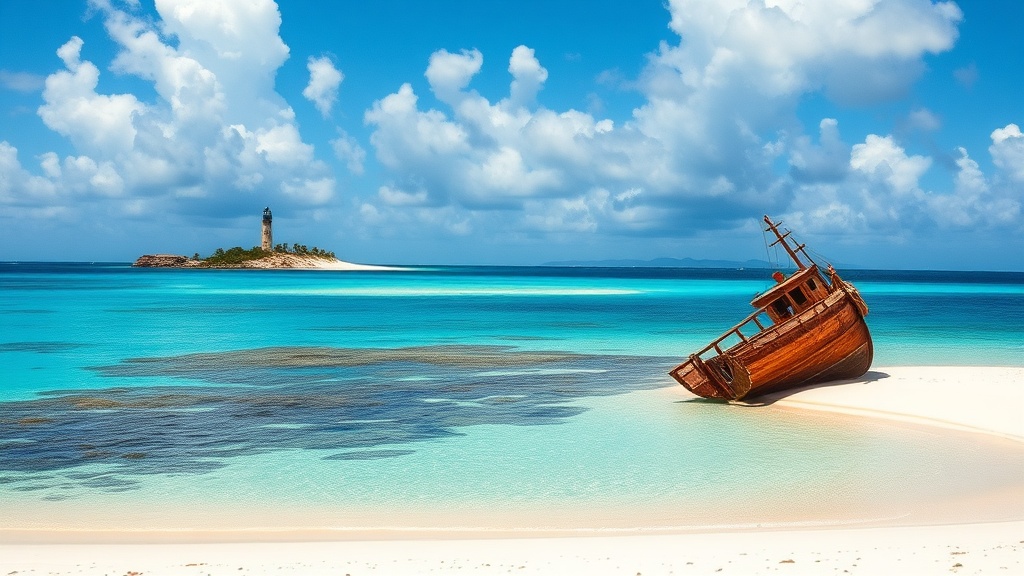
An uninhabited 1.7 km² islet about 10 km off the island's eastern tip (a 1.5–2-hour boat ride from the Willemstad-area marinas), with an abandoned lighthouse, wrecks on the windward shore and superb snorkelling. Day-trip boats only.
The geology is the reason for the diving. The island is uplifted coral limestone with almost no rivers and therefore almost no sediment run-off: underwater visibility routinely exceeds 30 metres, and the reef begins a few metres from shore before dropping away as a wall.
📍 Map of Curaçao
Curaçao runs north-west to south-east, with Willemstad roughly two-thirds of the way down the south coast. The island divides neatly into Banda Abou (the west — beaches, parks, plantation houses) and Banda Ariba (the east — Jan Thiel, Spanish Water, salt pans and the airport).
Distances are small and the roads are good: Willemstad to Westpunt at the far west is about 45 minutes, to Jan Thiel 15, to the airport 20. There is effectively no useful public transport for visitors outside the city, which is why a rental car is the default recommendation for anyone staying more than two days.
📜 History
The Caquetío, an Arawak people from the South American mainland, lived on Curaçao for more than two thousand years before Europeans arrived. Their petroglyphs survive in the Hato Caves and at several inland sites. Alonso de Ojeda claimed the island for Spain in 1499; finding no gold and little fresh water, the Spanish declared it an isla inútil, a useless island, used it for cattle, and deported most of the indigenous population to Hispaniola.
The Dutch West India Company took the island in 1634 — not for farming but for the harbour and the salt. Within a generation Willemstad became one of the most important trading posts in the Caribbean, and, from the 1660s, the region's largest slave-trading depot. Enslaved Africans were landed, held and sold on from Curaçao across Spanish America. This is the central fact of the island's history and Curaçao does not soften it: the Kura Hulanda Museum in Otrobanda, built around a former slave yard, is one of the most serious museums of the Atlantic slave trade anywhere.
A major slave revolt in 1795, led by Tula and Bazjan Karpata and inspired by the Haitian revolution, was crushed after a month; Tula was executed with deliberate brutality. He is now a national hero, 17 August is Tula Day, and the Netherlands formally apologised for its role in slavery in 2022. Abolition itself came only in 1863.
The 20th century was rewritten by oil. Venezuela's Maracaibo fields could not be refined on site, so Shell built a refinery on the Schottegat in 1918, drawing workers from across the Caribbean, Madeira and Asia and turning a quiet trading island into an industrial economy. The refinery dominated Curaçao for a century — economically, environmentally and politically — before winding down; what to do with the site is still a live argument.
Politically: universal suffrage in 1949, autonomy within the Kingdom in 1954, the 30 May 1969 labour uprising that burned part of Willemstad and forced real political change for Afro-Curaçaoans, and finally the dissolution of the Netherlands Antilles on 10 October 2010, when Curaçao became a country in its own right.
The 2020s have been busier than a small island expects. In March 2025 the MFK became the first party ever to win an absolute majority in the Staten, and the same month the Caribbean guilder replaced the Antillean guilder; in November 2025 Judge Mauritsz de Kort succeeded Lucille George-Wout as Governor. The US military build-up against Venezuela in late 2025 — the airspace closure of 29 November and the capture of Nicolás Maduro on 3 January 2026 — put the island, 65 km from the Venezuelan coast and host to a US Forward Operating Location at Hato airport since 1999, squarely in the eye of the storm; the Kingdom's line was studied neutrality. By 2026 the Pisas government was openly courting a role as a transit hub for Venezuelan oil through the mothballed refinery's 17-million-barrel storage — the harbour, once again, deciding the island's future.
⛓️ Slavery, Memory & Kura Hulanda
Any honest guide to Curaçao has to say what the harbour was for. Between roughly 1660 and 1795 the Dutch West India Company shipped an estimated 100,000 or more enslaved Africans through Willemstad, holding them in yards near the water before selling them onward to the Spanish colonies. The pastel merchant houses on Handelskade were paid for, directly or indirectly, by that trade.
Museum Kura Hulanda
In Otrobanda, built on and around a former slave yard. A serious, sober account of the Atlantic trade, West African civilisations and their destruction — the single most important thing to see on the island.
Tula Museum, Landhuis Kenepa
At the plantation where the 1795 revolt began. Small, plainly presented, and far more affecting for it.
Desenkadená monument
"Unchained", on the Otrobanda waterfront — the island's principal memorial to emancipation.
The landhuizen
The plantation houses scattered across the island are beautiful and were the machinery of forced labour. The good ones say so on the wall; visit those.
Tula Day, 17 August
Marked annually since Tula's rehabilitation as a national hero. The 2022 Dutch state apology for slavery is recent enough that the conversation is live.
Why it is not a downer
This history is not hidden from visitors or sold as a tragedy tour. It is simply the island's own account of itself, and engaging with it is the difference between seeing Willemstad and understanding it.
One practical note: give Kura Hulanda a proper two hours and go before the beaches, not after. It changes how the rest of the island reads — including the cheerful floating market, which is a modern descendant of the same Caribbean-Venezuelan trading network.
🎭 People & Culture
Curaçao's 158,000 people (CBS, 1 January 2026) are among the most genuinely multicultural populations in the Americas: African, Dutch, Sephardic Jewish, Portuguese and Madeiran, Venezuelan and Colombian, Lebanese, Chinese, Indian and Surinamese, layered over an Arawak substrate. More than fifty nationalities live on an island you can drive across in ninety minutes, and the resulting culture is Caribbean, European and South American at once without being derivative of any of them.
Tumba
The island's own carnival rhythm — brass, percussion and a competitive annual Tumba Festival that decides which song rules the parade. Loud, fast, and the sound of February.
Seú
The harvest procession with African roots, traditionally marking the first corn. Danced behind a kachu (cow horn) and hand drums, usually around Easter.
Family and Sunday
Sunday is for the family lunch, and it is not a small event. Many restaurants close; the ones that open do a krioyo (creole) buffet.
Religion
Predominantly Catholic, with a small but historically decisive Jewish community and growing Protestant and Adventist congregations. Saints' days come with processions.
Dushi
The word does most of the emotional work in Papiamentu. Sweet, lovely, delicious, dear — used for food, people, days and the island itself.
Dutch efficiency, Caribbean pace
Both are real and they coexist. The bureaucracy works and the appointment starts late; neither fact cancels the other.
One social note worth carrying: Curaçao's colour and class history is not settled, and the gap between the wealthy, largely white and expatriate districts and the neighbourhoods of Otrobanda and Bandabou is visible. Curaçaoans discuss it openly among themselves. A visitor who arrives with opinions about it will be listened to politely and not agreed with; a visitor who asks questions will get a much better conversation.
🗣️ Papiamentu — the Island's Own Language
Papiamentu is a creole built from Portuguese and Spanish, with Dutch, English, Arawak and West African words folded in, and it is spoken as a mother tongue by almost everyone on the island. It is not a dialect or a pidgin: it has standardised orthography, newspapers, literature, its own school instruction and official status alongside Dutch and English. Hearing it is one of the genuine pleasures of the island — it sounds like Portuguese being spoken by someone in a very good mood.
Most Curaçaoans move fluently between four languages — Papiamentu, Dutch, English and Spanish — often within a single sentence. You will have no communication difficulty whatsoever in English. Learning six words of Papiamentu is therefore entirely optional, and entirely worth it, because nobody expects it and everybody notices.
Bon bini
Welcome. Painted on half the signs on the island.
Bon dia / bon tardi / bon nochi
Good morning / afternoon / night. The bare minimum, and it works everywhere.
Kon ta bai?
How's it going? Answer: Hopi bon — very good.
Danki
Thank you. From the Dutch dank je, and used constantly.
Dushi
Sweet, lovely, delicious. Dushi Kòrsou is what the island calls itself.
Kuantu ta kosta?
How much does it cost? Useful at the floating market, where the traders are Venezuelan and Spanish also works.
Ayó / Te aworo
Goodbye / see you later.
Pasa un bon dia
Have a good day — the standard warm sign-off.
Note the spelling: Papiamentu with a u is the Curaçao and Bonaire standard; Papiamento with an o is the Aruban one. The difference is small, local, and occasionally a matter of pride.
🏙️ Willemstad
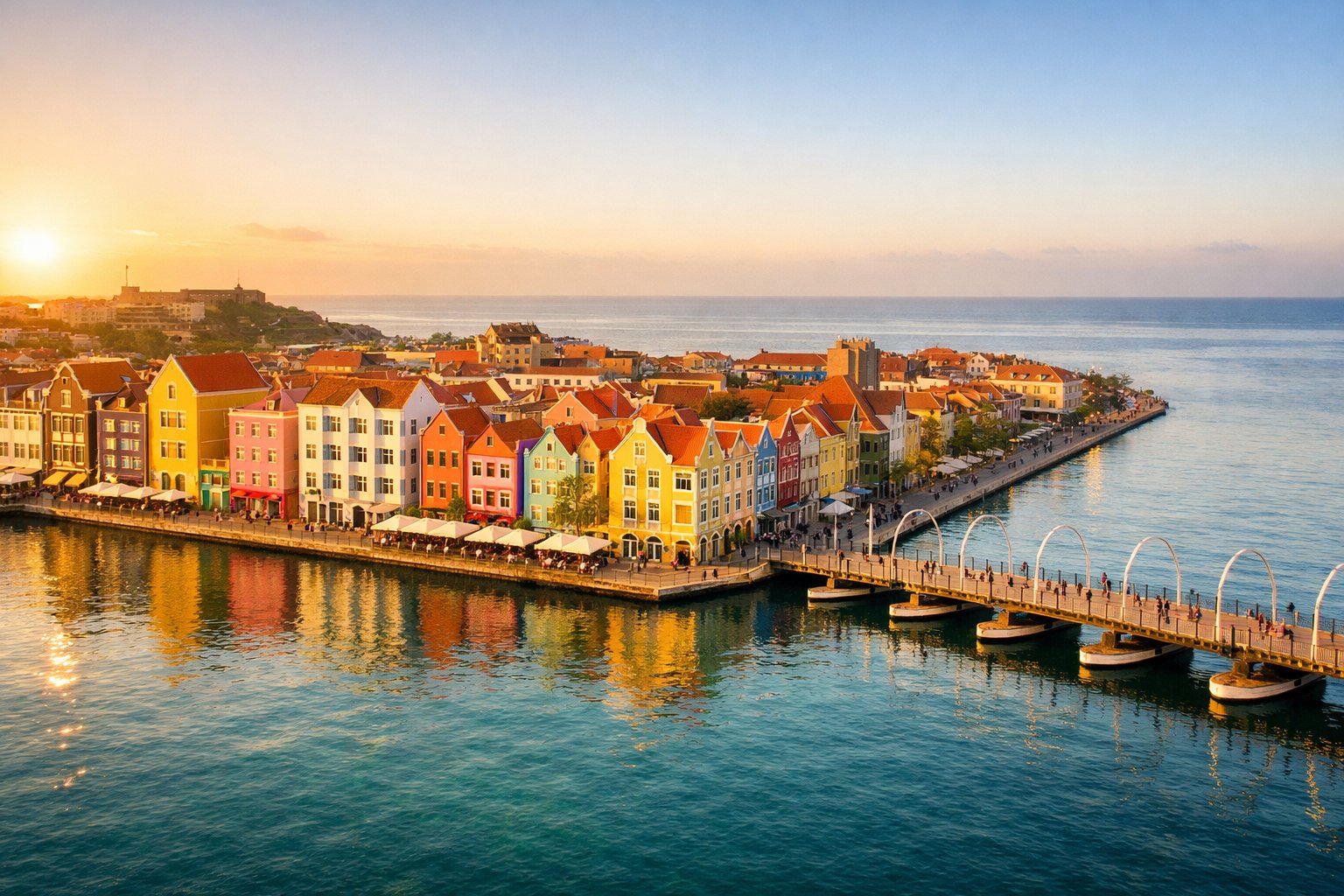
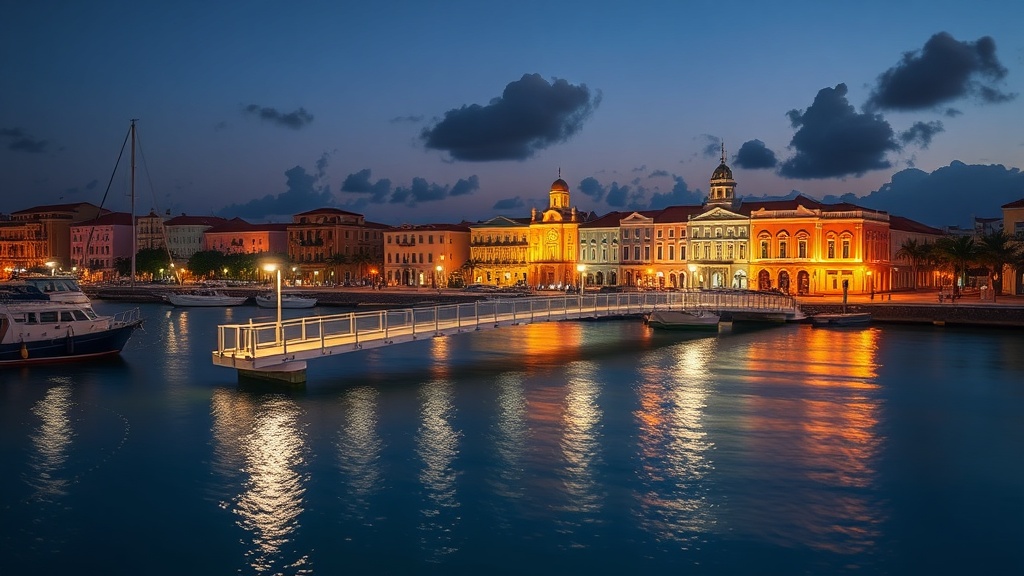
Willemstad is the capital, the reason for the island and a UNESCO World Heritage city since 1997. The historic centre straddles the narrow Sint Anna Bay, which cuts through the town to reach the deep Schottegat harbour behind it. Everything of interest is on one side of the water or the other, and crossing between them is itself an attraction.
Punda — "the Point"
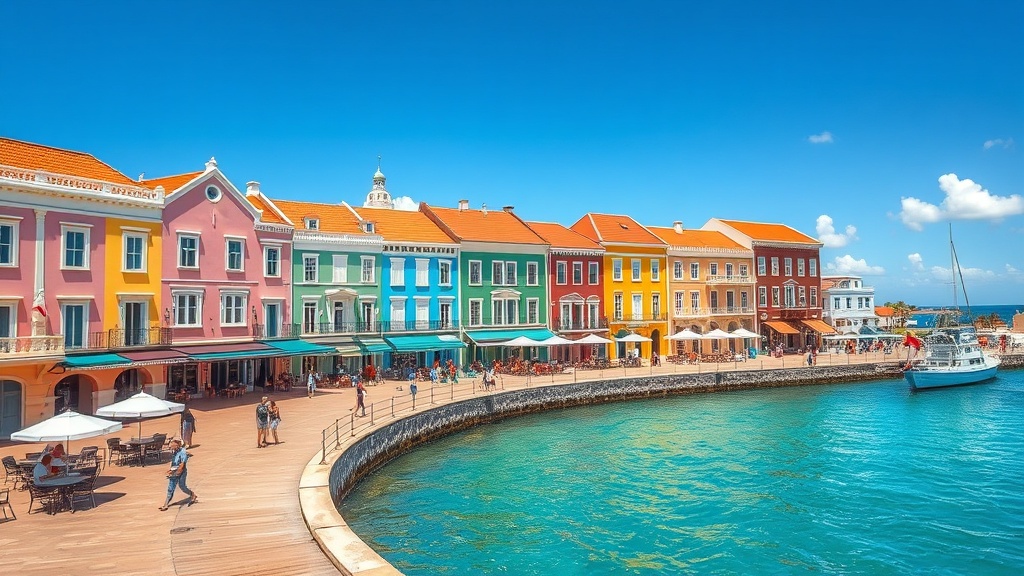
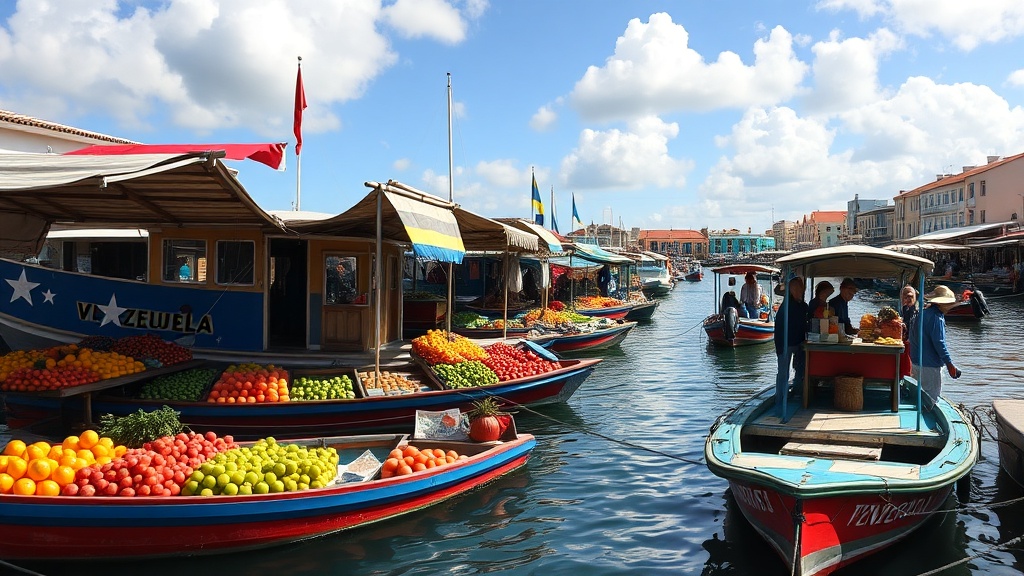
The original 1634 settlement, laid out on a grid behind Fort Amsterdam, which still houses the government. Its waterfront, the Handelskade, is the row of pastel gabled merchant houses on every photograph of the Caribbean's Dutch side. Behind it are the shopping streets of Breedestraat and Heerenstraat, the Old Market (Marshe Bieu) for lunch, and the floating market, where Venezuelan traders sell fruit, vegetables and fish from boats moored along the Sha Caprileskade.
Otrobanda — "the Other Side"
Older-feeling, rougher, and far more rewarding to walk. Otrobanda grew as the free and working-class quarter and has the island's best street art, its most interesting small restaurants, and Museum Kura Hulanda. The Rif Fort at the harbour mouth has been converted into a dining and shopping complex, which is pleasant and entirely un-representative of the district behind it.
Scharloo and Pietermaai
Scharloo was the quarter of the wealthy Jewish merchant families; its ornate mansions along the Scharlooweg range from immaculately restored to spectacularly derelict, and it sees almost no tourists. Pietermaai, just east of Punda, was similarly abandoned and has been restored into the island's restaurant and nightlife district — colonial façades, courtyards, cocktails.
The Queen Emma Bridge
The "Swinging Old Lady" is a pontoon bridge that pivots aside up to thirty times a day to let ships into the harbour. Crossing it is free; standing on it as it swings open, with the town rotating around you, is the small unforgettable thing about Willemstad. When it is open, free ferries carry pedestrians across.
🕍 The Oldest Synagogue in the Americas
Sephardic Jews expelled from Iberia and later from Dutch Brazil began arriving in Curaçao from 1651, and the community they founded — Mikvé Israel-Emanuel — is the oldest Jewish congregation in continuous existence in the Americas. Its synagogue, consecrated in 1732, is the oldest surviving synagogue building in the western hemisphere still in use.
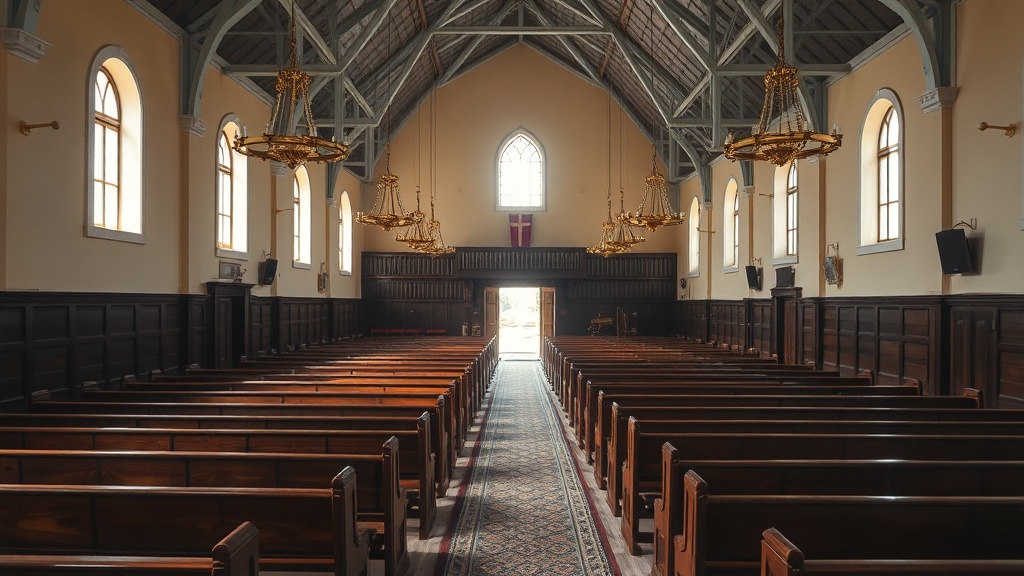
The floor is covered in sand. Explanations differ and the congregation offers all of them: a memory of the desert of the Exodus; a memory of the sand that muffled footsteps in the secret synagogues of the Inquisition; and simply what Caribbean floors were. Whichever it is, walking on it is the reason to come.
The attached Jewish Cultural Historical Museum holds ritual objects going back to the seventeenth century, and the Beth Haim cemetery at Blenheim, in use from 1659, is the oldest surviving European cemetery in the Americas — though it sits in the shadow of the old refinery and its stones have suffered badly for it.
The community's importance to the island is out of all proportion to its size. Sephardic merchant families built much of Punda and Scharloo, financed the trade the harbour lived on, and — like every merchant class in the seventeenth-century Caribbean — participated in the slave economy. Both things are part of the history, and the museum says so.
🌄 Western Curaçao — Banda Abou
The western third of the island is where Curaçao stops being Dutch and becomes wild: cactus hills, plantation houses, the best beaches and two national parks. Give it a full day at minimum; a rental car is essentially required.
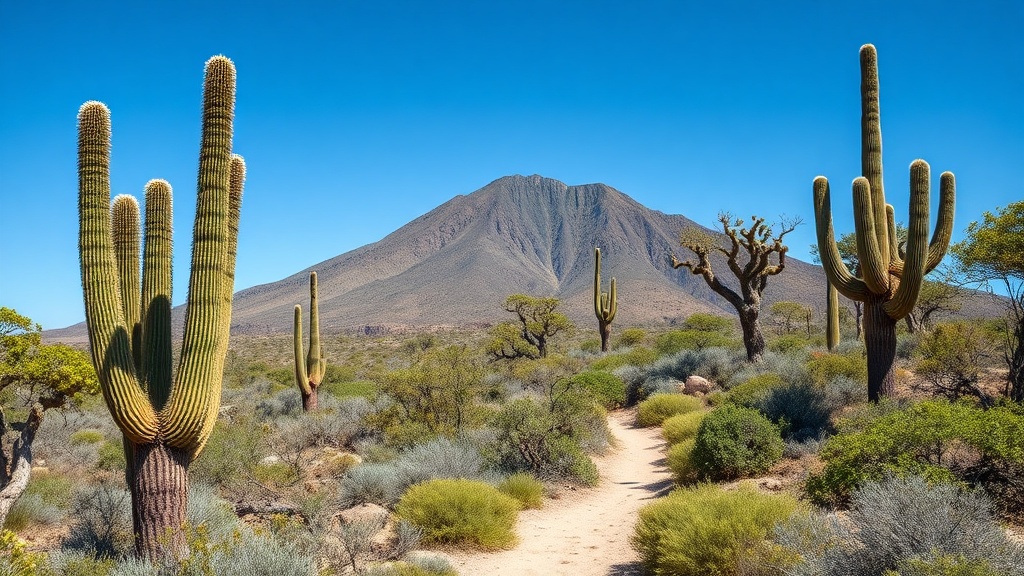
Christoffel National Park
The largest protected area on the island, around 372 m Mount Christoffel. Eight marked trails plus a driving route; the summit scramble takes about 90 minutes up and needs proper shoes. Start at 07:00 — the park closes the summit trail in the heat of the day.
Shete Boka National Park
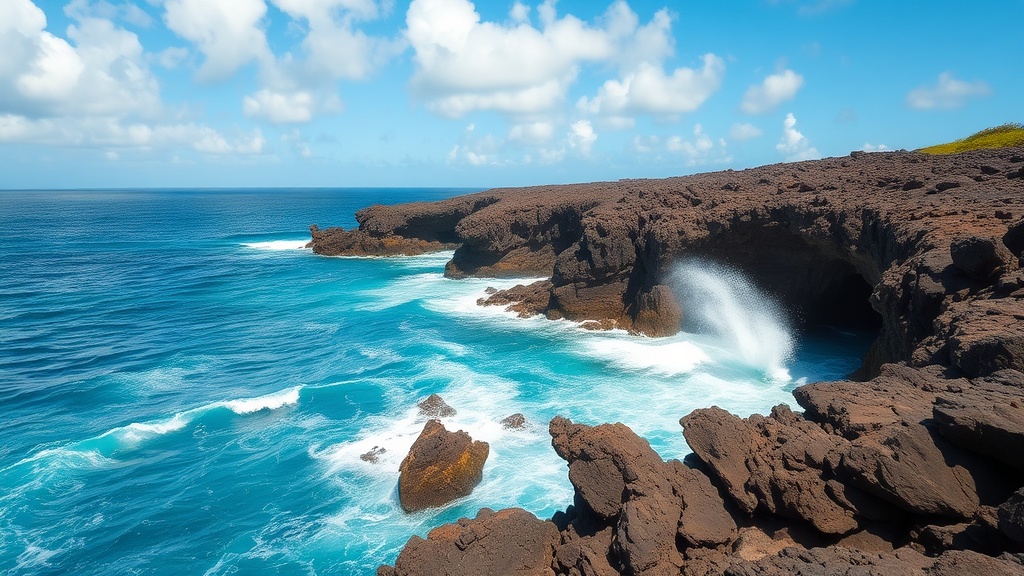
"Seven Inlets" on the north coast, where Atlantic swell detonates into limestone caverns. Boka Tabla is the cavern you can walk into; Boka Pistol shoots a jet of water like a gun, best in the December–February swell.
Landhuis Knip (Kenepa)
The plantation house where the 1795 revolt began, now the Tula Museum. Small and plain and worth more than its size.
Landhuis Jan Kok
One of the oldest plantation houses, overlooking salt pans where flamingos feed. Now a gallery and restaurant.
Westpunt
The village at the western tip — simple fish restaurants, the best beaches within ten minutes, and a pace that has resisted everything so far.
Playa Kalki & Playa Piskadó
At the far end: a wall dive straight from the beach, and a bay where local fishermen clean their catch and green turtles come in to feed almost every afternoon.
The road west (the Weg naar Westpunt) is good tarmac; the side roads down to the smaller beaches are often not. A normal hire car copes with all of them slowly, but check the insurance wording on unpaved roads before you commit to Playa Jeremi.
🦩 Eastern Curaçao — Banda Ariba
East of Willemstad the island flattens out into salt pans, mangrove and the big inland bay of Spanish Water. It is where most of the resorts, the airport and the island's flamingos are.
Jan Thiel
The main upscale beach area — beach clubs, restaurants, watersports and a decent house reef. Busy, comfortable, and where most first-time visitors end up staying.
Spanish Water (Spaanse Water)
A large sheltered inland bay full of yachts and ringed by mangroves. Kayaking and paddleboarding through the mangrove channels is the best way to see it, and there is a small ferry to Caracas Bay.
Caracas Bay & the Tugboat
A peninsula with WWII gun emplacements above and, below the surface, the Tugboat — a small wreck sitting in five metres of water, the most-photographed dive site on the island and reachable by snorkel.
Salt pans & flamingos
Caribbean flamingos feed at the eastern salt pans and at Sint Jorisbaai, most reliably from January to July. Stay in the car or well back — they spook easily and the birds matter more than the photograph.
Hato Caves
Limestone caverns with stalactites, a colony of long-nosed bats and Caquetío petroglyphs. Guided tours only, about 45 minutes, and pleasantly cool.
Curaçao Sea Aquarium
Dolphin and sea-lion programmes plus supervised in-water encounters with sharks, rays and turtles. Popular with families; make your own judgement about captive marine mammals before booking.
Also out east: the ostrich farm at Groot St. Joris, which is exactly as unlikely as it sounds and genuinely entertaining, and the aloe plantation next door where the island's traditional medicine crop is still processed.
🏖️ Beaches
Curaçao has more than thirty-five beaches, nearly all of them on the sheltered south coast and nearly all of them small coves rather than long strands. Several charge a modest entrance fee (roughly $3–10) which buys you toilets, loungers, a bar and usually a dive shop; the free ones have nothing at all, which is often the point.
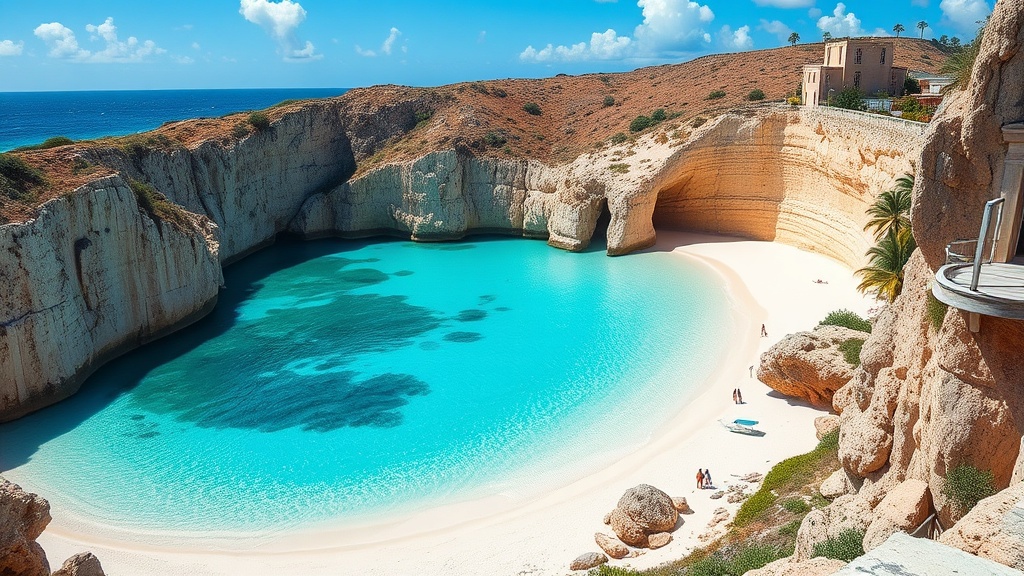
Grote Knip / Playa Kenepa Grandi
The postcard: turquoise water in a cliff-framed bowl. Free, with basic facilities and a cliff-jump the local teenagers will demonstrate for you. Go early — the car park fills.
Cas Abao
Powder sand, palms, full facilities and a dive shop, with a reef reachable by snorkel from the sand. Entrance fee. The best all-round family beach.
Playa Porto Mari
A double-reef system, resident green turtles, and the famous free-roaming pigs that walk down the sand looking for chips. Restaurant, showers, dive centre.
Playa Lagun
A tiny cove between cliffs, and the most reliable place on the island to snorkel with green turtles. Small, and busy for exactly that reason.
Playa Piskadó (Playa Grandi)
Where fishermen clean their catch and turtles come in to feed. Not a lounging beach — a wildlife encounter with sand attached.
Mambo Beach / Sea Aquarium Beach
The social beach: beach clubs, DJs, restaurants, shops. Nightlife rather than nature, and the busiest strip on the island.
Jan Thiel
The upscale equivalent nearer the resorts, with good facilities and calm water.
Klein Curaçao
An uninhabited island off the eastern tip, an hour and a half to two hours by boat: white sand, an abandoned lighthouse, wrecks on the wild side and superb snorkelling. Day boats leave around 07:00 and the crossing can be rough — take a tablet.
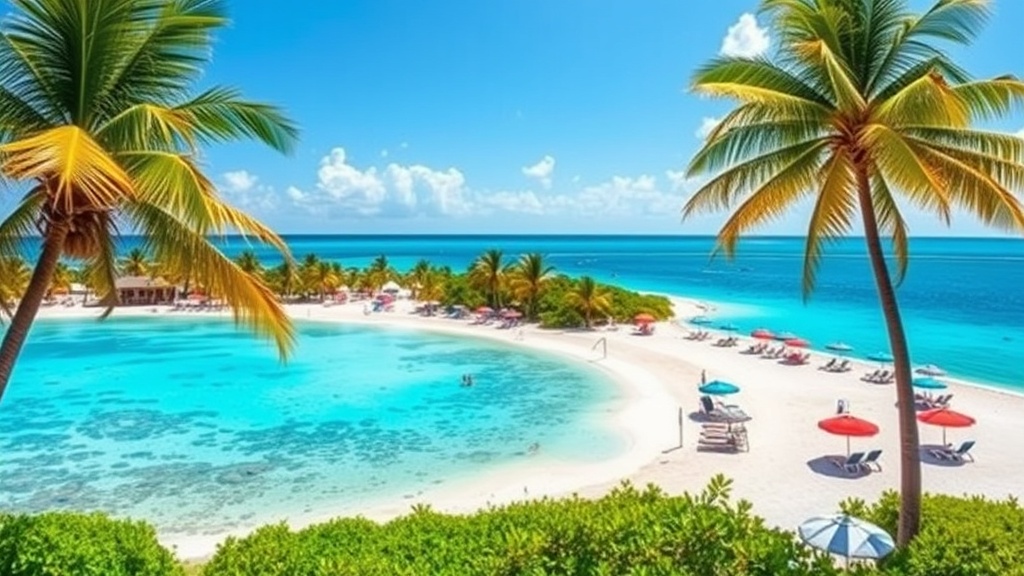
Two practicalities. Many beaches have rocky or coral entries, so water shoes are genuinely useful. And reef-safe sunscreen matters here — the reef starts a few metres from the sand, and oxybenzone-based sunscreen ends up on it within minutes.
🤿 Diving & Snorkelling
Curaçao is one of the best shore-diving destinations in the world. Sixty-five-plus named sites, most of them entered by walking off a beach, visibility routinely above 30 metres, water at 26–28 °C all year, negligible current on the leeward coast, and a fringing reef that starts shallow and then drops away as a wall. You do not need a boat, and for much of the island you do not need a guide.
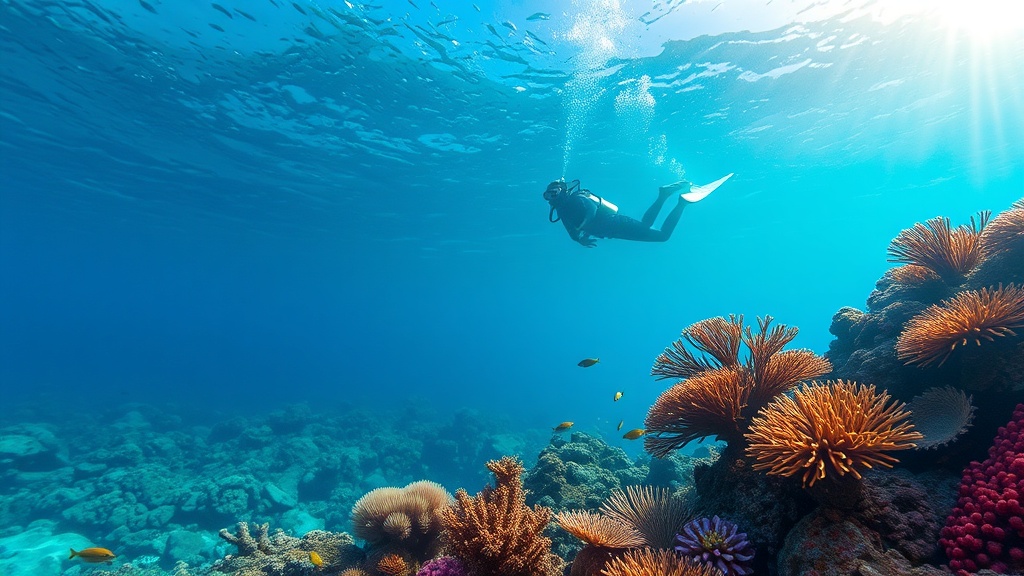
Tugboat, Caracas Bay
A small tug sitting upright in 5 m of water, with the wall right behind it. The island's signature photograph, and shallow enough to snorkel.
Mushroom Forest
Great mounded star-coral formations on the north-west coast, usually done by boat, sometimes shore-entered at Playa Santa Cruz.
Superior Producer
A cargo ship that sank off Otrobanda in 1977, sitting upright at 30 m. Advanced, current-prone, and the best wreck in the ABC islands.
Playa Kalki (Alice in Wonderland)
A double reef and wall at the far west, entered from the beach. Turtles, tarpon and superb visibility.
Director's Bay & Blue Room
A house reef next to the old governor's bay, and a partly submerged cave you snorkel into that glows blue at the right hour.
Watamula
The island's northern tip — remote, current-swept, and the healthiest hard coral on Curaçao. Guided boat dives only.
The Curaçao Marine Park now protects the whole leeward coast, and the reef here has come through the last two decades of Caribbean bleaching noticeably better than most of the region. There is a modest marine-park fee for divers; pay it.
For snorkellers, the point is that you need almost nothing. Playa Porto Mari's double reef, Playa Lagun's turtles, Tugboat, and the house reefs at Jan Thiel and Director's Bay are all walk-in. Bring your own mask — rental masks fit badly and a leaking mask ruins a week.
🦎 Wildlife & Nature
An arid island supports a strange and specific set of animals, and Curaçao's are mostly visible without effort — the iguanas are on the walls of your hotel and the flamingos are beside the road.
Flamingos
Caribbean flamingos feed on the eastern salt pans, at Jan Kok and at Sint Jorisbaai. Best January to July. They fly between here and Bonaire, where the breeding colony is.
White-tailed deer
Introduced centuries ago, now the emblem of Christoffel Park and genuinely rare — a few hundred animals. Dawn and dusk on the park's driving route.
Iguanas
Everywhere, enormous, and unbothered. Also, historically, dinner: sopi di yuana, iguana soup, is still on some traditional menus.
Sea turtles
Green and hawksbill turtles feed at Playa Piskadó, Playa Lagun and most dive sites. Nesting happens on a handful of northern beaches; keep lights off them in season.
Birds
The Curaçao barn owl (endemic subspecies), troupials, bananaquits, brown-throated parakeets and the caracara. Christoffel Park at first light is the place.
The blue lizard
Cnemidophorus murinus — the whiptail found on Curaçao and Klein Curaçao and nowhere else, the males an improbable electric blue.
The island's plant life is as distinctive as its fauna: columnar kadushi cactus (which becomes a soup), datu cactus fences that are still planted as living walls, aloe, and the wind-bent divi-divi trees that point unfailingly south-west because the trade wind never stops.
🥘 Cuisine
Kuminda krioyo — creole food — is Curaçao's own cooking, built from Dutch, West African, Portuguese, Indonesian and Latin American parts. It is stew-and-starch food, unfashionable, generous, and best eaten at lunchtime in a market or a snèk rather than at dinner in a restaurant.
Keshi yena
The national dish: spiced meat baked inside a hollowed Edam or Gouda rind. Invented by enslaved and servant cooks from the cheese rinds the Dutch discarded — an origin the island states plainly.
Stobá
Slow stews of goat (kabritu), beef or papaya. Goat stew with funchi is the Sunday plate.
Funchi & tutu
Cornmeal — funchi is the plain polenta-like side, tutu is funchi enriched with black-eyed peas and a little sugar.
Sopi
Soup as a main course: sopi di piska (fish), sopi mondongo (tripe), sopi di kadushi (cactus, and better than it sounds).
Fresh fish
Wahoo, mahi-mahi, red snapper and barracuda, usually grilled with creole sauce. The Westpunt fish shacks do it best and cheapest.
Pastechi & bitterballen
The two snack cultures side by side: the Caribbean fried pastry and the Dutch bar croquette, often on the same menu.
Where to eat: Marshe Bieu (the Old Market) in Punda for a canteen lunch of stobá and funchi at long tables, Plasa Bieu's neighbouring food stalls, Pietermaai for dinner, and any roadside snèk in Otrobanda or Bandabou for the real thing. Sunday brunch of krioyo food is an institution.
Keshi Yena
The national dish · baked stuffed cheese · serves 4
Ingredients: 1 whole Edam or Gouda (about 500 g), rind intact; 400 g chicken thighs or beef, cooked and shredded; 1 onion; 2 tomatoes; 30 g tomato purée; 50 g raisins; 30 g green olives, sliced; 15 g capers; 2 cloves garlic; 1 beaten egg; a dash of Worcestershire sauce; 1 tsp piccalilli or mustard; salt and pepper.
Method: Cut the top off the cheese and hollow it out, leaving a shell about 1 cm thick (keep the cheese for the sauce or a gratin). Soak the shell in cold water for an hour so it softens and does not crack. Fry the onion and garlic, add the tomatoes, purée, raisins, olives, capers and Worcestershire, then the shredded meat; simmer 15 minutes and stir in the beaten egg off the heat. Fill the shell, replace the lid, sit it in a buttered dish and bake at 180 °C for 30–35 minutes until the cheese slumps and browns.
💡 Use a whole small Edam rather than slices — the melting rind is the dish. Serve with funchi and a spoon.
Funchi
Cornmeal · the island's default side · serves 4
Ingredients: 250 g fine cornmeal; 1 litre water; 1 tsp salt; 30 g butter.
Method: Bring the salted water to the boil, then rain in the cornmeal in a thin stream while stirring hard with a wooden spoon. Keep stirring over low heat for 10–15 minutes until it pulls away from the pan. Beat in the butter, tip into a wetted bowl or tin, and turn out. Serve in slabs beside stew, or cut and fry the leftovers next morning.
💡 Fried funchi sticks are what stops the leftovers being leftovers.
🍹 Blue Curaçao, Rum & Drinking
The island gave its name to one of the world's most recognisable liqueurs, and the story is better than the cocktail. When the Spanish planted Valencia oranges here in the sixteenth century, the arid soil and salt air produced a mutation: a small, bitter, almost inedible fruit the islanders named laraha. The flesh is worthless. The dried peel, it turns out, is extraordinarily aromatic.
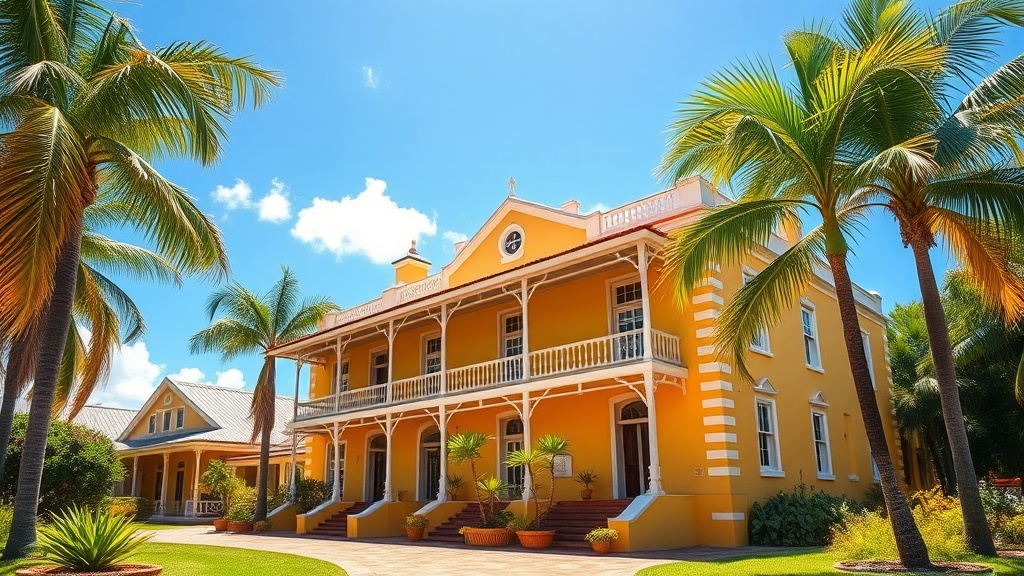
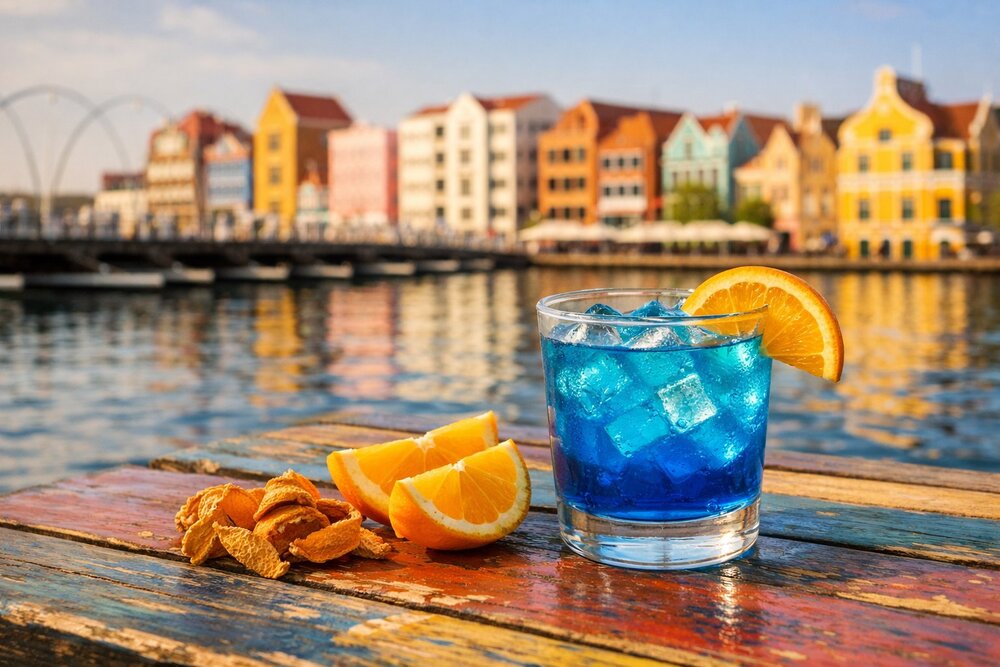
Senior & Co. at Landhuis Chobolobo have made the genuine article since 1896, in copper stills, and are the only producer entitled to call it Curaçao of Curaçao. The tour is short, cheap, self-guided and ends in a tasting room; go for the smell of the drying peel alone. The crucial detail: the original liqueur is clear. The blue was added purely for marketing in the 1930s, and the orange, green and red versions are the same spirit with different dye. The clear Triple Sec is what to bring home.
Amstel Bright
Brewed in Willemstad from 1958 until Heineken closed the island brewery in 2005 — famously from desalinated seawater, since Curaçao has no fresh groundwater to spare. It is now brewed in the Netherlands for the Caribbean market, still served with a wedge of lime, and it is still the correct beach beer.
Ponche Crema
The Christmas drink: rum, condensed milk, egg and spice. Sweet, potent and inescapable in December.
Awa di lamunchi
Fresh limeade, the island's default non-alcoholic drink, and better than anything in a bottle.
Rum & ron
No local distillery of note, but the Venezuelan and Caribbean rums on the shelf are excellent and cheap — Venezuelan añejos in particular.
Wine
There is none. The island is arid coral limestone with no viticulture at all; every bottle is imported, mostly from Chile, Argentina, Spain and Italy via the Dutch trade.
Where to drink
Pietermaai for cocktails in colonial courtyards, Mambo Beach for the party, and a neighbourhood snèk anywhere for a cold Amstel and a conversation.
🌙 Nightlife
Curaçao's evenings run on three registers, and most visitors sample all of them in a week.
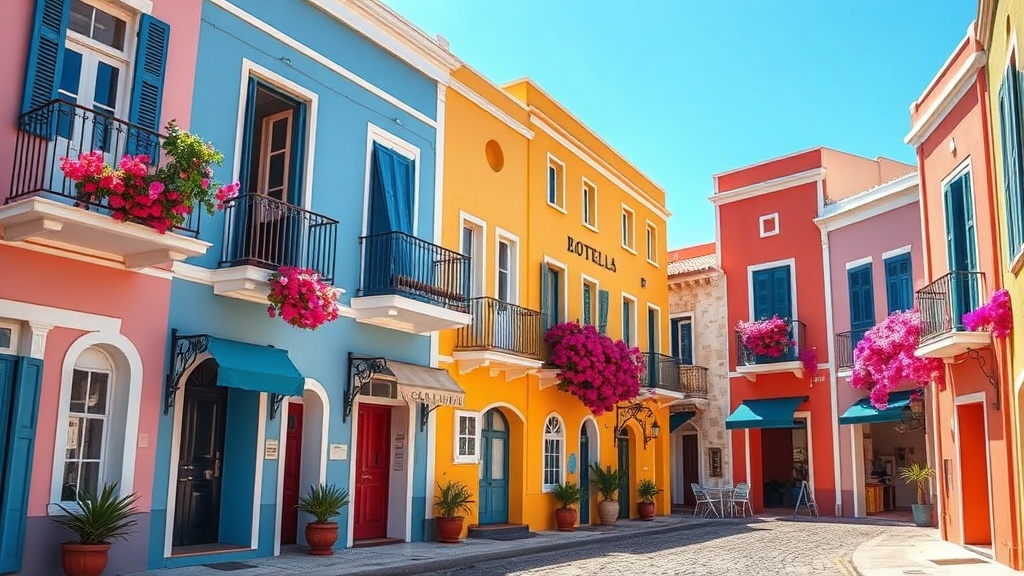
Pietermaai
The centre of gravity: restored eighteenth-century houses turned into bars, restaurants and small clubs. Mundo Bizarro, the courtyard bars along Nieuwestraat, and a crowd that is half local, half visiting.
Mambo Beach
Beach clubs, DJs and poolside parties, busiest on Friday and Saturday. Younger, louder and more commercial.
Snèks
Neighbourhood bars, plastic chairs, dominoes, tumba on the speaker and beer at a third of the beach price. This is where the island actually drinks.
Casinos
Several, mostly attached to the larger hotels. Curaçao is also, separately and famously, the licensing jurisdiction for a large share of the world's online gambling — an industry that is currently being re-regulated.
Live music
Tumba, salsa and jazz in Pietermaai and Otrobanda most weekends, and the whole island during the North Sea Jazz Festival.
A note on getting home
There is no night bus, and taxis are unmetered, run on government-set rates and are not cheap — agree the fare before you get in. If you have a hire car, plan not to drive; the alcohol limit is enforced.
🌡️ Climate & When to Go
Curaçao has a semi-arid tropical climate: warm, dry and windy, with almost no seasonal variation. Daytime temperatures sit at 28–32 °C all year, nights at 24–26 °C, and the sea at 26–28 °C. The constant easterly trade wind is what makes it bearable at midday and what makes the north coast unswimmable.
The dry months
February to June are the driest and sunniest. May and June are the sweet spot: dry, warm, and outside both the high season and the crowds.
The wet months
October to December bring what passes for a rainy season — brief, heavy showers, mostly at night, totalling under 550 mm a year. They rarely cost you a day.
High season
Mid-December to mid-April: the best weather, the highest prices and full flights from Amsterdam. Carnival (February–March) needs booking months ahead.
Low season
May to November: noticeably cheaper accommodation, quieter beaches, and identical weather for most of it.
Hurricanes
Curaçao sits below the hurricane belt and no hurricane has made landfall here in recorded history. Passing systems bring rain and swell rather than destruction — though Tropical Storm Tomas (November 2010) dumped 265 mm in a day and its floods killed two people — and this remains the island's single strongest practical selling point.
The wind
Strongest from January to April, when it can genuinely inconvenience a beach umbrella and delight a kitesurfer. It also keeps the mosquitoes down.
For divers there is effectively no bad season, though the December to February north swell stirs the water and shuts down the exposed sites — which is exactly when Boka Pistol in Shete Boka is at its most spectacular. You cannot have both on the same day.
✈️ Getting There & Around
Curaçao International Airport (CUR), still universally called Hato, sits fifteen minutes north of Willemstad. It is modern, small and easy.
From Europe
KLM flies Amsterdam–Curaçao daily, about 9.5 hours non-stop, and TUI operates seasonal charters from Amsterdam and Brussels. Amsterdam is the gateway for essentially all European traffic.
From North America
Miami has the most frequency; there are also direct services from New York (JFK), Charlotte, Atlanta and Toronto, with more in the winter season.
From South America
Bogotá, Medellín and Panama City connect regularly. Venezuelan services have been repeatedly suspended and restored — most recently cut entirely when the airspace over and around Venezuela was declared closed in late November 2025 during the US–Venezuela confrontation, which also disrupted Curaçao's own schedules for weeks — so check current status rather than assuming.
Island hopping
Divi Divi Air and EZ Air run short hops to Aruba and Bonaire several times a day. Bonaire in particular makes an easy two- or three-day add-on for divers.
Rental car
Strongly recommended and roughly $35–60 a day. Driving is on the right, roads are good, signage is Dutch-standard. You will want it from day one.
Buses and taxis
The konvoi minibuses and the large green Autobusbedrijf buses serve locals well and visitors badly. Taxis are unmetered with government-set rates — agree the fare first.
Parking in Punda is difficult; use the Otrobanda car parks and cross the Queen Emma Bridge on foot, which is quicker and considerably more enjoyable. Fuel is sold in litres and priced in guilders, and the stations are self-service with card payment.
🇪🇺 Getting There from Central Europe
There is no direct flight from Prague, Vienna or Bratislava. Every route runs through Amsterdam, and that single fact makes the trip unusually simple to plan.
The standard routing
Prague → Amsterdam (about 1h50) → Curaçao (about 9h30) with KLM, usually as one ticket with one baggage check. Total door to door around 14 hours.
The charter alternative
TUI Netherlands and Belgium sell seasonal Amsterdam and Brussels charters, often as packages. Cheaper in high season, less flexible if anything goes wrong.
An overnight in Amsterdam
The Curaçao departure is typically late morning, so a night in Amsterdam removes the tightest connection risk. It also makes the return leg, which lands early, considerably more humane.
Combining islands
Since you have flown this far, Bonaire (diving) or Aruba (beaches) is a 25-minute hop. Two islands in two weeks is the most common European itinerary.
Entry: Curaçao is part of the Kingdom of the Netherlands but not part of the EU or the Schengen area — a Schengen visa does not apply here and EU freedom of movement does not either. In practice, EU citizens including Czech and Slovak nationals need no visa for tourist stays of up to 90 days, but everyone must complete an online immigration card before arrival and hold a return ticket, proof of accommodation and valid travel insurance. Requirements change; check the official portal and your own ministry before you fly.
Practical notes for European travellers: the sockets are American (type A/B) at 127 volts, which is unlike anywhere in Europe — phone and laptop chargers handle it, hairdryers and travel kettles do not. Your EU mobile plan's roaming rules do not apply, because the island is outside the EU; buy a local prepaid SIM instead. And Curaçao is not covered by the European Health Insurance Card, so proper travel insurance with medical cover is not optional.
📋 Practical Information
Currency
The Caribbean guilder (XCG) replaced the Netherlands Antillean guilder in 2025 at 1:1, and remains pegged to the US dollar at 1.79. US dollars are accepted absolutely everywhere; euros are not, so change or withdraw dollars rather than carrying euro cash.
Cards & ATMs
Cards work almost everywhere, ATMs are plentiful and most dispense both guilders and dollars. Small snèks, beach kiosks and the floating market are cash businesses.
Language
Papiamentu day to day, Dutch officially, English and Spanish universally. You will never struggle.
Electricity
127 V, 50 Hz, with US type A/B sockets — a genuinely unusual combination. Dual-voltage chargers are fine; European heating appliances are not.
Water
Tap water is desalinated seawater and is safe, good and drinkable across the island. Do not buy bottled water here.
Health
Curaçao Medical Center in Willemstad is a modern hospital with European standards. No vaccinations required. Dengue occurs — use repellent at dusk.
Safety
Very safe by regional standards — the US State Department keeps the island at Level 1, its lowest advisory tier (reissued 9 September 2026). The real risks are beach theft from parked cars (leave nothing visible, ever) and ordinary city caution in Otrobanda after dark.
Emergency
911 for police and fire, 912 for an ambulance, 913 for the coast guard. There is a dedicated tourist police line, and the hyperbaric chamber for divers is at the Curaçao Medical Center.
Two things to arrange before arrival: the online immigration/embarkation card, which every visitor must submit, and travel insurance with medical and, for divers, decompression cover — DAN membership if you are diving seriously. Neither takes long and both are checked.
Tipping: many restaurants add a service charge of 10–15%; check the bill before adding more. Otherwise round up, and tip dive guides and boat crews as you would anywhere.
💰 Costs for Travellers
Curaçao is mid-priced for the Caribbean — clearly cheaper than Aruba or St Barths, roughly level with Bonaire, and much cheaper than either if you self-cater and use the free beaches. Prices below are in US dollars, which is what everything is effectively quoted in.
Budget accommodation
$60–100 a night for a guesthouse or apartment; vacation rentals are unusually good value for groups.
Mid-range hotel
$120–200 a night. Boutique hotels in restored Pietermaai buildings sit at the top of that band and are worth it.
Local lunch
$8–15 at Marshe Bieu or a snèk — stobá, funchi and a drink.
Restaurant dinner
$25–50 a head in Pietermaai or Jan Thiel, without wine.
Rental car
$35–60 a day, less for a week. Fuel is cheaper than in Europe.
Two-tank boat dive
$85–120. Unlimited shore-diving packages with tanks and weights run about $150–200 a week and are the reason people come.
Beach entry
$3–10 at the equipped beaches; free at Grote Knip, Playa Lagun, Playa Piskadó and most of the west.
Klein Curaçao day trip
$90–150 including breakfast, lunch and snorkelling gear.
Realistic daily budgets: $80–120 per person self-catering with a shared hire car and free beaches, $150–250 mid-range with restaurants and diving. A week of shore diving with an apartment and a car is one of the better value propositions in the Caribbean.
🏨 Accommodation
Where you stay on Curaçao determines what kind of holiday you have, more than on most islands, because the distances are just large enough to matter.
Pietermaai & Willemstad
Boutique hotels in restored colonial houses — Scuba Lodge, Pietermaai Boutique Hotel, Bario. Walk to dinner and bars; drive to the good beaches. Best for a first visit.
Jan Thiel & Mambo Beach
The resort clusters — Papagayo, LionsDive, Sunscape. Full amenities, beach on the doorstep, least local character.
Westpunt & the west
Quiet, near the best beaches and dive entries, and a 45-minute drive from a restaurant that is open late. Perfect for divers, wrong for nightlife.
Vacation rentals
Apartments and villas around Spanish Water, Jan Thiel and Bandabou are the best value on the island, especially for a week or more with a group.
Dive lodges
Several operators sell room-plus-unlimited-shore-diving packages with tanks, weights and a house reef. If diving is the point of the trip, start here.
What to check
Whether the rate includes the government tourist levy, whether there is secure parking, and — for the west — how far the nearest supermarket actually is.
A tactic that works well: three or four nights in Pietermaai for the city, the museums and the food, then the rest of the week in an apartment out west for the beaches and the diving. It costs nothing extra and gives you both islands that Curaçao is.
🏛️ UNESCO World Heritage
Historic Area of Willemstad, Inner City and Harbour was inscribed on the World Heritage List in 1997, as an outstanding example of European colonial town planning adapted to the tropics — and as a settlement whose architecture records four centuries of Dutch, Spanish, Portuguese and Caribbean contact.
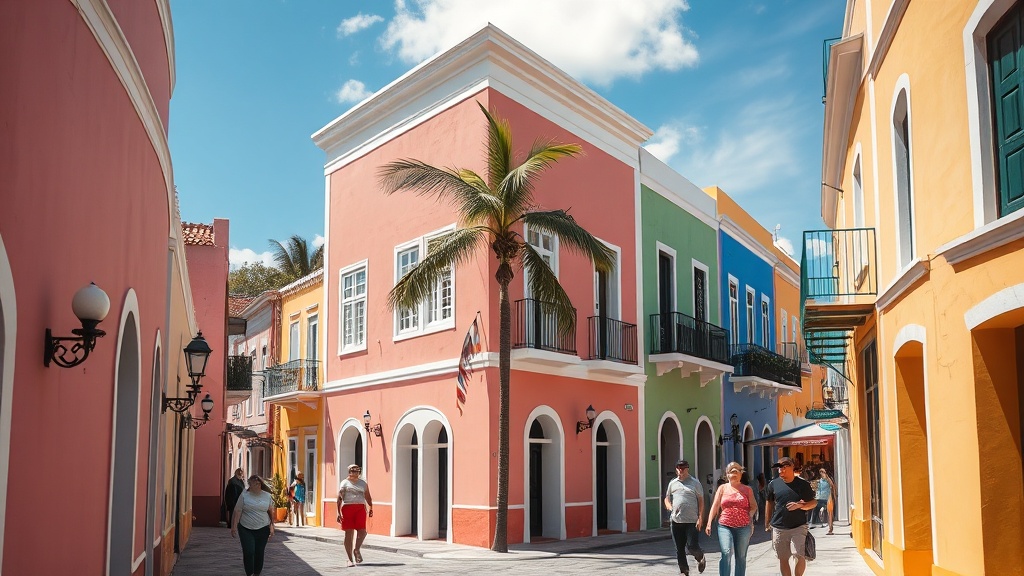
The inscription covers four historic districts: Punda (the fortified 1634 core), Otrobanda (the eighteenth-century town on the far bank), Scharloo (the merchant villas) and Pietermaai, along with Sint Anna Bay and the fort system. What UNESCO singles out is the adaptation: Dutch gable forms rebuilt with galleries, shutters and verandas for a climate they were never designed for.
The famous colours have a well-worn origin story: Governor Albert Kikkert, in the early 1800s, is said to have banned white façades because the glare gave him migraines — and, some versions add, because he owned the paint company. It is probably legend. The colours are nonetheless protected now, and the palette is regulated.
Willemstad remains Curaçao's only inscription. The Kingdom's Tentative List has carried Plantations in West Curaçao — the Ascencion, San Juan, Savonet and Knip estates as an arid-climate cultural landscape — since 2011, and there is no Curaçaoan entry on UNESCO's Intangible Cultural Heritage lists.
Walking the site takes half a day and costs nothing: Fort Amsterdam, Handelskade, the floating market, across the Queen Emma Bridge, through Otrobanda to Kura Hulanda, and back along the Scharlooweg. Restoration is uneven — immaculate on the waterfront, ruinous two streets inland — and that contrast is part of what there is to see.
🎉 Festivals & Events
Carnival (January–March)
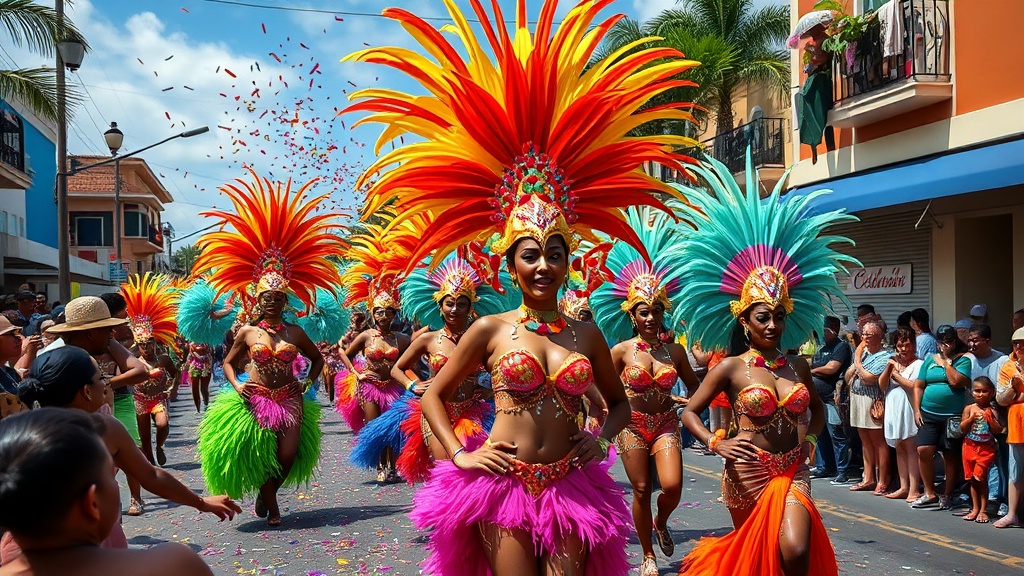
Not a weekend but a season: tumba competitions in January, then weeks of parades, the children's Marcha di Despedida, the Gran Marcha on the final Sunday and the burning of King Momo. The island's defining event — book accommodation months ahead.
Curaçao North Sea Jazz Festival (late Aug/early Sept; 3–5 September in 2026)
The Caribbean edition of the Dutch festival: two nights, multiple stages, genuinely major international jazz, Latin and R&B names.
Seú (April)
The harvest procession with African roots — hand drums, the kachu horn, and a walking dance through Otrobanda. The most traditional event in the calendar.
King's Day (27 April)
The King's birthday is a public holiday across the Kingdom: orange everywhere, street parties in Willemstad and a day off. Bonaire's own Dia di Rincon follows on 30 April and is worth the 25-minute hop.
Tula Day (17 August)
Commemoration of the 1795 revolt and its leader. Ceremonies at Landhuis Kenepa and a growing public significance since the Dutch state apology.
Curaçao Pride (late September)
One of the larger Pride events in the Caribbean, and an indicator of an island noticeably more relaxed than most of the region.
Dia di Bandera (2 July)
Flag Day — folk music, food and the island's own national celebration, distinct from anything Dutch.
Curaçao Marathon (November)
Full and half marathon along the coast. Flat, scenic and warm; run it early or regret it.
🤔 Fascinating Facts
The blue was marketing
Genuine Curaçao liqueur is clear. The blue dye was added in the 1930s to make the bottle recognisable — a decision so effective that the colour is now the drink's identity.
The laraha is inedible
The orange the liqueur is made from is a Valencia orange that mutated in Curaçao's arid soil into something nobody can eat. Only the dried peel is any use, and it is superb.
Four languages as standard
Most Curaçaoans are fluent in Papiamentu, Dutch, English and Spanish. The island's own language is the one they use at home.
The beer is made from the sea
Until the Willemstad brewery closed in 2005, Amstel Bright was the only beer in the world brewed entirely from desalinated seawater, because Curaçao has essentially no fresh groundwater. Today it is brewed in the Netherlands.
No hurricanes, ever
Curaçao lies below the hurricane belt and has never taken a direct hurricane strike in recorded history.
The bridge is free because of a governor's trick
The Queen Emma Bridge originally charged a toll — 2 cents for those wearing shoes, free for the barefoot. The rich promptly took their shoes off and the poor borrowed shoes to show they could pay.
A synagogue with a sand floor
Mikvé Israel-Emanuel (1732) is the oldest synagogue in continuous use in the Americas, and one of a handful anywhere with sand covering the floor.
Baseball far above its weight
An island of 158,000 people has produced Hall of Famer Andruw Jones (Cooperstown class of 2026), Kenley Jansen, Jurickson Profar, Ozzie Albies and Didi Gregorius; won the Little League World Series in 2004 and again on 30 August 2026; and in June 2026 became the smallest nation ever to play at a FIFA World Cup.
⭐ Notable People
Tula (d. 1795)
Leader of the great slave revolt and now a national hero; the island's most important historical figure and the subject of its most serious recent reckoning.
Moisés Frumencio da Costa Gomez (1907–1966)
"Doktor da Costa Gomez", the constitutional lawyer and politician who won universal suffrage and autonomy for the Antilles. The airport road and half the institutions carry his name.
Andruw Jones (b. 1977)
Ten-time Gold Glove centre fielder for the Atlanta Braves, inducted into the Baseball Hall of Fame in July 2026 — the first Curaçaoan in Cooperstown — and the reason a generation of Curaçaoan children play baseball.
Kenley Jansen (b. 1987)
One of the most prolific closers in Major League history, and a converted catcher — a very Curaçaoan career.
Izaline Calister (b. 1969)
Singer who took Papiamentu-language music onto international jazz and world-music stages.
Churandy Martina (b. 1984)
Olympic sprinter, European 200 m champion, and the athlete who carried the island's flag before and after the Antilles dissolved.
Jean-Julien Rojer (b. 1981)
Doubles specialist and multiple Grand Slam champion — Wimbledon, the US Open and Roland-Garros.
Frank Martinus Arion (1936–2015)
Novelist and linguist whose Dubbelspel (Double Play) is the great Curaçaoan novel, and a lifelong champion of Papiamentu as a language of literature.
📰 Media
Curaçao has a small, plural and generally free press. Amigoe (Dutch) and Extra and Èxtra (Papiamentu) are the main dailies, the Curaçao Chronicle serves English readers, and Antilliaans Dagblad covers the wider Dutch Caribbean. Press freedom is protected in law and in practice, and the Kingdom's standards apply: Reporters Without Borders does not rank Curaçao separately but the Kingdom of the Netherlands sits 2nd of 180 in the 2026 World Press Freedom Index.
Broadcast: TeleCuraçao is the main local channel, Dutch public channels arrive by satellite, and radio matters more than television — Dolfijn FM, Hit Radio and Easy FM, which become the nervous system of the island during the carnival tumba season.
Digitally, Facebook and WhatsApp do most of the work; Instagram does the tourism. The island's other media story is the one that appears in foreign headlines: Curaçao has long been the licensing jurisdiction for a large share of the world's online gambling operators, and the overhaul of that licensing regime through the new Curaçao Gaming Authority is one of the bigger domestic policy stories of the decade.
For visitors: local news in English is thin but the Chronicle covers what matters, and the Curaçao Meteorological Service's marine forecast is the one page divers and sailors should bookmark.
⚾ Sports
Baseball is the island's sport, and its record is genuinely extraordinary. A population of 158,000 has produced Andruw Jones — elected to the Baseball Hall of Fame on 20 January 2026 and inducted at Cooperstown on 26 July 2026, the first Curaçaoan there — plus Kenley Jansen, Jurickson Profar, Ozzie Albies, Didi Gregorius, Jonathan Schoop and Roger Bernadina. Willemstad's Pabao team won the Little League World Series in 2004 (Profar and Schoop were on it) and lost the finals of 2005 and 2019; on 30 August 2026 Pariba Little League of Willemstad won the island's second title, beating Henderson, Nevada 11–2 at Williamsport. MLB scouts are permanently present, and every neighbourhood has a diamond.
Where to watch
Sentro Deportivo Korsou in Willemstad for the main ground, or any neighbourhood field on a Saturday morning, which is better.
Diving and watersports
The obvious ones. Add windsurfing and kitesurfing on the eastern and windward coasts, where the trade wind is relentless and reliable.
Sailing
Spanish Water is full of yachts, and the Curaçao Challenge and Heineken Regatta bring international fleets. Sport fishing for wahoo and marlin runs year-round.
Football
Second to baseball, but 2026 changed the scale. Under Dick Advocaat, Curaçao went through Concacaf qualifying unbeaten (including a 7–0 over Bermuda) and a 0–0 draw in Kingston on 18 November 2025 sent it to the 2026 FIFA World Cup as the smallest nation ever to qualify, taking the record from Iceland. In Group E it lost 1–7 to Germany (14 June), drew 0–0 with Ecuador (21 June) and lost 0–2 to Côte d'Ivoire (25 June) — one point, last in the group, and a first World Cup goal all the same.
Running
The Curaçao Marathon and half in November, flat and coastal. Start times are early for good reason.
Athletics
Churandy Martina's sprinting made the island visible internationally long before its footballers did.
🎒 Packing for Curaçao
Reef-safe sunscreen
The reef starts metres from the sand and oxybenzone reaches it immediately. Bring it from home — the choice on the island is limited and expensive.
Your own mask and snorkel
Rentals exist but fit badly, and a leaking mask spoils every swim. A mask, snorkel and fins pay for themselves in a week here.
Water shoes
Several of the best entries are coral rubble or rock. Not optional if you plan to shore dive.
A US plug adapter
Type A/B sockets at 127 V. Dual-voltage chargers are fine; leave the hairdryer and the travel kettle at home.
Rash guard or 3 mm shorty
The water is 27 °C, but three dives a day will still cool you. Also sun protection you cannot forget to reapply.
Dive computer, torch, SMB
If you have them. Shore diving without a guide means carrying your own safety kit and your own plan.
Light rain shell
For the October–December showers, which are brief but genuinely heavy.
Smart-casual evening clothes
Pietermaai restaurants are not formal but they are not beachwear either. Cover-ups for shops and restaurants are expected.
Also worth having: a driving licence (an international permit is recommended though usually not demanded), motion-sickness tablets for the Klein Curaçao crossing, and a dry bag for the boat trips. Leave behind: euros — change them for dollars before you go or withdraw dollars on arrival.
📸 Photo Gallery
Click any image to enlarge. Been to Curaçao? Send your photos to photos@kaufmann.wtf to be featured here with full credit.
🌐 Useful Resources
Curaçao Tourist Board
Official information, events calendar and the current entry requirements: curacao.com
Digital immigration card
Every visitor must complete the online arrival card before departure — start from the tourist board site, which links the current official form.
Curaçao Marine Park & dive sites
Site maps, marine-park rules and the shore-entry guide are available from any dive shop and from CARMABI, the island's research institute.
Meteorological Service
Marine forecast, swell and wind — the page to check before a shore dive or a Klein Curaçao crossing.
Emergency numbers
911 police and fire · 912 ambulance · 913 coast guard · Curaçao Medical Center for the hospital and the hyperbaric chamber.
SIM cards
Digicel, Flow and UTS sell prepaid SIMs at the airport and in Willemstad. EU roaming does not apply here — the island is outside the EU.
Before travelling, check your own foreign ministry's advice — for Czech readers mzv.gov.cz, which also runs the DROZD registration system. The UNESCO listing for Willemstad is at whc.unesco.org.
📚 Recommended Reading
Dubbelspel (Double Play) — Frank Martinus Arion
The great Curaçaoan novel: four men, one afternoon of dominoes, and the whole society of the island underneath it. Available in English translation.
Curaçao: A Short History — Han Jordaan
The readable single-volume history, honest about the harbour and what it was used for.
The Jews of the Netherlands Antilles — Isaac S. Emmanuel
The definitive account of the Sephardic community that built Punda and Scharloo.
Museum Kura Hulanda catalogue
The museum's own publications on the Atlantic slave trade are the best thing to read before or after visiting.
A Papiamentu phrasebook
Impractical, since everyone speaks English, and entirely worth carrying anyway.
Curaçao Dive Guide
Site-by-site descriptions with shore-entry directions and marine-life identification. Any dive shop sells one.
On screen: search for footage of the Tugboat and Superior Producer wrecks before you dive them, and for the Gran Marcha parade if you want to understand why carnival takes two months. The Kura Hulanda museum has produced educational material on the slave trade that is worth more than any travel vlog.
✍️ Author's Note
"Curaçao caught me off guard. I had come for the photograph everyone has seen — the pastel houses on Handelskade — and I got it, at golden hour, exactly as advertised. What I did not expect was to spend the next morning in a museum built around a slave yard two streets behind those same houses, and to understand for the first time what the pretty waterfront had been for."
"The island does not hide that, and it does not sell it either. It simply tells you, and then lets you go to the beach. Which I did: floating above the reef at Playa Kalki with a green turtle grazing three metres below, entirely uninterested in me. Keshi yena at a long table in the Old Market, cheese and spiced meat and raisins in a combination that should not work. Tumba drifting out of a Pietermaai bar at two in the morning."
"The thing I keep telling people is the small one: stand on the Queen Emma Bridge when it swings open, rather than watching from the shore. Ninety seconds, free, and the entire town rotates slowly past you while a container ship slides through the middle of the capital. That is Curaçao in miniature — Dutch engineering, Caribbean light, and the strong suspicion that the island is enjoying the joke more than you are. Dushi Kòrsou."
— Radim Kaufmann, September 2026
Support This Project 🌍
This World Travel Factbook is a labor of love – free to use for all travelers. If you find it helpful, consider supporting its continued development.
