

🌍 Canary Islands at a Glance
🌏 Overview
Rising from the depths of the Atlantic Ocean like volcanic sentinels just 100 kilometers off the coast of Africa, the Canary Islands have enchanted travelers for millennia. The ancient Romans called them the "Fortunate Isles," and that name still resonates today—these eight islands offer year-round spring weather, spectacular volcanic landscapes, pristine beaches, and a unique culture that blends Spanish traditions with African influences and ancient Guanche heritage.
Each island possesses its own distinct character, making the archipelago feel less like a single destination and more like eight different worlds. Tenerife boasts Spain's highest peak—the snow-capped volcano Mount Teide rising majestically above subtropical vegetation. Gran Canaria presents a continent in miniature, from golden sand dunes to lush pine forests. Lanzarote's otherworldly volcanic landscapes inspired artist César Manrique to create architectural masterpieces integrated with nature. Fuerteventura offers endless beaches and world-class windsurfing. La Palma, La Gomera, and El Hierro provide pristine wilderness and ancient laurel forests unchanged since the dinosaur age.
For American travelers, the Canary Islands represent one of Europe's most accessible yet undiscovered gems—easier to reach than many European capitals, with excellent infrastructure, affordable prices, and a welcoming atmosphere that makes every visitor feel at home in these Islands of Eternal Spring.
✅ Travel Information
Access: The Canary Islands are easily accessible with regular flights from major European cities and direct connections from the Americas. As part of Spain and the European Union, EU citizens can enter freely, while most international visitors need only a valid passport for stays up to 90 days.
Getting There: All seven major islands have airports, with Tenerife South and Gran Canaria airports serving as the main international hubs. Inter-island ferries (Fred Olsen, Naviera Armas) and flights (Binter Canarias) connect the archipelago efficiently.
💡 Tip: The Canary Islands have excellent healthcare infrastructure as part of the Spanish system. EU citizens should bring their EHIC card. The islands are very safe for tourists with low crime rates.
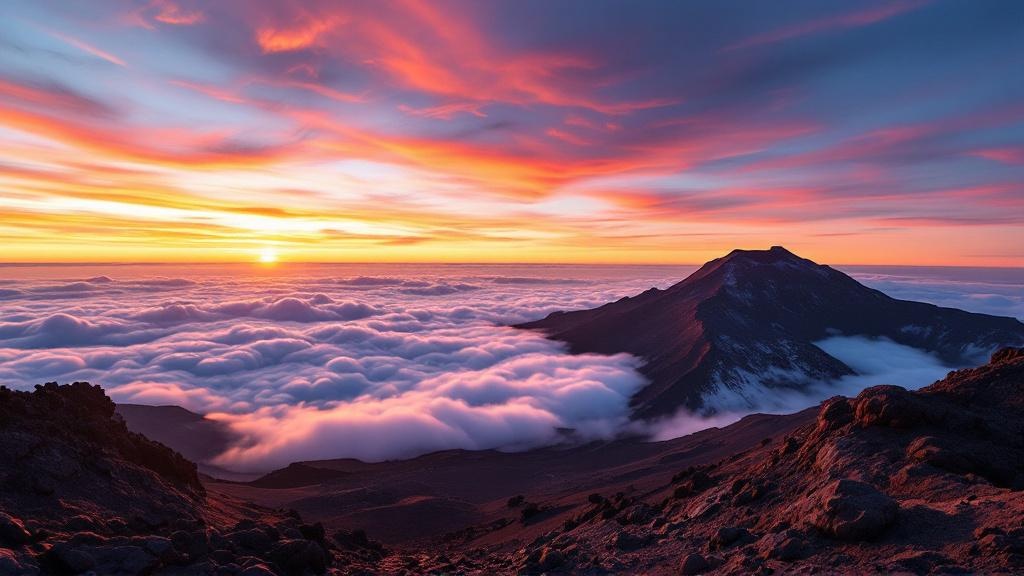
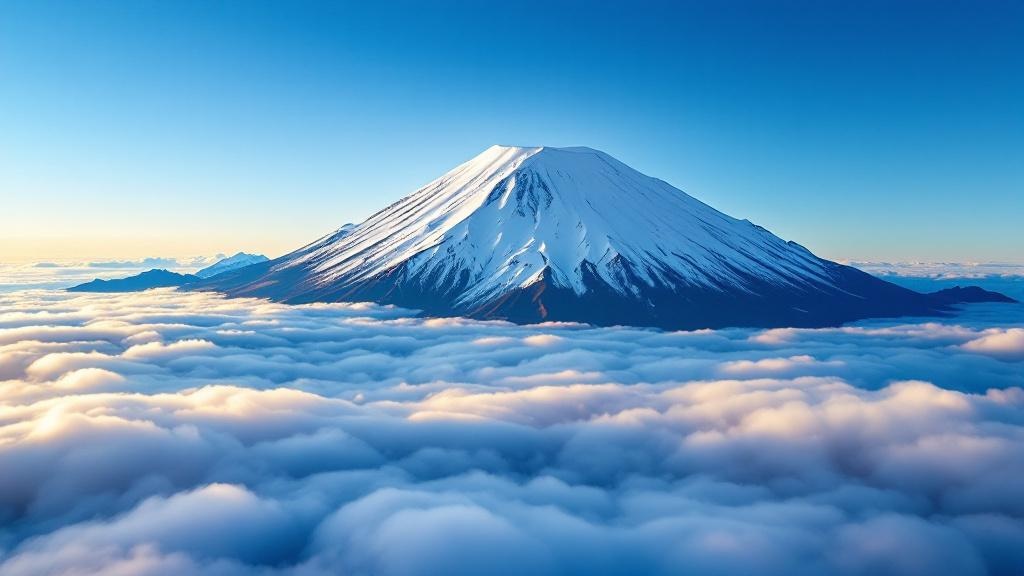
Mount Teide at Sunrise
Spain's highest peak rises above the clouds — a UNESCO World Heritage Site and one of the world's most visited volcanoes
🏷️ Name & Identity
Contrary to popular belief, the Canary Islands were not named after canary birds—it's actually the other way around! The name derives from the Latin "Canariae Insulae" meaning "Islands of Dogs," likely referring to the large dogs found by early Roman explorers or possibly to the Mediterranean monk seals (called "sea dogs") that once populated these waters.
The archipelago consists of eight main islands: Tenerife, Gran Canaria, Lanzarote, Fuerteventura, La Palma, La Gomera, El Hierro, and the smallest inhabited island La Graciosa. The indigenous Guanche people—of Berber origin from North Africa—inhabited the islands for millennia before Spanish conquest, developing unique cultures on each island with their own dialects and traditions. Their legacy lives on in place names, archaeological sites, and the distinctive whistling language of La Gomera called "Silbo Gomero."
Today, the Canary Islands form an autonomous community of Spain with their own parliament and distinct identity that blends European modernity with African warmth and ancient indigenous heritage. Canarians are Spanish citizens but proudly maintain their unique "Canario" identity—reflected in their accent, cuisine, music, and welcoming hospitality.
🗺️ Geography & Regions
The Canary Islands archipelago stretches across approximately 500 kilometers of Atlantic Ocean, located about 100 kilometers west of Morocco and 1,100 kilometers from mainland Spain. Despite their African proximity, the islands are European territory—an autonomous community of Spain with their own distinct identity and governance.
The seven main islands are divided into two provinces: the western province of Santa Cruz de Tenerife (including Tenerife, La Palma, La Gomera, and El Hierro) and the eastern province of Las Palmas (including Gran Canaria, Lanzarote, and Fuerteventura). Each island possesses remarkably different landscapes—from the volcanic moonscapes of Lanzarote to the lush laurel forests of La Gomera, from the dramatic cliffs of Los Gigantes on Tenerife to the endless golden beaches of Fuerteventura.
UNESCO has designated multiple Canarian sites as World Heritage Sites and Biosphere Reserves, recognizing ecosystems ranging from subtropical laurel forests to high-altitude volcanic deserts. The islands' biodiversity includes thousands of endemic species found nowhere else on Earth, making them a paradise for nature lovers and scientists alike.
🗺️ Map
📜 History
The indigenous Guanche people—likely of Berber origin from North Africa—inhabited the Canary Islands for over 2,000 years before European contact. They developed sophisticated societies adapted to island life, living in caves, practicing mummification of their dead, and creating distinctive pottery and tools. Each island developed its own dialect, customs, and governance systems, with kings called "menceyes" on Tenerife and "guanartemes" on Gran Canaria.
Spanish conquest began in 1402 when French-Norman adventurers arrived under the Castilian crown, but the mountainous western islands resisted for nearly a century. The conquest was brutal—disease, warfare, and enslavement devastated the Guanche population. By 1496, all islands had fallen to Spanish control. The islands became a crucial stopover point for Spanish galleons sailing to the Americas, with Christopher Columbus himself stopping in La Gomera before his historic 1492 voyage.
The islands developed through cycles of prosperity and hardship—sugar plantations, wine exports that Shakespeare praised, cochineal dye production, and eventually banana cultivation. The 20th century brought mass tourism, transforming the economy forever. Today, the Canary Islands enjoy autonomous status within Spain while maintaining strong cultural and economic ties to both Europe and Africa.
👥 People & Culture
Canarians embody a unique blend of Spanish traditions, African influences, and indigenous Guanche heritage, creating a culture distinct from mainland Spain. The approximately 2.2 million residents—concentrated mainly on Tenerife and Gran Canaria—are known for their warmth, hospitality, and relaxed approach to life that visitors often describe as "island time."
The Canarian dialect of Spanish is distinctive—closer to Caribbean Spanish than mainland Castilian, with unique vocabulary, pronunciation patterns, and expressions. On La Gomera, the ancient whistling language "Silbo Gomero" survives as a UNESCO-recognized Intangible Cultural Heritage—once used to communicate across deep valleys, now taught in schools and demonstrated for delighted visitors.
Cultural traditions include lively fiestas throughout the year, with the Carnival of Santa Cruz de Tenerife ranking among the world's largest alongside Rio de Janeiro. Traditional music features the "timple"—a small guitar-like instrument—while folk dances like the "isa" and "folía" preserve ancient rhythms. Canarian artisans continue traditions of pottery, embroidery, and basket-weaving that date back to Guanche times.
🗣️ Useful Spanish Phrases for the Canaries
Basic Spanish:
- Hola — Hello
- Gracias — Thank you
- Por favor — Please
- ¿Cuánto cuesta? — How much?
- La cuenta, por favor — The bill, please
Canarian Expressions:
- ¡Muyayo! — Wow! (surprise)
- Gofio — Traditional flour
- Papa — Potato (common food)
- Guagua — Bus
🏛️ Government & Politics
The Canary Islands are not a country but an autonomous community of Spain and one of the European Union’s nine outermost regions under Article 349 TFEU — a status that buys the archipelago its own economic and tax regime rather than mere regional devolution. Executive power sits with the Government of the Canary Islands, whose president since 14 July 2023 has been Fernando Clavijo Batlle of Coalición Canaria, governing with the People’s Party and two island parties. The next regional election falls due in 2027.
Uniquely in Spain the archipelago has two co-capitals — Santa Cruz de Tenerife and Las Palmas de Gran Canaria — which alternate as the seat of the presidency every four years, while the 70-seat Parliament of the Canary Islands sits permanently in Santa Cruz. Below the regional tier each of the seven main islands is run by its own cabildo insular, an island council with real authority over roads, water, tourism and heritage; this is why rules on things such as park access or holiday rentals can differ sharply from one island to the next. Madrid retains defence, foreign affairs and border control, and the islands send deputies and senators to the Cortes Generales.
Two issues dominate island politics in 2026. The first is overtourism: the Canaries posted record visitor numbers and record tourist spending while the grassroots movement Canarias Tiene Un Límite put tens of thousands onto the streets of Tenerife, Gran Canaria and Lanzarote. The government’s answer was Law 6/2025 on the sustainable regulation of tourist housing, in force since 13 December 2025, plus Tenerife’s new Teide eco-tax. The second is Atlantic migration: more than 43,000 people reached the islands by boat in a single record year, surpassing the 2006 “cayuco crisis”, which has made reception capacity and the transfer of unaccompanied minors to the mainland a standing point of friction between Las Palmas, Madrid and Rabat.
🌋 Tenerife — The Island of Eternal Spring
Tenerife, the largest and most populous Canary Island, presents visitors with extraordinary diversity—from the snow-capped volcanic peak of Mount Teide to lush northern valleys, from dramatic Atlantic cliffs to vibrant resort towns. Home to nearly a million residents and the co-capital Santa Cruz de Tenerife, this island offers everything from world-class stargazing to some of the planet's most spectacular carnival celebrations.
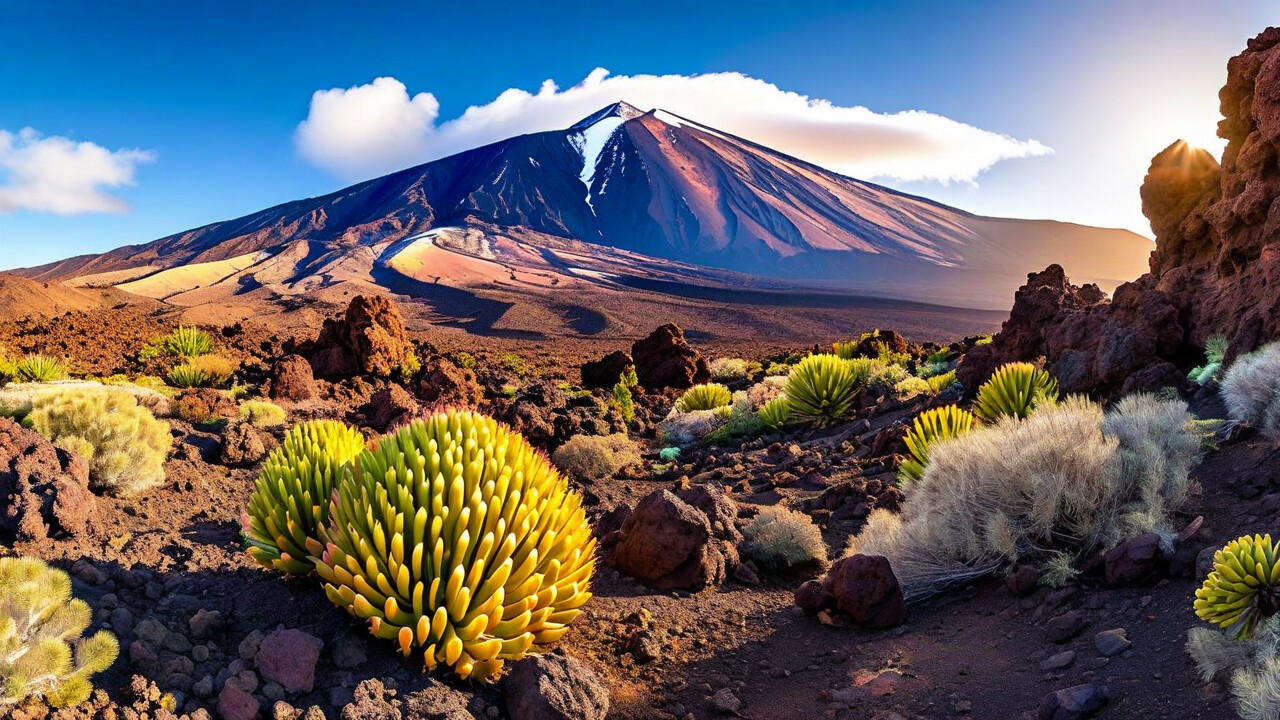
The centerpiece is unmistakably Mount Teide—Spain's highest peak at 3,718 meters, rising from the spectacular Las Cañadas caldera in Teide National Park. This UNESCO World Heritage Site receives millions of visitors annually who come to experience the otherworldly volcanic landscape, ride the cable car to near the summit, or simply marvel at one of Earth's most impressive volcanic structures. At night, the park offers some of the clearest skies in the world for stargazing.
Beyond Teide, Tenerife rewards exploration. The historic town of La Laguna—another UNESCO site—preserves colonial architecture and university town atmosphere. The northern coast offers dramatic scenery and authentic Canarian villages, while the south features Europe's best waterpark (Siam Park) and popular beach resorts. The spectacular cliffs of Los Gigantes, the ancient dragon tree of Icod de los Vinos, and the charming Puerto de la Cruz all merit extended visits.
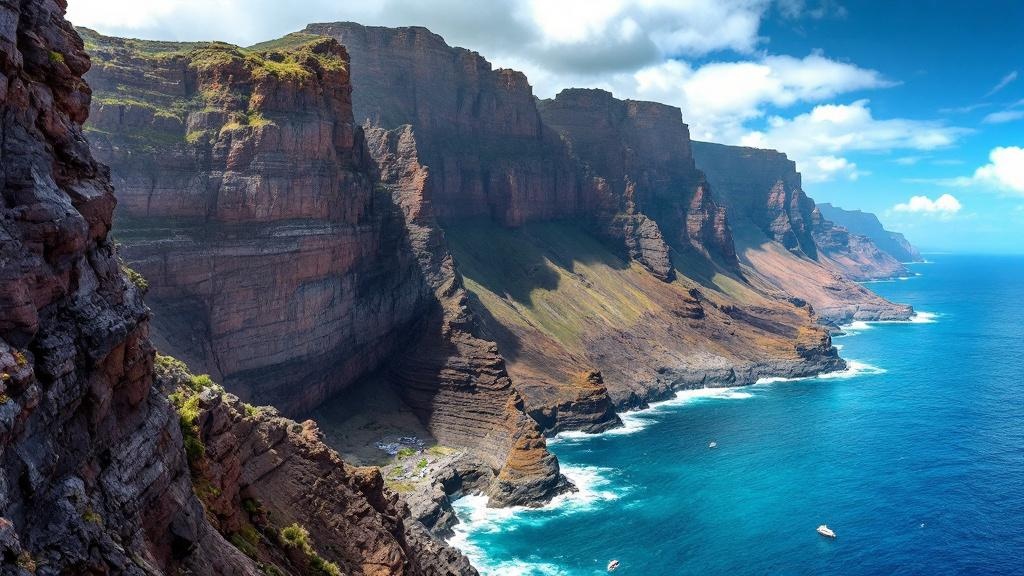
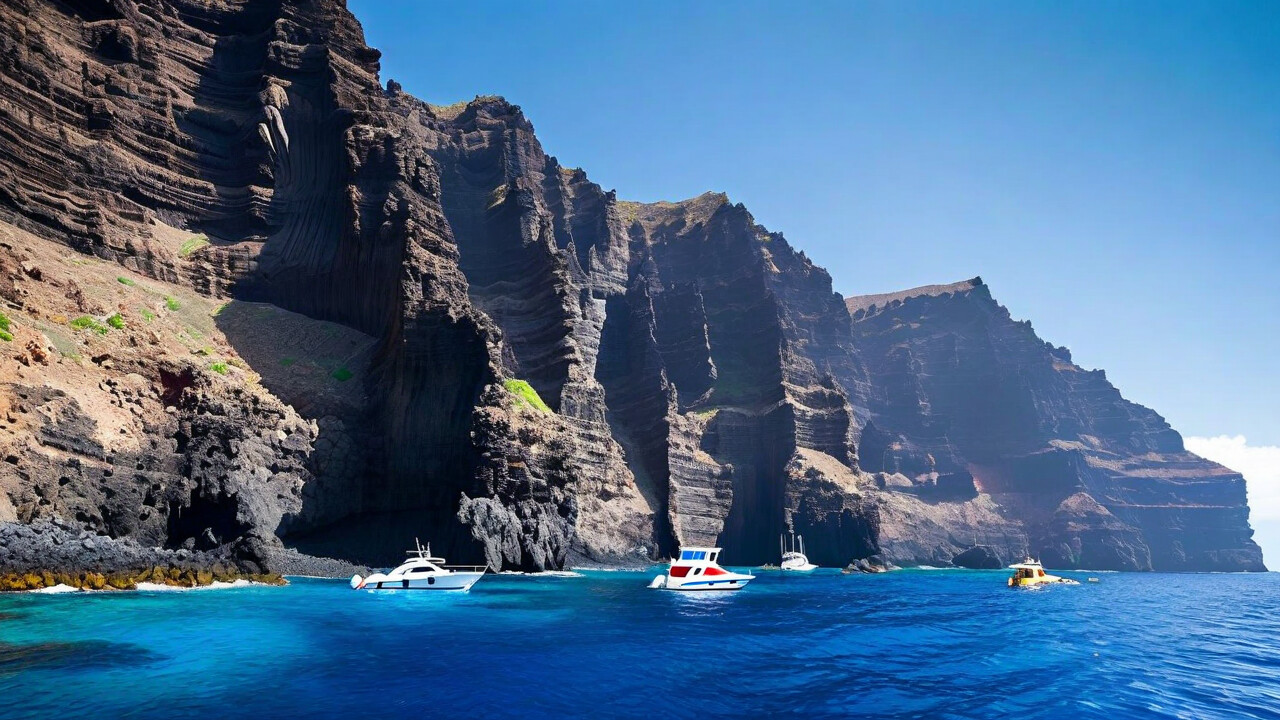
Los Gigantes — The Giant Cliffs
Dramatic volcanic cliffs rise 600 meters from the Atlantic Ocean — one of Tenerife's most spectacular natural landmarks
🏖️ Gran Canaria — A Miniature Continent
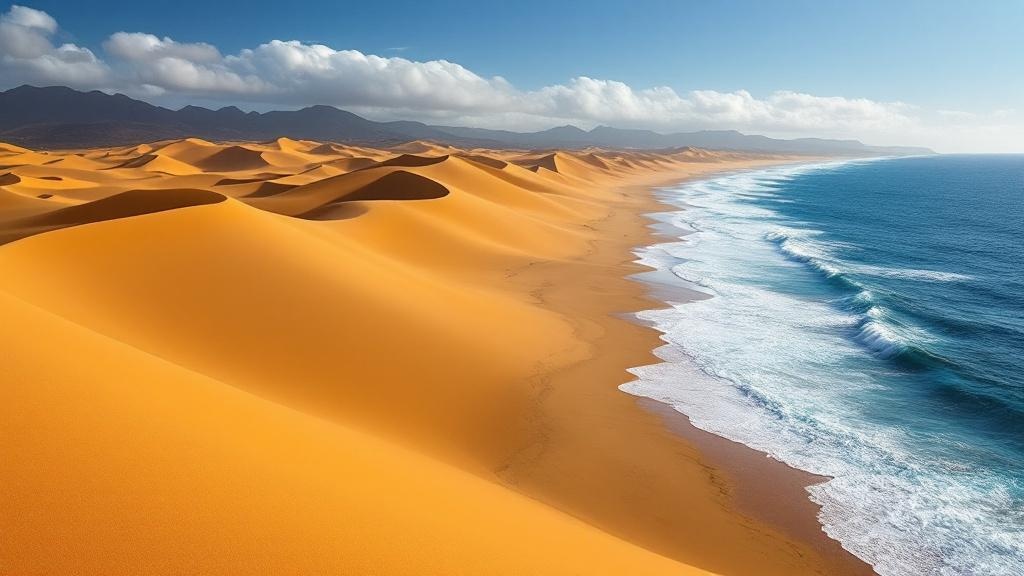
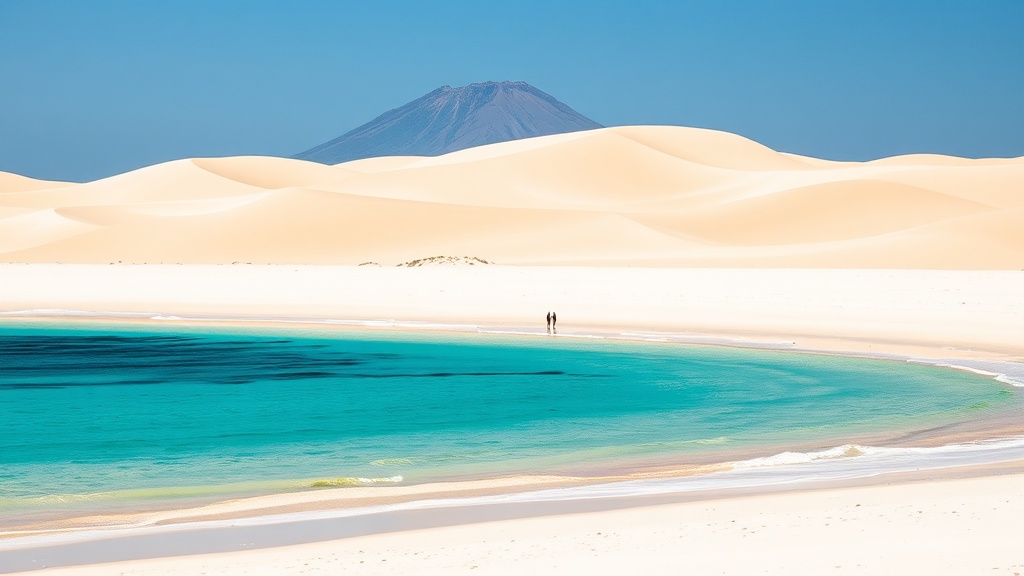
Gran Canaria earns its nickname "miniature continent" through extraordinary geographic diversity packed into just 1,560 square kilometers. From the golden dunes of Maspalomas—reminiscent of the Sahara—to pine-forested mountains, from dramatic rocky coastlines to lush subtropical valleys, this nearly circular island presents visitors with an astonishing variety of landscapes and microclimates.
Las Palmas de Gran Canaria, the archipelago's largest city and co-capital, offers vibrant urban culture alongside historic quarters. The Vegueta neighborhood preserves colonial architecture where Christopher Columbus stayed before sailing to America. The iconic Las Canteras beach—three kilometers of golden sand—ranks among Europe's finest urban beaches. The city hosts excellent museums, restaurants, and a lively cultural scene that runs year-round.
The island's interior reveals ancient villages, spectacular viewpoints, and the iconic Roque Nublo—an 80-meter volcanic plug that has become Gran Canaria's symbol. The mountainous center offers excellent hiking through pine forests and past dramatic rock formations, while the coastal south provides beach resorts and the protected Maspalomas dunes nature reserve.
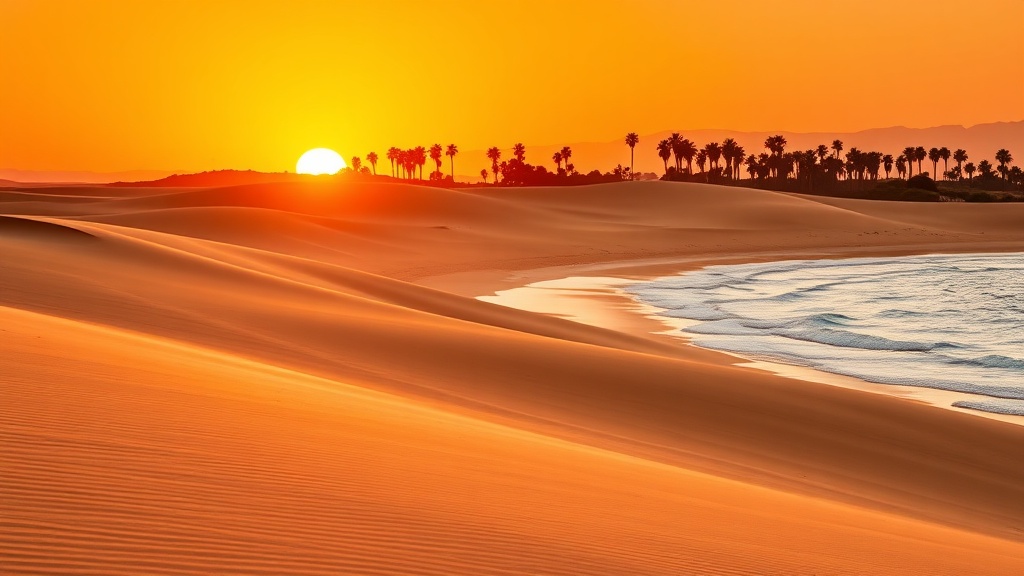
Maspalomas Dunes
Golden Saharan dunes meet the Atlantic Ocean — a protected natural reserve in southern Gran Canaria
🔥 Lanzarote — The Island of Fire
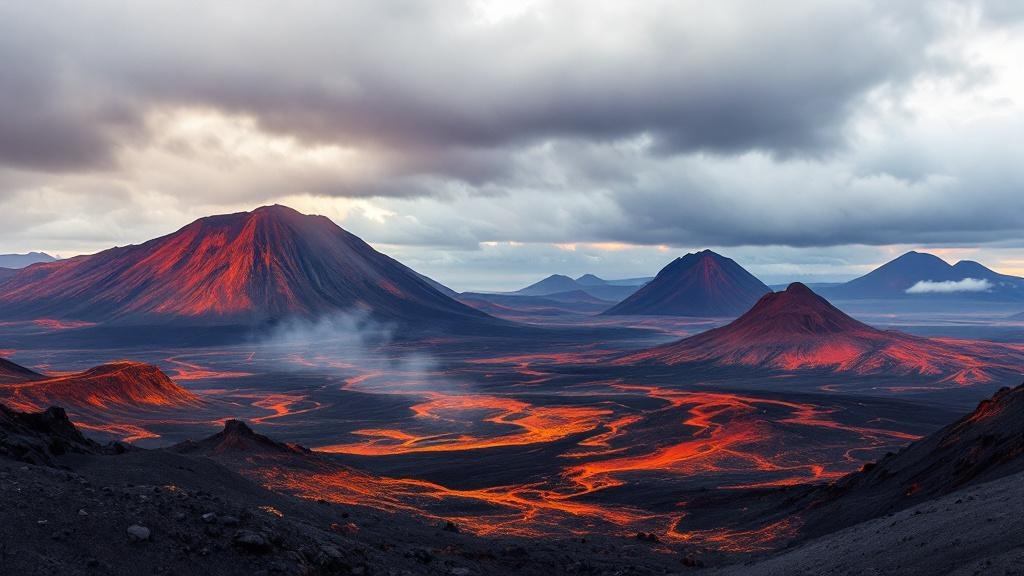
Lanzarote rises from the Atlantic like a vision of Mars—a dramatic volcanic landscape shaped by eruptions that buried a third of the island between 1730 and 1736. UNESCO designated the entire island a Biosphere Reserve, recognizing both its extraordinary geology and the remarkable harmony between human development and nature championed by artist César Manrique.
Timanfaya National Park showcases the moon-like terrain where guides demonstrate volcanic heat by pouring water into holes (instant steam!) or cooking over natural geothermal vents. The Jameos del Agua and Cueva de los Verdes transform volcanic tubes into stunning cultural venues. Manrique's influence extends across the island—his architecture blends seamlessly with the landscape, and strict building codes maintain whitewashed villages against black volcanic soil.
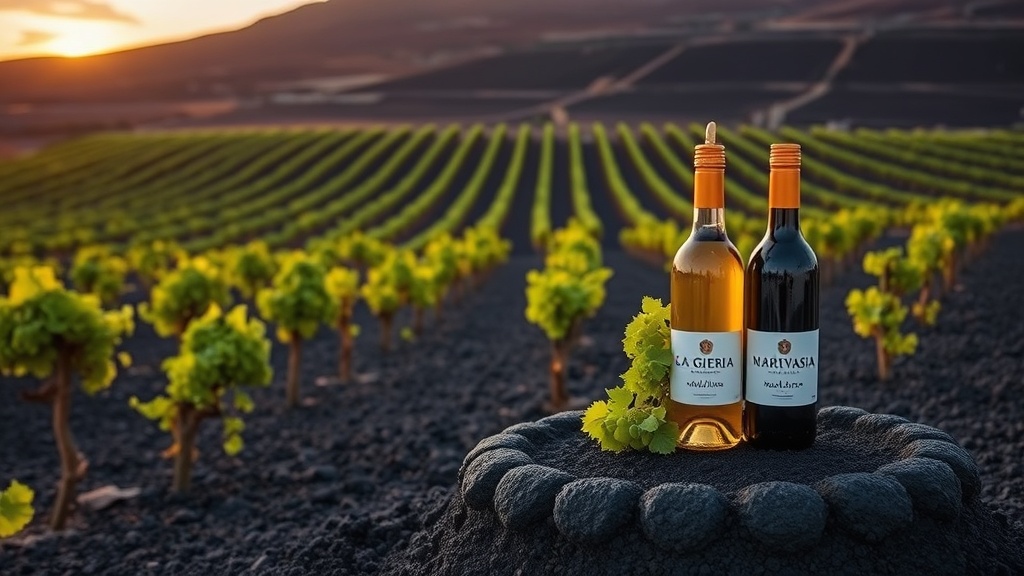
Beyond the volcanoes, Lanzarote offers distinctive experiences: the green crater lake at El Golfo, world-class surfing at Famara, Europe's first underwater sculpture museum, and unique vineyards where grapes grow in individual volcanic hollows. The island's commitment to sustainable development makes it a model for environmentally conscious tourism.
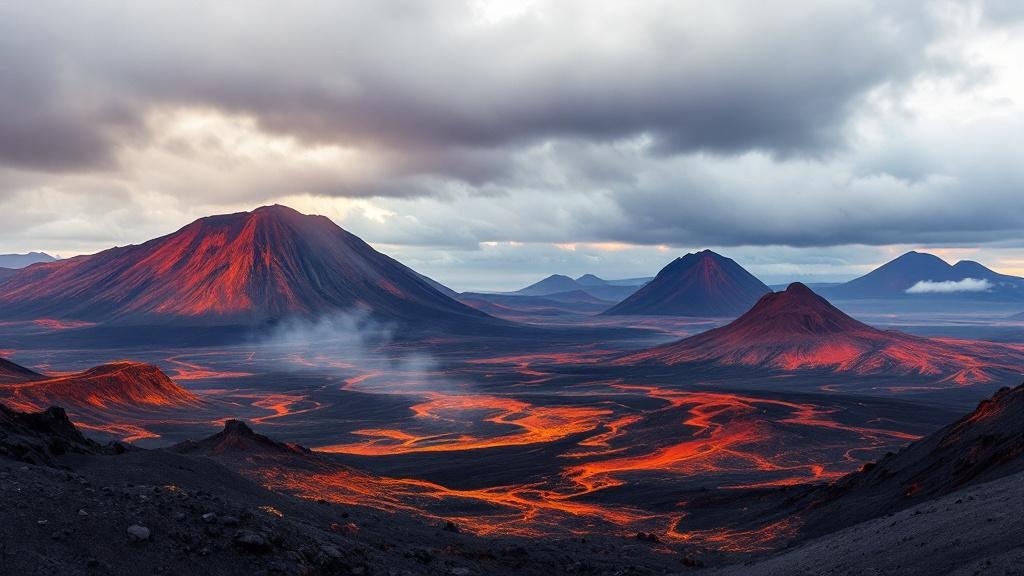
Timanfaya National Park
Otherworldly volcanic landscape — where the 1730 eruptions created a Martian panorama that remains virtually unchanged
🏄 Fuerteventura — Endless Beaches
Fuerteventura—the oldest Canary Island at over 20 million years—offers over 150 kilometers of beaches, making it a paradise for sun-seekers and water sports enthusiasts. The constant trade winds create world-class conditions for windsurfing and kitesurfing, while pristine waters attract divers and snorkelers to explore vibrant marine life.
The island's beaches range from vast golden stretches like Corralejo and Sotavento to hidden coves accessible only by hiking. The northern Corralejo Dunes Natural Park presents a dramatic landscape of shifting sands bordering turquoise waters. Throughout the island, traditional whitewashed villages contrast with the arid landscape, while goat herds provide milk for the famous Majorero cheese.
Fuerteventura maintains a slower pace than its more developed neighbors—perfect for travelers seeking authentic relaxation rather than tourist bustle. The interior reveals extinct volcanoes, abandoned windmills, and some of the Canaries' best-preserved traditional architecture in villages like Betancuria, the island's ancient capital.
🌲 La Palma — The Beautiful Island
La Palma earns its nickname "La Isla Bonita" (The Beautiful Island) through lush laurel forests, dramatic volcanic landscapes, and some of the world's clearest skies for stargazing. This verdant island offers a striking contrast to its eastern neighbors—here, rainfall nurtures forests that have survived since the Tertiary period, hosting species found nowhere else on Earth.
The spectacular Caldera de Taburiente—a massive erosion crater 8 kilometers wide—forms the island's heart, surrounded by pine forests and crisscrossed by hiking trails. The capital, Santa Cruz de La Palma, preserves colonial architecture and traditional balconies along cobblestone streets. At the island's highest point, the Roque de los Muchachos observatory takes advantage of exceptional astronomical conditions recognized by UNESCO.
In late 2021, the Cumbre Vieja volcano erupted spectacularly for nearly three months, creating new landscape features while demonstrating the islands' ongoing volcanic nature. The affected areas are recovering, and the island remains open to visitors who can now witness the dramatic aftermath of this geological event firsthand.
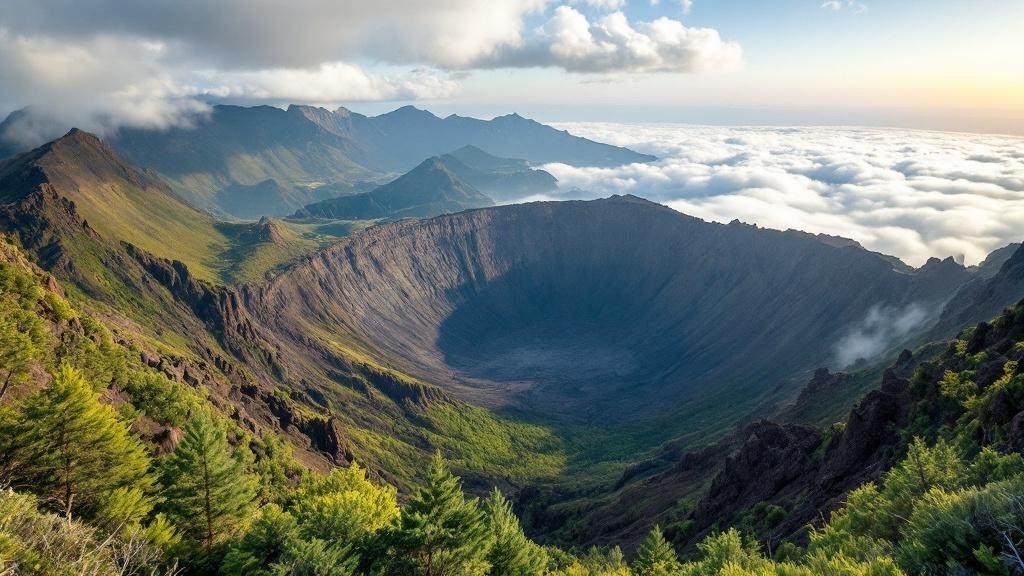
Caldera de Taburiente
One of the world's largest erosion craters — lush pine forests surround this dramatic natural amphitheater
🌿 La Gomera — The Whistling Island
La Gomera seems frozen in time—a nearly circular island of deep ravines, ancient forests, and traditional villages accessible only by ferry from Tenerife. This is where Columbus made his final provisioning stop before sailing into the unknown in 1492, and where the indigenous whistling language "Silbo Gomero" still echoes across valleys just as it has for millennia.
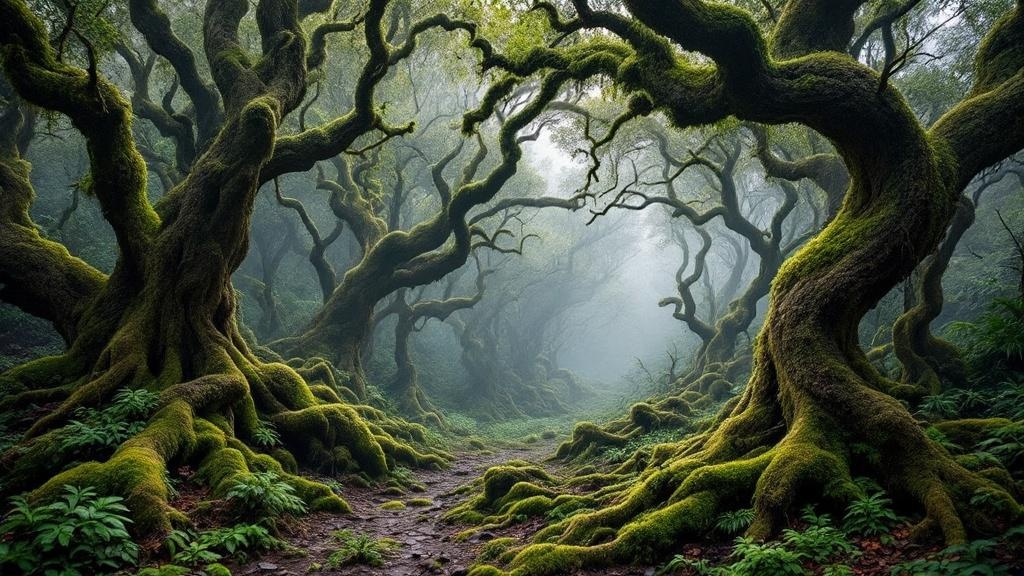
The island's crown jewel is Garajonay National Park, a UNESCO World Heritage Site protecting laurel forests—"laurisilva"—that once covered all Mediterranean Europe before the Ice Ages. Walking through these misty, moss-draped woods feels like stepping into a primeval world, with endemic species of plants and birds found nowhere else. The park covers much of the island's central plateau, accessible via excellent hiking trails.
Silbo Gomero—the whistling language developed to communicate across deep ravines—represents perhaps La Gomera's most unique cultural treasure. Recognized by UNESCO as Intangible Cultural Heritage, Silbo is now taught in schools and demonstrated at restaurants and cultural centers. Visitors can hear this haunting form of communication during demonstrations or, if lucky, between locals in remote villages.
🍜 Cuisine
Canarian cuisine reflects the islands' position at a crossroads of cultures—Spanish traditions enhanced with African, Latin American, and indigenous Guanche influences. Simple, hearty ingredients are transformed into distinctive dishes that reward adventurous palates while remaining accessible to cautious eaters.
Signature Canarian Drinks: Barraquito (layered coffee liqueur), Ron Miel honey rum, Mojo Canario sauces (rojo/verde), local Dorada and Tropical beers, fresh tropical fruit juices.
Canarian cuisine sits at a crossroads—Spanish traditions enhanced with African, Latin American, and Guanche influences.
Sancocho Canario
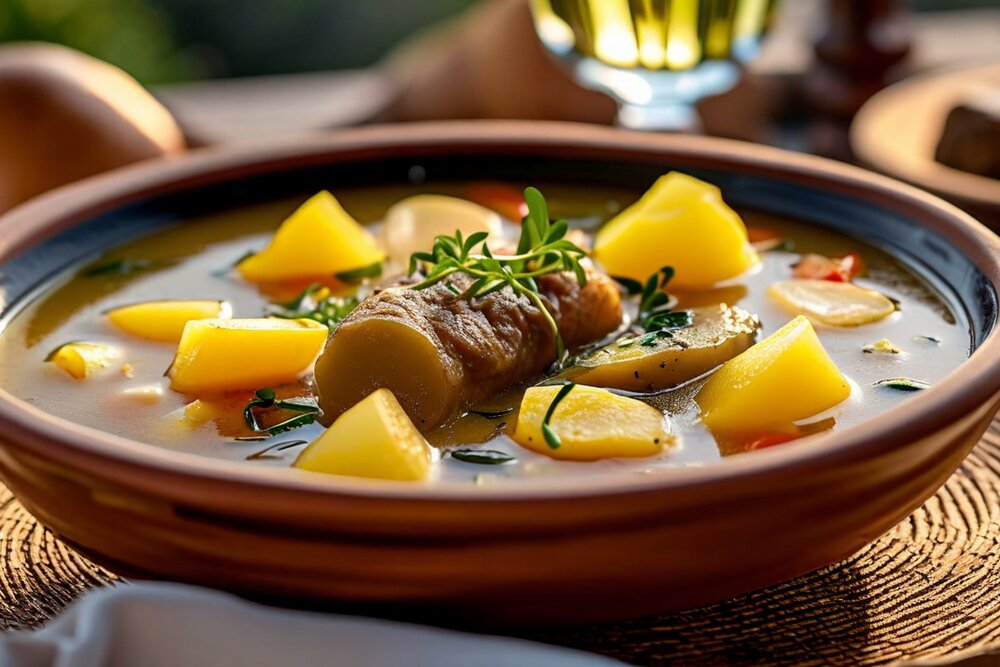
A beloved fish stew traditionally made with salted cherne (wreckfish), served with sweet potatoes, gofio, and mojo. This is the classic Friday meal in Canarian homes, especially during Lent. The combination of salty fish and sweet potatoes is unforgettable. This recipe serves two.
Ingredients: 400g salt cod or any firm white fish, 2 medium sweet potatoes (peeled, chunked), 2 medium potatoes (peeled, chunked), 1 onion (quartered), 4 cloves garlic (whole), 2 bay leaves, Mojo rojo or verde for serving, Gofio for serving (optional).
Preparation: If using salt cod, soak in cold water for 24-48 hours, changing water several times to remove excess salt. Place the desalted fish in a large pot with onion, garlic, and bay leaves. Cover with fresh cold water. Bring slowly to a gentle simmer—never boil, or the fish will toughen. Cook for 15 minutes. Add sweet potatoes and regular potatoes. Continue simmering for 20-25 minutes until potatoes are tender. Carefully remove fish and vegetables with a slotted spoon, arranging on a platter. Serve with mojo on the side. Traditionally, gofio is kneaded with some of the cooking broth into a ball and served alongside.
💡 The cooking broth is called "caldo de sancocho" and is prized for its flavor. Save it for soup or rice dishes.
Bienmesabe
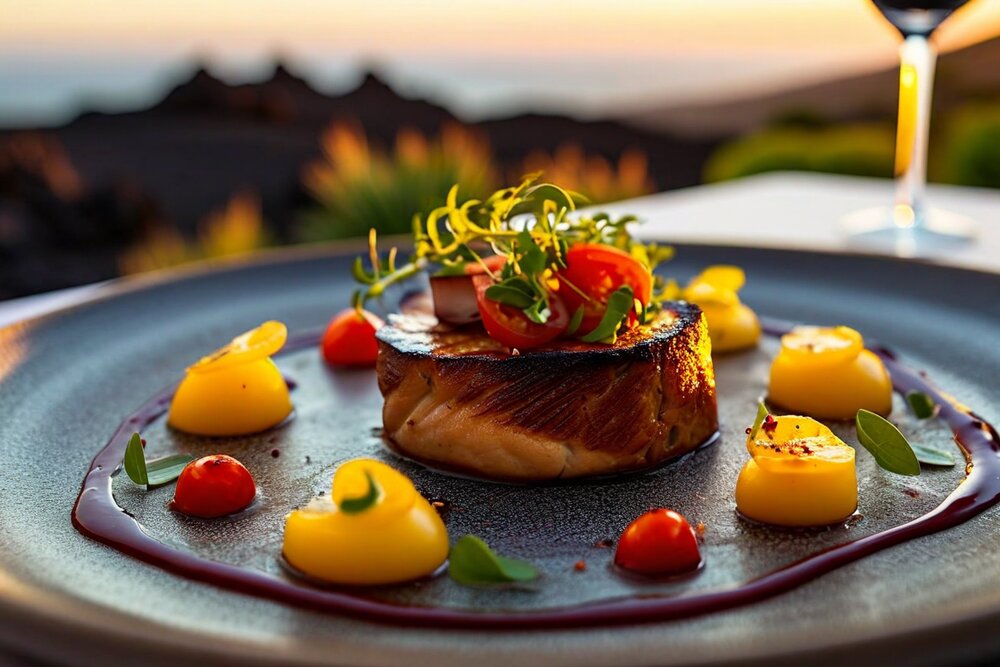
Meaning "tastes good to me," this almond cream dessert is pure Canarian indulgence. Ground almonds, egg yolks, sugar, and lemon create a rich, thick cream often served with ice cream or as a cake filling. It originated in the convents of the islands. This recipe serves two.
Ingredients: 150g ground almonds, 150g sugar, 100ml water, 3 egg yolks, Zest of 1 lemon, 5ml cinnamon, Vanilla ice cream for serving.
Preparation: Combine sugar and water in a saucepan. Heat, stirring, until sugar dissolves. Bring to a boil and simmer for 5 minutes to create a light syrup. Remove from heat and stir in the ground almonds and lemon zest. Mix well. Beat the egg yolks lightly. Temper them by adding a spoonful of the warm almond mixture while stirring. Add the tempered yolks to the pot. Return to very low heat, stirring constantly for 5-6 minutes until thickened. Do not boil or the eggs will curdle. Remove from heat and stir in cinnamon. Transfer to a container and refrigerate for at least 2 hours. Serve cold, spooned over vanilla ice cream or alongside sponge cake.
💡 Bienmesabe keeps refrigerated for up to a week and actually improves after a day or two as the flavors meld.
Signature Dishes: Papas arrugadas – small wrinkled potatoes boiled in heavily salted seawater, served with mojo sauces. Mojo rojo – red sauce with peppers, paprika and garlic. Mojo verde – green sauce with cilantro or parsley. Gofio – roasted grain flour used in soups, desserts, and as accompaniment. Sancocho canario – traditional salted fish stew. Ropa vieja – shredded beef with chickpeas.
Beverages: Malvasía wines – sweet wines from volcanic vineyards, praised by Shakespeare. Ron miel – honey rum liqueur, perfect after dinner. Barraquito – layered coffee with condensed milk, Licor 43, and cinnamon. The islands produce excellent wines, especially from Lanzarote's unique volcanic vineyards where vines grow in individual hollows protected from the wind.
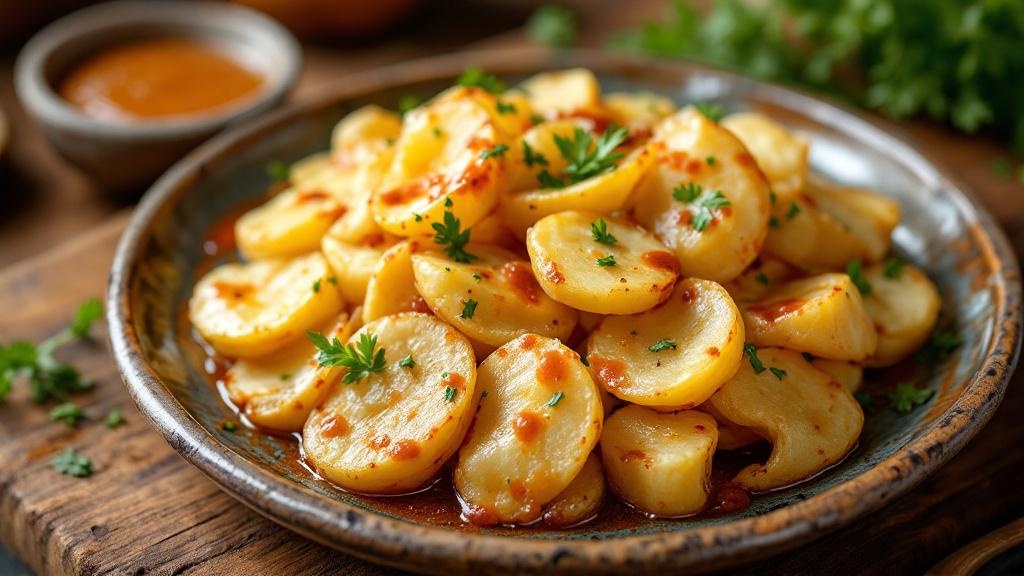
Papas Arrugadas con Mojo
The quintessential Canarian dish — wrinkled potatoes with vibrant red and green mojo sauces
🍷 Wine, Spirits & Drinking Culture
The Canary Islands have a genuine and fascinating wine tradition — volcanic viticulture that produces some of Spain's most distinctive wines. Lanzarote's La Geria region is one of the world's most extraordinary viticultural landscapes: each vine grows in a hand-dug hollow (hoya) in the black volcanic lapilli (picon), protected by a semicircular stone wall (zocos) from the constant trade winds. Tenerife has five DOs, with the highest vineyards in Spain (up to 1,800m on the slopes of Mount Teide). Malvasía Volcánica is the islands' most distinctive grape — producing aromatic, mineral whites. Listán Negro (reds) and Listán Blanco are other key varieties. The Malvasia de Lanzarote was one of Shakespeare's favourite wines ('Malmsey'). Producers like Bodega El Grifo (Lanzarote, 1775), Bodegas Monje (Tenerife), and Viñátigo are leading the quality revolution.
Canarian Wines — Key Varieties: Malvasía Volcánica — the flagship grape, aromatic mineral whites from Lanzarote's volcanic soil. Shakespeare praised it as 'Malmsey'. Listán Negro — the primary red grape, producing fresh fruity reds. Listán Blanco — crisp whites, grown across all islands. Negramoll, Marmajuelo, Baboso — indigenous varieties found only on the Canaries. Key DOs: Lanzarote, La Palma, Tacoronte-Acentejo (oldest DO, 1992), Valle de Güímar, Valle de la Orotava, Ycoden-Daute-Isora, Gran Canaria.
Drinks & Cocktails: Ron Miel — honey rum liqueur, the islands' signature spirit, perfect after dinner. Barraquito — layered coffee with condensed milk, liqueur and cinnamon, a Canarian icon. Cortado Canario — espresso with condensed milk. Tropical fruit juices — mango, papaya, passion fruit grown locally.
🏆 Kaufmann Wine Score — Canary Islands
Rated on four criteria: Aroma (/25), Taste (/30), Finish (/20), Value (/25) — Total /100
| Wine | 🔴 Aroma | 🟡 Taste | 🟢 Finish | 🔵 Value | Total |
|---|---|---|---|---|---|
| El Grifo Malvasía Volcánica Seco (Lanzarote) | 23 | 27 | 18 | 22 | 90 |
| Suertes del Marqués 7 Fuentes Listán Negro (Tenerife) | 22 | 28 | 19 | 23 | 92 |
| Envínate Táganan Tinto (Tenerife) | 23 | 28 | 19 | 21 | 91 |
| Bodegas Monje Listán Negro (Tenerife) | 20 | 25 | 17 | 22 | 84 |
| Viñátigo Marmajuelo (Tenerife) | 22 | 26 | 17 | 22 | 87 |
| Matías i Torres Malvasía Aromática (La Palma) | 23 | 27 | 18 | 21 | 89 |
95–100 Legendary · 90–94 Outstanding · 85–89 Very Good · 80–84 Good · 75–79 Average · <75 Below Average
🌡️ Climate & Best Time to Visit
The Canary Islands truly deserve their nickname "Islands of Eternal Spring"—average temperatures hover between 18°C and 24°C year-round, making any month perfect for visiting. This subtropical climate results from the islands' position in the Atlantic, cooled by trade winds and the Canary Current while warmed by African proximity.
Each island features multiple microclimates. Southern coasts are generally sunnier and drier, while northern areas receive more rain and cloud cover (creating the lush landscapes of La Palma and La Gomera). The eastern islands (Lanzarote, Fuerteventura) are more arid, while western islands are greener. Higher elevations, especially on Tenerife and La Palma, can see snow in winter while beaches below remain warm.
Best Time: Year-round destination. Spring (April-May) and autumn (September-October) offer perfect weather with fewer crowds. Summer brings more tourists but still pleasant temperatures. Winter provides escape from European cold—Christmas and Carnival seasons are particularly festive. Water temperatures remain swimmable year-round (19-24°C).
✈️ How to Get There
By Air: All seven major islands have airports. Tenerife South (TFS) and Gran Canaria (LPA) serve as main international hubs with direct flights from across Europe and connections from the Americas. Tenerife North (TFN) handles inter-island and domestic Spanish flights. Budget airlines like Ryanair, easyJet, and Vueling offer affordable European connections.
Inter-Island Travel: Binter Canarias operates frequent flights between islands (20-45 minutes, affordable prices). Fred Olsen Express and Naviera Armas ferries connect major islands with regular crossings. The Tenerife-La Gomera ferry takes just 50 minutes and runs multiple times daily.
Getting Around: Car rental is recommended for island exploration—major companies operate at all airports with competitive rates. Public buses (guaguas) serve main routes on larger islands. Trams connect Santa Cruz de Tenerife with La Laguna. Taxis are metered and reasonable.
📋 Practical Information
Entry Requirements: EU citizens need only ID. US, Canadian, UK and Australian citizens need only a valid passport for stays of up to 90 days in any 180 — no visa required. Since 10 April 2026 the EU Entry/Exit System (EES) has been fully operational at every Spanish border crossing, including Tenerife South, Gran Canaria and Lanzarote airports: on your first arrival your fingerprints and facial image are recorded and passports are no longer stamped. EES is free and is not a travel authorisation. ETIAS is not yet in force — it is expected to open in late 2026 and to become a boarding requirement only from April 2027. Tax status is often misreported: the Canaries are inside the EU customs territory, but they sit outside the EU VAT and excise areas, so mainland Spanish VAT does not apply and the local IGIC (general rate 7%) is charged instead — which is why alcohol, tobacco, perfume and electronics are noticeably cheaper here, subject to allowances when you fly home.
Health & Safety: No vaccinations required. Tap water is safe but bottled water is common. EU citizens should bring EHIC card. Excellent healthcare facilities on main islands. Very low crime rates—normal precautions suffice. Strong sun requires high SPF protection year-round — the islands sit on the latitude of the Sahara. Since January 2026 the summit routes of Teide National Park carry an eco-tax: fees run from about €3 to €25 depending on route, day and residency, only 300 climbers a day are admitted across three time slots, and the permit must be booked in advance. Tenerife residents go free.
Communications: Spanish is the official language; English widely spoken in tourist areas. EU roaming applies for European phones. WiFi widely available. Electrical outlets are European standard (Type C/F, 230V).
⚠️ Travel Advisory
U.S. State Department: Level 2 — Exercise Increased Caution (Spain)
The Canary Islands are covered by the advisory for Spain, which sits at Level 2 because of terrorism and occasional civil unrest — the same level as most of Western Europe. On 1 August 2026 the Department raised the North African enclave of Ceuta to Level 3 (Reconsider Travel) after a mass border crossing from Morocco; that carve-out lies roughly 1,300 km from the archipelago and does not apply to the Canaries. No part of the islands carries a heightened warning.
Verify before you fly at travel.state.gov; UK travellers should check FCDO advice for Spain.
In practice the risks here are natural rather than criminal. The Atlantic is the single biggest danger. The archipelago regularly ranks at or near the top of Spain’s drowning statistics: swell arrives with no continental shelf to slow it, rip currents run hard off the north coasts, and many of the most photogenic beaches have no lifeguard. Obey the flag system — red means the beach is closed, not that it is challenging — and treat unmarked coves as unsafe for swimming.
Volcanic and seismic activity is monitored continuously by IGN and INVOLCAN. La Palma’s Tajogaite eruption of 2021 destroyed roughly 1,300 buildings and closed part of the Aridane valley for years; the traffic-light alert system is public and any change is announced well ahead of any evacuation. Visitors are never permitted near an active vent.
Calima — the Saharan dust haze that blows in on an easterly — can cut visibility, ground inter-island flights for a day or two and push temperatures 10 °C above normal. It is a nuisance rather than a hazard, but travellers with asthma should carry medication. Finally, the anti-overtourism demonstrations organised by Canarias Tiene Un Límite have been large and peaceful; they disrupt traffic in Santa Cruz, Las Palmas and Arrecife on announced dates rather than posing any threat to visitors. Petty theft in the southern resort strips of Tenerife and Gran Canaria is the only common crime.
💰 Cost of Living
The Canary Islands offer excellent value compared to mainland Spain and most Western European destinations. Budget travelers can manage on €50-70/day including basic accommodation, local restaurants, and public transport. Mid-range travelers spending €100-150/day enjoy comfortable hotels, car rental, and quality dining.
Typical Costs: Coffee €1.50-2.50 • Beer €2-3 • Lunch menu del día €8-12 • Dinner for two €40-60 • Budget hotel €40-60 • Mid-range hotel €70-120 • Car rental €25-40/day • Bus ticket €1.50-3 • Museum entry €5-10 • Teide cable car €40 round trip • Teide summit-trail eco-tax €3–€25 (from January 2026, advance booking required).
Money-Saving Tips: The "menú del día" (daily set menu) offers excellent value at lunch. Local bars serve generous free tapas with drinks. Supermarkets stock quality local products. Inter-island flights are often cheaper than ferries if booked ahead.
🏨 Accommodation
The Canary Islands offer accommodation for every budget and style—from international resort chains to family-run rural houses (casas rurales). The southern coasts of Tenerife and Gran Canaria concentrate package tourism with large resort hotels, while smaller islands and northern areas offer more authentic local experiences.
New rules since December 2025: Law 6/2025 on the sustainable regulation of the tourist use of housing took effect on 13 December 2025 in response to the overtourism protests. It freezes the issuing of new vivienda vacacional (VV) holiday-rental licences for five years, hands island and municipal councils far greater control over where short lets are permitted, and puts existing licence-holders onto a transitional regime rather than closing them down. Practical effect for visitors: legally listed apartments are becoming scarcer and pricier in the high-demand zones of Tenerife and Gran Canaria, so book early and check that a listing quotes a VV registration number.
Options: Budget hostels and guesthouses from €20-40/night • Mid-range hotels €60-100 • Luxury resorts €150+ • Casas rurales (rural houses) offer unique stays in renovated traditional properties • Apartment rentals provide kitchen facilities and local neighborhood experience • Paradores (historic government-run hotels) on several islands.
Recommendations: Book ahead for December-February peak season and Carnival period. Consider multiple islands—easy inter-island travel makes island-hopping practical. Northern areas and smaller islands offer better value and more authentic atmosphere than southern resort zones.
🎉 Festivals & Events
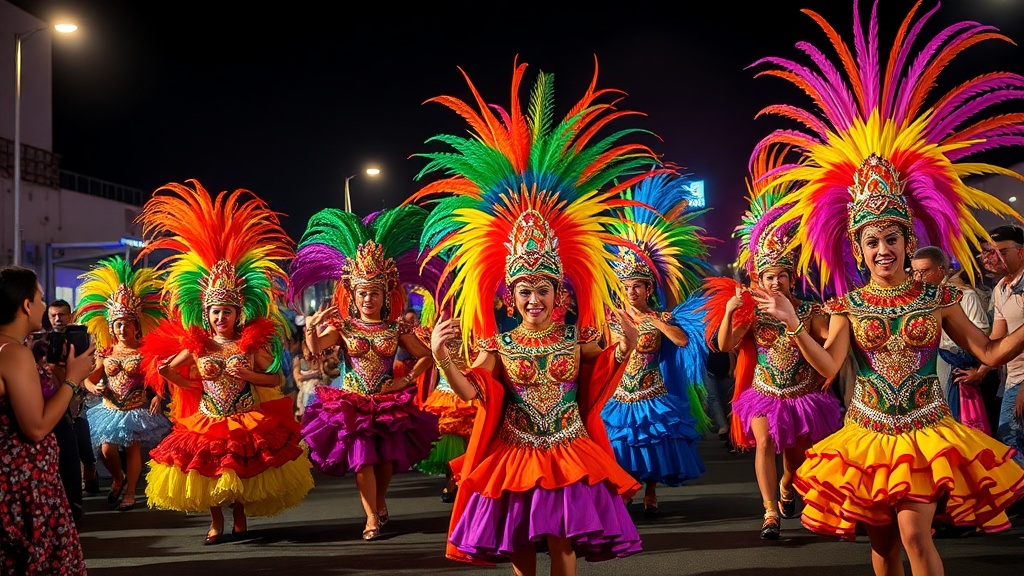
Carnival (February-March): Santa Cruz de Tenerife hosts one of the world's largest carnivals—rivaling Rio de Janeiro. Two weeks of parades, costumes, music, and celebration culminate in the spectacular Queen election and the "Burial of the Sardine." Las Palmas follows with its own equally vibrant celebration.
Corpus Christi (May-June): La Orotava and La Laguna create elaborate flower carpets and colored sand tapestries—incredible temporary artworks destroyed as processions pass. A unique Canarian tradition dating back centuries.
Other Celebrations: Romería pilgrimages throughout the year honor local patron saints with traditional dress and decorated carts • Bajada de la Virgen (La Palma, every 5 years) • Festival of the Branches (Tenerife, September) • Wine harvest festivals on various islands • San Juan bonfires (June 23) on beaches throughout the archipelago.
🏛️ UNESCO World Heritage Sites
The Canary Islands boast four UNESCO World Heritage Sites and multiple Biosphere Reserves, recognizing their exceptional natural and cultural value. These designations protect unique ecosystems and historic sites while promoting sustainable tourism.
World Heritage Sites:
- Teide National Park (Tenerife, 2007) – Spain's highest peak and third-tallest volcanic structure globally
- Garajonay National Park (La Gomera, 1986) – Ancient laurel forests dating to the Tertiary period
- San Cristóbal de La Laguna (Tenerife, 1999) – Colonial town that served as model for Latin American cities
- Risco Caído and Sacred Mountains (Gran Canaria, 2019) – Pre-Hispanic archaeological site and cultural landscape
Spain has 50 World Heritage properties in total, four of them here — a striking share for an archipelago of 7,447 km². Note that Silbo Gomero, La Gomera's whistled language, is inscribed on UNESCO's Intangible Cultural Heritage list, which is a separate register from the World Heritage List. Access to the Teide property tightened in January 2026 with the introduction of an eco-tax and a 300-per-day cap on the summit routes.
Biosphere Reserves: The entire island of Lanzarote plus major areas on La Palma, El Hierro, Fuerteventura, and Gran Canaria hold UNESCO Biosphere Reserve status.
🎒 Packing Tips
Essential Items: High SPF sunscreen (strong year-round sun) • Comfortable walking shoes for volcanic terrain • Layers for variable microclimates • Swimwear • Light rain jacket (especially for northern areas and winter)
For Hikers: Sturdy hiking boots • Poles for volcanic terrain • Sufficient water (limited facilities on trails) • Warm layers for high-altitude Teide visits • Hat and sun protection
Considerations: Casual dress prevails everywhere • Smart casual sufficient for finest restaurants • Bring adapter for European outlets (Type C/F) • Snorkeling gear if you have preferred equipment • Binoculars for whale watching and stargazing
📚 Resources
Official Tourism: hellocanaryislands.com – Comprehensive official tourism portal • spain.info/canary-islands – Spanish national tourism board
Practical: Fred Olsen Express (fredolsen.es) & Naviera Armas (navieraarmas.com) – Inter-island ferries • Binter Canarias (bintercanarias.com) – Inter-island flights • TITSA (titsa.com) – Tenerife buses • Global (guaguas.com) – Gran Canaria buses
Weather & Conditions: AEMET (aemet.es) – Official Spanish weather service • Windguru – Wind/surf conditions • IAC Webcams – Teide Observatory sky conditions
📖 Recommended Reading
History & Culture: "The Canary Islands: A Cultural History" by Andrew Gravette • "Guanche Language: The Unknown History" by Ignacio Reyes
Travel Guides: Lonely Planet Canary Islands • Rough Guide to the Canary Islands • DK Eyewitness Canary Islands
Nature & Hiking: "Walking in Tenerife" by Paddy Dillon • "Walking in La Palma" by Paddy Dillon • "Plants and Flowers of the Canary Islands" by David & Zoë Bramwell
🎬 Video Resources
🤔 Fascinating Facts
Third Tallest Volcano: Mount Teide is the world's third tallest volcanic structure when measured from its base on the ocean floor (7,500 meters).
Backwards Naming: Canary birds are named after the islands, not vice versa! The islands' name comes from Latin "Canariae Insulae" (Islands of Dogs).
World's Second Carnival: Santa Cruz de Tenerife's Carnival is officially recognized as the world's second largest after Rio de Janeiro.
Whistling Language: La Gomera's Silbo Gomero is a whistling language that can be understood from 5km away—UNESCO Intangible Cultural Heritage.
Columbus Connection: Christopher Columbus stopped in La Gomera in 1492 to resupply before his voyage that discovered America.
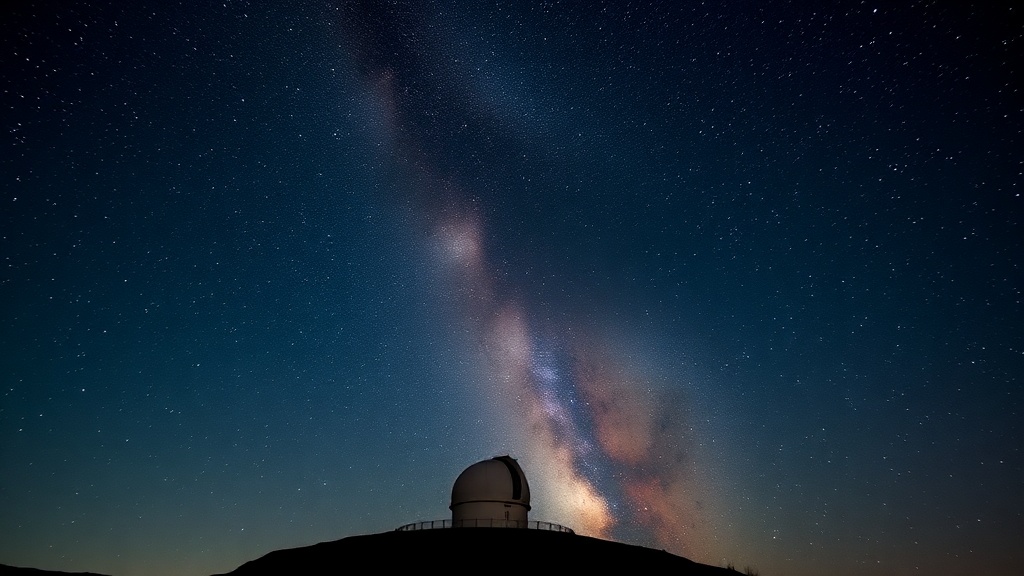
Stargazing Paradise: The Canary Islands host two world-class observatories—some of Earth's best conditions for astronomical observation.
👥 Notable People
César Manrique (1919-1992) – Artist and architect who shaped Lanzarote's unique aesthetic, integrating art with nature in groundbreaking ways that influenced global sustainable tourism.
Benito Pérez Galdós (1843-1920) – Born in Las Palmas, Spain's most important novelist after Cervantes, author of "Fortunata y Jacinta" and other masterpieces.
Pedro González "Petrus Gonsalvus" (1537-1618) – Born in Tenerife with hypertrichosis, he became famous at European courts and likely inspired the "Beauty and the Beast" tale.
⚽ Sports
Football: UD Las Palmas (Gran Canaria) and CD Tenerife are the archipelago's big clubs, and the derbi canario between them is one of the fiercest inter-island rivalries in Spain — though the two have not met in the top flight for years. Both fell in 2025: Las Palmas were relegated from LaLiga and Tenerife dropped out of the Segunda División. Las Palmas finished fifth in the 2025–26 Segunda División and reached the June 2026 promotion play-offs, and begin 2026–27 back in the second tier, LaLiga Hypermotion. Neither island currently has a LaLiga side, which for a region of 2.3 million people is a sore point.
Traditional Sports: Lucha Canaria (Canarian wrestling) – Ancient sport where competitors try to make opponents touch the ground. Juego del palo – Stick fighting. Salto del pastor – Pole vaulting derived from shepherd techniques.
Water Sports: World-class windsurfing and kitesurfing (especially Fuerteventura), surfing, diving, and sailing. The islands host international competitions in various disciplines.
📺 Media
Television: Televisión Canaria (RTVC) provides regional programming. All major Spanish national channels available.
Press: El Día and Diario de Avisos (Tenerife), La Provincia and Canarias 7 (Gran Canaria), plus local publications on each island.
In Film: The dramatic landscapes have attracted filmmakers worldwide. Productions filmed here include "Clash of the Titans" (2010), "Fast & Furious 6" (2013), "Rambo: Last Blood" (2019), and numerous others utilizing the volcanic terrain.
📸 Photo Gallery
Share your Canary Islands photos! Send to photos@kaufmann.wtf to be featured.
✍️ Author's Note
The Canary Islands surprised me with their diversity—eight islands, each a world unto itself. I expected beaches and resorts; I found ancient forests unchanged since the dinosaur age, volcanic landscapes that could be Mars, and a whistling language that carries across mountain valleys. I expected Spanish culture; I found something uniquely Canarian—warmer, slower, shaped by centuries at the crossroads of continents.
Whether you seek adventure in the world's third-tallest volcano, relaxation on endless beaches, or discovery in primeval forests, these Islands of Eternal Spring offer it all—with year-round perfect weather and that uniquely Canarian hospitality that makes every visitor feel immediately at home.
¡Bienvenidos a las Islas Canarias!
—Radim Kaufmann, 2026
Support This Project 🌍
This World Travel Factbook is a labor of love – free to use for all travelers. If you find it helpful, consider supporting its continued development.
