🍽️ Cuisine
Australian cuisine has shed its old reputation as British food with better weather. Waves of immigration — Italian and Greek from the 1950s, Vietnamese and Chinese from the 1970s, and more recent arrivals from across Asia, the Middle East, and Africa — combined with growing recognition of Aboriginal "bush tucker" ingredients, have made Australian cooking one of the world's most genuinely fusion-driven food cultures, built on outstanding local produce and seafood.
Beyond the recipes below: Vegemite, the salty yeast-extract spread, remains a genuine national touchstone, usually thin on buttered toast (never thick — that's the beginner's mistake every tourist makes). Fish and chips by the beach, a proper flat white, and Chiko Rolls (a distinctly Australian deep-fried snack) round out the everyday eating landscape, alongside native ingredients — lemon myrtle, wattleseed, finger lime, saltbush — increasingly showing up on serious restaurant menus rather than treated as novelty.
Meat Pie
The National Snack
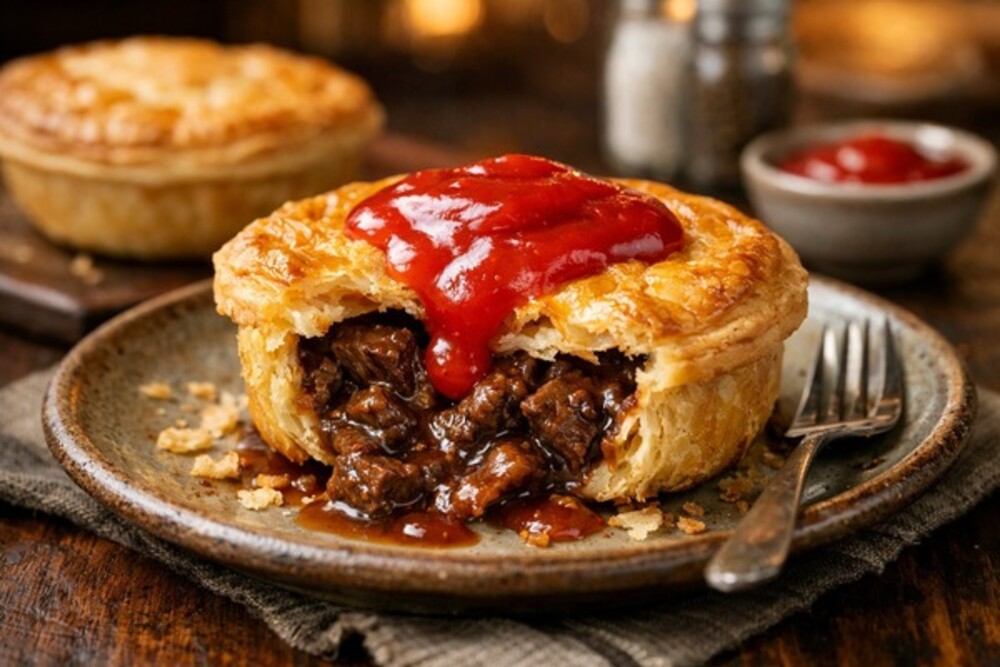
Flaky pastry filled with rich minced beef gravy — sold at every footy match, servo, and bakery in the country, always eaten with tomato sauce ("dead horse" in old slang).
Ingredients: 500g minced beef · 1 onion, diced · 2 tbsp flour · 250ml beef stock · 2 tbsp Worcestershire sauce · shortcrust pastry (base) · puff pastry (lid) · 1 egg, beaten
Preparation: brown the mince with onion, stir in flour, then gradually add stock and Worcestershire sauce until thick and rich. Cool completely. Line pie tins with shortcrust, fill with the mince mixture, top with puff pastry, brush with egg, and bake at 200°C (400°F) for 25–30 minutes until golden.
💡 The filling must be fully cooled before assembling, or the pastry will turn soggy in the oven.
Pavlova
Crisp Meringue, Soft Center
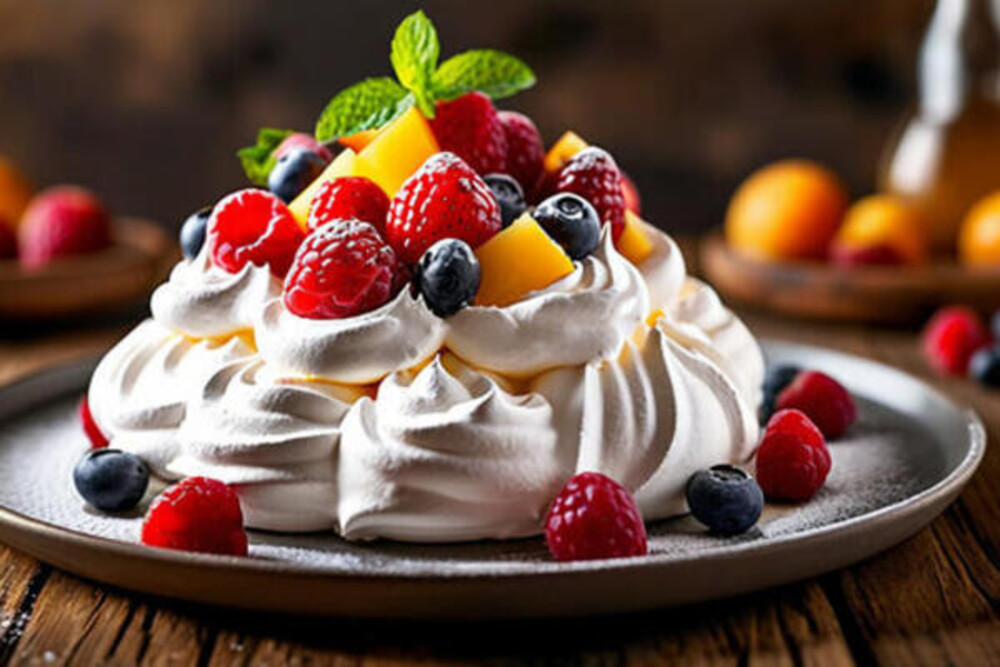
A meringue dessert with a crisp shell and marshmallow-soft center, topped with whipped cream and fresh fruit — the subject of a long-running, good-natured dispute with New Zealand over who invented it.
Ingredients: 4 egg whites · 240g caster sugar · 1 tsp white vinegar · 1 tsp cornflour · 300ml cream, whipped · passionfruit, strawberries, kiwifruit to top
Preparation: whisk egg whites to stiff peaks, then add sugar gradually while beating until glossy. Fold in vinegar and cornflour. Shape into a disc on baking paper and bake at 120°C (250°F) for about 90 minutes, then cool completely in the switched-off oven. Top with whipped cream and fruit just before serving.
💡 Never open the oven door while it bakes — a temperature shock will crack the shell.
Lamingtons
Chocolate & Coconut Sponge
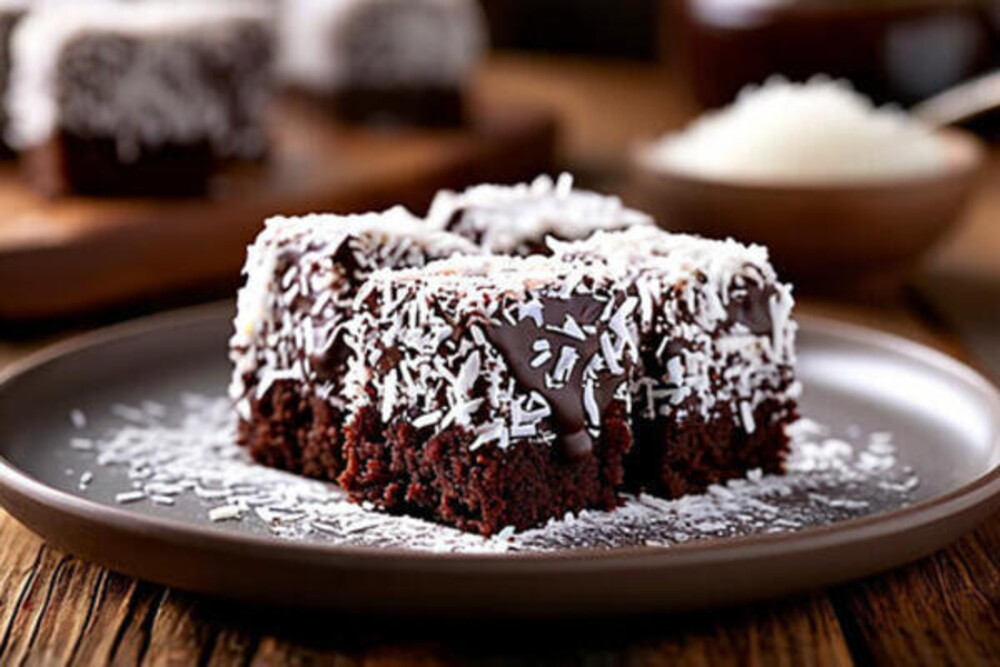
Squares of sponge cake dipped in chocolate icing and rolled in desiccated coconut — a school fête and CWA (Country Women's Association) bake-sale staple nationwide.
Ingredients: 1 plain sponge cake, cubed · 300g icing sugar · 30g cocoa powder · 125ml milk · 30g butter, melted · desiccated coconut for coating
Preparation: whisk icing sugar, cocoa, milk, and melted butter into a smooth, pourable chocolate icing. Dip each sponge cube into the icing using a fork, letting the excess drip off, then roll immediately in coconut. Set on a wire rack until the icing firms up.
💡 A day-old, slightly stale sponge holds together far better during dipping than a fresh one.
Barramundi with Lemon Myrtle
Modern Native-Ingredient Cooking
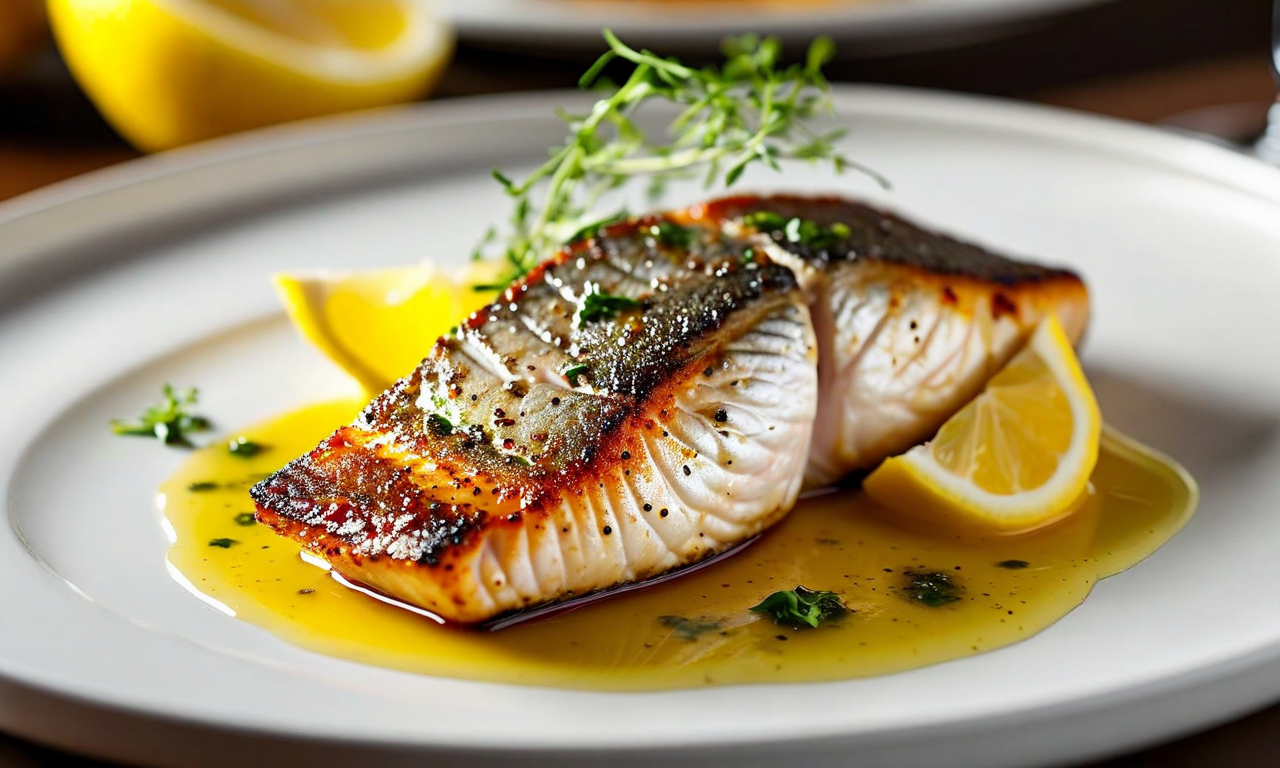
Barramundi, Australia's favorite native fish, pan-seared and finished with lemon myrtle — an Australian rainforest herb with an intense citrus aroma that's become a signature of the country's modern native-ingredient cooking movement.
Ingredients: 2 barramundi fillets, skin on · 1 tsp ground lemon myrtle (or substitute lemon zest) · 2 tbsp olive oil · butter · salt, pepper · lemon wedge
Preparation: pat the fillets dry and score the skin lightly. Season with salt, pepper, and lemon myrtle. Sear skin-side down in a hot pan with oil for 4 minutes until crisp, flip, add a knob of butter, and baste for 2 more minutes. Serve with a lemon wedge.
💡 Lemon myrtle is significantly more intense than citrus zest — start with less than you think you need.
