01Overview
Senegal's geography opens in several directions: Dakar faces the Atlantic, Saint-Louis sits at the meeting of river and sea, the Saloum Delta follows the rhythms of mangroves and channels, and Casamance has its own greener landscapes and histories. Teranga, often translated as hospitality, is a useful invitation to pay attention to social relationships, not a promise of a uniform experience. A journey becomes richer when it includes time for conversation and everyday places.
02History
Senegal's past reaches through the histories of regional kingdoms and trading networks, the expansion of Islam, Atlantic commerce, and French colonial rule. Gorée and Saint-Louis preserve different aspects of those encounters and inequalities. Independence came in 1960. Historical sites should be read critically: architecture, memorial narratives, and the lives of residents are related but not identical sources. The story of the country is larger than the colonial facades most frequently photographed.
03Places & landscapes
Dakar offers museums, markets, contemporary art, and a lively ocean-facing urban landscape. Gorée is both a place of remembrance and an inhabited island. Saint-Louis rewards walking and attention to its island setting. The Saloum Delta is a cultural and natural landscape of channels, islands, and long human occupation. Other routes may include bird habitats or southeastern cultural landscapes, but the best choice depends on season, travel time, and current local access.
04People & culture
Wolof is widely spoken, while French is the official language and many other national languages remain central to community life. Islam is prominent, with Sufi traditions playing an important role, alongside Christian and other practices. Dress and behavior should respect the setting, especially around religious sites. Greetings and shared tea can take time; accepting the pace of an encounter often matters more than completing another stop on a schedule.
05Planning your visit
For an initial trip, choose either a northern extension from Dakar toward Saint-Louis or a route toward the Saloum Delta rather than trying to cover every region. The rainy season changes roads, vegetation, and travel times. Casamance requires its own logistical planning because The Gambia interrupts the most direct land connection. Verify the actual route and any border requirements. Ask locally about swimming conditions: powerful surf and currents can make attractive beaches unsuitable.
06
Senegalese cuisine is the crown jewel of West African cooking, a sophisticated tradition built on fresh fish, peanuts, and the celebrated jollof rice that inspires fierce regional pride. Teranga—Wolof for hospitality—defines the Senegalese table, where meals are served on communal platters and eating with the right hand is customary. The national dish, thiéboudienne, combines fish with vegetables and broken rice in a one-pot masterpiece. From the grilled lamb of Dakar's street vendors to the sweet bissap juice served at every celebration, Senegalese food offers bold, generous flavors.
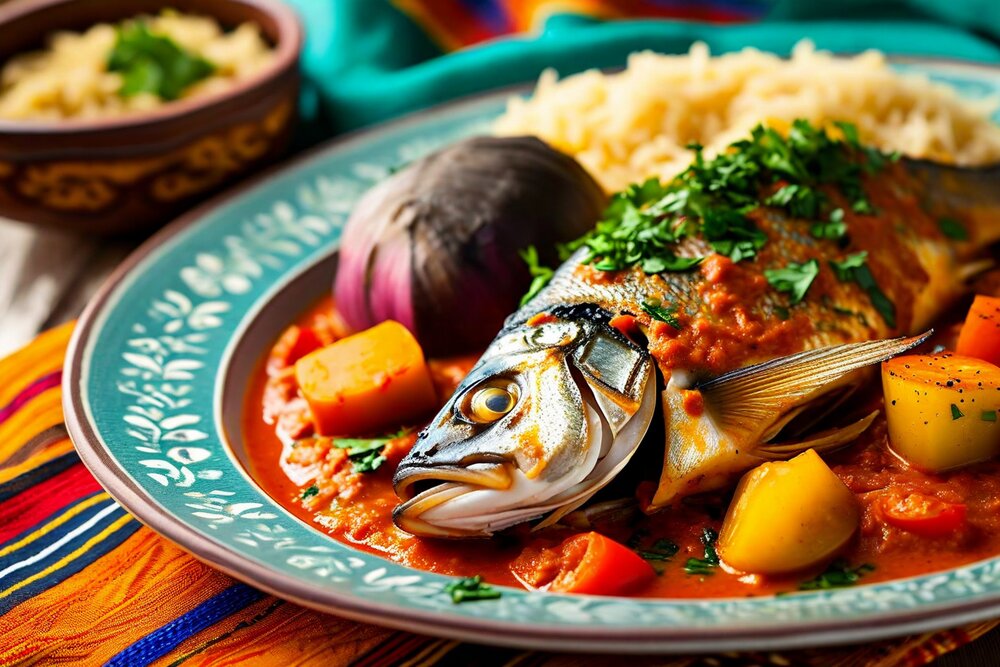
Thiéboudienne
Senegal's magnificent national dish—fish and vegetables cooked with tomato paste and stuffed fish, all served over broken rice that has absorbed every drop of flavor. The rice is cooked directly in the fish broth, making it the most flavorful rice dish you'll ever taste.
Ingredients: 300g firm white fish (sea bass or grouper, in chunks), 200g broken rice (or regular rice), 60ml tomato paste, 1 onion (quartered), 1 carrot (chunked), 1 small cabbage (quartered), 1 eggplant (chunked), 100g cassava (optional, chunked), 30ml vegetable oil, 3 cloves garlic (minced), 1 Scotch bonnet pepper, 15ml tamarind paste, Fish stock cube, Salt and pepper, 800ml water.
Preparation: Make a stuffing paste: blend garlic, parsley, and a little oil. Cut slits in the fish and stuff with the paste. Heat oil in a large pot. Brown the stuffed fish on both sides. Remove and set aside. Add tomato paste to the pot and fry until darkened, about 5 minutes. Add onion and cook until softened. Pour in water and bring to a boil. Add the firmer vegetables (cassava, carrot) first. After 10 minutes, add eggplant and cabbage. Return fish to the pot. Add tamarind, stock cube, and whole Scotch bonnet (don't burst it). Simmer 15 minutes. Remove all fish and vegetables, keeping them warm. You need about 500ml liquid for the rice. Add rice to the broth. Cover and cook on low for 25 minutes until rice absorbs all liquid. Mound rice on a platter, arrange fish and vegetables on top. Serve family-style.
💡 The tomato paste must fry until it darkens—this step creates the dish's characteristic deep red color and complex flavor.
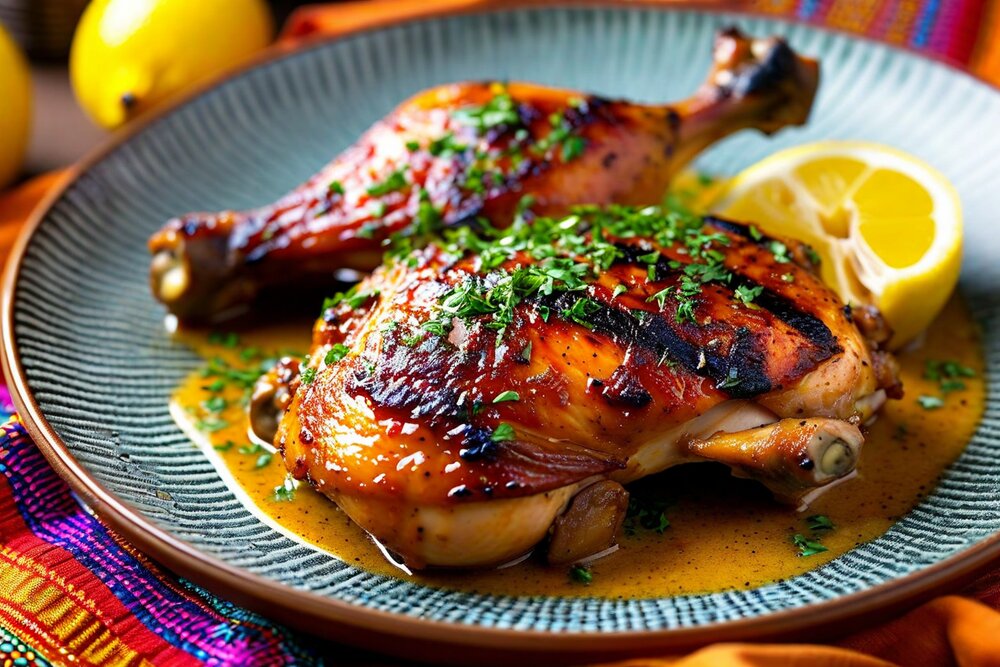
Yassa Poulet
Grilled chicken smothered in caramelized onions and mustard-lemon sauce. Yassa originated with the Casamance people of southern Senegal and has become beloved across West Africa. The tangy, onion-heavy sauce is addictive.
Ingredients: 4 chicken thighs (bone-in), 4 large onions (thinly sliced), 60ml lemon juice, 30ml Dijon mustard, 60ml vegetable oil, 3 cloves garlic (minced), 1 Scotch bonnet pepper (whole), 2 bay leaves, 15ml white vinegar, 200ml chicken stock, Salt and pepper, Pitted green olives (optional).
Preparation: Marinate chicken in half the onions, lemon juice, 30ml oil, garlic, salt, and pepper for at least 2 hours, preferably overnight. Remove chicken from marinade. Reserve onions. Grill or pan-fry chicken until golden and cooked through. Set aside. Heat remaining oil in a large pan. Add all onions (marinated and fresh) and cook over medium-low heat for 30 minutes until deeply caramelized. Add mustard, vinegar, stock, bay leaves, and whole Scotch bonnet. Simmer for 15 minutes. Nestle the grilled chicken into the onion sauce. Cover and simmer for 10 more minutes. Add olives if using. Taste and adjust lemon juice and salt. Serve over white rice with plenty of the onion sauce.
💡 Don't rush the onions—the slow caramelization is essential. They should be golden and jammy, not just softened.
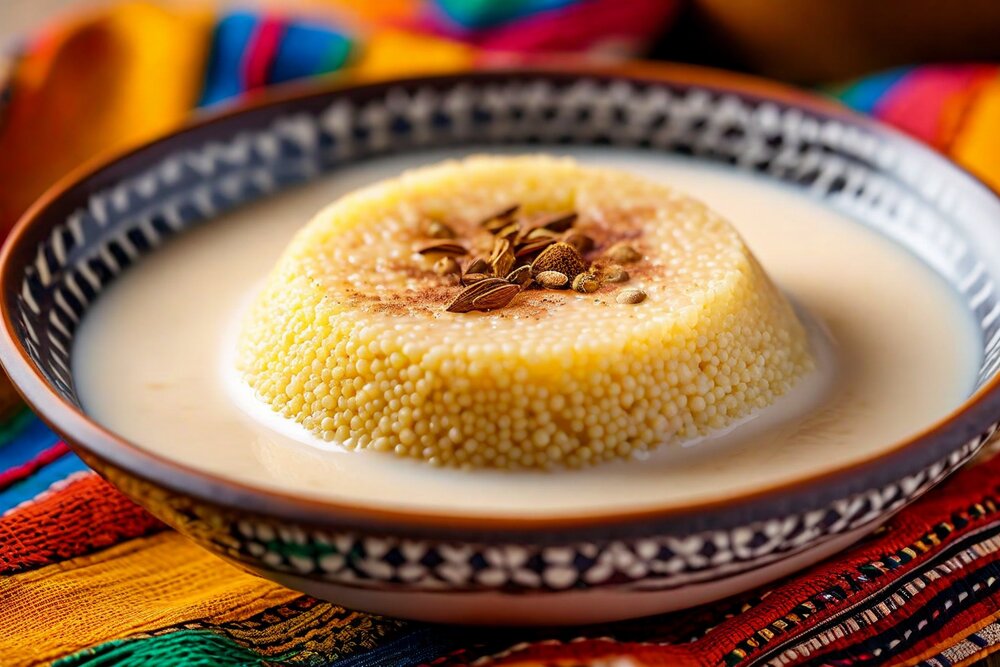
Thiakry
A sweet millet couscous dessert mixed with thick fermented milk, vanilla, and nutmeg. Thiakry is served cold as a refreshing end to spicy meals or enjoyed as a snack. The chewy millet grains contrast beautifully with the creamy sauce.
Ingredients: 150g millet couscous (thiéré), 200ml evaporated milk, 100ml sweetened condensed milk, 100g plain yogurt, 60g sugar (adjust to taste), 5ml vanilla extract, 2ml nutmeg, Raisins for garnish (optional).
Preparation: Steam the millet couscous according to package directions, or sprinkle with water and steam for 20 minutes until tender but chewy. Spread couscous on a tray to cool completely. Break up any clumps with your fingers. Mix evaporated milk, condensed milk, yogurt, sugar, vanilla, and nutmeg until smooth. Fold the cooled millet into the milk mixture until evenly coated. Refrigerate for at least 1 hour to let flavors meld and mixture thicken. Serve cold in bowls, garnished with raisins.
💡 Traditional thiakry uses fermented milk (lait caillé). For authenticity, mix equal parts yogurt and buttermilk instead of plain yogurt.
07Drinks & local traditions
Attaya is a social tea ritual in which preparation and conversation matter as much as the drink. Bissap, made from hibiscus, and bouye, made from baobab fruit, are useful introductions to nonalcoholic flavors. Availability of alcohol varies by setting; hospitality should not be equated with drinking.
09Sources & further reading
Safety advice checked September 17, 2026. Entry rules and local conditions may change; use the current official pages for your passport and route.