🌍 Kaufmann World Travel Factbook
East Africa · The Great Lakes

Burundi

Heart of Africa — the deep-blue shores of Lake Tanganyika, a source of the Nile, and the thundering ritual of the royal drummers.

Burundi
Cigar & Cocktail Magazine
Cigar & Cocktail
New issue · Q1 2026
Read →
Book
Hugh the Little Robot (Soon)
By Radim Kaufmann
Learn more →
More books by Radim Kaufmann
More books
Fiction · history · science
radimkaufmann.com →

🌍 Burundi at a Glance

🏛️
Gitega
Capital
👥
12.9M
Population
📐
27,834 km²
Area
💰
BIF
Franc
🗣️
Kirundi, French
Language
🌡️
Equatorial
Climate
01

🌍 Overview

Burundi is a landlocked country of roughly 14.7 million people (2026 estimate) packed into just 27,834 km² of East African highland — one of the most densely populated states on the continent. It sits where the Great Rift Valley's western arm meets the Congo–Nile watershed, bordered by Rwanda to the north, Tanzania to the east and south, and the Democratic Republic of the Congo across Lake Tanganyika to the west.

Gitega has been the political capital since 2019; Bujumbura, on the lakeshore, remains the economic capital and largest city. The currency is the Burundian franc (BIF), trading around 2,990 BIF to the US dollar in August 2026. Kirundi, French, English and Swahili all hold official status, though Kirundi is spoken by essentially everyone — a rare linguistic unity in Africa.

Political capitalGitega (since 2019)
Economic capitalBujumbura
Population~14.7 million (2026 est.)
Area27,834 km²
LanguagesKirundi, French, English, Swahili
CurrencyBurundian franc (BIF) — ~2,990/USD
Highest pointMount Heha, 2,684 m
Independence1 July 1962 (from Belgian trusteeship)
Time zoneCAT (UTC+2), no DST
Calling code / TLD+257 / .bi
02

📜 History

Kingdom Era: Burundi was a centralized monarchy for centuries, ruled by the Mwami (king) and organized through a complex social structure. The kingdom maintained its independence and cultural identity throughout the pre-colonial period, with the Royal Drummers serving as symbols of royal power.

Colonial Period: Germany claimed Burundi as part of German East Africa in the 1890s. After WWI, Belgium administered the territory under a League of Nations mandate, governing through the existing monarchical structure but deepening ethnic divisions that would haunt the nation's future.

Independence & Conflict: Burundi gained independence in 1962 as a constitutional monarchy. Political instability, ethnic tensions between Hutu and Tutsi communities, and cycles of violence marked the following decades, culminating in a devastating civil war (1993–2005).

Modern Era: The Arusha Peace Agreement of 2000 laid groundwork for reconciliation. While challenges persist, Burundi has made strides toward stability. The capital was officially moved from Bujumbura to the more centrally located Gitega in 2019.

03

🗺️ Geography

Burundi sits on the great East African plateau at an average elevation of 1,700 meters. The western escarpment drops dramatically to Lake Tanganyika at 773 meters, while the highest point, Mount Heha (2,670m), offers panoramic views across the Rift Valley.

The landscape is characterized by rolling hills — Burundi is known as 'the land of a thousand hills.' Kibira National Park in the northwest protects montane rainforest, while Rusizi National Park along the lake hosts hippos, crocodiles, and diverse birdlife. The Ruvubu River, Burundi's longest, winds through the eastern regions.

03b

🗺️ Map

04

🎭 People & Culture

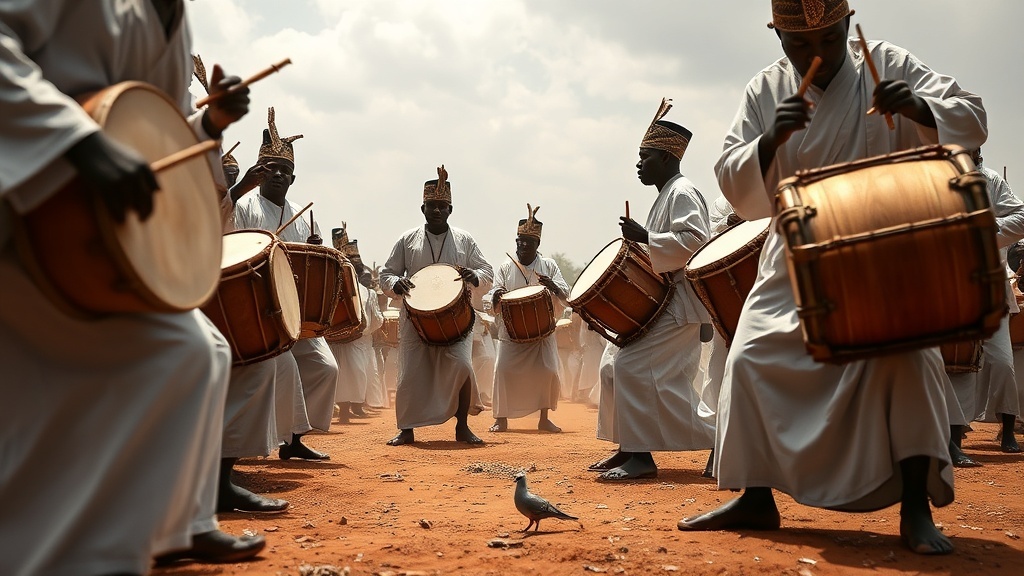
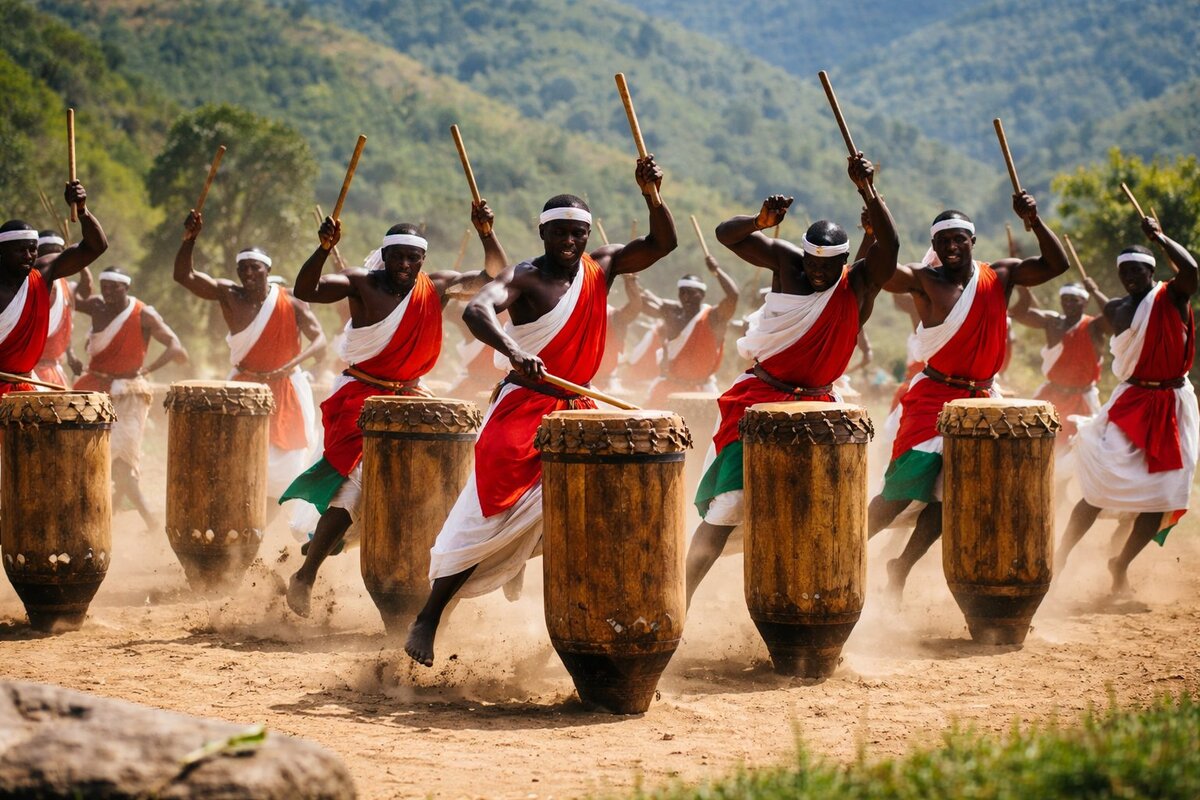
Burundian culture is deeply rooted in oral tradition, dance, and music. The Royal Drummers of Burundi (Tambourinaires) perform with massive sacred drums carved from tree trunks, creating rhythms recognized as a UNESCO Masterpiece. Their performances combine drumming, dance, and song in spectacular displays of coordination.

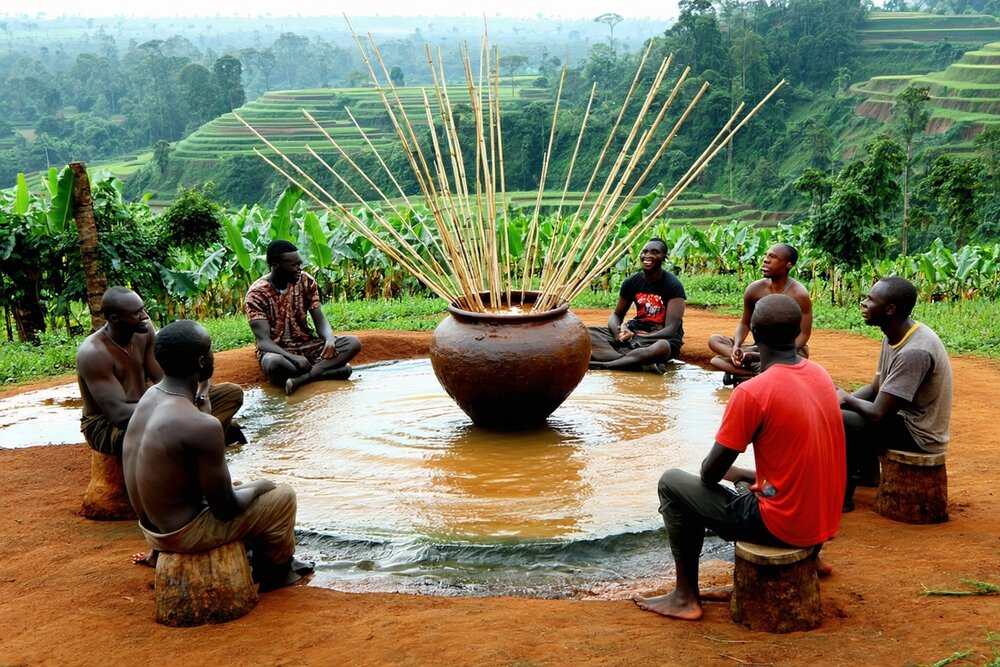
Daily life revolves around communal gatherings, with sharing beer from a communal pot through long reed straws being a central social ritual. Kirundi proverbs and poetry pervade conversation. The basket-weaving tradition produces intricate works of art, and pottery remains an important craft.

Coffee is king — Burundi produces exceptional single-origin arabica beans that are gaining recognition in specialty coffee markets worldwide. Agriculture employs the vast majority of the population, with coffee, tea, and subsistence farming defining rural life.

The Royal Drummers of Burundi

The Royal Drummers of Burundi

Inscribed on UNESCO Intangible Cultural Heritage list in 2014 — a royal rite, not a folk show.

05

🏙️ Gitega

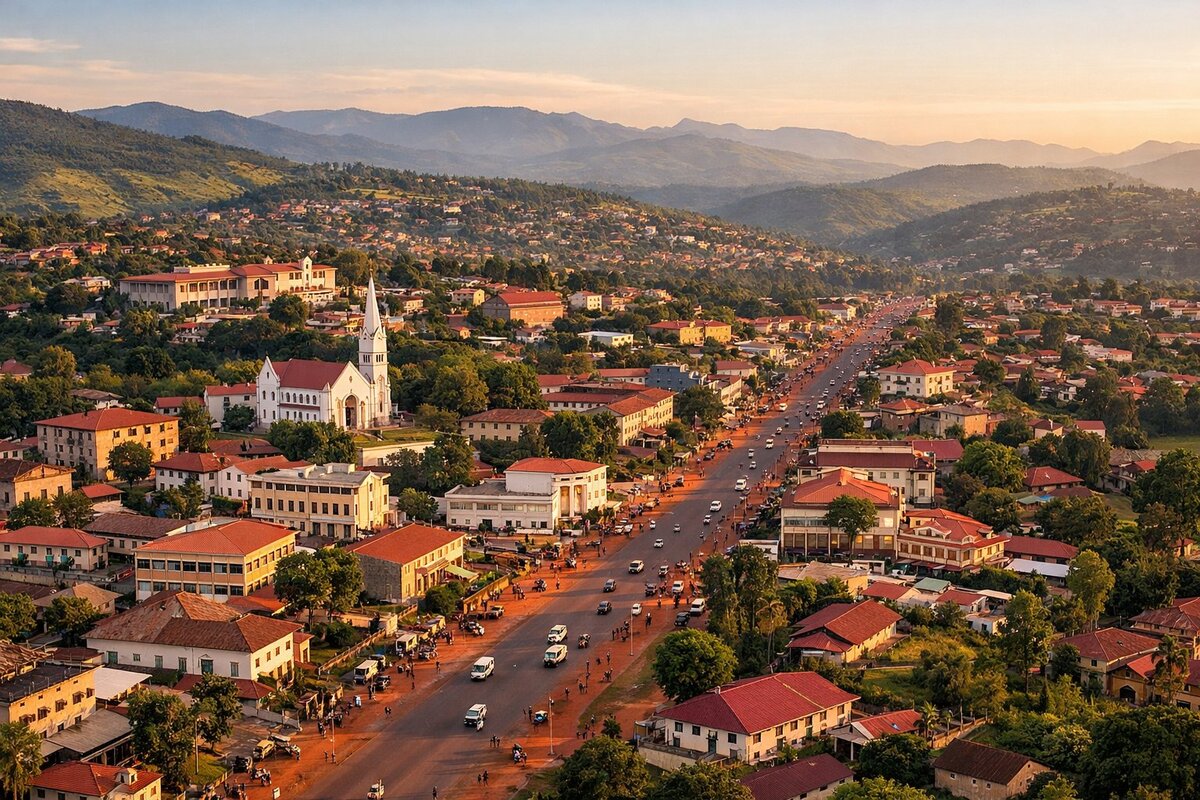
Gitega, Burundi's political capital since 2019, sits in the central highlands at about 1,800 meters elevation. This historic city served as the seat of the Burundian monarchy and retains a more traditional character than the lakeside commercial center of Bujumbura.

The National Museum of Gitega houses an impressive collection of royal artifacts, traditional instruments, and ethnographic displays. The city's markets bustle with local produce, and the surrounding hills offer excellent views of the terraced countryside.

Bujumbura, the former capital and largest city, remains the economic heart. Its lakefront setting on Tanganyika provides swimming beaches, waterfront restaurants, and spectacular sunsets over the lake. The Livingstone-Stanley Monument marks where the famous explorers met nearby.

Gitega, the political capital

Gitega, the political capital

The old royal seat in the central highlands, capital again since 2019.

06

🌊 Lake Tanganyika

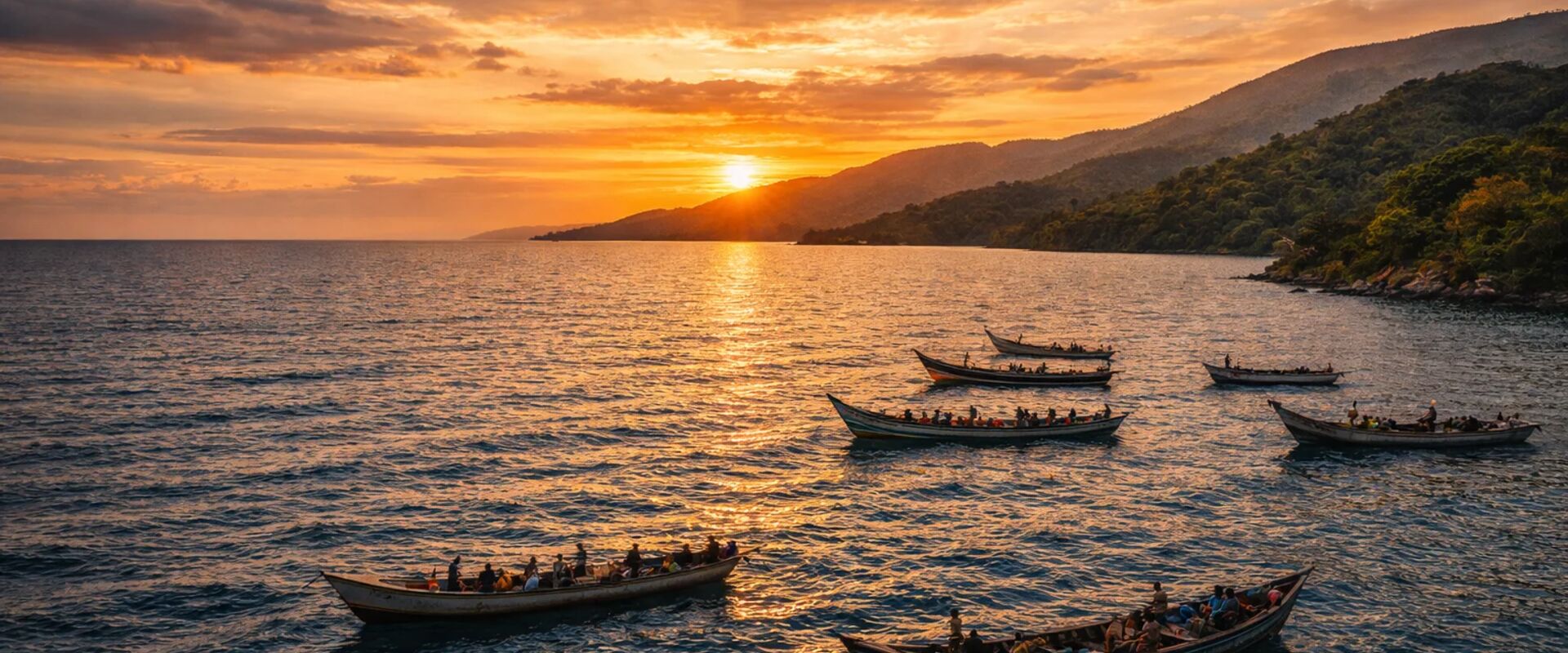
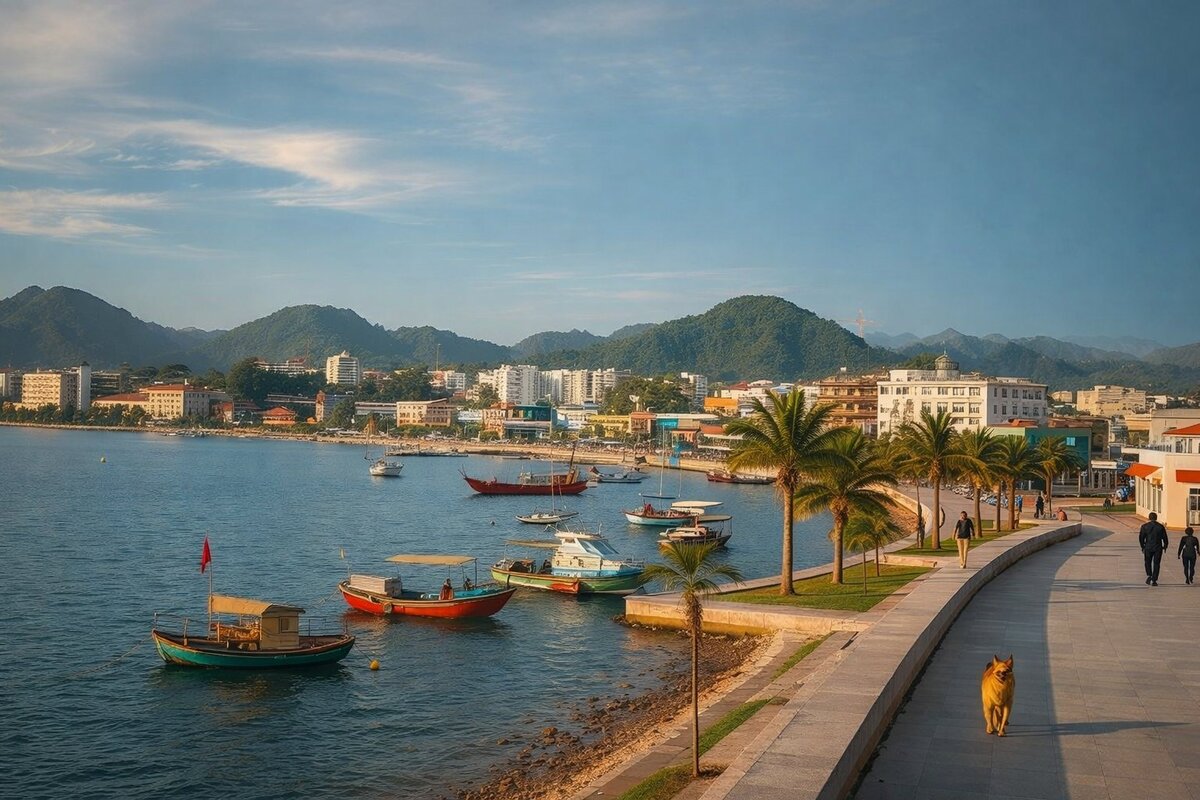
The world's second-deepest lake (1,470m) and second-largest by volume stretches along Burundi's western border. Its crystal-clear waters support over 350 species of fish, many found nowhere else on Earth, making it a biodiversity hotspot of global importance.

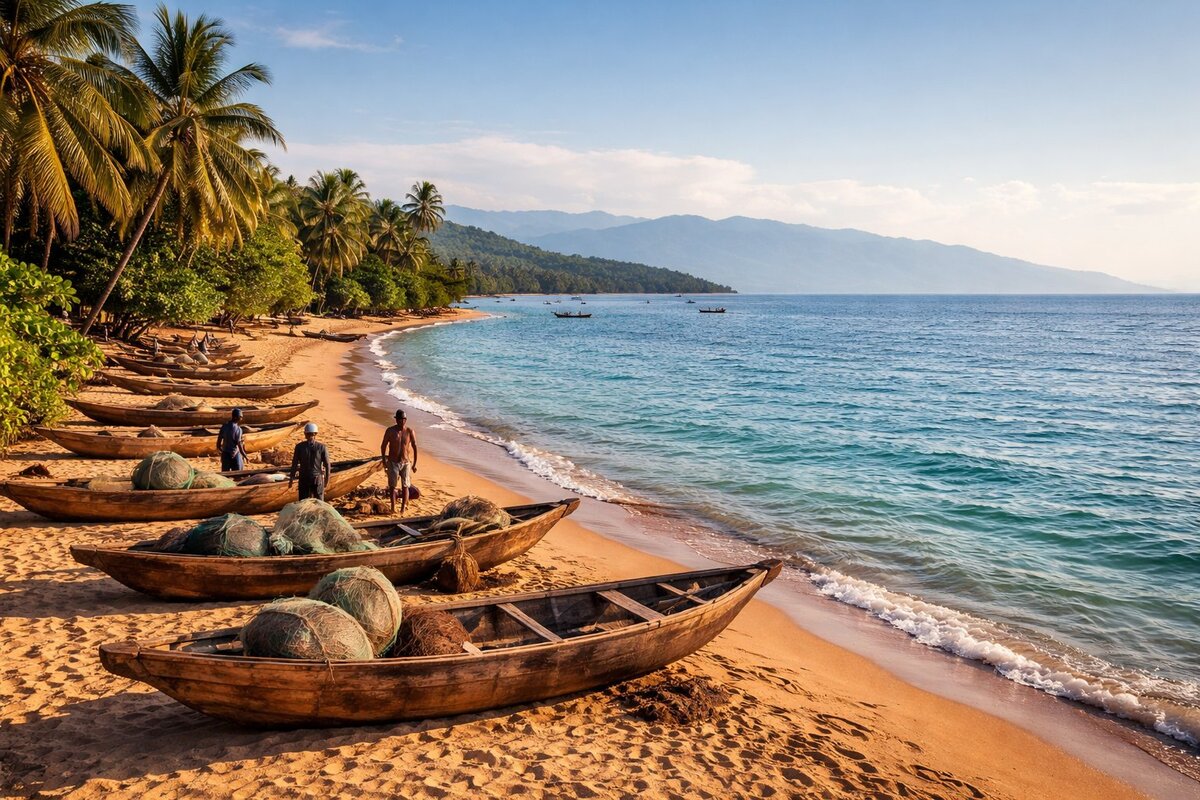
Saga Beach and other lakeside spots near Bujumbura offer swimming in fresh water so vast it resembles an inland sea. Fishing villages dot the shoreline, and boat trips reveal dramatic mountain backdrops. The lake's waters remain warm year-round.

The Bujumbura waterfront

The Bujumbura waterfront

The Rift wall rises straight off the lake behind the city.

07

🌿 Kibira National Park

🚫 Level 4 — Do Not Travel

Kibira National Park is designated Level 4 (Do Not Travel) by the U.S. State Department because armed groups operate inside the forest, as are the neighbouring provinces of Cibitoke and Bubanza that give access to it. The park is described here for completeness — it should not be visited on the current advisory. See the Travel Advisory section below.

Burundi's largest national park protects 400 km² of montane rainforest in the Congo-Nile divide. The park shelters chimpanzees, colobus monkeys, and over 200 bird species in dense forest that catches moisture from both the Congo and Nile watersheds.

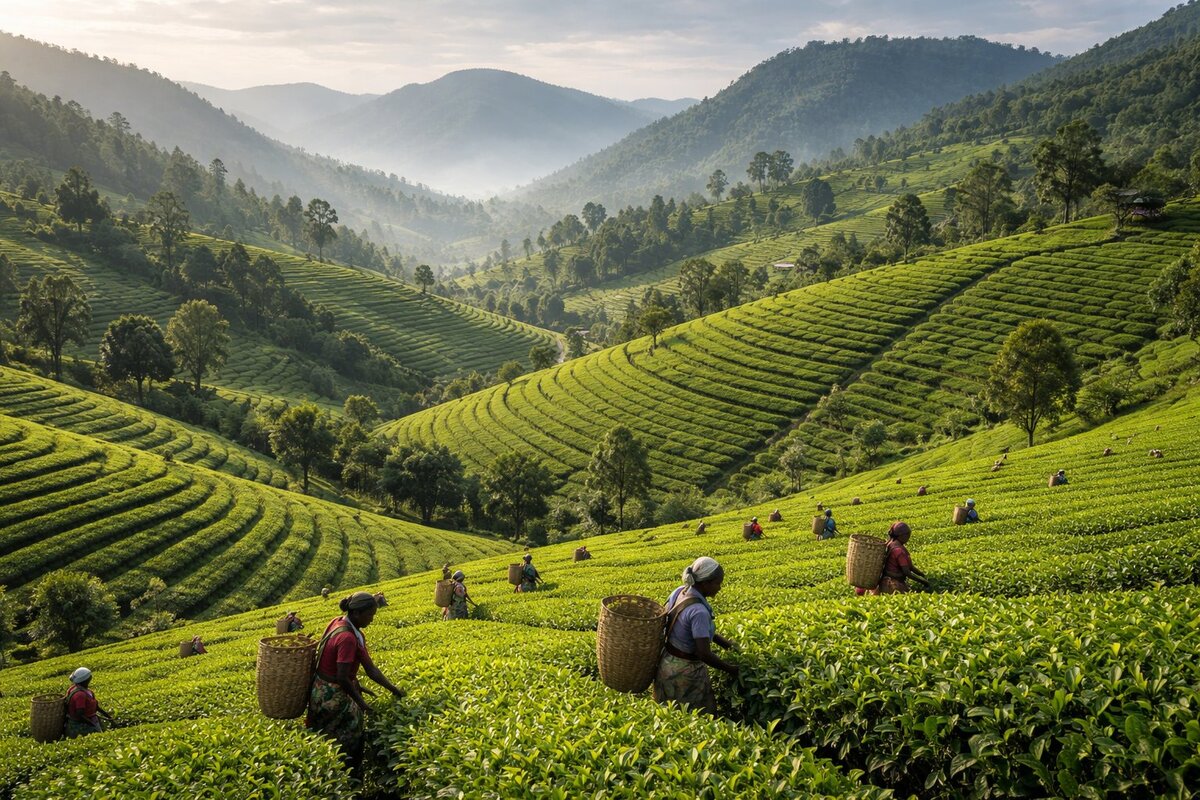
Hiking trails wind through bamboo forests, past waterfalls, and to viewpoints overlooking the tea plantations that border the park. The adjacent Teza and Rwegura tea estates produce some of Africa's finest teas.

Tea on the Congo–Nile divide

Tea on the Congo–Nile divide

Above Kibira the rainforest gives way to tea estates along the watershed ridge.

08

💎 Hidden Gems

Burundi has almost no tourist infrastructure, which means almost everything here is off the beaten path. These are the places worth the rough roads.

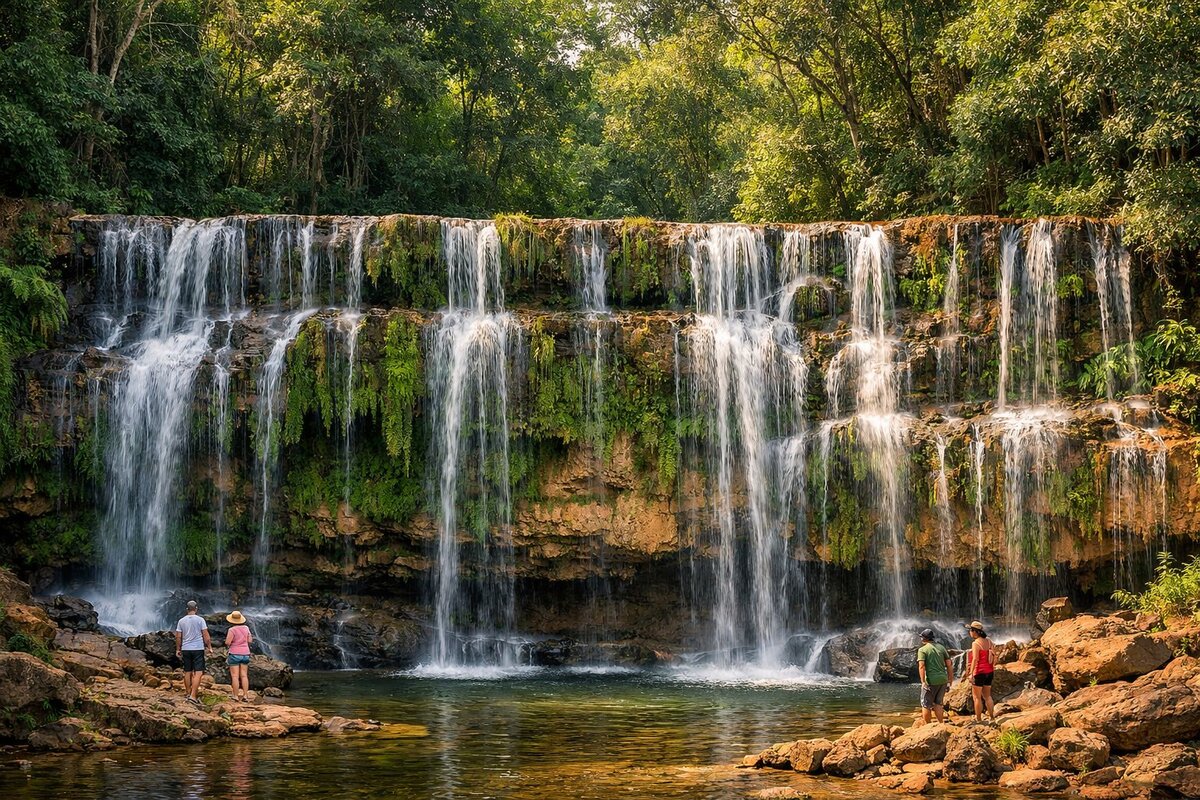
Karera Falls (Rutana Province). Four cascades tumbling through gallery forest about 3.5 hours southeast of Gitega. A short boardwalk trail links the drops; go in the wet season for volume, in the dry season for the road.

Nyakazu Fault — the "German Cliff." A dramatic escarpment near Rutana where the Rift wall drops away toward the Tanzanian plain. Named for the German garrison that retreated through it in 1916.

Gasumo, the southernmost source of the Nile. A small stone pyramid above the village of Rutovu, at roughly 2,000 m, marks the spring the German explorer Burkhart Waldecker identified in 1937 as the Nile's furthest headwater. There is no ticket office and often no one there at all.

Lake Rwihinda (Kirundo). "The Lake of Birds" — a shallow northern lake and protected reserve where crowned cranes, herons and pelicans gather in the thousands.

Ruvubu National Park. Burundi's largest protected area, a savanna-and-riverine mosaic in the east with buffalo, hippo and antelope — and virtually no other visitors.

Livingstone–Stanley Monument, Mugere. A stone slab 12 km south of Bujumbura marking where the two explorers are said to have camped in 1871, with a wide view over the lake.

The southernmost source of the Nile

The southernmost source of the Nile

The pyramid above Rutovu marks the spring Burkhart Waldecker identified in 1937 as the furthest headwater of the Nile.

Karera Falls, Rutana Province

Karera Falls, Rutana Province

Four cascades in gallery forest — the most photographed natural site in the country, and still usually empty.

09

🍽️ Cuisine

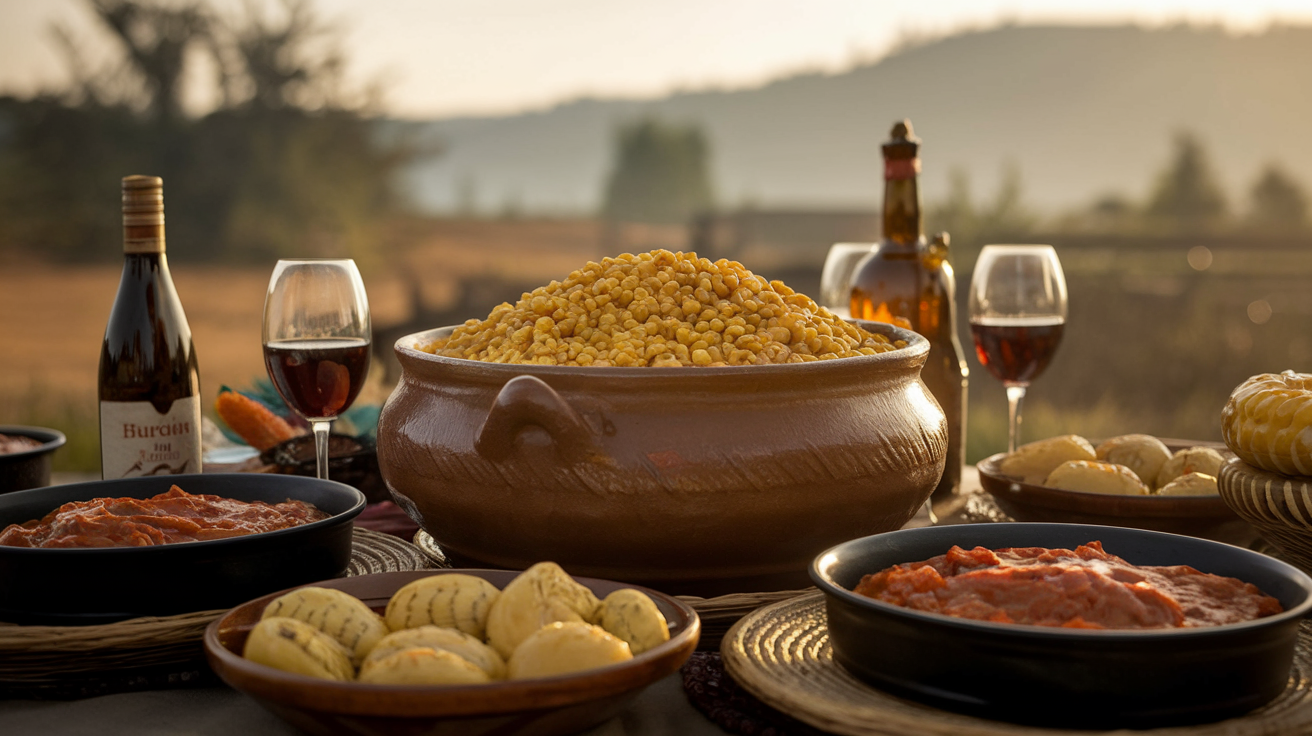
Burundian cuisine is simple and hearty, featuring beans, bananas, and vegetables from the fertile highlands.

Beans with Plantains

National Comfort Food

Beans with Plantains

Red beans cooked with green plantains—eaten daily across Burundi. This recipe serves two.

Ingredients: 240ml red kidney beans, 2 green plantains, Palm oil, 1 onion, Salt, Chili (optional).

Preparation: Cook beans until almost tender. Then peel and cube plantains. Add plantains to beans. Cook until both are soft. Then add palm oil and onion. Last, season and serve.

💡 Green plantains are starchy like potatoes, not sweet.

Banana Beer

Urwarwa

Banana Beer

Traditional fermented banana beverage—served at celebrations. This recipe serves two.

Ingredients: 10 ripe bananas, Sorghum flour, Water.

Preparation: Mash ripe bananas thoroughly. Mix with sorghum flour. Add water to desired consistency. Then let ferment 1-3 days. Strain through grass filter. Last, serve chilled or room temp.

💡 Fermentation time affects strength—longer is stronger.

Isombe

Cassava Leaves

Isombe

Pounded cassava leaves cooked with palm oil and eggplant. This recipe serves two.

Ingredients: 480ml cassava leaves, pounded, 1 eggplant, diced, 60ml palm oil, 1 onion, Peanut butter, Salt, chili.

Preparation: Boil cassava leaves until very tender. Then drain and mash. Sautingé onion, add eggplant. Add leaves and palm oil. Then stir in peanut butter. Simmer until thick.

💡 Fresh cassava leaves must be cooked thoroughly—never raw.

Signature Dishes: Beans & Bananas – the quintessential Burundian meal. Ugali – stiff maize porridge with vegetable stew. Isombe – cassava leaves with palm oil. Brochettes – grilled meat skewers, the most popular street food. Mukeke – freshwater fish from Lake Tanganyika.

Beverages: Banana beer (urwarwa) – traditional home-brewed drink central to gatherings. Primus and Amstel – popular commercial beers. Ikivuguto – fermented milk drink. Coffee and tea are everyday beverages.

10

🍷 Wine, Spirits & Drinking Culture

Burundi has no wine production. The small, mountainous Central African nation has an equatorial highland climate unsuited to grape cultivation. Urwarwa (banana wine, identical to the Rwandan tradition) is the most important traditional beverage — central to weddings, funerals, and social gatherings. Impeke (sorghum beer) is consumed communally, often from a shared pot through long reed straws — a practice that symbolizes community and trust. Primus and Amstel (brewed locally by Brarudi) are the commercial beers. Burundi's world-class specialty coffee sector (highland arabica, increasingly recognized internationally) represents a sophisticated terroir-driven beverage tradition.

11

🌡️ Climate & Best Time

Burundi has a tropical highland climate moderated by altitude. The highlands enjoy temperatures between 17–23°C year-round, while the lake region around Bujumbura is warmer at 25–30°C. Two rainy seasons occur: the long rains (February–May) and short rains (September–November).

The dry season (June–August) offers the best conditions for travel, with clear skies and comfortable temperatures. The lake area can be humid year-round. Light layers are recommended for highland evenings.

12

✈️ Getting There

By Air: Bujumbura International Airport (BJM) receives flights from Nairobi, Addis Ababa, Kigali, and Dar es Salaam via Kenya Airways, Ethiopian Airlines, and RwandAir. No direct flights from Europe or the Americas.

By Land: Border crossings operate with Rwanda (north), Tanzania (east and south), and DR Congo (west via Lake Tanganyika ferry). The road from Kigali to Bujumbura takes about 4 hours.

13

📋 Practical Information

Money: Burundian Franc (BIF). US dollars widely accepted for larger transactions. ATMs available in Bujumbura and Gitega but unreliable elsewhere — carry cash. Budget: $30–50/day budget, $80–150/day mid-range.

Language: Kirundi is the national language, spoken by virtually everyone. French is the language of administration and education. Some English is spoken in tourist areas. Swahili is useful near the Tanzanian border.

Safety: Check current travel advisories before visiting. Bujumbura and major towns are generally safe during the day. Travel in groups outside cities. Malaria prophylaxis essential. Yellow fever vaccination required for entry.

14

💰 Cost of Living & Budget

Burundi is inexpensive in local terms and surprisingly expensive in imported ones. Hotels aimed at NGO staff and diplomats in Bujumbura are priced well above what the rest of the country costs. Figures below are approximate for August 2026 and move with the franc.

Guesthouse / budget room$20–40 per night
Mid-range hotel, Bujumbura$60–130 per night
Local meal (beans, rice, plantain)5,000–15,000 BIF ($2–5)
Restaurant meal, Bujumbura25,000–60,000 BIF ($8–20)
Primus or Amstel beer2,000–3,500 BIF ($0.70–1.20)
Bujumbura taxi ride10,000–25,000 BIF ($3–8)
Shared minibus between towns5,000–20,000 BIF ($2–7)
4x4 with driver, per day$100–180 including fuel

A note on money. Burundi runs a parallel exchange market and a chronic shortage of hard currency; the street rate and the official rate have diverged sharply in recent years. Fuel shortages are common and can strand a trip. Bring clean US dollars in recent bills, and do not count on cards or ATMs outside Bujumbura.

15

🎉 Festivals & Events

Unity Day — 5 February. Marks the 1991 Charter of National Unity, with official ceremonies and a public holiday.

Independence Day — 1 July. The national day, commemorating independence from Belgian trusteeship in 1962. Parades, drumming and speeches, largest in Gitega and Bujumbura.

Prince Louis Rwagasore Day — 13 October. Honours the independence leader assassinated in 1961, weeks before he could take office.

Ndadaye Day — 21 October. A sober national commemoration of Melchior Ndadaye, Burundi's first democratically elected president, assassinated in 1993 — the event that opened the civil war.

Umuganuro — the sorghum festival. The old royal harvest rite, once the calendar's central ceremony, suppressed after the monarchy fell and now revived in local and cultural form. Timing varies by locality; ask in Gitega.

Gishora drum performances. Not a festival but a standing event: the drum sanctuary above Gitega stages performances for visitors, and the drummers appear at every national occasion.

16

🏛️ UNESCO Heritage

Burundi has no inscribed World Heritage Sites. As of August 2026 it remains one of the small group of States Parties with an empty inscribed list — but it maintains an active tentative list of ten properties, and in February 2026 submitted the Royal Residence of Gishora for formal nomination.

Tentative List (cultural and natural):

  • La résidence royale du Burundi: le cas de Gishora — the royal drum sanctuary above Gitega
  • Le rugo traditionnel du Mugamba — the traditional highland homestead
  • Les paysages naturels sacrés de Muramvya, de Mpotsa et de Nkiko-Mugamba
  • Gasumo — la source la plus méridionale du Nil
  • Rwihinda — le lac aux oiseaux
  • Le lac Tanganyika
  • La réserve naturelle de la Rusizi
  • Le parc national de la Kibira
  • Le parc national de la Ruvubu
  • Les chutes de la Karera et la faille de Nyakazu

Intangible Cultural Heritage. Distinct from the World Heritage List: the ritual dance of the royal drum was inscribed on UNESCO's Representative List of the Intangible Cultural Heritage of Humanity in 2014. This is Burundi's one UNESCO listing, and it is frequently — and wrongly — reported as a World Heritage Site.

17

🏛️ Government & Politics

Burundi is a presidential republic under the constitution approved by referendum in 2018. Évariste Ndayishimiye has been president since 18 June 2020, succeeding Pierre Nkurunziza, who died in office. In February 2026 Ndayishimiye also took up the rotating chairpersonship of the African Union, giving a small and usually overlooked country an unusually prominent continental platform.

Nestor Ntahontuye has served as prime minister since 5 August 2025, moving up from the finance and economic planning portfolio; he replaced Gervais Ndirakobuca, who became president of the Senate. Prosper Bazombanza is vice-president.

The CNDD–FDD, the former rebel movement that has governed since 2005, dominates both chambers of parliament after the June 2025 legislative elections, which opposition parties and international observers criticised heavily. Burundi is in practice a one-party-dominant state; the main opposition party CNL was suspended in 2023 and its leader Agathon Rwasa was excluded from the 2025 ballot.

Administratively the country runs from provinces down through communes, zones and collines ("hills") — the hill remains the fundamental unit of Burundian social and political life.

18

⚠️ Travel Advisory & Safety

🇺🇸 U.S. State Department: Level 3 — Reconsider Travel

Burundi is rated Level 3 (Reconsider Travel) due to political violence, crime and health risks. The advisory was last updated in April 2026, alongside a U.S. Embassy Bujumbura security alert restricting the movement of U.S. government personnel.

Level 4 — Do Not Travel zones inside Burundi:

  • Cibitoke and Bubanza provinces — armed violence and incursions from eastern DRC
  • Kibira National Park — armed groups operate in the forest
  • The former Central Market area of Bujumbura — violent crime

Practical safety. Grenade attacks and armed robbery occur; night travel outside cities is a bad idea on both security and road-condition grounds. Photographing government buildings, the airport, bridges or anyone in uniform can lead to detention — put the camera away near anything official. Police roadblocks are routine; carry your passport or a certified copy.

Health. A yellow fever vaccination certificate is required for entry. Malaria is present year-round throughout the country, including Bujumbura — take prophylaxis. Cholera outbreaks recur in the lakeshore districts. Medical facilities are extremely limited; evacuation insurance is not optional, and Nairobi is the nearest reliable hospital.

Regional context. Relations with Rwanda have been tense since 2024 and the land border has been closed for extended periods. Fighting in eastern DRC spills across Lake Tanganyika and the Rusizi plain. Check the border situation within days of travelling, not weeks.

19

✨ Fascinating Facts

The drums are a state institution, not a folk act. The ingoma were royal instruments; drumming was a hereditary duty tied to the sanctuary at Gishora, and beating them for entertainment would once have been unthinkable.

Everyone speaks the same language. Kirundi is spoken by virtually the entire population — one of very few African countries with a single indigenous national language, and a reminder that Burundi's conflicts were never linguistic.

The Nile starts here — arguably. The spring at Gasumo, 2,000 m up in Rutovu, is the furthest headwater from the Mediterranean by river distance, which makes a Burundian hillside the source of the world's longest river system.

Lake Tanganyika is a freshwater ocean. Second-deepest lake on Earth at 1,470 m, second-largest by volume, and up to 12 million years old, with hundreds of endemic cichlid species found nowhere else.

The capital moved in 2019. Parliament voted to shift the political capital from lakeside Bujumbura to highland Gitega — the old royal seat — leaving Burundi with two capitals.

Population density without cities. Burundi is among Africa's most densely populated countries, yet the large majority of people live rurally, spread across the collines rather than concentrated in towns.

Coffee is the economy. Arabica grown on smallholder plots supplies the large majority of export earnings — a single crop carrying a whole country's foreign exchange.

20

👤 Notable People

Prince Louis Rwagasore (1932–1961) — son of the Mwami, leader of the UPRONA independence movement, assassinated weeks after his party's election victory and before independence itself. The country's founding martyr.

Melchior Ndadaye (1953–1993) — Burundi's first democratically elected president and first Hutu head of state, assassinated after 102 days in office. His killing triggered the civil war.

Marguerite "Maggy" Barankitse (b. 1956) — humanitarian who founded Maison Shalom, sheltering tens of thousands of children orphaned by the war. Inaugural Aurora Prize laureate, 2016; now in exile.

Vénuste Niyongabo (b. 1973) — won Olympic gold in the 5,000 m at Atlanta 1996, Burundi's first Olympic medal of any colour, in an event he had barely raced.

Francine Niyonsaba (b. 1993) — 800 m silver medallist at Rio 2016 and world indoor champion, later a record-setter over 2,000 m after moving up in distance.

Khadja Nin (b. 1959) — singer whose Kirundi- and Swahili-language albums made her one of the best-known East African voices in Europe.

Gaël Bigirimana (b. 1993) — midfielder who left Burundi as a child refugee and went on to play in the English Premier League for Newcastle United.

21

⚽ Sports

Football is the national obsession. The men's team, the Intamba Mu Rugamba ("Warriors"), qualified for the Africa Cup of Nations for the first time in 2019 — a national event that briefly shut the country down. The domestic league is centred on Bujumbura clubs, with Vital'O and Inter Star the historic rivals.

Athletics is where Burundi punches far above its size. Vénuste Niyongabo's 5,000 m gold at Atlanta 1996 remains the country's only Olympic title; Francine Niyonsaba's 800 m silver at Rio 2016 is its other medal. The highland altitude around Gitega and Bujumbura's hills produce a steady flow of middle-distance runners, many of whom train abroad.

Other sports. Basketball and volleyball are played in the cities and cycling has a small following. Facilities are minimal outside the capital; most competition happens on dirt.

22

📰 Media & Press Freedom

Burundi ranks 119th of 180 countries in the 2026 RSF World Press Freedom Index, with a score of 46.14 — up six places from 125th in 2025, its first improvement after years of decline, and against a global backdrop RSF described as a 25-year low.

The improvement is real but narrow. A new press law enacted in July 2024 revised the restrictive 2018 legislation and partially decriminalised press offences, removing custodial sentences for charges such as insult and "harmful allegations." Independent outlets shut down after the 2015 crisis — Radio Publique Africaine, Bonesha FM — have not returned in their original form, and much independent Burundian journalism is still produced from exile, notably by SOS Médias Burundi and the Iwacu diaspora network.

Pressure persists in practice: journalists face prosecution under national-security charges, with the case of Sandra Muhoza — tried for "undermining the integrity of the national territory" — the most cited recent example. State broadcaster RTNB dominates reach. Foreign journalists need accreditation, and reporting without it is treated seriously.

23

📸 Photo Gallery

24

✍️ Author's Note Radim Kaufmann

I came to Burundi half-expecting the headlines and left thinking only about the drums. In a courtyard above Gitega, the Royal Drummers stacked their carved karyenda on their heads and walked in single file before exploding into a rhythm that I felt in my sternum before my ears caught up. Children watched from the terraced banks; an older man beside me closed his eyes and mouthed the cadence as if it were a prayer he had been keeping warm his whole life.

Later, on the shore of Lake Tanganyika, fishermen pushed their narrow pirogues into water so clear and deep it felt like the edge of the planet. Someone passed me a long reed straw plunged into a pot of impeke, the millet beer that Burundians share — never one cup each, always one vessel together. That gesture, more than any monument, is what I carry home from this small, hilly country: the conviction that hospitality here is not performance but architecture, the literal shape the day is built around.

Burundi remains one of Africa's least-visited nations, and that is both its bruise and its gift. There are no tour buses on the road to Kibira, no souvenir stalls at the Livingstone-Stanley stone, no curated experiences between you and the country. What there is, instead, is the chance to be a guest in the older sense of the word — and to discover that the heart of Africa beats, quite literally, in 4/4 time.

—Radim Kaufmann, 2026

Need help? Chat with Hugh