

🇳🇮 Nicaragua at a Glance
🌍 Overview — Lakes, Volcanoes and a Closed Door
Nicaragua is the largest country in Central America — 130 373 km², about one and two-thirds of Czechia — and the emptiest of them, with roughly 6,8 million people in a space that holds nine million in Honduras and seventeen in Guatemala. Nearly all of them live on the Pacific third of it, on a strip of volcanic soil between the ocean and two enormous lakes.
It is also, as of 20 July 2026, a country that has formally stopped holding elections. Speaking at the parade for the forty-seventh anniversary of the revolution he led, Daniel Ortega said Nicaragua would not vote again — cancelling the ballot due in November 2027 and closing the last procedural fiction of the state he and his wife run together. That is the fact any honest page about Nicaragua in 2026 has to lead with, and everything practical below is written in its shadow.
Where it is
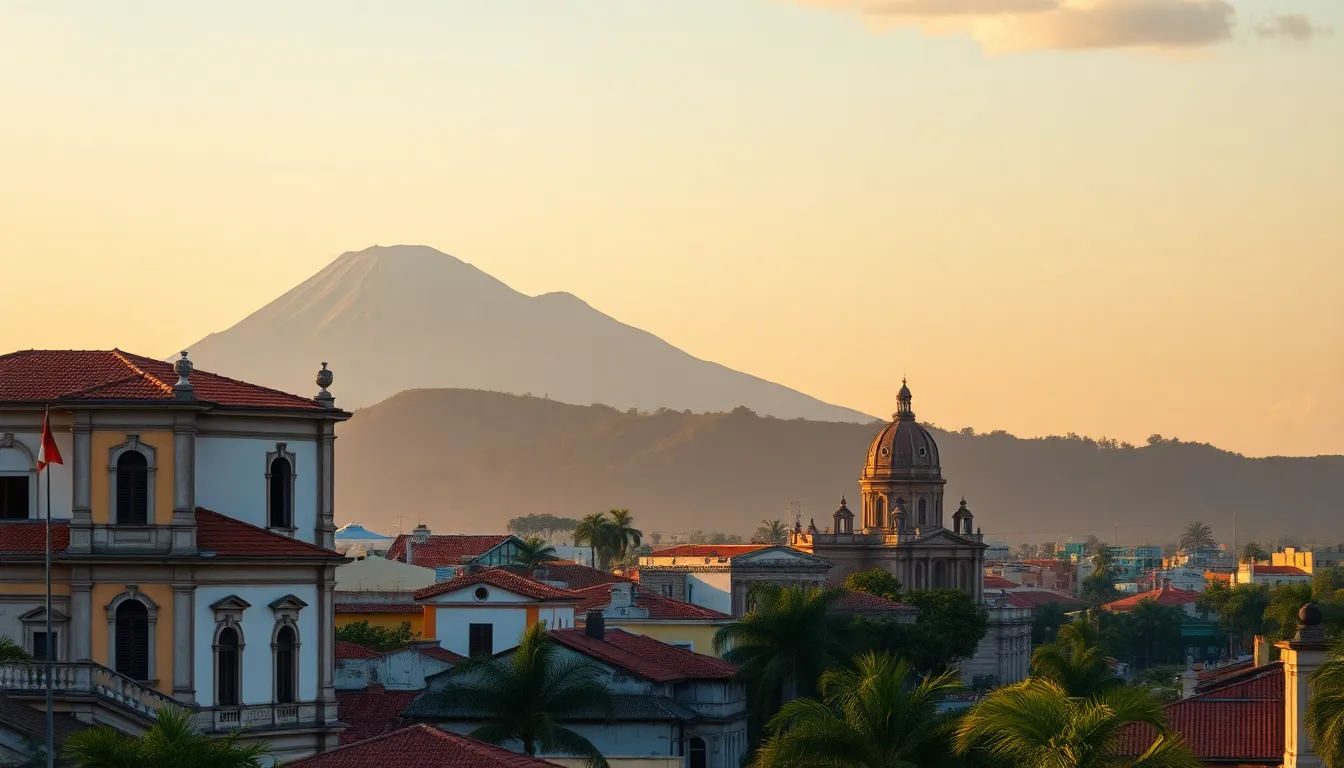
Between Honduras to the north and Costa Rica to the south, with the Pacific on one side and the Caribbean on the other. It sits between 10° and 15° north, squarely in the tropics, and the Caribbean half is a different country in almost every sense — different language, different history, different rainfall by a factor of four.
The two lakes
Lake Cocibolca (Lake Nicaragua), 8 264 km², the largest lake in Central America and the twentieth largest in the world — bigger than any lake in Europe outside Russia and the Nordic countries. Above it, joined by the Tipitapa river, Lake Xolotlán (Lake Managua), 1 042 km² and badly polluted for most of the twentieth century.
The fire line
A chain of about nineteen volcanoes considered active runs the length of the Pacific side, from Cosigüina above the Gulf of Fonseca to Maderas on Ometepe island. Several of them are climbable in a morning, one of them has a permanent lava lake you can look into from a car park, and the soil they made is why everyone lives there.
Who lives here
Officially around 69 % mestizo, 17 % white, 9 % Black — overwhelmingly the Creole and Garífuna communities of the Caribbean coast — and 5 % indigenous: Miskito, Mayangna (Sumu), Rama, and the Nahuat-descended communities of the west. Census categories here are political; see the autonomy section.
How it is governed
On paper a republic. In practice a family dictatorship: since February 2025 the constitution has abolished the presidency in favour of a co-presidency held by Daniel Ortega and his wife Rosario Murillo, with the term extended to six years, the army and police written in as subordinate to it, and the co-presidents empowered to appoint as many vice-presidents as they like. See the 2025–26 section.
Can you go?
Yes, and people do — the country is not a war zone and ordinary tourism continues. But MZV ČR classifies the security situation as deteriorated, Czechia has no resident embassy, roughly a tenth of the population has left since 2018, and foreigners at any political gathering can be expelled. The travel advice in the practical section is written accordingly.
🏷️ The Name, the Sea That Is Not One, and the Sharks
Where the name comes from
Almost certainly from Nicarao, the cacique whose people the Spanish met on the western shore of the great lake in 1522 — the standard gloss adds agua, water, so "Nicarao's water". A rival etymology derives it from Nahuatl nic-anahuac, roughly "here beside the water". Every version of the story has the lake in it, which tells you something.
Cocibolca
The indigenous name for the great lake, usually glossed as "sweet sea", and the one Nicaraguans increasingly use. The Spanish called it Mar Dulce, the freshwater sea, for the same reason: it has a horizon, it has swells, it has squalls that sink boats, and from the middle of it you cannot see land.
The sharks
Lake Cocibolca has bull sharks in it. For a long time they were thought to be a landlocked species that had evolved in place; in the 1960s tagging showed the truth, which is better — they swim up the San Juan river from the Caribbean, jumping the rapids like salmon, 190 km inland, and back out again. Bull sharks tolerate fresh water better than any other large shark. Numbers are far down since commercial finning in the 1970s and sightings are now rare.
The other lake
Xolotlán, Lake Managua, took the capital's untreated sewage for most of a century and became a byword for what a city can do to the water it sits on. A treatment plant funded by Germany opened in 2009 and the lake is measurably better; it is still not a place anyone swims. Volcán Momotombo stands at its north-west end and appears on the old Nicaraguan banknotes, the national coat of arms of the Central American federation, and a famous Rubén Darío poem.
The isthmus of Rivas
The strip between the great lake and the Pacific is only about 18 km wide at its narrowest. That accident of geography is the reason Nicaragua spent two centuries being discussed as the site of an interoceanic canal, the reason a US company ran a transit route across it during the Gold Rush, and the reason William Walker turned up. See the canal section.
Two coasts, one country
Nicaraguans distinguish the Pacífico from the Costa Caribe as sharply as anyone distinguishes any two halves of a country. The Pacific side is Spanish-speaking, Catholic, densely settled and volcanic. The Caribbean side is English-Creole and Miskito-speaking, largely Moravian Protestant, thinly settled, historically a British protectorate, and reachable by road only recently. See the Caribbean coast section.
🗺️ Geography — Three Countries Stacked Sideways
Nicaragua divides cleanly into three north-south bands, and they differ so much in rainfall, population and history that treating them as one landscape is the standard mistake visitors make.
1 · The Pacific lowlands
A belt of volcanic plain and lake, maybe 75 km wide, holding the volcanic chain, both great lakes, Managua, León, Granada, Masaya and the surf coast. Rainfall around 1 000–1 500 mm with a hard dry season. The soil is young volcanic ash and it is superb — this is where the cotton, sugar, sesame and most of the food comes from, and where the overwhelming majority of Nicaraguans live.
2 · The central highlands
A block of older, eroded mountains rising to 1 500–2 000 m across Matagalpa, Jinotega, Estelí and Nueva Segovia. Cooler, cloud-forested at the top, and the coffee country. The highest point in Nicaragua, Mogotón at 2 107 m, sits on the Honduran border here. It is also where the Contra war was hardest and where MZV ČR currently advises against travel.
3 · The Caribbean lowlands
Half the country's land area and about a tenth of its people. Flat, hot, and drenched — 3 000 to over 5 000 mm of rain a year, among the wettest places in the Americas. Broadleaf rainforest, pine savanna in the north, vast wetland, and rivers that do the job roads do elsewhere: the Coco, the Grande de Matagalpa, the Escondido, the Río San Juan.
The rivers that are borders
The Río Coco (Wangki), 750 km and the longest river in Central America, is the Honduran border for most of its course and cuts straight through Miskito territory, which is why the Miskito regard it as a road rather than a frontier. The Río San Juan drains the great lake to the Caribbean and is the Costa Rican border; navigation rights on it were still being argued at the International Court of Justice in 2009 and 2015.
Earthquakes
Nicaragua sits on the Middle America Trench, where the Cocos plate dives under the Caribbean plate at about 8 cm a year — one of the faster subduction rates on earth. Managua has been destroyed twice in living memory, in 1931 and on 23 December 1972. The 1972 quake was only magnitude 6,2 but shallow and directly under the city: roughly 10 000 dead and the centre never rebuilt.
Hurricanes
The Caribbean coast is squarely in the track. Joan (1988) flattened Bluefields; Mitch (1998) killed thousands, most of them in a single lahar off Casita volcano; and in November 2020 the coast was hit by two category-4 hurricanes, Eta and Iota, within fourteen days, both making landfall within 25 km of each other near Puerto Cabezas. Bilwi has not fully recovered.
🌋 The Fire Line — Nineteen Volcanoes and a Lava Lake
The Nicaraguan volcanic chain is the most accessible in the Americas. Not the highest, not the most violent, but the one where a visitor with no mountaineering experience can stand on an active crater rim before lunch, and in one case drive to within a hundred metres of moving lava.
🎯 Masaya
The star, and genuinely unusual: Santiago crater holds a persistent lava lake, visible from a railed viewpoint that a road goes to. The Spanish called it La Boca del Infierno, the mouth of hell, and planted a cross on the rim in 1529 to exorcise it; the cross is still there. Nicaragua's first national park (1979). Visits are capped at short slots because of the sulphur dioxide, and the park closes without warning when the gas rises.
Momotombo
The 1 297 m cone at the north-west corner of Lake Managua, and the most painted, photographed and versified mountain in the country — Rubén Darío and Victor Hugo both wrote about it without Hugo ever seeing it. Dormant for 110 years, then it erupted again on 1 December 2015 and intermittently through 2016.
Cerro Negro
Born in 1850 and therefore one of the youngest volcanoes on earth, a 728 m heap of black cinder outside León with no vegetation at all. It is where volcano boarding was invented in 2004 — you walk up in about 45 minutes and come down the ash slope sitting on a reinforced plywood board at up to 90 km/h. Genuinely fun, genuinely abrasive, and now the single most-sold activity in León.
Telica, San Cristóbal, Cosigüina
Telica (1 061 m) glows at night and is the standard overnight hike from León. San Cristóbal (1 745 m) is the highest volcano in the country and steams almost constantly. Cosigüina, at the far north-west tip, blew itself apart in January 1835 in one of the largest eruptions in recorded American history — ash fell in Jamaica and Mexico — and left a crater lake you can hike to for a view across the Gulf of Fonseca into Honduras and El Salvador.
Mombacho and Apoyo
Mombacho (1 344 m) stands over Granada with cloud forest on top, a reserve, and orchids and howler monkeys; its flank collapsed into the lake at some point in the past and made Las Isletas, the 365 small islands off Granada. Next door, Laguna de Apoyo is a 21 000-year-old caldera filled with warm, startlingly clear water — the best swimming in Nicaragua and the standard day off.
Concepción and Maderas
The two that make Ometepe. Concepción (1 610 m) is a textbook active cone and a hard, hot, loose eight-hour climb; Maderas (1 394 m) is extinct, cloud-forested, muddy, and has a small crater lake at the top. See the Ometepe section.
A practical note on climbing them. Guides are compulsory on most of these, cheap (roughly US$25–45 per person for a day climb including transport), and worth it — the trails are unmarked, the rock is loose, and people have died on Concepción from heat and dehydration. Start before six. Carry more water than seems reasonable. Masaya's lava-lake viewpoint runs late-afternoon slots that sell out.
🗿 Before Spain — Footprints in the Ash
The footprints of Acahualinca
In 1874, quarrymen digging for building stone in Managua hit a layer of volcanic mud holding human footprints — around fifteen people, adults and children, walking in the same direction toward the lake, preserved in ash. They were long dated to 6 000 years ago; more careful work puts them at roughly 2 100 years old. Either way they are the oldest direct trace of people in Nicaragua, and a small museum stands over them in a poor Managua neighbourhood.
Two worlds meeting
Nicaragua sits on the seam between Mesoamerica and the Intermediate Area of lower Central America and South America. The Pacific side was culturally Mesoamerican — maize, cacao as currency, Nahuat and Oto-Manguean languages, a calendar. The Caribbean side was oriented south and east, toward Chibchan-speaking peoples of Costa Rica, Panama and Colombia. The line between them runs roughly along the lakes and it has never really moved.
The Chorotega
Oto-Manguean speakers who arrived from the north perhaps around 800 CE, displaced from Mexico, and dominated the Pacific plain and the Nicoya peninsula. They left the polychrome pottery that fills Nicaraguan museums — the Nicoya polychrome tradition is some of the finest ceramic work in the isthmus — and a ceramics tradition that is still alive in San Juan de Oriente.
The Nicarao
A Nahuat-speaking people, close cousins of the Aztecs linguistically, who arrived later still and settled the western shore of the great lake and the Rivas isthmus. Their cacique Nicarao met Gil González Dávila in 1522 and, according to the Spanish account, conducted a long theological cross-examination of him before accepting baptism along with several thousand of his people — which reads less like conversion than like a chief taking the measure of a new power.
The stone figures of Zapatera
On Zapatera island and at Chontales, basalt statues up to four metres tall: human figures with animal alter egos — jaguar, crocodile, eagle — rising over their heads. Most were removed in the nineteenth century by the American diplomat and antiquarian Ephraim George Squier and now stand in the Convento San Francisco in Granada, which is the single best museum in the country.
What was lost
The Pacific population collapsed with extraordinary speed after 1522 — disease, and a slave trade that shipped an estimated 200 000 to 500 000 people from Nicaragua to Panama and Peru in roughly two decades, one of the most concentrated episodes of enslavement in the early Spanish empire. The Nahuat language of the Pacific side was effectively gone by the nineteenth century. The indigenous peoples who survive as distinct nations today are on the Caribbean side, precisely because Spain never got there.
⛪ 1524–1821 — León, Granada, and Three Centuries of Sulking
Spanish Nicaragua was poor, peripheral and ferociously divided. Francisco Hernández de Córdoba — whose name is on the currency — founded Granada and León in the same year, 1524, and the two cities have been arguing ever since.
Granada
On the shore of the great lake, with an outlet to the Caribbean down the Río San Juan, and therefore rich, trading and conservative. Its money came from moving goods to the Atlantic. Its politics were clerical and its architecture is the reason people go there now. It claims to be the oldest continuously inhabited European-founded city on the American mainland, which is contested but not absurd.
León
Inland on the volcanic plain, with no trade outlet, and therefore poorer, bureaucratic, intellectual and liberal. It was the colonial capital, it got the university in 1812 — the second in Central America — and it has been the country's radical city ever since. The original León was abandoned in 1610 after an eruption of Momotombo and the ruins, León Viejo, are a UNESCO World Heritage Site.
The pirates
Because the San Juan reached the sea, Granada was sackable, and it was sacked repeatedly — Henry Morgan's men in 1665, the French under Gallardillo and others in 1670 and 1685. The Spanish answer was El Castillo de la Inmaculada Concepción on the river, finished in 1675, where in 1762 a nineteen-year-old woman, Rafaela Herrera, took over the guns after her commandant father died and held off a British flotilla. She is a national heroine and the story appears to be substantially true.
The Mosquito Coast
Spain never controlled the Caribbean side. The British did, loosely, through an alliance with the Miskito — they crowned a Miskito king in Jamaica, armed him, and ran a protectorate that lasted, on and off, from the 1630s to 1860, with a residual British-backed reserve until 1894. This is why the Caribbean coast speaks English, why it is Protestant, and why it has never felt governed from Managua.
Independence by letter
Central America declared independence from Spain in September 1821 without a shot being fired in Nicaragua, was annexed by Iturbide's Mexican empire, and on its collapse became the United Provinces of Central America (1823–1838). Nicaragua left in 1838. The federation's failure is usually blamed on liberal–conservative warfare, and Nicaragua supplied more of that than anyone.
Why it matters now
The León–Granada split is not a museum piece. Liberal and conservative in Nicaragua began as the parties of two cities rather than two ideologies, capital cities alternated between them, and Managua was made the capital in 1852 purely as a compromise between the two — a city chosen because it was neither. That is the origin of the strangest capital in Central America.
🎩 1855–57 — The American Who Made Himself President
It is the least believable episode in Central American history and it is entirely documented. A thirty-one-year-old Tennessee lawyer, doctor and newspaper editor named William Walker arrived in Nicaragua with fifty-seven men, took over the country, had himself elected president, was recognised by the United States, reintroduced slavery, and was shot by a Honduran firing squad five years later.
How he got in
Nicaragua's liberals, losing their civil war with Granada, hired him. Walker had already tried and failed to seize Baja California and Sonora for a slaveholding republic. He landed in June 1855 with fifty-seven filibusteros, won at La Virgen and took Granada in October by boat while the conservative army was elsewhere. Within days he was the real power in the country.
President Walker
He installed a puppet, then ran a farcical election and had himself inaugurated president of Nicaragua on 12 July 1856. He made English an official language, confiscated land for American settlers, and on 22 September 1856 legalised slavery, which had been abolished in Central America in 1824. The Pierce administration in Washington had recognised his government the previous May.
Why he lost
Two reasons. First, all five Central American republics combined against him — the National War, and the only occasion in history when they have united about anything. Costa Rica's army crossed the border and a drummer boy named Juan Santamaría died burning the filibusters out of a building in Rivas, becoming Costa Rica's national hero. Second, Walker seized the transit company of Cornelius Vanderbilt, who then quietly funded and guided his enemies. Never do that to Vanderbilt.
The burning of Granada
Retreating in November 1856, Walker's men burned Granada for several days and left a sign in the ruins reading "Aquí fue Granada" — "Here was Granada." He surrendered to the US Navy in May 1857, came back twice, and was captured by the Royal Navy in Honduras and handed to the Hondurans, who shot him at Trujillo on 12 September 1860, aged 36.
Cholera
The National War's real killer. Cholera moved with the armies and the estimates of the dead run into the tens of thousands — plausibly a larger share of Nicaragua's population than any war before or since. Walker's adventure cost the country perhaps a tenth of its people.
The long shadow
Walker is the reason "yanqui" has the force it has in Nicaraguan politics, and every subsequent US intervention was read through him. The Sandinistas invoked him constantly; so, differently, did the conservatives who had fought him. When Nicaraguans say the United States has a habit of arriving uninvited, this is the first exhibit, not the last.
🚢 The Canal That Was Never Dug — Twice
For most of the nineteenth century, when people said "the canal", they meant Nicaragua. The great lake plus the San Juan river gets you most of the way across the isthmus already; only the 18 km of the Rivas isthmus would have to be cut. Panama won anyway, and the reason is a postage stamp.
The Accessory Transit Company
Before any canal, there was a road and steamer route. From 1851 Cornelius Vanderbilt carried California gold-rush traffic from the Caribbean up the San Juan, across the lake by steamer and over the Rivas isthmus by stagecoach — cheaper and faster than going round Cape Horn, and profitable enough to explain most of what happened to Nicaragua in that decade, Walker included.
The volcano stamp
In 1902 the US Senate was choosing between Panama and Nicaragua, and Nicaragua was ahead. Then Mont Pelée erupted on Martinique and killed 28 000 people, and the Panama lobbyist Philippe Bunau-Varilla mailed every senator a Nicaraguan postage stamp showing Momotombo erupting — evidence, he said, of volcanic activity on the route. The Senate voted for Panama by eight votes. The stamp story is true and the stamp is in collections.
The Bryan–Chamorro Treaty
Having built elsewhere, Washington then made sure nobody else built here. The 1914 treaty gave the United States exclusive, perpetual canal rights in Nicaragua for US$3 million, plus a 99-year lease on the Corn Islands and a naval base option on the Gulf of Fonseca. Costa Rica and El Salvador sued and won at the Central American Court of Justice; the US and Nicaragua ignored the ruling and the court collapsed. The treaty was finally abrogated in 1970.
The Chinese canal, 2013
In June 2013 the National Assembly passed Law 840, granting a 50-year renewable concession over a 278 km canal — Brito on the Pacific to the Punta Gorda river on the Caribbean, straight through Lake Cocibolca — to HKND, a Hong Kong company owned by a telecoms businessman, Wang Jing, with no infrastructure record. Cost estimate: US$50 billion, four times Nicaragua's GDP.
Why people fought it
The concession included expropriation powers over land along the route, and the peasant movement it produced — over a hundred marches between 2013 and 2018 — was the first sustained mass protest of the Ortega era and a direct rehearsal for 2018. Environmentally, dredging a shipping channel through the drinking-water reservoir of a country was the objection nobody answered. Wang Jing lost some 85 % of his fortune in the 2015 Chinese market crash and the office closed in 2018.
Repealed, 2024
On 8 May 2024 the National Assembly repealed Law 840 and the concession agreement unanimously, 91–0, at Ortega's own proposal — the same body that had passed it in three days eleven years earlier. Nothing was ever dug. The government has since floated a new route to Chinese partners; treat any canal announcement from Managua as a diplomatic gesture until earth moves.
🪖 Sandino and the Somozas — 1912 to 1979
The occupation
US Marines landed in 1912 and, apart from a nine-month gap, stayed until 1933 — twenty-one years. They ran the customs house, supervised elections, and created a constabulary, the Guardia Nacional, meant to be a professional non-partisan force. It became the instrument of the family that ruled for the next forty-three years.
Augusto César Sandino
A mine mechanic from Niquinohomo who refused to accept the 1927 peace that ended the last liberal revolt, took to the mountains of Las Segovias with a few hundred men, and fought the Marines for six years. He was never defeated. He pioneered the tactics that the word "guerrilla" now implies, wore a broad-brimmed hat that became an icon, and made "Nicaragua" a word in newspapers from Mexico City to Moscow.
The murder
The Marines left in January 1933. Sandino made peace with the new president, Sacasa, and began disarming his men. On the night of 21 February 1934, leaving a dinner at the presidential house in Managua, he was seized by the Guardia and shot, on the orders of its director, Anastasio Somoza García. His body has never been found. Two years later Somoza took the presidency.
The dynasty
Anastasio Somoza García, 1936–1956, shot by the poet Rigoberto López Pérez in León in September 1956. His elder son Luis Somoza Debayle, 1956–1963, dead of a heart attack in 1967. The younger son Anastasio "Tachito" Somoza Debayle, West Point, 1967–1979. Forty-three years, three men, one family. "Somoza may be a son of a bitch, but he's our son of a bitch" is attributed to Franklin Roosevelt and is probably apocryphal — it stuck because nobody in Nicaragua found it implausible.
What they owned
By the 1970s the family controlled an estimated a fifth of Nicaragua's arable land, the national airline, the shipping line, the cement works, the one blood plasma export company, and much of the media. A joke of the period had Somoza asked how much of Nicaragua he owned; the answer was that the question was badly phrased.
⚠️ The earthquake that ended it
At 00:35 on 23 December 1972 a magnitude 6,2 quake at very shallow depth destroyed central Managua. Around 10 000 dead, a quarter of a million homeless. International aid poured in and the Guardia looted it; construction contracts went to Somoza companies; corrugated iron donated for shelters turned up for sale. Roberto Clemente, the Pittsburgh Pirates outfielder, died on 31 December 1972 when the overloaded plane carrying his own relief flight crashed off Puerto Rico — he had gone himself because earlier shipments had been stolen. The theft of the earthquake is what lost Somoza the business class, the church and finally the country.
✊ 19 July 1979 — The Revolution
The FSLN — Frente Sandinista de Liberación Nacional — was founded in 1961 by Carlos Fonseca, Silvio Mayorga and Tomás Borge, three students who took Sandino's name and Cuba's example. For its first fifteen years it was small, hunted and mostly unsuccessful. Fonseca was killed in the mountains in 1976 and never saw what he built.
The raid that changed it
On 22 August 1978, twenty-five guerrillas led by Edén Pastora — "Comandante Cero" — walked into the National Palace during a session of Congress and took the entire chamber hostage. They left two days later with US$500 000, fifty-nine freed prisoners and a plane, driven to the airport through streets lined with cheering crowds. It proved the regime could be humiliated.
⚠️ The murder of Chamorro
The other hinge. Pedro Joaquín Chamorro, editor of La Prensa and the most respected opposition figure in the country, was shot dead in his car in Managua on 10 January 1978. Nobody believed the official account. The funeral turned into a riot, the business class called a general strike, and the middle ground that had tolerated Somoza for a generation stopped.
The final offensive
Through the first half of 1979, insurrections in Masaya, Estelí, León and the barrios of Managua. Somoza's response was to bomb his own cities from the air, which finished whatever support he had left abroad. On 20 June an ABC correspondent, Bill Stewart, was forced to the ground and shot in the head by a Guardia soldier in front of his own crew; the footage ran on American television that night. Somoza flew out on 17 July 1979; the FSLN entered Managua on 19 July.
What the war cost
Somewhere between 30 000 and 50 000 dead in a country of under three million, the economy in ruins, and a treasury holding about US$3,5 million against a foreign debt of US$1,6 billion — Somoza had emptied it. He was assassinated in exile in Asunción, Paraguay, on 17 September 1980, by an Argentine commando unit that hit his car with a bazooka.
The literacy crusade
The new government's best-remembered act. In 1980, ninety thousand volunteers, mostly teenagers, went to the countryside for five months to teach reading. Illiteracy fell from roughly 50 % to about 13 %, UNESCO gave Nicaragua an award for it, and a generation of urban middle-class Nicaraguans saw how the other half of their country lived for the first time. Whatever came later, this happened.
And what it was not
The revolution was not monolithic. It had Catholic priests in the cabinet — Ernesto Cardenal at Culture, his brother Fernando at Education, Miguel d'Escoto at Foreign Affairs — a business wing, a Moscow-facing wing, and the Chamorro family in the first junta. Violeta Chamorro, Pedro Joaquín's widow, resigned from that junta within a year. The coalition came apart fast, and its pieces spent the next decade shooting at each other.
💣 The Contra War, the World Court, and Iran
Who the Contras were
Initially remnants of Somoza's Guardia Nacional regrouped in Honduras, organised and financed from 1981 by the Reagan administration through the CIA. Later they absorbed genuinely different constituencies — disaffected peasants angry at agricultural collectivisation and the draft, and on the Atlantic coast Miskito fighters who had been forcibly relocated from the Río Coco by the Sandinista army in 1982. That second group is why the war is not reducible to Washington's script.
The draft
The Servicio Militar Patriótico, introduced in 1983, conscripted teenage boys and was the single most unpopular thing the Sandinista government did. It turned mothers against the revolution more effectively than any Contra broadcast, and abolishing it was a central plank of the opposition in 1990.
⚖️ Nicaragua v. United States
In 1984 the CIA mined Nicaragua's harbours, damaging ships of several countries. Nicaragua sued at the International Court of Justice, and in June 1986 the court found the United States had violated international law by arming the Contras and mining the harbours, and ordered reparations. Washington refused to accept jurisdiction, vetoed enforcement at the Security Council, and paid nothing. It remains one of the clearest cases of a great power simply declining a judgment against it.
Iran–Contra
Congress had banned military aid to the Contras in the Boland Amendments. The National Security Council staff, chiefly Oliver North, therefore sold missiles to Iran — itself under a US arms embargo, and holding American hostages in Lebanon — and routed the proceeds to the Contras. It broke in November 1986, produced the largest US political scandal since Watergate, fourteen indictments and eleven convictions, several later pardoned.
The cost
Roughly 30 000 dead across the decade, a full US trade embargo from 1985, and hyperinflation that reached an annual rate in the tens of thousands of per cent by 1988 — one of the worst in Latin American history. The currency was reissued twice. By 1990, GDP per head was below where it had been in 1960 and Nicaragua had become the poorest country on the American mainland, a position it has not left.
Esquipulas
The war ended through Central American diplomacy, not superpower agreement. The Esquipulas II accords, driven by Costa Rican president Óscar Arias and signed in August 1987, traded democratisation for demobilisation and won Arias the Nobel Peace Prize. Nicaragua's part of the bargain was an early, internationally observed election: 25 February 1990.
🗳️ 1990–2006 — Violeta, the Piñata and the Pact
The election nobody predicted
Every poll and most journalists had Ortega winning. On 25 February 1990 Violeta Barrios de Chamorro, the widow of the murdered La Prensa editor, running for a fourteen-party coalition, took 54,7 % to Ortega's 40,8 %. She became the first woman elected head of state in the Americas. The Sandinistas handed over power — the single most creditable thing the FSLN has ever done, and the precedent its current leadership has spent twenty years erasing.
La piñata
Between the election and the handover, Sandinista officials transferred state property into private hands — their own — under hastily passed laws 85, 86 and 88. Houses, farms, vehicles, businesses. The word piñata entered Nicaraguan political vocabulary permanently, it split the FSLN, and it is the reason figures like Sergio Ramírez and Ernesto Cardenal broke with Ortega in the 1990s rather than the 2000s.
Chamorro's balancing act
She ended the draft, demobilised both armies, cut inflation from five figures to double digits, and kept Humberto Ortega — Daniel's brother — as army chief, which enraged her own coalition and probably prevented a coup. Her six years were poor, tense and peaceful. That was the achievement.
Alemán and the corruption
Arnoldo Alemán, Liberal, president 1997–2002, was convicted in 2003 of money laundering and embezzlement of around US$100 million and sentenced to twenty years. Transparency International once listed him among the most corrupt leaders in the world. He served most of his sentence under house arrest in comfortable conditions and had the conviction annulled by a Sandinista-controlled Supreme Court in 2009.
⚠️ El Pacto
The deal that made everything after it possible. In 1999–2000, Ortega and Alemán — nominally bitter enemies — carved up the state between their two parties: the Supreme Court, the electoral council and the comptroller's office split by quota, a seat in parliament with immunity guaranteed to every outgoing president, and the threshold for a first-round presidential win lowered from 45 % to 35 %. Ortega returned to power in 2006 on 38 %. He could not have done it without the pact.
The abortion ban
In October 2006, days before the election, the National Assembly abolished the century-old exception permitting abortion to save a woman's life — with FSLN votes, as Ortega courted the Catholic hierarchy. Nicaragua now has one of the most absolute bans in the world: no exception for rape, for fatal foetal abnormality, or for the life of the woman. It has not been revisited in twenty years.
🏛️ 2007–2018 — The Return, and April
Ortega came back in January 2007 with 38 % of the vote, a Catholic wedding, a rebranded pink-and-yellow party aesthetic, and the slogan cristiana, socialista, solidaria. For a decade it looked, from outside, like it might work. Venezuelan oil money — around US$500 million a year at its peak, handled off-budget through a private company — funded social programmes while the private sector was left alone. Growth ran at 4–5 %. Business leaders praised the stability. Then one weekend in April 2018 it ended.
Consolidation, step by step
The Supreme Court ruled in 2009 that the constitutional ban on consecutive re-election did not apply to him. 2011: re-elected. 2014: the National Assembly removed presidential term limits entirely. 2016: the main opposition candidate was stripped of his party by a court ruling weeks before the vote, and Rosario Murillo became vice-president on her husband's ticket. Each step was legal in form.
⚠️ 18 April 2018
The trigger was small: a decree cutting pensions and raising social-security contributions. Pensioners protested; students joined them; the response was live ammunition within forty-eight hours. Within a week the protest had stopped being about pensions and had become a demand for the government to go. Barricades — tranques — went up across the country and held for three months.
The crackdown
The IACHR put the death toll at roughly 325 by the time the barricades were cleared in July; other counts run higher. Most of the dead were young and most were shot. The clearing operation, Operación Limpieza, used police alongside armed civilian groups. A UN group of human rights experts concluded in 2023 that the violations amounted to crimes against humanity, and in 2025 reported that the army had taken part.
What was closed
By 2024 the government had cancelled the legal status of more than 5 000 NGOs — including the Nicaraguan Academy of Language, the Red Cross, boy scouts, and medical associations. It confiscated La Prensa's building in 2021 and the Universidad Centroamericana (UCA), the Jesuit university where much of 2018 began, in August 2023, after declaring it a "centre of terrorism". At least twenty-six private universities have been seized or closed.
The 2021 election
Held on 7 November 2021 after seven potential presidential candidates were arrested over the preceding five months, along with journalists, business leaders and two former Sandinista commanders. Ortega was declared winner with 75 %. The European Parliament, the OAS and the United States all declined to recognise it; Nicaragua left the OAS, a withdrawal that completed in November 2023.
The exodus
The numbers are the clearest measure of what happened. Since 2018, somewhere between 600 000 and 900 000 Nicaraguans have left — close to a tenth of the population — for Costa Rica, the United States and Spain. Their remittances, over US$4,5 billion a year, are now the largest single source of foreign currency in the economy. The government's opponents are also its main funders.
⚠️ 2025–2026 — The Co-Presidency and the End of Elections
This is the section that dates fastest and matters most. Two things have happened since the start of 2025 that change what Nicaragua formally is, and a traveller, a journalist or anyone with family there should know both.
The constitutional reform
Passed in January 2025 and in force from 18 February 2025. It abolishes the presidency and vice-presidency and replaces them with a co-presidency held jointly by Daniel Ortega and Rosario Murillo; extends the term from five years to six; lets the co-presidents appoint any number of vice-presidents, all ministers, judges, ambassadors and heads of agencies; subordinates the army, police and every other state body to them explicitly; and gives the state authority over media that "threaten peace".
What it means for succession
Murillo is not a deputy. She is a head of state in her own right, and if Ortega — born 11 November 1945 — dies, she continues without an interregnum. That is the reform's purpose and nobody in Managua pretends otherwise. She has been the government's daily voice for a decade, controls its communications, and is regarded by much of the opposition as the more feared of the two.
⚠️ 20 July 2026
At the parade for the forty-seventh anniversary of the revolution, Ortega stated that Nicaragua would not hold elections again — framing it as denying the United States a route to power through an opposition he called its instrument. It cancels the general election due in November 2027. Nicaragua had already been rated not free for years; this removed the last procedural pretence, and it was reported worldwide within hours.
Denationalisation
In February 2023 the government put 222 political prisoners on a plane to Washington and stripped them of Nicaraguan nationality; a further 94 were denationalised in absentia days later, among them the novelist Sergio Ramírez — Ortega's own former vice-president — the poet Gioconda Belli, and the bishop emeritus of Estelí. Property was confiscated and pensions cancelled. Rendering citizens stateless is prohibited by the American Convention on Human Rights, to which Nicaragua was a party.
The Church
The most sustained confrontation with the Catholic Church anywhere in the hemisphere in decades. Bishop Rolando Álvarez of Matagalpa refused exile, was sentenced in February 2023 to 26 years for treason, and was released to the Vatican in January 2024. The papal nuncio was expelled in 2022, the Jesuits were banned and their assets seized in 2023, processions have been prohibited in the street since 2023, and hundreds of clergy are in exile.
Withdrawing from the world
Between February and June 2025 Nicaragua announced or completed withdrawal from the UN Human Rights Council, the FAO, the ILO, the IOM, UNHCR and UNESCO — the last of these after UNESCO gave its World Press Freedom Prize to La Prensa; that withdrawal takes effect on 31 December 2026. Add the 2023 OAS exit and the country has left most of the multilateral system that could report on it.
What this changes for a visitor. Very little day to day and a great deal in the tail risk. Tourists are not targets and the beaches and volcanoes operate normally. But there is no Czech embassy in the country, the government has expelled foreigners for attending demonstrations, journalists and researchers have been refused entry at the airport without explanation, and there is no domestic court that will hear a complaint against the state. Read the practical section and the Czech section before booking, not after.
🛂 Exile, Costa Rica, and the Country Outside the Country
Costa Rica
The main destination and the closest. Costa Rica has received well over 200 000 Nicaraguan asylum claims since 2018, on top of a Nicaraguan population that was already large — the country's asylum system was overwhelmed within a year and the backlog runs to years. Most Nicaraguans in Costa Rica work in agriculture, construction and domestic service, as they did before 2018, but the profile now includes doctors, lawyers, journalists and priests.
Spain
The destination for those with means or a claim to descent. Spain's Ley de Memoria Democrática and its rapid grants of nationality to denationalised Nicaraguans — Spain offered citizenship to the 2023 group within days — made Madrid the intellectual capital of the Nicaraguan opposition. Sergio Ramírez and Gioconda Belli both live there.
The United States
Around a quarter of a million Nicaraguans entered under humanitarian parole and asylum routes between 2021 and 2024, concentrated in Florida and Texas. The tightening of US parole and TPS programmes from 2025 has left a large number in legal limbo, and it is the single biggest risk to the remittance flow the Nicaraguan economy now depends on.
The remittance paradox
The government denounces the exiles as traitors and lives on their money. Remittances passed US$4,5 billion in 2024, around a quarter of GDP, and are the reason the córdoba has held its peg, reserves have risen and consumption has not collapsed. The IMF expects a fall of several points of GDP in 2026 as US immigration policy bites, and there is no obvious substitute.
Writers in exile
Nicaragua's literary tradition is enormous for its size and almost all of it is currently outside the country. Sergio Ramírez — Cervantes Prize 2017, vice-president 1985–1990, denationalised 2023. Gioconda Belli — poet and novelist, denationalised 2023. Ernesto Cardenal died in Managua in 2020 at 95, having been suspended from the priesthood by John Paul II for serving in the Sandinista cabinet and rehabilitated by Francis in 2019, and having spent his last years as a critic of the government he once served.
What the exiles are not
They are not a government in waiting. The Nicaraguan opposition is fragmented across at least half a dozen platforms with real disagreements — over the Sandinista legacy, over sanctions, over whether to negotiate — and no single figure commands it. Anyone selling you a tidy narrative of a unified democratic movement is selling you something.
💵 The Economy — Coffee, Beef, Gold and Other People's Wages
Nicaragua is the poorest country on the American mainland by GDP per head, ahead only of Haiti in the hemisphere. It is also, awkwardly for every political narrative about it, macroeconomically stable — the currency holds, reserves are up, inflation is low — because a tenth of its people are abroad sending money home.
The numbers
GDP around US$19–20 billion; GDP per head roughly US$2 700. Growth of about 3–3,8 % expected in 2026 depending on whose forecast you take (IMF at the top of that range, World Bank at the bottom). Inflation in low single digits. Roughly a quarter of the population below the national poverty line, and informal employment above 70 %.
What it sells
Coffee — usually the single largest export earner, and prices have been historically high. Gold, which rose fast in the 2020s and now rivals coffee. Beef, much of it to the United States, and much of it grazed on land cleared from the Caribbean rainforest. Sugar, peanuts, sesame, tobacco, shrimp, lobster. Plus maquila assembly of clothing in free zones, which employs over a hundred thousand people.
Remittances
Over US$4,5 billion a year, about a quarter of GDP — one of the highest ratios in the world, and above coffee, gold, beef and tourism combined. The IMF projects a decline of roughly 3,5 percentage points of GDP in 2026 as US immigration enforcement tightens. That single line is the largest risk in the Nicaraguan economy, larger than sanctions or politics.
The currency
The córdoba (NIO), named for the conquistador who founded León and Granada. It was devalued through a crawling peg against the dollar for thirty years; in January 2024 the central bank set the crawl to zero and the rate has sat near 36,6 NIO = 1 USD since. Dollars circulate freely and prices for tourists are frequently quoted in them.
Sanctions
US and EU sanctions are targeted: individuals, the police, the gold mining authority, the state telecoms regulator, family members. There is no general trade embargo, and CAFTA-DR — the free trade agreement with the United States — is still in force, which is why the maquilas keep running. Repeated US bills to suspend it have not passed. Treat claims that Nicaragua is "under embargo" as wrong.
China
Nicaragua switched recognition from Taipei to Beijing in December 2021 and signed a free trade agreement with China that entered into force on 1 January 2024. Chinese imports have risen sharply; Chinese investment has not, beyond some housing and a stalled refinery. The relationship so far looks more like a diplomatic alignment than an economic one.
👥 Society — Young, Catholic, Baseball-Mad and Very Polite
How people talk
Nicaraguan Spanish is voseante — vos rather than tú, with its own verb forms (vos sos, vos tenés, vení), shared with Costa Rica, Argentina and much of Central America. It swallows final s and it is full of nicaraguanismos: chunche (thingamajig), maje (mate, or idiot, depending), tuani (great), deacachimba (excellent, and vulgar). The vocabulary carries a Nahuat substrate — chocolate, tomate, cusuco, pipante.
Addresses
Nicaragua does not really use street addresses. Directions are given from a landmark, in blocks, using compass points that are themselves local: al lago (north, toward the lake), al sur, arriba (east, where the sun rises), abajo (west). A real address reads "from where the Pepsi factory used to be, two blocks to the lake and half a block up". The landmark is often a building that was demolished decades ago. This is not a joke and taxi drivers expect it.
Religion
Around 45–50 % Catholic and 35–40 % evangelical Protestant, with the evangelical share rising fast, plus the Moravian Church, which has been the dominant denomination of the Caribbean coast since German missionaries arrived in 1849 and is a genuine cultural institution there. The state's fight is with the Catholic hierarchy specifically; evangelical churches have generally been left alone.
Baseball, not football
Nicaragua is one of the few Latin American countries where baseball, not football, is the national sport — a legacy of the US occupation and of Caribbean-coast contact before it. Dennis Martínez of Granada was the first Nicaraguan in the major leagues and pitched a perfect game for Montreal in 1991; the national stadium in Managua carried his name until the government renamed it in 2017.
Young
Median age around 28, and falling birth rates have only recently started to change that. Nicaragua had one of the highest adolescent pregnancy rates in Latin America and still has among the highest; combined with the total abortion ban, that is one of the country's hardest public-health problems and it is not discussed officially.
Courtesy
Two things visitors notice immediately. Nicaraguans are markedly formal and warm in greeting — you greet a room, you greet a shop, you say buenas to strangers on a path — and they are direct and self-mocking about their own country's history in a way that catches foreigners off guard. What they are careful about is current politics, and the caution is well founded. Do not push a conversation there; let people take it where they want.
🧠 Fifteen Things About Nicaragua That Are True
There are sharks in the lake
Bull sharks reach Lake Cocibolca by swimming 190 km up the San Juan river from the Caribbean, negotiating rapids on the way. They were once thought to be a separate landlocked species; tagging in the 1960s proved they commute.
An American was president here
William Walker, of Nashville, Tennessee, was inaugurated president of Nicaragua on 12 July 1856 with fewer than a thousand men, was recognised by Washington, and reinstated slavery. He was shot in Honduras four years later.
A postage stamp decided the Panama Canal
A lobbyist sent every US senator a Nicaraguan stamp depicting Momotombo erupting in 1902. The Senate chose Panama by eight votes.
You can drive to a lava lake
Masaya's Santiago crater holds a persistent lava lake with a road and a car park at the rim. There is nowhere else on earth quite this easy.
The capital has no centre
The 1972 earthquake destroyed downtown Managua and it was never rebuilt. The cathedral still stands roofless as a ruin and the city sprawls around a hole.
Nobody uses street addresses
Directions run from landmarks, sometimes landmarks that no longer exist, using al lago for north and arriba for east.
It has the biggest freshwater lake between Titicaca and the Great Lakes
Cocibolca, 8 264 km² — larger than any lake in Europe outside Russia and Scandinavia, and locally called a sea.
Volcano boarding was invented here
In 2004, on Cerro Negro outside León, by an Australian who ran out of better ideas. Around 90 km/h down black cinder, sitting on plywood.
Its poet is on the money and in the dictionary
Rubén Darío founded modernismo and changed the Spanish language more than any writer since Góngora. He is on the banknotes, the airport was nearly named for him, and León's cathedral holds his grave.
A woman held off the Royal Navy at nineteen
Rafaela Herrera took command of the guns at El Castillo on the San Juan river in 1762 after her father died, and turned back a British flotilla.
The English on the Caribbean coast is not tourist English
It is Nicaraguan Creole English, spoken at home for three centuries, from a British protectorate that Spain never controlled.
Abortion is banned absolutely
Since October 2006, with no exception for rape, fatal foetal abnormality or the life of the woman — one of a handful of such laws in the world, passed with Sandinista votes.
It won a case against the United States and got nothing
The ICJ ruled for Nicaragua in 1986 over the mining of its harbours and ordered reparations. Washington refused jurisdiction and vetoed enforcement.
A tenth of its people have left
600 000 to 900 000 Nicaraguans have emigrated since 2018. Their remittances are now about a quarter of the economy.
It has stopped holding elections
On 20 July 2026, at the anniversary parade of the revolution he led, Daniel Ortega announced there would be no more. The 2027 vote is cancelled.
🌴 The Caribbean Coast — the Other Nicaragua
Half the country's territory, a tenth of its people, and a place that most Nicaraguans from the Pacific side have never been. It speaks English and Miskito, it is Protestant, it was never Spanish, and until the 2000s you could not drive there.
Bluefields
The southern capital, on a lagoon, reachable by a long road to El Rama and then a boat down the Escondido — or by a short flight. Creole, Garífuna, Mestizo and Miskito all at once; the Palo de Mayo festival in May is a month-long street carnival of drumming and dance with clear West Indian roots and no Pacific equivalent. Named, probably, for a Dutch pirate called Blauveldt.
Bilwi / Puerto Cabezas
The northern capital and the Miskito heartland, with two names that signal which side of an argument you stand on. It was a US-built banana and timber port, it was a staging area in the Contra war, and it was hit by two category-4 hurricanes fourteen days apart in November 2020. It is poor, hot, and the friendliest place in Nicaragua for a visitor who makes an effort.
⭐ The Corn Islands
Big Corn and Little Corn, 70 km offshore, and the one unambiguously lovely beach destination in the country. Big Corn has a road, cars and an airstrip; Little Corn has neither cars nor an airstrip — a panga from Big Corn, then you walk. Clear water, real reef, lobster, and a Creole culture that leased itself to the United States under the Bryan–Chamorro Treaty until 1970. Getting there is a flight to Big Corn plus a 30-minute open-sea boat that is genuinely rough.
Pearl Lagoon and the Pearl Cays
North of Bluefields, a big brackish lagoon with Creole and Garífuna villages — Orinoco is the Garífuna one — and a scatter of small cays offshore that are a hawksbill turtle nesting site and have been fought over by developers. Quieter and cheaper than the Corn Islands and reached by panga.
The Río San Juan
The southern border and one of the great river journeys of the Americas: from San Carlos on the lake down past El Castillo's Spanish fortress to San Juan de Nicaragua (Greytown) at the Caribbean. Slow boats, howler monkeys, the Indio Maíz biological reserve on the north bank — some of the best-preserved lowland rainforest in Central America — and the ruins of the port the Gold Rush built.
Bosawás
In the north, the Bosawás Biosphere Reserve: around 20 000 km², the second-largest rainforest in the Americas after Amazonia and roughly 15 % of Nicaragua's land. It is Mayangna and Miskito territory, it is UNESCO-listed, and it is being cleared by armed cattle settlers — colonos — at a rate that has killed indigenous leaders and drawn international condemnation. It is not a tourist destination and should not be treated as one.
🪶 Miskito, Mayangna, Rama — Autonomy on Paper
The Miskito
The largest indigenous people in Nicaragua — perhaps 150 000 in Nicaragua plus more in Honduras — with their own language, a long history as British allies and intermediaries, and a strong sense of being a nation rather than a minority. The Miskito Kingdom, crowned and armed by Britain from the 1630s, traded, raided and negotiated its own way through the colonial period; Spain never subdued it and Nicaragua only annexed the coast in 1894.
⚠️ 1982 and the Red Christmas
The Sandinista government's worst mistake. Fearing Contra infiltration, the army forcibly relocated some 10 000 Miskito from the Río Coco to inland camps, burning villages behind them. It drove thousands into the Contras and into Honduras, produced a genuine indigenous insurgency (MISURASATA, then MISURA), and is the reason the Contra war on the Atlantic coast cannot be described as a purely US creation. The FSLN later acknowledged it.
The Autonomy Statute
Partly to end that war, Nicaragua passed Law 28 in 1987 — a genuinely advanced piece of legislation for its time — creating two autonomous regions, RACCN in the north and RACCS in the south, with regional councils, recognition of communal land, and education in indigenous languages. Law 445 (2003) then set up a process to demarcate and title communal territories, and by 2013 some 23 territories had title covering around a third of the country.
Why it does not work
Titling was the easy part; saneamiento — clearing the titled land of illegal occupants — was never carried out. Cattle ranchers and gold prospectors moved into Bosawás and the Indio Maíz, and communities that hold legal title cannot enforce it. Dozens of Mayangna and Miskito people have been killed in land conflicts since 2015. The Inter-American Court ruled in Nicaragua's own Awas Tingni case in 2001 — the first judgment in the world recognising indigenous communal land rights under the American Convention — and the ruling is still not fully implemented.
The Mayangna and the Rama
The Mayangna (Sumu), perhaps 25 000, live along the upper rivers of Bosawás and speak a language related to Miskito; they are the people most directly in the path of the colono frontier. The Rama number only a few hundred, on Rama Cay in Bluefields lagoon and along the southern coast; Rama is critically endangered, with a handful of fluent speakers left and a well-documented revitalisation effort.
The Garífuna
Not indigenous to Nicaragua but Afro-indigenous — descendants of Carib, Arawak and shipwrecked or escaped Africans, deported by the British from St Vincent in 1797 to Roatán and dispersed along the Central American coast. Nicaragua's Garífuna communities are around Pearl Lagoon, small but culturally distinct; the Garífuna language, dance and music are on UNESCO's intangible heritage list.
🏙️ Managua — the Capital With a Hole in the Middle
Managua is the least conventional capital in Central America and most visitors pass through it as fast as they can, which is defensible. It is worth a day, mostly for what it tells you about the country.
Why it is the capital
Because León and Granada could not stop fighting. In 1852 the capital was moved to the fishing town between them precisely because it belonged to neither. Managua became the seat of government without ever becoming the country's cultural or commercial centre, and it has never entirely stopped feeling like a compromise.
The ruin at the middle
The old cathedral, Santiago, gutted by the 1972 earthquake, stands roofless and structurally braced on the old Plaza de la Revolución. It is the single most eloquent building in Nicaragua and you can walk around it. The new cathedral, finished in 1993 and designed by Ricardo Legorreta, is a grey concrete block topped with 63 small domes and is either brutally beautiful or simply brutal depending on who you ask.
The Malecón and the lake
The lakefront promenade was rebuilt as the Puerto Salvador Allende leisure complex — restaurants, a small funfair, boat trips on Xolotlán. It is busy in the evenings and it is where Managuans actually go. Along the avenues stand the árboles de la vida, some 140 illuminated steel "trees of life" installed on Rosario Murillo's initiative at a cost widely reported in the millions of dollars. They are the most divisive objects in the country.
What to actually see
The Huellas de Acahualinca, the 2 100-year-old footprints, in a small museum on the lakeshore. The Palacio Nacional de la Cultura on the old plaza, holding the national museum, with pre-Columbian ceramics and the room where Pastora's guerrillas took Congress hostage in 1978. Loma de Tiscapa, a crater-lake hill with the silhouette of Sandino on top, the best view over the city and the site of Somoza's bunker.
Markets
Mercado Roberto Huembes is the one to go to for crafts — hammocks, ceramics from San Juan de Oriente, leather, cigars — and it is also a working market rather than a tourist one. Mercado Oriental is one of the largest markets in Central America, reportedly covering dozens of city blocks, and is not a place to wander with a camera.
Safety, honestly
Nicaragua has long had a lower homicide rate than its northern neighbours — a real and often-cited fact — but Managua is where the country's street crime is, robberies of foreigners have risen since 2018, and MZV ČR explicitly warns about theft of documents and money as well as violent muggings in Managua and at beaches. Move by taxi arranged by your hotel or by app, not by flagging one down; do not walk after dark; keep the passport in the hotel and carry a copy.
🏛️ Granada and León — the Two Cities
If you have four days in Nicaragua, they go here. The two cities are 150 km apart, they have been rivals for five centuries, and they feel completely different.
⭐ Granada
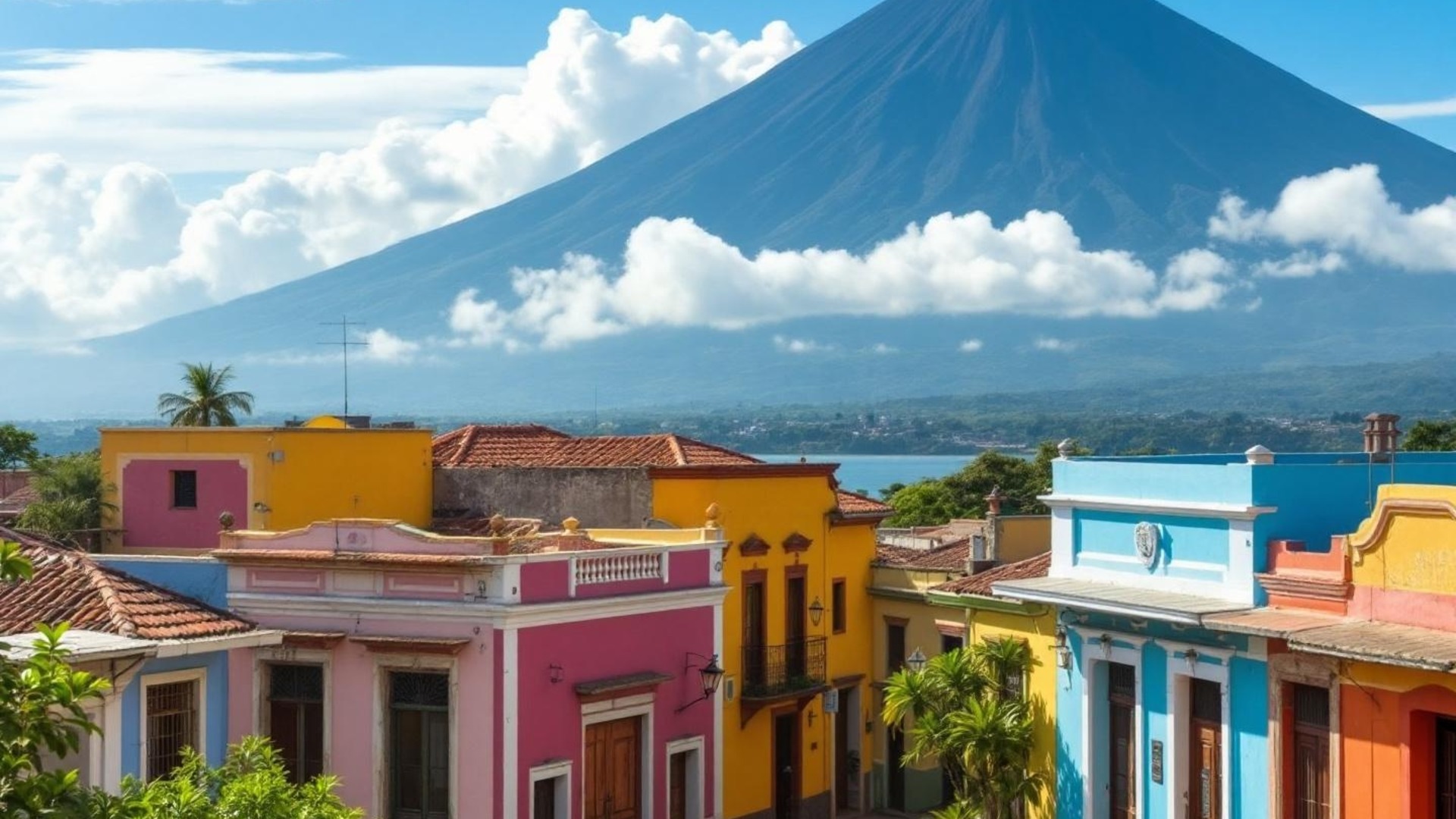
The postcard. Ochre, pink and blue single-storey colonial houses with internal courtyards, a yellow cathedral on a plaza full of horse carriages, and the lake at the end of the street. Small enough to walk in a morning. The Convento y Museo San Francisco holds the Zapatera statues and is the best museum in the country. Calle La Calzada is the restaurant street and is frankly touristy; two blocks off it, the city is ordinary and much better.
Las Isletas
365 small islands in the lake off Granada, formed when Mombacho's flank collapsed. A two-hour boat trip among them costs a few hundred córdobas per person in a shared panga and is the classic Granada afternoon: fishermen, herons, a small Spanish fort, and — a low point — an island with a single captive spider monkey that boats stop at. Ask your boatman to skip it.
Mombacho and Apoyo from Granada
Mombacho's cloud forest is 20 minutes away: a truck up the volcano, a crater trail, orchids, howler monkeys and a canopy tour. Laguna de Apoyo, a 21 000-year-old caldera lake with warm, clear water, is 25 minutes the other way and is where everyone ends up on their rest day. Both are easy half-days by taxi or shuttle.
⭐ León
The better city, and most people who spend time in both end up saying so. Hotter, flatter, scruffier, younger, and genuinely intellectual — the UNAN university has been the country's radical centre since 1812. The cathedral, the largest in Central America, is a UNESCO World Heritage Site and you can walk barefoot on its brilliant white roof for a view of the whole volcanic chain. Rubén Darío is buried inside, at the foot of a lion.
León's murals and museums
Revolutionary murals all over the centre; León fell to the FSLN before Managua did and does not let you forget it. The Museo de la Revolución on the plaza is run by veterans who give the tour themselves and take you onto the roof — it is partisan, informal, and much more interesting than a neutral museum would be. The Fundación Ortiz-Gurdián is a serious art collection in two colonial houses.
León Viejo and the volcanoes
León Viejo, the original city abandoned in 1610 after Momotombo erupted, is a UNESCO site 30 km away — low excavated foundations, the remains of a cathedral, and the grave of Hernández de Córdoba, whom the governor beheaded here in 1526. From León itself you reach Cerro Negro for volcano boarding, Telica for the overnight glow hike, and the Las Peñitas beach for the sunset.
🏝️ Ometepe — Two Volcanoes in a Freshwater Sea
An hour by ferry from San Jorge, an island of 276 km² shaped like a figure of eight by two volcanoes joined at a low isthmus. The name is Nahuat: ome two, tepetl mountain. It is a UNESCO Biosphere Reserve, it is the image on half the country's tourist literature, and it earns it.
Getting there
Ferries from San Jorge, near Rivas, to Moyogalpa — about an hour, several a day, roughly US$3–5 for a foot passenger and more for a car. The crossing can be genuinely rough when the wind is up; the lake behaves like a sea and the older wooden boats roll. Take the larger modern ferry if the timetable allows.
Concepción
1 610 m, active, symmetrical, and a serious climb — eight to ten hours return, guide compulsory, unrelenting sun on the lower half and loose scree above. People get into trouble on it every year through heat and underestimating it. Start at first light and carry four litres of water per person.
Maderas
1 394 m, extinct, cloud-forested and muddy — genuinely muddy, in a way that ruins shoes — with a small crater lake at the summit that is usually in cloud. Shorter than Concepción, about six hours return, and much better for wildlife: howler monkeys are a near certainty and the forest is beautiful.
Petroglyphs
Ometepe has over 1 700 recorded petroglyphs, concentrated on the Maderas side around Balgüe and El Porvenir — spirals, faces, animals, and some very large panels on boulders in coffee fields. Most are on private land and the family will show you round for a small fee. They are unfenced, uncurated and completely unlike a museum.
Ojo de Agua and Charco Verde
Ojo de Agua is a spring-fed natural swimming pool of startlingly clear cold water on the isthmus, walled and developed but still lovely early in the morning. Charco Verde is a small lagoon reserve on the Concepción side with a beach, howler monkeys and a local legend about a shape-shifting landowner called Chico Largo.
How to do it
Rent a scooter or a bicycle — the ring road is paved on the Concepción side and rough on the Maderas side, and a scooter is about US$20–25 a day. Stay at Balgüe or Santa Cruz on the Maderas side rather than in Moyogalpa; that is where the farms, the hostels and the quiet are. Three nights is right. Two is not enough and people always say so on the ferry back.
🏄 The Pacific Coast — Surf, Turtles and San Juan del Sur
Why the surf is reliable
The wind. Lake Cocibolca sits just inland, and the temperature differential pulls an offshore wind across the coast for around 300 days a year — which holds the wave faces up and grooms them. Combined with consistent southern-hemisphere swell from April to October, it gives southern Nicaragua some of the most dependable surf in the Americas, and at a fraction of Costa Rican prices.
San Juan del Sur
The main base: a horseshoe bay with a fishing fleet, a statue of Christ on the headland, and a party reputation that peaked around 2015 and has calmed since 2018. The bay itself is not the surf — the breaks are 10–30 minutes north and south by shuttle. Playa Maderas is the beginner-to-intermediate standard; Playa Hermosa is bigger and emptier; Playa Remanso is the gentlest.
Popoyo and the north
Two hours north, Popoyo is the serious break — a reef that holds size, with an outer reef for the experienced and a beach break for everyone else — and the area around it (Guasacate, Astillero) has quietly become the surf-and-yoga centre of the country. Further north again, Las Peñitas near León is the budget option with a long beach break and no scene at all.
⭐ The arribadas
La Flor and Chacocente wildlife refuges host arribadas: mass synchronised nesting by olive ridley turtles, when tens of thousands of females come ashore over a few nights. They run roughly July to January, peaking August–November, usually on a waning moon. Ranger-guided night visits only, no flash, no phone torches. It is the single most extraordinary wildlife event in Nicaragua and it is not reliably predictable — allow flexible days.
Montelimar and the middle coast
Pochomil and Masachapa, the closest beaches to Managua, are where the capital goes at Easter and are crowded and cheerful then and empty otherwise. Montelimar — Somoza's beach estate, later a Cuban-built resort — is the main all-inclusive, and if that is the holiday you want, it exists.
⚠️ Rips and reality
The Pacific here has strong rip currents and almost no lifeguards. Drownings of visitors happen every year, most often on unfamiliar beaches at low tide after a drink. Ask locally which end of the beach is safe, swim where Nicaraguans swim, and treat an empty beautiful beach as information rather than luck.
🐒 Wildlife — Howlers, Sloths, and a Forest Being Eaten
What you will actually see
Mantled howler monkeys are near-guaranteed anywhere with trees — Ometepe, Mombacho, the San Juan river — and they are loud enough at dawn to wake you through a wall. White-faced capuchins and spider monkeys are commoner in the south and east. Two-toed and three-toed sloths, agoutis, coatis, iguanas everywhere, and magpie jays with absurd curling crests in every dry-forest car park.
Birds
Around 700 recorded species. The one everyone comes for is the resplendent quetzal, in the cloud forests of Selva Negra and the Datanlí-El Diablo reserve above Matagalpa and Jinotega, best from February to May. Also three species of toucan, the turquoise-browed motmot (the guardabarranco, the national bird, and common), scarlet macaws in the Indio Maíz and on Ometepe where a reintroduction is running, and enormous numbers of North American migrants from October.
Big animals, honestly
Jaguar, puma, tapir and giant anteater all still exist in Nicaragua, effectively only in Bosawás and the Indio Maíz. Your realistic chance of seeing any of them as a visitor is close to zero, and anyone promising otherwise is selling. Take that as a measure of how much intact forest is left rather than as a disappointment.
Turtles
Four species nest on Nicaraguan beaches. The olive ridley arribadas at La Flor and Chacocente are the spectacle; leatherbacks nest sparsely on the same coast; hawksbills nest in the Pearl Cays on the Caribbean side, where a community conservation programme has brought a critically endangered population back from near-zero. Green turtles are still legally hunted by Miskito communities under indigenous rights provisions, which is a genuine and unresolved conservation argument.
⚠️ Deforestation
The hard number. Nicaragua has lost a very large share of its primary forest since 1990, and the loss is concentrated exactly where the protected areas are: Bosawás and the Indio Maíz have lost roughly a third of their forest cover in two decades to cattle ranching, gold prospecting and settler agriculture. The state has the legal tools and does not use them. Indigenous land defenders have been killed for trying.
Where to go for nature
Indio Maíz, reached from El Castillo on the San Juan, is the best-preserved and the hardest to reach. Mombacho and Selva Negra are cloud forest you can do in a day. Isla Juan Venado near Las Peñitas is a mangrove channel full of birds and caimans, an hour by paddle. Los Guatuzos, on the south shore of the lake, is a wetland reserve with caiman night trips and a butterfly farm, reached from San Carlos.
☕ Coffee and Cigars — the Northern Highlands
Two of Nicaragua's three best-known products come from the same few departments in the north, and both are worth building two or three days of a trip around.
The coffee country
Matagalpa, Jinotega, Nueva Segovia and Estelí — shade-grown arabica between roughly 800 and 1 600 m, picked from November to February, and consistently among the best-scoring coffees in Central America at Cup of Excellence. Jinotega alone produces something like a third of the national crop. Coffee is usually Nicaragua's largest single export earner.
How to visit
Selva Negra outside Matagalpa is the obvious base: a working coffee farm founded by German immigrants in the 1890s, with a hotel, cloud forest trails, its own cheese and a good farm tour. Around Jinotega and San Ramón there are cooperative farm stays where you sleep with a family and pick if you are there in season — much better value and much more interesting, and a genuine share of the money stays local.
The history under it
Coffee is why the highlands were settled by outsiders in the late nineteenth century, why indigenous communal land in Matagalpa was broken up, and why the region was the base of both Sandino's war against the Marines and, fifty years later, the Contra war. The Zelaya government's coffee land reforms in the 1890s triggered an indigenous uprising in Matagalpa that was put down with considerable violence. None of this is far under the surface.
🚬 Estelí and the cigars
Nicaragua is now, by many measures, the largest exporter of premium hand-rolled cigars to the United States, having passed the Dominican Republic — and almost all of it comes from Estelí and the Jalapa valley. The soil is volcanic, the valley is wide, and the leaf is powerful; Nicaraguan filler is what gives modern full-bodied cigars their strength.
Why here
Cuban exiles, after 1959, looking for soil like Vuelta Abajo. Joya de Nicaragua, founded in 1968, is the oldest factory and made cigars for the Somozas and then, after being bombed and looted, for the Sandinistas. The revolution and the Contra war nearly killed the industry; it came back from the 1990s and now includes Padrón, My Father, Drew Estate, Perdomo and Oliva.
Visiting a factory
Most of the big Estelí factories take visitors by arrangement — Joya de Nicaragua, Drew Estate and Tabacalera Perdomo among them — and the tours are the real thing: curing barns, fermentation piles, sorting tables, and rollers working at a pace that is hard to believe until you watch it. Book ahead, go on a weekday morning, and expect to be sold to at the end, which is fair enough.
🍽️ Food — Maize, Beans, Plantain and Sour Orange
Nicaraguan cooking is maize-based, pork-heavy, fried, sour with bitter orange, and much better than its reputation. It is closer to the Mesoamerican tradition than to the Caribbean on the Pacific side, and entirely Caribbean on the other one. Nobody outside Central America has heard of most of it.
⭐ Gallo pinto
The national dish and the national breakfast: yesterday's rice fried with yesterday's red beans until the grains take the colour, with onion and sweet pepper. The name means "spotted rooster", for the speckled look — there is no chicken in it, a point on which Nicaragua and Costa Rica agree while disagreeing about everything else concerning the dish, including who invented it. Nicaraguan pinto uses small dark red beans and is drier; Costa Rican uses black beans and Lizano sauce.
⭐ Nacatamal
The Sunday institution. A large parcel of maize masa enriched with lard and sour orange, filled with pork, rice, potato, tomato, onion, mint, olive and a chilli, wrapped in a plantain leaf and steamed for hours. It is a full meal, it is made on Saturday and eaten on Sunday morning with coffee and bread, and the plantain leaf — not a corn husk — is what distinguishes it from a Mexican tamal.
Vigorón and quesillo
Vigorón: boiled yuca, crisp chicharrón and a sharp cabbage-and-tomato slaw called curtido, served on a banana leaf, invented in Granada and sold in its plaza. Quesillo: a soft tortilla wrapped round fresh stretchy cheese, pickled onions, cream and salt, in a plastic bag you drink the last of — the town of Nagarote on the León road exists, as far as travellers are concerned, to sell them.
Indio viejo and baho
Indio viejo — "old Indian" — is shredded beef stewed with maize masa until it thickens into something between a stew and a porridge, with sour orange, mint and achiote. Baho is beef, green plantain and yuca steamed together in banana leaves for hours, a Sunday dish in Masaya. Both are slow, cheap and deeply traditional.
The Caribbean kitchen
A separate cuisine. Rondón ("run down") is fish or turtle, cassava, plantain and breadfruit simmered in coconut milk — the signature Creole dish of the coast. Rice and beans there are cooked in coconut milk, not fried. Lobster, king crab and coconut bread on the Corn Islands, and pan de coco everywhere on that side.
What to expect at the table
A fritanga — a street grill, usually an open front room, from about six in the evening — is where the good cheap food is: grilled meat, gallo pinto, fried plantain, tajadas, salad, a bag of something to drink, for a couple of dollars. Portions are large, chilli is served on the side rather than cooked in, and lunch (almuerzo) is the main meal.
🍳 Four Nicaraguan Recipes
A note before the recipes. Nicaragua has four food photographs on this site and not one of them is usable — a whole roast chicken filed as gallo pinto, a Mexican corn-husk tamal filed as a nacatamal, a sweetcorn smoothie filed as pinol, and a brothy soup filed as indio viejo. They are catalogued in the author's note. Rather than illustrate these dishes wrongly, we describe them precisely enough to cook.
Gallo pinto
Breakfast · serves 4 · 20 minutes (plus cooked rice and beans)
Ingredients: 3 cups cooked long-grain rice, cold, ideally a day old · 1½ cups cooked small red beans, drained but keep the cooking liquid · 1 medium white onion, finely diced · 1 sweet red pepper, diced · 2 cloves garlic · 3 tbsp oil · salt · optional: a sprig of fresh coriander at the end
Method: Cold rice is not optional — warm rice turns to paste. Heat the oil in a wide pan and fry the onion, pepper and garlic until soft and just beginning to colour, 5–6 minutes. Add the beans with about 4 tbsp of their dark cooking liquid and let it bubble for a minute: that liquid is what colours the rice. Add the rice and turn it over and over with a wooden spoon until every grain is evenly speckled reddish-brown and the pan is dry again, about 5 minutes. Season. Serve with fried eggs, tajadas of fried sweet plantain, fresh cheese and a spoonful of soured cream.
💡 Do not use black beans and do not add Lizano sauce — that is the Costa Rican version, and saying so in Nicaragua is a conversation starter.
Nacatamal
Sunday · makes 8 large parcels · 3 hours plus overnight marinating
Ingredients: For the masa: 1 kg masa harina (or fresh nixtamalised masa) · 250 g lard · 500 ml warm chicken stock · juice of 2 sour oranges (or 2 parts orange to 1 part lime) · 1 tsp achiote paste · salt. For the filling: 1 kg pork shoulder in large cubes, marinated overnight in sour orange, garlic, salt and achiote · 1 cup raw rice · 3 potatoes, sliced · 2 tomatoes, sliced · 1 onion, sliced · 1 sweet pepper in strips · 8 sprigs of fresh mint (hierbabuena) · 8 green olives · 8 prunes or a few raisins · 1 mild chilli, sliced. Plus: large plantain (banana) leaves, passed briefly over a flame to soften, and kitchen string.
Method: Beat the lard until pale, then work in the masa, stock, sour orange, achiote and salt to a soft, spreadable dough — it should fall slowly from the spoon. Cut the leaves into roughly 30 cm squares and pass each over a gas flame until it turns glossy and pliable. On each leaf put a large ladle of masa, flatten it, then build on top: pork with its marinade, a spoonful of raw rice, potato, tomato, onion, pepper, a sprig of mint, an olive, a prune, a slice of chilli. Fold the leaf into a tight parcel, then a second leaf the other way, and tie firmly with string. Stand the parcels upright in a deep pot with 5 cm of water in the bottom, cover, and steam for 3 hours, topping the water up. Rest 15 minutes before opening.
💡 The rice goes in raw — it cooks in the pork fat and the steam, and it is the reason the filling is not a paste. Nacatamales are made on Saturday and eaten on Sunday morning; they reheat better than they eat fresh.
Indio viejo
Main · serves 6 · 1½ hours
Ingredients: 800 g beef brisket or skirt · 2 large onions · 1 sweet pepper · 4 cloves garlic · 4 tomatoes · 1 cup masa harina (or 4 corn tortillas, soaked and blended) · juice of 2 sour oranges · 1 tsp achiote · a handful of fresh mint · 4 tbsp oil or lard · 1,5 l of the beef cooking broth · salt and pepper
Method: Simmer the beef in salted water with half an onion until tender, about an hour; keep the broth and shred the meat with two forks. Fry the remaining onion, pepper, garlic and tomato in the fat until collapsed, add the achiote, then the shredded beef, and let it fry a few minutes. Slacken the masa harina in 500 ml of cold broth until completely smooth — lumps here cannot be fixed later — and pour it into the pan with the rest of the broth. Cook on a low heat, stirring almost constantly for 25–30 minutes, until it thickens to the consistency of a soft polenta and no longer tastes of raw maize. Finish with the sour orange and the mint off the heat.
💡 It should hold the mark of a spoon. If it is soupy it is not finished; if it stiffens too far, loosen it with hot broth, never water.
Vigorón
Street food · serves 4 · 45 minutes
Ingredients: 800 g yuca (cassava), peeled and cut into 6 cm lengths, hard core removed · 400 g pork belly with the skin on, cut into strips · ½ small white cabbage, shredded very fine · 2 tomatoes, diced · 1 onion, sliced paper-thin · juice of 3 limes and 1 sour orange · 1 mild chilli, sliced · salt · banana leaf to serve
Method: Make the curtido first so it has time: mix the cabbage, tomato, onion, chilli, lime and sour orange juice with plenty of salt and leave for at least 30 minutes, turning occasionally. Boil the yuca in well-salted water until a knife goes in easily, 20–25 minutes; drain and let it steam dry. For the chicharrón, put the pork strips in a heavy pan with a splash of water and a good pinch of salt, cover, and cook on a medium heat until the water has gone and the fat has rendered, then uncover and fry in its own fat until the skin blisters and crackles. To serve, line a plate with banana leaf, pile on the yuca, then the chicharrón, then the curtido on top.
💡 Eaten with the fingers, standing up, in the plaza in Granada where it was invented. No cutlery is provided and none is expected.
🍹 Drinks — Rum, Toasted Maize and the Macuá
Flor de Caña
Nicaragua's best-known export after coffee and cigars: rum distilled at Chichigalpa since 1890 by the Pellas family, aged in the shadow of the San Cristóbal volcano, and sold by age statement — 4, 5, 7, 12, 18, 25. It is dry by Caribbean standards, with no added sugar, which is why it is taken seriously by people who do not otherwise take Central American rum seriously. Note: the only picture this site holds of it is a machine-generated fake with a garbled label, and it is not shown.
⚠️ What lies behind it
For two decades, chronic kidney disease of non-traditional causes (CKDnt) has killed thousands of sugarcane cutters in western Nicaragua, concentrated around Chichigalpa, where entire neighbourhoods are known as La Isla de las Viudas — the island of widows. The causal role of heat stress and dehydration in cane cutting is now well established. The company has funded research and changed working practices; the disease has not gone away. It belongs in any honest paragraph about Nicaraguan rum.
Pinol and pinolillo
The national drink and the reason Nicaraguans call themselves pinoleros. Pinol is toasted ground maize; pinolillo adds cacao, and both are whisked into water or milk with sugar and cinnamon and drunk cold. The colour is tan to chocolate brown, the texture is slightly gritty by design, and it is closer to a thin drinking chocolate than to anything else in Europe.
Tiste, chicha and cacao
Tiste is maize and cacao again but with the maize toasted darker and no milk. Chicha de maíz is lightly fermented maize, pink with achiote, sold from barrels at festivals. Cacao here is a drink rather than a bar — Nicaragua grows fine-flavour cacao in the Río San Juan and around Matagalpa, and a small craft chocolate industry has grown up around it.
The Macuá
Nicaragua's official national cocktail, chosen by a national competition in 2006 and named after a bird. White rum, guava juice, orange juice, lemon, a little sugar, over ice. It is simple, not very strong, and quite good. The other standard is a Nica Libre — Flor de Caña 7 with cola and a lot of lime.
Beer and coffee
Beer is Toña and Victoria, both from the same brewery, both pale lagers, both fine cold; Toña is the popular one and Victoria the slightly better one. Coffee in the country is often surprisingly bad — the good beans are exported — so buy your beans in Matagalpa or from a specialist roaster in Granada or León rather than judging Nicaraguan coffee by what arrives in a roadside restaurant.
🎭 Culture — Darío, the Güegüense, Marimba and Masks
⭐ Rubén Darío
Born in 1867 in the village now called Ciudad Darío, dead in León in 1916 at 49. He founded modernismo, the first literary movement to travel from Latin America to Spain rather than the other way, and he remade Spanish verse — its metre, its vocabulary, its permissible subjects. Every Spanish-language poet of the twentieth century writes after him. Nicaraguans call him simply el Príncipe, and he is buried under a lion in León cathedral.
El Güegüense
A satirical dance-drama from around 1700, performed in a mixture of Spanish and Nahuat, in which a wily mestizo trader runs verbal rings around the Spanish colonial authorities — the first work of Nicaraguan literature and arguably the first mestizo theatre in the Americas. UNESCO listed it as intangible cultural heritage in 2005. It is performed at the San Sebastián festival in Diriamba in January, in masks, with drums and flutes, and ser güegüense is still how Nicaraguans describe talking your way round power.
Masaya and the craft towns
Masaya is the craft capital: hammocks — genuinely among the best in the world and worth the luggage — leatherwork, embroidery, and a covered artisans' market. Around it the Pueblos Blancos: San Juan de Oriente for pottery, in an unbroken Chorotega tradition; Catarina for plants and the mirador over Laguna de Apoyo; Masatepe for wicker furniture; Diriá and Niquinohomo, where Sandino was born.
Marimba and the dances
The marimba de arco — a bow-framed instrument played sitting down, with a violin and guitar behind it — is the Pacific-side national sound, and Masaya is its home. The dances go with masks: El Toro Huaco, Las Inditas, and above all La Gigantona y el Enano Cabezón in León, a towering white woman puppet and a big-headed dwarf who recite verses at each other — a satire of the Spanish lady and the shrewd indigenous man that has been running for two centuries.
The poets
For its size, the density is absurd: after Darío, Salomón de la Selva, José Coronel Urtecho, Pablo Antonio Cuadra, Carlos Martínez Rivas, Ernesto Cardenal, Gioconda Belli, Claribel Alegría. Poetry has been the national art form and a political weapon — the man who shot Somoza García in 1956 was a poet, and Cardenal ran the Ministry of Culture. Sergio Ramírez won the Cervantes Prize in 2017; both he and Belli have since been stripped of their nationality.
Festivals
Santo Domingo in Managua, 1–10 August, the capital's biggest. La Purísima and La Gritería on 7 December — the single most Nicaraguan night of the year: households build altars to the Virgin, crowds go door to door shouting ¿Quién causa tanta alegría? and are answered ¡La Concepción de María!, and everyone is given sweets, sugar cane and gofio. Palo de Mayo in Bluefields through May. Street processions have been restricted since 2023; the household version continues.
📰 Media, Press Freedom & Resources
Nicaragua has effectively no independent press inside the country. Everything worth reading about it is written by exiles, and knowing which outlet is which is more useful here than in almost any other country in this book.
What happened to La Prensa
Founded 1926, edited by Pedro Joaquín Chamorro until his murder in 1978, censored by the Somozas and then by the Sandinistas in the 1980s, and finally raided and its building confiscated in August 2021. Its journalists left the country; it publishes online from exile. In 2025 it won the UNESCO/Guillermo Cano World Press Freedom Prize, at which the government announced Nicaragua's withdrawal from UNESCO.
Confidencial
confidencial.digital — founded by Carlos Fernando Chamorro, son of Pedro Joaquín, himself a Sandinista editor in the 1980s who broke with Ortega. Its newsroom was raided twice and he now works from Costa Rica. It is the most consistently reliable investigative outlet on Nicaragua and publishes in English as well as Spanish.
Divergentes and Despacho 505
divergentes.com — a regional investigative outlet doing the best data work on migration, the economy and the security forces. Despacho 505 and Nicaragua Investiga are the other exile newsrooms worth following. All three operate from Costa Rica or Spain.
State media
El 19 Digital, Canal 4, Canal 8 and most of the rest are owned by the state or by the president's family, and their output should be read as government communication, which is still informative if you read it that way. Rosario Murillo's near-daily broadcasts are the single best primary source on what the government wants said.
The rankings
Reporters Without Borders places Nicaragua at or near the bottom of the Americas in its press freedom index. Freedom House rates it Not Free, with one of the sharpest declines recorded anywhere over the last decade. Human Rights Watch and the UN Group of Human Rights Experts on Nicaragua publish annually and are the standard references.
Books worth reading
Sergio Ramírez, Adiós muchachos — the revolution's own vice-president on how it went wrong, and the indispensable book. Gioconda Belli, The Country Under My Skin — the same decade from inside the movement, and much angrier. Salman Rushdie, The Jaguar Smile — an outsider's 1986 snapshot that Rushdie himself later qualified. Stephen Kinzer, Blood of Brothers — the best single narrative of the 1980s in English.
💸 What It Actually Costs
Nicaragua is the cheapest country in Central America and by a clear margin — roughly half of Costa Rica for the same day. Prices below are September 2026, in US dollars because tourism prices are quoted in them, with córdobas at ≈ 36,6 NIO to the dollar. Dollars are accepted almost everywhere; change is given in córdobas.
Beds
Hostel dorm US$8–14. Private room in a hostel or simple hospedaje US$20–35. A good mid-range colonial hotel in Granada or León US$45–80. A boutique hotel or a beach lodge with a pool US$90–160. Little Corn Island cabins run higher than the mainland for what you get, because everything arrives by boat.
Food
A fritanga plate with rice, beans, meat and plantain US$2,5–4. A set lunch (almuerzo corriente) US$3–5. A proper restaurant dinner in Granada US$10–18. Toña beer US$1–1,5 in a shop, US$2–3 in a bar. Coffee US$1–2. A litre of bottled water US$0,80.
Getting around
A chicken bus — a repainted US school bus — goes anywhere for US$0,50–3 and is the real transport of the country. A tourist shuttle between Granada, León, San Juan del Sur and Ometepe is US$20–35 and saves half a day. Taxis in Managua are US$2–5 a hop, shared by default — agree the fare before getting in. Hiring a car with insurance US$45–70 a day.
Activities
Volcano boarding on Cerro Negro US$30–35. A guided volcano climb US$25–45. Masaya lava-lake evening slot US$10 park entry plus transport. Las Isletas boat trip US$15–25 shared. A surf lesson at San Juan del Sur US$25–35. A day's board hire US$10–15. Turtle arribada night visit at La Flor US$15–25 including the ranger.
Daily budget
Backpacker US$30–40 a day, and it is a comfortable US$35 rather than a grim one. Mid-range US$70–110. Comfortable US$150–220, which in Nicaragua buys a very good hotel and a private driver. The Corn Islands add 30–50 % to any of these.
💳 Money practicalities
Bring clean, untorn US dollars — damaged notes are refused. ATMs (BAC, Lafise, Banpro) are reliable in Managua, Granada, León, Rivas and San Juan del Sur, dispense both currencies, and charge around US$4–6 per withdrawal. Cards work in hotels and better restaurants and nowhere else. Take enough cash for the Corn Islands, Ometepe's south side and the whole Caribbean coast.
🌡️ Climate & When to Go
The two seasons
Verano — "summer", confusingly — is the dry season, roughly December to April. Invierno, "winter", is the wet season, May to November, when it rains hard in the afternoon and is clear the rest of the day for most of it. Temperature barely changes across the year: Pacific lowlands 28–35 °C by day all year round, highlands 5–8 °C cooler, Caribbean coast hot and humid throughout.
⭐ The best window
Late November to early February. The rain has stopped, the landscape is still green rather than burnt, temperatures are at their most bearable, the coffee harvest is on, and La Purísima on 7 December is the best night of the year to be in the country. Book ahead around Christmas and New Year.
March and April
The hottest and dustiest time — Managua and León regularly hit 36–38 °C, the Pacific side turns brown, and there is smoke from field burning. Good for volcanoes early in the morning and for surf, bad for everything else. Semana Santa (Holy Week) empties the cities onto the beaches and doubles coastal prices.
The rains
May to November. In practice for most of it that means a brilliant morning, a heavy downpour in the afternoon and a clear evening — perfectly travellable, much greener, far fewer people and lower prices. September and October are the exception: the heaviest months, the peak of the hurricane season, and the time when Caribbean-coast travel and unpaved roads become genuinely unreliable.
Hurricanes
The Atlantic season runs June to November, peaking August–October, and the exposure is on the Caribbean side. The Pacific side is rarely hit directly but gets days of rain from systems passing north. If you are going to the Corn Islands or Bilwi in that window, build slack into the itinerary — flights and boats stop for weather routinely.
What to pack
Light cotton and long sleeves for the evening mosquitoes, a proper rain shell rather than a poncho if you are travelling in the wet, a warm layer for Matagalpa and the Maderas summit, sun protection that works — the tropical sun at altitude on an open volcano cone is punishing — and shoes you are willing to destroy on Maderas. A dry bag if you are taking boats, which you will be.
✈️ Getting There & Getting Around
The airport
Augusto C. Sandino International (MGA), on the eastern edge of Managua, 11 km from the centre. Small, straightforward, and the only international airport with meaningful traffic. Take an official airport taxi from the desk inside the terminal (US$20–25 to most of Managua, US$45–55 to Granada) rather than anything offered outside the doors.
✈️ Who flies there
No direct flights from Europe. The realistic options are Copa via Panama City, Avianca via San Salvador or Bogotá, American via Miami, United via Houston, Aeroméxico via Mexico City, and Iberia or Air Europa from Madrid with one of those connections. Anything routed through the United States requires ESTA even in transit.
Arriving overland
Very common and often better. Peñas Blancas from Costa Rica is the busiest crossing and can take two hours; direct buses (TicaBus, Transnica, NicaBus) from San José to Managua or Granada take 9–11 hours and handle the paperwork for you. Las Manos and El Espino from Honduras. Many travellers fly into Liberia (LIR) in Costa Rica, which is only about 3 hours from the border.
Buses
The chicken buses — retired US school buses, repainted, loaded to the roof — go everywhere, all day, for almost nothing, and are the single best way to see the country if you have the time and the patience. Faster expresos and minibuses run the main routes. Tourist shuttles connect Granada, León, San Juan del Sur, Ometepe and the airport door to door and are worth the money on long hops.
Driving
Main Pacific-side roads are decent; everything else varies from rough to seasonal. A 4×4 is genuinely needed for Ometepe's Maderas side, the highlands in the wet and anywhere on the Caribbean side. Police checkpoints are frequent, usually routine, and you must carry passport, licence and rental papers. Do not drive at night outside towns: unlit vehicles, livestock and people on the road.
Boats and small planes
La Costeña flies small turboprops from Managua to Bilwi, Bluefields, Big Corn Island and San Carlos — an hour instead of two days, and worth it; baggage limits are low and strictly enforced. Ferries run San Jorge–Ometepe several times a day, pangas Big Corn–Little Corn twice a day, and slow boats down the San Juan from San Carlos to El Castillo and beyond.
📋 Practical Information
Entry
EU citizens, including Czechs, need no visa for up to 90 days. You buy a tourist card (tarjeta de turismo) on arrival for US$10, cash, and passports must be valid for at least six months. Nicaragua is in the CA-4 free-movement area with Honduras, El Salvador and Guatemala, which means the 90 days are shared across all four — leaving to Honduras and coming back does not reset it. Leaving to Costa Rica does.
⚠️ Entry can be refused
This is the unusual part and it is real. Since 2018 Nicaragua has refused entry to journalists, academics, NGO staff, clergy and human rights workers at the airport with no reason given and no appeal, sometimes to people with valid onward tickets and hotel bookings. Migration also screens social media at the border. If your profession is on that list, understand the risk before you book a non-refundable trip.
Health
No vaccination is required unless you are arriving from a yellow-fever country, in which case a certificate is mandatory. Recommended: hepatitis A and B, typhoid, tetanus, and rabies for long rural stays. Dengue is the real risk and it is present all year, worst in the wet season; there is also chikungunya and Zika. Use repellent day and night. Malaria risk is low and limited to parts of the Caribbean lowlands. Do not drink the tap water outside Managua's piped system.
Medical care
Private clinics in Managua — Hospital Vivian Pellas is the standard reference — are good; public hospitals outside the capital are not, and the Caribbean coast has very little. Travel insurance covering medical evacuation is essential, and should explicitly cover volcano hiking, surfing and boat travel, which cheap policies often exclude.
⚠️ Safety and politics
Nicaragua's homicide rate is low by Central American standards and violent crime against tourists is uncommon. The real risks are opportunistic theft, road accidents, rip currents and politics. Foreigners at any demonstration can be detained and expelled — participation by non-citizens is treated as illegal. Do not photograph police, soldiers or government buildings. Assume phone and social media are monitored. Do not carry political material.
Day to day
Power is 120 V, 60 Hz, US-style flat plugs — bring an adapter, most European devices handle the voltage. Mobile coverage (Claro, Tigo) is good on the Pacific side, patchy elsewhere; a local SIM is cheap with a passport. Tipping: 10 % is often already added as propina, check the bill. Water in restaurants is bottled. Toilet paper goes in the bin, not the bowl, almost everywhere.
🇨🇿 For Czech Readers
Getting there from Prague
No direct flight and no short routing. The practical options are Prague → Madrid → Panama City → Managua (Iberia or Air Europa plus Copa), Prague → Amsterdam or Paris → Panama City → Managua (KLM or Air France plus Copa), or Prague → Madrid → San Salvador → Managua with Avianca. Total 19–26 hours with one long connection. Routings via Miami or Houston are usually cheaper and need an ESTA even in transit.
What it costs from Prague
Return flights typically 25 000–38 000 Kč depending on season, with the cheapest around May–June and September–October and the dearest at Christmas. On the ground Nicaragua is very cheap by Czech standards: a full day backpacking runs around 700–900 Kč, mid-range 1 600–2 500 Kč. Budget 50 000–70 000 Kč for two people for two weeks including flights and you will not be economising.
Money in crowns
The córdoba sits at about 36,6 NIO to the US dollar under a fixed peg, which puts 1 córdoba at roughly 0,55–0,60 Kč at autumn 2026 rates. A street meal at 120 córdob is around 70 Kč; a Toña beer about 30 Kč; a night in a good colonial hotel in Granada about 1 300–1 800 Kč. Take US dollars in cash from Prague — euros are harder to change and get a worse rate.
⚠️ MZV ČR
The Ministry of Foreign Affairs classifies Nicaragua's security situation as deteriorated and advises great caution, movement in daylight only, avoiding crowds, and not travelling at all to the northern departments of Nueva Segovia, Madriz, Estelí, Jinotega, Matagalpa and Boaco or to the Atlantic departments, where armed criminal groups operate. It also warns explicitly that participation by foreigners in any demonstration is treated as illegal and is grounds for expulsion. Check mzv.gov.cz before you book, not after.
Embassy and DROZD
There is no Czech embassy in Nicaragua. The country falls under the Embassy of the Czech Republic in Mexico City, which is 2 500 km and a connecting flight away, and consular help is correspondingly limited. Register your trip in DROZD (Dobrovolná registrace občanů ČR při cestách do zahraničí) — for Nicaragua this is not a formality, it is the only way the ministry knows you are there. Note the honorary consulate contact details from the Mexico City embassy's website before departure.
Insurance and the practical bits
Standard Czech travel insurance frequently excludes volcano hiking, surfing and travel on small boats — exactly the three things people go to Nicaragua for. Read the exclusions and buy an adventure rider. Make sure medical repatriation is covered without a cap that a Central American evacuation would blow through. Czech driving licences are accepted with an international permit; carry both. Vaccination and dengue advice is the same as in the practical section — consult a Czech travel-medicine centre six weeks ahead.
✍️ Author's Note — Seven Photographs, Two of Them Usable
Every country page in this collection is built after an inventory of what images actually exist for it. Nicaragua has seven, and this is the worst result so far: two are usable and five are not, including all four food photographs. The reasons are worth writing down, because the failures fall into recognisable patterns rather than being random.
What is shown
Two pictures. The hero — colonial rooftops, a dome and a volcanic cone in low light — is generic and its caption names no place, because nothing in it is identifiable. The second is the hero of the page this one replaces, kept deliberately and captioned as an idealised composite rather than a photograph of Granada: the colours are right and the volcano is impossible.
⚠️ The fake rum label
flor-de-cana.jpg shows a rum bottle whose label reads "FOD CHAN" over illegible script. It is a machine-made imitation of the label of Flor de Caña, a real company that has been distilling at Chichigalpa since 1890. It is not shown, at any caption. This is the third time this collection has found a picture imitating a real brand — after the forged National Geographic marks on the Martinique and Netherlands heroes — and it is the reason the running defect log now carries a bucket-wide sweep for brand marks.
⚠️ Cooking the rooster
nicaragua-gallo-pinto.jpg is a whole roast chicken. Gallo pinto is fried rice and beans; its name means "spotted rooster" and describes the speckled look of the dish. The image bank read the name literally and cooked the bird. This is a new failure mode for this collection — an idiomatic dish name taken at face value — and it predicts the same error for ropa vieja, moros y cristianos, huevos rancheros and every other dish named for something it is not.
The wrapper is the dish
nicaragua-nacatamal.jpg shows a small tamal in a corn husk. A nacatamal is fist-sized and wrapped in plantain leaf, and the wrapper is the single feature that distinguishes it from a Mexican tamal. A banana leaf lies decoratively under the plate, which makes the error worse rather than better: the right material was in the frame and was used as garnish.
Ingredients read, technique ignored
nicaragua-pinol.jpg is a bright yellow sweetcorn drink garnished with parsley; pinol is toasted dry maize and pinolillo adds cacao, so the drink is tan to brown. nicaragua-indio-viejo.jpg is shredded beef in a thin broth with whole corn kernels; indio viejo is thickened with masa until it will hold a spoon. In both the ingredient list was read and the method was not — the same failure as the gallo pinto, one step further down.
Formats
Two of the seven files are not what their names say: 01-hero.jpg is a WebP and nicaragua-indio-viejo.jpg is a PNG, both served under a .jpg extension. Browsers cope by sniffing content, caches and image pipelines sometimes do not. This now spans seven countries and twenty files in the running log, and it wants a single bucket-wide pass rather than another per-country note.
What the text does instead. The four dishes are described in the recipe section in enough detail to cook them, with the distinguishing features — plantain leaf, toasted maize, masa thickening, cold day-old rice — stated explicitly. A wrong picture of a dish teaches the reader something false and is harder to unlearn than no picture at all. On the politics, every date and figure in the 2018–2026 sections was checked against reporting from the outlets listed above at the time of writing in September 2026, rather than recalled; the 20 July 2026 announcement in particular is recent enough that anyone reading this later should check what followed it.
Support This Project 🌍
This World Travel Factbook is a labor of love – free to use for all travelers. If you find it helpful, consider supporting its continued development.